

To make your skin glow, start with gentle cleansing, a moisturizer that suits your skin, and consistent sun protection. These basics can help your skin stay hydrated and protected without an expensive, complicated routine. The American Academy of Dermatology (AAD) recommends this simple three-step approach to skin care.
Here, “glow” means skin that looks well moisturized and feels comfortable—not lighter skin, a tan, or a poreless finish. The goal is to care for your skin, not erase every line or change your natural skin tone.
The habits below combine practical skin care with everyday health habits. Some directly address dryness or prevent damage; others have less-certain effects on visible radiance.
9 Daily Habits for Healthier-Looking Skin
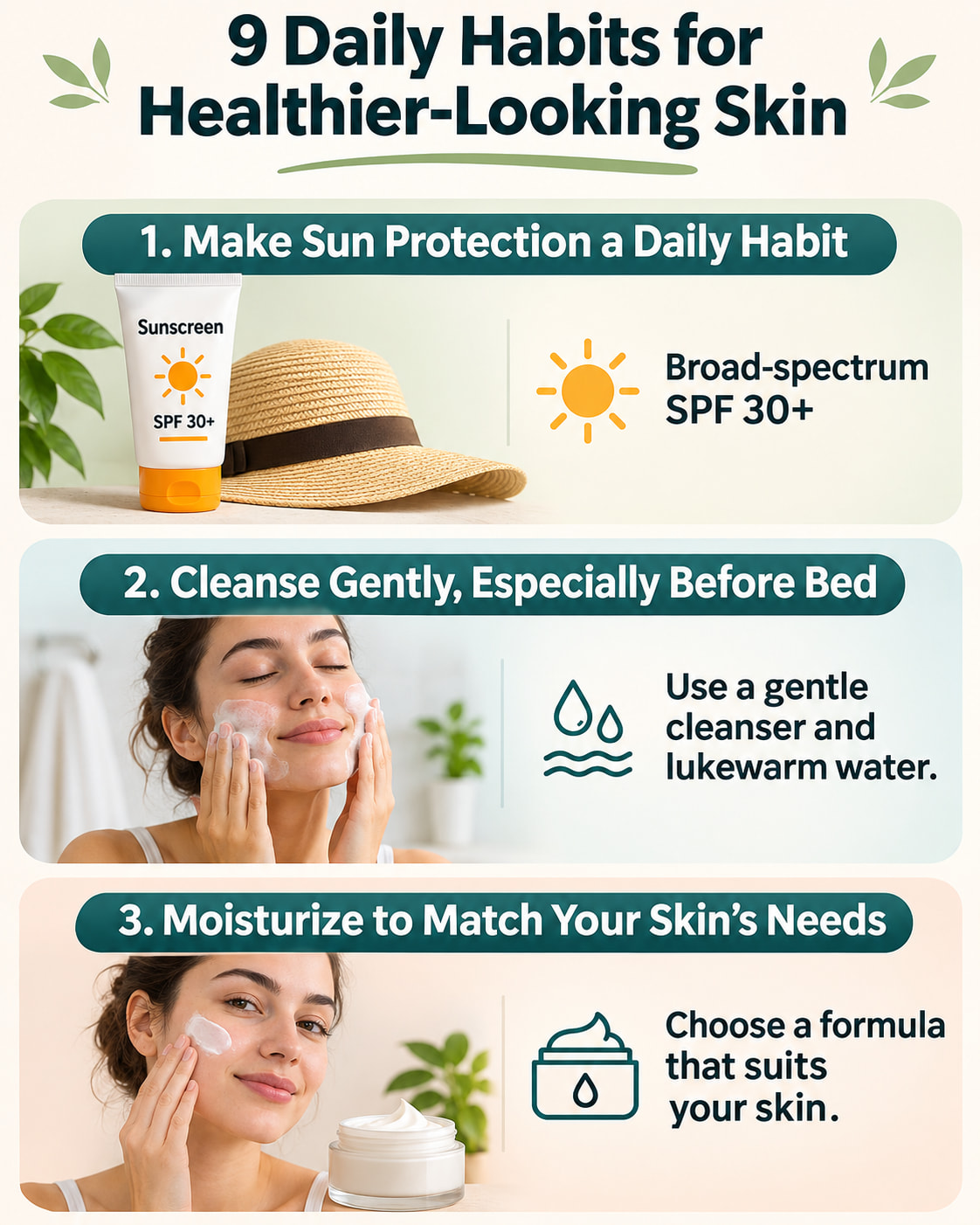
1. Make Sun Protection a Daily Habit
Sun protection is not an instant brightening treatment. Its value is helping prevent ultraviolet-related damage, including premature wrinkles and age spots.
Choose a broad-spectrum, water-resistant sunscreen with SPF 30 or higher. Broad-spectrum means it protects against both UVA and UVB rays. According to the AAD’s sunscreen guidance, apply it generously to dry, exposed skin about 15 minutes before going outdoors—even on cloudy days.
Cover areas that clothing leaves exposed, including your face, ears, and neck. Reapply approximately every two hours outdoors and after swimming or sweating, following the product’s directions. Use shade and protective clothing, too; sunscreen is only one part of sun protection.
For dark spots or uneven pigmentation, consider a tinted sunscreen containing iron oxide. The AAD’s guidance on dark spots explains that iron oxide adds protection against visible light, which can worsen pigmentation. This is about managing unwanted dark spots, not lightening your natural complexion.
2. Cleanse Gently, Especially Before Bed
Make cleansing a way to remove makeup, dirt, and excess oil—not a test of how thoroughly you can scrub.
Use a gentle, nonabrasive cleanser with lukewarm water. Apply it with your fingertips, rinse thoroughly, and pat your face with a soft towel. The AAD’s face-washing advice recommends avoiding scrubbing and limiting washing to twice daily and after heavy sweating.
At night, remove makeup before going to bed. In the morning, your skin may need only water or a gentle cleanser; the AAD includes both options in its basic skin-care recommendations. You do not need to chase a squeaky-clean feeling.
3. Moisturize to Match Your Skin’s Needs
Moisturizer helps the skin retain water and keeps its surface softer and smoother. Apply it after washing while your skin is still slightly damp.
There is no single texture that works best for everyone. The AAD’s moisturizer guide offers these useful starting points:
| Your skin’s needs | A reasonable starting point |
|---|---|
| Dry or flaky | A richer cream; very dry areas may benefit from an ointment. |
| Oily | A lighter gel rather than a heavy cream. |
| Combination | More moisture on dry areas and a lighter approach on oily areas. |
| Sensitive | A fragrance-free formulation that your skin tolerates. |
For acne-prone skin, look for products labeled “noncomedogenic” or “won’t clog pores.” You do not have to apply the same rich product to every part of your face. Adjust the texture and amount to how each area feels.
4. Keep Your Routine Simple and Nonirritating

Adding more products can create more opportunities for irritation. Introduce new products individually rather than replacing your entire routine at once.
Before using a new cosmetic product broadly, follow the AAD’s home-testing guidance: apply it to a small area, such as the underside of your arm, twice daily for seven to ten days. Follow the product’s directions for how long to leave it on, especially for products that should be rinsed off.
This is a home tolerance check, not diagnostic allergy testing. If you develop redness, itching, or swelling, wash the product off and stop using it.
Do not treat burning or stinging from a new cosmetic as evidence that it is “working.” Stop the irritating product. For a prescribed treatment, ask your prescriber how to handle irritation before changing your treatment plan, as the AAD advises.
5. Eat Varied, Balanced Meals
Think about meeting your nutritional needs rather than finding one food that will transform your complexion. For otherwise healthy adults, the AAD recommends getting nutrients through food first.
Build variety into meals with vegetables, fruit, protein foods, whole grains, nuts, or seeds. A simple meal could be beans with rice and vegetables, or eggs with whole-grain toast and fruit.
Nutrients have real roles in skin function. For example, vitamin C is needed to make collagen, and foods such as citrus fruit, peppers, and broccoli provide it. That biological role does not mean extra vitamin C—or one particular food—will necessarily create a visible glow.
Supplements may be appropriate for a diagnosed deficiency or another specific nutritional need. A “skin, hair, and nails” label alone is not a reason to take one, and some supplements can interact with medicines or affect laboratory tests. Discuss a genuine nutritional concern with a qualified health professional rather than choosing a supplement solely for cosmetic promises.
6. Stay Hydrated Without Forcing Extra Water
Drink regularly throughout the day, and account for extra fluid losses in hot weather or during physical activity. Water is a useful choice, but other drinks and moisture in food also contribute. The NHS hydration guide emphasizes that fluid needs vary with circumstances.
The connection between drinking extra water and better-looking skin is less certain than beauty advice often suggests. A 2018 systematic review of six studies found limited, low-quality evidence of small improvements in skin hydration, particularly among people who previously drank less.
That is not a reason to force extra liters of water when you are already adequately hydrated. Meeting your body’s fluid needs and moisturizing dry skin are different jobs; drinking more water should not replace appropriate topical care.
7. Give Sleep a Consistent Place in Your Routine
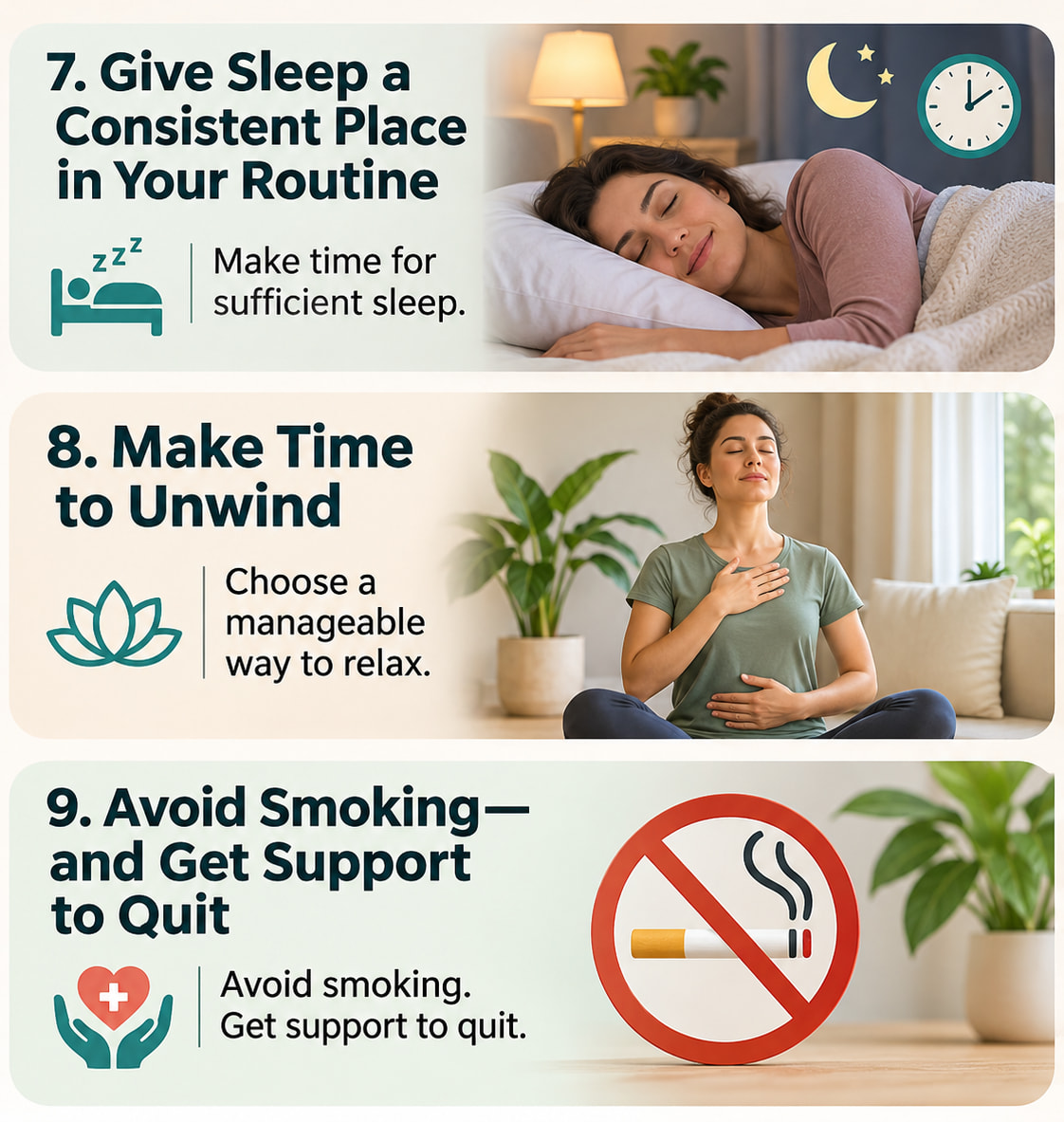
Make room for sufficient sleep rather than treating it as something to fit around an increasingly elaborate evening routine.
The CDC recommends seven or more hours of sleep for adults ages 18–60, with age-specific ranges for older adults. Practical habits include keeping consistent bed and wake times, creating a quiet sleep environment, and avoiding caffeine late in the day.
Skin-specific evidence is more limited. A 2015 study involving 60 White women found an association between poorer sleep and less favorable measures of skin aging and barrier function. Because participants were grouped by their existing sleep patterns, the study does not prove that sleeping longer will produce a glow—or establish how its findings apply to everyone.
Prioritize sleep for your overall well-being, not as another beauty standard to meet perfectly.
8. Make Time to Unwind
Stress can worsen acne and make eczema symptoms harder to manage. The AAD explains this relationship in its guide to stress and skin conditions.
Choose a manageable way to pause during the day. For example, try a few minutes of comfortable, slow breathing or a short guided meditation. The point is to find something workable, not add another demanding task.
Stress-management practices can complement treatment, but they do not replace it. A skin flare is not proof that you have failed to relax, and ongoing acne or eczema deserves appropriate care.
9. Avoid Smoking—and Get Support to Quit
Smoking accelerates skin aging and slows wound healing, according to the AAD’s healthy-skin guidance. Avoiding it is a protective habit, not an overnight cosmetic fix.
For people who smoke, quitting is a health change—not a test of willpower or appearance. A health professional can help you explore support and suitable treatments. The CDC’s smoking-cessation guidance identifies counseling and medication as effective tools, with the combination offering the best chance of quitting successfully.
A Simple Morning and Evening Routine
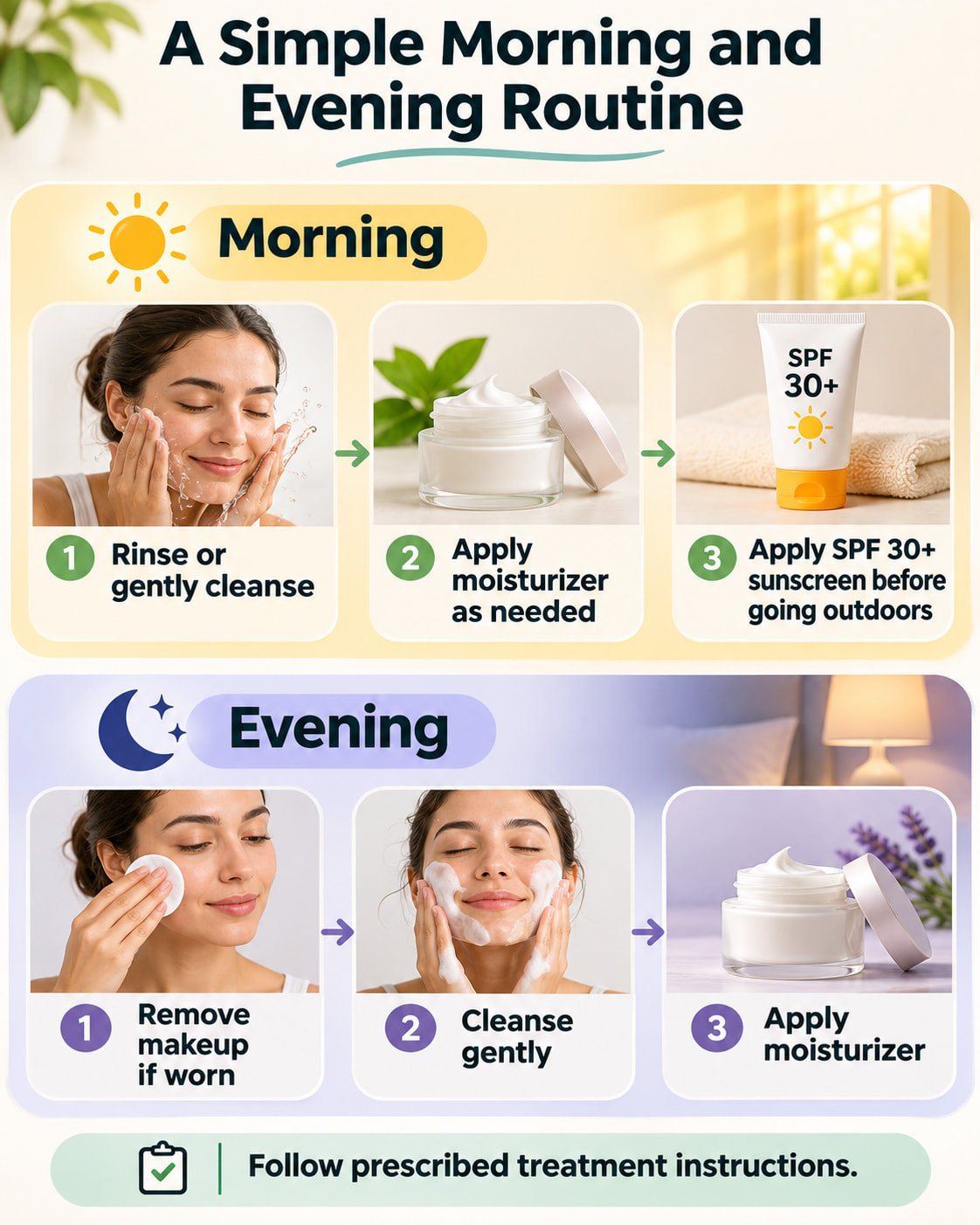
You do not need nine skin-care products to follow nine healthy habits. Put the basics together in a routine you can repeat.
Morning
Rinse with water or use a gentle cleanser, depending on your skin’s needs. Apply moisturizer where needed, then sunscreen before going outdoors. Apply makeup afterward, when you wear it.
This follows the AAD’s basic routine and product-order guidance. Remember that outdoor sunscreen reapplication still matters after the morning application.
Evening
Remove makeup when worn, cleanse gently, and apply moisturizer. If you use a prescribed skin treatment, follow its instructions about timing, application, and whether your skin should be dry before use.
A treatment plan may change the sequence, so use your prescriber’s directions rather than adding every recommended product to the same routine.
What to Avoid When You Want Glowing Skin
Daily exfoliation is not a requirement. Scrubs, brushes, and exfoliating acids can irritate the skin when used too aggressively. Irritation can also worsen dark spots, particularly in darker skin tones.
The AAD’s exfoliation guidance recommends choosing the method and frequency around your skin type and the products you already use. Do not exfoliate sunburned skin or areas with cuts or wounds. Be especially cautious when using retinoids or other products that already cause peeling or sensitivity. You can leave exfoliation out of a basic routine.
Also skip UV tanning as a route to “glow.” Tanning outdoors or in a tanning bed accelerates skin aging and increases skin-cancer risk. A bronzed appearance is not a sign that your skin is healthier.
What to Expect—and When to See a Dermatologist
Not every change happens on the same schedule. The AAD notes that moisturizer can soften the appearance of fine lines within a few days. That does not mean it permanently removes wrinkles. Sun protection is primarily a long-term protective habit, while concerns such as persistent pigmentation may need more time and targeted treatment.
Pay attention to comfort as well as appearance. Seek assessment if dryness, flaking, or itching continues despite gentle care, or if even moisturizer causes burning or stinging. The AAD’s dry-skin guidance recommends professional evaluation when basic measures are not helping.
Arrange a dermatologist visit for a spot that changes, itches, bleeds, or looks different from your other spots. Do not treat an unexplained skin change as something to scrub away or brighten.
Start with a manageable routine: cleanse gently, moisturize appropriately, and protect your skin from the sun. Build the other habits around your life, and let comfort and consistency—not a flawless finish—guide your next steps.
This content is for informational purposes only and not medical advice.