
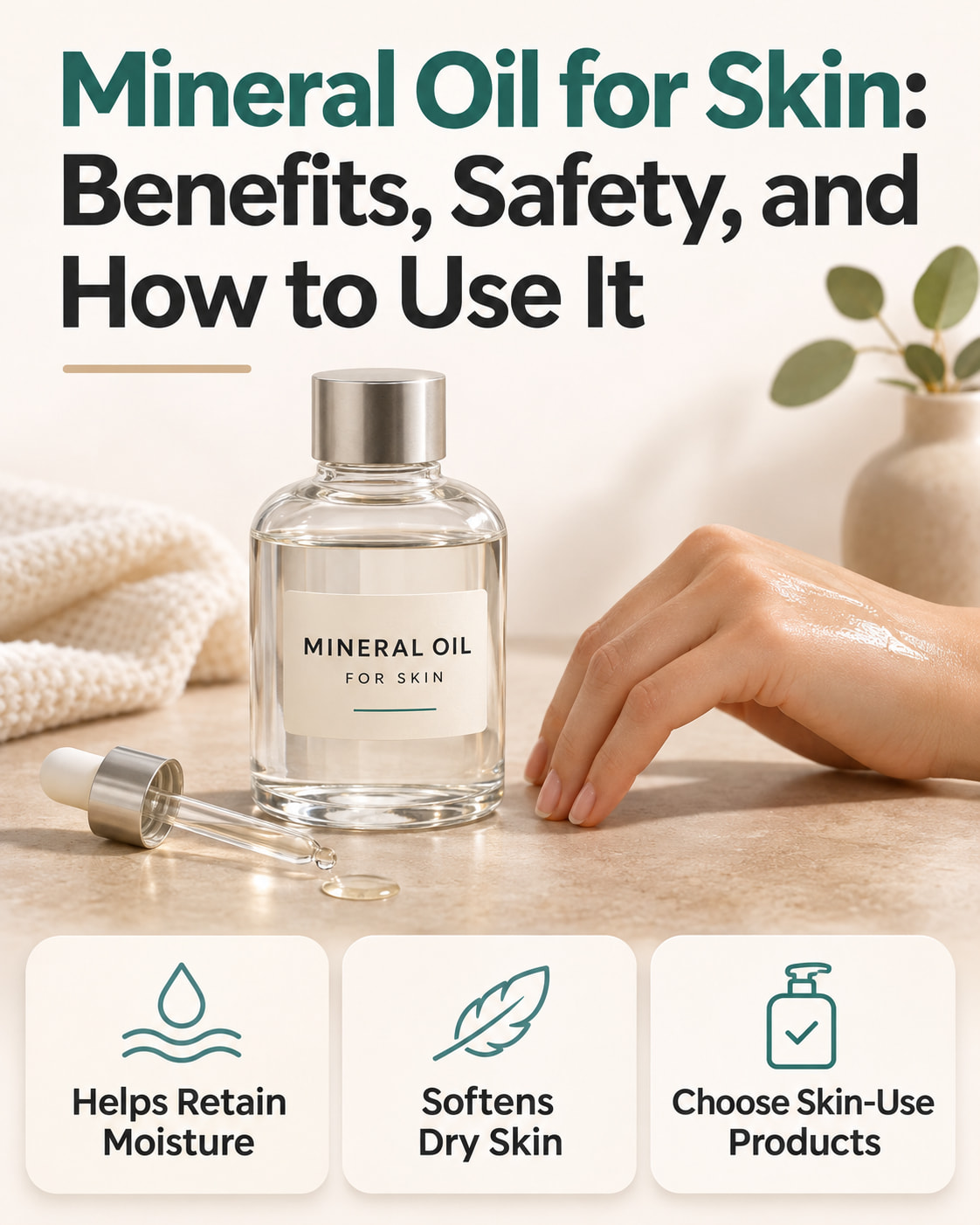
Mineral oil for skin can help reduce moisture loss and soften dry, rough areas. Highly refined mineral oil in products intended for skin use is generally well tolerated when used as directed.
The right product depends on your skin type, the full ingredient list, and how your skin responds. Choosing a fragrance-free formula, testing it on a small area, and applying it after washing can help you build a simple moisturizing routine.
What Is Mineral Oil?
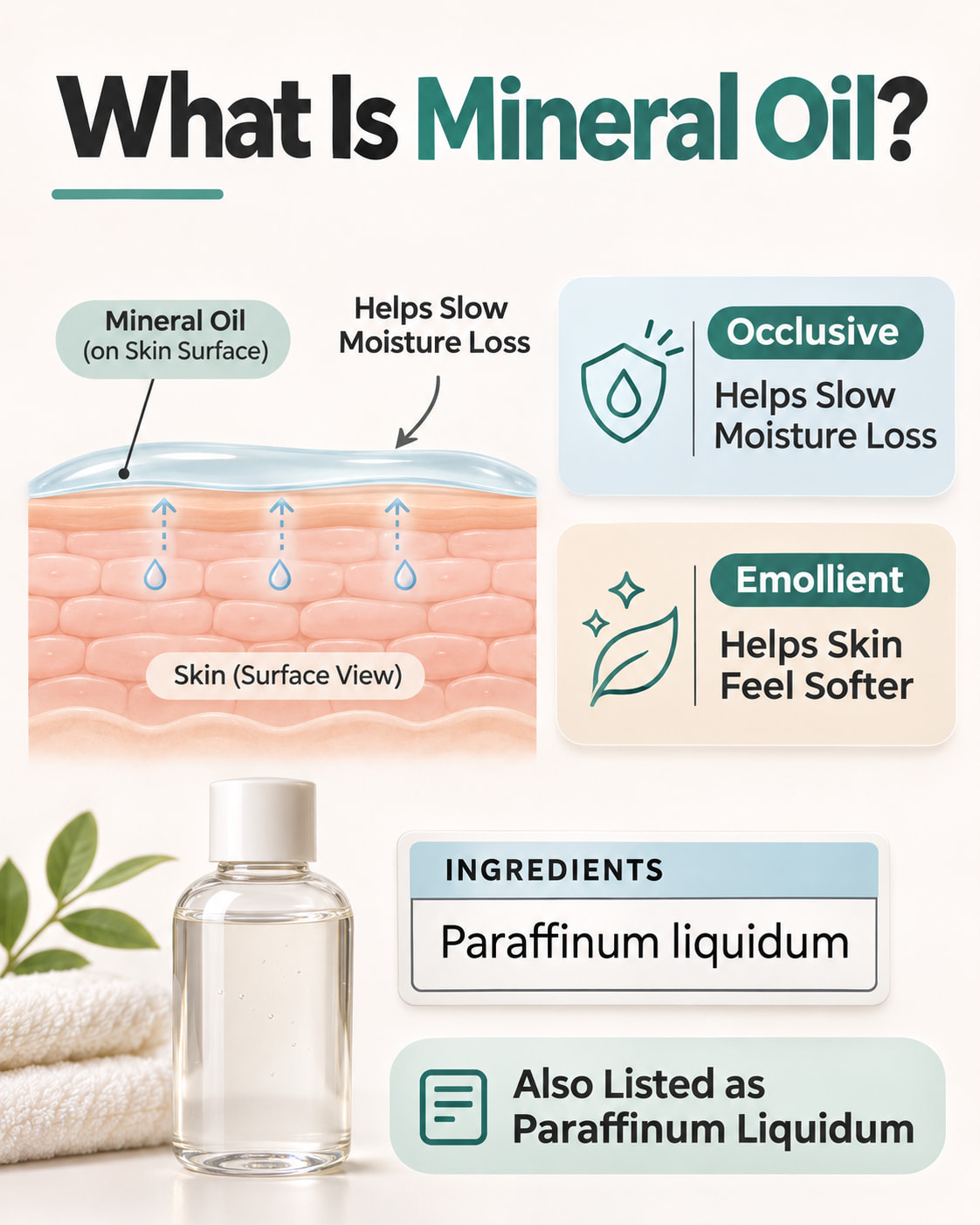
Mineral oil is a liquid mixture of purified hydrocarbons derived from petroleum. In skin care, it may appear on ingredient lists as mineral oil, Paraffinum liquidum, or liquid paraffin.
It has two main functions:
- Occlusive: It helps slow water loss from the skin.
- Emollient: It helps the skin feel smoother and softer.
Pure mineral oil does not contain water. Its main moisturizing role is to help retain water already present in your skin. In a cream or lotion, it works alongside the product’s other ingredients.
The word “mineral” does not mean that it supplies your skin with nutritional minerals.
Benefits of Mineral Oil for Skin
Helps Reduce Moisture Loss
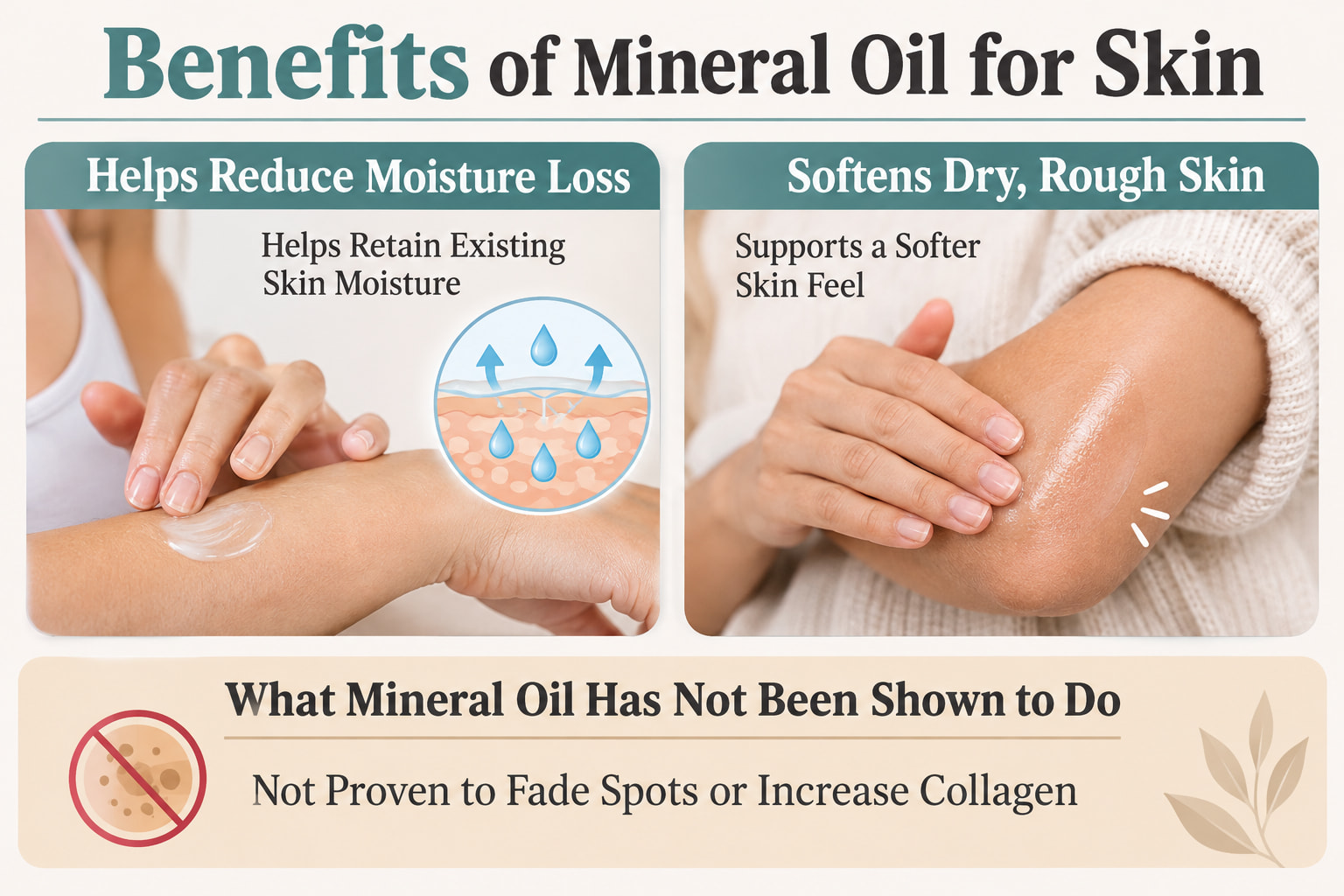
Mineral oil leaves a film that slows moisture evaporation. This can be useful when your skin feels dry after bathing, frequent handwashing, or exposure to cold, dry weather.
The American Academy of Dermatology’s dry-skin guidance, updated in January 2026, includes mineral oil among ingredients to look for in a cream or ointment. It also recommends applying moisturizer while your skin is still damp.
For example, if your lower legs feel tight after a shower, applying a suitable moisturizer before they dry completely can help retain moisture.
Softens Dry, Rough Skin
Mineral oil’s emollient properties can make rough areas feel smoother. It may be useful in products for dry hands, elbows, legs, and other areas that need regular moisturizing.
A small clinical trial published in 2004 compared mineral oil with virgin coconut oil in 34 people with mild to moderate dry skin. Participants applied one of the oils to their legs twice daily for two weeks. Both groups showed improved skin hydration, with broadly comparable results.
The study was small and short. It supports mineral oil’s moisturizing role, but it does not establish that it works better than every other moisturizer or suits everyone.
What Mineral Oil Has Not Been Shown to Do
The evidence supports moisture retention and skin softness. It does not establish plain mineral oil as a way to fade dark spots, remove scars, increase collagen, or permanently reverse wrinkles.
It also should not replace a care plan for acne, eczema, or another skin condition.
Is Mineral Oil Safe for Skin?
Highly Refined Skin Care Oil Has a Different Safety Profile
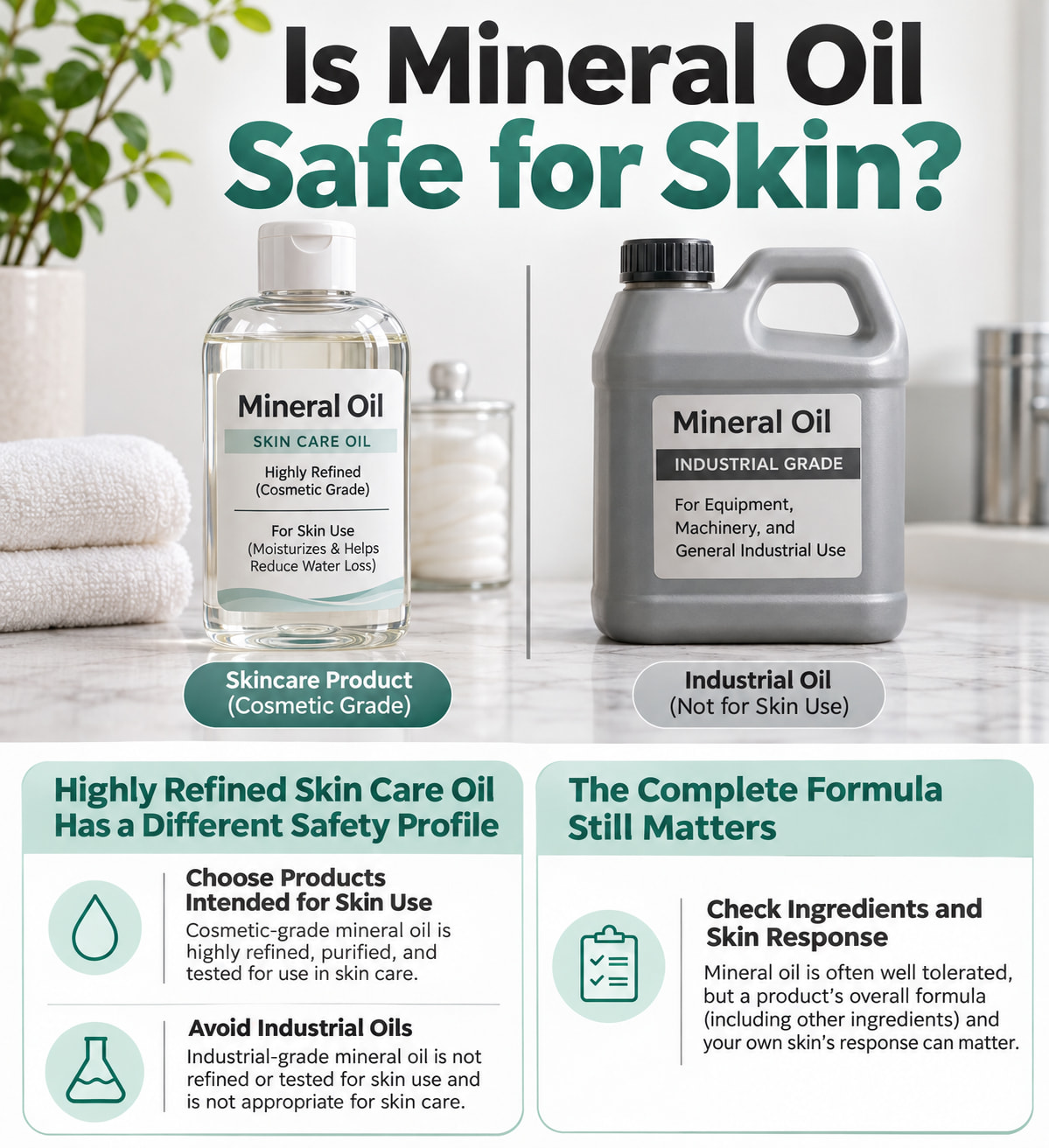
The type of mineral oil matters. Products formulated for cosmetic or pharmaceutical skin use contain refined ingredients with a different safety profile from untreated industrial oils.
A German Federal Institute for Risk Assessment review, published in 2018, concluded that health risks were not expected from skin application of the highly refined mineral oils covered by its assessment. Those oils met specified purity requirements.
The National Cancer Institute also distinguishes untreated or mildly treated industrial mineral oils from the highly refined oils typically used in cosmetics. Its information about cancer risks from untreated oils does not cover highly refined products.
Choose a product labeled for skin use. Industrial lubricants and oils intended for unrelated purposes are not substitutes.
The Complete Formula Still Matters
A reassuring ingredient safety profile does not guarantee that every product will suit your skin.
Fragrance, preservatives, or other ingredients may cause irritation or an allergic reaction. Even a simple product can feel uncomfortable on some people’s skin. Pay attention to the entire ingredient list and your response after application.
Does Mineral Oil Clog Pores?
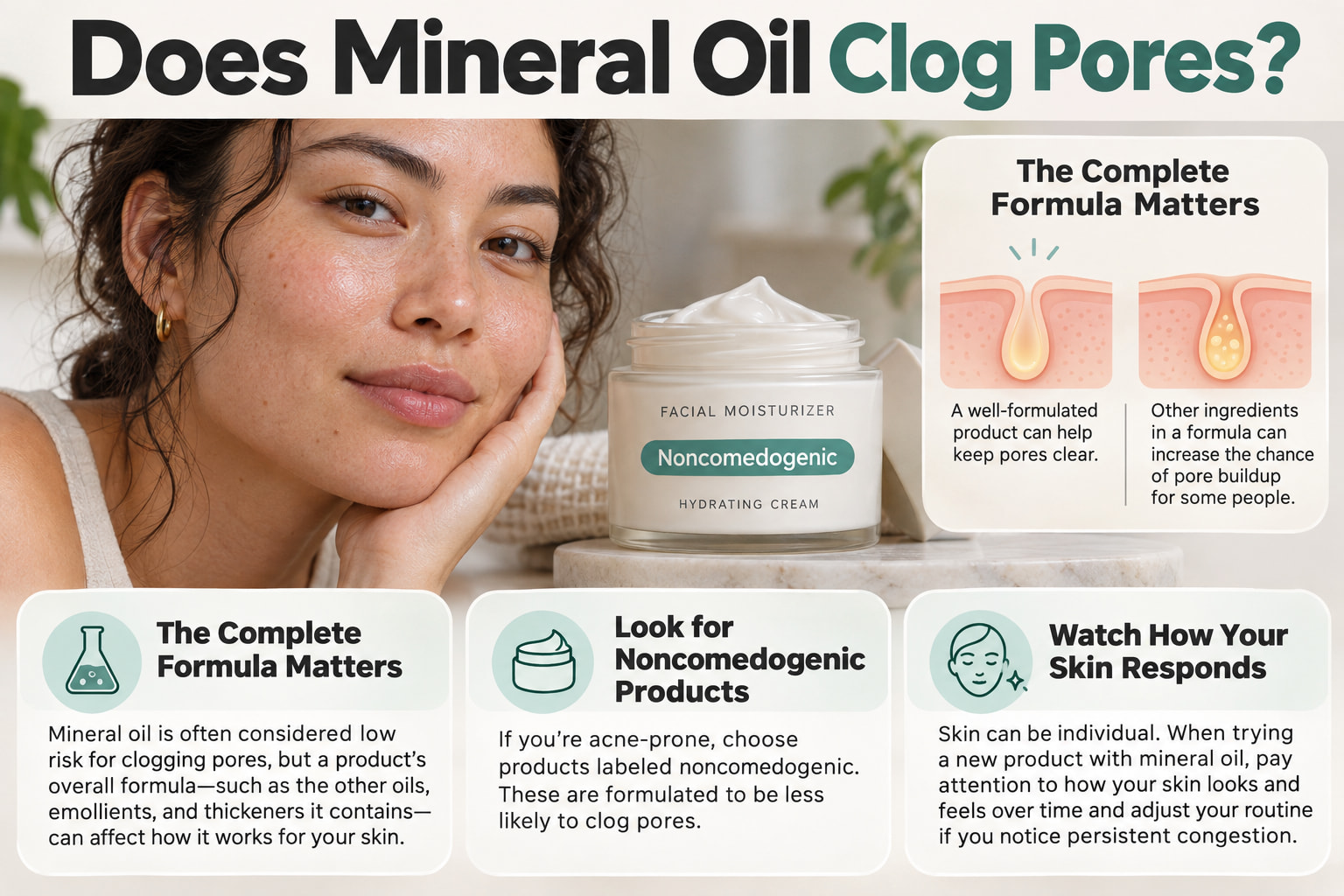
Mineral oil does not automatically make a product pore-clogging. Older research is reassuring about cosmetic mineral oil, but it cannot guarantee that every formula will be suitable for acne-prone skin.
The American Academy of Dermatology recommends looking for moisturizers labeled noncomedogenic, oil-free, or “won’t clog pores” when you have acne.
If you want a mineral-oil-containing product, look for a finished formula labeled noncomedogenic. If it feels too greasy or you notice new bumps after introducing it, stop using it and reconsider the product.
You can also choose different textures for different areas. A rich body moisturizer may feel comfortable on dry legs while being less appealing on an oily face.
How to Choose a Mineral Oil Skin Care Product
Check the label before choosing a bottle or moisturizer.
| What to check | What to look for |
|---|---|
| Intended use | Clear directions for application to the skin |
| Ingredients | Mineral oil, Paraffinum liquidum, or liquid paraffin |
| Fragrance | A fragrance-free formula, especially for sensitive or easily irritated skin |
| Acne suitability | A noncomedogenic formula if you are prone to breakouts |
| Texture | A cream, lotion, or oil you find comfortable enough to use consistently |
“Unscented” does not always mean fragrance-free. A product may contain ingredients that mask its scent.
You also do not need to buy a separate oil if your usual moisturizer already contains mineral oil and keeps your skin comfortable.
How to Use Mineral Oil for Skin
1. Test a Small Area First
Before using a new product widely, check how your skin responds.
The AAD’s product-testing guidance recommends applying a product to a small area, such as the underside of your arm, twice daily for seven to 10 days. Use the amount and contact time you would normally use.
If redness, itching, or swelling develops, wash the product off and stop using it. A home tolerance check cannot rule out every reaction and is different from medical allergy testing.
2. Apply After Gentle Washing
Wash with lukewarm water and a gentle cleanser. Pat your skin lightly so it remains slightly damp.
Apply your mineral-oil-containing moisturizer, or a skin-use oil according to its directions. Moisturizing soon after washing helps retain water before it evaporates.
3. Spread Gently and Follow the Label
Smooth the product over the area without vigorous rubbing. Use the amount recommended on the label; there is no single number of drops that suits every product or body area.
A small amount of plain oil may feel different from a cream containing mineral oil. Adjust your product choice if the texture is uncomfortable or excessively greasy.
4. Fit It Into Your Existing Routine
Follow the product’s directions for reapplication and pay attention to when your skin feels dry.
If you use a prescription cream, ask your pharmacist or dermatologist how to fit the moisturizer around it. Do not mix an oil into prescribed products or change their application instructions on your own.
Side Effects and Precautions
Watch for Irritation or New Bumps
Possible reactions to an emollient product include persistent stinging, redness, itching, a rash, or inflamed hair follicles. A heavy formula may also aggravate breakouts in some people.
Stop using a new product if these problems develop. Seek advice if the reaction is significant or does not settle.
Keep Ordinary Skin Products Out of Your Eyes
Mineral oil intended for skin care is not an eye product. Keep it out of your eyes and follow all label warnings.
Do not use it as a home-care solution for deep wounds, animal bites, or serious burns. These situations may need medical assessment.
Keep Oily Fabrics Away From Flames
Oil and moisturizer residue can transfer to clothing, bedding, or dressings.
The NHS Specialist Pharmacy Service’s 2026 guidance explains that contaminated fabrics can catch fire more easily and burn more intensely when exposed to a flame or other ignition source.
Keep these fabrics away from cigarettes, open flames, and heat sources. Wash clothing and bedding regularly, while recognizing that washing may not remove all residue. This precaution applies to many emollients, including paraffin-free products.
Prevent Slips
Oily residue can make a shower, bathtub, or tiled floor slippery. Clean spills promptly and take care when applying body oil near wet surfaces.
When to See a Dermatologist
Arrange an assessment if:
- Dryness persists despite a consistent moisturizing routine.
- Your skin becomes painful, repeatedly cracked, or bleeding.
- Products regularly cause burning or stinging.
- A new rash or worsening breakouts continue after you stop the suspected product.
Persistent dry skin can sometimes be associated with an underlying skin condition. A dermatologist can help identify the cause and recommend a suitable routine.
Frequently Asked Questions
Can You Use Mineral Oil on Your Face?
Yes, a product formulated for facial skin may be suitable, particularly for dry areas. Choose a texture that feels comfortable, test it first, and look for a noncomedogenic formula if you have acne-prone skin.
Can You Use Mineral Oil on Your Skin Every Day?
Daily use may be appropriate when the product is intended for regular skin application and your skin tolerates it. Follow the label and adjust your routine if irritation or breakouts appear.
Is Mineral Oil the Same as Petroleum Jelly?
No. Mineral oil is liquid, while petroleum jelly, also called petrolatum, is semisolid. Both are petroleum-derived ingredients that can help retain moisture, but they have different textures and should not be treated as identical.
Is Baby Oil the Same as Mineral Oil?
Some baby oils contain mineral oil with added fragrance or other ingredients. Read the label rather than assuming that every baby oil is pure mineral oil, fragrance-free, or suitable for sensitive facial skin.
Can Mineral Oil Help Skin That Is Dry From Eczema?
A suitable mineral-oil-containing moisturizer may help retain moisture, but eczema often requires more than moisturizing alone. Ask your clinician which formula fits your care plan, especially if the skin is inflamed, cracked, or weeping.
Does Mineral Oil Lighten Skin?
There is no good evidence that plain mineral oil lightens your natural skin color or fades dark spots. Its established role is moisturizing. Skin that feels smoother after application does not mean pigmentation has changed.
Conclusion
Mineral oil can be a useful ingredient for keeping dry skin softer and helping it retain moisture. Choose a product intended for skin use, check the full formula, and test it before applying it widely.
Start with a fragrance-free option that feels comfortable after washing. If dryness or irritation persists, get advice about a routine suited to your skin.
This content is for informational purposes only and not medical advice.
References
- American Academy of Dermatology: Dermatologists’ tips for relieving dry skin.
- Agero and Verallo-Rowell: Clinical comparison of coconut oil and mineral oil for dry skin.
- BfR: Safety assessment of highly refined mineral oils in cosmetics.
- National Cancer Institute: Untreated and mildly treated mineral oils.
- American Academy of Dermatology: Moisturizer and acne.
- American Academy of Dermatology: Testing skin care products.