
Microneedling for hair loss may improve hair growth in people with pattern hair loss, particularly when combined with topical minoxidil. However, results are not guaranteed, and risks include irritation, infection, and scarring.
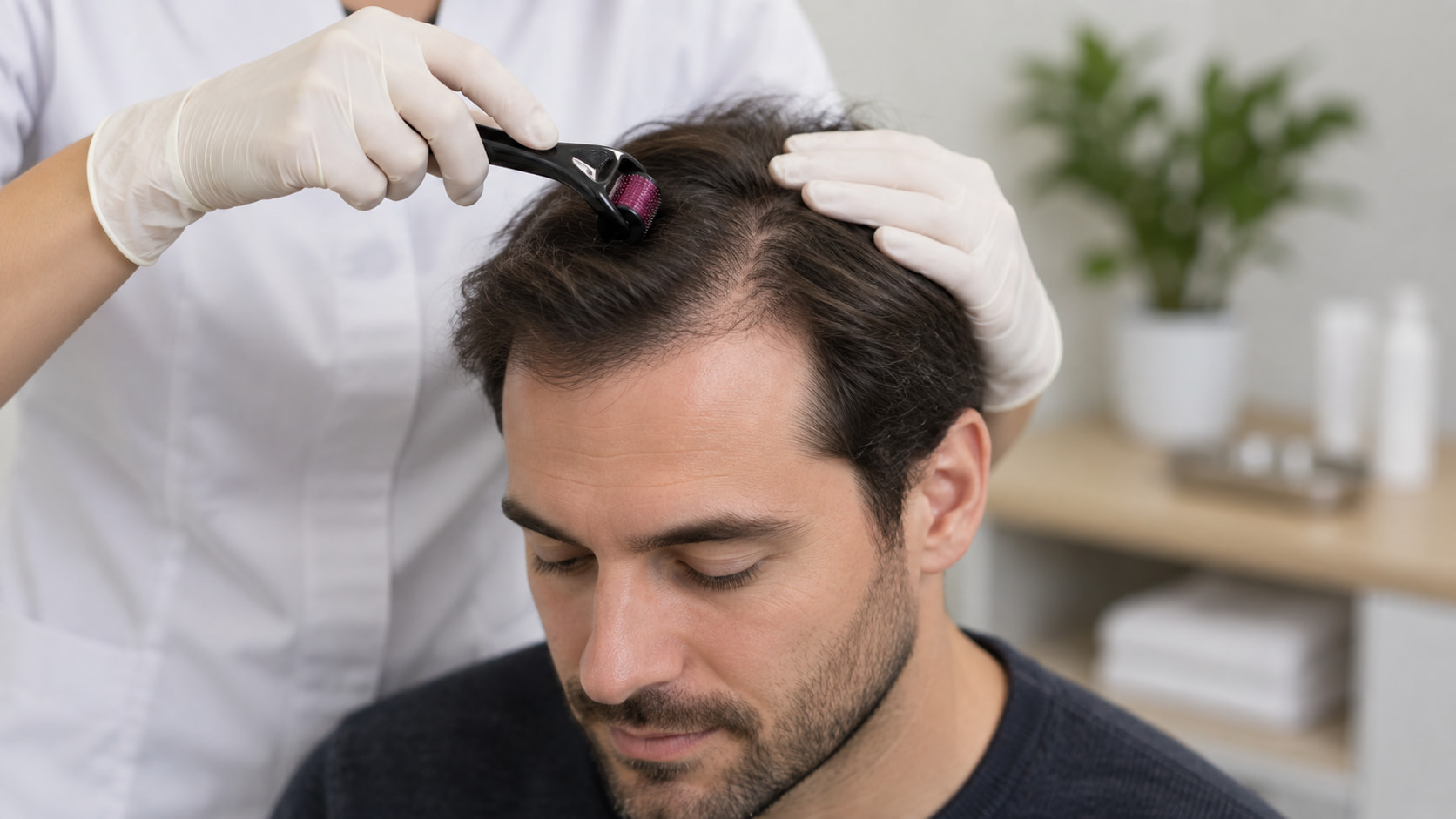
Before buying a scalp roller or booking sessions, find out why your hair is thinning. According to the American Academy of Dermatology’s hair-loss guidance, microneedling can worsen some conditions. A diagnosis, an experienced healthcare professional, and a clear aftercare plan are important starting points.
What Is Microneedling for Hair Loss?
Scalp microneedling involves making small, controlled punctures in the skin with fine needles. Devices include rollers, stamps, and motorized pens. These differ in how they enter the skin and how their settings are controlled.
Researchers propose that the skin’s repair response may create signals that support activity around hair follicles. Microneedling can also increase the penetration of topical products, which may contribute to its effects when combined with medication. These possible mechanisms do not mean that every thinning area will regrow hair.
Conventional microneedling uses needles without added heat. Radiofrequency microneedling adds heat and has a different risk profile, discussed below.
Does Microneedling for Hair Loss Work?
Microneedling With Minoxidil
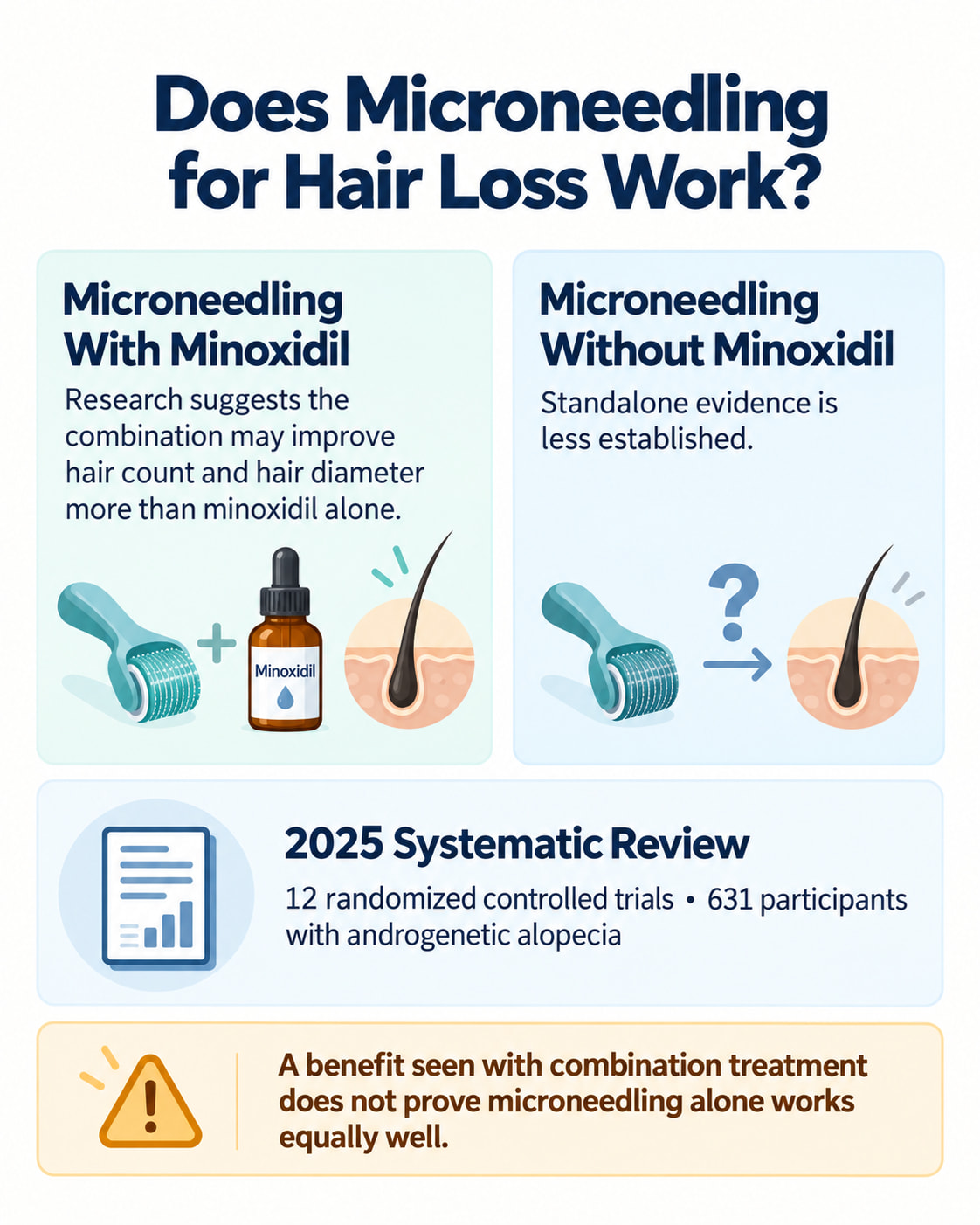
The most encouraging evidence concerns microneedling as an addition to topical minoxidil—not as a replacement.
A systematic review published in March 2025 identified 12 randomized controlled trials involving 631 people with androgenetic alopecia, also called pattern hair loss. Eleven trials contributed to the pooled analyses. Overall, the combination improved hair count and hair diameter compared with minoxidil alone.
However, hair-count results varied substantially between studies. Devices, protocols, and participants also differed. Side effects were more frequent with the combination, although reported events were generally mild or temporary. These findings support a possible additional benefit, not a guaranteed personal result.
Microneedling Without Minoxidil
Evidence for microneedling alone is less established.
A systematic review published in Dermatology and Therapy found generally favorable results across hair-loss studies but described the evidence as relatively low quality. The authors called for stronger trials to clarify standalone benefits, best practices, and long-term safety.
The practical distinction matters: a study showing that microneedling plus minoxidil outperformed minoxidil alone does not prove that microneedling by itself is better than medication.
What the Research Still Cannot Tell Us
Important uncertainties remain about the best device, needle depth, session interval, and maintenance schedule. Long-term results after stopping microneedling are also insufficiently established.
Be cautious with claims promising a specific percentage of regrowth, permanent results, or success after a fixed number of appointments.
Who May Benefit From Microneedling for Hair Loss?
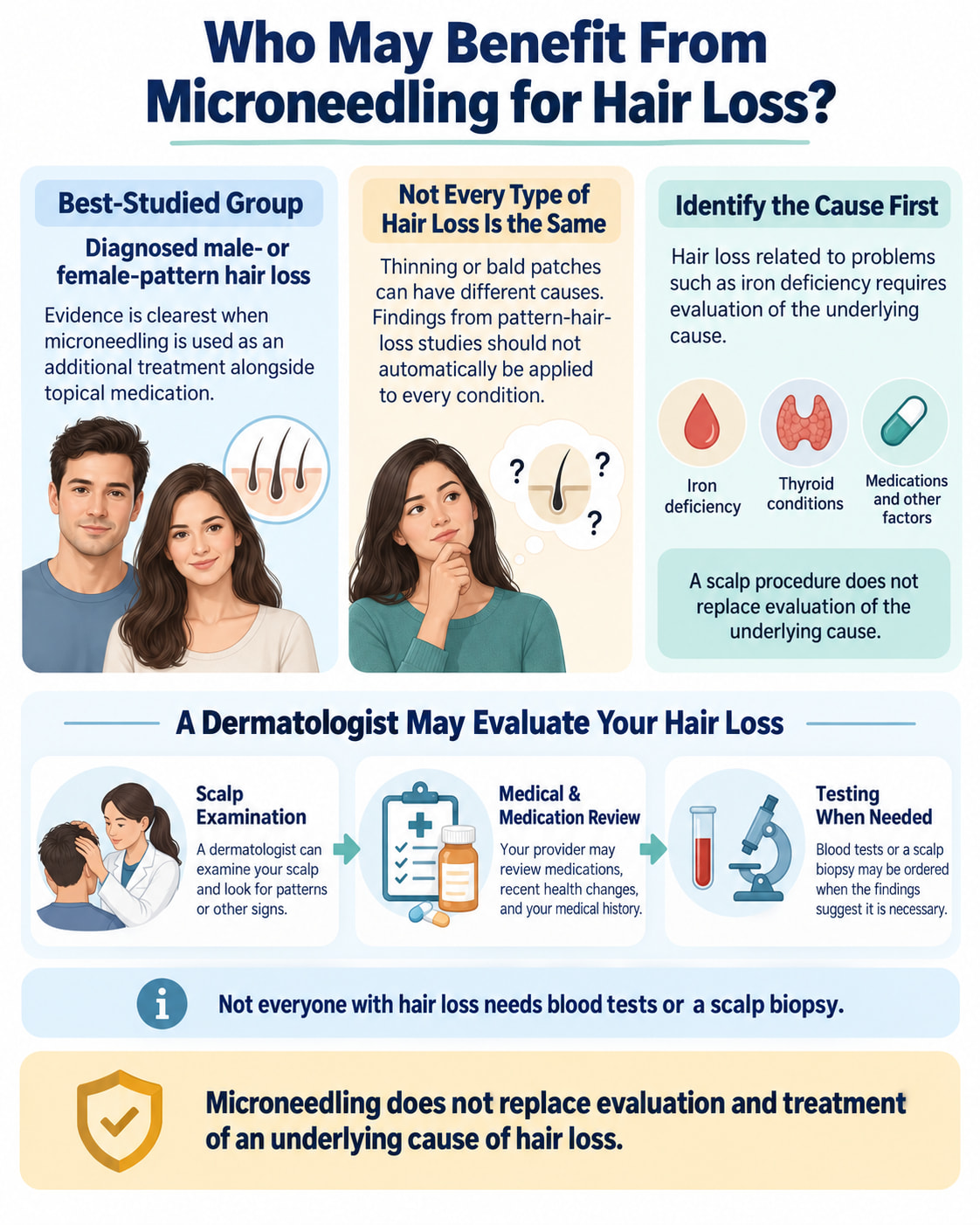
The clearest evidence applies to people with diagnosed male- or female-pattern hair loss, particularly those considering an additional procedure alongside topical medication. Findings from these studies should not automatically be applied to every cause of thinning or bald patches.
For example, hair loss associated with iron deficiency requires evaluation of the deficiency and its cause. A scalp procedure does not replace that assessment. Cleveland Clinic emphasizes identifying the underlying problem before spending time and money on microneedling.
A dermatologist may examine your scalp, review medications and recent health changes, and order testing when the findings suggest it is necessary. Not everyone needs blood tests or a scalp biopsy.
What Happens During a Professional Scalp Microneedling Session?
A professional appointment generally begins with a consultation and examination. The clinician reviews your health history, discusses expectations, and may take baseline photographs.
During the procedure, the scalp is cleaned. A topical numbing product may be used to reduce discomfort, followed by the selected microneedling device. The details depend on the area involved and the clinician’s plan.
Ask whether a new needle cartridge is used for every session, including repeat appointments for the same person. The FDA warns that reusing cartridges can spread infection.
Aftercare and Topical Products
Get written instructions about washing your scalp, sun exposure, hair products, and restarting topical medications. Skin may become more sensitive to products after microneedling, particularly those containing irritating ingredients such as alcohol or exfoliating acids.
Do not assume that applying minoxidil, essential oils, or a “growth serum” immediately afterward will improve results. Ask the clinician what belongs in your aftercare plan and what should stay off your scalp.
Questions to Ask Before Paying
Request an itemized estimate covering the consultation, planned sessions, follow-up visits, and any medication or add-on procedure.
Also ask how progress will be measured, when the plan will be reviewed, and what happens if you do not improve. A useful question is: “What additional benefit do you expect from microneedling compared with my current plan?”
How Long Does Microneedling Take to Work for Hair Loss?
Research measures changes over months, not days. An early randomized pilot study in men found greater improvement with microneedling plus minoxidil after 12 weeks than with minoxidil alone.
A separate randomized trial in women assessed outcomes through 24 weeks. These are study assessment periods—not deadlines by which everyone should expect visible regrowth.
Before starting, agree on a follow-up point and a way to compare results. Photographs taken with similar lighting, hair length, and positioning can make comparisons more useful. The women’s trial standardized these factors when evaluating progress.
Avoid judging the entire plan from one photograph or one day of shedding.
Is Microneedling for Hair Loss Safe?
Microneedling is not risk-free, even when performed professionally. Possible effects range from temporary discomfort to complications requiring medical attention. FDA and AAD guidance identify the following concerns.
| Type of concern | Possible effects |
|---|---|
| Temporary reactions | Redness, soreness, itching, pinpoint bleeding, bruising, or crusting |
| Complications | Infection, scarring, or persistent changes in skin color |
| Product sensitivity | Stinging or irritation when products are applied afterward |
Professional training, appropriate patient selection, infection-control practices, and following aftercare instructions help reduce avoidable risks. They do not eliminate every possibility of a complication.
Is Microneedling FDA-Approved for Hair Loss?
The FDA has not cleared any microneedling devices for hair loss, according to its microneedling safety information. It also has not cleared these devices for use with other products, including topical medications or platelet-rich plasma.
Clearance for facial scars or wrinkles does not establish clearance for scalp hair growth. Clinical research and FDA clearance are separate issues.
Radiofrequency Microneedling Has Additional Risks
On October, 2025, an FDA safety communication described reports of serious complications with certain uses of radiofrequency microneedling, including burns, scarring, fat loss, and nerve damage.
Those reports concern procedures that add heat. They should not be presented as the complication rate for conventional scalp microneedling. Ask exactly which procedure a clinic is offering rather than assuming all “microneedling” services are interchangeable.
Who Should Avoid Scalp Microneedling or Get Medical Advice First?
Microneedling may be unsuitable when you have:
- Active scalp problems: Infection, open sores, or an inflammatory skin condition needing assessment.
- Healing or scarring concerns: Poor wound healing, previous keloids, immune suppression, or uncontrolled diabetes.
- Bleeding or allergy concerns: A bleeding disorder, blood-thinning medication, or an allergy to device materials or numbing products.
Tell the clinician about pregnancy or breastfeeding and current or recent isotretinoin use. These require an individualized discussion before a procedure. Do not stop prescribed medication simply to qualify for microneedling.
Can You Try Microneedling for Hair Loss at Home?
At-home devices should not be assumed to provide the same benefits or safeguards as professional care.
The AAD’s microneedling guidance warns that overuse, excessive pressure, and accidentally puncturing the skin can cause irritation, infection, scarring, or changes in skin color and texture.
Cleveland Clinic also cautions against using professional-grade devices at home. Buying a longer-needle roller does not turn a home routine into a supervised medical procedure.
The safer starting point is a dermatology consultation—not copying someone else’s needle depth, pressure, or schedule.
When Should You See a Dermatologist About Hair Loss?
Arrange an assessment for sudden or unexplained hair loss, expanding bald patches, or thinning accompanied by burning, tenderness, significant itching, scaling, sores, or drainage. These features can indicate conditions that need a different approach from routine pattern-hair-loss care.
After microneedling, contact your provider for blistering, persistent bleeding, or swelling that does not settle. Seek prompt medical attention for worsening pain and redness, pus, or fever, which can signal a complication such as infection.
Do not assume worsening scalp symptoms mean the procedure is “working.”
Frequently Asked Questions
Does Microneedling Work for Women With Hair Loss?
It may help some women with female-pattern hair loss when combined with topical minoxidil. A 2022 randomized trial enrolled 120 premenopausal women with mild-to-moderate female-pattern hair loss and found greater improvement in hair density with the combination than with minoxidil alone at 24 weeks. The study does not establish the same benefit for every woman or every cause of thinning.
Does Scalp Microneedling Hurt?
It can be uncomfortable. Clinicians may use topical numbing medication, but some tenderness or soreness can still occur. Tell the provider about anesthetic allergies and discuss pain management before the appointment.
Can You Apply Minoxidil Immediately After Microneedling?
Do not assume that you should. Research protocols differ, and some trials temporarily withheld patients’ usual minoxidil applications after a session. That does not establish one universal waiting period. Follow the treating clinician’s instructions about when to restart it rather than combining the two on your own.
Is a Derma Roller Better Than a Microneedling Pen?
There is no clearly established winner for everyone. The 2025 review did not find a statistically significant difference between rolling and motorized-device subgroups. That does not prove that all devices, settings, or techniques are equally effective or safe.
Are Microneedling Results Permanent?
Permanent results have not been established, and the best long-term maintenance schedule remains uncertain. Also, any benefit from minoxidil generally requires continued use; stopping that medication can lead to losing its benefits. Discuss both parts of the plan before starting.
Can Microneedling Make Hair Loss Worse?
It can worsen some underlying conditions, according to the AAD. Improper technique can also injure the scalp or cause infection and scarring. Increased discomfort, sores, or worsening thinning should prompt a reassessment—not more aggressive needling.
Conclusion
Microneedling for hair loss may offer an additional benefit alongside topical minoxidil for pattern hair loss. Evidence is less certain for microneedling alone, and questions remain about long-term results and ideal protocols.
Before buying a device or committing to sessions, schedule a scalp assessment. Ask what is causing your thinning, what additional benefit is realistic, and how safety and progress will be monitored.
This content is for informational purposes only and not medical advice.
References
- American Academy of Dermatology: Hair loss—diagnosis and treatment.
- Ahmed and colleagues: Systematic review and meta-analysis of microneedling plus minoxidil for androgenetic alopecia.
- English and colleagues: Microneedling and its use in hair-loss disorders—a systematic review.
- Dhurat and colleagues: Randomized pilot study of microneedling in androgenetic alopecia.
- Liang and colleagues: Randomized trial comparing minoxidil-based approaches for female-pattern hair loss.
- U.S. Food and Drug Administration: Microneedling benefits, risks, and safety.
- American Academy of Dermatology: Microneedling benefits, precautions, and at-home risks.
- American Academy of Dermatology: Hair-loss signs and symptoms.