
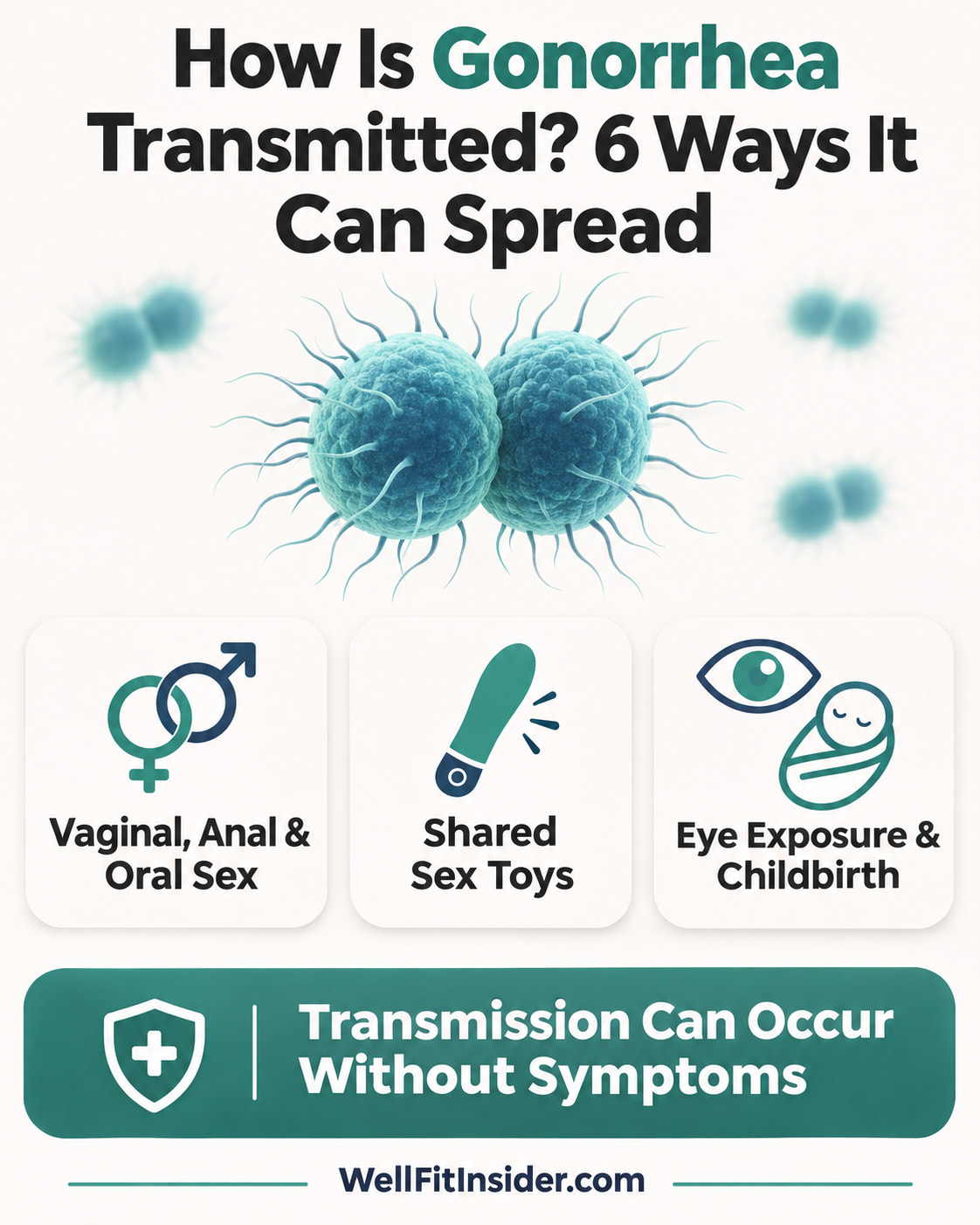
Gonorrhea is transmitted mainly through vaginal, anal, or oral sex with someone who has the infection. It can also spread through shared sex toys, infected fluids reaching the eyes, and from a pregnant person to their baby during childbirth.
Knowing how gonorrhea is transmitted matters because a person can pass it on without noticeable symptoms. According to CDC guidance, testing may be needed even when you and your partner feel well.
What Is Gonorrhea?
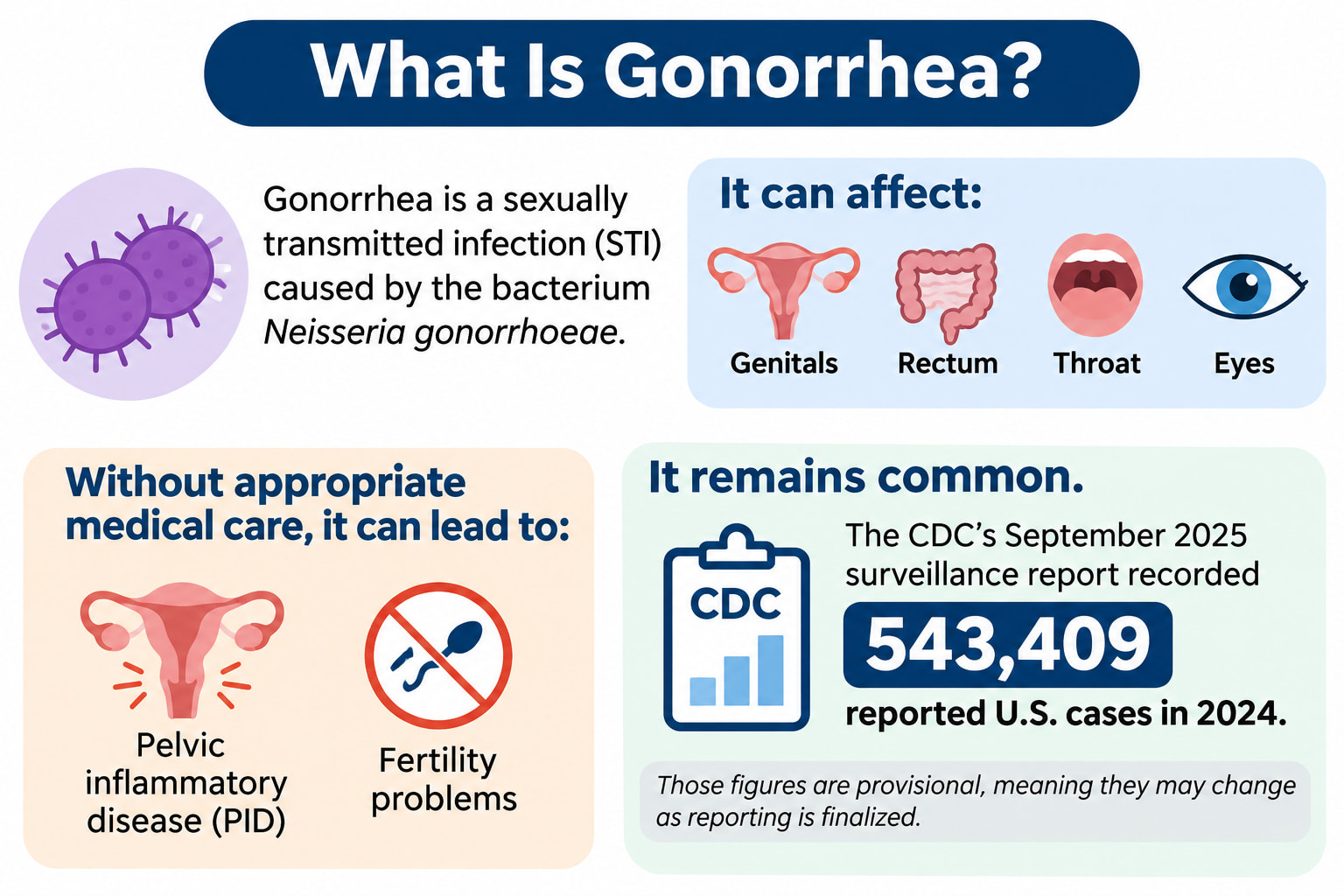
Gonorrhea is a sexually transmitted infection, or STI, caused by the bacterium Neisseria gonorrhoeae. It can affect the genitals, rectum, throat, and eyes. Without appropriate medical care, it can lead to complications such as pelvic inflammatory disease and fertility problems.
It remains common. The CDC’s September 2025 surveillance report recorded 543,409 reported U.S. cases in 2024. Those figures are provisional, meaning they may change as reporting is finalized.
How Is Gonorrhea Transmitted?
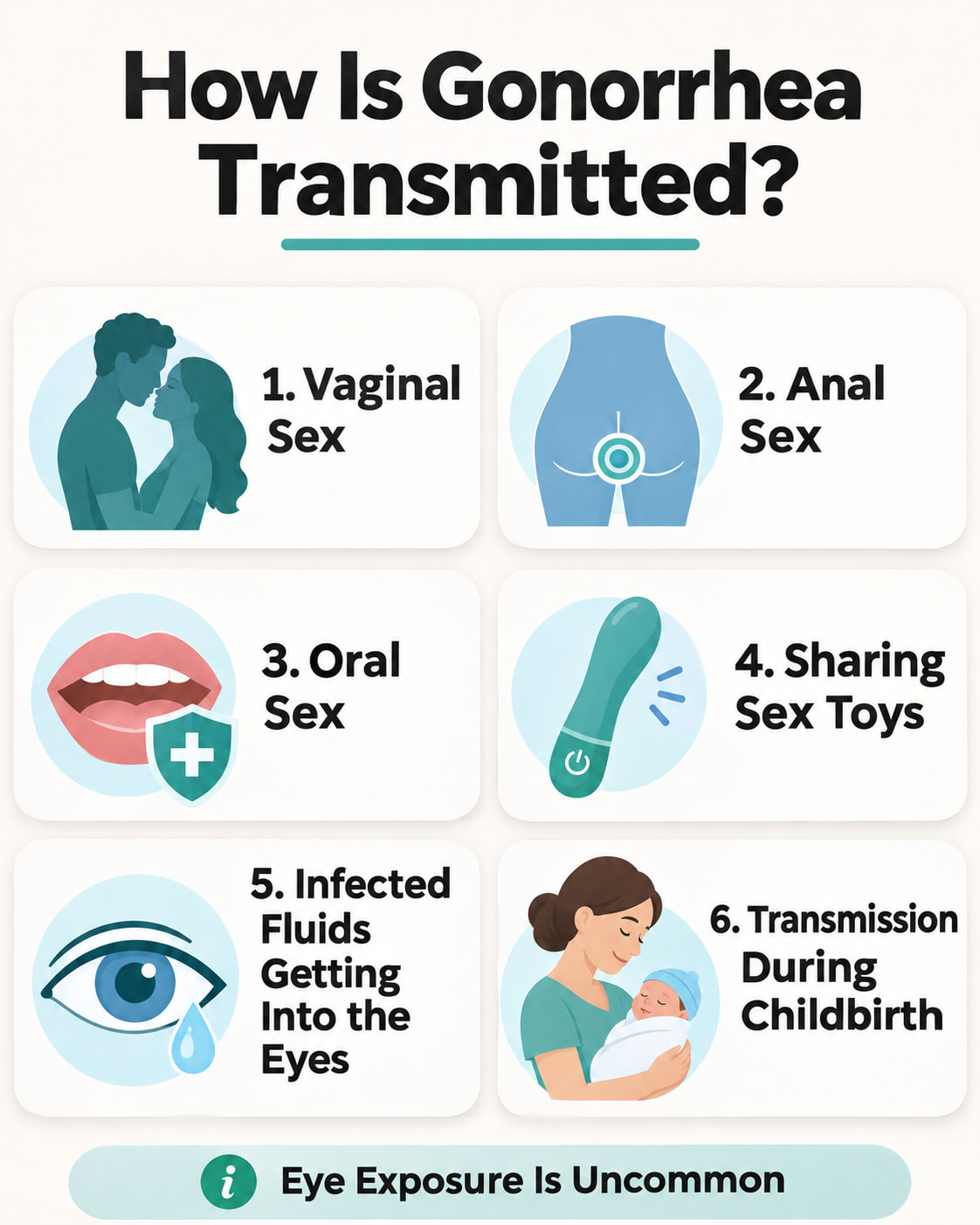
The BASHH patient leaflet, revised in February 2026, identifies the following six routes. Vaginal, anal, and oral sex are the main routes; eye exposure is uncommon.
1. Vaginal Sex
During vaginal sex, gonorrhea bacteria can reach susceptible tissue in a partner’s genital tract, including the cervix or urethra. The urethra is the tube that carries urine out of the body.
Ejaculation is not required for transmission. Pulling out before ejaculation therefore does not reliably prevent gonorrhea.
2. Anal Sex
Gonorrhea can pass between the penis and rectum during anal sex. Either the insertive or receptive partner can acquire an infection, depending on where the bacteria are present.
Rectal gonorrhea may cause discharge, itching, soreness, or bleeding. It can also cause no symptoms, so the absence of discomfort does not rule it out.
3. Oral Sex
Oral sex can transmit gonorrhea in more than one direction:
- Giving oral sex: Exposure to an infected partner’s genitals can result in throat infection.
- Receiving oral sex: A partner with throat gonorrhea can pass the infection to your genitals.
- Oral contact with the anus: This may also provide a route for transmission.
Throat gonorrhea often causes no symptoms. Oral sex can transmit the infection even when vaginal or anal intercourse does not occur.
4. Sharing Sex Toys
Sex toys can carry infected secretions from one person to another when they are shared without appropriate cleaning or a fresh condom cover.
If you share toys, wash them according to the manufacturer’s instructions and use a new condom before another person uses them. This is a different situation from sharing ordinary household objects.
5. Infected Fluids Getting Into the Eyes
Gonorrhea can reach the eyes when infected genital secretions enter them directly or are transferred on fingers.
For example, someone could touch infected genitals and then rub an eye. This can transfer bacteria from another person or from their own existing genital infection.
Although uncommon, eye involvement needs prompt attention. Red or painful eyes, especially with pus after a possible exposure, warrant urgent medical assessment.
6. Transmission During Childbirth
A baby can be exposed to gonorrhea during delivery if the pregnant person has the infection. This can cause a serious eye infection in the newborn.
Prenatal testing and appropriate medical care help reduce this risk. If you are pregnant and think you may have been exposed, contact your prenatal care team promptly.
What Does Not Spread Gonorrhea?

Ordinary social contact does not spread gonorrhea. You do not acquire it from:
- Toilet seats.
- Swimming pools.
- Hugging.
- Sharing food.
- Ordinary sharing of towels.
These activities differ from sexual exposure or sharing contaminated sex toys. Deep kissing has a separate evidence question, addressed in the FAQs below.
When Should You Get Tested for Gonorrhea?
Contact a healthcare professional or sexual health clinic if a partner has gonorrhea, you develop possible symptoms, or you are concerned about a sexual exposure. Symptoms can include burning when urinating, unusual genital discharge, or rectal discomfort.
Do not wait for symptoms before seeking advice after a partner’s positive diagnosis.
Testing Should Match the Areas Exposed
Tell the clinician about oral, vaginal, and anal sex so they can consider the appropriate samples.
| Area being checked | Samples that may be used |
|---|---|
| Genitals | Urine or a genital swab, depending on anatomy and the test |
| Throat | Throat swab |
| Rectum | Rectal swab |
A urine test alone does not assess the throat or rectum. For example, if your concern involves oral sex, ask whether a throat swab is appropriate.
A Very Early Negative Result May Need Repeating
Testing immediately after exposure may miss an infection. The BASHH testing guideline notes that a negative test within two weeks of contact with someone who has gonorrhea cannot reliably exclude infection.
A clinician may recommend another test after that window. This does not mean you should delay asking for help: symptoms, pregnancy, or a partner’s diagnosis call for prompt assessment.
How to Reduce Gonorrhea Transmission
Practical steps include:
- Use condoms correctly throughout vaginal and anal sex.
- Use barriers during oral sex. A condom can cover the penis, and a dental dam can cover the vulva or anus.
- Avoid sharing sex toys without cleaning them and changing the condom cover.
- Discuss testing with your clinician, including which body sites need checking.
- Make sure partners receive appropriate medical care after a diagnosis.
Condoms and other barriers reduce risk, but they do not guarantee that every possible exposure is prevented.
How Long Can Gonorrhea Spread After Treatment?
If you are diagnosed, follow your clinician’s instructions and complete the prescribed medication. Feeling better does not automatically mean it is time to resume sex.
CDC follow-up guidance advises avoiding sexual activity for seven days after completing prescribed treatment and until partners have also completed care and symptoms have resolved. Each partner needs to complete the required waiting period. This pause includes oral sex; using a condom does not replace it.
Two follow-up tests may serve different purposes:
| Follow-up | Purpose |
|---|---|
| About three months after treatment | Retesting to detect another infection, even if partners received care |
| 7–14 days after treatment for throat gonorrhea | An earlier check to confirm the throat infection has cleared |
Ask your clinician which follow-up applies to you. Partners from the previous 60 days need assessment. If the last contact was earlier, the most recent partner still needs evaluation.
When to Get Medical Help
Arrange a sexual health assessment for a possible exposure, a partner’s diagnosis, or symptoms suggesting an STI.
Seek urgent medical assessment if you may have gonorrhea and develop red or painful eyes, pus from the eyes, fever, joint pain or swelling, or a new rash. NHS guidance identifies these as possible signs of a more serious infection.
Frequently Asked Questions
Can You Get Gonorrhea From Oral Sex?
Yes. Giving or receiving oral sex can transmit gonorrhea between the throat and genitals. A person can have throat gonorrhea without a sore throat or other noticeable symptoms.
Can Gonorrhea Spread Through Kissing?
Some research suggests that deep or tongue kissing may contribute to throat gonorrhea. However, the evidence is limited, and the likelihood of transmission is not clearly established. It is too definite to say that deep kissing can never transmit it.
Can Someone Transmit Gonorrhea Without Symptoms?
Yes. A person can pass gonorrhea to a partner without knowing they have it. Symptoms alone cannot tell you whether a partner has an infection or whether testing is needed.
Can Gonorrhea Spread Without Ejaculation?
Yes. Ejaculation is not necessary for bacteria to pass during sexual contact. Withdrawal therefore does not reliably protect against gonorrhea.
Can You Get Gonorrhea From a Toilet Seat?
No. Public health guidance does not identify toilet seats as a transmission route. Ordinary activities such as hugging, swimming, and sharing food do not spread it either.
Can You Get Gonorrhea More Than Once?
Yes. A previous infection does not protect you from another one. Reinfection can happen through a partner who still has the infection or a new exposure.
Does a Positive Gonorrhea Test Prove a Partner Was Unfaithful?
No. A positive result alone does not establish when the infection began or who had it first. Because infections can go unnoticed, CDC advises discussing the diagnosis without automatically assigning blame. Focus on testing, partner communication, and appropriate care.
Conclusion
Understanding how gonorrhea is transmitted helps you recognize meaningful exposures and choose the right next step. If a partner has tested positive or you are concerned about an exposure, contact a sexual health clinic and explain which types of contact occurred so testing can match your situation.
This content is for informational purposes only and not medical advice.