
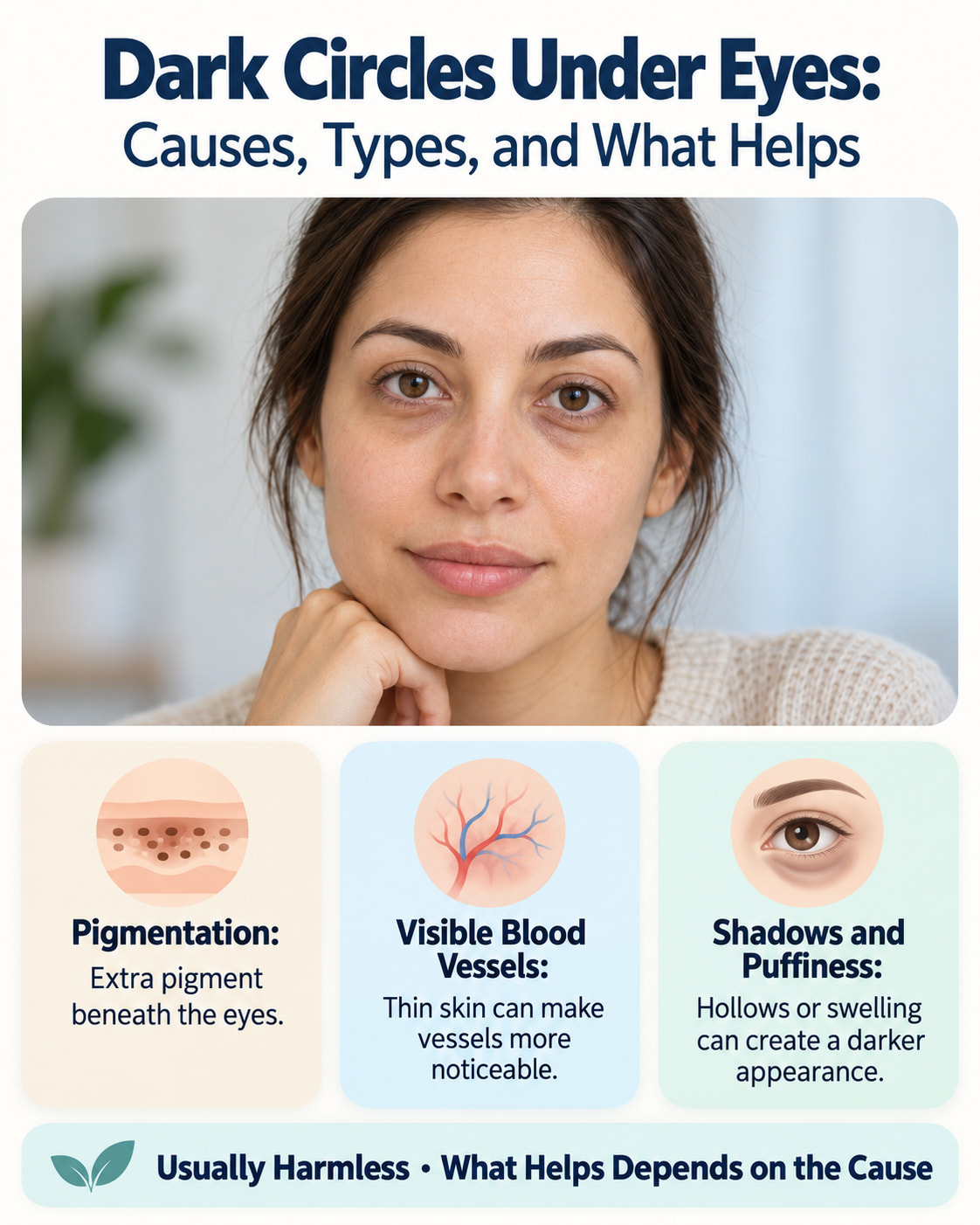
Dark circles under eyes commonly come from extra pigmentation, visible blood vessels, or shadows created by hollows and puffiness. They are usually harmless, and what may help depends on the cause.
Genetics, aging, allergies, and irritation can all contribute. Too little sleep may make existing circles more noticeable, which explains why getting more rest does not always change their appearance.
Understanding the cause can help you choose sensible care and avoid spending money on products that do not address your concern. Gentle skin care, sun protection, and attention to persistent itching or congestion are useful starting points.
What Are Dark Circles Under Eyes?
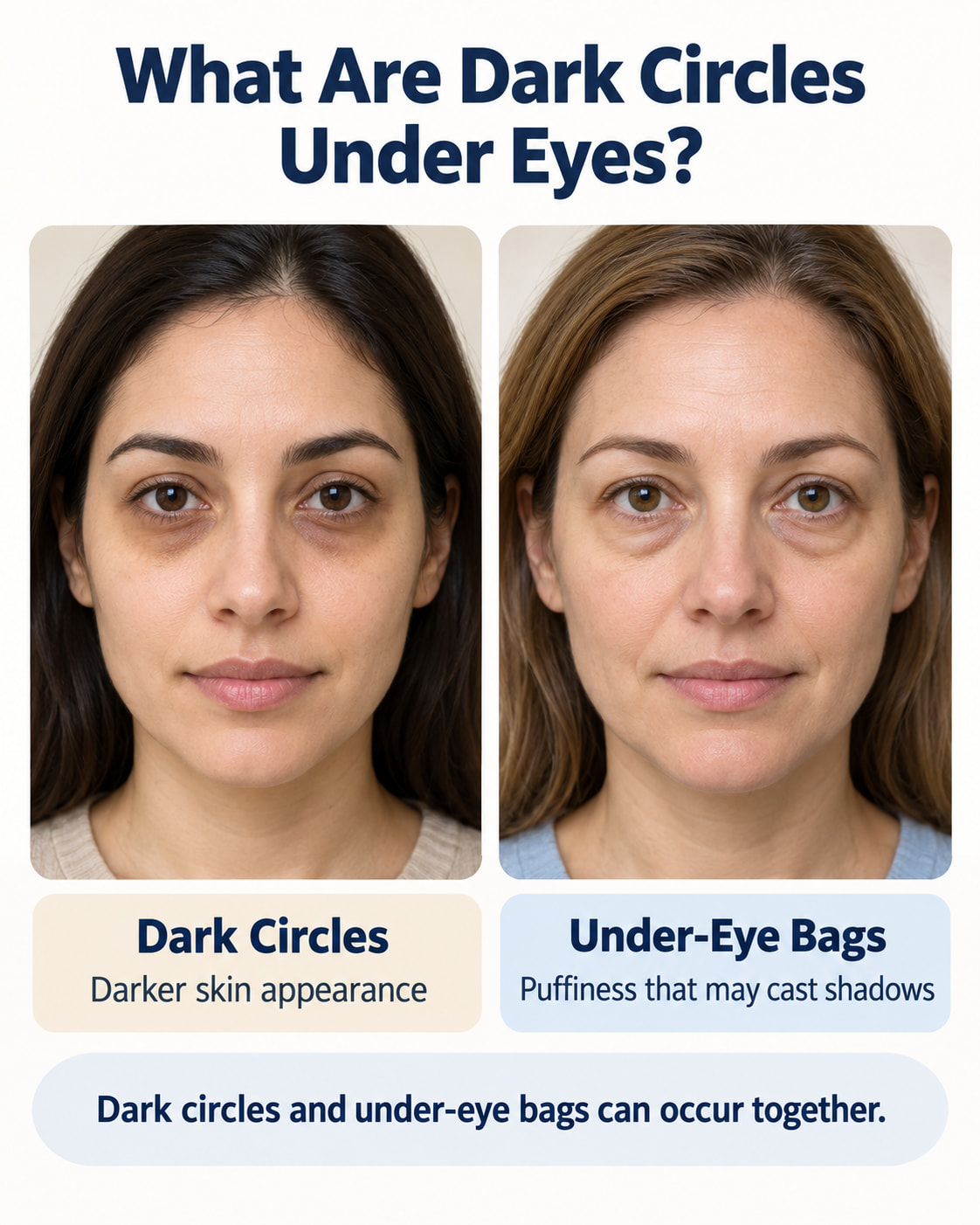
Dark circles describe an area beneath the eyes that appears darker than the surrounding skin. Depending on your skin tone and the contributing factors, the area may look brown, blue, purple, gray, or almost black.
Dark circles and under-eye bags can overlap:
- Dark circles describe discoloration or a darkened appearance.
- Under-eye bags describe swelling or protruding tissue that can cast a shadow.
Some people mainly have a color change. Others mainly have shadows, and many have both.
What Causes Dark Circles Under Eyes?
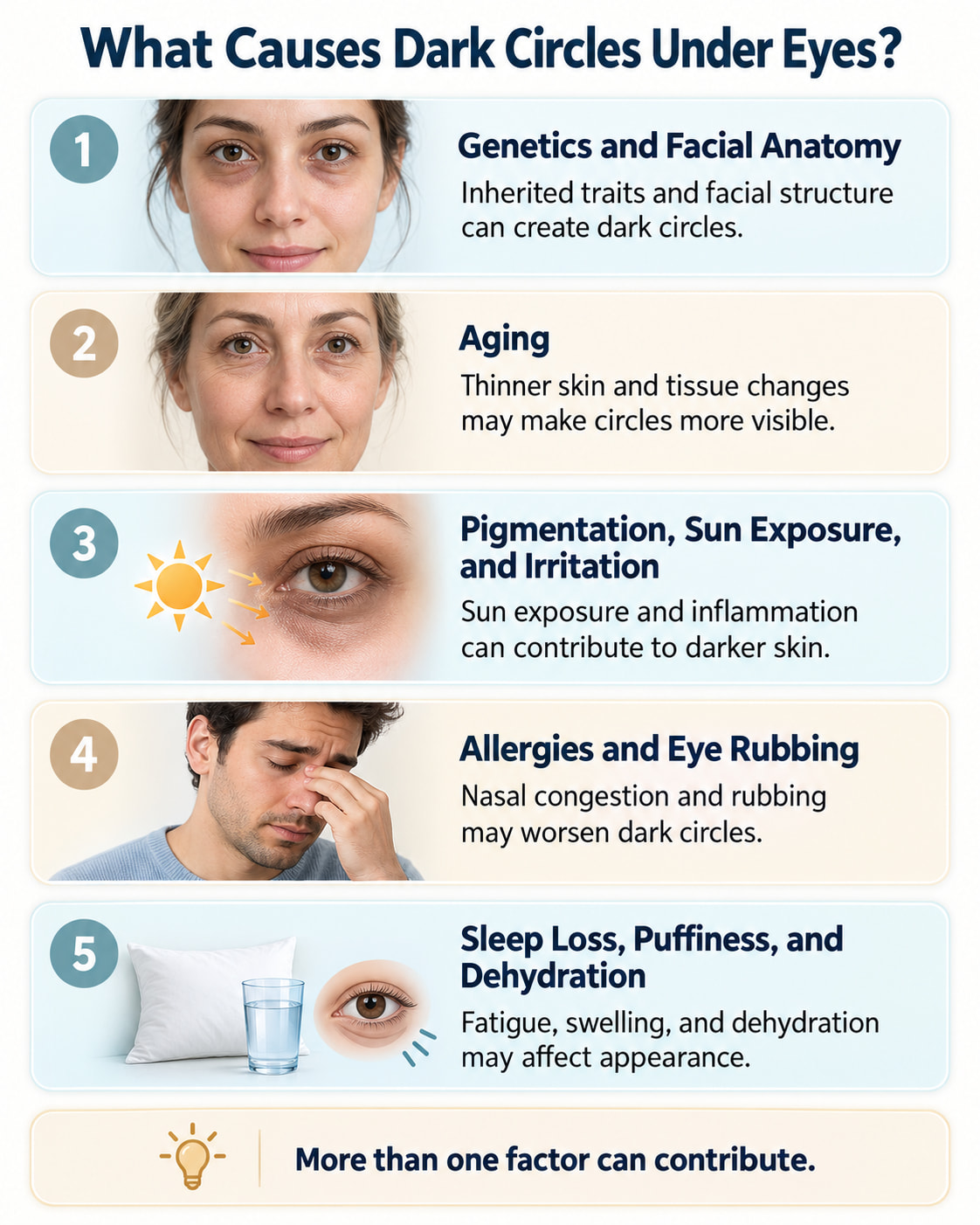
Genetics and Facial Anatomy
Dark circles can run in families. Inherited pigmentation, naturally thin skin, and the shape of the area around your eyes can influence their appearance.
For example, a groove between the lower eyelid and cheek can create a shadow even when you are well rested. This groove is often called a tear trough.
Aging
With age, the skin beneath the eyes becomes thinner, allowing underlying blood vessels to show more clearly.
Changes in fat and other supporting tissue can also make hollows or bags more noticeable. The resulting shadows may look like darker skin even when extra pigment is not the main issue.
Pigmentation, Sun Exposure, and Irritation
Sun exposure can increase pigmentation. Eczema, contact dermatitis, and repeated rubbing may also leave darker marks after inflammation.
This is called post-inflammatory hyperpigmentation. It can be more noticeable or persistent in darker skin tones.
Dermatitis, rubbing, sun exposure, and pigmentation changes are among the common contributors to dark circles.
Allergies and Eye Rubbing
Nasal allergies can cause dark, sometimes puffy areas called allergic shiners. Congestion affects blood flow in nearby veins, making the area beneath the eyes look darker.
Clues that allergies may be involved include:
- A stuffy or runny nose.
- Sneezing.
- Itchy or watery eyes.
- Symptoms that recur during particular seasons or exposures.
Rubbing itchy eyes can add irritation. Dark circles alone, however, cannot confirm an allergy.
Sleep Loss, Puffiness, and Dehydration
Insufficient sleep can make existing circles and shadows more obvious. Fluid-related puffiness may also change how the area looks, especially after waking.
Dehydration can make the eyes appear more sunken and the surrounding skin look dull. Drinking enough to meet your usual needs may help when dehydration contributes, but extra water will not remove inherited pigmentation or an anatomical hollow.
Types of Dark Circles Under Eyes
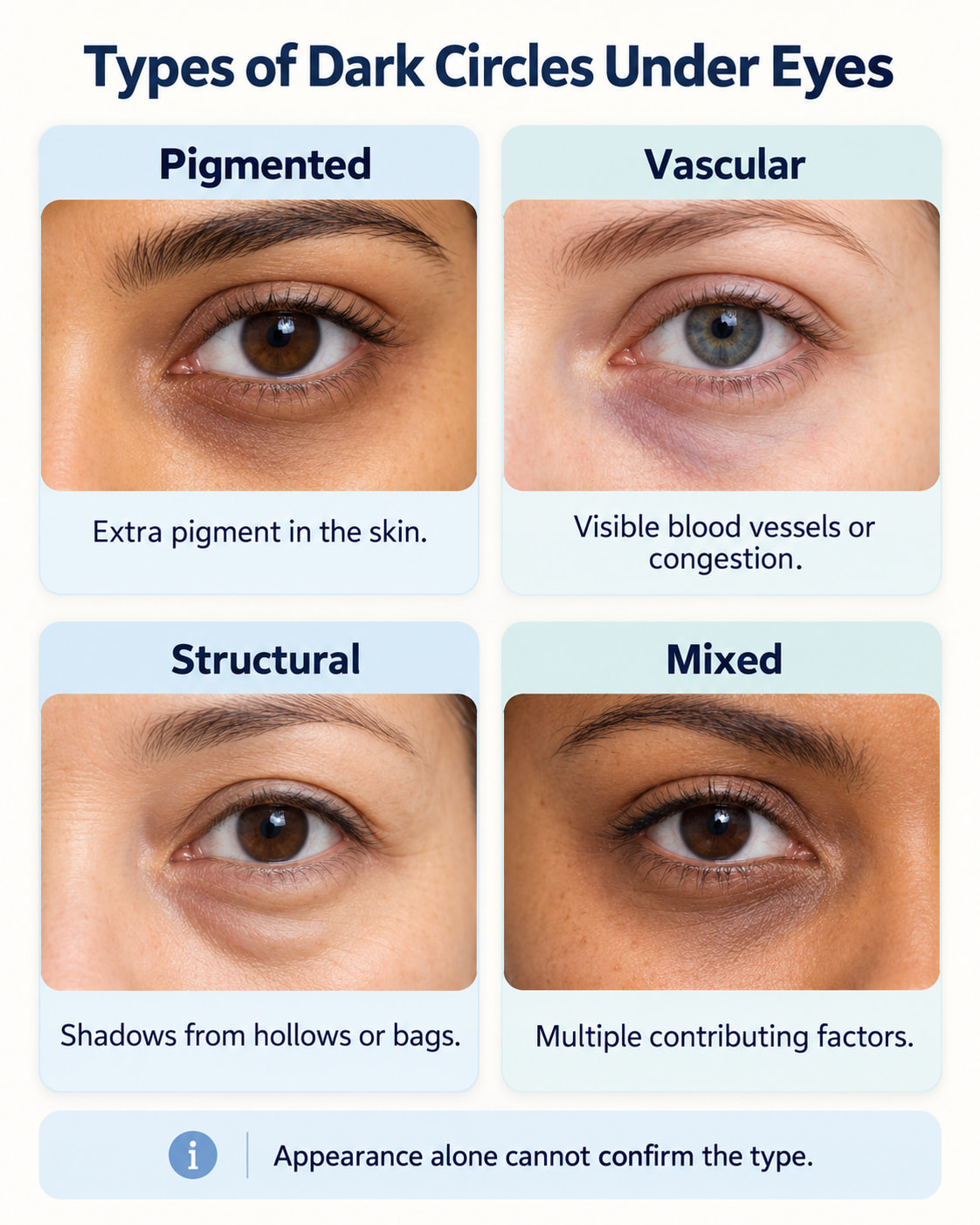
Dermatology research commonly describes four types:
| Type | Typical appearance | Main contributing factor |
|---|---|---|
| Pigmented | Often brown or darker than nearby skin | Increased pigment in the skin |
| Vascular | Often blue, purple, or pinkish | Visible vessels or vascular congestion |
| Structural | A shadow beneath a hollow or bag | Facial anatomy or changes in supporting tissue |
| Mixed | A combination of discoloration and shadows | More than one contributing factor |
These descriptions are clues, not a reliable home diagnosis. Skin tone, lighting, and overlapping causes can make the categories difficult to distinguish.
A dermatologist may consider your history, examine the skin, and sometimes use additional tools to assess pigmentation. Identifying the main contributors helps explain why the same eye cream can produce different results for different people.
What Helps With Dark Circles Under Eyes?
Protect the Skin From Sun Exposure
Sun protection is especially relevant when pigmentation contributes to the darkness.
The American Academy of Dermatology’s guidance on hyperpigmentation recommends broad-spectrum sunscreen with SPF 30 or higher. Tinted sunscreen containing iron oxide can also help protect against visible light, which may worsen pigmentation.
Use sunscreen according to its directions and keep it out of your eyes. Sunglasses, a hat, and shade provide additional protection.
Sun protection helps limit further darkening. It cannot fill an under-eye hollow.
Reduce Rubbing and Product Irritation
If your eyelids itch, sting, or flake, repeatedly applying stronger products may make matters worse.
Keep your routine gentle:
- Avoid rubbing or scrubbing the under-eye area.
- Remove makeup carefully.
- Choose fragrance-free products that your skin tolerates.
- Stop using a new cosmetic product if it causes burning, redness, or swelling.
Persistent irritation deserves evaluation. Addressing the reason for the irritation can help prevent ongoing inflammation and further discoloration.
Try a Cool Compress for Temporary Puffiness
A clean, cool, damp washcloth held gently over closed eyes may temporarily ease puffiness and make some vascular darkness less noticeable.
Avoid pressing hard or placing ice directly against the skin. Cooling is most useful for a temporary swollen appearance; it does not remove skin pigment or change the underlying anatomy.
Keep Sleep Consistent
Getting adequate sleep may reduce how noticeable existing circles look. A regular bedtime and wake time are reasonable starting points if your sleep has been inconsistent.
If morning puffiness is a recurring issue, sleeping with your head slightly elevated may help limit fluid pooling around the eyes.
Improvement will depend on how much fatigue or swelling contributes. Longstanding pigmentation and hollows may remain.
Get Help for Persistent Allergy Symptoms
If dark circles occur alongside congestion, sneezing, or itchy eyes, discuss those symptoms with a healthcare professional or pharmacist.
Managing an identified allergy may improve related puffiness and discoloration. It may also reduce the urge to rub your eyes.
Use Concealer if You Want Immediate Coverage
Concealer can reduce the visible contrast between the under-eye area and surrounding skin. It provides temporary coverage while you decide whether other steps are worthwhile.
Choose a formula that does not irritate your skin and remove it gently. Cosmetic coverage is optional; uncomplicated dark circles do not need to be changed for health reasons.
Do Eye Creams Help With Dark Circles?
Some eye products may improve the appearance of certain dark circles, but results depend on the formula and the cause. A cream cannot replace the volume missing from an under-eye hollow.
Two commonly discussed ingredients illustrate the limits of the evidence:
- Caffeine: A small controlled study found that caffeine gel did not significantly outperform its gel base overall for puffiness. Cooling appeared to account for much of the improvement.
- Vitamin C: A small study of the lower eyelids found different results with different formulations. This does not establish that every vitamin C eye cream will improve dark circles.
Brightening ingredients used elsewhere on the face are not automatically suitable for delicate eyelid skin. Retinoids, including retinol, can irritate the skin and should be avoided during pregnancy.
Choose products intended for the eye area, follow the label, and introduce changes cautiously. If a product causes persistent irritation, stop using it and seek advice.
A useful expectation is improvement in appearance, with results that vary from person to person. Be cautious about promises of complete or overnight removal.
Professional Options for Dark Circles Under Eyes
If the circles bother you despite gentle care, a dermatologist can assess whether pigmentation, visible vessels, hollows, or several factors are involved.
Depending on that assessment, options may include:
| Main concern | Options a specialist may discuss |
|---|---|
| Excess pigmentation | Selected topical products, superficial chemical peels, or certain lasers |
| Visible blood vessels | Certain laser approaches |
| Under-eye hollowing | Fillers or other procedures intended to address selected volume deficits |
| Excess skin or prominent bags | Eyelid surgery in suitable cases |
These approaches address different contributors, making an individual assessment important.
A systematic review published in 2025 evaluated 33 studies involving 1,320 participants. Several procedures showed improvement, but study methods and outcomes varied substantially. The findings do not establish one option that works best for everyone.
Procedures also have risks. Peels and lasers can cause irritation or unwanted pigmentation changes, so skin tone and individual risk need consideration. Strong chemical peels should not be attempted around the eyes at home.
Fillers require particular care. The FDA notes that accidental injection into a blood vessel can cause rare but serious complications, including tissue injury and vision loss.
Discuss the likely benefit, risks, alternatives, and maintenance needs with an appropriately trained clinician before deciding.
When to See a Healthcare Professional
Arrange an evaluation if:
- Changes beneath one eye are getting worse.
- Swelling, itching, or a rash persists.
- You suspect allergies or a reaction to a skin care product.
- The appearance concerns you and you want help understanding the cause.
A clinician may ask when the changes began, whether they run in your family, what products you use, and whether you have other symptoms. Testing depends on the findings; dark circles alone do not mean everyone needs bloodwork.
Seek urgent medical care if changes around the eyes occur with eye pain, vision changes, a hot or painful swollen eyelid, marked redness, or fever and feeling unwell. These are among the eye symptoms that warrant urgent assessment.
Frequently Asked Questions
Why Do I Have Dark Circles Even When I Sleep Well?
Sleep is only one factor. Inherited pigmentation, visible vessels, thin skin, allergies, and under-eye hollows can remain even with adequate rest. If sleep changes have little effect, another contributor may be more important.
Can Dark Circles Go Away Permanently?
Some circles become less noticeable when a temporary contributor, such as irritation or allergy-related swelling, improves. Inherited pigmentation and structural shadows may persist. No single product or procedure guarantees permanent removal, and some cosmetic results require maintenance.
Does Drinking More Water Help With Dark Circles?
It may help your overall appearance if you are dehydrated. Drinking beyond your usual needs is not an established solution for dark circles caused by genetics, pigmentation, visible vessels, or hollows.
Are Dark Circles a Sign of Iron Deficiency?
You cannot identify iron deficiency from dark circles alone. If you also have unexplained fatigue, unusual paleness, dizziness, or shortness of breath, a healthcare professional can assess whether testing is appropriate.
Do not start iron supplements solely to change your under-eye appearance. Excess iron can be harmful.
Can Children Have Dark Circles Under Their Eyes?
Yes. Family traits, thin skin, rubbing, and congestion can contribute. If circles persist alongside troublesome allergies, disrupted sleep, or other symptoms, discuss them with the child’s healthcare professional. Bruising or painful swelling should not be assumed to be ordinary dark circles.
How Long Does It Take for Dark Circles to Improve?
There is no single timeline. Temporary puffiness may change relatively quickly, while pigmentation usually changes more gradually. Structural shadows may remain despite skin care. A clinician can help you understand what improvement is realistic for the cause and approach being considered.
Conclusion
Dark circles under eyes can have several overlapping causes, so the most useful first step is understanding what contributes to yours. Start with gentle skin care, sun protection, and attention to persistent irritation or allergy symptoms.
If the appearance continues to concern you, a dermatologist can help you assess suitable options. New or worsening changes on one side, especially with pain or vision symptoms, deserve medical attention.
This content is for informational purposes only and not medical advice.
References
- Mayo Clinic — Dark Circles Under Eyes
- Cleveland Clinic — Dark Circles Under Eyes
- DermNet — Dark Circles Under the Eyes
- American Academy of Dermatology — How to Fade Dark Spots in Darker Skin Tones
- International Journal of Dermatology — Clinical Analysis and Classification of Dark Eye Circle
- Journal of Applied Pharmaceutical Science — Evaluation of Caffeine Gels for Puffy Eyes
- Skin Research and Technology — Effects of Vitamin C on Dark Circles of the Lower Eyelids
- Mayo Clinic — Wrinkle Creams and Ingredient Safety
- Dermatologic Surgery — Systematic Review of Periorbital Hyperpigmentation Approaches