
The main difference in dopamine vs serotonin is that dopamine is especially involved in reward learning, motivation, and movement, while serotonin contributes to mood regulation, sleep, appetite, and digestion. Both are chemical messengers called neurotransmitters, and their functions overlap. Neither is simply a “happiness chemical.”
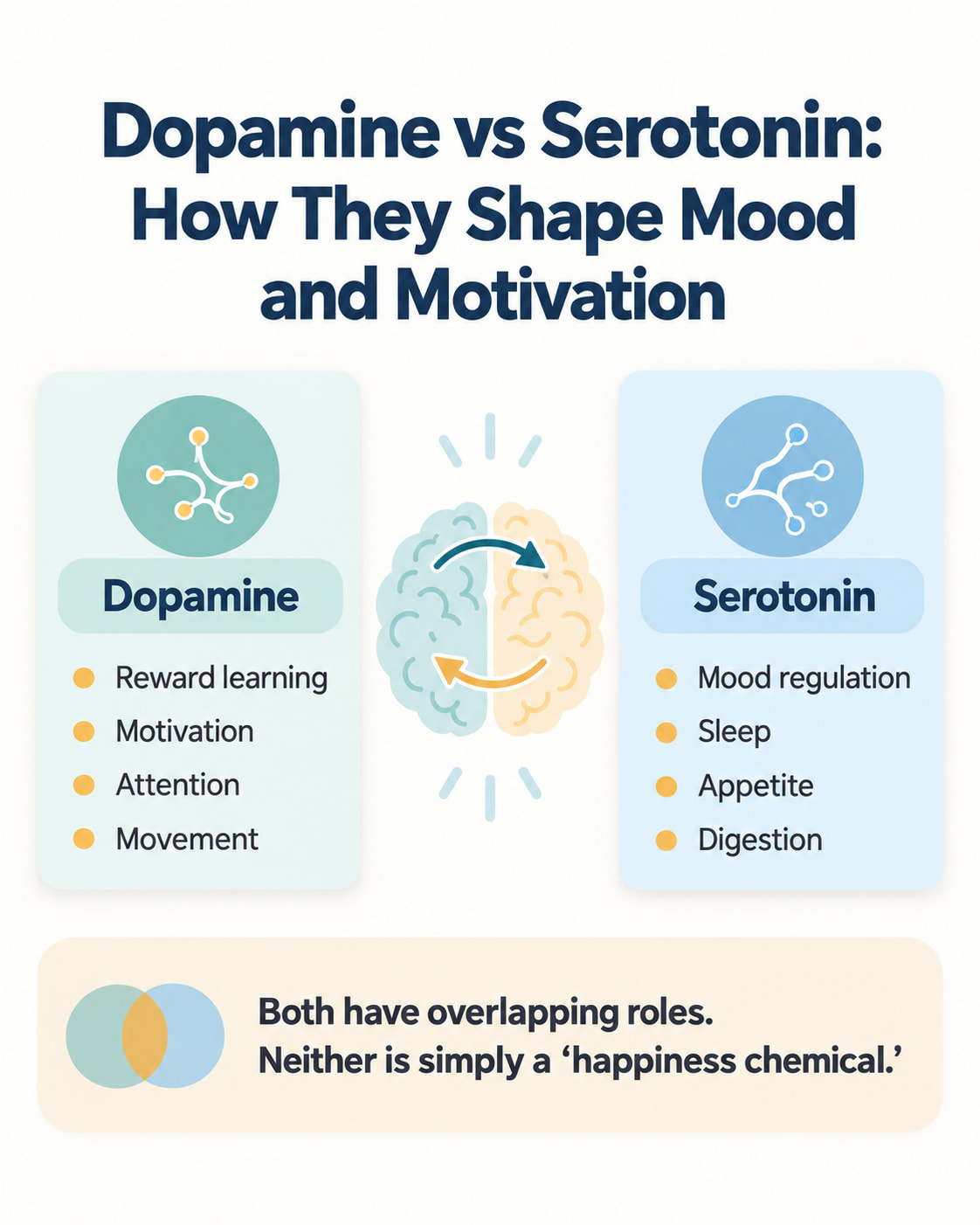
Understanding this distinction can help you make sense of brain-health information without falling for misleading deficiency quizzes. Feeling unmotivated or unhappy does not, by itself, tell you which neurotransmitter is involved or whether its activity is low.
The useful approach is to understand what these systems do, support your overall well-being, and recognize when persistent symptoms deserve professional attention.
What Is the Difference Between Dopamine and Serotonin?
Dopamine and serotonin help nerve cells communicate. Their effects depend on where signaling happens and which cells receive the message—not just how much of a chemical is present. Research also shows that the two systems interact during learning.
| Comparison | Dopamine | Serotonin |
|---|---|---|
| Important brain functions | Motivation, reward learning, attention, and movement | Mood regulation, sleep, appetite, and learning |
| Role in reward-related behavior | Helps shape learning from rewards and actions taken to pursue them | Contributes to responses to outcomes, including negative feedback and delayed rewards |
| Functions beyond mood | Movement control and hormonal signaling | Bowel function and blood clotting |
| Starting material | The amino acid tyrosine | The essential amino acid tryptophan |
These are important roles, not exclusive responsibilities. For example, both chemicals participate in sleep and learning, even though popular comparisons often assign those functions to only one.
What Is Dopamine?
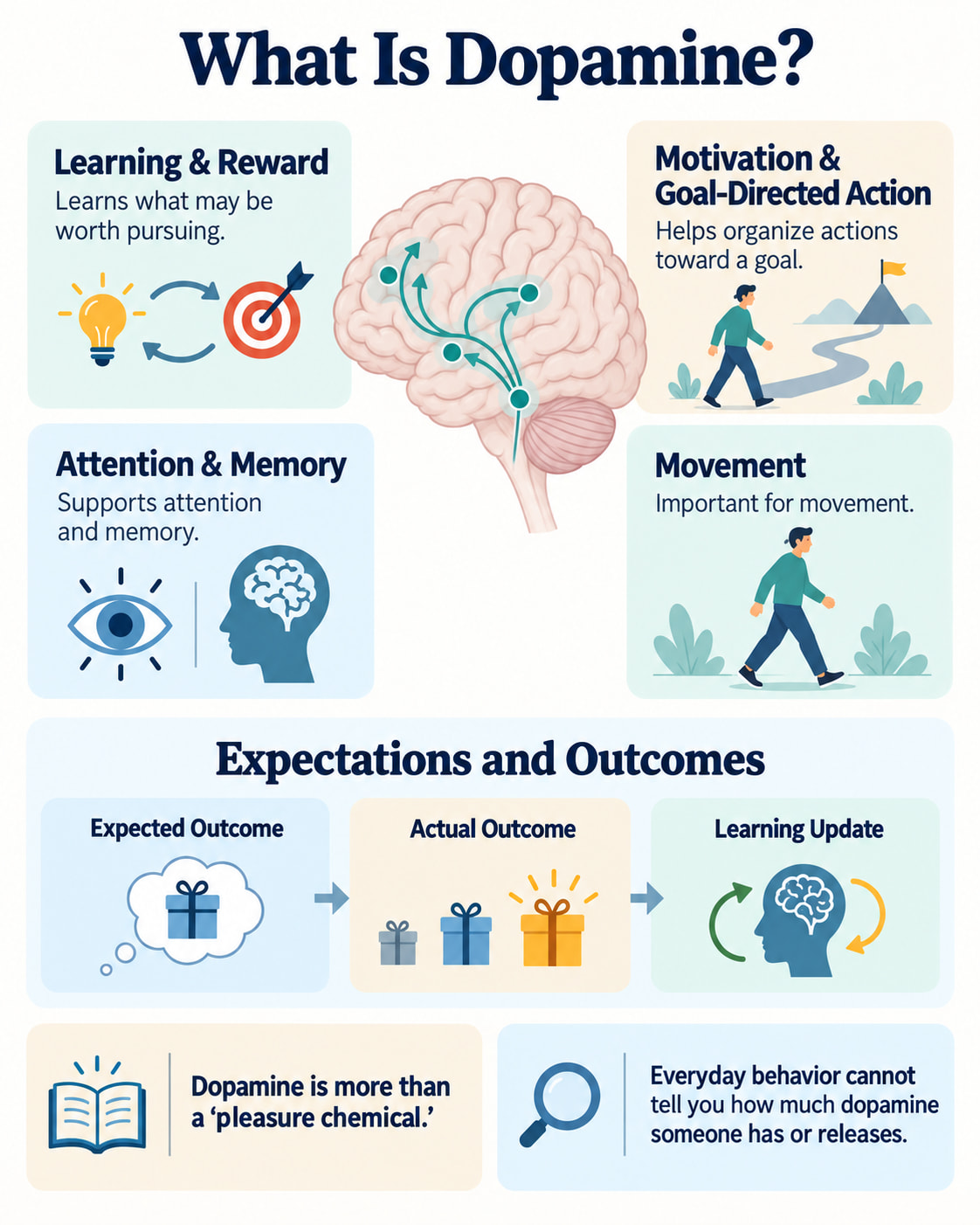
Dopamine is a neurotransmitter involved in learning what is worth pursuing and helping organize actions toward a goal. It also contributes to attention, memory, and movement. That makes it much more than a chemical associated with pleasurable experiences.
Dopamine Helps Connect Expectations With Outcomes
Some dopamine signals help the brain respond when an outcome differs from what was expected. These signals can help update what you learn about an action or situation.
A 2019 Nature study in rats found distinct dopamine dynamics associated with learning and motivation. The findings support a distinction between signals that help update expectations and those involved in pursuing rewards. They do not establish a way to measure someone’s motivation from everyday behavior.
For an everyday illustration, imagine trying a new study method and doing better than expected on a quiz. Learning from that result and deciding to use the method again are reward-related processes. The example illustrates the concept; it does not tell you how much dopamine was released.
Dopamine Also Supports Movement
Dopamine’s movement role is medically important. Parkinson’s disease involves loss of dopamine-producing nerve cells in particular brain pathways. This is very different from casually describing an unproductive afternoon as “low dopamine.”
What Is Serotonin?
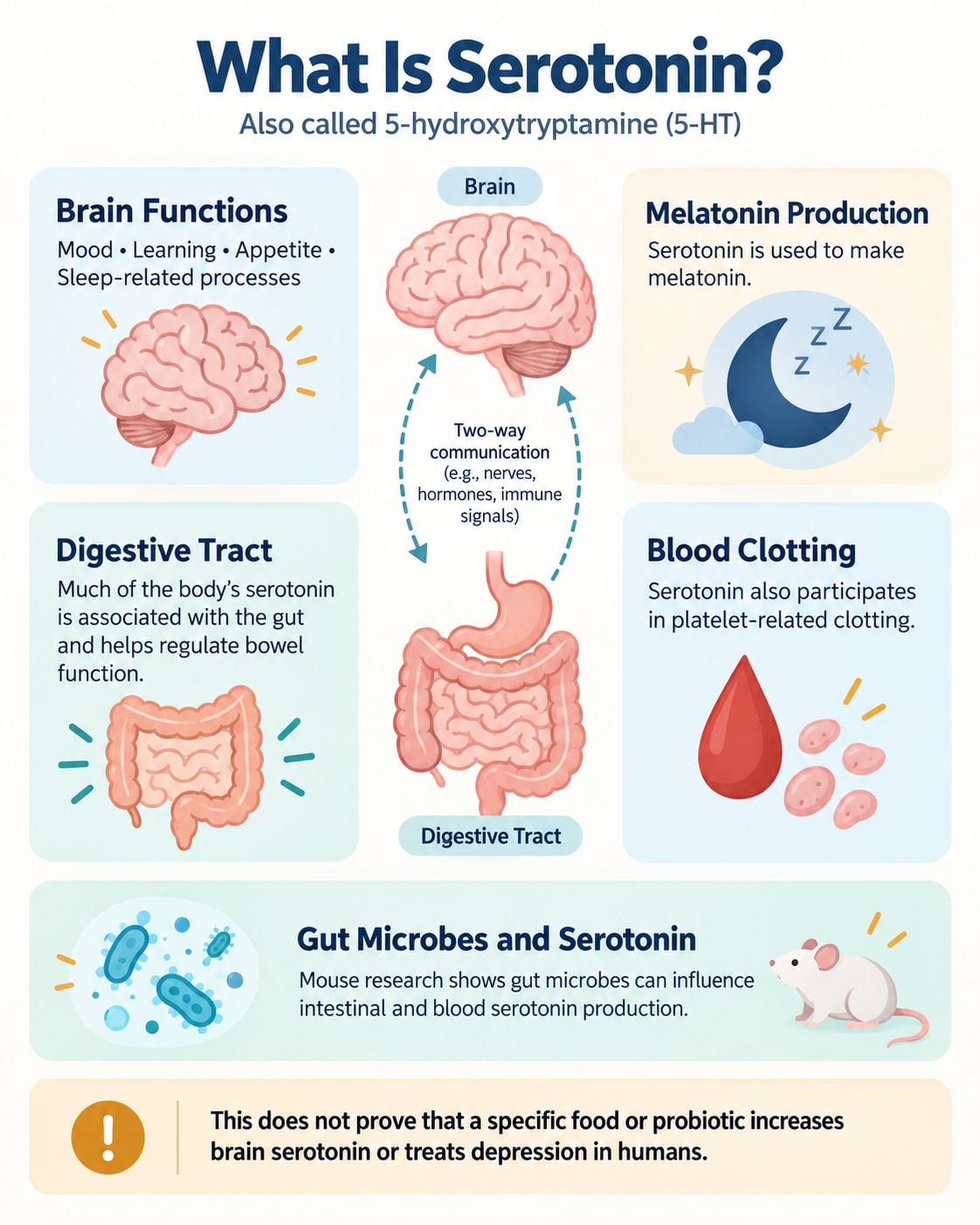
Serotonin, also called 5-hydroxytryptamine or 5-HT, is another neurotransmitter with several jobs. In the brain, it contributes to mood, learning, appetite, and sleep-related processes. It is also used to make melatonin, a hormone involved in the sleep-wake cycle.
Serotonin is not limited to the brain. Much of the body’s serotonin is associated with the digestive tract, where it helps regulate bowel function. It also participates in platelet-related blood clotting. These bodily functions should not be confused with its effects on mood.
Research in mice has shown that gut microbes can influence intestinal and blood serotonin production. However, that finding does not demonstrate that a particular probiotic or food increases brain serotonin or improves depression in humans.
How Do Dopamine and Serotonin Affect Mood and Motivation?
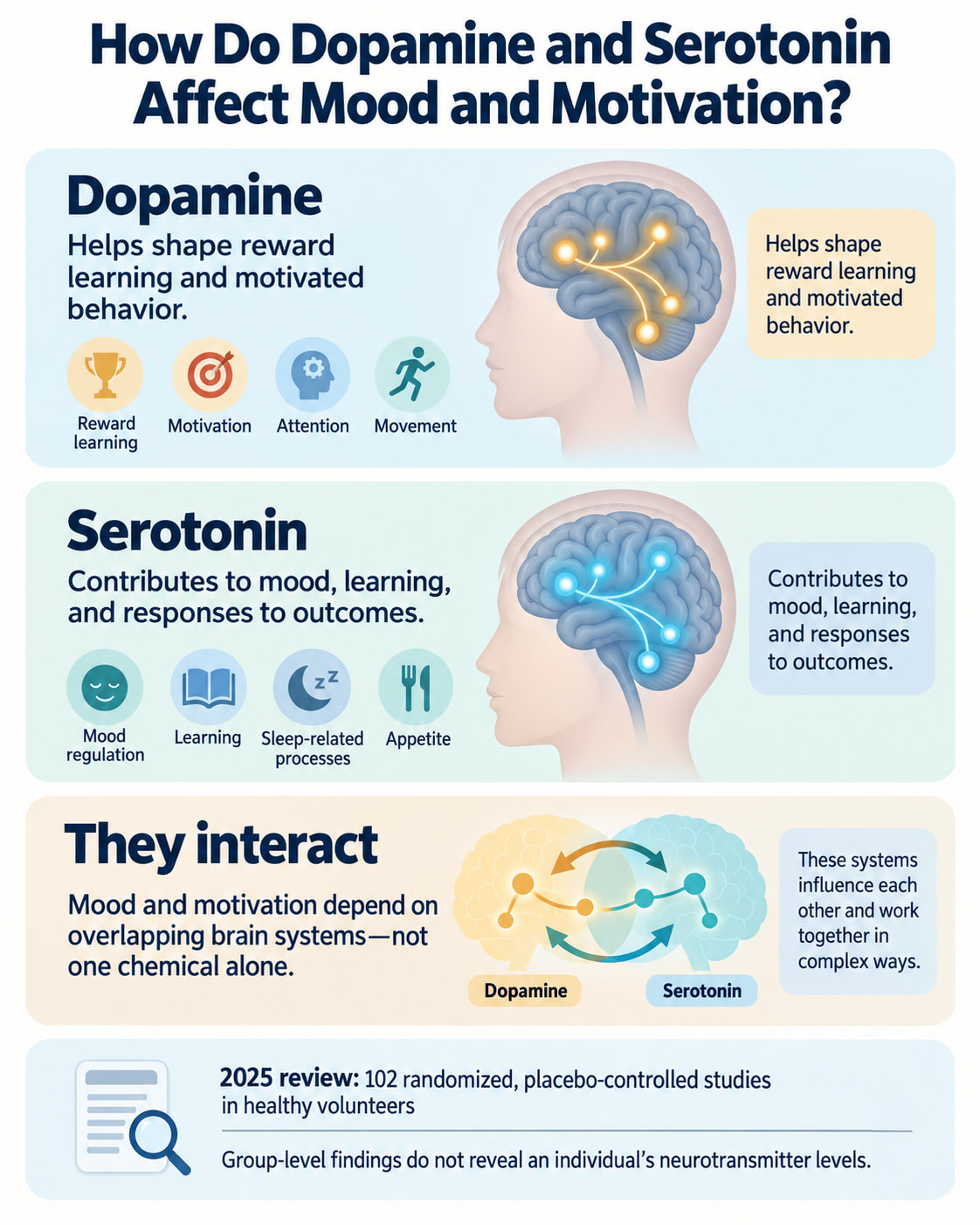
The difference is more complicated than “dopamine makes you want things, while serotonin makes you happy.”
What Human Research Shows
A 2025 systematic review and meta-analysis published in JAMA Psychiatry analyzed 102 randomized, placebo-controlled studies in healthy volunteers.
Manipulations that increased dopamine signaling were associated with stronger reward learning or sensitivity and more vigorous responses to rewards. Serotonin-related manipulations were associated with some measures of learning from negative outcomes. Both systems were associated with how participants valued delayed rewards.
These findings describe group-level performance on laboratory tasks—not a method for identifying your personal neurotransmitter levels. The authors noted differences among tasks, medications affecting multiple systems, and a lack of direct head-to-head comparisons.
Mood Is Not Determined by One Chemical
According to NIMH’s depression guidance, depression involves genetic, biological, environmental, and psychological factors. It is not diagnosed by identifying a simple shortage of serotonin or dopamine.
That does not make neurotransmitters unimportant. It means that understanding persistent mood symptoms requires looking at the person’s symptoms, health, circumstances, and functioning—not assigning one chemical to one feeling.
Can You Tell If Dopamine or Serotonin Is Low?
You cannot reliably identify low dopamine or serotonin from symptoms alone.
Low energy, reduced interest, poor concentration, and sleep changes can occur together in depression. Some medical conditions, including thyroid disorders, and certain medications can produce similar symptoms.
What About Blood Tests?
A dopamine blood test cannot determine how your brain responds to dopamine. Clinicians instead consider your history, symptoms, examination, and any tests appropriate to the suspected condition.
Serotonin blood testing has specific medical uses. MedlinePlus explains that it is generally performed when carcinoid syndrome, a condition associated with certain tumors, is suspected. It is not a routine test of happiness, motivation, or depression.
What Is More Useful to Track?
Before an appointment, note when symptoms began, how often they occur, and whether they affect work, relationships, sleep, or usual activities. Mention medication changes and supplements as well. This gives a clinician more useful information than labeling yourself “dopamine deficient.”
How Do Medications Affect Dopamine and Serotonin?
Some medications change how nerve cells use or respond to neurotransmitters. Common antidepressant categories include the following:
| Medication category | Systems named in the category |
|---|---|
| Selective serotonin reuptake inhibitors, or SSRIs | Serotonin |
| Serotonin-norepinephrine reuptake inhibitors, or SNRIs | Serotonin and norepinephrine |
| Norepinephrine-dopamine reuptake inhibitors, or NDRIs | Norepinephrine and dopamine |
NIMH’s medication guidance lists these among commonly prescribed antidepressant categories. It also emphasizes that people respond differently and may need adjustments to find an appropriate option.
NIMH notes that antidepressants commonly take 4–8 weeks to work. Sleep, appetite, energy, or concentration may improve before mood does, although timing varies.
A medication’s name does not tell you which one you need. “I lack motivation, so I need a dopamine medication” is not a reliable way to choose care. Medication decisions depend on symptoms, medical history, other medicines, potential side effects, and individual response.
Do not start, stop, switch, or change the dose of a prescribed medication based on a neurotransmitter comparison. Contact the prescribing clinician about concerns or side effects.
How to Support Mood and Motivation Safely
You do not need to know your neurotransmitter levels to take useful steps for your well-being. NIMH recommends regular activity, adequate sleep, balanced meals, manageable priorities, and social connection as part of mental health self-care.
Keep a Consistent Sleep Schedule
Choose a realistic bedtime and wake-up time that allow enough sleep. CDC guidance recommends at least seven hours for adults ages 18–60, with age-specific recommendations for older adults. Sleep quality matters as well as duration.
A practical starting point is keeping your wake-up time consistent and turning off electronic devices at least 30 minutes before bed. Persistent trouble sleeping deserves attention rather than being automatically blamed on serotonin.
Choose Physical Activity You Can Repeat
Regular physical activity supports brain health and sleep and can reduce feelings of anxiety. You do not need an intense workout to begin building an activity routine.
Start with something manageable, such as a short walk or an activity you enjoy. NIMH notes that small amounts add up, so movement does not have to happen in one long session.
Judge the routine by whether it is sustainable and helpful—not by whether it produces a supposed “dopamine spike.”
Eat Regular, Balanced Meals
Regular meals and adequate hydration can support energy and focus. Pay attention to how caffeine and alcohol affect your sleep, mood, and daily functioning.
Food provides nutrients used in normal brain function, but a food list is not a personalized neurotransmitter prescription. Research on dietary effects does not justify promising that a particular meal will correct dopamine or serotonin signaling.
Make Goals Manageable and Stay Connected
Choose what needs attention now and what can wait. Keep room for enjoyable activities and people who can offer emotional or practical support. These are among NIMH’s self-care recommendations.
For example, replace “catch up on everything today” with “open the document and draft the first paragraph.” Ask a friend to join you for a walk or help with one concrete task. These are ways to make a difficult day more manageable, not tests of your brain chemistry.
Check Before Using Mood Supplements
Do not assume that a product marketed as a “serotonin booster” or “dopamine support” is appropriate for you.
For example, NCCIH warns that St. John’s wort can interact dangerously with many medications. Combining it with certain antidepressants or other medicines that affect serotonin can cause serious serotonin-related side effects. It can also weaken the effects of some medicines.
Review supplements with a pharmacist or clinician, especially when you already take medication. “Natural” does not mean interaction-free.
When to Seek Medical Help
Seek professional support when low mood, loss of interest, difficulty concentrating, or sleep and appetite changes are distressing or interfere with daily life. Symptoms lasting two weeks or more are particularly important. Do not wait for that threshold when symptoms are severe or worsening.
Recognize Possible Serotonin Syndrome
Serotonin syndrome is a potentially life-threatening medication reaction. It can occur after starting, increasing, or combining medicines that affect serotonin.
Seek immediate medical assessment for new agitation or confusion accompanied by fever, heavy sweating, tremor, muscle spasms, or a fast heartbeat, especially after a medication change. Symptoms can develop within minutes to hours. Severe symptoms require emergency care.
Get Immediate Support During a Crisis
In the United States, call or text 988 for suicidal thoughts or a mental health crisis. Call 911 for an immediate life-threatening emergency.
Frequently Asked Questions
Is Dopamine or Serotonin More Important for Happiness?
Neither can be ranked as the main happiness chemical. Both contribute to processes relevant to well-being, but their roles extend beyond mood. Reward learning, emotional responses, sleep, and other functions involve overlapping systems.
Does Low Motivation Mean Low Dopamine?
No. Low motivation alone cannot identify dopamine dysfunction. Its significance depends on the broader pattern of symptoms and circumstances. Persistent changes deserve assessment rather than a self-diagnosis based on a neurotransmitter label.
Does Increasing Serotonin Always Decrease Dopamine?
No universal rule applies. A mouse study published online in 2024 found opposing dopamine and serotonin signals during reward learning in a specific brain region. That does not establish a whole-brain seesaw in which raising one always lowers the other.
Can Foods Increase Dopamine or Serotonin?
Your body uses tyrosine to make dopamine and tryptophan to make serotonin. Foods supply these building blocks, but that does not mean eating more of them predictably improves mood or corrects a signaling problem. Balanced nutrition is a more useful goal than chasing a “happy chemical” food.
Can a Dopamine Detox Reset Your Brain?
Avoiding pleasurable activities is not an established way to replenish dopamine stores or reset brain chemistry. Taking breaks from distracting apps may help you change an unwanted habit, but that is different from a biological detox. You do not need to avoid ordinary enjoyment or social contact.
Can Too Much Serotonin Be Harmful?
Yes. Excessive serotonin activity associated with certain medications, combinations, or dose changes can cause serotonin syndrome. Feeling happy is not a sign of this condition; concerning features include agitation, confusion, fever, sweating, and abnormal muscle activity.
Conclusion
The most useful dopamine vs serotonin comparison recognizes different but overlapping roles—not two competing happiness chemicals. Neither a difficult day nor a single symptom reveals your neurotransmitter levels.
Choose one manageable step that supports your daily life, such as a consistent bedtime or a short walk. When mood or motivation problems persist, seek professional support rather than trying to diagnose and “balance” your brain chemistry yourself.
This content is for informational purposes only and not medical advice.
References
- Cleveland Clinic. Dopamine.
- Cleveland Clinic. Serotonin.
- Cleveland Clinic. Dopamine Deficiency.
- Mohebi A, et al. Nature, 2019. Dissociable Dopamine Dynamics for Learning and Motivation.
- Mkrtchian A, et al. JAMA Psychiatry, 2025. Differential Associations of Dopamine and Serotonin With Reward and Punishment Processes in Humans: A Systematic Review and Meta-Analysis.
- Yano JM, et al. Cell, 2015. Indigenous Bacteria From the Gut Microbiota Regulate Host Serotonin Biosynthesis.
- National Institute of Mental Health. Depression, Mental Health Medications, and Caring for Your Mental Health.
- Centers for Disease Control and Prevention. About Sleep and Benefits of Physical Activity.
- National Center for Complementary and Integrative Health. St. John’s Wort: Usefulness and Safety.
- Harvard Health Publishing. Dopamine Fasting: Misunderstanding Science Spawns a Maladaptive Fad.