
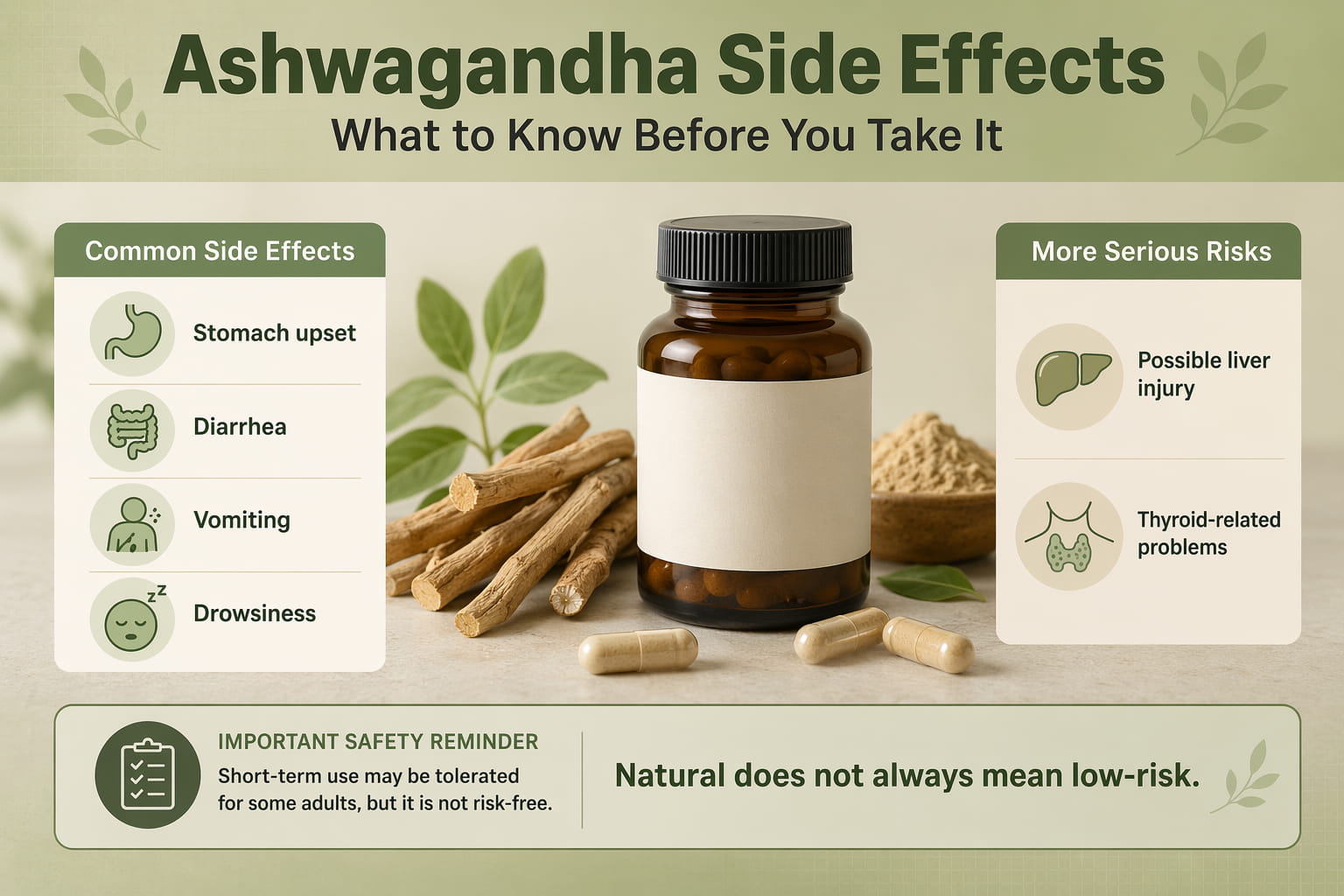
Ashwagandha side effects can include stomach upset, diarrhea, vomiting, and drowsiness, and in rarer cases may involve liver injury or thyroid-related problems. That matters because ashwagandha is often marketed as a natural stress or sleep supplement, but natural does not always mean low-risk. According to the NIH Office of Dietary Supplements and the National Center for Complementary and Integrative Health, ashwagandha appears to be reasonably well tolerated for short-term use of up to about 3 months, but its long-term safety is still unclear, and some people should avoid it entirely.
Common ashwagandha side effects
Most reported side effects are mild and affect the digestive system or alertness. NIH and NCCIH both note that short-term use can cause stomach-related symptoms and drowsiness in some people.
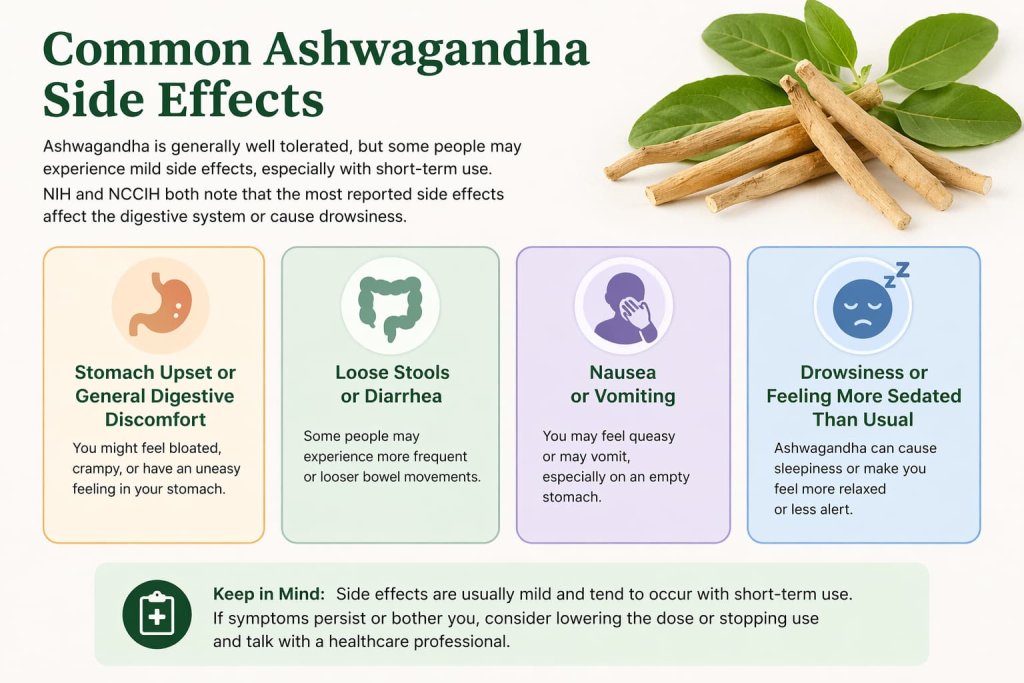
- Stomach upset or general digestive discomfort
- Loose stools or diarrhea
- Nausea or vomiting
- Drowsiness or feeling more sedated than usual
These effects do not happen to everyone, but they are the side effects most consistently listed by federal health sources. The key point is that even when ashwagandha feels fine at first, that does not rule out delayed problems, especially if you keep taking it, combine it with other supplements, or use it alongside prescription medicines.
Serious ashwagandha side effects to know
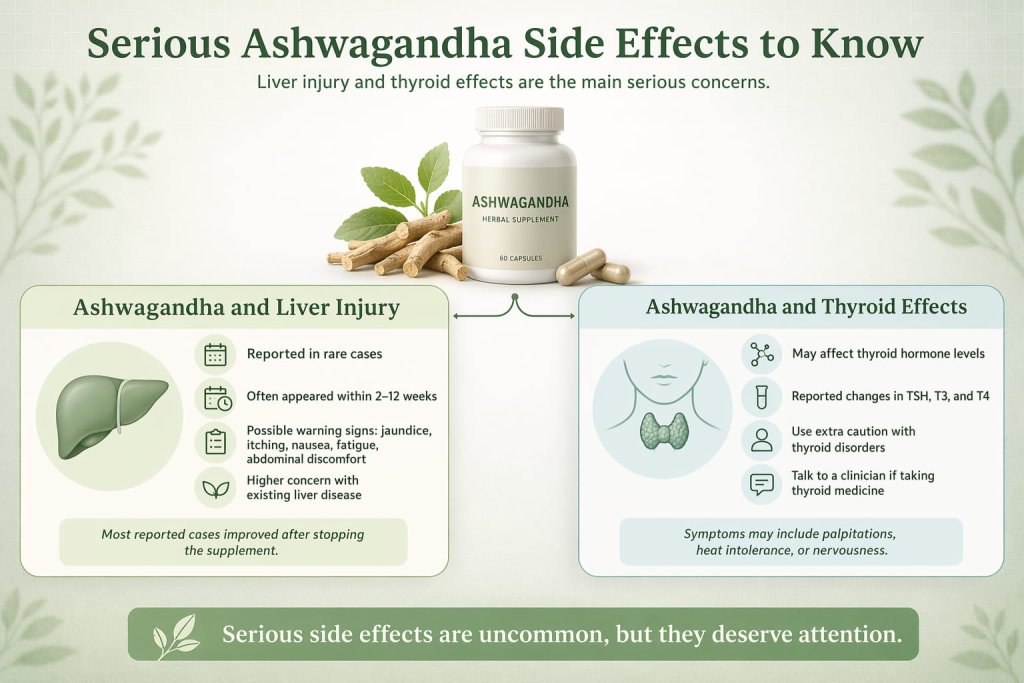
Serious problems appear to be much less common than mild stomach side effects, but they matter more because they can require medical care. The two biggest concerns in official safety summaries are liver injury and effects on thyroid function.
Ashwagandha and liver injury
A small but important number of case reports have linked ashwagandha supplements to clinically apparent liver injury. NIH’s LiverTox monograph says the injury has typically appeared about 2 to 12 weeks after starting the supplement, often with jaundice and itching. The NIH Office of Dietary Supplements also describes reported cases involving symptoms such as jaundice, pruritus, nausea, lethargy, abdominal discomfort, and high bilirubin.
Most reported cases improved after the person stopped taking the supplement, but LiverTox also notes that rare fatal liver injury and emergency liver transplant cases have been described, especially in people who already had cirrhosis or advanced chronic liver disease.
This does not mean every ashwagandha product causes liver damage. It does mean liver risk is real enough that it should be taken seriously, particularly if you already have liver disease, drink heavily, or use other products that can stress the liver.
Ashwagandha and thyroid effects
Ashwagandha may also affect thyroid hormone levels. The NIH Office of Dietary Supplements reports that in a small clinical trial, people with subclinical hypothyroidism who took 300 mg of ashwagandha root extract twice daily for 8 weeks had lower TSH and higher T3 and T4 levels than the placebo group. It also describes case reports of thyrotoxicosis that improved after the supplement was stopped.
That does not prove everyone will have a thyroid problem from ashwagandha. But it does mean people with thyroid disorders, people taking thyroid hormone medicine, and anyone with symptoms such as palpitations, heat intolerance, or unexplained nervousness should be cautious and speak with a clinician before using it.
Who should avoid ashwagandha?
Some groups have more reason than others to be careful. Based on NCCIH, the NIH Office of Dietary Supplements, and LiverTox, these are the main groups who should avoid ashwagandha or only use it with direct medical guidance.
- People who are pregnant
- People who are breastfeeding
- People with thyroid disorders or those taking thyroid hormone medication
- People with autoimmune disorders
- People who are about to have surgery
- People with cirrhosis, advanced chronic liver disease, or a history of liver injury from supplements
- Men with hormone-sensitive prostate cancer, because ashwagandha may increase testosterone levels
Recent European safety reviews have also taken a cautious position. The NIH Office of Dietary Supplements notes that Denmark banned ashwagandha in 2023 and that France’s ANSES recommended against its use in certain populations in 2024, including pregnant and breastfeeding women and people with endocrine disorders.
Ashwagandha drug interactions
Drug interaction risk is one of the most practical reasons to be careful with ashwagandha. NCCIH says it may interact with several types of medicines.
Possible interaction categories include:
- Diabetes medicines, because ashwagandha may affect blood sugar control
- High blood pressure medicines
- Immunosuppressants, because ashwagandha may affect immune activity
- Sedatives and other medicines that make you sleepy
- Anti-seizure medicines
- Thyroid hormone medicines
This is one reason self-prescribing multiple supplements at the same time can get risky fast. A supplement can feel mild on its own but become a problem when layered onto prescription drugs or other products with similar effects.
Why side effects can vary from one supplement to another
Not all ashwagandha supplements are the same. The NIH Office of Dietary Supplements explains that the chemical composition of the root and leaf differs, and that commercial products may contain root extract alone or a mix of root and leaf. It also says studies have used different extraction methods, standardization processes, and doses, which makes it hard to identify one clearly recommended extract or amount.
Product quality is another issue. LiverTox notes that some reported liver injury cases involved multi-ingredient products or products whose contents were not independently verified, which means mislabeling or contamination can complicate the picture. At the regulatory level, the U.S. Food and Drug Administration says supplement manufacturers are responsible for evaluating safety and labeling before marketing, and the FDA generally takes action after products reach the market if they are adulterated or misbranded.
That is why label claims alone are not enough. A product may say root extract, high potency, or standardized, but that still does not guarantee the same safety profile seen in a particular study.
Another practical reason to be selective is product quality. The NCCIH overview of Ayurvedic medicine notes that some Ayurvedic preparations may contain lead, mercury, or arsenic in amounts that can be toxic. The NIH Office of Dietary Supplements consumer guidance also says that independent quality seals can help confirm that a supplement was properly manufactured, contains the ingredients listed on the label, and does not contain harmful levels of contaminants. If you choose an ashwagandha supplement, look for third-party testing from groups such as NSF, U.S. Pharmacopeia, or ConsumerLab, while remembering that a quality seal does not prove the product is safe or effective for you.
When to stop ashwagandha and get medical advice
Stop taking ashwagandha and contact a clinician promptly if you develop symptoms that could suggest liver or thyroid problems, or if side effects become more than mild. Based on NIH safety summaries, warning signs include:
- Yellowing of the eyes or skin
- Itching that is new or unexplained
- Unusual fatigue or lethargy
- Nausea that does not settle
- Abdominal discomfort after starting the supplement
- New symptoms that appear after you begin using it, especially if you also take prescription medication
Seek urgent care if symptoms are severe, rapidly worsening, or accompanied by confusion, severe vomiting, or signs that you may be acutely unwell.
If you think ashwagandha caused a serious reaction, stop using it and report it. The FDA’s dietary supplement problem reporting page says consumers and health professionals can submit dietary supplement complaints and adverse events through the Safety Reporting Portal. The NIH Office of Dietary Supplements also advises telling your health care provider and reporting the reaction to the manufacturer using the contact information on the product label.
Is ashwagandha safe for long-term use?
Right now, the best-supported answer is not enough is known. The NIH Office of Dietary Supplements and NCCIH both say ashwagandha appears to be reasonably well tolerated in the short term, generally up to about 3 months, but there is not enough information to draw firm conclusions about long-term safety.
That matters because many people take ashwagandha daily for stress or sleep and assume that an herb can be used indefinitely. The current evidence does not support that assumption. Most human studies have been relatively small, short, and based on different preparations, so safety data are not as solid or as uniform as many supplement labels imply.
FAQ
Can ashwagandha cause liver damage?
Yes, it can, although it appears to be uncommon. Federal safety sources and NIH’s LiverTox both describe reported cases of liver injury linked to ashwagandha supplements, including rare severe cases.
Can ashwagandha affect the thyroid?
Yes. The NIH Office of Dietary Supplements reports evidence that ashwagandha can change thyroid hormone markers in some people, and case reports have described thyrotoxicosis that resolved after stopping the supplement.
Is ashwagandha hard on the stomach?
It can be for some people. Mild digestive side effects such as stomach upset, loose stools, diarrhea, nausea, and vomiting are among the most commonly reported problems with short-term use.
Who should not take ashwagandha?
Pregnant or breastfeeding people, people with thyroid disorders, autoimmune conditions, advanced liver disease, those about to have surgery, and men with hormone-sensitive prostate cancer are key groups who should avoid it or only use it under medical supervision.
Are higher doses more likely to cause side effects?
Possibly, but there is no simple universal cutoff because products differ so much. The NIH Office of Dietary Supplements describes reported liver injury cases in people taking 450 to 1,350 mg per day over 1 week to 4 months, and one thyroid-related case report involved 1,950 mg per day for more than 2 months. But because extracts and ingredient mixes vary, label strength alone does not reliably predict risk.
Does the type of ashwagandha extract matter?
Yes. The NIH Office of Dietary Supplements notes that commercial products may contain root extract, leaf extract, or mixed root-and-leaf extracts, and these do not have the same chemical profile. That is one reason a dose that looked acceptable in one study cannot automatically be assumed to have the same safety profile in a different product.
Bottom line
Ashwagandha side effects are often mild at first, but they are not always trivial. Stomach upset, diarrhea, nausea, vomiting, and drowsiness are the most common issues, while liver injury, thyroid effects, and drug interactions are the concerns that deserve the most caution.
If you are considering ashwagandha, the safest move is to check the exact product, review your medications, and talk with a qualified clinician or pharmacist before you start. That is especially important if you have a thyroid condition, liver disease, are pregnant or breastfeeding, or take prescription medicine regularly.
This content is for informational purposes only and not medical advice.
References
- NIH Office of Dietary Supplements — Ashwagandha Fact Sheet for Health Professionals
- National Center for Complementary and Integrative Health — Ashwagandha: Usefulness and Safety
- U.S. Food and Drug Administration — Dietary Supplements
- National Center for Complementary and Integrative Health — Ayurvedic Medicine: In Depth
- NIH Office of Dietary Supplements — What You Need to Know About Dietary Supplements
- U.S. Food and Drug Administration — How to Report a Problem with Dietary Supplements