
Whey is usually the better choice when you want fast digestion and a strong post-workout protein hit, while casein is usually the better choice when you want slower digestion, steadier amino acid release, or a pre-sleep protein. Both can support muscle gain and recovery, and for most people the bigger factor is whether you consistently hit your total daily protein target. The NIH Office of Dietary Supplements notes that whey provides more leucine than casein, while casein digests more slowly.
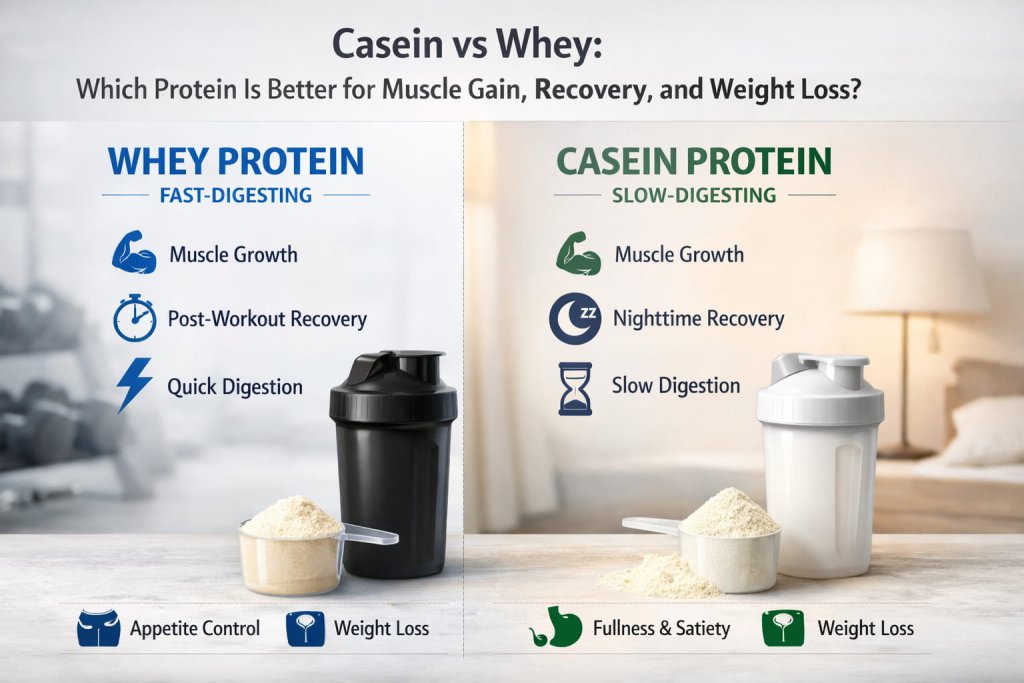
That difference matters because the “best” protein depends on your goal. If you want a convenient shake after training, whey usually makes more sense. If you want to cover a long gap without food or support overnight recovery, casein is often the smarter fit. Neither one is a magic fat-loss supplement, and neither one replaces a solid overall diet.
Casein vs whey in simple terms
Both casein and whey are complete milk proteins, which means they provide all essential amino acids. The main practical difference is how fast they digest. Whey is absorbed more quickly and tends to raise blood amino acid levels faster, while casein releases amino acids more gradually over time.
That is why whey is often marketed as a post-workout protein and casein as a nighttime protein. That basic idea is useful, but it is also easy to oversimplify. In real life, both proteins can be effective, and the better option depends on your schedule, appetite, training style, and total protein intake across the day.
What is the real difference between casein and whey?
The biggest difference is digestion speed and amino acid delivery. Whey is especially rich in leucine, the amino acid most closely linked with stimulating muscle protein synthesis. Casein digests more slowly, so amino acids enter the bloodstream at a steadier pace.
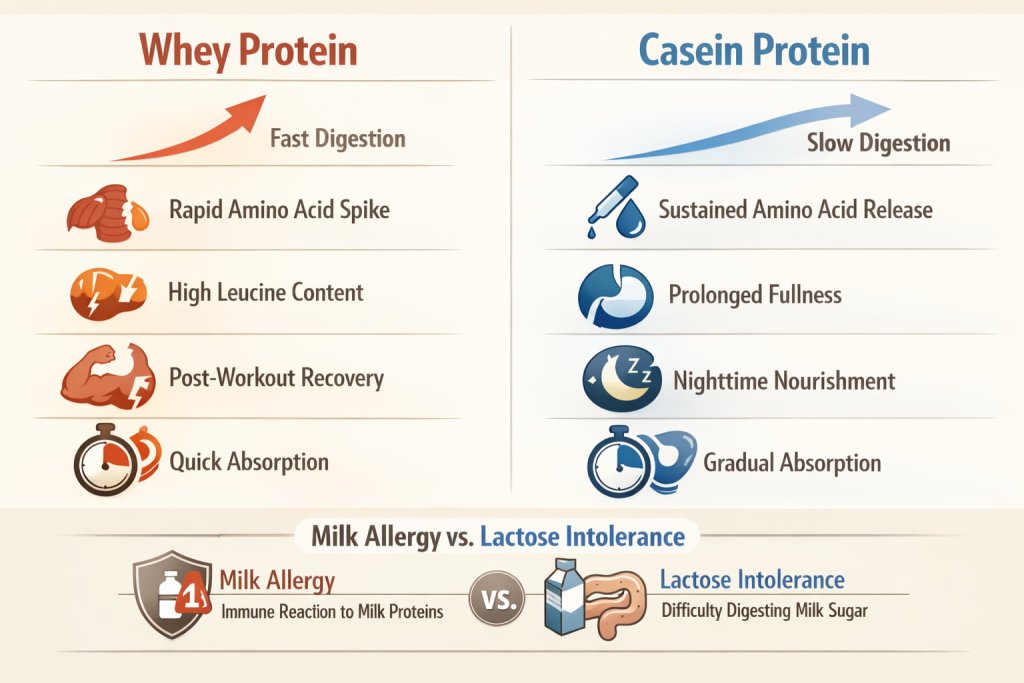
In practical terms, whey is more of a fast-rise protein, while casein is more of a slow-release protein. That does not automatically make whey better overall. It just means whey is usually more useful when timing matters right after training, while casein is often more useful when you want more staying power.
Milk allergy and lactose intolerance are not the same
This distinction matters because many people use the terms interchangeably, but they are not the same issue. The National Institute of Diabetes and Digestive and Kidney Diseases explains that lactose intolerance is different from a milk allergy. Lactose intolerance is a problem digesting lactose, the sugar in milk, and it can cause symptoms like gas, bloating, or diarrhea. A milk allergy is an immune reaction to milk proteins and can be serious.
That matters for casein vs whey because both are milk proteins. If you have a diagnosed milk allergy, casein and whey are generally not appropriate unless your clinician says otherwise. If your issue is lactose intolerance, tolerance can vary by person and by product, so reading the label and starting cautiously is more practical than assuming all dairy-based powders will affect you the same way.
Is whey or casein better for muscle gain?
For muscle gain overall, both can work well. Whey often gets the edge in the short term because of its faster digestion and higher leucine content. A PubMed-indexed study in older men found that whey stimulated post-meal muscle protein accretion more effectively than casein and casein hydrolysate.
But that is not the whole story. Another PubMed-indexed exercise study found that acute ingestion of both whey and casein after exercise increased muscle protein net balance, resulting in net muscle protein synthesis. That is why long-term outcomes usually come down less to which powder wins on paper and more to whether your total daily protein and training are strong enough to support growth.
So if your question is, “Which is better for building muscle?” the most useful answer is this:
Choose whey for muscle gain if:
You want a fast-digesting shake after training, you prefer a lighter shake, or you want the option that usually gives the bigger rapid leucine hit.
Choose casein for muscle gain if:
You want protein that digests more slowly, helps cover a long period without food, or fits better before bed.
Choose either one if:
Your real gap is simply not eating enough total protein during the day. For most active adults, that matters more. NIH notes that athletes often need about 1.2 to 2.0 grams of protein per kilogram of body weight per day, and that high-quality protein intake around training can help maximize training adaptations.
Is casein better than whey for recovery?
Both proteins can support recovery because both are complete proteins. The difference is timing. Whey is usually easier to place right after exercise because it digests quickly. NIH guidance notes that athletes can maximize muscle adaptations by consuming about 0.3 g/kg of high-quality protein within 0 to 2 hours after exercise and then every 3 to 5 hours across the day.
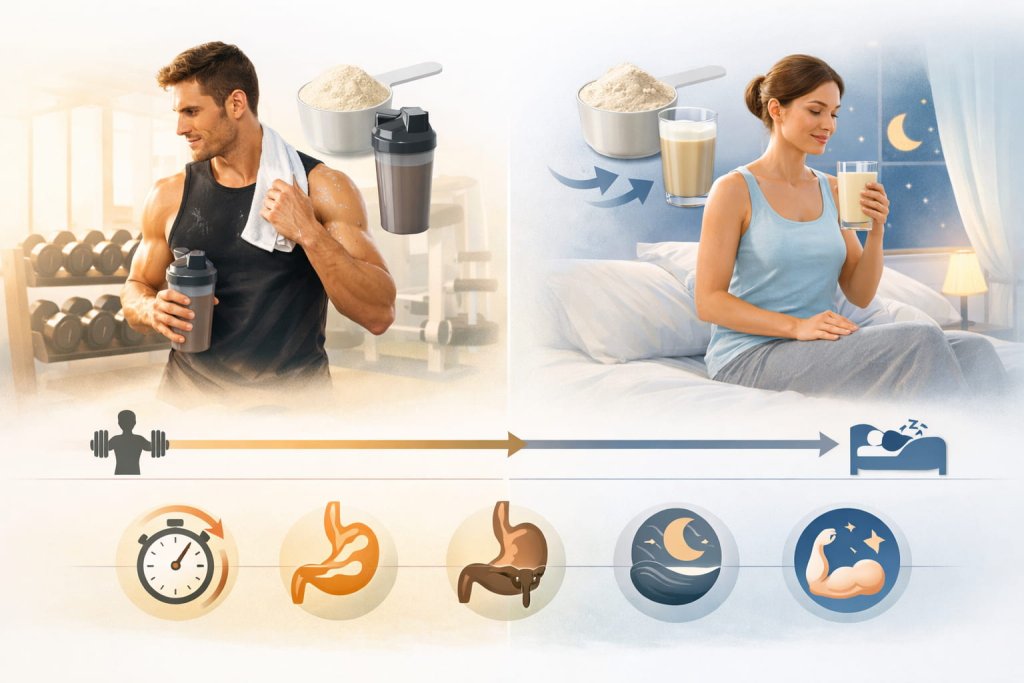
Casein becomes especially useful later in the day. A systematic review on pre-sleep protein reported that around 20 to 40 grams of casein about 30 minutes before sleep can improve the overnight protein synthetic response. That does not mean everyone must take casein before bed, but it does explain why casein is often the more logical choice when the goal is overnight recovery support.
In other words:
- Right after training, whey usually fits better.
- Before a long overnight fast, casein often fits better.
- Over a full day of eating, both can support recovery when your total intake is strong.
Casein vs whey for weight loss
Neither casein nor whey directly causes fat loss on its own. The NIDDK guidance on healthy weight management is clear that weight loss depends on a sustainable eating pattern and physical activity, not one supplement.
Where protein powders can help is more indirect. They may make it easier to hit protein goals, support lean mass while dieting, and replace less-filling snack calories with something more structured. But they still count toward your daily calories, so adding shakes on top of your usual diet can slow weight loss instead of helping it.
As for fullness, the evidence is mixed rather than dramatic. A randomized controlled trial on satiety found a positive acute effect of whey on satiety and fullness compared with casein in overweight and obese adults. That is useful, but it does not mean whey clearly wins for long-term fat loss.
A practical rule is simple:
- If you want a lighter post-workout shake, whey usually makes more sense.
- If you want a slower, more meal-like shake between meals or at night, casein may feel more filling.
- If your goal is weight loss, the best choice is the one that helps you stay within your calorie target and keep your protein intake consistent.
Which protein is better before bed?
Casein usually has the advantage before bed because of its slower digestion. That slower release is exactly why pre-sleep casein has been studied for overnight muscle protein synthesis and recovery.
If you already had a protein-rich dinner and your total daily intake is strong, a bedtime shake may be optional rather than necessary. But if evenings are your longest gap without food, casein is usually the better fit than whey.
How much protein do you actually need?
For healthy adults, MedlinePlus says protein generally makes up about 10% to 35% of total calories. For physically active people and athletes, NIH guidance puts needs higher, often around 1.2 to 2.0 g/kg/day.
For workout timing, NIH cites about 0.3 g/kg of high-quality protein within 0 to 2 hours after exercise and then every 3 to 5 hours across the day. For many people, that works out to roughly 20 to 40 grams per feeding, depending on body size and training demands.
That is why the smartest order of priorities usually looks like this:
- Hit your total daily protein target.
- Spread protein across the day reasonably well.
- Use whey or casein to make that easier when whole food is not convenient.
Do you actually need a protein powder?
Not necessarily. The MedlinePlus overview of dietary proteins notes that protein also comes from regular foods such as dairy products, meat, beans, nuts, and certain grains. Protein powder is mainly a convenience tool, not a requirement.
That means if you already reach your daily protein target with meals you enjoy and tolerate well, adding whey or casein is optional. A powder becomes most useful when whole-food meals are not practical, your schedule is tight, or you want an easier way to spread protein more evenly across the day.
How to choose between casein and whey
If you are still unsure, this shortcut works for most people.
Choose whey if you want:
A fast-digesting protein after training, a higher-leucine option, or a shake that feels less heavy.
Choose casein if you want:
A slower-digesting protein, more staying power between meals, or a bedtime shake.
Use both if you want:
Whey after workouts and casein before bed. That is a perfectly reasonable setup if it fits your budget and routine.
Keep it simple if you do not want multiple powders:
Pick the one you enjoy using and will actually take consistently. In many real-world diets, adherence matters more than micro-optimizing protein timing.
How to shop for a casein or whey protein powder
Once you know whether you want faster digestion or slower digestion, the next step is choosing a product that fits your goals and your stomach.
Start with the label. The FDA’s Nutrition Facts guide explains that nutrition information is based on the listed serving size, and the NIH consumer supplement guide notes that supplement labels list ingredients and the amount per serving. That means one scoop is not automatically the same from one brand to another.
When comparing products, check these points first:
- Protein per serving: Compare actual grams of protein, not just scoop size.
- Servings per container: A cheaper tub is not always a better value if it contains fewer usable servings.
- Added sugars and extras: Some powders include sweeteners, creamers, or fillers that may not fit your goals.
- Allergen information: This matters especially if you react to dairy.
- Quality testing: When possible, choose products that mention independent third-party testing, such as NSF or USP-style verification.
A simple rule works well: choose the powder with the protein profile you want, the fewest unnecessary extras, and a label you can understand at a glance.
Safety box
Who should be careful? If you have a milk allergy, both casein and whey should be treated as milk proteins. The FDA food allergy labeling guidance specifically notes that casein, sodium caseinate, and whey are all milk proteins.
If you have chronic kidney disease, do not assume a high-protein routine is right for you. The NIDDK guidance for adults with chronic kidney disease explains that some people with CKD may need moderate amounts of protein and should work with a clinician or dietitian to find the right amount.
When buying supplements, quality matters. NIH explains that supplements are regulated differently than drugs and that independent organizations such as NSF and U.S. Pharmacopeia offer quality testing programs. That does not guarantee a product is perfect, but it is a practical quality check when you are comparing brands.
Frequently asked questions
Is whey better than casein after a workout?
Usually, yes. Whey is the more common post-workout choice because it digests faster and contains more leucine than casein. That makes it a strong fit when you want a quick protein feeding after training.
Is casein better than whey before bed?
Usually, yes. Casein’s slower digestion and the research on pre-sleep protein make it the more logical bedtime option, especially if dinner was light or there will be a long overnight gap without food.
Can you take casein and whey on the same day?
Yes. Many people use whey after training and casein later at night. There is nothing inherently wrong with using both, as long as your total protein intake fits your needs and the product works for your digestion, budget, and schedule.
Which is better for weight loss: casein or whey?
Neither is a direct fat-loss supplement. Whey may have a slight short-term edge for fullness in some studies, while casein may feel more satisfying over a longer stretch because it digests more slowly. For actual weight loss, calorie balance and a sustainable eating plan matter more than which milk protein you buy.
Final verdict on casein vs whey
Whey is usually better for post-workout use, and casein is usually better before bed or during long gaps between meals. For muscle gain and recovery, both can work. For weight loss, neither is magic. The best choice is the one that helps you meet your daily protein goal consistently, fits your routine, and does not create unnecessary calories or digestive hassle.
If you are choosing your first protein powder, start with your actual use case, not hype. Post-workout? Go with whey. Nighttime or longer-lasting fullness? Go with casein. Want the most flexible plan? Use the one you will stick with.
This content is for informational purposes only and not medical advice.
References
- National Institute of Diabetes and Digestive and Kidney Diseases — Eating, Diet, & Nutrition for Lactose Intolerance
- PubMed — Whey Protein Stimulates Postprandial Muscle Protein Accretion More Effectively Than Do Casein and Casein Hydrolysate in Older Men
- PubMed — Ingestion of Casein and Whey Proteins Result in Muscle Anabolism After Resistance Exercise
- PubMed — Comparative Effects of Whey and Casein Proteins on Satiety in Overweight and Obese Individuals
- MedlinePlus — Protein in Diet
- MedlinePlus — Dietary Proteins
- National Institute of Diabetes and Digestive and Kidney Diseases — Eating & Physical Activity to Lose or Maintain Weight
- FDA — How to Understand and Use the Nutrition Facts Label
- National Institute of Diabetes and Digestive and Kidney Diseases — Healthy Eating for Adults with Chronic Kidney Disease