
Body recomposition means losing body fat while maintaining or gaining muscle, and yes, it is possible. The catch is that it usually works best with a patient, structured approach built around resistance training, enough protein, sustainable eating habits, and realistic progress tracking rather than crash dieting or endless cardio alone. According to a Frontiers review on body recomposition, this is a real and research-supported goal, but it usually takes consistency rather than quick fixes.
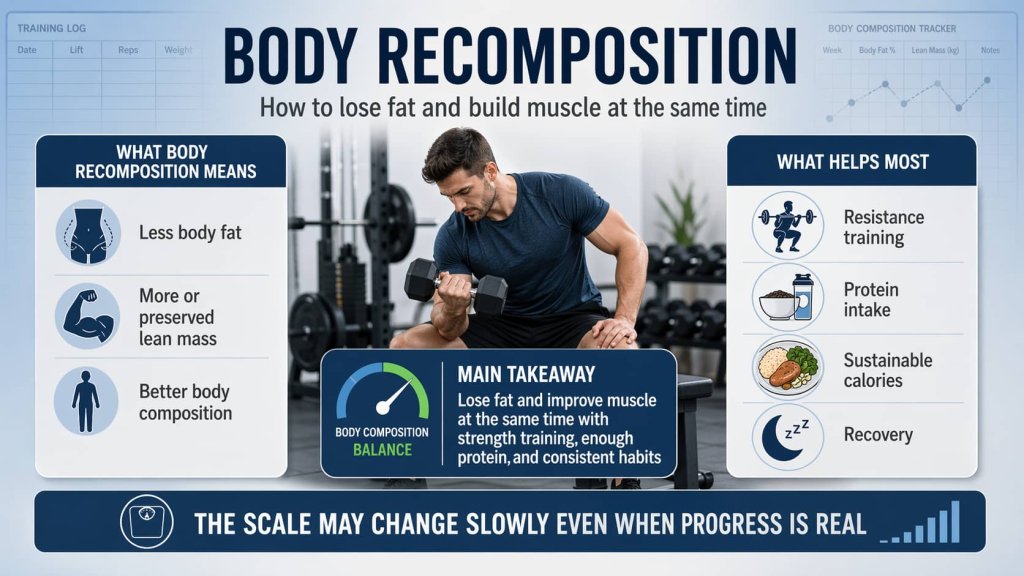
This matters because body weight by itself does not tell the full story. You can improve your shape, strength, waist measurement, and body composition even if the scale moves slowly or barely changes at all. That is one reason body recomposition is often a better goal than “just lose weight.” A PubMed study on body mass vs. body composition changes found that body weight alone can miss meaningful changes in fat mass and lean mass.
What is body recomposition?
Body recomposition is the process of reducing fat mass while preserving or increasing lean mass. In simple terms, you are not turning fat into muscle. You are lowering stored body fat while training and eating in a way that helps muscle stick around or grow.
A body recomposition goal is different from a traditional weight-loss goal. With regular dieting, the main target is a lower scale number. With body recomposition, the main target is a better fat-to-muscle balance. That is why your body may look leaner, clothes may fit better, and gym performance may improve before you see a dramatic drop on the scale.
How body recomposition works
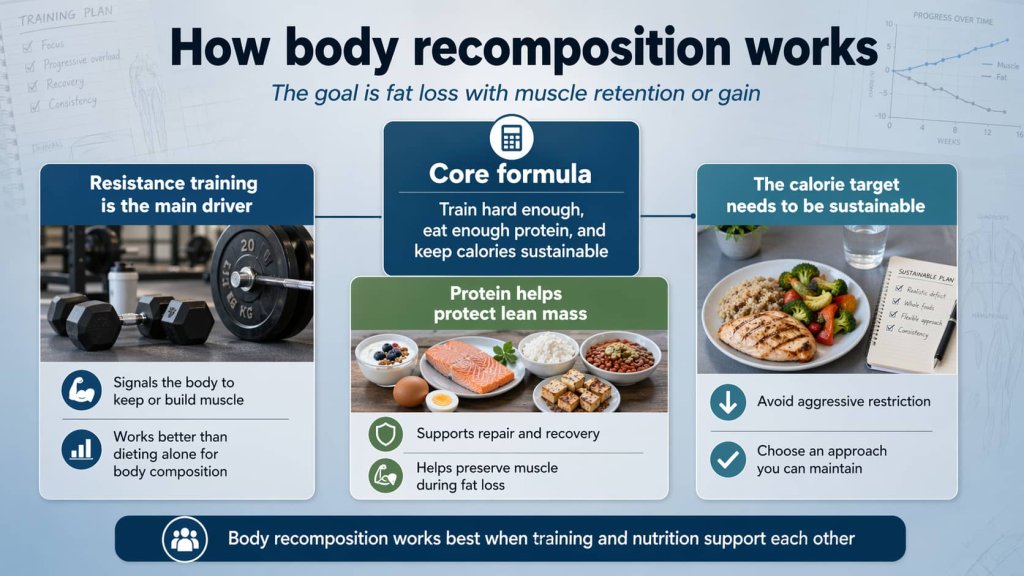
Resistance training is the main driver
If you want to keep or build muscle while losing fat, resistance training needs to stay at the center of the plan. A 2025 meta-analysis on resistance exercise during weight loss found that combining dietary weight-loss strategies with resistance exercise improved body composition more than diet-only approaches. Another 2025 review of exercise modalities during caloric restriction found that pairing calorie restriction with exercise helps optimize fat loss while preserving lean body mass.
That does not mean cardio is useless. Aerobic activity supports heart health, energy expenditure, and overall fitness. But for body recomposition, cardio works best as support, not as a substitute for lifting or other muscle-strengthening work.
Protein helps protect lean mass
Protein intake matters because your body needs enough amino acids to repair and build muscle tissue. The International Society of Sports Nutrition position stand states that 1.4 to 2.0 grams of protein per kilogram of body weight per day is sufficient for most exercising adults.
In practice, that usually means including a meaningful protein source across your meals rather than trying to cram everything into one shake. Lean meats, poultry, fish, eggs, dairy, soy foods, beans, lentils, and nuts or seeds can all help. Whole foods should come first, and supplements are optional, not mandatory. NIDDK guidance on eating and physical activity recommends a healthy eating pattern built around vegetables, fruits, whole grains, lean protein foods, and healthier fats while limiting added sugars, saturated fat, and excess sodium.
The calorie target needs to be sustainable
Body recomposition usually works better with a controlled, sustainable calorie approach than with aggressive restriction. NIDDK says the key to losing weight is choosing a healthy eating plan you can maintain over time. Extreme cuts may make adherence harder and can work against training quality and lean-mass retention.
For many adults, a modest calorie deficit makes sense when fat loss is the main goal. For very lean people who mostly want more muscle, a small surplus or maintenance intake may be more appropriate. The best choice depends on your starting point, training status, and whether fat loss or muscle gain is the bigger priority right now.
Your starting point matters more than many people realize. Body recomposition is often most noticeable in beginners, people returning to training after time off, and adults with a higher starting body-fat level. It can still happen in trained or already-lean people, but progress is usually slower and usually requires tighter control of training, recovery, and calorie intake. As people get leaner, slower fat-loss phases usually do a better job of protecting lean mass than aggressive cuts.
Best training approach for body recomposition
A practical body recomposition plan does not need to be flashy. It needs to be repeatable.
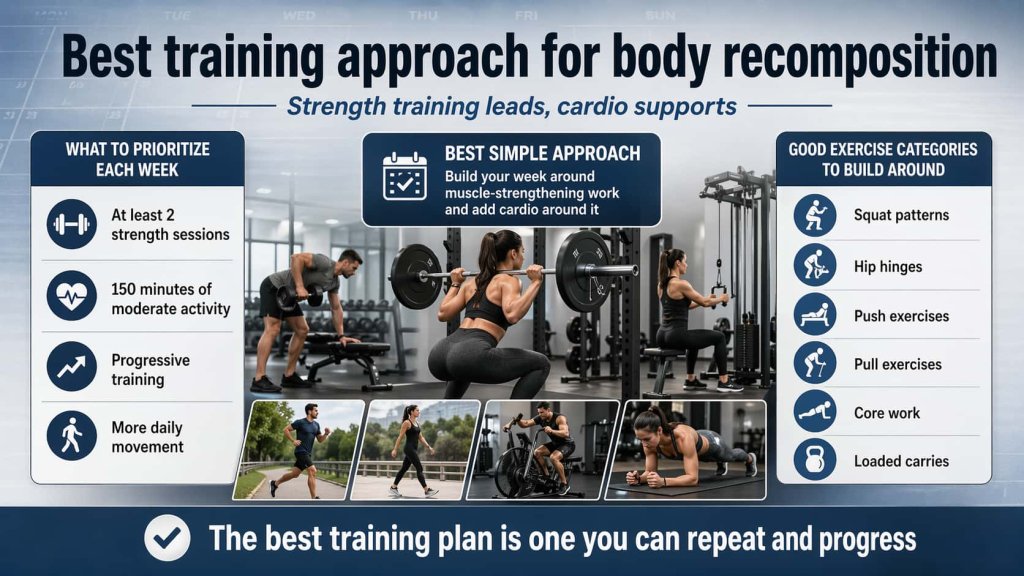
What to prioritize each week
- At least 2 days of muscle-strengthening work for all major muscle groups
- At least 150 minutes of moderate-intensity aerobic activity per week as a strong public-health baseline
- Progressive training, where your body gradually gets a reason to adapt
- Consistent movement outside formal workouts, such as walking more and sitting less
A simple weekly layout could include two to four strength sessions, plus a few sessions of walking, cycling, or other moderate cardio. The exact split matters less than consistency, good exercise selection, and gradually improving your performance over time.
Good exercise categories to build around
Most adults do well when training includes:
- Squat or leg-press patterns
- Hip-hinge patterns such as deadlift variations
- Push exercises such as presses or push-ups
- Pull exercises such as rows or pulldowns
- Core stability work
- Loaded carries, step-ups, or other functional full-body moves
These basics cover a lot of muscle mass, which is helpful when the goal is to improve body composition rather than chase novelty.
What to eat for body recomposition
There is no single body recomposition diet, but the pattern is usually similar across successful plans.
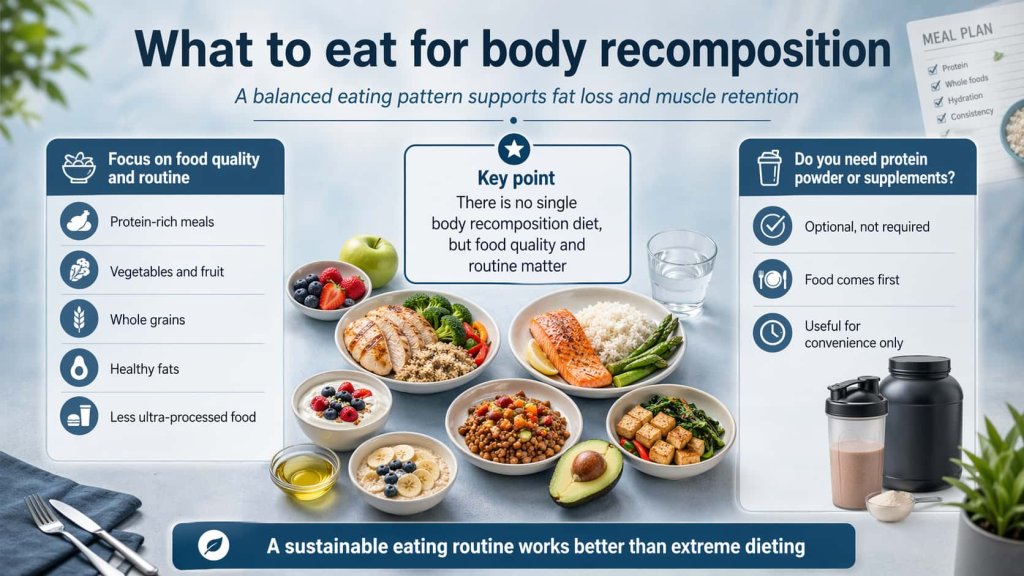
Focus on food quality and routine
A strong base looks like this:
- Protein-rich foods at meals
- Plenty of vegetables and fruit
- Mostly whole-grain carbohydrate sources
- Healthy fats from foods such as olive oil, nuts, seeds, and seafood
- Fewer ultra-processed, high-calorie foods that are easy to overeat
This kind of routine supports training, recovery, and appetite control. It also makes it easier to stay consistent long enough to see changes in body composition.
Do you need protein powder or supplements?
No. Protein powder can be convenient, but it is just one tool. If you already meet your protein needs from food, you do not need it. If you do use supplements, the NIH Office of Dietary Supplements guidance on exercise and athletic performance notes that exercise-performance products can have side effects, may interact with medications, and are not a substitute for a solid diet.
That caution matters even more for younger athletes. The same NIH fact sheet notes that major sports nutrition groups do not justify the use of performance supplements by young athletes and emphasize nutrition basics first.
How to track body recomposition progress
If you only track scale weight, you can miss real progress. A 2021 study found that body mass did not reflect body composition changes after similar training. That is a big reason body recomposition can feel confusing if you judge success by one number alone.
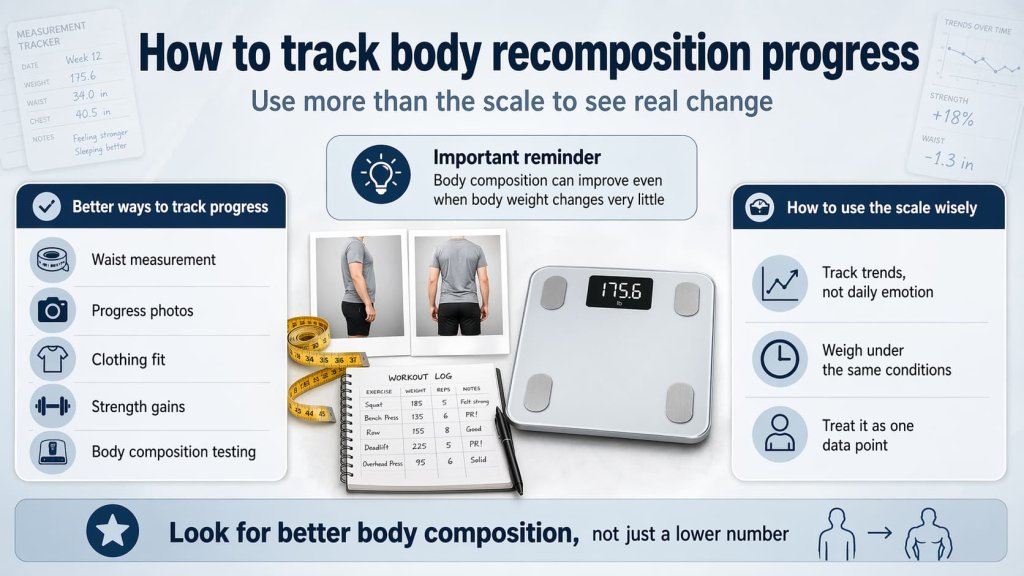
A better way to track progress is to use a few markers together:
- Scale weight trend over time, not day-to-day fluctuations
- Waist measurement
- Progress photos
- Clothing fit
- Strength or workout performance
- Body composition testing, if you have access to it
If you use scale weight, keep the method consistent. Weigh under the same conditions each time, ideally in the morning, and treat it as one data point rather than the whole result. That helps you read the number more accurately in a process where body composition can improve even when total body weight changes very little. NHS England guidance on recording weight supports using a consistent method so the number is more useful over time.
Waist measurement is especially useful because NHLBI guidance on healthy weight notes that carrying more fat around the waist raises health risk. For adults, a waist circumference of more than 35 inches for women or 40 inches for men increases risk. NHLBI recommends measuring just above the hipbones after breathing out.
Why sleep and recovery matter for body recomposition
Training and food are not the whole picture. Recovery matters too. CDC sleep guidance for adults says adults should get at least 7 hours of sleep each day. Poor sleep can make appetite, recovery, and workout quality harder to manage, which is not helpful when you are trying to improve both fat loss and muscle retention at the same time.
Recovery also includes rest days, sensible training volume, and not trying to push every session to exhaustion. Body recomposition is more of a consistency project than a punishment project.
Common mistakes that slow body recomposition
Doing too much cardio and too little strength work
This can make it harder to send a strong muscle-preserving signal, especially during a calorie deficit. A better approach is to keep strength training as the foundation and use cardio as a support tool.
Eating too little
Very aggressive dieting may lower training quality, make recovery worse, and increase the chance that lost weight includes lean tissue. Sustainable nutrition usually beats short, harsh phases that you cannot maintain.
Expecting fast scale changes
Body recomposition is often slower than straight weight loss because you are trying to improve more than one thing at once. Visible changes, better strength, and a smaller waist are often more meaningful than rapid scale loss.
Changing the plan too often
Body recomposition takes enough time for training and nutrition to work together. Constantly switching diets, workouts, or calorie targets makes it harder to tell what is actually helping.
Who body recomposition is best for
Body recomposition is often a strong fit for:
- Adults who want to lose fat without obsessing over the scale
- People who want to look leaner and feel stronger
- Beginners starting a structured strength routine
- People returning to training after time off
- Adults with overweight or obesity who want a more health-focused approach than crash dieting alone
It can also be a smart mindset shift for people who have dieted before, lost weight, and then regained it because the plan was too extreme to maintain. Long-term habits usually work better than short bursts of restriction.
Who should be more careful before starting a body recomposition plan
You should get individualized advice before making major changes if you:
- Have heart disease, diabetes, high blood pressure, or another chronic condition
- Have a disability that affects exercise choices
- Are pregnant or breastfeeding
- Are under 18 and thinking about using adult calorie tools or aggressive dieting methods
One more group belongs here: people with a history of disordered eating, compulsive exercise, or intense anxiety around food, weight, or body shape. In those cases, a body recomposition plan can become too restrictive or mentally unhealthy if it is self-directed. The National Institute of Mental Health eating disorders page notes that fixation on weight loss, body weight or shape, and controlling food intake can be warning signs of an eating disorder, so a clinician or registered dietitian is the safer place to start.
NIDDK specifically states that its Body Weight Planner is for adults 18 and older and is not intended for younger people or for pregnant or breastfeeding women. That is an important limit to mention in any body recomposition guide.
A simple body recomposition plan to start with
If you want a straightforward place to begin, use this framework:
- Strength train at least 2 times per week, covering all major muscle groups
- Add enough cardio to meet the adult baseline of at least 150 minutes per week
- Build meals around protein, vegetables, fruit, whole grains, and healthier fats
- Avoid crash diets and choose an eating pattern you can sustain
- Track your waist, strength, and photos along with your weight
- Sleep at least 7 hours most nights
That is not flashy, but it is evidence-based and realistic.
FAQ
Is body recomposition better than weight loss?
It depends on your goal, but for many people, yes. If you care about looking leaner, getting stronger, and improving body composition rather than just seeing a lower number on the scale, body recomposition is often the better target.
Can you do body recomposition without lifting weights?
You can improve health with many forms of activity, but body recomposition is harder without resistance training because muscle-strengthening work is the main signal that tells your body to keep or build lean mass.
How long does body recomposition take?
Usually longer than simple scale-based dieting. Think in terms of steady progress over months, not dramatic changes in a week or two. Because the scale may move slowly, waist size, photos, and strength are often better indicators of progress.
Do you need a perfect diet for body recomposition?
No. You need a sustainable one. Consistency with protein, training, calorie awareness, and recovery matters more than chasing a perfect meal plan for a few days and then falling off.
Conclusion
Body recomposition is real, but it is not a shortcut. The most effective approach is usually simple: lift regularly, eat enough protein, keep calories sensible, recover well, and track more than just the scale. Done consistently, that approach can help you lose fat, keep muscle, and build a body that performs better as well as looks better.
If you are starting now, focus on the basics for the next 8 to 12 weeks and judge progress by your strength, waist, habits, and how you feel, not just by one morning weigh-in.
Safety box
Body recomposition should support health, not push you into extreme restriction or overtraining. If you have a medical condition, are pregnant or breastfeeding, are under 18, or have a history of disordered eating, get personalized guidance before using adult calorie targets or starting a hard training cut.
This content is for informational purposes only and not medical advice.
References
- Frontiers / PMC — Editorial: New insights and advances in body recomposition
- Healthy People 2030 — Increase the proportion of adults who do enough aerobic and muscle-strengthening activity
- PubMed — Effect of resistance exercise on body composition during dietary weight loss
- PubMed — Comparing exercise modalities during caloric restriction
- PubMed — International Society of Sports Nutrition Position Stand: protein and exercise
- PubMed — Body mass does not reflect the body composition changes in response to similar physical training
- NHLBI — Aim for a Healthy Weight
- CDC — FastStats: Sleep in Adults
- NIH Office of Dietary Supplements — Dietary Supplements for Exercise and Athletic Performance
- National Institute of Mental Health — Eating Disorders