
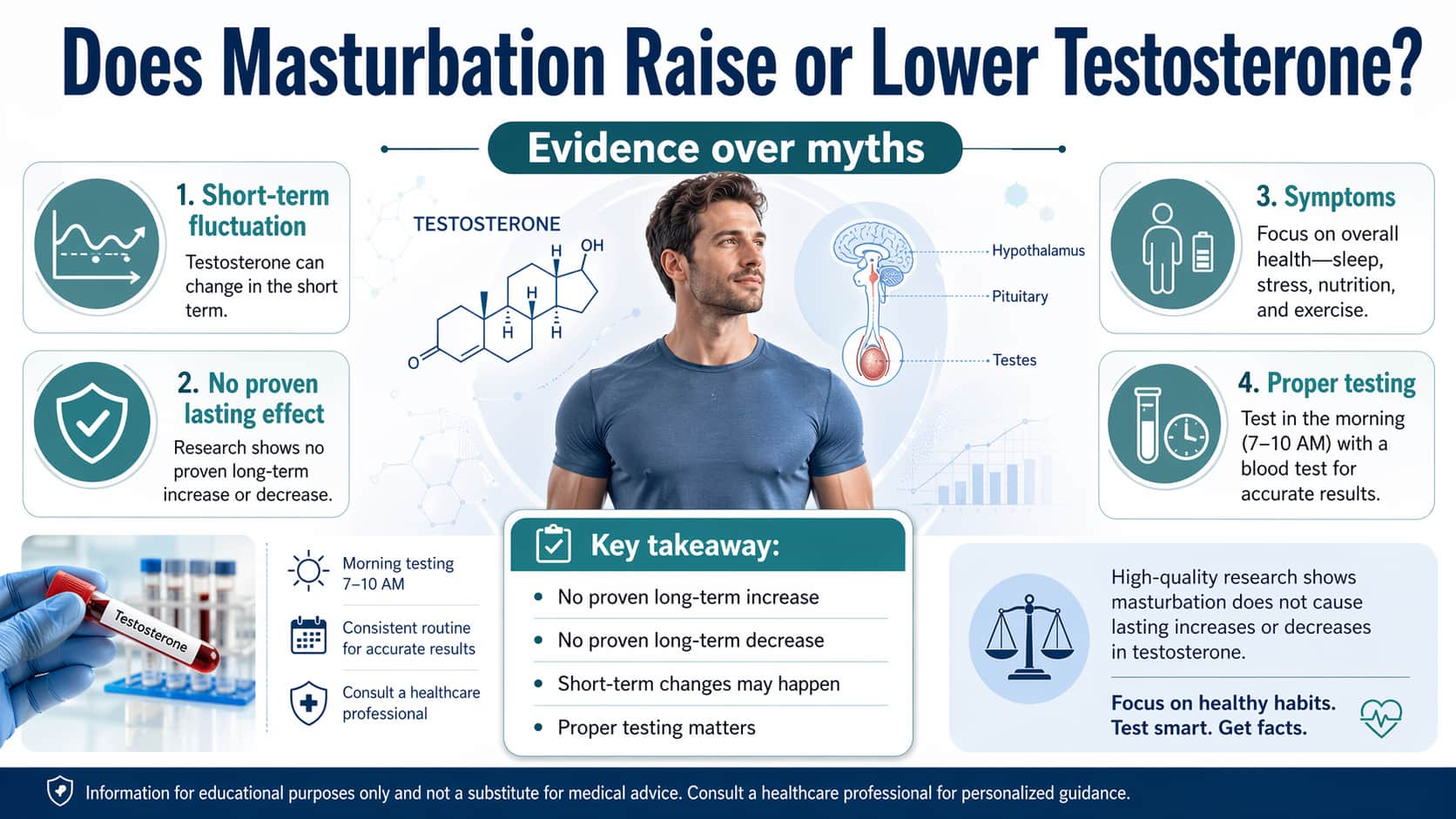
Masturbation does not appear to raise or lower testosterone in any lasting, clinically meaningful way. The best available evidence suggests that testosterone may fluctuate briefly around sexual activity, but there is no strong proof that masturbation causes long-term low testosterone or reliably boosts it over time. That matters because many people blame masturbation for symptoms that are more often explained by sleep, stress, weight, illness, medications, or true hormone deficiency that needs proper testing.
The short answer on masturbation and testosterone
A good evidence-based answer is simple: masturbation is not a proven cause of low testosterone, and stopping masturbation is not a proven way to raise it long term. Cleveland Clinic notes that masturbation does not have long-term effects on testosterone, while also explaining that short-term findings in small studies have been mixed.
That means the internet myth is overstated in both directions. Masturbation is not a hormone “drain,” but it is also not a reliable hormone “hack.” If your concern is true low testosterone, the main question is not how often you masturbate. The real question is whether you have consistent symptoms plus repeatedly low morning blood-test results.
What the studies actually show
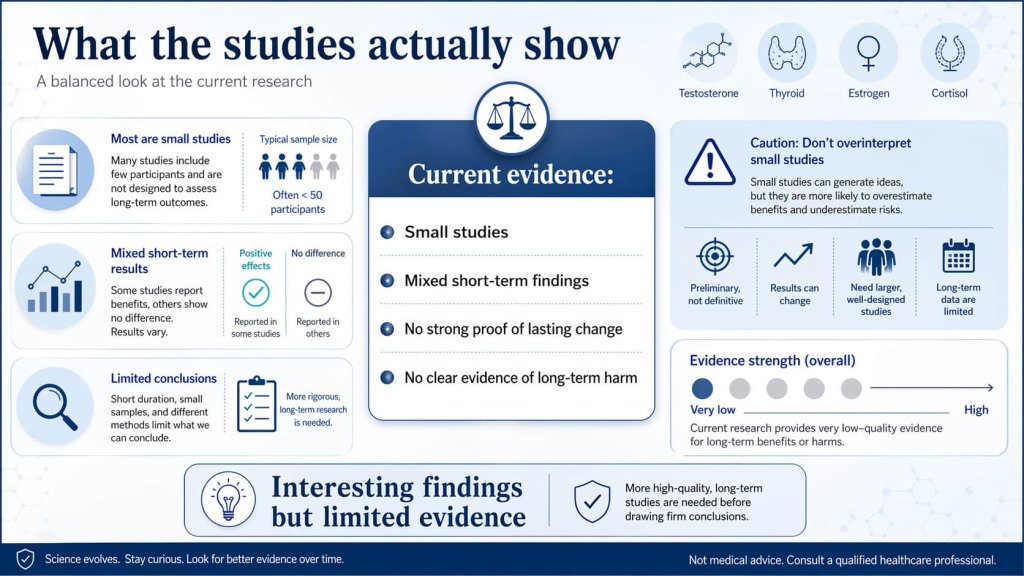
The research people quote most often is not as strong as social media makes it sound. A small 2021 pilot study published in PubMed’s listing for Basic and Clinical Andrology found that masturbation may affect free testosterone concentrations, but it did not show a significant change in hormonal ratios, and the authors called for larger studies. That makes it interesting, but not strong enough to prove a meaningful long-term effect in everyday life.
An older 2001 study, also indexed in PubMed, found that acute orgasm during the testing session did not itself change plasma testosterone, although testosterone levels were higher after a period of abstinence in that very small sample.
Small studies like this can hint at short-term hormonal movement, but they do not prove that masturbation is causing a lasting increase or decrease in testosterone in the real world.
It is also worth keeping the evidence limits in mind. Most of the direct research on masturbation and testosterone is small and focused on men, so it cannot support sweeping claims. That is one reason major clinical guidance does not treat masturbation frequency as a meaningful cause of testosterone deficiency. The stronger medical standard is still symptoms plus repeat morning blood tests.
Why the “7 days of abstinence boosts testosterone” claim is not reliable
A famous claim online says abstaining from ejaculation for seven days sharply increases testosterone. The problem is that the 2003 paper behind that claim was later retracted. Springer’s retraction note says the article was retracted because it significantly overlapped with a previously published article in Chinese.
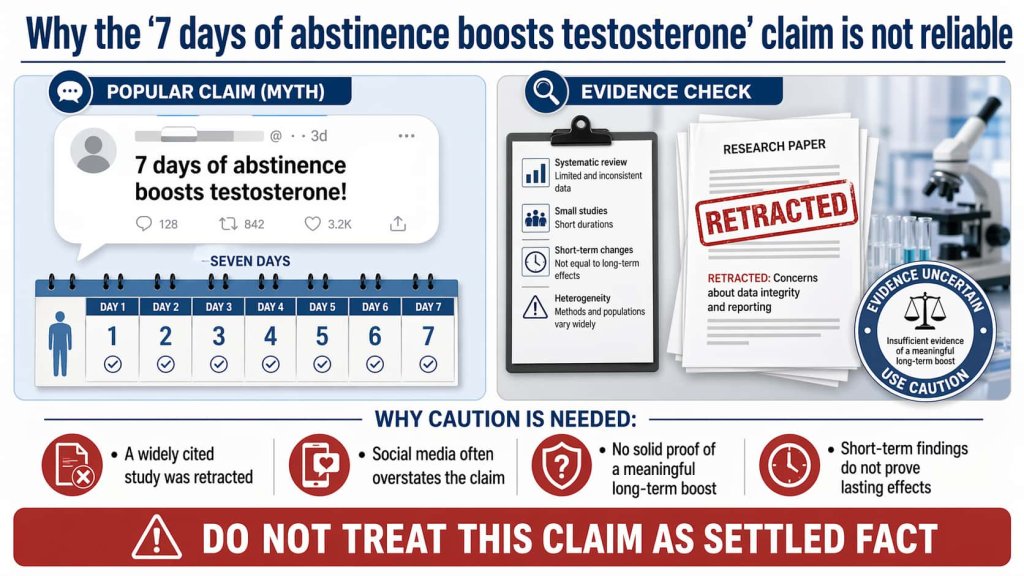
That does not automatically erase all uncertainty around abstinence and hormones, but it does mean this study should not be treated as strong proof that avoiding masturbation reliably boosts testosterone.
This is one reason the best current answer stays conservative: there may be short-term fluctuations, but there is no solid evidence that masturbation lowers testosterone long term or that abstinence meaningfully raises it long term.
That position also matches the broader medical approach to testosterone deficiency, which focuses on symptoms and repeat blood testing rather than on sexual frequency.
Do not confuse testosterone with sperm or semen
One reason this topic gets confusing is that testosterone and semen are not the same thing. Testosterone is a hormone measured with a blood test. Semen analysis looks at sperm count, movement, and other fertility-related measures. Those are different tests with different goals.
This matters because some men are told to avoid ejaculation for 2 to 7 days before a semen analysis so the sample reflects their highest sperm count. MedlinePlus guidance on semen analysis and Cleveland Clinic’s semen analysis guide both describe abstinence instructions for fertility testing. But that does not mean abstaining from masturbation is a proven way to raise testosterone. It means abstinence can affect a semen test, not that it has been shown to create a meaningful long-term testosterone boost.
What actually affects testosterone more than masturbation
If someone has genuinely low testosterone, the more likely explanations are things like age-related decline, obesity, illness, poor nutrition, overtraining, certain medications, injury to the testicles, or problems involving the pituitary gland or hypothalamus.
The Endocrine Society’s patient guide to hypogonadism notes that testosterone naturally changes from hour to hour, is highest in the morning and lowest at night, and can temporarily fall with too much exercise, poor nutrition, severe illness, and some medicines.
MedlinePlus patient guidance also explains that low testosterone can be linked to obesity, medication side effects, testicular injury, and disorders affecting the glands that control hormone production.
So if someone feels tired, has lower libido, or notices worse erections, masturbation is usually not the first place to look. Sleep loss, depression, anxiety, relationship issues, alcohol, chronic disease, medication effects, and weight gain are often more relevant than ejaculation frequency. Some symptoms that people attribute to “low T” can also happen for entirely different reasons.
What low testosterone symptoms can look like
Possible symptoms of low testosterone include lower sex drive, erectile problems, infertility, loss of muscle mass, increased body fat, low energy, low mood, trouble concentrating, thinning bones, or fewer spontaneous erections. But symptoms alone are not enough to diagnose testosterone deficiency. Blood testing and clinical context matter.
That is important because some men with borderline or even low lab values have few symptoms, while others have symptoms caused by something else entirely. In other words, feeling “off” after masturbation does not prove your testosterone dropped.
How low testosterone is actually diagnosed
The Endocrine Society’s clinical guideline on testosterone therapy recommends diagnosing hypogonadism only in people who have symptoms or signs of testosterone deficiency plus unequivocally and consistently low testosterone levels. It also recommends confirming the diagnosis by repeating a morning fasting testosterone measurement.
The American Urological Association guideline says clinicians can use a total testosterone below 300 ng/dL as a reasonable cut-off in support of diagnosis, but that number still has to be interpreted alongside symptoms and repeat testing. A single random afternoon test is not the same as a proper evaluation.
What can skew a testosterone test
A single low testosterone result can be misleading. Testosterone is usually highest in the morning and lowest at night, and levels can also shift from day to day. Severe illness, poor nutrition, too much exercise, and some medicines can temporarily lower testosterone.
That is why proper testing matters. The Endocrine Society recommends confirming low testosterone with repeat morning fasting tests, and MedlinePlus’ testosterone test overview notes that testing is commonly done between 7 and 10 a.m. In practical terms, a one-off low number after a bad night of sleep, intense training, or an illness should not be treated as proof that masturbation lowered your testosterone.
Does masturbation matter for muscle gain or gym performance?
There is no strong evidence that ordinary masturbation habits meaningfully change your long-term testosterone status in a way that determines muscle gain. Muscle growth depends much more on training quality, recovery, calories, protein intake, sleep, and overall health. Even if sexual activity causes a brief hormonal fluctuation, that is not the same thing as creating a lasting anabolic advantage or disadvantage.
So if you are trying to build muscle, it makes more sense to focus on consistent programming, adequate sleep, and enough food than to worry that masturbation is tanking testosterone.
When to see a doctor instead of guessing
Make an appointment if you have ongoing symptoms such as low libido, erectile dysfunction, infertility concerns, reduced muscle mass, fatigue, depressed mood, or unexplained changes in body composition. Mayo Clinic’s male hypogonadism overview explains that finding the cause of hypogonadism is an important first step before treatment.
This is also why self-treating with internet advice or assuming masturbation is the cause can delay the real answer. If testosterone truly is low, the workup may need repeat labs and sometimes additional testing to look at the pituitary gland, testes, or related hormones.
FAQ
Does masturbation lower testosterone?
Not in any proven long-term way. The current evidence and patient guidance point to no lasting reduction in testosterone from masturbation.
Does masturbation raise testosterone?
It may be associated with brief hormonal fluctuations around sexual activity, but there is no strong evidence that it raises testosterone in a lasting or clinically meaningful way.
Does abstaining from masturbation increase testosterone?
There is no strong basis for claiming that abstinence reliably boosts testosterone. A commonly cited 2003 study supporting that claim was retracted in 2021.
Can masturbation cause low testosterone symptoms?
Masturbation itself is not a proven cause of low testosterone. If you have symptoms that sound like low T, it is more useful to look at sleep, stress, body weight, illness, medications, and proper hormone testing.
What is the right way to test for low testosterone?
Use a clinician-guided workup with symptoms plus repeat early-morning blood tests. Diagnosis depends on more than one number and more than one symptom.
The bottom line
If you are asking whether masturbation raises or lowers testosterone, the most accurate answer is: probably neither in any lasting way that matters clinically. Short-term changes may happen, but they are not the same thing as true testosterone deficiency. If you are worried about low testosterone, skip the myths and get evaluated the right way with symptoms, repeat morning labs, and medical guidance. That approach is far more useful than blaming masturbation.
If you have persistent symptoms, the smartest next step is to discuss testing with a clinician rather than trying to “fix” testosterone by changing masturbation frequency alone.
This content is for informational purposes only and not medical advice.
References
- PubMed — Endocrine Response to Masturbation-Induced Orgasm in Healthy Men Following a 3-Week Sexual Abstinence
- Springer Nature — Retraction Note to: A Research on the Relationship Between Ejaculation and Serum Testosterone Level in Men
- MedlinePlus — Semen Analysis
- Cleveland Clinic — Semen Analysis
- Endocrine Society — Hypogonadism in Men
- American Urological Association — Testosterone Deficiency Guideline
- MedlinePlus — Testosterone Levels Test