
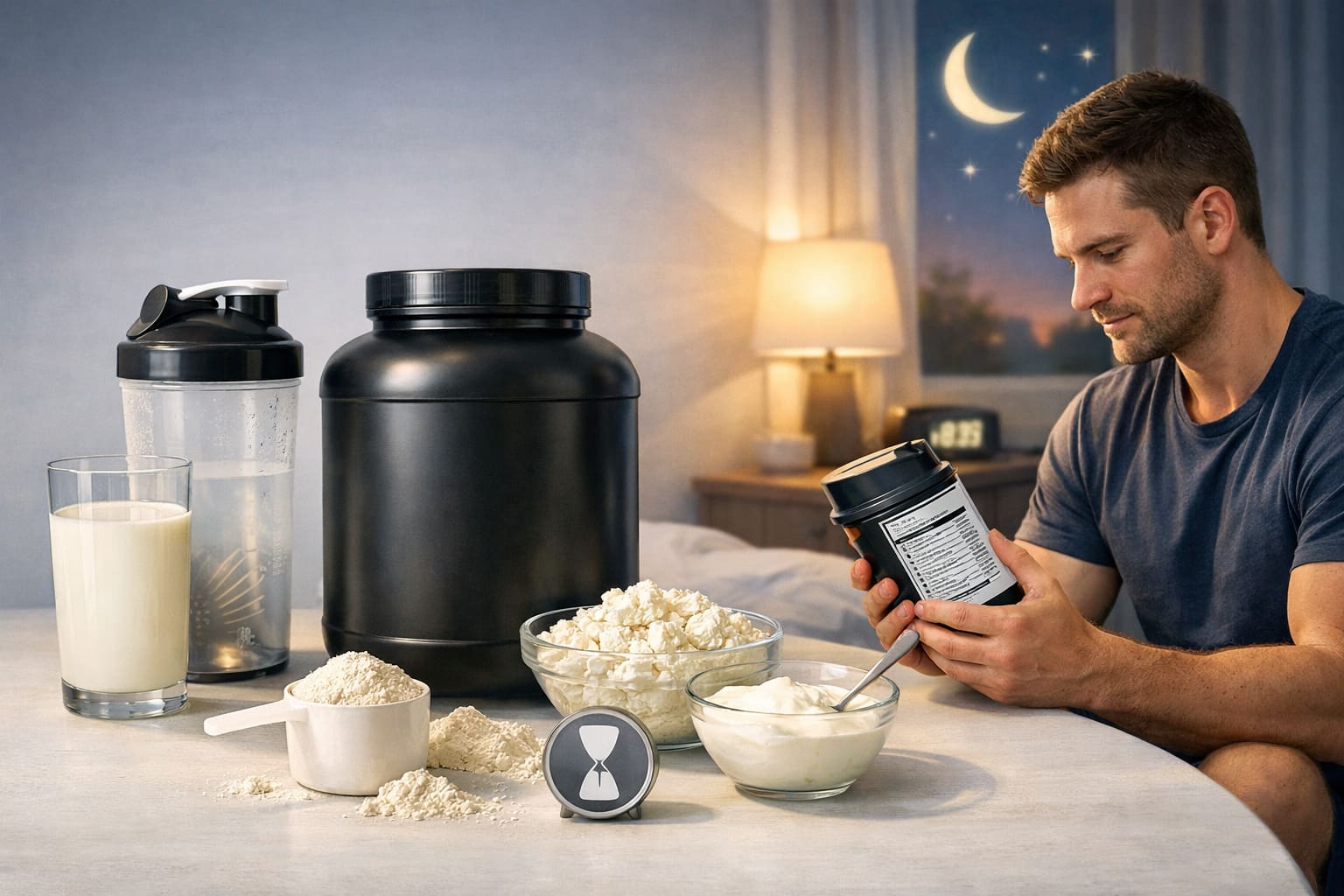
Casein protein is a slow-digesting milk protein that may help support muscle recovery, especially when you go long hours without eating or want a protein option before bed. Understanding how casein protein works matters because it can be useful in the right situation, but it is not automatically better than whey, and it is not the right choice for everyone.
What Is Casein Protein?
Casein is the main protein in cow’s milk, accounting for about 80% of milk protein. Milk protein is also considered a complete protein, which means it provides all nine essential amino acids your body needs from food. According to the NIH review on milk proteins, that is one reason dairy proteins remain popular in both sports nutrition and everyday diets.
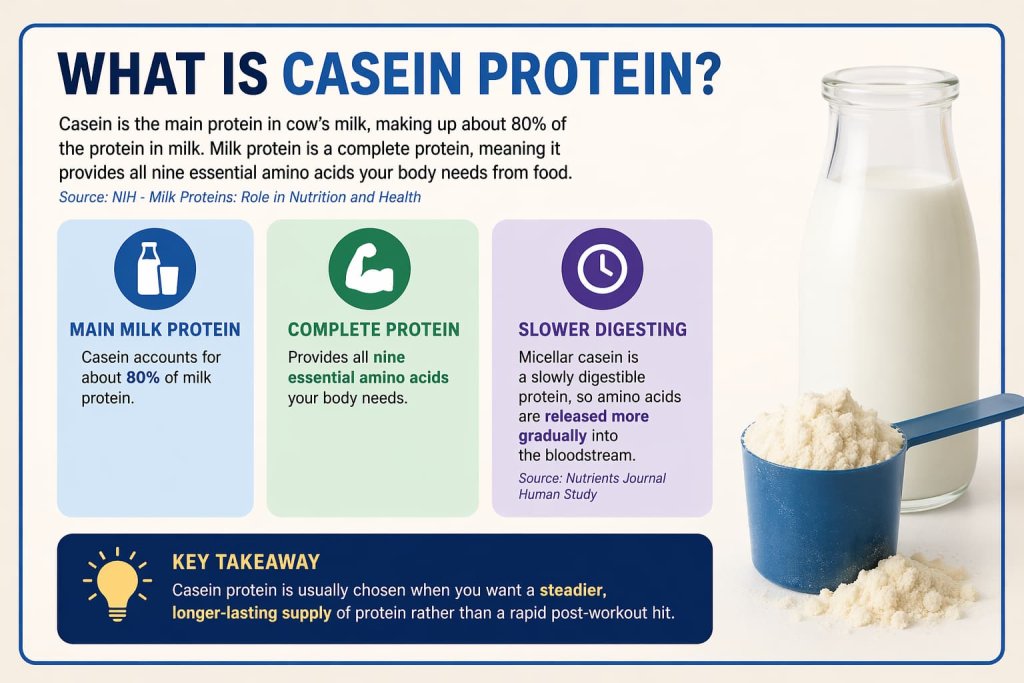
What makes casein protein different is its digestion speed. A human study published in Nutrients describes micellar casein as a slowly digestible protein source, meaning amino acids tend to appear more gradually in the bloodstream than they do with whey. In practical terms, casein is usually chosen when someone wants a steadier protein supply rather than a rapid post-workout hit.
Natural Food Sources of Casein Protein
You do not need a powder to get casein protein. Dairy foods such as milk, cottage cheese, yogurt, skyr, and cheese naturally provide casein, although the exact mix of casein and whey varies by food. For many people, a protein-rich evening snack can serve the same purpose as a casein shake. A supplement is most useful when convenience, portability, taste, or precise protein tracking matters more than getting protein from whole foods.
Casein Protein Benefits
1. Casein protein may help support overnight muscle recovery
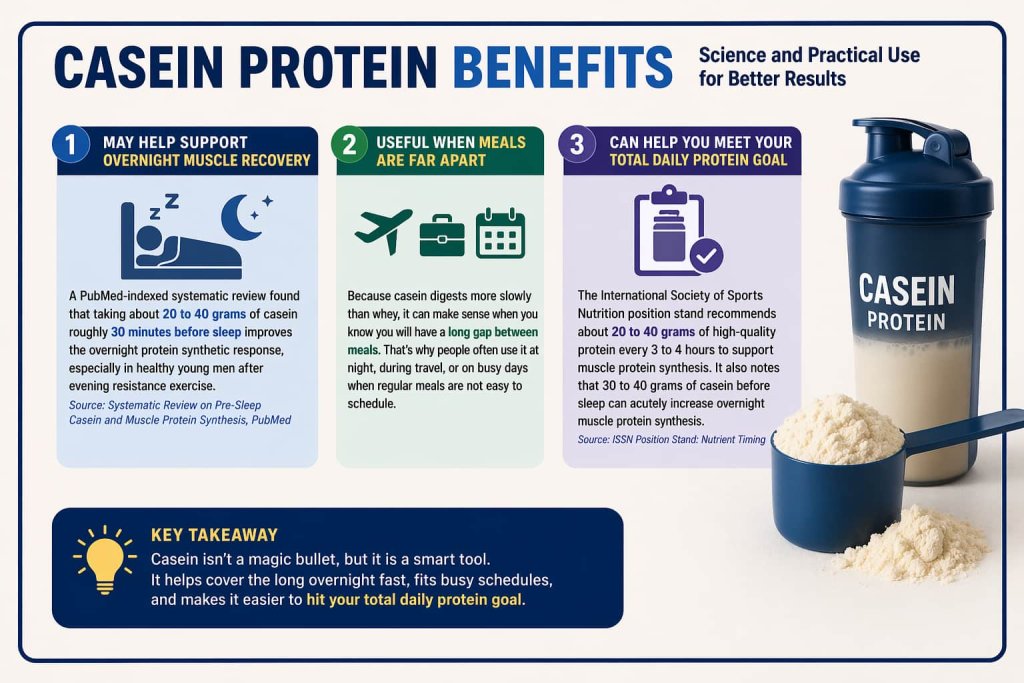
The strongest evidence for casein protein is around pre-sleep use. A systematic review indexed by PubMed found that taking about 20 to 40 grams of casein roughly 30 minutes before sleep improves the overnight protein synthetic response, especially in healthy young men after evening resistance exercise. That does not make casein a miracle muscle builder, but it does make it a practical option for people who train hard and want to cover the long overnight fasting window.
2. Casein protein can be useful when meals are far apart
Because casein digests more slowly than whey, it can make sense when you know you will have a long gap between meals. That is why people often use it at night, during travel, or on busy days when regular meals are not easy to schedule. The point is not that slow protein is always superior. The point is that casein fits situations where slower amino acid delivery is the goal.
3. Casein protein can help you meet your total daily protein goal
For most people trying to support muscle gain or recovery, the bigger issue is total daily protein intake, not whether every scoop comes from casein. The International Society of Sports Nutrition position stand says that about 20 to 40 grams of high-quality protein every 3 to 4 hours is a useful pattern for supporting muscle protein synthesis, and it also notes that 30 to 40 grams of casein before sleep can acutely increase overnight muscle protein synthesis. You can read that in the ISSN position stand on nutrient timing.
Casein Protein vs Whey Protein
Casein protein and whey protein both come from milk, but they are usually used for different reasons. Casein is slower. Whey is faster. That difference is why whey is often the easier choice right after training, while casein is often the better fit before bed or during longer gaps without food.
That does not mean casein is inferior. It means the timing and purpose are different. If your priority is fast digestion and a quick rise in amino acids, whey usually makes more sense. If your priority is a more prolonged amino acid release, casein protein has a clearer role. For many people, the best answer is not “casein or whey.” It is using the protein source that fits the situation while keeping total daily intake on track.
One useful detail is leucine. Leucine is the amino acid that helps trigger muscle protein synthesis, and whey usually provides more leucine per serving than casein. That helps explain why whey is often preferred immediately after training, while casein is more often used before bed or during long gaps between meals, when slower amino acid delivery is the main advantage.
When to Take Casein Protein
Casein protein usually makes the most sense in two situations.
Before bed
This is the best-supported timing strategy. A serving of 20 to 40 grams about 30 minutes before sleep is the range most often studied.
Between meals or during long gaps without food
Casein can also be useful when you know you will go several hours without a meal. That might include long work shifts, travel, or a late dinner followed by sleep. This is more of a practical use case than a special performance trick, but it is one of the reasons casein remains popular.
How Much Casein Protein Should You Take?
A practical serving is usually 20 to 40 grams, depending on your body size, total protein intake, and the rest of your diet. Many active adults do well by using casein as just one protein feeding within a day that already includes protein-rich meals. If you already meet your protein needs with food, casein is optional rather than essential.
A simple way to think about it is this: use casein to fill a gap, not to replace a balanced diet. If you regularly eat enough protein across the day, casein is a convenience tool, not a requirement.
Who May Benefit Most From Casein Protein?
Casein protein may be most useful for:
- people doing regular resistance training
- people who prefer a protein feeding before sleep
- people who go long stretches between meals
- people who struggle to hit daily protein targets with food alone
It may be less compelling if you already eat enough daily protein, prefer whole foods, or want a protein powder mainly for immediately after training, where faster digestion is often the main goal.
Casein Protein Side Effects and Safety
Most discussion around casein protein safety comes down to allergies, digestive tolerance, kidney disease, and supplement quality, not to some unique danger of casein itself.
Milk allergy: a real reason to avoid casein protein
Casein is a milk protein. The FDA explains in Have Food Allergies? Read the Label that ingredients such as casein, sodium caseinate, and whey are all milk proteins, and the food source name must be declared on the label. If you have a true milk allergy, casein protein is not appropriate.
Lactose intolerance: different from milk allergy
Lactose intolerance is not the same thing as a milk allergy. The National Institute of Diabetes and Digestive and Kidney Diseases explains in Symptoms & Causes of Lactose Intolerance that lactose intolerance comes from difficulty digesting lactose, the natural sugar in milk, while milk allergy is an immune reaction to milk proteins. Some people with lactose intolerance can tolerate certain dairy products or smaller amounts of lactose better than others, so tolerance to a casein supplement may depend on the formula and the amount of residual lactose in it.
Chronic kidney disease: get medical guidance first
For healthy people, protein powders are usually discussed in the context of diet and training. For people with chronic kidney disease, the conversation is different. NIDDK notes in Healthy Eating for Adults with Chronic Kidney Disease that some people with CKD may need to consume moderate amounts of protein so waste does not build up in the blood. If you have CKD or have been told to limit protein, do not add casein casually without guidance from your clinician or renal dietitian.
Supplement labels and quality matter
If you buy casein as a powder, remember that supplements are not pre-approved by FDA before sale. The FDA states in Questions and Answers on Dietary Supplements that manufacturers and distributors have the initial responsibility for ensuring supplement safety and labeling, while the NIH Office of Dietary Supplements says in Dietary Supplements: What You Need to Know that third-party seals such as NSF International and U.S. Pharmacopeia can help verify manufacturing quality and label accuracy, though they do not guarantee that a product is safe or effective for you.
Safety box: Avoid casein protein if you have a milk allergy. If you have lactose intolerance, check the label carefully because tolerance depends on the product and your individual sensitivity. If you have chronic kidney disease or another medical condition that affects protein intake, talk with your health care professional before using a casein supplement. Choose products with clear labeling and, when possible, third-party quality testing.
How to Choose a Casein Protein Powder
One label detail is worth checking: not every product marketed around casein is the same. Micellar casein is the classic slow-digesting form most people mean when they talk about casein powder. Some products use caseinates or broader milk-protein blends instead. That does not automatically make them worse, but the texture, digestion rate, and overall protein profile may not be identical. If your goal is a slow bedtime protein, a product that clearly lists micellar casein is usually the simplest choice.
A good casein protein product should be simple and transparent. Look for:
- a clear protein amount per serving
- an ingredient list you can understand
- milk allergen labeling
- third-party quality seals when available
- a serving size that fits your actual protein needs, not just the biggest scoop on the shelf
Do not assume that “more” is better. A larger serving is not automatically more useful, especially if it pushes your total intake beyond what you actually need.
FAQs About Casein Protein
Is casein protein better than whey?
Not overall. Casein is usually better when you want slower digestion, such as before sleep. Whey is usually better when you want faster digestion, such as right after training. Both can fit a good nutrition plan.
What is the best time to take casein protein?
The best-supported time is about 30 minutes before bed, typically in the 20 to 40 gram range.
Can you take casein protein every day?
Yes, many people can use casein daily as part of their total protein intake, as long as it fits their diet and they do not have a reason to avoid milk proteins. Daily use is optional, not mandatory.
Who should avoid casein protein?
People with a milk allergy should avoid it. People with chronic kidney disease or anyone under medical advice to limit protein should check with a health professional first.
Conclusion
Casein protein can be a smart, useful option when you want a slow-digesting protein, especially for overnight recovery or long gaps between meals. It is not a magic supplement, and it is not automatically better than whey. The most practical approach is to use casein protein where it fits best, keep your total daily protein intake in a sensible range, and pay attention to safety if you have a milk allergy, lactose intolerance, or kidney disease. If you decide to use it, choose a clearly labeled product and make sure it supports your diet rather than replacing it.
This content is for informational purposes only and not medical advice.
References
- NIH/PMC — Health-Related Aspects of Milk Proteins
- PMC/Nutrients — Casein Protein Processing Strongly Modulates Post-Prandial Plasma Amino Acid Responses In Vivo in Humans
- PubMed — Effects of Pre-Sleep Protein Consumption on Muscle-Related Outcomes
- International Society of Sports Nutrition — Position Stand: Nutrient Timing
- FDA — Have Food Allergies? Read the Label
- NIDDK — Symptoms & Causes of Lactose Intolerance
- NIDDK — Eating, Diet, & Nutrition for Lactose Intolerance
- NIDDK — Healthy Eating for Adults with Chronic Kidney Disease
- FDA — Questions and Answers on Dietary Supplements
- NIH Office of Dietary Supplements — Dietary Supplements: What You Need to Know