
A kiwi is low in calories. One medium kiwi has about 45 calories, and 100 grams has about 61 calories. That makes kiwi an easy fruit to fit into a balanced eating pattern while still getting fiber, vitamin C, and potassium from a relatively small serving. According to FDA raw fruit nutrition data, 2 medium kiwifruit (148 g) provide 90 calories, which works out to about 45 calories per medium fruit and about 61 calories per 100 grams. USDA’s FoodData Central is the main federal source for food composition data, and the FDA poster gives a practical consumer serving size for kiwifruit.
How Many Calories in a Kiwi?
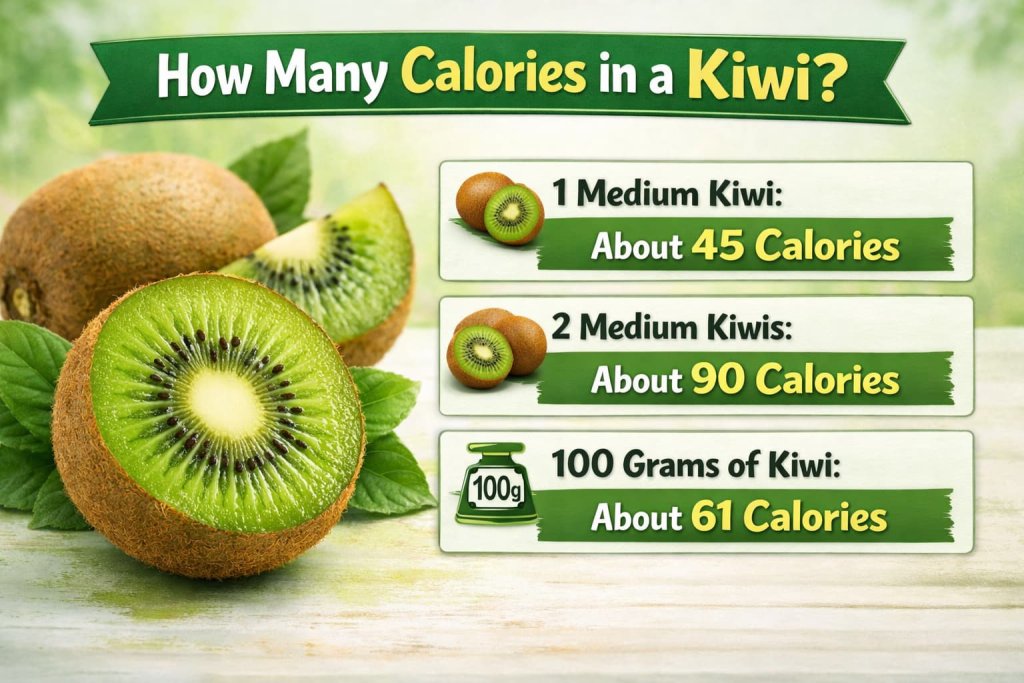
Here are the most useful everyday numbers for plain raw kiwi:
- 1 medium kiwi: about 45 calories
- 2 medium kiwis: about 90 calories
- 100 grams of kiwi: about 61 calories
These numbers are practical because fruit size varies. A smaller kiwi may have a little less, and a larger kiwi may have a little more, but kiwi still remains a low-calorie fruit overall.
Kiwi Nutrition Profile
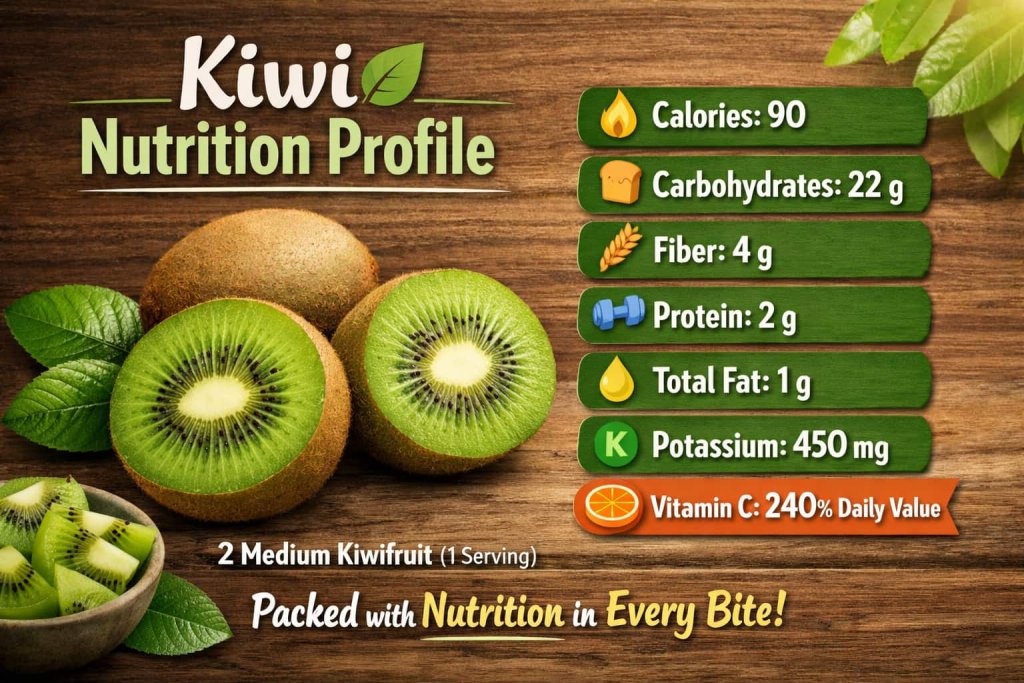
Kiwi offers more than just a low calorie count. The FDA data for 2 medium kiwifruit lists:
- Calories: 90
- Carbohydrates: 22 g
- Fiber: 4 g
- Protein: 2 g
- Total fat: 1 g
- Potassium: 450 mg
- Vitamin C: 240% Daily Value
That means 1 medium kiwi provides roughly half of those amounts, making it a nutrient-dense fruit for its size.
Key Nutrients in Kiwi
Vitamin C in Kiwi
Kiwi is especially rich in vitamin C. The FDA raw fruit data shows 2 medium kiwis provide 240% of the Daily Value for vitamin C. The NIH Office of Dietary Supplements explains that vitamin C helps the body make collagen, supports wound healing, helps protect cells as an antioxidant, and supports immune function.
Fiber in Kiwi
Kiwi contains fiber, which can support fullness and normal digestive health. Based on the FDA serving data, 2 medium kiwis provide 4 grams of fiber, so 1 medium kiwi gives about 2 grams. That can make kiwi a smart snack choice when you want something light but satisfying.
Potassium in Kiwi
Kiwi also provides potassium. FDA data lists 450 mg of potassium in 2 medium kiwis. Potassium is an important mineral that helps support normal nerve and muscle function and fluid balance.
Is Kiwi Good for Weight Management?
Yes, kiwi can be a good fruit for weight management. It is relatively low in calories, contains fiber, and has a high water content typical of fresh fruit. That combination can help you add volume and nutrients to meals or snacks without adding many calories. The calorie math is simple: one medium kiwi is only about 45 calories, so it is much easier to fit into a calorie-conscious eating plan than many processed snack foods.
Kiwi may work especially well for weight management when you use it in simple, practical ways:
- As a snack instead of sweets
- Sliced into plain yogurt or oatmeal
- Added to fruit salad
- Paired with protein-rich foods like Greek yogurt or cottage cheese
Kiwi is not a special weight-loss food by itself, but it can absolutely support a lower-calorie, higher-nutrient eating pattern.
Is Kiwi a Good Choice for Everyday Eating?

For many people, yes. Kiwi is a practical everyday fruit because it is:
- Low in calories
- Rich in vitamin C
- A source of fiber
- Easy to portion
- Simple to add to breakfast, snacks, or desserts
The USDA SNAP-Ed seasonal produce guide also notes kiwifruit can be used in salads, smoothies, yogurt, and other simple meals and snacks, and that the skin is edible if properly washed.
Who Should Be a Little More Careful With Kiwi?
Some people should be more cautious with kiwi because it can trigger allergic reactions. The American Academy of Allergy, Asthma & Immunology explains that oral allergy syndrome can cause itching or swelling of the mouth, lips, tongue, throat, or face after eating certain raw fruits and vegetables. Kiwi is one of the fruits linked with this kind of reaction in some people, especially those with certain pollen allergies.
MedlinePlus also notes that some people with latex allergy can react to certain foods, a pattern sometimes called latex-fruit syndrome, and kiwi is among the foods linked with this cross-reactivity.
People who should be a little more careful include:
- Anyone with a known kiwi allergy
- People who get itching or tingling in the mouth after eating raw kiwi
- People with oral allergy syndrome
- Some people with latex allergy
If kiwi causes swelling, hives, breathing trouble, vomiting, or other serious symptoms, that needs urgent medical attention. Severe food allergy reactions can be emergencies.
People who have been told by a clinician to limit potassium, such as some people with kidney disease, should also consider kiwi as part of their total daily potassium intake rather than assuming all fruit is automatically unlimited.
Does Kiwi Have a Lot of Sugar?
Kiwi does contain natural sugar, like other fruit, but it also provides fiber and nutrients. For 2 medium kiwis, the FDA data lists 16 grams of total sugars. For most people, that is a normal amount for a serving of whole fruit, especially since it comes packaged with fiber, vitamin C, and water rather than being a source of added sugar.
How Many Calories Are in Green Kiwi vs. Gold Kiwi?
The most authoritative federal consumer data easily available here is for kiwifruit in general rather than a side-by-side green-versus-gold FDA table. For a standard consumer article, the safest evidence-based approach is to use the FDA serving figure of 90 calories for 2 medium kiwis unless you are comparing a specific branded or cultivar-based product label.
In practice, the calorie difference between green and gold kiwi is usually small for normal serving sizes. The more important point for most readers is portion size: a larger kiwi will usually have more calories than a smaller one, regardless of variety.
Simple Ways to Eat Kiwi
Kiwi is easy to use in meals and snacks:
- Eat it plain with a spoon after cutting it in half
- Slice it over yogurt
- Add it to oatmeal
- Mix it into fruit salad
- Blend it into smoothies
Some people also eat kiwi with the skin on after washing it well. Doing that does not meaningfully change the calorie count, but it may slightly increase the fiber you get from the fruit.
These options help keep the calorie count predictable because the fruit itself is naturally low in calories.
FAQ
How many calories are in 1 kiwi?
One medium kiwi has about 45 calories. This is based on FDA data showing 2 medium kiwis have 90 calories.
How many calories are in 2 kiwis?
Two medium kiwis have about 90 calories.
Is kiwi low in calories?
Yes. Kiwi is considered a low-calorie fruit, with about 45 calories per medium fruit.
Is kiwi good for weight loss?
Kiwi can support a weight-loss-friendly eating plan because it is low in calories and provides fiber and volume, but no single food causes weight loss on its own.
Can people with allergies eat kiwi?
Some can, but kiwi can trigger reactions in people with kiwi allergy, oral allergy syndrome, or some latex allergies. Anyone who has reacted before should be cautious and get medical advice when needed.
The Bottom Line on How Many Calories in a Kiwi
Kiwi is a simple, nutrient-rich fruit that stays low in calories. A medium kiwi has about 45 calories, while 2 medium kiwis have about 90 calories. It also provides fiber, potassium, and a standout amount of vitamin C, which makes it a strong choice for healthy snacks and balanced meals. For most people, kiwi is an easy fruit to enjoy regularly, but anyone with kiwi allergy, oral allergy syndrome, latex allergy, or potassium restrictions should be more careful.
Sources and References
- U.S. Food and Drug Administration — Raw Fruits Poster (Text Version / Accessible Version)
- U.S. Department of Agriculture — FoodData Central
- NIH Office of Dietary Supplements — Vitamin C Fact Sheet for Consumers
- U.S. Food and Drug Administration — Nutrition Information for Raw Fruits, Vegetables, and Fish
- USDA SNAP-Ed Connection — Kiwifruit
- American Academy of Allergy, Asthma & Immunology — Oral Allergy Syndrome (OAS)
- American Academy of Allergy, Asthma & Immunology — Oral Allergy Syndrome (OAS) Defined
- MedlinePlus — Latex Allergy Symptoms
- MedlinePlus — Latex allergies – for hospital patients