
Raw milk is unpasteurized milk, while pasteurized milk is heated to reduce harmful bacteria — and pasteurized milk is considered the safer choice by all major health authorities. Understanding the difference matters because milk is a common household food, yet safety, nutrition, and wellness claims often conflict online.
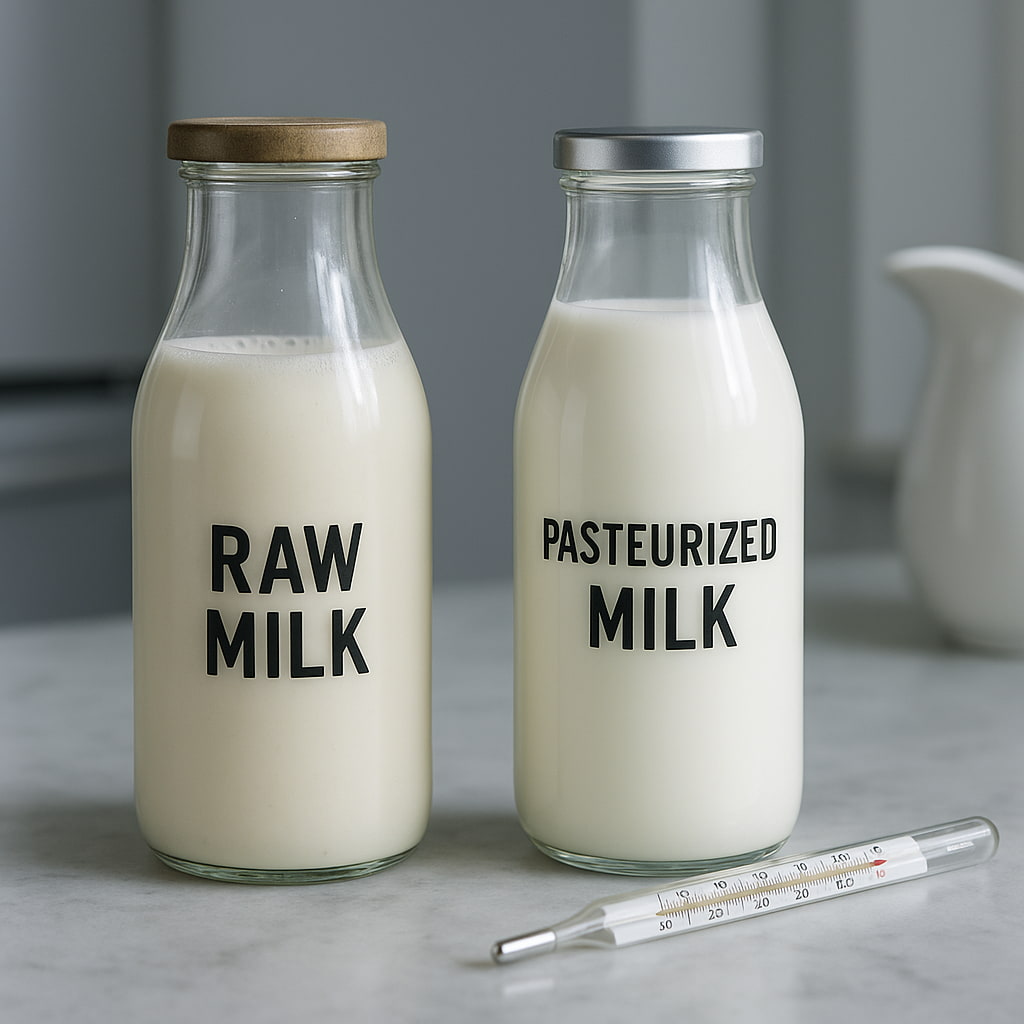
This guide breaks down how both types compare in nutrition, how pasteurization affects vitamins, what risks remain in raw milk, and how to choose confidently for your health. All information comes from authoritative sources such as the Centers for Disease Control and Prevention (CDC) and the U.S. Food and Drug Administration (FDA).
What Is Raw Milk?
Raw milk is milk that has not undergone pasteurization. It comes directly from cows, goats, or sheep and is consumed without heat treatment.
Advocates often claim raw milk is “more natural,” but according to the CDC’s raw milk safety overview, raw milk may contain harmful bacteria that naturally occur in farm environments, even when farms practice good hygiene.
Source: CDC Raw Milk Safety
What Is Pasteurized Milk?
Pasteurized milk is milk heated to a controlled temperature for a set time to reduce harmful bacteria while preserving its natural nutrients. The two most common methods are:
- HTST: Heated to about 161°F (72°C) for 15 seconds
- UHT: Heated to about 280°F (138°C) for 2 seconds
According to the U.S. Food and Drug Administration (FDA), pasteurization “kills harmful germs by heating milk to a specific temperature for a set period of time,” improving safety without major nutrient loss.
Source: FDA – Dangers of Raw Milk
The FDA’s Pasteurized Milk Ordinance also sets national safety standards for all Grade “A” milk sold in the U.S.
Source: FDA – Pasteurized Milk Ordinance
Nutrition Comparison: Raw vs Pasteurized Milk
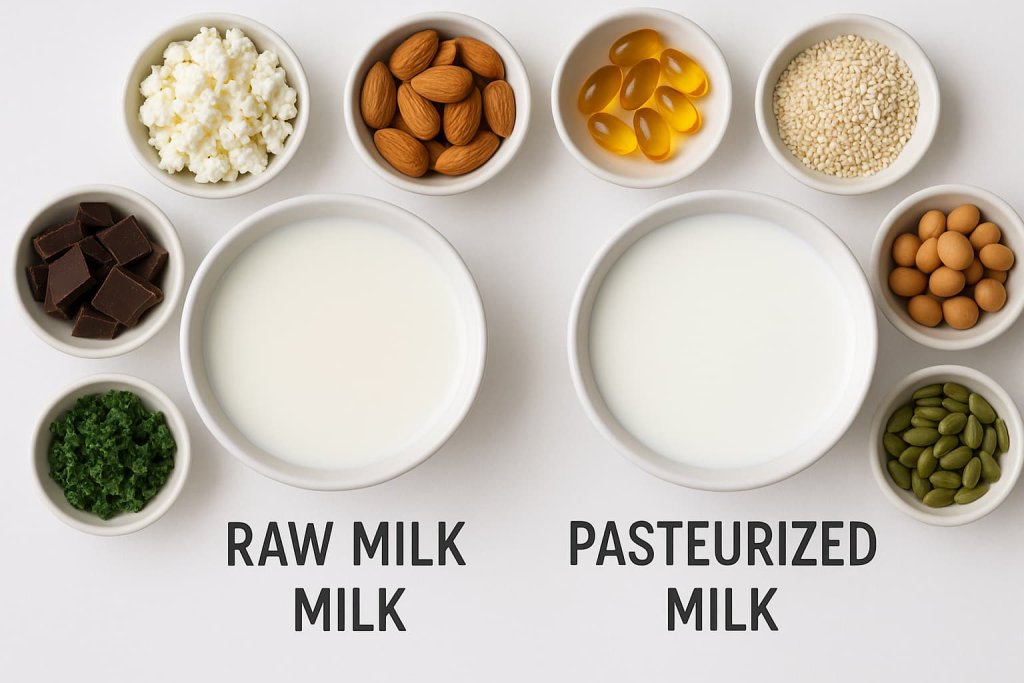
Understanding how raw and pasteurized milk compare nutritionally is essential when evaluating their benefits for overall wellness. According to major health authorities, pasteurization supports safety while maintaining the core nutritional profile of milk, including protein, fat, carbohydrates, and essential minerals. Below is a detailed breakdown based on current scientific evidence.
Macronutrients
Both raw and pasteurized milk provide very similar amounts of protein, fat, and carbohydrates, because the pasteurization process does not significantly affect macronutrient content.
According to the Centers for Disease Control and Prevention (CDC), heat treatment “does not meaningfully alter the structural integrity of milk proteins or the natural balance of fats and carbohydrates.” In addition, pasteurized milk maintains its natural levels of essential minerals such as calcium, phosphorus, and potassium, which support bone strength, muscle function, and hydration. Source: CDC Raw Milk Overview
Furthermore, in the United States many versions of pasteurized milk are fortified with vitamin D, which supports bone health and immune function. The U.S. Food and Drug Administration (FDA) explains that fortified milk products and plant-based alternatives provide nutrients including protein, calcium, vitamin D and potassium. Source: FDA – Milk and Plant-Based Milk Alternatives: Know the Nutrient Difference
Vitamins and Heat Sensitivity
Pasteurization involves heating milk to temperatures that may slightly reduce certain heat-sensitive vitamins, including:
- Vitamin C
- Folate
- Vitamin B6 and B12
However, these vitamins are not primary nutrients for which people consume milk, and the reductions are considered nutritionally insignificant by public health agencies. The CDC confirms that pasteurized milk retains its essential vitamins and minerals, and the small loss of heat-sensitive vitamins does not meaningfully impact dietary quality.
Source: CDC Raw Milk Facts
Enzymes and Probiotics
Some raw milk advocates claim that the natural enzymes and bacteria present in unpasteurized milk may support digestion or immune health. However, current scientific evidence does not support these claims.
According to the U.S. Food and Drug Administration (FDA):
- Milk-derived enzymes are not necessary for human digestion because the body itself produces the enzymes required to break down milk proteins, fats, and sugars.
- The bacteria found in raw milk are not equivalent to clinically studied probiotic strains. Genuine probiotics are non-pathogenic, human-origin organisms selected and grown under controlled conditions. Raw milk bacteria can originate from udder or environmental contamination.
Source: FDA – Raw Milk Misconceptions and the Danger of Raw Milk Consumption - Meanwhile, pasteurized milk still provides complete nutrient value but with a much lower risk of contamination from harmful bacteria.
In other words: while raw milk may appear to offer “live enzymes” or “natural probiotics,” these claims lack strong scientific backing, and the risk of exposure to harmful microbes remains higher compared to properly pasteurized milk.
Table: Nutritional Comparison of Raw vs Pasteurized Milk
(Values based on typical 1 cup / 240 mL serving; nutritional values remain generally consistent across both types)
| Nutrient | Raw Milk | Pasteurized Milk | Notes |
|---|---|---|---|
| Calories | ~148 kcal | ~148 kcal | No significant change after pasteurization |
| Protein | 7.7 g | 7.7 g | Heat does not meaningfully affect protein quality |
| Total Fat | 8 g | 8 g | Fat structure remains stable during pasteurization |
| Carbohydrates (Lactose) | 12 g | 12 g | Lactose content is unchanged |
| Calcium | 276 mg | 276 mg | Pasteurization does not reduce mineral content |
| Potassium | 322 mg | 322 mg | Minerals remain intact |
| Vitamin D | Minimal (natural) | ~120 IU (fortified) | Pasteurized milk is commonly fortified |
| Heat-Sensitive Vitamins | Slightly higher | Slightly lower | Reduction considered nutritionally insignificant |
| Enzymes | Naturally present | Denatured | Not essential for human digestion |
| Bacteria | Includes beneficial & harmful bacteria | Harmful bacteria reduced | Pasteurization improves safety while maintaining nutrition |
Summary of Key Nutrition Takeaways
- Macronutrients remain stable in both raw and pasteurized milk.
- Minerals such as calcium, potassium, and phosphorus are preserved, supporting bone strength, muscle function, and hydration.
- Heat-sensitive vitamins may decrease slightly, but this change is not significant for overall health.
- Pasteurized milk is often fortified with vitamin D, offering additional wellness benefits not naturally present in raw milk.
- Raw milk contains natural bacteria that may include harmful pathogens, while pasteurized milk provides the same nutrients with reduced contamination risk.
Wellness Benefits: What Does the Evidence Say?

Pasteurized milk may support:
- Bone health (due to calcium, protein, and vitamin D fortification)
- Muscle function (thanks to high-quality protein and potassium)
- Hydration and electrolyte balance
- Overall daily nutrient intake
Raw milk offers no scientifically proven superior nutritional benefits, despite popular claims.
Risks of Raw Milk
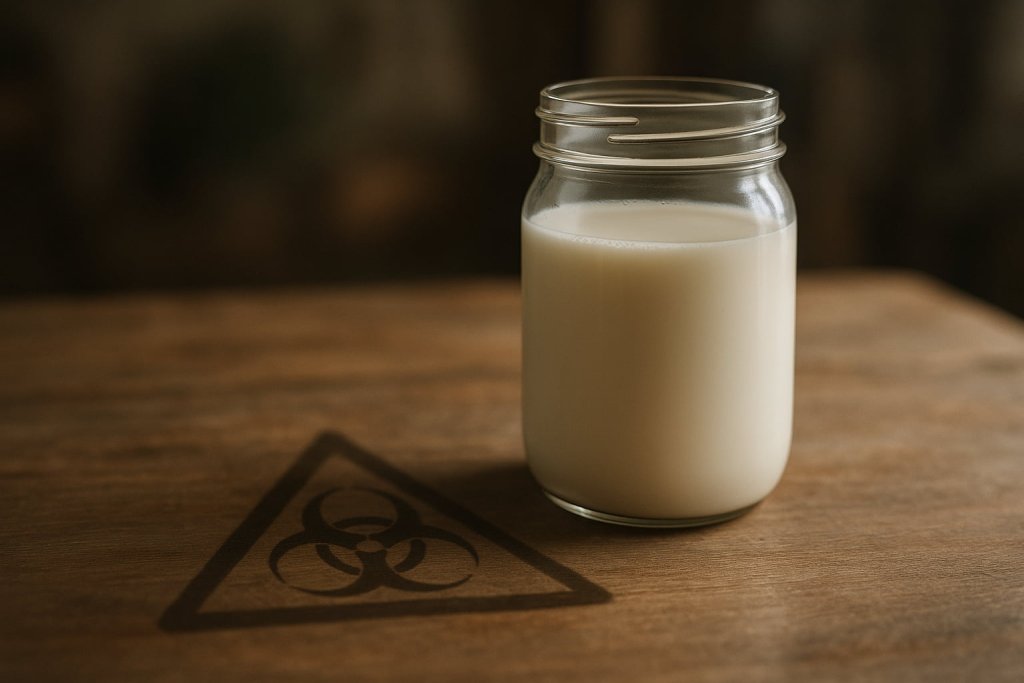
Raw milk may contain harmful bacteria such as Salmonella, E. coli, Listeria monocytogenes, and Campylobacter. These pathogens can enter milk through the cow’s udder, the farm environment, or during handling—making raw milk significantly more likely to carry disease-causing microorganisms.
According to the Centers for Disease Control and Prevention (CDC), raw milk “can carry harmful germs that can cause serious illness,” and the only reliable way to reduce this risk is pasteurization.
Source: CDC – Raw Milk
Certain groups are at greater risk of severe illness, including:
- Children
- Pregnant individuals
- Older adults
- People with weakened immune systems
The U.S. Food and Drug Administration (FDA) reports that between 1998 and 2018, raw milk was linked to 202 outbreaks, resulting in 2,645 illnesses and 228 hospitalizations.
Source: FDA – Dangers of Raw Milk
Because raw milk may contain bacteria capable of causing severe infections, choosing pasteurized milk is the safest way to enjoy milk’s nutritional benefits while reducing foodborne illness risk.
How Pasteurization Supports Safety
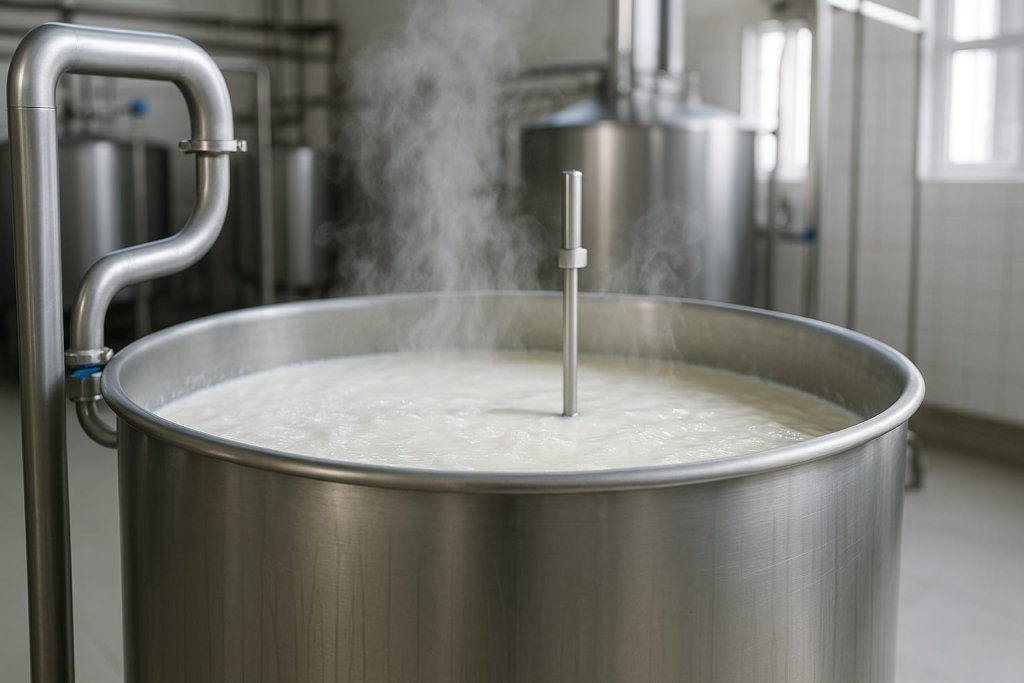
Pasteurization supports milk safety by reducing harmful bacteria, protecting high-risk groups, and improving shelf life—all while preserving key nutrients. The process inactivates germs such as Salmonella, E. coli, Listeria, and Campylobacter through controlled heating.
According to the U.S. Food and Drug Administration (FDA), pasteurization is a proven public-health measure that makes milk safer without significantly changing its nutritional value.
Source: FDA – Food Safety and Raw Milk
Food Safety and Storage Tips
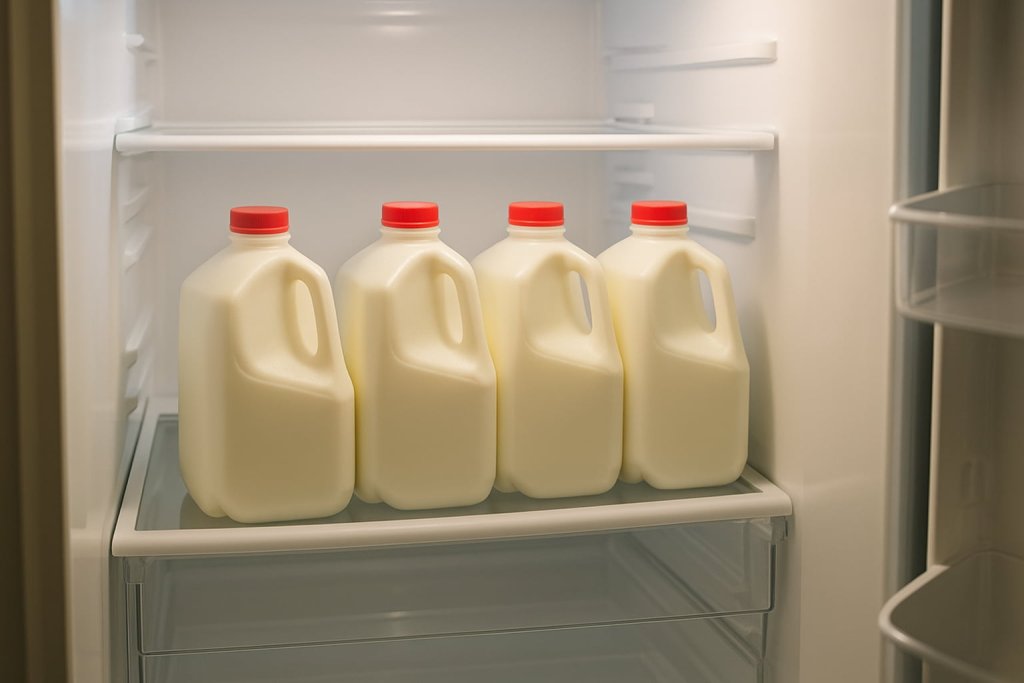
Safe handling and proper storage are essential for preventing foodborne illness from any type of milk. Following evidence-based guidelines recommended by the Centers for Disease Control and Prevention (CDC) and the U.S. Food and Drug Administration (FDA) may help reduce the risk of contamination and spoilage in both raw and pasteurized milk.
Keep Milk Refrigerated at Safe Temperatures
Milk should be stored at 40°F (4°C) or lower because warmer temperatures allow harmful bacteria to multiply more rapidly, especially in unpasteurized milk. The U.S. Food and Drug Administration (FDA) recommends keeping refrigerators at or below 40°F and using a thermometer to monitor the temperature.
Source: FDA – Refrigerator Thermometers: Cold Facts about Food Safety
Make sure to place the thermometer in the middle of the fridge, check it at least weekly, and adjust the thermostat or service the appliance if temperatures rise above safe levels.
Store Milk Away From the Door
Because temperatures fluctuate significantly near the refrigerator door, milk stays safest when stored in the coldest, most stable areas of the fridge. Warm air enters every time the door opens, causing temperature swings that may speed up bacterial growth and shorten milk’s freshness.
For proper storage:
- Keep milk in the back of the refrigerator
- Use a middle or lower shelf for consistent cold temperatures
- Store milk in its original, tightly sealed container
The U.S. Department of Agriculture’s Food Safety and Inspection Service (USDA-FSIS) advises that perishable foods should be stored in the colder sections of the refrigerator—not in the door—because stable temperatures help maintain safety and slow bacterial growth.
Source: USDA-FSIS – Refrigeration and Food Safety
Follow Use-By and Sell-By Dates
Pasteurized milk usually stays fresh for 5–7 days past its sell-by date when kept at 40°F (4°C) or below. Actual freshness depends on consistent refrigeration and whether the container has been opened. According to the U.S. Department of Agriculture (USDA), proper cold storage helps slow bacterial growth and maintain milk quality.
Source: USDA – Dairy Storage Guidance
Raw milk typically spoils faster because natural bacteria continue to multiply, giving it a shorter shelf life compared to pasteurized milk.
Avoid Leaving Milk at Room Temperature
Milk should not remain at room temperature for longer than two hours because harmful bacteria can multiply rapidly once the milk rises above safe refrigeration levels. If the ambient temperature is above 90°F (32°C)—for example during an outdoor picnic—milk should be refrigerated within one hour to prevent accelerated bacterial growth.
Source: CDC – 4 Steps to Food Safety
Leaving milk out too long—even pasteurized milk—places it in the temperature “danger zone” (above 40°F / 4°C), where bacteria growth increases significantly and the risk of foodborne illness rises.
Do Not Return Warm Milk to the Container
If milk has been poured and left out for a period of time, avoid pouring it back into the container. This may introduce new bacteria into the entire jug, increasing the risk of spoilage.
Keep Raw Milk Separate From Ready-to-Eat Foods
Because raw milk may contain harmful bacteria, the CDC recommends storing it separately from foods that are eaten without cooking, such as:
- Fresh fruit
- Vegetables
- Ready-to-eat meals
- Salads
- Sandwich ingredients
This reduces the likelihood of cross-contamination.
Source: CDC Raw Milk Safety
Use Clean Containers and Utensils
Always use clean, sanitized containers when transferring or storing milk—especially raw milk. Even small amounts of contamination can allow bacteria to multiply quickly.
Source: FDA Safe Food Handling Practices
Freezing Milk (Optional)
Pasteurized milk can be safely frozen, although its texture may change after thawing—often becoming slightly grainy or separated. This change affects quality, not safety. Frozen milk should be thawed in the refrigerator and used within a few days for best results.
Some consumers freeze raw milk, but freezing does not kill harmful bacteria. The Centers for Disease Control and Prevention (CDC) explains that freezing only stops bacteria from growing temporarily; once the milk thaws, any pathogens still present can multiply again.
Source: CDC – 4 Steps to Food Safety
For consistent safety and nutrient reliability, pasteurized milk remains the preferred option—whether refrigerated or frozen.
How Long Does Milk Last? (Quick Guide)
| Type of Milk | Refrigerated Shelf Life | Room Temperature (>2 hrs) | Notes |
|---|---|---|---|
| Pasteurized Milk | ~5–7 days after sell-by date | Not recommended | Spoils slower due to reduced bacteria |
| Raw Milk | ~3–5 days (often shorter) | Not recommended | Spoils faster due to higher bacterial load |
| Ultra-Pasteurized (UHT) | 2–3 weeks (unopened) | Not recommended | Refrigerate after opening |
Actual freshness varies depending on temperature consistency, storage method, and container hygiene.
Key Takeaways
- Keep milk consistently below 40°F (4°C).
- Store milk toward the back of the fridge, not on the door.
- Raw milk spoils faster than pasteurized milk.
- Follow sell-by dates, especially for raw milk.
- Keep raw milk away from other foods to prevent contamination.
- Never leave milk out for more than two hours.
- Use clean containers and handle milk with safe practices.
These tips align with current CDC and FDA recommendations and support safer everyday milk consumption.
Common Myths and Evidence-Based Facts
“Raw milk is more nutritious.”
Authoritative research shows no meaningful nutritional advantage.
“Raw milk supports better digestion.”
There is no strong evidence that raw milk supports lactose digestion better than pasteurized milk.
“Raw milk is safe from clean farms.”
Even the cleanest farms cannot guarantee milk free of harmful bacteria because contamination can occur inside the animal’s udder or during handling.
Who Should Be Extra Careful?
The following groups should avoid raw milk, according to the CDC and the American Academy of Pediatrics:
- Children
- Pregnant people
- Older adults
- People with weakened immune systems
Pasteurized milk is the safer option for these groups.
Legal Status in the United States
Under U.S. federal law, the sale of raw (unpasteurized) milk across state lines (interstate commerce) for human consumption is prohibited. The regulation comes from the Food and Drug Administration (FDA) and is part of efforts to protect public health.
Source: FDA – Food Safety and Raw Milk
Within individual states (intrastate commerce), laws vary significantly:
- Some states permit raw milk sales only on the farm where it was produced.
- Others allow limited retail sales under strict licensing or warning label rules.
- Many states ban sales completely of raw milk for human consumption.
Because the legal framework can differ widely from one state to another, consumers who are considering raw milk should verify their local dairy laws and regulations before purchase.
Should You Choose Raw or Pasteurized Milk?
If your goal is nutrition, wellness, and safe daily consumption, pasteurized milk offers:
- The same core nutrients
- Lower risk of harmful bacteria
- Strong support from medical and public health authorities
- A safer choice for children and families
Raw milk may appeal to those who prefer minimally processed foods, but the risks make it unsuitable for many people.
Frequently Asked Questions (FAQs)
1. Is raw milk more nutritious than pasteurized milk?
No. Scientific reviews show no meaningful nutritional advantage.
2. Does pasteurization destroy important nutrients?
Only minor reductions occur in heat-sensitive vitamins; major nutrients remain unchanged.
3. Is raw milk safe if it comes from a clean farm?
Not fully. Harmful bacteria can still be present even in clean, well-managed farms.
4. Does raw milk help with lactose intolerance?
There is no strong evidence that raw milk supports easier lactose digestion.
5. Which milk is safer for children?
Pasteurized milk. Raw milk carries higher risk of harmful bacteria.
6. Why do experts recommend pasteurized milk?
Because it provides the same nutrients with much lower risk of foodborne illness.
7. Can raw milk cause serious infections?
Yes. Raw milk has been linked to outbreaks of Listeria, E. coli, and Campylobacter.
Conclusion
Raw milk and pasteurized milk offer similar nutrients, but pasteurized milk is the clearly safer choice based on decades of scientific evidence. For most people — especially families, pregnant individuals, and older adults — pasteurized milk supports nutrition and wellness without the added risk.
This content is for informational purposes only and not medical advice.
References
- CDC – Raw Milk: Food Safety Overview
CDC – Raw Milk - FDA – The Dangers of Raw Milk (Unpasteurized Milk Can Pose a Serious Health Risk)
FDA – Dangers of Raw Milk - FDA – Food Safety and Raw Milk (Pasteurization & Pathogen Risks)
FDA – Food Safety and Raw Milk - FDA – Raw Milk Misconceptions and the Danger of Raw Milk Consumption
FDA – Raw Milk Misconceptions - USDA-FSIS – Refrigeration and Food Safety (Temperature Guidance)
USDA-FSIS – Refrigeration and Food Safety - USDA – How Long Dairy Products Stay Fresh in the Refrigerator
USDA – Dairy Storage Guidance