
Cantaloupe is low in calories: 100 grams of raw cantaloupe has about 34 calories, 1 cup of diced cantaloupe has about 53 calories, and 1/4 of a medium cantaloupe has about 50 calories. That makes it a naturally sweet, hydrating fruit that can fit well into a balanced eating plan
Beyond calories, cantaloupe also provides vitamin C, vitamin A from carotenoids, water, and some potassium. It can be a smart choice for snacks, breakfast, or a lighter dessert. The main thing to remember is food safety, especially once the melon is cut.
How Many Calories Are in Cantaloupe?
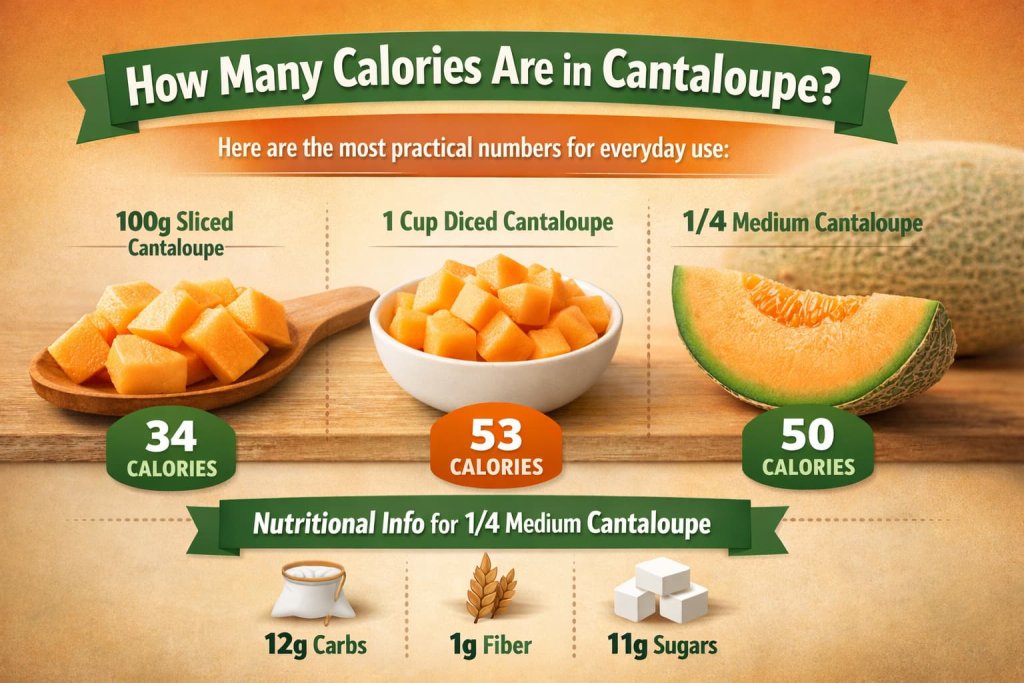
Here are the most practical numbers for everyday use:
- 100 grams of raw cantaloupe: about 34 calories
- 1 cup diced cantaloupe: about 53 calories
- 1/4 medium cantaloupe: about 50 calories
These values come from USDA FoodData Central and the FDA raw fruits chart. The FDA chart also shows that 1/4 of a medium cantaloupe provides about 12 grams of carbohydrate, 1 gram of fiber, and 11 grams of naturally occurring sugar.
Cantaloupe Nutrition Profile
Cantaloupe is mostly water, which helps explain why it feels light and refreshing while staying relatively low in calories. According to USDA nutrition data, raw cantaloupe contains very little fat, a small amount of protein, naturally occurring fruit sugars, and modest fiber for its serving size.
A typical serving of cantaloupe offers:
- low calories
- high water content
- very little fat
- modest fiber
- naturally occurring sugars
- vitamin C
- vitamin A activity from carotenoids
- some potassium
- some folate
This makes cantaloupe a nutrient-dense fruit for the number of calories it contains.
Is Cantaloupe Good for Weight Management?
Yes, cantaloupe can be a good fruit for weight management because it gives you a satisfying portion for relatively few calories. At about 34 calories per 100 grams, it has a low calorie density, which means you can eat a decent amount without adding many calories to your day.
Here are a few reasons it can work well in a weight-conscious eating plan.
It Is Low in Calories for Its Volume
A bowl of diced cantaloupe looks and feels substantial, but the calorie total stays fairly modest. That can make it easier to enjoy fruit while keeping portions satisfying.
It Is Naturally Sweet
If you are trying to cut back on candy, pastries, or other desserts, cantaloupe can be a simple swap that still gives you sweetness.
It Is Hydrating
Because cantaloupe contains a lot of water, it can feel refreshing and filling as part of breakfast, snacks, or lighter meals.
Portion size still matters, though. Eating a very large amount will raise your total carbohydrate and calorie intake, even if the fruit itself is still a nutritious choice.
Key Nutrients in Cantaloupe
Vitamin C in Cantaloupe
Cantaloupe is especially known for vitamin C. The NIH Office of Dietary Supplements vitamin C fact sheet explains that vitamin C helps the body make collagen, supports wound healing, acts as an antioxidant, and helps the immune system function properly.
Vitamin A Activity From Carotenoids
The orange color of cantaloupe comes from carotenoids that contribute to vitamin A intake. According to the NIH vitamin A fact sheet, vitamin A is important for normal vision, immune function, reproduction, and growth and development.
Potassium in Cantaloupe
Cantaloupe also provides potassium. The NIH potassium fact sheet notes that potassium is essential for normal cell function and is present in all body tissues. While cantaloupe is not the highest-potassium food, it can still contribute to your overall intake.
Folate in Cantaloupe
Cantaloupe contains some folate as well. The CDC folic acid guidance explains that folate is important for making new cells and is especially important before and during early pregnancy.
Is Cantaloupe High in Sugar?
Cantaloupe does contain natural sugar, but it is not a high-calorie food. The FDA reference for 1/4 medium cantaloupe lists about 11 grams of sugar in that serving. For most people, that works well in a healthy eating pattern, especially when the fruit is eaten whole rather than as juice.
Whole cantaloupe also provides water and some fiber, which makes it more balanced than many processed sweet snacks. If you are tracking carbohydrates, the key is to pay attention to portion size.
Who Should Be a Little More Careful With Cantaloupe?
For most healthy adults, cantaloupe is a nutritious fruit choice. Still, a few groups may want to be more mindful.
People at Higher Risk for Foodborne Illness
The CDC guidance on Listeria and melons warns that melons can be contaminated with Listeria and that the bacteria can grow in cut melon. This matters most for pregnant adults, older adults, newborns, and people with weakened immune systems.
People With Kidney Disease or Potassium Restrictions
Healthy people with normal kidney function usually do not need to worry about potassium from foods. But the NIH potassium consumer fact sheet notes that people with kidney disease or those taking certain medications may need to watch potassium intake more closely. If you have been told to follow a low-potassium diet, portion size matters.
People Closely Tracking Carbs or Blood Sugar
Cantaloupe can still fit into many balanced eating plans, but large servings add more carbohydrate. Pairing fruit with a source of protein or eating it as part of a meal may work better for some people than eating a very large portion on its own.
Cantaloupe Food Safety Tips
Food safety is one of the most important things to know about cantaloupe because cut melon has been linked to foodborne illness risk. The CDC Listeria prevention guidance says not to eat cut melon that has been left out for more than 2 hours, or 1 hour if the temperature is above 90°F. The CDC also advises not keeping cut melon in the refrigerator for more than 1 week.
The CDC safer food choices for pregnant women also notes that freshly cut melon or cut melon kept refrigerated for 7 or fewer days is the safer option.
To reduce risk at home:
- wash the outside of the cantaloupe before cutting it
- use a clean knife and clean cutting board
- refrigerate cut melon promptly
- do not leave cut cantaloupe out too long
- throw it away if it has been stored too long or handled unsafely
Best Ways to Eat Cantaloupe if You Are Watching Calories
If your goal is weight management, these are some of the easiest ways to enjoy cantaloupe.
Keep Servings Simple
A cup of diced cantaloupe is a practical serving because it stays relatively low in calories while still feeling generous.
Use It as a Snack Instead of Dessert
Replacing a pastry, candy bar, or sugary frozen treat with cantaloupe can cut calories while still giving you something sweet.
Pair It With Protein
Try cantaloupe with plain Greek yogurt, cottage cheese, or a handful of nuts if you want a snack that may feel more satisfying.
Avoid Loading It With Extras
Plain cantaloupe is naturally light. Adding syrup, sweetened yogurt, or rich toppings can raise the calorie total quickly.
Is Cantaloupe Better Than Other Fruits for Dieting?
There is no single best fruit for dieting, but cantaloupe compares well because it is low in calories and high in water. Some fruits are higher in calories per serving, while others offer more fiber. The better question is whether cantaloupe helps you enjoy your food, feel satisfied, and stay within your overall calorie goals. For many people, it does.
A practical approach is to rotate cantaloupe with other fruits like berries, apples, oranges, and grapefruit so you get a wider mix of nutrients and textures.
Frequently Asked Questions
How many calories are in 1 cup of cantaloupe?
About 53 calories. USDA reference data list 1 cup of diced cantaloupe at roughly 156 grams and about 53 calories.
How many calories are in 100 grams of cantaloupe?
About 34 calories. This is one of the most useful numbers for comparing cantaloupe with other fruits by weight.
Is cantaloupe fattening?
No. Cantaloupe is not a high-calorie food. It is relatively low in calories and can fit well into a weight-management eating plan when portions are reasonable.
Is cantaloupe good for weight loss?
It can support a weight-loss eating pattern because it is low in calories, hydrating, and naturally sweet. But weight loss depends on your overall diet and total calorie intake, not on one food alone.
Can people with diabetes eat cantaloupe?
Many people with diabetes can include cantaloupe in their eating plan, but portion size matters. Individual needs vary, so it is best to follow your own meal-planning guidance from a clinician or dietitian.
Conclusion
Cantaloupe is a sweet, refreshing fruit that is easy to fit into a healthy eating plan. It has about 34 calories per 100 grams, about 53 calories per cup, and around 50 calories in 1/4 of a medium melon. It also provides vitamin C, vitamin A-related carotenoids, water, and some potassium.
For most people, cantaloupe is a smart choice for snacks, breakfast bowls, and lighter desserts. Just make sure to handle cut melon safely and keep portions realistic if you are tracking calories or carbohydrates.
Sources/References
- U.S. Department of Agriculture — FoodData Central
- U.S. Food and Drug Administration — Raw Fruits Poster (Text Version / Accessible Version)
- National Institutes of Health Office of Dietary Supplements — Vitamin C Fact Sheet for Consumers
- National Institutes of Health Office of Dietary Supplements — Vitamin A and Carotenoids Fact Sheet
- National Institutes of Health Office of Dietary Supplements — Potassium Fact Sheet for Consumers
- National Institutes of Health Office of Dietary Supplements — Potassium Fact Sheet for Health Professionals
- Centers for Disease Control and Prevention — About Folic Acid
- Centers for Disease Control and Prevention — How Listeria Spread: Sprouts and Melons
- Centers for Disease Control and Prevention — Preventing Listeria Infection
- Centers for Disease Control and Prevention — Safer Food Choices for Pregnant Women