
Potassium rich foods support muscle function, nerve signaling, and healthy fluid balance. They also play a key role in supporting normal blood pressure, especially when paired with lower sodium intake. Including more potassium-rich foods in your daily meals is a simple, nutrition-forward way to support overall wellness.
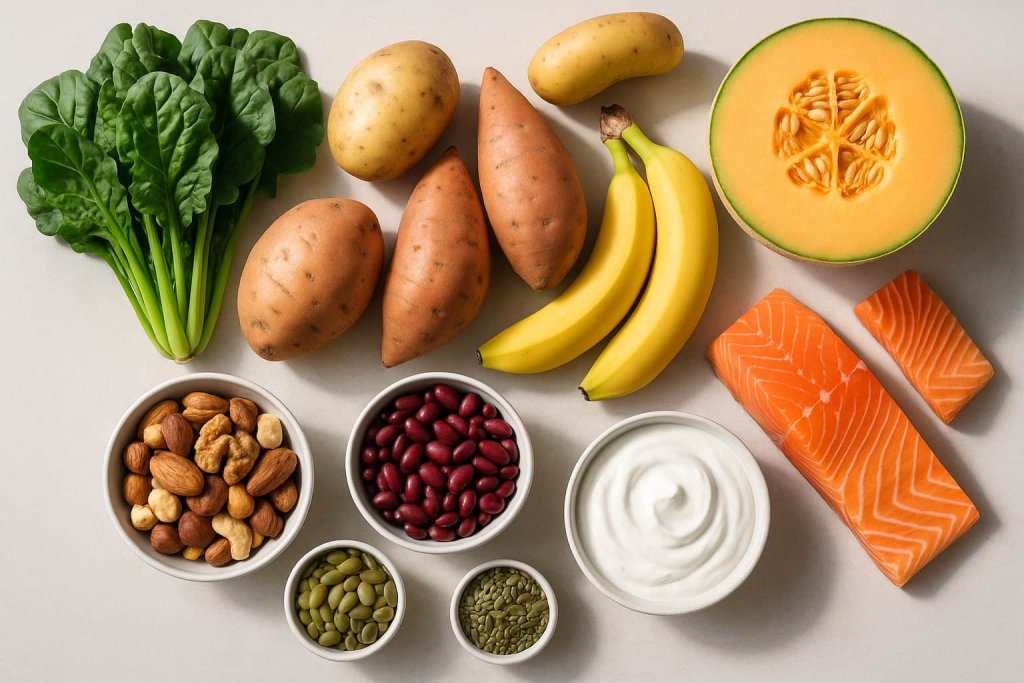
According to the National Institutes of Health Office of Dietary Supplements (NIH ODS, 2025), potassium is an essential mineral that helps maintain healthy muscle contraction, supports the heart, and contributes to stable electrolyte balance. Most adults do not meet the recommended intake, which makes understanding potassium-rich foods important for daily nutrition.
This guide highlights top food sources, practical serving ideas, and wellness-focused considerations—using evidence-backed, YMYL-compliant information.
What Potassium Does in the Body
Potassium supports several essential functions:
- Helps maintain fluid and electrolyte balance
- Supports nerve communication
- Plays a role in muscle contraction, including the heart
- May help support healthy blood pressure when consumed alongside lower sodium
- Supports overall nutritional balance
For most healthy adults, potassium from whole foods is considered safe, but individuals with kidney conditions or those taking certain medications should follow personalized medical advice.
Recommended Daily Intake
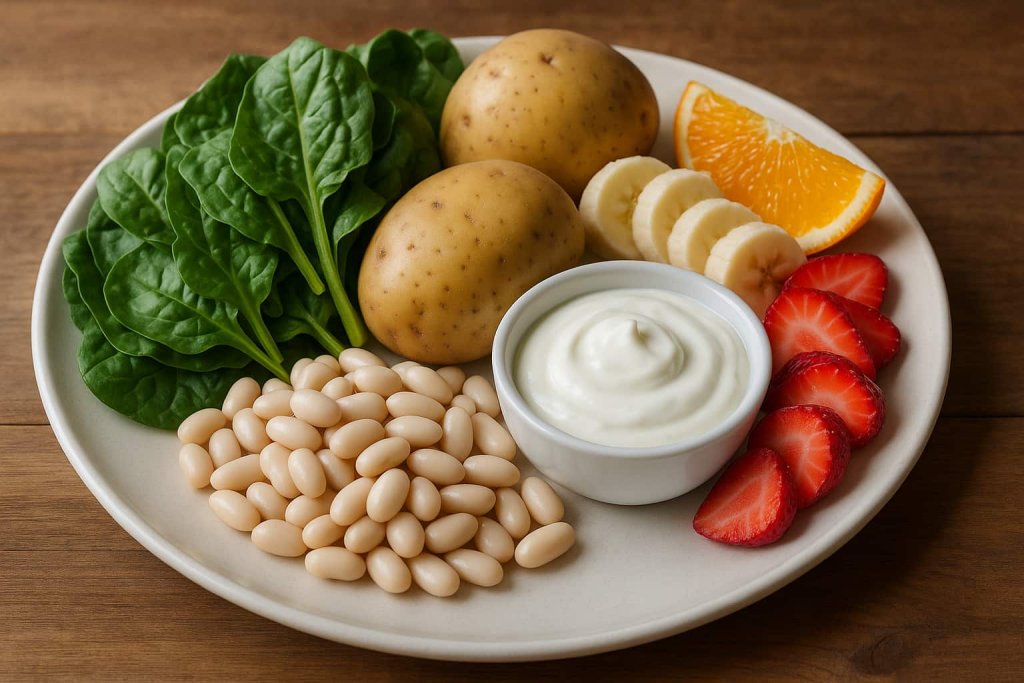
The National Academies of Sciences, Engineering, and Medicine recommends:
- 3,400 mg/day for adult men
- 2,600 mg/day for adult women
Most people consume significantly less, which is why focusing on potassium-rich foods can support daily nutrient goals.
Potassium Content and Food Sources
Comparison of High- and Moderate-Potassium Foods
Potassium levels vary widely depending on the type of food and portion size. High-potassium foods typically contain more than 200 mg per serving, while moderate-potassium foods fall in the 50–200 mg range. Recognizing the difference helps you choose foods that naturally support electrolyte balance and overall nutritional wellness. High-potassium options like leafy greens, potatoes, beans, and certain fruits can quickly raise total intake, while moderate-potassium foods such as whole grains, nuts, and some vegetables offer steady background support throughout the day.
Potassium Levels in Common Foods (Summary Table)
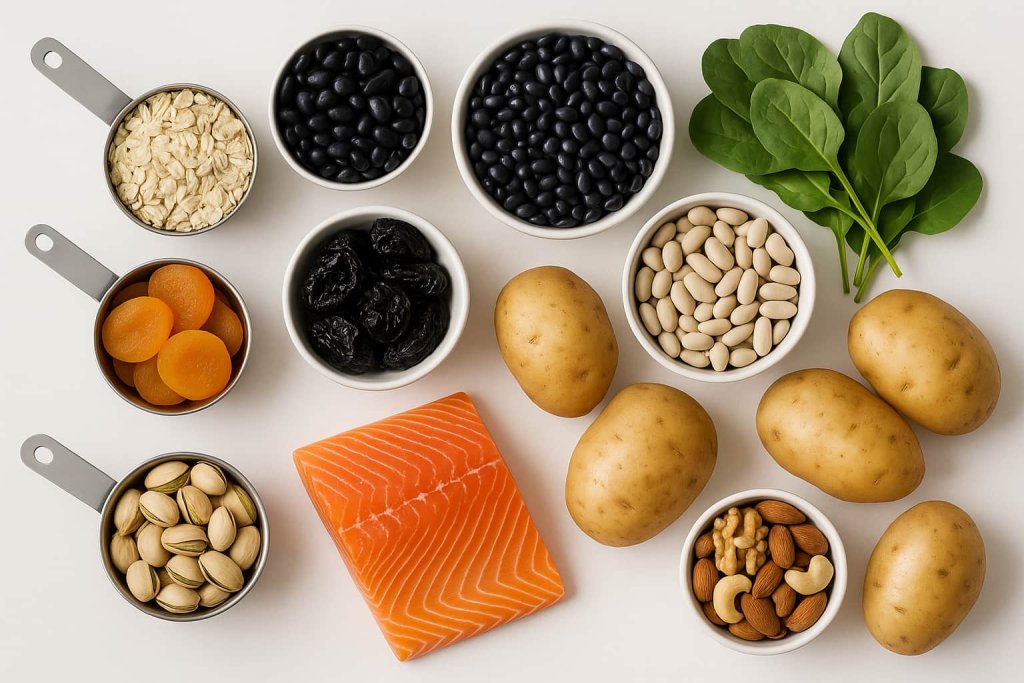
Below is a simplified table highlighting approximate potassium values in commonly eaten foods. These figures come from reputable nutrition databases and give a practical view of how much potassium you can expect per standard serving. Actual values may vary depending on factors like preparation method, ripeness, or food brand.
| Food | Serving Size | Approx. Potassium (mg) | Notes |
|---|---|---|---|
| Beet greens (cooked) | 1 cup | ~1,300 mg | One of the highest natural sources |
| Swiss chard (cooked) | 1 cup | ~960 mg | Highly concentrated potassium |
| Spinach (cooked) | 1 cup | ~840 mg | Nutrient-dense leafy green |
| Baked potato (with skin) | 1 medium | ~900 mg | Versatile, filling source |
| Sweet potato | 1 medium | ~540 mg | Provides potassium plus fiber |
| Lima beans (cooked) | 1 cup | ~950 mg | Rich in plant protein |
| White beans (cooked) | ½ cup | ~500 mg | Affordable and nutrient-rich |
| Banana | 1 medium | ~500 mg | Convenient and widely eaten |
| Cantaloupe | 1 cup | ~400 mg | Hydrating, moderate potassium |
| Dried apricots | 30 g | ~450 mg | Potassium-dense due to low water content |
| Milk | 1 cup | ~380 mg | Provides potassium and calcium |
| Salmon (cooked) | 100 g | ~380–450 mg | Protein-rich with minerals |
| Yogurt (low-fat) | 6 oz | ~215 mg | Varies by brand |
| Pistachios | 1 oz | ~290 mg | Higher-potassium nut |
| Whole grains (e.g., brown rice) | 1 cup cooked | ~150 mg | Moderate-level contributor |
How to Interpret Potassium Values Safely
Potassium values are useful reference points, but they are based on standard serving sizes and can vary with cooking methods or food types. For most healthy adults, potassium from whole foods is well regulated by the kidneys. Individuals with kidney conditions or those taking potassium-altering medications should follow professional guidance. Use these values for general meal planning, not medical decisions.
Using Potassium Tables to Build Balanced Meals
Potassium tables make it easier to plan balanced meals by combining high-potassium foods, such as leafy greens, beans, potatoes, or fruit, with moderate-potassium options like whole grains, nuts, or yogurt. Spreading potassium-rich foods across meals helps support steady intake and overall nutritional balance.
Top Potassium Rich Foods and Their Benefits
1. Potassium-Rich Vegetables
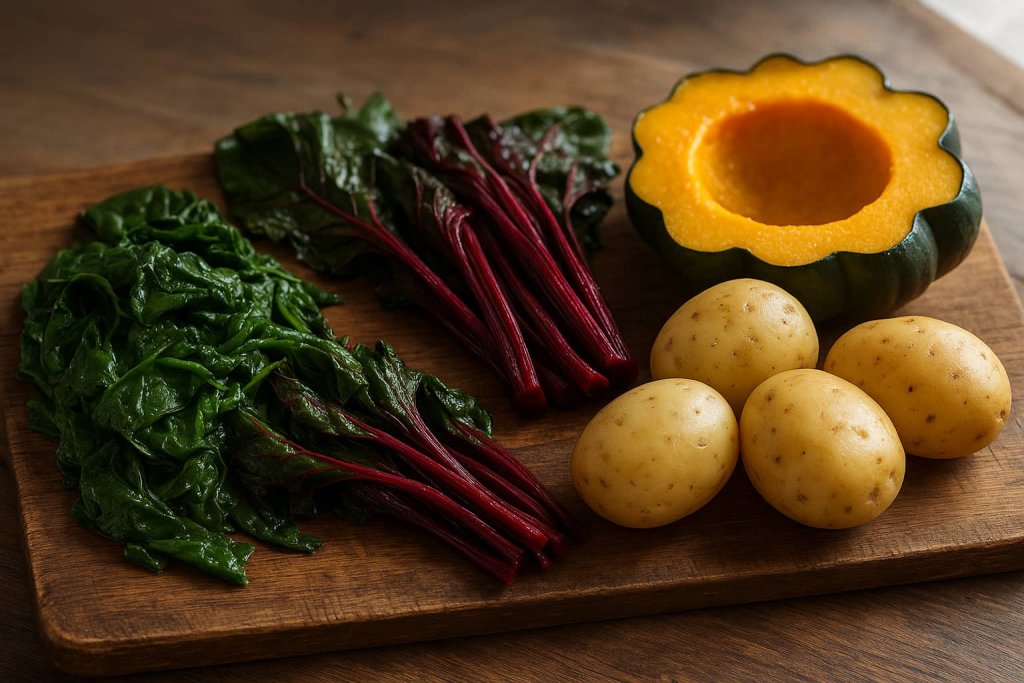
Vegetables are among the most concentrated natural sources of potassium, offering essential vitamins, minerals, and fiber in every serving. Many cooked leafy greens—such as spinach, beet greens, and Swiss chard—provide substantial amounts of potassium that support normal muscle function and electrolyte balance. Starchy vegetables like potatoes, sweet potatoes, and winter squash also deliver meaningful potassium and contribute to steady energy. According to the U.S. Department of Agriculture, vegetables play an important role in meeting recommended potassium intake levels because they supply a broad mix of nutrients in relatively low-calorie portions.
2. High-Potassium Legumes and Beans
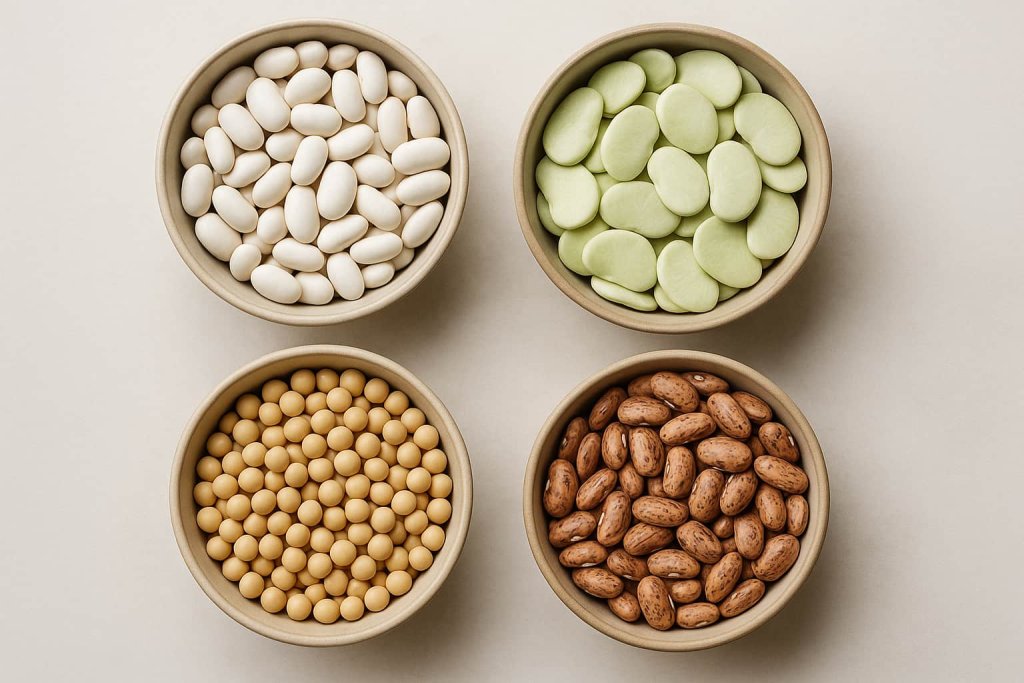
Legumes provide potassium along with plant-based protein, fiber, and other minerals. Options such as white beans, lima beans, soybeans, and pinto beans offer notable potassium content per cup. These foods may help support satiety, digestive health, and overall nutrient balance. Research from the National Library of Medicine highlights that legumes contribute essential micronutrients that support daily wellness, making them valuable additions to meals for individuals aiming to increase potassium intake through whole foods.
3. Fruits That Provide Potassium
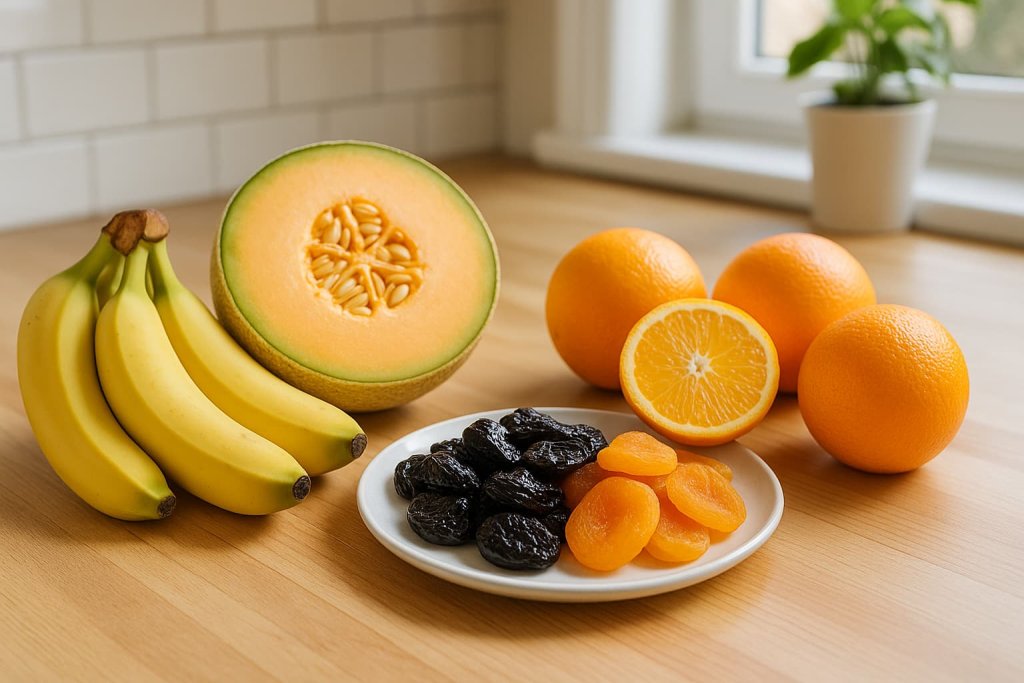
Many fruits naturally contain potassium, making them convenient options for hydration and nutrient support. Bananas, cantaloupe, oranges, dried apricots, prunes, and dates offer varying levels of potassium in small, accessible servings. These fruits may help support normal fluid balance and energy levels throughout the day. According to the Dietary Guidelines for Americans, fruits are encouraged as part of a balanced eating pattern because they provide key nutrients—including potassium—that many adults underconsume.
4. Dairy and Animal-Based Potassium Sources
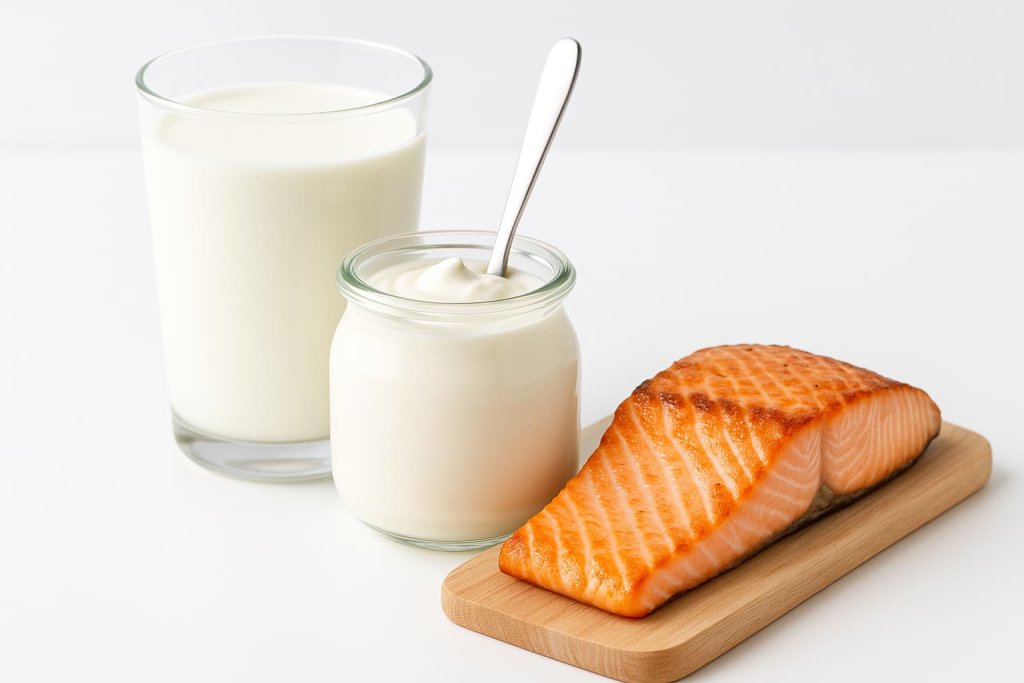
Milk, yogurt, and certain fish, such as salmon, provide moderate amounts of potassium along with protein, calcium, and other essential nutrients. These foods support diverse dietary needs and may help balance potassium intake throughout the day. Protein-rich animal sources offer additional benefits, such as supporting muscle maintenance and providing micronutrients not typically found in plant-based foods. The National Institutes of Health notes that potassium is widely distributed across food groups, making both plant and animal sources useful for meeting daily targets.
5. Nuts, Seeds, and Other Plant Foods
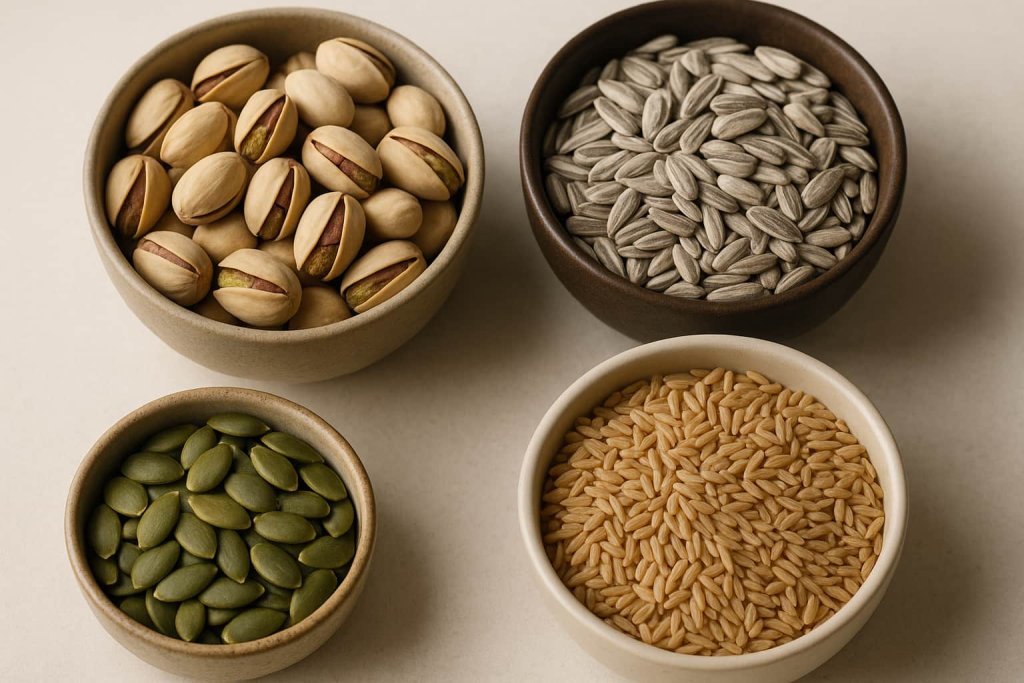
Nuts and seeds—including pistachios, sunflower seeds, and pumpkin seeds—offer moderate potassium levels along with healthy fats and fiber. Whole grains and starchy roots such as taro or brown rice also contribute smaller but consistent amounts of potassium. These foods can be combined with higher-potassium options to help support an overall balanced nutrient pattern. Their versatility makes them easy to incorporate into snacks, salads, and main meals, offering steady nutritional value throughout the day.
Practical Ways to Add More Potassium-Rich Foods
Simple Meal and Snack Ideas
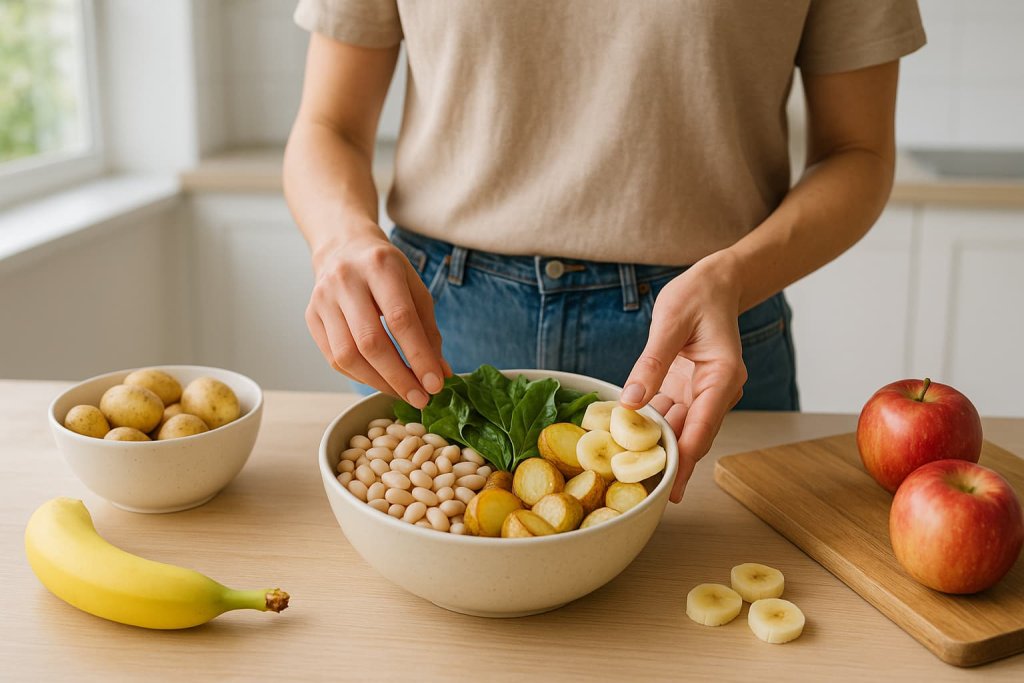
Incorporating potassium-rich foods into daily meals can be simple and flexible. Adding cooked leafy greens to omelets or grain bowls provides a strong potassium foundation early in the day. A baked potato or sweet potato can serve as a nutrient-dense side dish at lunch or dinner. Beans can be added to soups, salads, and stews for an easy potassium boost. For snacks, pairing fruit such as bananas, cantaloupe, or dried apricots with yogurt offers a balanced combination of potassium, fiber, and protein. According to the Dietary Guidelines for Americans, distributing nutrient-rich foods across meals helps support overall dietary quality.
Grocery Planning and Budget-Friendly Tips
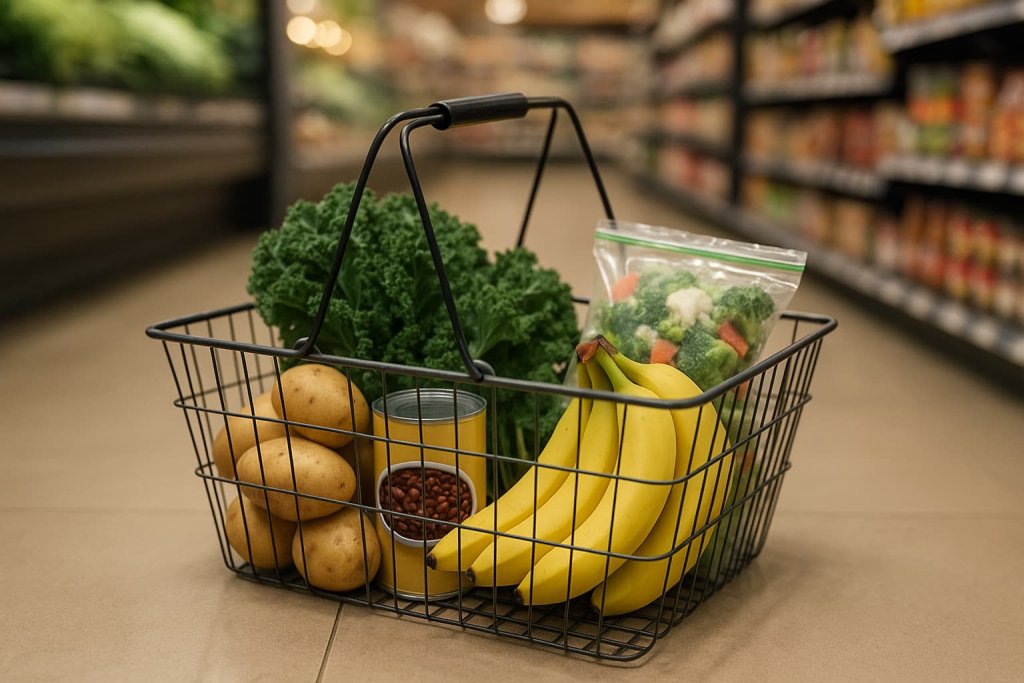
Planning ahead can make it easier to consistently include potassium-rich foods without increasing grocery costs. Affordable staples such as beans, potatoes, leafy greens, and seasonal fruits offer a high potassium-to-cost ratio. Buying canned beans (rinsed to reduce sodium), frozen vegetables, or bulk produce can help maintain nutrient intake while staying within budget. The U.S. Department of Agriculture notes that frozen produce retains nutritional value and can be a cost-effective choice for year-round potassium availability.
Combining Potassium Sources for Balanced Nutrition
Pairing potassium-rich foods with complementary ingredients helps support balanced meals. For example, beans and whole grains create a fiber-rich foundation, while leafy greens paired with fish or yogurt contribute minerals and protein. Mixing moderate-potassium foods (such as nuts or whole grains) with higher-potassium options (such as potatoes or certain fruits) helps spread intake throughout the day in a sustainable, nutrient-centered way. This approach aligns with guidance from the National Institutes of Health, which recommends obtaining potassium through varied, whole-food dietary patterns.
Who Should Be Cautious With High-Potassium Foods

Kidney-Related Considerations
Individuals with reduced kidney function may need to limit potassium intake because the kidneys play a key role in maintaining potassium balance. When kidney function decreases, high-potassium foods can accumulate in the body more easily. The National Institutes of Health explains that people with chronic kidney conditions often require tailored dietary guidance to maintain safe potassium levels.
Medications That Influence Potassium Levels
Certain medications may affect how the body regulates potassium. Examples include some blood pressure medications, potassium-sparing diuretics, and other agents that influence electrolyte balance. According to the National Library of Medicine, medication-related changes in potassium handling may require individuals to monitor intake under professional supervision.
Why Personalized Medical Guidance Matters
Because potassium needs vary widely depending on individual health status, medications, and kidney function, personalized guidance from a healthcare professional is important. Medical experts can help determine appropriate potassium levels and assess whether specific foods should be increased, moderated, or limited. This individualized approach supports safety and aligns with recommendations from organizations like the Centers for Disease Control and Prevention.
Frequently Asked Questions
Is it better to get potassium from foods or supplements?
Most healthy adults are encouraged to obtain potassium from whole foods because they provide additional nutrients such as fiber, vitamins, and minerals. Supplements should only be used if recommended by a healthcare professional.
Which foods offer the most potassium?
Leafy greens, potatoes, beans, dried fruits, and certain fish provide some of the highest concentrations of potassium per serving.
Can potassium-rich foods support healthy blood pressure?
Higher dietary potassium intake—especially when paired with lower sodium intake—may support healthy blood pressure patterns, according to the National Institutes of Health.
Can someone consume too much potassium from food?
Healthy kidneys generally regulate potassium effectively. However, individuals with reduced kidney function or those taking medications affecting potassium should follow personalized medical advice.
Are bananas the best source of potassium?
Bananas offer moderate potassium, but many foods—including leafy greens, beans, and potatoes—contain equal or higher amounts per serving.
Conclusion
Potassium-rich foods support fluid balance, muscle function, and overall nutritional wellness. Including a mix of vegetables, legumes, fruits, dairy, nuts, seeds, and whole grains can help most adults meet recommended intake levels through whole-food sources. Individuals with specific health conditions or those taking medications that influence potassium should rely on personalized medical guidance to determine their ideal intake.