
A plain bagel usually has about 250 to 300 calories, but the exact number depends on its size, recipe, and toppings. That matters because bagels can fit into a healthy diet, yet they are often larger and more calorie-dense than many people expect. Knowing the calorie range, nutrition profile, and smarter ways to serve a bagel can help you make better choices without giving it up completely. According to the USDA, Panera Bread, and Dunkin, a plain bagel is mostly a carbohydrate food, with modest protein and usually not much fiber unless you choose a whole-grain version.
How Many Calories in a Bagel?
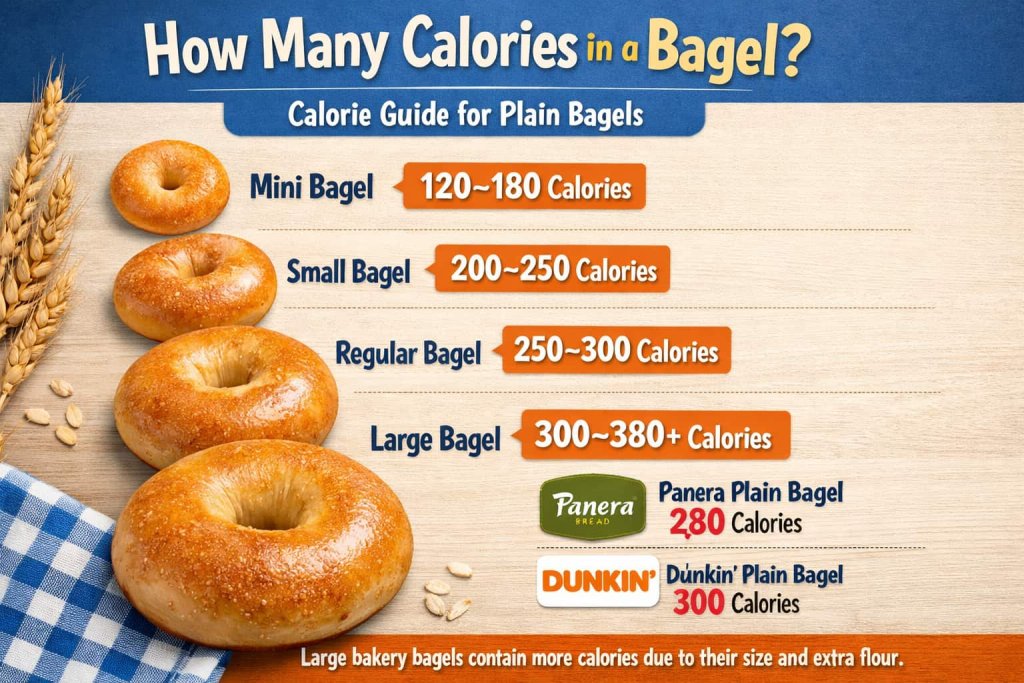
Here is a simple list-style guide for plain bagels:
- Mini bagel: about 120 to 180 calories
- Small plain bagel: about 200 to 250 calories
- Regular plain bagel: about 250 to 300 calories
- Large bakery-style bagel: about 300 to 380+ calories
For real-world examples, Panera lists its Plain Bagel at 280 calories, while Dunkin lists its Plain Bagel at 300 calories. Larger bakery bagels can be higher because they weigh more and often contain more flour per serving.
How Many Calories in Common Bagel Types?
Here is a practical calorie guide for common bagel types:
- Plain bagel: about 250 to 300 calories
- Everything bagel: about 290 to 340 calories
- Multigrain bagel: about 300 to 380 calories
- Cinnamon raisin or sweet bagel: often about 300 to 370 calories
- Crunch-topped or sugar-topped bagel: often about 400 calories or more
These numbers vary by brand and size, but they show an important pattern: flavored, sweet, and larger bagels are usually higher in calories than a plain bagel. That is why checking the serving size and nutrition label can make a bigger difference than the name alone.
Why Bagel Calories Vary So Much
Bagel calories change for a few main reasons.
Size
The biggest factor is size. A heavier bagel has more flour and more total calories. Many coffee-shop and bakery bagels are much larger than older standard serving sizes. USDA food composition data shows bagels provide roughly 257 to 288 calories per 100 grams, so even a moderate increase in size can raise calories quickly.
Type of Bagel
Some bagels contain added sugar, cheese, seeds, or flavor mix-ins that change the calorie count. Panera’s Cinnamon Crunch Bagel is 430 calories, compared with 280 calories for its Plain Bagel. Dunkin’s Multigrain Bagel is 380 calories, and its Everything Bagel is 340 calories.
Toppings and Fillings
A bagel’s toppings can add as many calories as the bagel itself. Cream cheese, butter, peanut butter, bacon, sausage, and cheese can raise the total fast. Dunkin’s nutrition guide lists 120 calories for its Plain Cream Cheese Spread, which means a plain bagel with cream cheese can reach around 420 calories before you add anything else.
Here are a few realistic examples of how fast the total can rise:
- Plain bagel alone: about 250 to 300 calories
- Bagel with plain cream cheese: often about 350 to 450 calories
- Bagel with butter: often about 320 to 400 calories
- Bagel breakfast sandwich with egg and cheese: often about 450 to 600+ calories
- Bagel with peanut butter: often about 400 to 500 calories, depending on how much is used
This is why many people underestimate bagel calories. The bagel itself may be moderate, but the full meal can become much heavier once spreads, cheese, or breakfast meats are added.
Nutrition Profile of a Plain Bagel
Here is a realistic nutrition profile for 1 regular plain bagel:
| Nutrient | Typical amount |
|---|---|
| Calories | about 250 to 300 |
| Carbohydrates | about 57 to 64 g |
| Protein | about 10 to 11 g |
| Total fat | about 1 to 2 g |
| Fiber | about 2 to 4 g |
| Sodium | about 400 to 620 mg |
Panera’s Plain Bagel provides 280 calories, 57 g carbohydrate, 10 g protein, 2 g fiber, and 410 mg sodium. Dunkin’s Plain Bagel provides 300 calories, 64 g carbohydrate, 11 g protein, 3 g fiber, and 620 mg sodium.
Key Nutrients in a Bagel
A bagel is not empty food, but its nutrients depend a lot on the type you choose.
Carbohydrates
Bagels are primarily a carbohydrate food. That makes them a quick source of energy, which can be useful before activity or as part of a meal. But because carbs have the biggest effect on blood sugar for many people, portion size matters. Mayo Clinic notes that carbohydrates often have the greatest impact on blood sugar levels, and whole-grain, fiber-rich carbs are generally better choices than refined ones.
Protein
Plain bagels usually provide around 10 to 11 grams of protein, which is helpful but not high compared with eggs, Greek yogurt, cottage cheese, or lean meats. Pairing a bagel with a stronger protein source can make the meal more balanced.
Fiber
Many plain bagels are made from refined flour, so fiber may be modest. The FDA says the Daily Value for fiber is 28 grams, which helps show why a bagel with only 2 to 3 grams is not a high-fiber choice. Whole-grain versions are usually better in this area.
Sodium
Bagels can be surprisingly salty. The FDA says the Daily Value for sodium is less than 2,300 mg per day. A single plain bagel may provide roughly 18% to 27% of that amount, and some flavored varieties can be much higher.
Iron and Other Enriched Nutrients
Many bagels made with enriched flour provide some iron and B vitamins. Those nutrients can contribute to your daily intake, though the exact amount varies by brand and recipe. The FDA requires key nutrients such as iron to appear on Nutrition Facts labels when present in qualifying amounts.
Is a Bagel Good for Weight Management?
A bagel can fit into a weight-management plan, but it is not automatically a light choice.
The main challenge is calorie density and portion size. A bagel can be eaten very quickly, may not be very filling if it is low in fiber and protein, and is often paired with calorie-heavy spreads or breakfast sandwich fillings. The National Institute of Diabetes and Digestive and Kidney Diseases explains that healthy weight management works best with an eating pattern you can maintain over time, not by focusing on one single food.
A bagel is more likely to work well for weight management when you:
- choose a smaller bagel or eat half
- pick a whole-grain or higher-fiber version
- add protein such as eggs, cottage cheese, or Greek yogurt
- keep spreads moderate
- pair it with fruit or vegetables instead of extra pastries or chips
A simple way to make a bagel work better for weight management is to treat it as a main carbohydrate serving, not a light extra. For example, half a regular bagel with eggs and fruit may be more filling and easier to manage than a full bagel with a thick spread. This approach can lower total calories while adding more protein and better meal balance.
The Dietary Guidelines for Americans, 2025–2030 emphasize prioritizing fiber-rich whole grains and reducing highly processed refined carbohydrates, which is useful guidance when choosing between a plain white bagel and a more fiber-rich option.
When a Bagel May Be a Better Choice
A bagel may make more sense when:
- you need a convenient breakfast
- you want quick energy before exercise
- you pair it with protein for a more balanced meal
- you control toppings and portion size
For some people, half a bagel with eggs and fruit may be more satisfying than a full bagel with a thick layer of cream cheese. That kind of change can lower calories while improving fullness. This fits with general guidance from NIDDK and Mayo Clinic to build meals around foods that are more filling and nutrient-dense.
Who Should Be a Little More Careful
Some people may want to be more careful with bagels, especially large refined-flour versions.
People Watching Blood Sugar
Because bagels are rich in carbohydrates and often low in fiber, they may raise blood sugar quickly. Mayo Clinic recommends choosing whole grains more often and limiting refined, highly processed carbs.
People Watching Sodium
If you are trying to reduce sodium, bagels can add up faster than expected. Plain versions may already contain a moderate amount, and salt-topped types can be far higher. Panera’s Salt Bagel, for example, is listed at 1,960 mg sodium, which is close to a full day’s recommended limit on its own.
People Trying to Lower Total Calories
A bagel is easy to underestimate. A plain one may seem simple, but large portions plus cream cheese, butter, or breakfast sandwich fillings can turn it into a high-calorie meal quickly. That does not mean you have to avoid bagels. It simply means portion awareness matters.
How to Make a Bagel Healthier
You do not need to stop eating bagels to make them work better for your goals.
Choose a Smaller Portion
A half bagel can still be satisfying, especially with protein and fruit.
Pick Whole Grain When Possible
Whole-grain bagels are often higher in fiber and may help you stay full longer. Mayo Clinic notes that whole grains are linked with better overall diet quality and can support heart and metabolic health.
It is also worth checking the label carefully. A bagel that looks darker or says “multigrain” is not always mostly whole grain. In many products, refined flour is still the main ingredient. Choosing a bagel with whole wheat or another whole grain listed first is usually the better option if you want more fiber and a steadier, more filling breakfast.
Use Smarter Toppings
Try options like:
- peanut butter in a modest amount
- eggs
- cottage cheese
- plain Greek yogurt on the side
- avocado in a thin layer
- smoked salmon with vegetables
Add Protein and Produce
A bagel by itself is mostly carbs. Adding protein and produce usually makes the meal more filling and more balanced.
Bagel Calories Compared With Common Breakfast Foods
A bagel is often higher in calories than people expect compared with other simple breakfast foods.
- 1 plain bagel: about 280 to 300 calories
- 2 slices of bread: often much lower, depending on type
- 1 English muffin: Dunkin lists 190 calories
- 1 large egg: much lower in calories and higher in protein per calorie
That does not make a bagel bad. It just means it is closer to a substantial grain serving than a light snack.
FAQs About How Many Calories in a Bagel
How many calories are in half a bagel?
Usually about 125 to 150 calories for half of a regular plain bagel, depending on the full size.
How many calories are in a bagel with cream cheese?
It often lands around 350 to 450 calories, depending on the bagel size and how much cream cheese is added. Dunkin’s plain bagel plus plain cream cheese is about 420 calories.
Are whole-wheat bagels lower in calories?
Not always. Whole-wheat or multigrain bagels are not necessarily lower in calories, but they may offer more fiber and a better nutrition profile.
Is a bagel healthier than bread?
It depends on the bread and the bagel. A bagel is usually denser and higher in calories than one or two slices of bread, but the ingredient quality and portion size matter most.
The Bottom Line on Bagel Calories
A plain bagel usually contains about 250 to 300 calories, with more calories in larger bakery-style versions and flavored types. Bagels can fit into a healthy eating pattern, but they are easiest to manage when you watch portion size, choose higher-fiber options, and keep toppings balanced. A few simple changes can make a bagel breakfast more satisfying and more aligned with your goals.
Sources/References
- USDA — FoodData Central
- Panera Bread — Plain Bagel
- Dunkin — Nutrition PDF
- FDA — How to Understand and Use the Nutrition Facts Label
- FDA — Sodium in Your Diet
- NIDDK — Weight Management
- NIDDK — Eating & Physical Activity to Lose or Maintain Weight
- Mayo Clinic — Diabetes management: How lifestyle, daily routine affect blood sugar
- Mayo Clinic — Whole grains: Hearty options for a healthy diet
- U.S. Department of Health and Human Services and U.S. Department of Agriculture — Dietary Guidelines for Americans, 2025–2030