
How to store cheese the right way is to keep it cold (refrigerator at 40°F/4°C or below), wrap it to prevent drying while avoiding trapped moisture, and follow different rules for hard, soft, and shredded cheeses. Done well, this protects flavor and texture, reduces food waste, and supports overall wellness by helping you use cheese as a satisfying, portion-friendly source of protein and calcium.
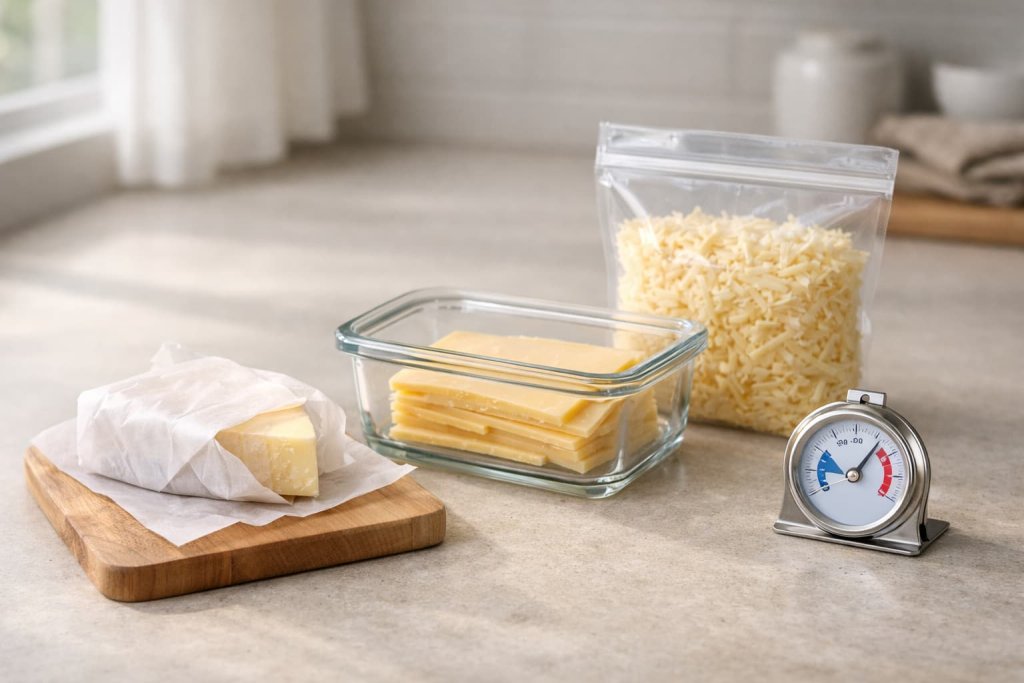
For official food-safety basics (including fridge temperature targets), see the USDA Food Safety and Inspection Service (FSIS).
Why storing cheese correctly matters for nutrition and overall wellness
Cheese can make meals more satisfying and enjoyable, which can support consistent, balanced eating. It also contributes key nutrients:
- Protein (helps you feel fuller and supports muscle maintenance)
- Calcium (important for bones and normal muscle function)
- Vitamin B12 (supports nervous system and red blood cell function)
But storage matters because spoiled cheese can cause food waste and, in some cases, foodborne illness risk—especially with higher-moisture cheeses. Keeping cheese safely cold and properly wrapped helps you get the nutrition benefits without the avoidable downsides.
For calcium needs by age (including teens and adults), see the NIH Office of Dietary Supplements.
The golden rules of how to store cheese
Rule 1: Keep the fridge cold enough
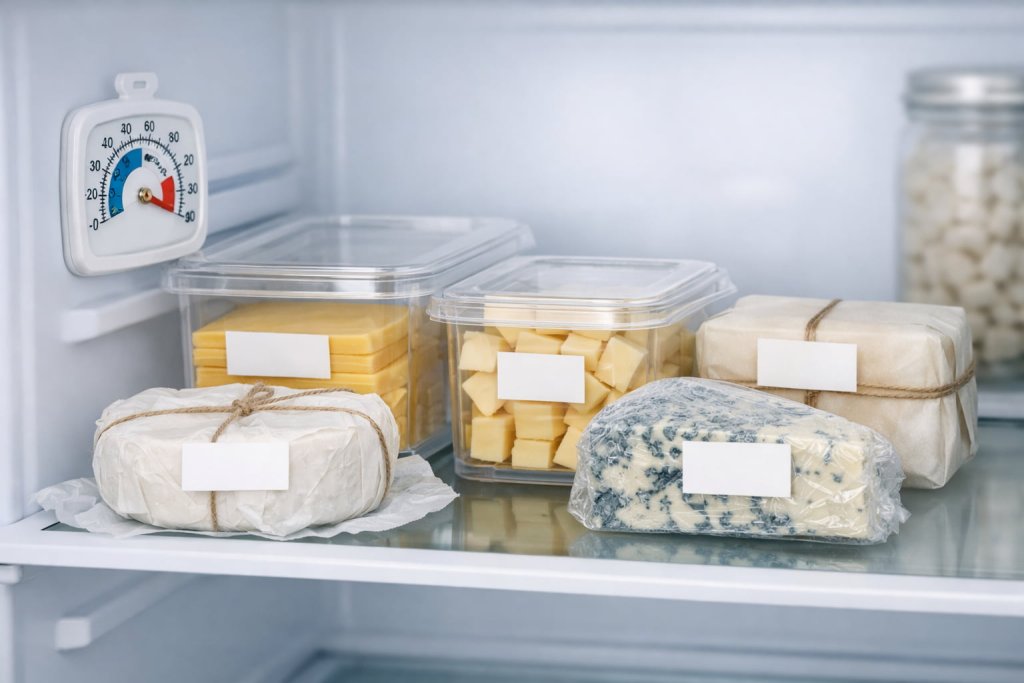
Set your refrigerator to 40°F (4°C) or below. If your dial doesn’t show exact temps, using a fridge thermometer helps you confirm the real temperature. For the official temperature guidance, see the U.S. Food and Drug Administration (FDA).
Rule 2: Store cheese away from temperature swings
Avoid the fridge door if possible (it warms up every time you open it). A deli drawer or a stable middle shelf usually works better for consistent chill.
Best fridge location tip: If your refrigerator has a deli drawer or cheese drawer, that’s often a good spot because it stays more temperature-stable. If you’re using a regular shelf, aim for the middle/back of the fridge (not the door). Consistent cold helps cheese stay fresher and reduces the chance of condensation that can speed spoilage.
Rule 3: Wrap to balance moisture (not too dry, not too wet)
Most cheese storage problems are either:
- Drying out (too much air exposure), or
- Getting slimy/moldy fast (too much trapped moisture)
The goal is controlled protection: wrapped snugly enough to prevent drying, but not sealed in a way that traps condensation against the cheese.
Clean handling matters (it extends shelf life):
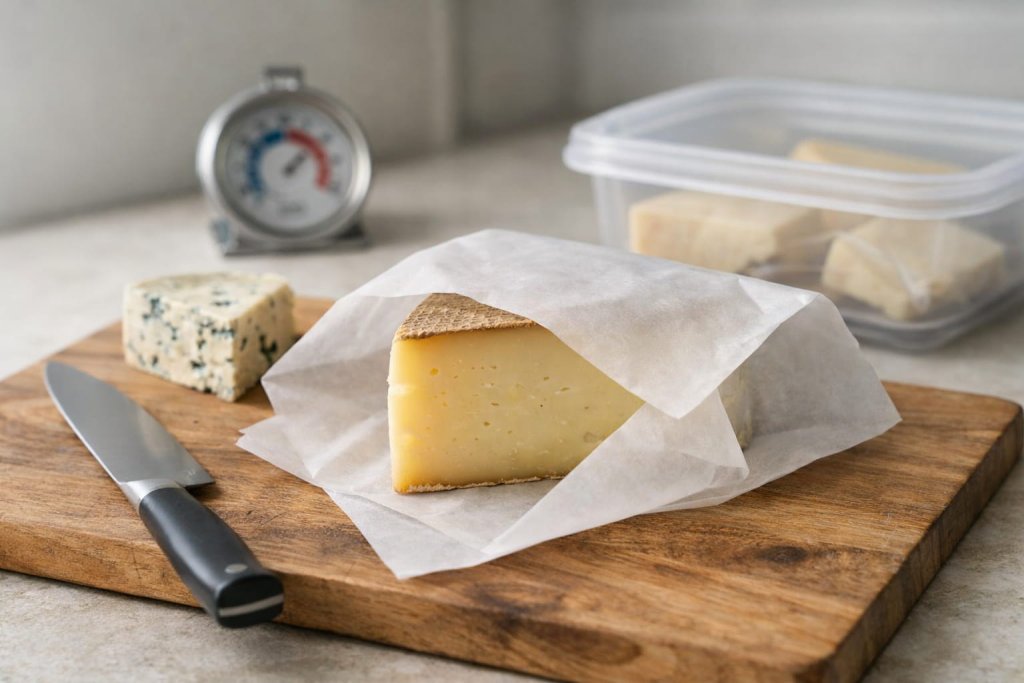
- Always cut cheese with a clean, dry knife and use a clean cutting board.
- Avoid touching the cut surface repeatedly (hands add moisture and microbes).
- Re-wrap cheese right after serving instead of leaving it out on the counter.
- If you’re serving multiple cheeses, use separate knives when possible to reduce cross-contamination and flavor transfer.
Best wrapping method by cheese type
How to store cheese blocks (hard and semi-hard)
Examples: cheddar, Swiss, Parmesan wedge, Gouda
Best approach:
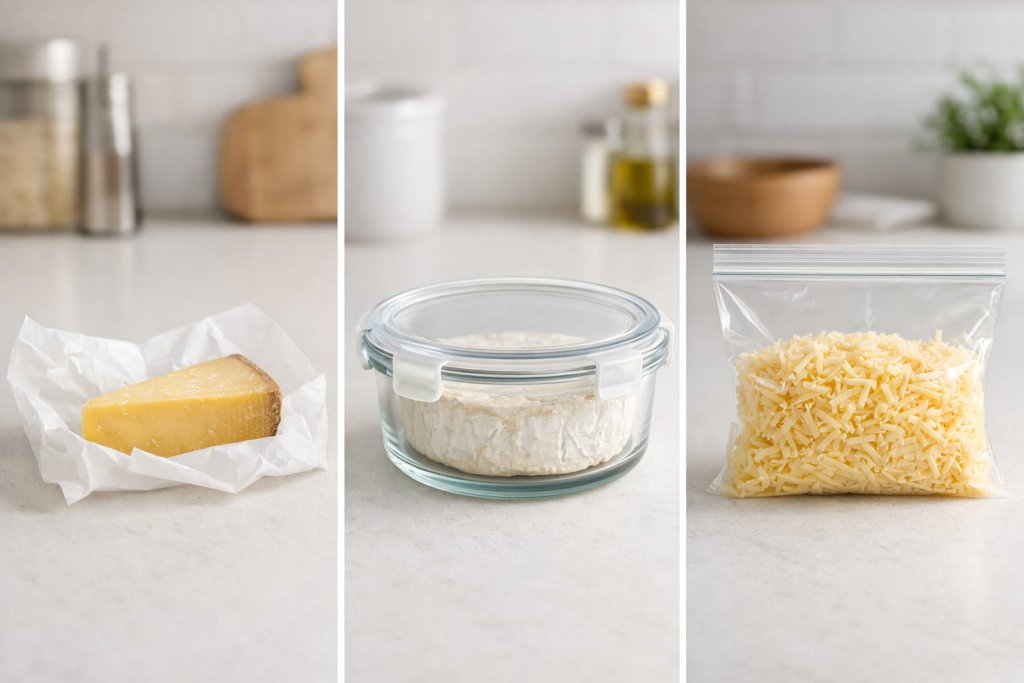
- Wrap in wax paper or parchment paper (or cheese paper if you have it)
- Then place it in a resealable bag or container (not vacuum-tight against the cheese, just protected)
Why it works: the inner layer helps the cheese “breathe” a bit while the outer layer limits drying and odor transfer.
How to store soft and fresh cheeses
Examples: Brie, Camembert, fresh mozzarella, ricotta, cottage cheese, cream cheese, queso fresco
Best approach:
- Keep in the original container if it’s resealable and clean
- If not, move to a clean airtight container
- For fresh mozzarella in liquid: keep it submerged in its liquid and covered; replace liquid if the product directions suggest it
Soft cheeses are higher moisture, so they generally spoil faster and are less forgiving if temperature control slips.
How to store blue cheese and strong-smelling cheeses
Examples: blue cheese, Gorgonzola, Roquefort, washed-rind cheeses
Best approach:
- Keep these cheeses tightly contained (a sealed container works well) to prevent odors from spreading to other foods.
- Store them separately from mild cheeses when possible so flavors don’t transfer.
- If the cheese is meant to be “strong” by design, focus on odor control and moisture balance, not removing its natural aroma.
How to store shredded, sliced, and crumbled cheese
Examples: shredded cheddar/mozzarella, sliced sandwich cheese, crumbled feta
Best approach:
- Keep tightly sealed in the original bag if it reseals well
- Press out excess air and keep it cold
- If moisture builds up, consider moving to a dry, clean container lined with a paper towel (replace towel as needed)
Shredded cheese has more exposed surface area, so it tends to dry out or mold faster than a block.
How long does cheese last in the fridge
Storage time depends on cheese type, processing, and how it’s handled (clean knife, re-wrapping, fridge temperature). As a practical baseline from USDA AskUSDA:
- Hard cheese (block): about 6 months unopened; about 3–4 weeks after opening
- Shredded hard cheese: about 1 month after opening (quality varies by brand and handling)
- Soft cheeses: often about 1 week after opening (varies by product)
Use dates as guidance for quality, but rely on your senses and food-safety rules for spoilage.
Easy habit that prevents waste: Write the open date on the package (or on a piece of tape on the container). Cheese often gets tossed because no one remembers when it was opened—dating it makes the storage timeline usable in real life.
Quick storage cheat sheet
| Cheese type | Best wrap/container | Typical fridge life (general) | Biggest risk |
|---|---|---|---|
| Hard/semi-hard block | Wax/parchment + bag/container | Longer (weeks) | Drying out |
| Soft/fresh | Airtight container | Shorter (days to ~1 week) | Spoilage |
| Shredded/sliced | Sealed bag/container | Shorter (days to weeks) | Mold growth |
| Blue/mold-ripened (intentionally) | Original wrap + container | Shorter (1–2 weeks typical) | Off-flavors if too sealed |
What to do if you see mold
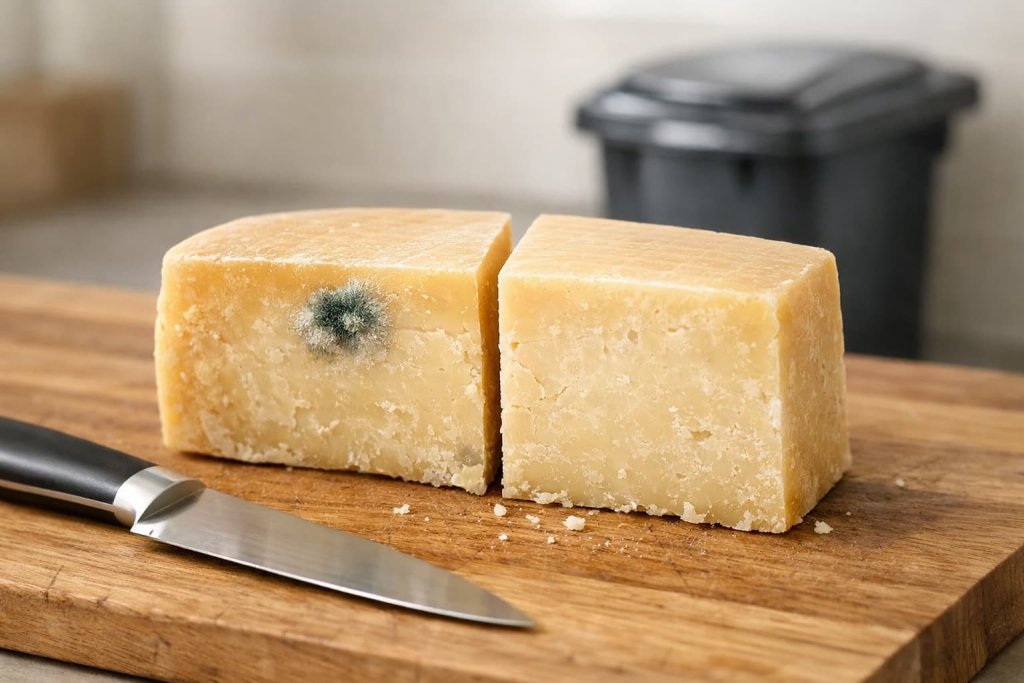
This is where cheese type really matters. The safe rule of thumb:
- Soft cheeses with mold: discard them.
- Hard cheeses with mold: you can often salvage by cutting away mold properly.
Practical steps for hard cheese:
- Cut off at least 1 inch around and below the moldy spot
- Keep the knife out of the mold to avoid spreading it
- Re-wrap with fresh paper and a clean outer bag/container
If you’re unsure, toss it. Food safety beats saving a few ounces.
Signs cheese should be discarded (especially soft cheeses):
- Strong sour or “off” odor that’s new for that cheese
- Slimy or sticky surface on cheeses that shouldn’t be slimy
- Pink, green, or black growth (beyond a cheese’s normal rind/mold style)
- Excess liquid pooling in the container (not brined cheeses)
- Bitter, soapy, or sharply unpleasant taste (don’t “taste-test” if you suspect spoilage—discard it)
How to store cheese in the freezer (when you need it to last)
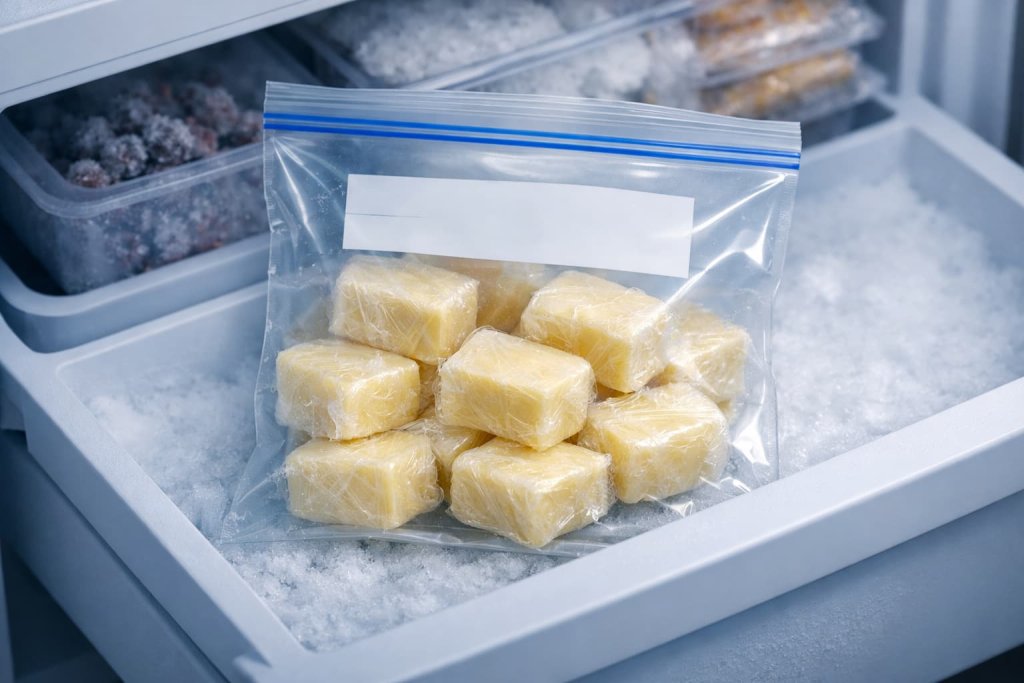
Freezing can work best for hard or semi-hard cheese, especially if you plan to use it melted or cooked later (texture can change).
Freezer guidance from the National Center for Home Food Preservation:
- Cut hard/semi-hard cheese into smaller portions (they suggest about 1 to 1½ pounds or smaller)
- Use moisture-vapor resistant packaging
- Expect it may become crumbly/mealy, but flavor can remain
- Recommended freezer shelf life is commonly around 6 months for many cheeses
Cheeses that generally don’t freeze well include cottage cheese and ricotta, and often cream cheese (texture changes can be significant).
How long can cheese sit out at room temperature

For food safety, avoid leaving cheese out for long periods—bacteria grow fastest in the 40°F to 140°F “danger zone.” As a general rule, don’t leave cheese at room temperature for more than 2 hours (or 1 hour if the room is hot). For a clear, official explanation of the danger zone and the 2-hour rule, see the Centers for Disease Control and Prevention (CDC).
If you’re building a cheese board, set out smaller portions and refill from the fridge as needed to keep the rest cold.
Power outage or travel: when to keep or toss cheese
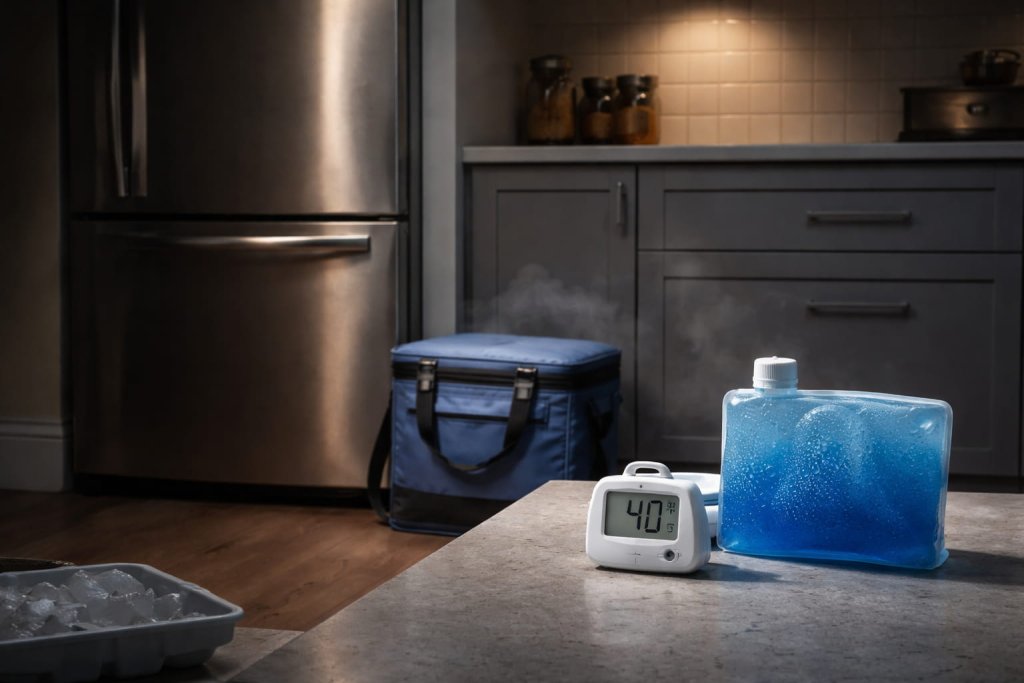
If your fridge loses power, don’t guess. Use the federal guidance chart at FoodSafety.gov, which lists cheese types specifically.
Key takeaways from the chart:
- After extended time above safe temps, soft cheeses are typically discard
- Hard cheeses are more likely to be safe to keep
- Shredded cheeses are more likely to be discard after unsafe exposure
When in doubt, throw it out—especially for higher-moisture cheeses.
Wellness-friendly tips for enjoying cheese while supporting your goals

Cheese can fit into balanced eating when you store it well and portion it thoughtfully.
Extra caution for higher-risk groups: If you’re pregnant, immunocompromised, or older, talk with a clinician about safer cheese choices—especially when it comes to soft cheeses made with unpasteurized milk. Choosing pasteurized options and keeping strict cold storage can reduce risk.
Use the serving size as a reality check
A common reference serving for many cheeses is about 1 oz (28–30 g), and many Nutrition Facts labels reflect that.
Pair cheese with fiber for steadier satisfaction
Instead of cheese alone, pair it with:
- Fruit (apple, berries, pears)
- Vegetables (cucumbers, bell peppers, tomatoes)
- Whole grains (whole-grain crackers, oats in savory bakes)
- Beans/lentils (salads, bowls)
This improves overall nutrient balance and helps the snack or meal “stick” longer.
Watch saturated fat and sodium over the whole day
Cheese can be higher in saturated fat and sodium depending on the type. The Dietary Guidelines for Americans recommend keeping saturated fat to less than 10% of calories per day and sodium under 2,300 mg/day for most people.
A simple strategy: choose stronger-flavored cheeses (you often need less), and use cheese as a “finisher” rather than the main ingredient.
Example: a balanced snack formula
- 1 oz cheese + 1 piece of fruit
- 1 oz cheese + sliced veggies + hummus
- Cottage cheese + berries (if tolerated and preferred)
People Also Ask about how to store cheese
Can you store cheese in plastic wrap?
It works short-term, but it can trap moisture and lead to sliminess or off flavors for some cheeses. A breathable layer (wax/parchment/cheese paper) plus an outer container is often better for blocks.
What’s the best container for storing cheese?
For blocks: paper wrap + a bag or container. For soft cheeses: airtight container. For shredded cheese: sealed bag/container with minimal air.
Should you wash mold off cheese?
No. For hard cheese, cut it off correctly. For soft cheese, discard.
How do you keep cheese from drying out?
Use a breathable wrap (wax/parchment) plus an outer container, and avoid leaving cut surfaces exposed.
Can you freeze shredded cheese?
You can, but quality may drop and clumping is common. If you freeze it, portion it flat in a bag and use it for cooking.
What temperature should cheese be stored at?
Keep the refrigerator at 40°F (4°C) or below for safety and quality.
Conclusion
Knowing how to store cheese properly is a small habit that pays off: better taste, less waste, and fewer food-safety headaches. Keep your fridge cold, match the wrapping method to the cheese type, and treat soft and shredded cheeses as more time-sensitive.