
For most healthy adults, protein is “too much” when it regularly crowds out other essentials (fiber-rich carbs, fruits/vegetables, healthy fats), pushes you above the usual upper range of about 35% of daily calories, or causes symptoms—especially if you have kidney disease or other risks. Understanding how much protein is too much matters because higher-protein diets can be helpful, but only when they stay balanced and fit your health status.
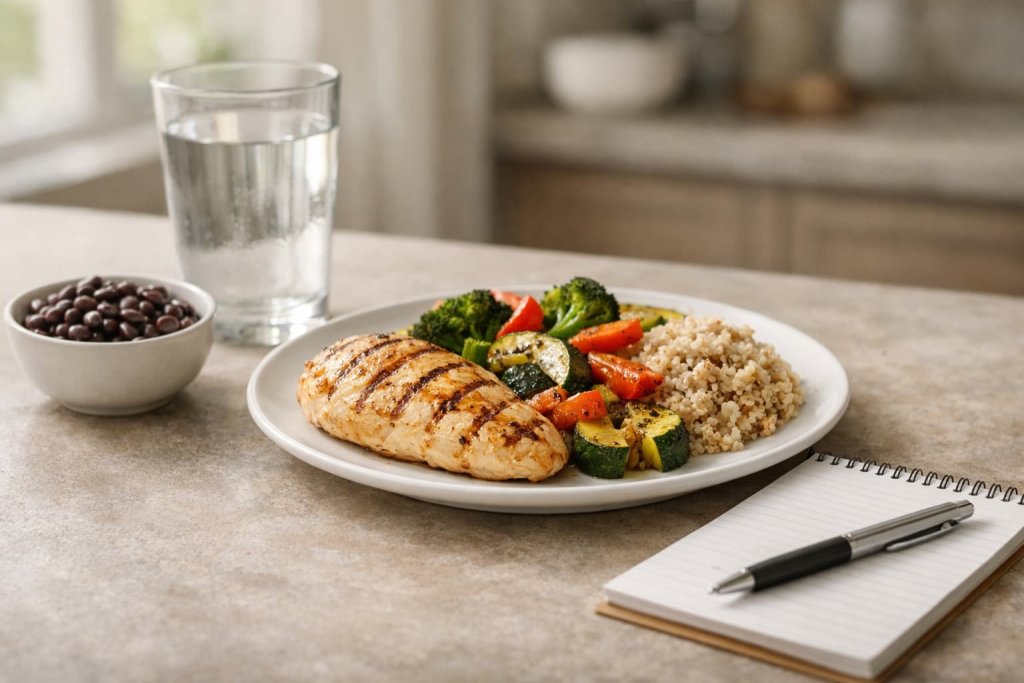
There’s no single number that’s “too much” for everyone. Instead, the safest way to answer this is to combine (1) evidence-based ranges, (2) your goals (maintenance, muscle gain, fat loss), and (3) how your body responds.
Is there an official upper limit for protein?
Unlike many vitamins and minerals, protein does not have a clearly defined “tolerable upper intake level.”
- The European Food Safety Authority notes that available data are not sufficient to set a tolerable upper intake level (UL) for protein. (European Food Safety Authority)
- In the U.S., guidance commonly uses the Acceptable Macronutrient Distribution Range (AMDR), which sets protein at 10%–35% of total daily calories for adults. (Dietary Guidelines for Americans; ODPHP)
Practical takeaway: If you’re consistently above 35% of calories from protein, that’s a sensible “check your balance” threshold—not an automatic danger sign, but a reason to make sure you aren’t sacrificing fiber, carbs, and healthy fats.
Quick numbers that help you decide if you’re overdoing it
These ranges are commonly used in nutrition and sports-nutrition guidance:
- Baseline minimum (RDA): ~0.8 g/kg/day (meets needs for most healthy adults). (ODPHP)
- Most active people: ~1.4–2.0 g/kg/day is often sufficient. (International Society of Sports Nutrition)
- Lean-mass retention during aggressive calorie deficits (advanced, resistance-trained): sometimes ~2.3–3.1 g/kg/day is discussed in the research context (not a general target). (International Society of Sports Nutrition)
A quick note on wording: “high protein” is relative. A plan can be “high” compared with your usual intake even if it’s still within common guidance. For most healthy adults, protein starts to look “high” when it consistently exceeds what you need for your goals and pushes you toward the upper end of the AMDR (35% of calories), especially if it displaces fiber-rich foods.
A simple “sanity check” using calories (AMDR)
Protein has 4 calories per gram.
If you eat 2,000 calories/day:
- 10% protein = 200 calories from protein = 50 g/day
- 35% protein = 700 calories from protein = 175 g/day
That means: At 2,000 calories/day, consistently above ~175 g/day can put you beyond the typical AMDR upper end. (Dietary Guidelines for Americans; ODPHP)
When protein intake becomes more likely to be “too much” in real life
Protein is most likely “too much” when one or more of these are true:
- You’re far above what your goal needs (for example, pushing very high intakes without performance or body-composition benefit).
- Your diet becomes protein-heavy but low in fiber (few fruits/vegetables/whole grains/beans).
- Most of your protein comes from processed meats or high-saturated-fat sources, raising saturated fat and sodium exposure.
- You’re using multiple protein supplements on top of high-protein meals, creating an easy calorie surplus.
- You have kidney disease (or another condition where protein targets should be individualized). (National Kidney Foundation; NIDDK)
Signs you may be eating too much protein
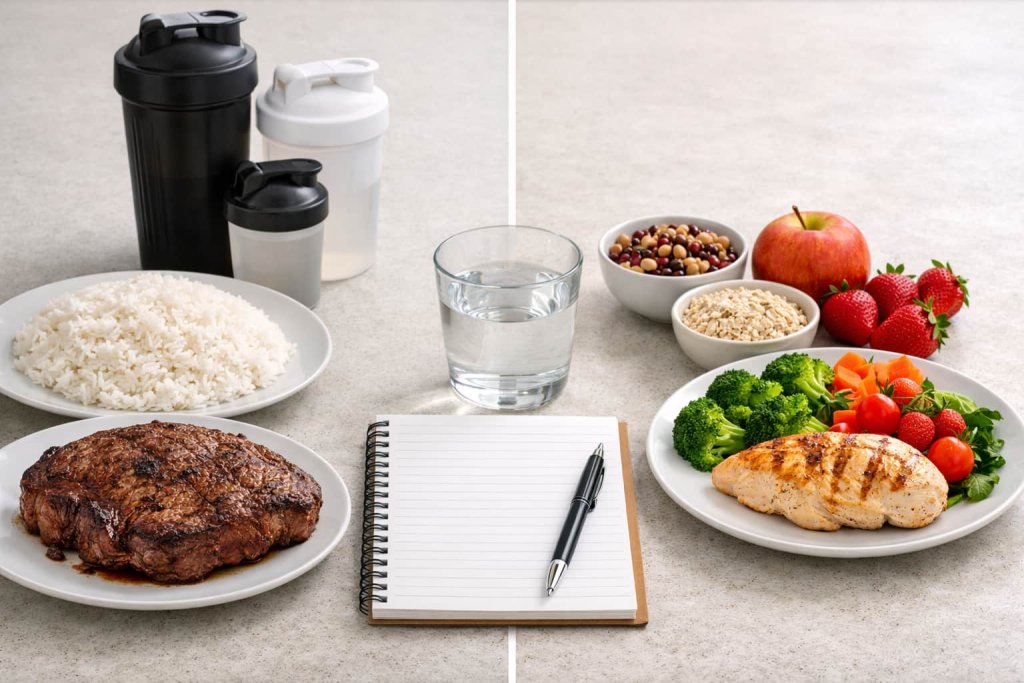
These are common “real-world” signs that your current high-protein approach may be out of balance.
Digestive issues (constipation, bloating, harder stools)
This often happens when higher protein comes with lower fiber (less produce, fewer beans, less whole grains). Many people fix this by keeping protein steady while raising fiber and fluids. (Mayo Clinic)
Feeling unusually thirsty or “dried out”
When you raise protein substantially—especially alongside hard training—you may need more fluids. Persistent thirst can be a sign your plan needs adjustment.
Bad breath on a high-protein, low-carb plan
This can show up when high protein is paired with very low carbs (some people drift into “keto-like” eating without intending to). It’s less about protein itself and more about the overall pattern. (Mayo Clinic)
Low energy, poor workouts, or irritability
If your protein increase came from cutting carbs too hard, you may notice lower training quality or fatigue. Many people do better when protein rises without eliminating carbs entirely—especially around workouts. (Dietary Guidelines for Americans)
Unwanted weight gain
Protein foods and shakes still contain calories. If your protein increase adds 300–600 calories/day, weight gain is a predictable result. (Dietary Guidelines for Americans)
Kidney-related concerns (for people with CKD or kidney risk)
If you have chronic kidney disease, protein targets can change by stage and treatment (for example, dialysis vs not on dialysis). Some people with CKD may be advised to eat moderate amounts of protein so waste products don’t build up. (NIDDK; National Kidney Foundation)
If you have kidney disease, don’t use internet “high-protein targets” as your plan—get individualized advice.
Who should be extra careful with high-protein diets?
High-protein eating is not automatically unsafe, but these groups should be more cautious and ideally get clinician/dietitian guidance:
- People with chronic kidney disease (CKD) or reduced kidney function (NIDDK; National Kidney Foundation)
- People advised to limit protein unless on dialysis (National Kidney Foundation)
- Anyone with a history of kidney problems, or who is unsure about kidney function and wants to start an extreme plan like “carnivore” (Mayo Clinic)
Also be cautious with very high-protein dieting if you are pregnant, breastfeeding, older and under-eating, or a teen still growing. These life stages still benefit from adequate carbs, healthy fats, and micronutrients—so the goal is balance, not extremes.
A safer way to set your protein target
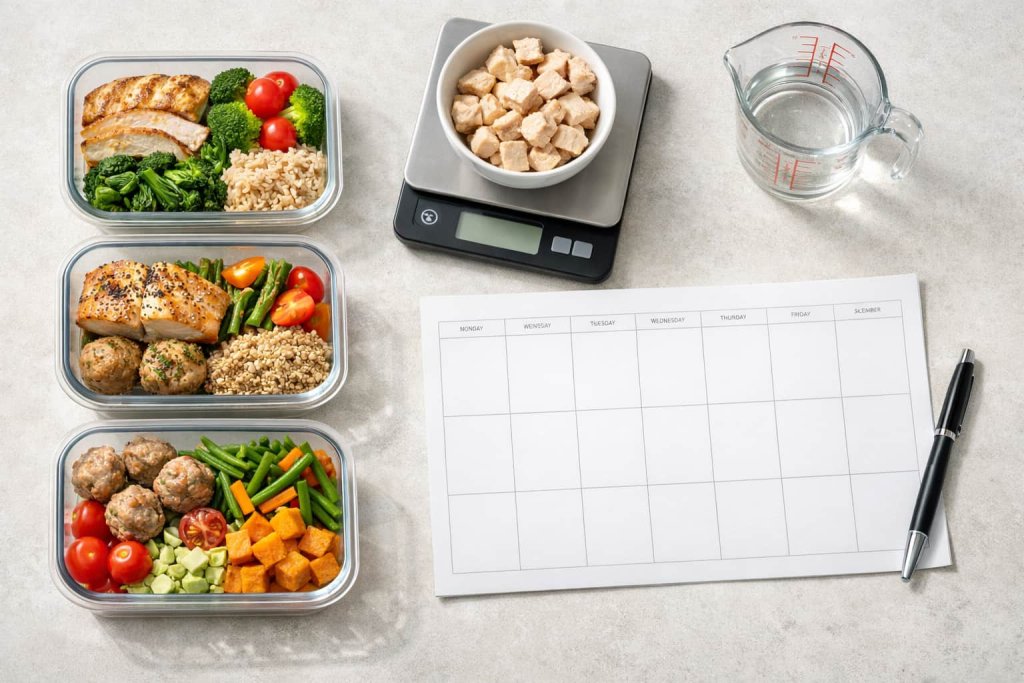
Use this three-step method so you avoid extremes.
Step 1: Pick a goal-based range
- General health / maintenance: 0.8–1.2 g/kg/day
- Regular training / muscle-focused: 1.4–2.0 g/kg/day (International Society of Sports Nutrition)
- Fat loss while lifting (advanced): start near 1.6–2.2 g/kg/day, and only consider higher with strong reasons (ISSN context)
If you prefer grams per pound (lb), a simple conversion is:
- 0.8 g/kg/day ≈ 0.36 g/lb/day
- 1.4–2.0 g/kg/day ≈ 0.64–0.91 g/lb/day
- 2.3–3.1 g/kg/day ≈ 1.04–1.41 g/lb/day
This is a quick way to sanity-check popular targets like “1 gram per pound,” which can be appropriate for some lifters but unnecessary for many people depending on total calories and training volume.
Step 2: Check your “protein percent of calories”
If protein is consistently pushing beyond 35% of calories, pause and make sure your diet quality isn’t suffering. (Dietary Guidelines for Americans; ODPHP)
Step 3: Check balance and symptoms for 2–3 weeks
If you get constipation, fatigue, thirst, or you’re relying on supplements for most protein, adjust:
- Keep protein steady, add fiber (beans/lentils, oats, berries, vegetables)
- Add carbs around workouts (fruit, yogurt, rice, potatoes)
- Add fluids and include electrolytes if you sweat heavily
- Shift sources toward lean and plant proteins more often
Step 4: Spread protein across the day
Many people digest and use protein better when it’s split across meals instead of “back-loaded” at dinner. A practical approach is 25–40 g per meal for many adults (adjust for body size), plus a protein-rich snack if needed. This can reduce the urge to overdo shakes or giant portions later in the day.
Food-first protein: better sources and better balance
A high-protein diet is usually safer and easier to tolerate when most protein comes from minimally processed foods:
- Seafood, eggs, poultry, lean meats (in sensible portions)
- Beans, lentils, tofu/tempeh, edamame
- Greek yogurt, cottage cheese, milk (or fortified alternatives where appropriate)
- Nuts and seeds (also provide healthy fats)
Tip: If your diet is very protein-heavy, make your plate more balanced:
- Add a fiber anchor: vegetables, fruit, beans, oats, whole grains
- Add healthy fats: olive oil, nuts, seeds, avocado
- Keep ultra-processed “protein foods” (bars, chips, sweetened shakes) as occasional, not foundational
Protein powders and bars: how to use them without overdoing it
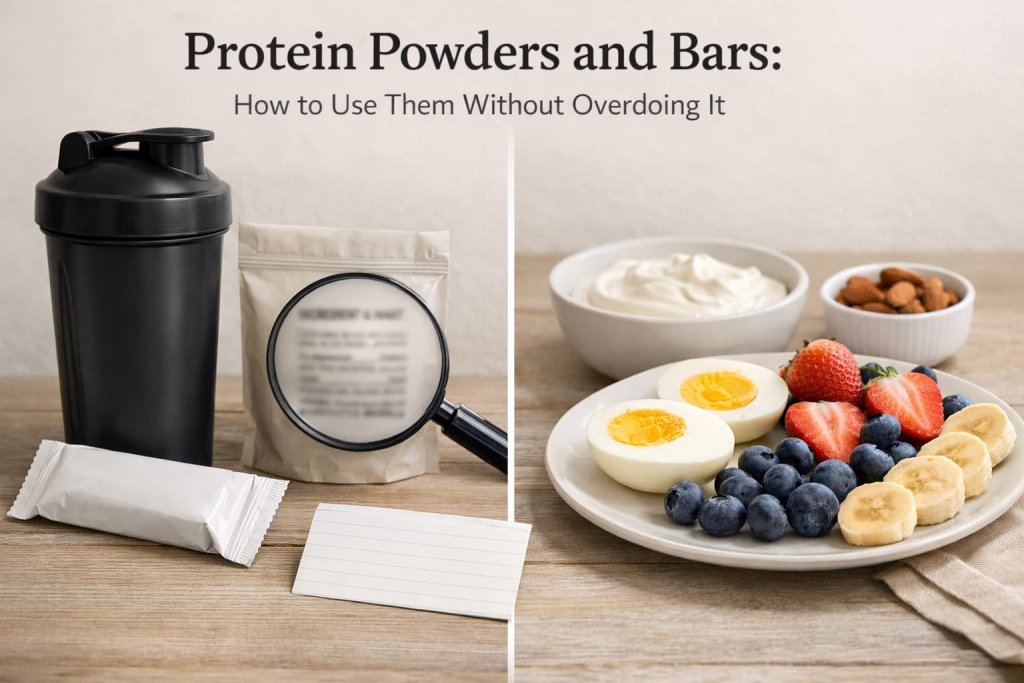
Supplements can be convenient, but they’re easy to overuse. For many people, 1 serving per day (or less) is plenty when your meals already include protein. If you rely on multiple shakes/bars daily, it’s a sign your plan may be unbalanced.
Quick label checks:
- Aim for a product with minimal added sugar and no mega-doses of vitamins/minerals unless prescribed
- Watch sodium if you’re using several servings per day
- If you’re sensitive, check for sugar alcohols or high fiber-additives that can cause GI upset
- Treat powders as “food,” not a free add-on—count the calories
Common high-protein mistakes that cause problems
If you’re seeing symptoms, these are frequent culprits:
- Raising protein while cutting fiber too low (few vegetables, beans, fruit, or whole grains)
- Using multiple shakes/bars daily instead of food-first protein
- Choosing mainly processed meats or high-sodium “protein foods”
- Forgetting fluids (especially with training or hot weather)
- Treating protein as “free calories” and accidentally eating in a surplus
- Going extreme (very low-carb + very high protein) without a clear reason or plan
Safety box: when to contact a clinician

Talk with a clinician or registered dietitian if:
- You have CKD, diabetes with kidney concerns, or past kidney problems (NIDDK; National Kidney Foundation)
- You notice persistent swelling, major appetite changes, or ongoing nausea
- You’re considering an extreme high-protein plan (such as very low-carb, animal-only patterns) and want to do it safely (Mayo Clinic)
Frequently asked questions
How much protein is too much per day?
For many adults, “too much” often means regularly exceeding what your goal needs and drifting above the AMDR upper end of 35% of calories, especially if symptoms or diet imbalance show up. (Dietary Guidelines for Americans; ODPHP)
Is 150 grams of protein a day too much?
It depends on your body size, calories, and training. For a 70 kg (154 lb) person, 150 g/day is about 2.1 g/kg/day, which is above the “sufficient for most exercisers” range and may be unnecessary unless you have a specific, well-managed reason. (International Society of Sports Nutrition)
Is 1 gram of protein per pound too much?
For some lifters in a calorie deficit, it can be a reasonable short-term target. But for many people it’s more than necessary—especially if it pushes protein above ~35% of calories or crowds out fiber-rich foods. A better approach is to use a goal-based range and adjust based on performance, recovery, and digestion.
Is 200 grams of protein a day too much?
For many people, yes—especially at moderate calorie intakes—because it can push you near or above 35% of calories and crowd out fiber/carbs. A larger, highly active person may tolerate it, but it’s worth checking diet quality and symptoms. (Dietary Guidelines for Americans; ODPHP)
Can too much protein hurt your kidneys?
In healthy people, high-protein diets aren’t known to cause medical problems in general. But in people with kidney disease, protein targets often need to be moderated and individualized. (Mayo Clinic; NIDDK; National Kidney Foundation)
What’s the best protein intake for muscle gain?
Many active people do well around 1.4–2.0 g/kg/day, combined with progressive training and enough total calories. (International Society of Sports Nutrition)
Does “more protein” always mean more muscle?
No. Once you’re in a sufficient range, extra protein often has diminishing returns—especially if you’re not training effectively or you’re not eating enough total calories, carbs, and micronutrients to support performance and recovery. (International Society of Sports Nutrition)
Conclusion
“How much protein is too much” usually isn’t one magic number—it’s when your protein intake exceeds what your body and goals need, disrupts your overall diet quality, or causes symptoms, especially if you have kidney disease risk. Aim for a goal-based range, keep protein within a balanced calorie distribution, and prioritize food-first sources with enough fiber, carbs, and fluids.
This content is for informational purposes only and not medical advice.