
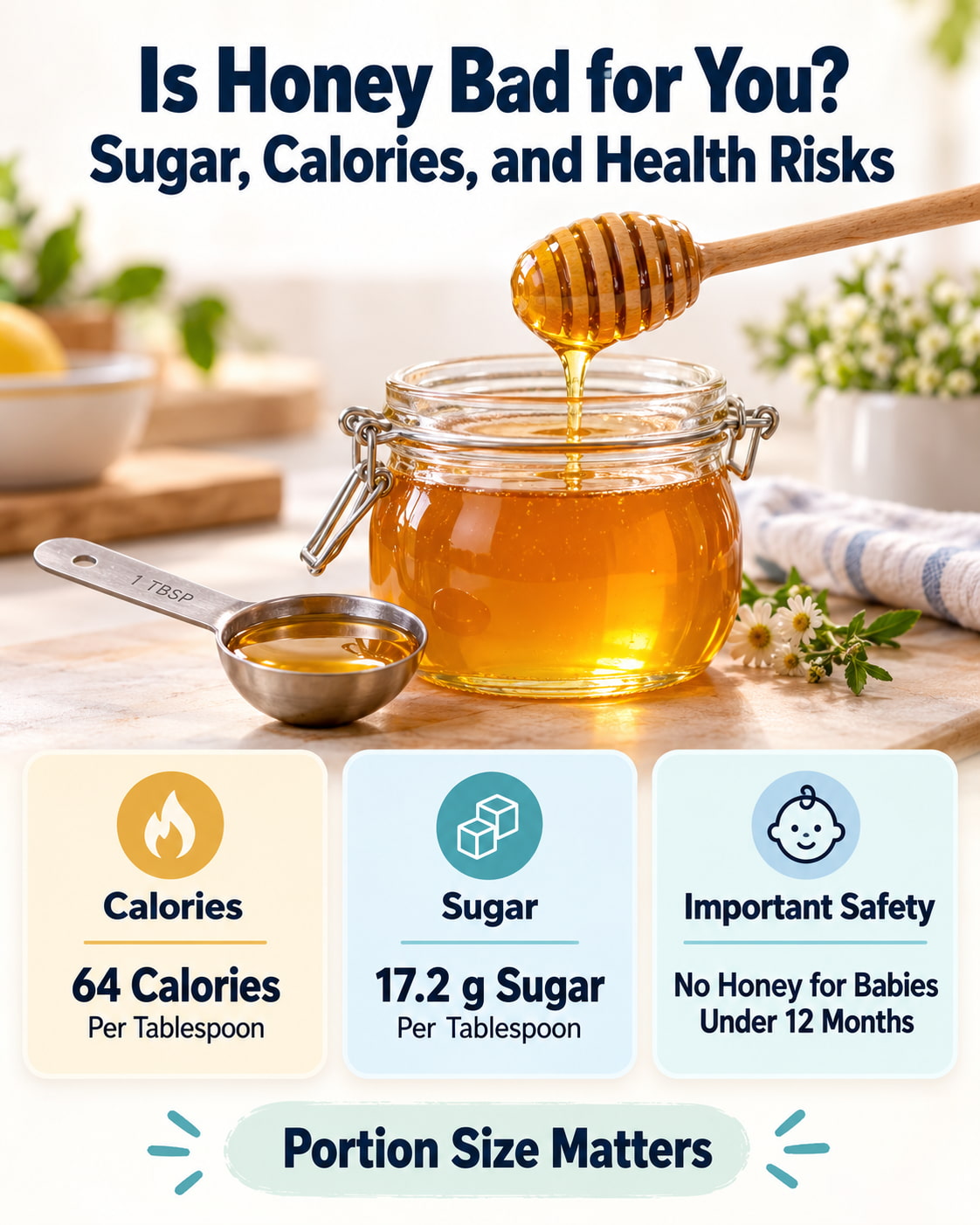
Honey is generally safe for most adults in small amounts, but it is a concentrated source of sugar and calories. Whether honey is bad for you depends on your portions, overall diet, and health needs.
A measured teaspoon contributes much less sugar than several generous spoonfuls. Understanding that difference can help you enjoy honey while keeping your intake in perspective.
One important exception applies to babies: never give honey to an infant younger than 12 months, including honey added to food.
How Much Sugar and How Many Calories Are in Honey?
Honey consists mainly of sugars, particularly fructose and glucose, along with water and small amounts of other substances.
USDA’s reference data use a weight of approximately 21 grams for one tablespoon of honey. Here is how common portions compare:
| Amount of honey | Approximate weight | Calories | Total carbohydrates | Total sugars |
|---|---|---|---|---|
| 1 teaspoon | 7 g | 21 | 5.8 g | 5.7 g |
| 2 teaspoons | 14 g | 43 | 11.5 g | 11.5 g |
| 1 tablespoon | 21 g | 64 | 17.3 g | 17.2 g |
| 2 tablespoons | 42 g | 128 | 34.6 g | 34.5 g |
Values are rounded estimates calculated from USDA FoodData Central. Actual portions and product labels may differ. Total sugars are already included in total carbohydrates.
Honey supplies very little protein or fiber. Its small amounts of vitamins and minerals do not make a typical serving a significant source of these nutrients.
Does Honey Count as Added Sugar?
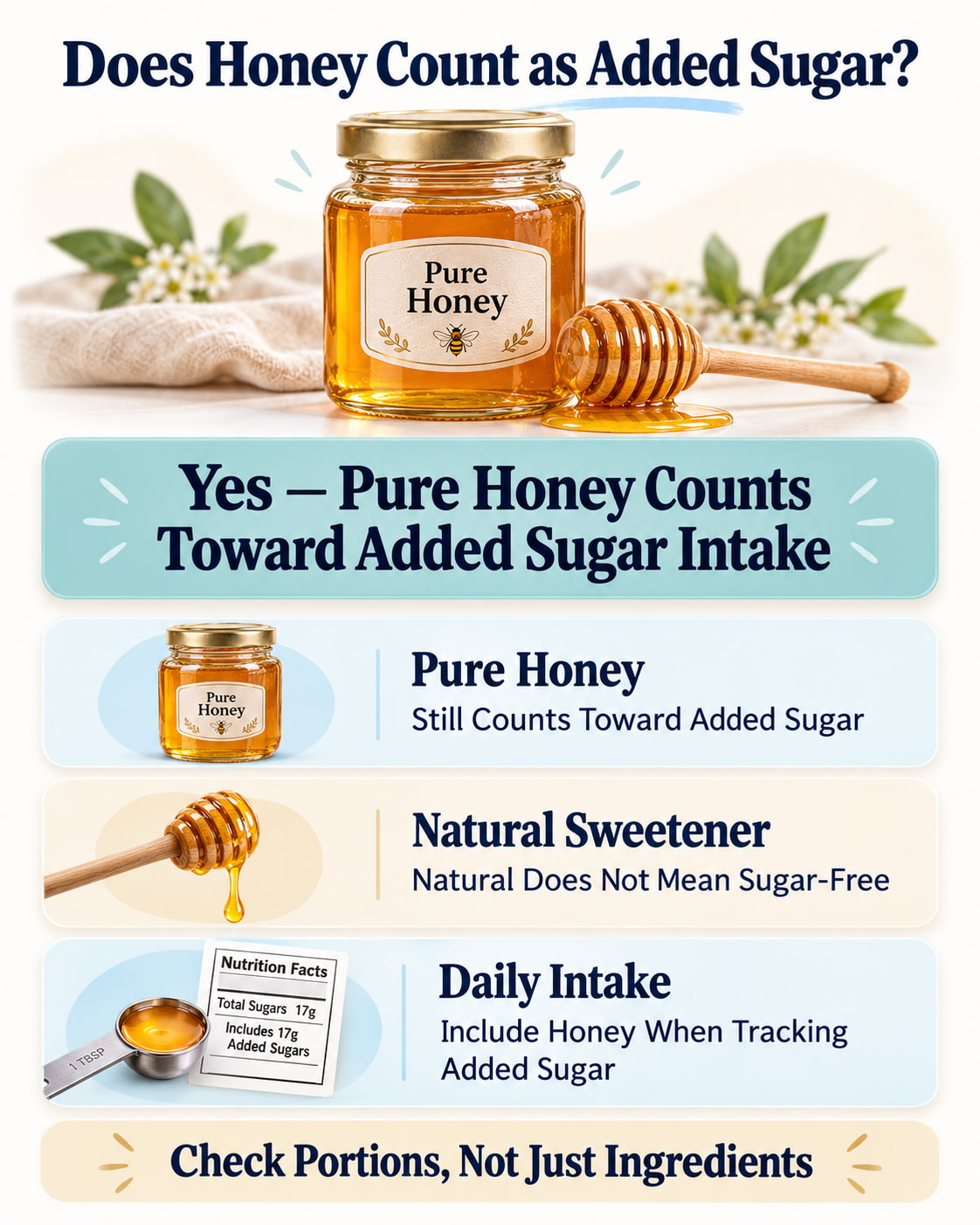
Yes. Honey counts toward added-sugar intake even when the jar contains only pure honey.
The FDA’s definition of added sugars includes honey and other sweeteners. “Added sugar” describes its place in the diet; it does not necessarily mean a manufacturer mixed another sugar into the jar.
Pure honey can also have a special Nutrition Facts label that shows its contribution to the added-sugars Daily Value without the usual “Includes X g Added Sugars” wording.
The World Health Organization uses the term free sugars, which also includes sugars naturally present in honey. Under either framework, honey contributes to the amount you are advised to limit.
How Much Honey Is Too Much?
There is no single daily honey allowance that suits everyone. The useful starting point is your intake of added sugars from all foods and drinks.
The 2025–2030 Dietary Guidelines for Americans, released in January 2026, advise keeping added sugars to no more than 10 grams per meal. The American Heart Association also provides daily limits.
| Guidance | Amount | What the amount covers |
|---|---|---|
| Dietary Guidelines for Americans | No more than 10 g per meal | Added sugars across the whole meal |
| American Heart Association: women | No more than 25 g per day | Added sugars from all foods and drinks |
| American Heart Association: men | No more than 36 g per day | Added sugars from all foods and drinks |
These are different organizations’ recommendations, so keep the meal and daily measurements separate.
One tablespoon of honey contains about 17 grams of sugar. That exceeds the federal meal recommendation before counting other added sugars.
You may also see a 50-gram Daily Value on food labels. This is the FDA’s reference for a 2,000-calorie diet, rather than an amount you need to consume.
If you enjoy honey, a measured small portion makes intake easier to track. Include sweetened drinks, flavored yogurt, sauces, cereals, and desserts when considering the rest of your sugar intake.
Is Honey Bad for You? Health Risks to Know
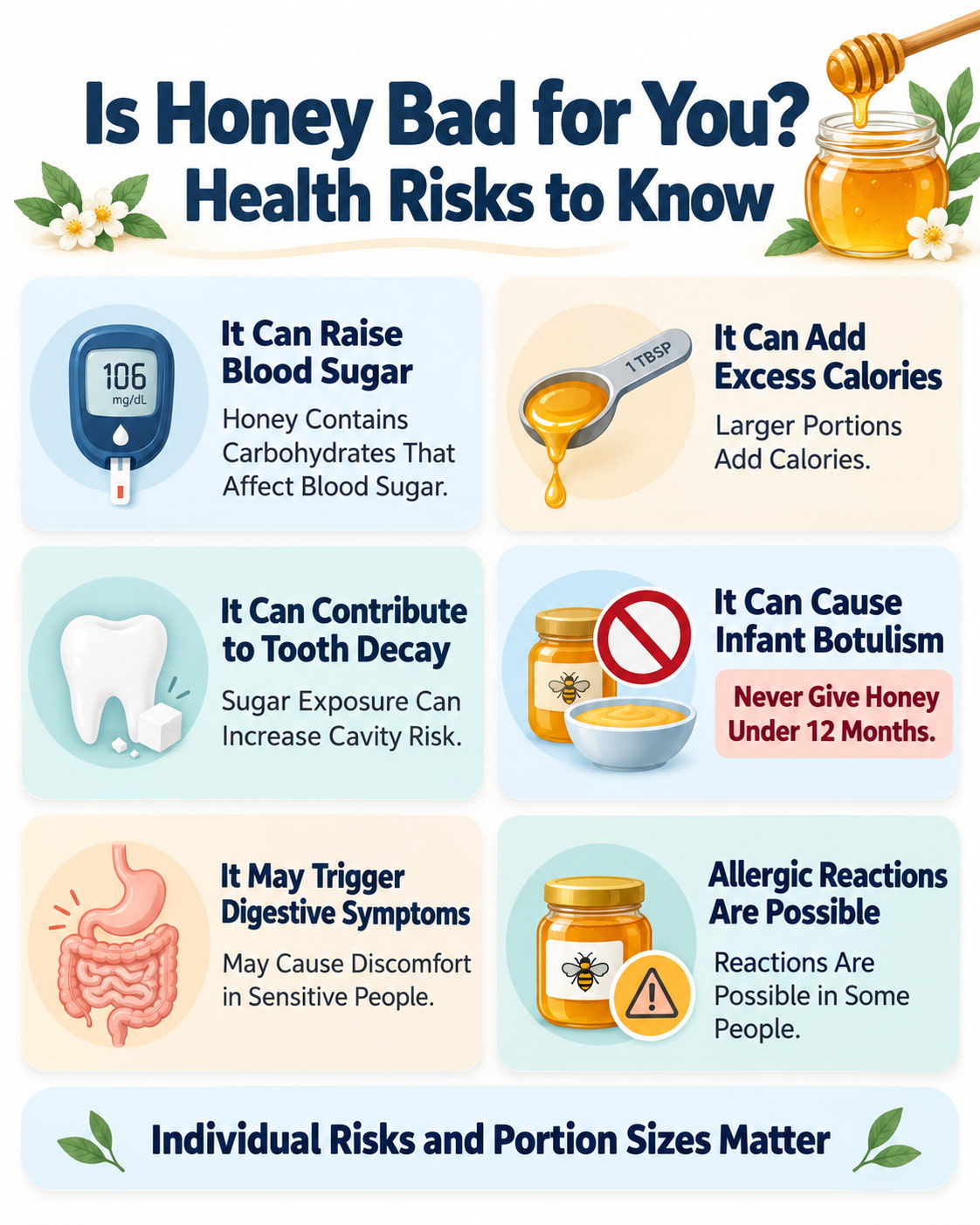
It Can Raise Blood Sugar
Honey contains carbohydrates that affect blood glucose.
According to Mayo Clinic’s guidance on honey and diabetes, replacing sugar with honey generally offers no advantage in a diabetes eating plan. Both affect blood sugar, and honey’s carbohydrates still need to be counted.
If you have diabetes, use the total-carbohydrate information on the label and follow your individual eating plan. A product described as natural or raw still contributes carbohydrates.
It Can Add Excess Calories
Adding honey to drinks, breakfast foods, snacks, and sauces can increase your daily calorie intake. Those additions may contribute to weight gain if they regularly take your intake above your energy needs.
Honey itself does not guarantee weight gain. The amount you use and the rest of your eating pattern matter.
For weight management, pay attention to whether honey replaces another sweetener or simply adds more calories to foods you already eat.
It Can Contribute to Tooth Decay
Honey’s sugars can be used by bacteria in dental plaque to produce acids that damage teeth.
WHO identifies free-sugar intake, including sugars from honey, as an important risk factor for cavities. Honey’s natural origin does not remove this concern.
Keeping sugary foods and drinks limited and maintaining regular oral hygiene remain important even when honey is your preferred sweetener.
It Can Cause Infant Botulism
The CDC advises against giving honey before 12 months because of the risk of infant botulism, a rare but serious illness.
Honey may contain Clostridium botulinum spores. In an infant’s gut, these spores can lead to bacteria producing a harmful toxin.
This warning applies to raw and pasteurized honey. Health Canada explains that the spores are not easily destroyed by ordinary cooking or boiling.
Do not add honey to an infant’s:
- Food.
- Water.
- Formula.
- Pacifier.
After the first birthday, the infant-specific warning changes, but that does not make honey a necessary food. Current dietary guidance also recommends avoiding added sugars during infancy and early childhood.
It May Trigger Digestive Symptoms
Some people have difficulty absorbing excess fructose, one of the sugars in honey.
Monash University identifies honey as a high-FODMAP sweetener. For susceptible people, including some people with IBS, larger amounts may contribute to bloating, gas, abdominal discomfort, or diarrhea.
Tolerance varies. If you repeatedly notice symptoms after honey, discuss them with a clinician or registered dietitian instead of assuming you need to eliminate many foods.
Allergic Reactions Are Possible
Some people can have allergic reactions to honey or substances it contains, including pollen or bee-derived proteins.
A previous reaction to honey deserves medical attention. However, a bee-sting allergy does not automatically mean you are allergic to honey; the American Academy of Allergy, Asthma & Immunology distinguishes these reactions.
Avoid trying honey again on your own if it previously caused an immediate or severe reaction.
Is Honey Healthier Than Sugar?
Honey and granulated sugar differ in taste and composition, but both contribute sugar and calories.
Mayo Clinic notes that honey has slightly more calories and carbohydrates per teaspoon than granulated sugar. Honey can taste sweeter, so you might use less. Any reduction in sugar or calories depends on actually using a smaller amount.
When comparing them, consider:
- Portion size: Compare the amounts you actually use.
- Blood sugar needs: Both sweeteners affect blood glucose.
- The whole food: A honey-sweetened cereal or snack can still contain substantial added sugar.
Choose the flavor you prefer and keep the amount modest. Switching sweeteners alone does not establish a meaningful health improvement.
What Does Research Say About Honey’s Health Benefits?
Human research on honey’s metabolic effects is mixed.
A review published in Nutrition Reviews in 2023 reported small improvements in fasting blood sugar and cholesterol, but many findings had low-certainty evidence. A 2025 review in Nutrition & Diabetes found a mixture of favorable and unfavorable changes in health markers.
The studies used different honey amounts, comparison diets, and participant groups. Many were short. Their results do not establish that adding honey prevents diabetes or heart disease.
You do not need to eat honey for these possible benefits. If you enjoy it, count it toward your sugar intake.
Is Raw Honey Better for You?
Raw, organic, and manuka honey still contribute sugar and calories. These descriptions do not create an exemption from portion limits.
Some research has explored differences between honey varieties and processing methods. However, it has not established that every raw or premium honey provides better long-term health outcomes.
Choose honey according to your taste preferences and check its nutrition label. The same infant warning applies regardless of the variety or whether it has been pasteurized.
How to Use Honey Without Overdoing Sugar
Small changes can make your portions easier to manage.
Measure the Amount
Use a measuring spoon instead of pouring directly from the bottle. This helps you see how much goes into a drink, bowl of oatmeal, or recipe.
Reducing a portion from one tablespoon to one teaspoon removes approximately 43 calories and 11.5 grams of sugar.
Start With an Unsweetened Food
Adding a small measured amount to plain yogurt or unsweetened oatmeal gives you more control over the sweetness.
Check the starting food’s label first. Flavored yogurt, instant oatmeal packets, and granola may already contain added sugars.
Replace Other Sweeteners When Appropriate
If you choose honey in a drink, account for any sugar, syrup, or sweetened creamer already included.
For example, replacing a usual sweetener with a measured amount of honey lets you compare the portions. Adding honey alongside the usual sweetener increases the total.
Judge the Entire Product
“Honey-sweetened” is a description, not a guarantee of balanced nutrition.
Look at serving size, added sugars, and the food’s overall nutritional value. A honey ingredient does not automatically make a snack a better choice.
When to Get Medical Advice
Ask a clinician or registered dietitian for help if you need to fit honey into a diabetes eating plan or have recurring digestive symptoms after eating it. A previous suspected allergic reaction also deserves evaluation.
Get emergency help for trouble breathing, throat or tongue swelling, or fainting after eating honey. Call 911 or your local emergency number.
An infant with poor feeding, a weak cry, unusual muscle weakness, difficulty swallowing, or breathing problems needs immediate medical attention, particularly if honey exposure is possible.
Frequently Asked Questions
Is It Okay to Eat Honey Every Day?
A small amount may fit into an adult’s overall diet, but there is no nutritional need to eat honey daily. Count it with your other added sugars and consider any individual health restrictions.
Is One Tablespoon of Honey Too Much?
One tablespoon contains about 17 grams of sugar, which is more than the current federal recommendation of no more than 10 grams of added sugar per meal. A smaller measured portion leaves more room for other foods containing added sugar.
Is Honey Good for Weight Loss?
Honey is not an established weight-loss aid. Adding it without reducing other calories can increase your energy intake. Any benefit from changing sweeteners depends on the amounts used and your overall eating pattern.
Can People With Diabetes Eat Honey?
Honey may fit into some individualized eating plans, but it raises blood sugar and must be included in carbohydrate calculations. It does not provide a general advantage over sugar for diabetes management.
Does Honey in Tea Count as Added Sugar?
Yes. Mixing honey into tea, coffee, or another drink does not change its contribution to added-sugar intake. Measure what you add and include other sweetened ingredients in the total.
Can Babies Have Honey if It Is Cooked?
Babies younger than 12 months should not have honey, including honey added to cooked foods. Ordinary cooking does not reliably eliminate the spores responsible for infant botulism.
Conclusion
Honey can be an enjoyable sweetener when you account for its sugar and calories. Measured portions, the rest of your diet, and individual health needs matter more than whether a label says raw, organic, or natural.
Start by measuring the honey you normally use and checking other sources of added sugar in the same food or drink. Keep all honey away from babies younger than 12 months.
This content is for informational purposes only and not medical advice.
References
- USDA FoodData Central: Honey
- FDA: Added Sugars on the Nutrition Facts Label
- USDA and HHS: Dietary Guidelines for Americans
- American Heart Association: How Much Sugar Is Too Much?
- WHO: Free Sugars and Health
- Mayo Clinic: Honey
- CDC: Foods and Drinks to Avoid or Limit
- Health Canada: Infant Botulism
- Monash University: Research Behind the Low FODMAP Diet