
Lab-grown meat is real animal meat grown from cells in a controlled environment instead of raising and slaughtering livestock. Also known as cultivated or cell-cultured meat, it is produced by expanding animal cells in nutrient-rich conditions that allow them to form muscle and fat tissue similar to traditional meat.

Understanding what lab-grown meat is matters because it may support sustainable food production, reduce reliance on large-scale livestock systems, and provide consumers with an additional protein option. According to the U.S. Food and Drug Administration, cultivated meat must undergo strict regulatory review before entering the market, and the United States Department of Agriculture oversees inspection and labeling after harvest.
This article explains how lab-grown meat is made, its nutritional profile, potential benefits, safety evaluations, and what researchers continue to study—using only factual, science-backed information.
What Lab-Grown Meat Is
Lab-grown meat—also called cultivated meat or cell-cultured meat—is real animal meat grown directly from animal cells instead of raising and slaughtering livestock. Producers begin with a small sample of cells that naturally have the ability to grow and form muscle. These cells are then placed in a nutrient-rich environment that supports their growth in a controlled facility.
Cultivated meat differs from plant-based meat because it contains actual animal muscle and fat cells, not ingredients derived from plants. While plant-based meat relies on soy, pea protein, or other plant sources, lab-grown meat uses the same biological building blocks found in conventional meat.
This technology fits within modern food science as a new approach to producing protein. According to the United States Department of Agriculture, cell-cultured meat is overseen under federal food safety frameworks, similar to other advanced food technologies. The goal is to produce meat that matches the sensory and nutritional qualities of conventional beef, poultry, or seafood while using fewer animals and potentially less land or water.
How Lab-Grown Meat Is Made
Step 1 — Cell Sampling
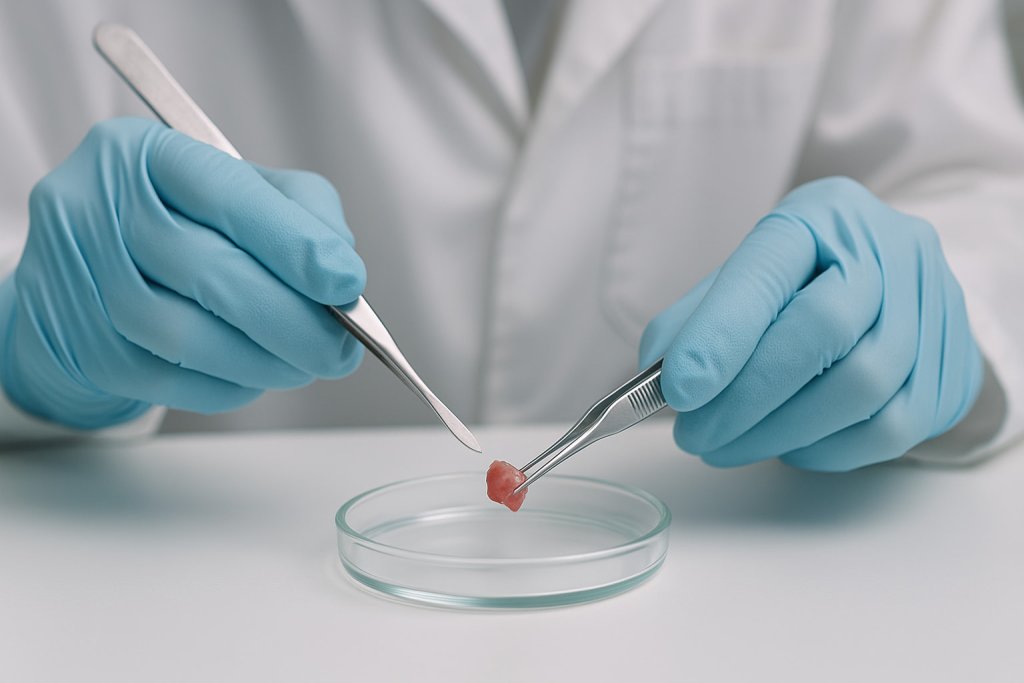
Producers begin by obtaining a small cell sample from an animal, often through a quick biopsy. This sample may include muscle stem cells capable of dividing and developing into various tissue types. One small biopsy can supply many future production batches because the cells can be expanded repeatedly.
Step 2 — Cell Growth in Bioreactors

Once collected, the cells are placed in bioreactors, which are stainless-steel vessels that carefully control temperature, oxygen, and nutrient delivery. Research from the National Institutes of Health notes that cells require specific nutrients—such as amino acids, vitamins, minerals, and sugars—to divide and develop properly.
This stage uses growth media, a fluid mixture that supports cell development. Modern versions aim to be serum-free, standardized, and free from antibiotics, aligning with regulatory expectations for safe food production.
Step 3 — Tissue Formation and Structuring
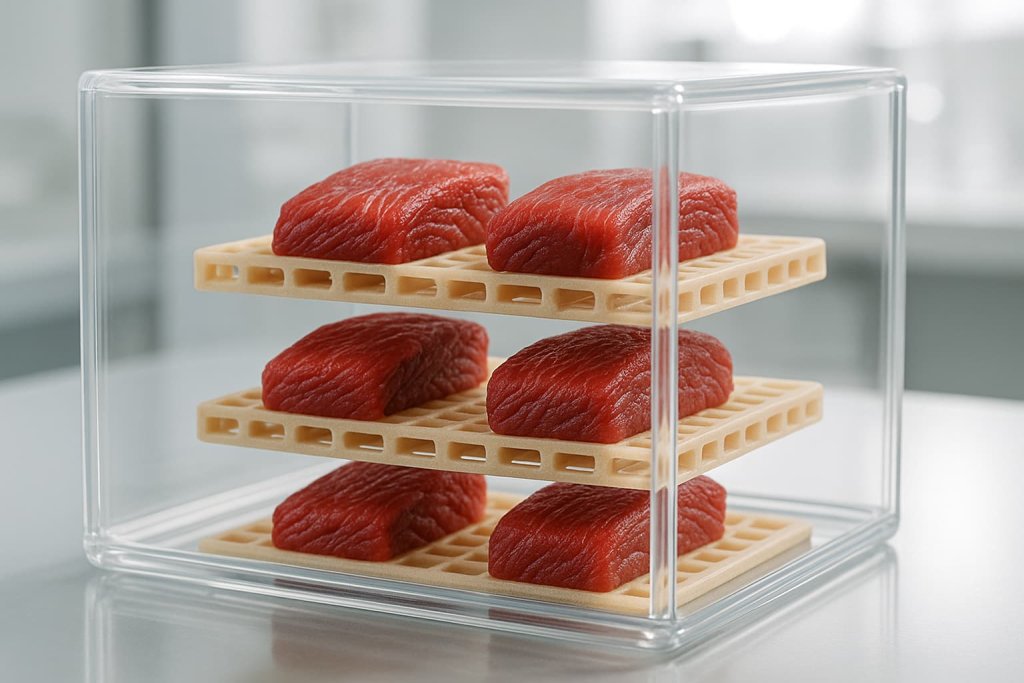
As the cells multiply, they begin forming muscle fibers and fat tissue. To create realistic texture, some producers use edible scaffolds that guide cell alignment. This allows the tissue to form structures that more closely resemble ground meat or, in advanced designs, whole-cut textures.
Step 4 — Harvesting and Final Processing
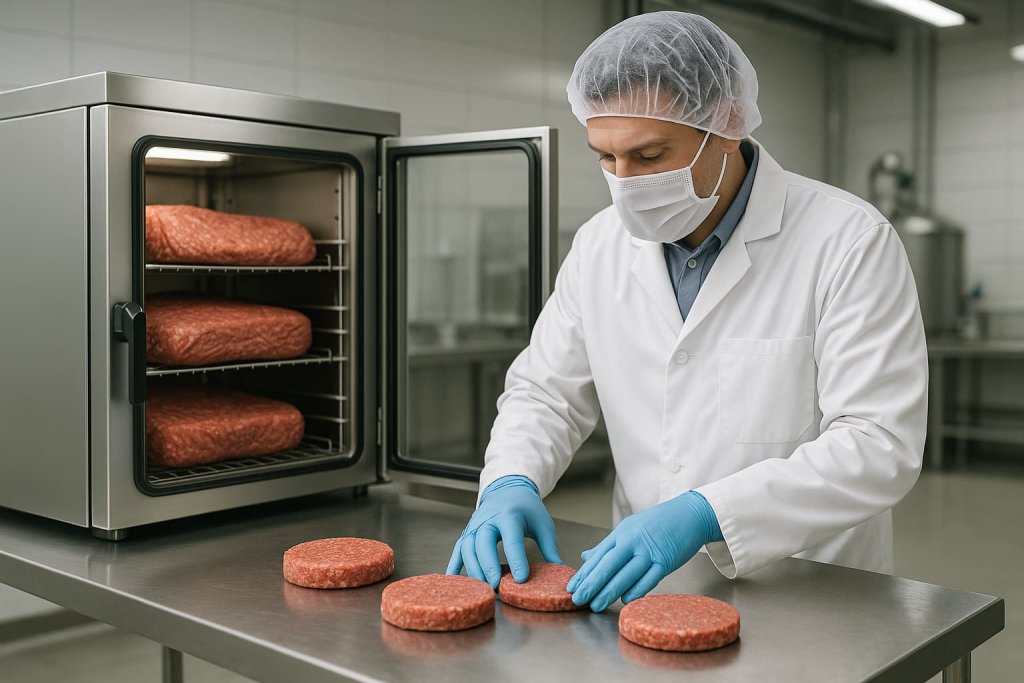
When the tissue reaches the desired density, it is harvested from the bioreactor. Producers may blend, season, or shape it into nuggets, patties, or other products. At this point, oversight transitions fully into food-processing standards similar to those used for traditional meat.
Is Lab-Grown Meat Safe?
Safety is one of the primary considerations for regulators. In the United States, cultivated meat undergoes dual federal oversight:
FDA Oversight and Pre-Market Review
The U.S. Food and Drug Administration reviews the early stages of production, including cell collection, cell lines, and growth conditions. Companies must demonstrate that the resulting cells are well-characterized, stable, and free from contaminants.
USDA Inspection and Labeling Requirements
After the cells form meat tissue, the USDA’s Food Safety and Inspection Service oversees harvesting, facility inspection, and labeling requirements. This ensures that cultivated meat is processed with the same safety controls used for conventional meat, including sanitation and hazard-analysis protocols.
Safety Evaluation Criteria
Regulatory safety reviews focus on several key areas:
- Cell line quality and stability
- Microbial safety, ensuring cells and equipment remain contamination-free
- Nutrient composition, confirming the product matches expected food standards
- Manufacturing controls, similar to hazard-analysis standards used in traditional meat facilities
These steps ensure that each approved product meets federal safety expectations before reaching consumers.
What Experts Are Still Studying
Because cultivated meat is new, researchers continue to evaluate:
- Long-term nutritional characteristics
- Environmental impacts at commercial scale
- Consumer safety considerations using larger datasets
According to scientific summaries cited by the National Library of Medicine, early findings suggest cultivated meat can match the composition of traditional meat, but long-term data are still limited. Current evaluations remain cautious, factual, and guided by regulatory science.
Nutrition Facts of Lab-Grown Meat

Core Nutrient Profile
Lab-grown meat is designed to closely match the nutritional composition of traditional meat because it is made from the same biological components: muscle and fat cells. These cells naturally contain high-quality protein, essential amino acids, and micronutrients found in animal tissues. Research from the National Institutes of Health indicates that cultured muscle cells maintain nutritional features similar to their animal-derived counterparts when grown under controlled conditions.
Comparison With Conventional Meat
Early analyses show that cultivated meat can offer similar levels of protein, iron, B vitamins, and minerals typically found in beef or poultry. Because the cells grow in a controlled environment, their nutrient composition is less influenced by factors like animal feed, age, or farming conditions. However, sodium, fat distribution, and other formulation characteristics depend on how each producer prepares the final product.
Potential Nutritional Advantages
Some producers aim to create formulations that may help support healthier dietary patterns. Examples include:
- Adjustable fat profile: Fat types may be modified to include more unsaturated fats.
- Micronutrient refinement: Specific nutrients may be standardized or enhanced.
- Sodium control: Final products may use less sodium than traditional processed meats.
These potential advantages depend on future product development. According to the United States Department of Agriculture, cultivated products must still meet federal labeling and food safety standards, ensuring transparency about their nutritional content.
What Researchers Still Need to Evaluate
Because cultivated meat is new, researchers continue studying:
- Long-term nutrient stability
- Variability across different production technologies
- How processing steps affect micronutrients
- Consumer dietary outcomes over time
Scientific reviews in the National Library of Medicine emphasize that long-term nutritional evaluations are ongoing and that results may vary depending on how each manufacturer formulates and processes their products.
Potential Benefits of Lab-Grown Meat

Supports Animal Welfare
Since cultivated meat expands cells from a small biopsy, it may help reduce the need for large-scale animal farming. A single sample can generate multiple production batches, which may support efforts to reduce reliance on livestock.
May Help Reduce Environmental Impact
Cultivated meat may help support environmental goals by requiring less land and potentially reducing greenhouse gas emissions when compared with conventional beef. Environmental outcomes vary by production method, but controlled systems may help limit resource use. Research linked by the U.S. Department of Agriculture notes that environmental performance depends heavily on energy sources and technology efficiency.
Controlled Food Safety Conditions
Producing meat in sanitized bioreactors may help reduce exposure to some pathogens associated with traditional livestock environments. According to the U.S. Food and Drug Administration, cultivated products must meet stringent microbial and manufacturing controls.
Opportunities for Urban and Local Food Production
Because cultivated meat does not rely on farmland, facilities can be built near cities. This may help support future food security by producing protein closer to where people live, reducing transportation needs and supply-chain vulnerabilities.
Challenges and Limitations
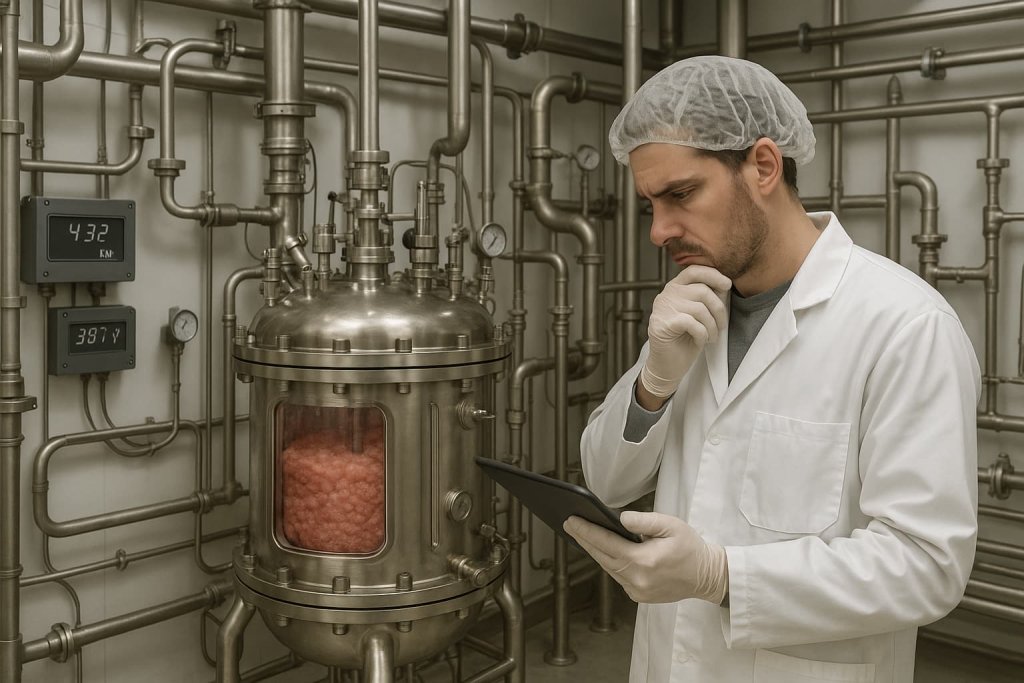
High Production Costs
One of the largest barriers is cost. Growth media, sterile facilities, and advanced bioreactors remain expensive. These costs make cultivated meat significantly more expensive than conventional meat at present.
Energy Use and Sustainability Concerns
Although cultivated meat may reduce land and water use, maintaining sterile production systems requires substantial energy. Sustainability depends on energy sources; renewable power may help support lower emissions, while fossil fuel–based systems may offset some potential benefits.
Limited Market Availability
Despite regulatory progress, cultivated meat is not widely available. Only small pilot tastings have occurred, and large-scale commercial distribution has not yet been achieved. Production capacity remains limited as companies refine manufacturing processes.
Regulatory and Labeling Complexities
Cultivated meat falls under dual oversight from the FDA and USDA in the United States, which requires detailed review and facility inspection. Labeling rules continue evolving to ensure clarity for consumers. According to the USDA, labeling must accurately describe the product while complying with federal food standards.
Limited Long-Term Data
Because cultivated meat is new, long-term research on nutritional outcomes, sustainability, and consumer health patterns is still developing. Reviews from the National Library of Medicine highlight the need for continued monitoring as production scales and new formulations emerge.
Nutrition and Wellness Considerations
How Cultivated Meat Fits Into a Balanced Diet
Cultivated meat provides high-quality protein and essential nutrients found in traditional meat, making it suitable for many balanced eating patterns. It may support daily nutritional needs by supplying amino acids, iron, and B vitamins. According to guidance from the Dietary Guidelines for Americans, protein foods—including meat—can be part of a varied diet that also includes vegetables, fruits, whole grains, and healthy fats. Cultivated meat fits into this framework as an additional protein option rather than a replacement for nutrient-rich plant foods.
Sodium, Fat, and Additive Considerations
Because cultivated meat is processed during production, sodium levels and fat composition depend on the final recipe. Some producers aim to moderate sodium compared with conventional processed meats, and others may adjust fat types to include more unsaturated fats. These differences vary by brand and formulation. As with any meat product, checking labels will remain important for individuals monitoring sodium or saturated fat intake.
Dietary Restrictions and Allergen Awareness
Cultivated meat is considered an animal product because it is grown from animal cells, so it is not suitable for people following vegetarian or vegan diets. Those with specific dietary restrictions—such as sensitivities to certain proteins or additives—should evaluate ingredient lists once products are commercially available. Research supported by the National Institutes of Health continues to analyze how cultivated meat compares in allergen content to conventional meat, but long-term data remain limited.
Role in Flexible and Sustainable Eating Patterns
Cultivated meat may help support flexible eating habits by offering an additional protein choice for people aiming to reduce reliance on conventional livestock. It can complement meals that prioritize plant-based foods, whole grains, and vegetables. Some consumers may choose cultivated meat as part of a more sustainable or environmentally conscious dietary approach, depending on how future production systems evolve.
Frequently Asked Questions
Is lab-grown meat vegan or vegetarian?
No. Lab-grown meat uses real animal cells and is considered an animal product. It is not vegan or vegetarian, although it may appeal to people looking to reduce reliance on conventional livestock.
Can lab-grown meat support a balanced diet?
Yes. Lab-grown meat contains protein, amino acids, and micronutrients that support overall wellness when eaten as part of a balanced diet rich in fruits, vegetables, whole grains, and plant-based foods. According to the Dietary Guidelines for Americans, protein foods can be included in diverse eating patterns.
Is cultivated meat available in grocery stores?
Not yet. While some products have received regulatory approval, large-scale production and retail distribution are still in development.
Does cultivated meat contain antibiotics?
Cultivated meat is grown in clean, controlled environments that do not rely on routine antibiotic use. According to the U.S. Food and Drug Administration, foods made from cultured animal cells must meet the same safety standards as other FDA-regulated foods. Because production occurs in sterile systems rather than farm settings, antibiotics are generally unnecessary, and any use must follow strict federal safety requirements.
Can cultivated meat help reduce environmental impact?
It may help reduce land use and resource demand compared with traditional cattle farming, depending on production methods and energy sources. Environmental outcomes vary across different models and technologies.
Is cultivated meat genetically modified?
Not necessarily. Many cultivated meat products use natural cell lines without genetic modification. Producers must clearly label products to meet federal transparency requirements.
Conclusion
Lab-grown meat represents a scientific approach to producing real animal protein in controlled environments. It mirrors the nutrient profile of traditional meat, may support certain environmental goals, and offers potential advantages in food system diversification. While federal agencies such as the FDA and USDA oversee safety and labeling, the technology is still developing, and long-term research continues. As production expands, cultivated meat may become a valuable addition to balanced, flexible, and sustainable dietary choices.
This content is for informational purposes only and not medical advice.