
Ultra filtered milk can be worth the higher price if you want more protein per cup, less sugar from lactose, and a lactose-free option—while still getting real dairy nutrition. In most cases, you’re paying for extra processing plus a nutrition profile that’s convenient for high-protein eating and easier lactose digestion (for many people), not for a “healthier” milk in every situation.
This guide explains what ultra filtered milk is, what actually changes on the label, how it compares with regular milk, and when the higher price makes sense for your budget and goals.
What is ultra filtered milk?
Ultra filtered milk is cow’s milk that has been pushed through fine membranes that separate milk components by size. In simple terms, filtration can concentrate protein while reducing some water and lactose (milk sugar), depending on the product.
Regulatory note: the Food and Drug Administration discusses ultrafiltered milk (UF milk) in industry guidance, reflecting how UF milk is used in dairy processing.
Ultra filtered milk is often confused with “ultra-pasteurized” or “UHT” milk, but they’re not the same thing. “Ultra filtered” describes a filtration step that changes the balance of protein/lactose/water. “Ultra-pasteurized” or “UHT” describes a heat-treatment step designed to reduce microbes and extend shelf life. Some products are both, which is why the front label can feel confusing. Your best move is to treat “ultra filtered” as a nutrition/processing method and “ultra-pasteurized/UHT” as a shelf-life method, then confirm the details on the Nutrition Facts and ingredient list.
Ultra filtered milk vs regular milk: what changes most
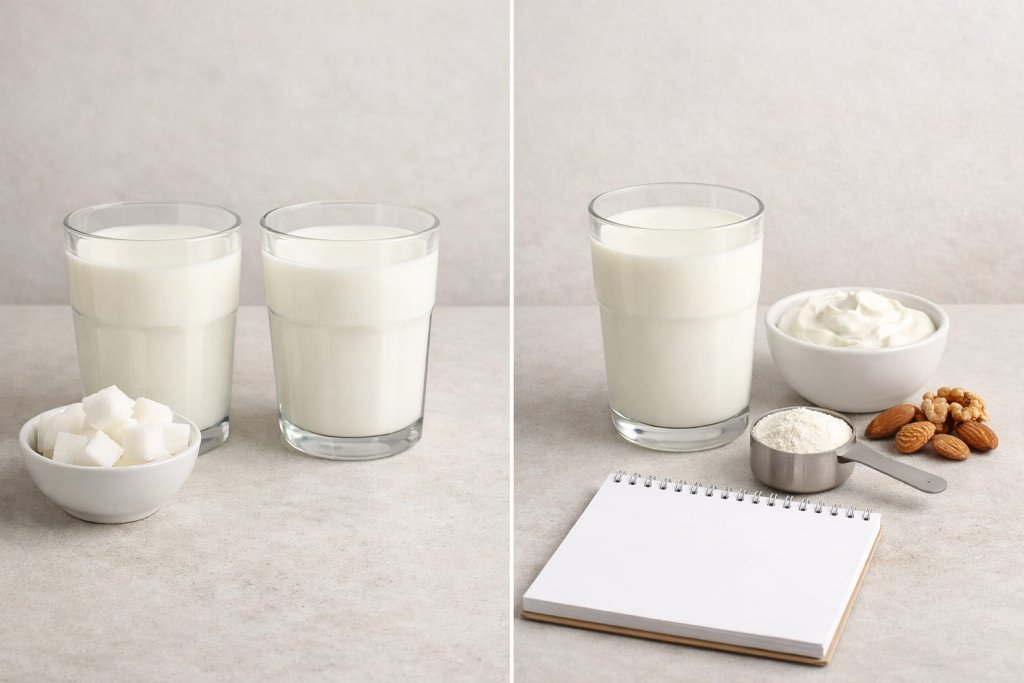
Ultra filtered milk isn’t a single standardized “macro profile.” Brands vary. But many ultra filtered milks are marketed around three consistent changes:
- Higher protein per serving
- Lower sugar (from lower lactose)
- Often lactose-free (varies by brand and formulation)
A clear example is the nutrition comparison published by fairlife, which shows their ultra-filtered milk at 13g protein and 6g sugar per serving vs “regular milk” at 8g protein and 12g sugar per serving (and lactose present).
Quick comparison table (typical label expectations)
| Milk type | What you’ll often see | Best for |
|---|---|---|
| Ultra filtered milk | Higher protein, lower sugar, often lactose-free (varies by brand) | High-protein routines, lower lactose needs, convenience |
| Regular milk | Standard protein, standard lactose/sugar | Most households, general cooking, lower cost |
| Lactose-free regular milk | Similar nutrition to regular milk, lactose removed/broken down | Lactose intolerance (not milk allergy) |
| Plant-based milks | Wide variation; protein may be low unless fortified | Dairy-free needs/preferences (compare protein/calcium labels carefully) |
Tip: The only reliable way to confirm differences is the Nutrition Facts label on the exact carton you’re buying.
Is ultra filtered milk lactose-free?
Many ultra filtered milks are labeled lactose-free, but not all. Some products achieve this by:
- Filtering out more lactose, and/or
- Adding lactase (the enzyme that breaks lactose down)
If you’re buying ultra filtered milk specifically for lactose issues, look for “lactose-free” on the front and confirm the sugar grams on the Nutrition Facts panel.
Lactose intolerance is not the same as milk allergy
This is important for safety: NIDDK explains lactose intolerance is a digestive issue with lactose, while milk allergy is an immune reaction to milk proteins. So a lactose-free or ultra filtered milk can still trigger a milk allergy because it still contains milk proteins.
Storage and safety basics (don’t skip this)
Even though pasteurization reduces harmful germs, milk is still perishable once you bring it home. The Food and Drug Administration advises discarding perishable foods (including milk) if they’ve been above 40°F (4°C) for 4 hours or more (such as during a long power outage). For everyday use, the USDA notes milk is typically kept refrigerated about 7 days (refrigerator conditions matter), so store it on a colder shelf (not the door) and return it to the fridge right after pouring.
Is ultra filtered milk “healthier” than regular milk?

Not automatically. It can be more convenient for certain nutrition goals because it packs more protein into the same volume and often has less sugar from lactose. But “healthier” depends on:
- Your total diet pattern
- Your protein needs
- Your lactose tolerance
- Your budget
- How you use milk (drinking vs cooking)
If you already meet your protein needs and tolerate regular milk well, ultra filtered milk may not change much for you besides cost.
What about calcium and vitamin D?
Ultra filtered milk is still milk, so it generally contributes key nutrients people rely on from dairy, including calcium. Vitamin D content depends on fortification, which can vary by product. If you’re choosing milk mainly for calcium/vitamin D, check the label for % Daily Value—especially if you switch brands or fat levels.
If you don’t use dairy, fortified soy beverages are commonly discussed as the most “milk-like” alternative nutritionally. The MyPlate guidance notes that milk and fortified soy beverages can provide nutrients like calcium and (when fortified) vitamin D—so your best move is still to compare labels, not assumptions.
Why ultra filtered milk usually costs more
The higher price generally reflects:
- Extra processing (membrane filtration + sometimes lactase addition)
- Brand positioning (premium “high-protein” marketing)
- Packaging/distribution choices (varies by company)
In short: you’re paying for a more engineered nutrition profile and convenience—not necessarily a completely different food category.
Real-world price snapshot (U.S.) for “worth it” decisions
Prices change by region and sales, but a quick check shows the premium is real.
Example: a 52 fl oz ultra filtered milk product (fairlife) listed at:
- Walmart: $5.32 (shown on listing)
- Target: product listing available (price varies by location/sales)
- Kroger: $5.69 shown on listing (discounted from $5.99 on the page)
Practical takeaway: if ultra filtered milk helps you reliably hit a protein target (or reduces lactose-related symptoms), that premium may be “worth it” because it replaces other higher-cost protein add-ons. If not, regular milk is usually the better value.
Quick value check: cost per gram of protein (fast math)
If you want a budget-based answer, compare milk by “protein value,” not by bottle price:
- Find protein grams per serving on the label
- Find servings per container
- Total protein per container = protein per serving × servings
- Cost per gram of protein = price ÷ total protein grams
If ultra filtered milk comes out close to regular milk (or replaces a more expensive protein add-on you’d otherwise buy), the premium is more likely worth it. If the cost per gram is much higher and you don’t need the lactose benefit, regular milk usually wins on value.
When ultra filtered milk is worth the higher price
Ultra filtered milk tends to be worth it if one (or more) of these are true:
- You want more protein per cup without changing taste/texture much
- You prefer lower sugar from lactose (and the product is lactose-free or lower lactose)
- You use milk daily in smoothies/coffee and want a higher-protein base
- You’re trying to simplify high-protein meals without adding extra ingredients
Best uses where the “value” shows up
- Smoothies and shakes (protein density matters)
- Coffee drinks (creamier feel; brand-dependent)
- Quick breakfasts (overnight oats, cereal + protein pairing)
- High-protein snacks (milk + fruit + nuts)
When ultra filtered milk is probably not worth it
You can usually skip the premium if:
- You tolerate regular milk well and don’t need the extra protein
- You mostly use milk for cooking/baking where protein differences don’t matter
- You’re buying it for a “health halo” rather than a specific label-based need
- Your budget is tight and the premium crowds out more important staples (protein foods, produce, whole grains)
How to choose the best ultra filtered milk
Use this quick checklist in the store:
- Check protein per serving (compare to your regular milk)
- Check sugar grams (lower often means less lactose)
- Confirm lactose-free if that’s your goal
- Scan the ingredient list (some include lactase; some have added vitamins)
- Pick the fat level that fits your preference (whole/2%/fat-free)
Label-reading checklist (30 seconds in the store)
Use this order so marketing doesn’t distract you:
- Protein first: higher grams per serving is the main “ultra filtered” selling point
- Sugar next: lower sugar often signals lower lactose, but brands vary
- “Lactose-free” wording: only trust it if it’s stated clearly on-pack
- Calories + fat level: whole vs 2% vs fat-free changes calories and fullness
- Added ingredients: lactase is common; added vitamins vary by brand
- Sodium: usually low, but worth a quick glance if you track sodium
Tip: The only reliable way to confirm differences is the Nutrition Facts label on the exact carton you’re buying.
People Also Ask about ultra filtered milk
Does ultra filtered milk have more protein than regular milk?
Often yes. Many brands are formulated to have higher protein per serving than regular milk (check the label for grams per cup).
Is ultra filtered milk lactose-free?
Many are, but not all. Look for “lactose-free” on the carton and confirm the sugar grams and ingredient list.
Is ultra filtered milk more processed?
It’s more processed than regular milk because it uses membrane filtration (and sometimes lactase addition). That doesn’t automatically make it “bad,” but it can make it more expensive.
Is ultra filtered milk good for lactose intolerance?
It may be helpful if it’s lactose-free or lower lactose. Lactose tolerance varies by person, and lactose intolerance is different from milk allergy.
Can kids drink ultra filtered milk?
In general it’s still dairy milk, but needs vary by age, diet, and any medical conditions. For specific concerns (growth, allergies, digestive issues), check with a pediatric clinician.
FAQs
1) Does ultra filtered milk taste different?
Some people describe it as slightly creamier. Taste differences vary by brand and fat level.
2) Is ultra filtered milk safe to use if I have a milk allergy?
No. Milk allergy is a reaction to milk proteins, and ultra filtered milk still contains milk proteins.
3) Is ultra filtered milk better for weight loss?
It can support higher-protein eating patterns, which may help fullness for some people, but it’s not a guarantee. Total calories and overall diet matter most.
4) Is ultra filtered milk the same as lactose-free milk?
Not always. Some lactose-free milks are regular milk treated with lactase; some ultra filtered milks are lactose-free; some may only be lower lactose. Check the carton.
5) Does ultra filtered milk have less sugar?
Often, yes—because lactose (milk sugar) is reduced and/or broken down. Confirm by checking sugar grams per serving.
6) Is ultra filtered milk good for high-protein diets?
It can be a convenient way to increase protein per cup without changing your routine much (especially in coffee and smoothies).
7) What’s the easiest way to decide if it’s worth it?
Compare cost per serving and protein grams per serving. If you’ll use it daily and benefit from the label differences, it’s more likely worth paying extra.
Conclusion
Ultra filtered milk is “worth the higher price” when you’ll actually use its advantages—especially more protein per cup and lower lactose/sugar—often enough to justify the premium. If you don’t need those benefits, regular milk is usually the smarter, budget-friendly choice.
This content is for informational purposes only and not medical advice.