
Low calorie high protein meals are balanced meals that keep calories moderate while providing enough protein, fiber, and food volume to help you feel satisfied. The best options are not tiny “diet meals.” They usually combine lean protein, vegetables, beans, whole grains, fruit, or healthy fats in smart portions.
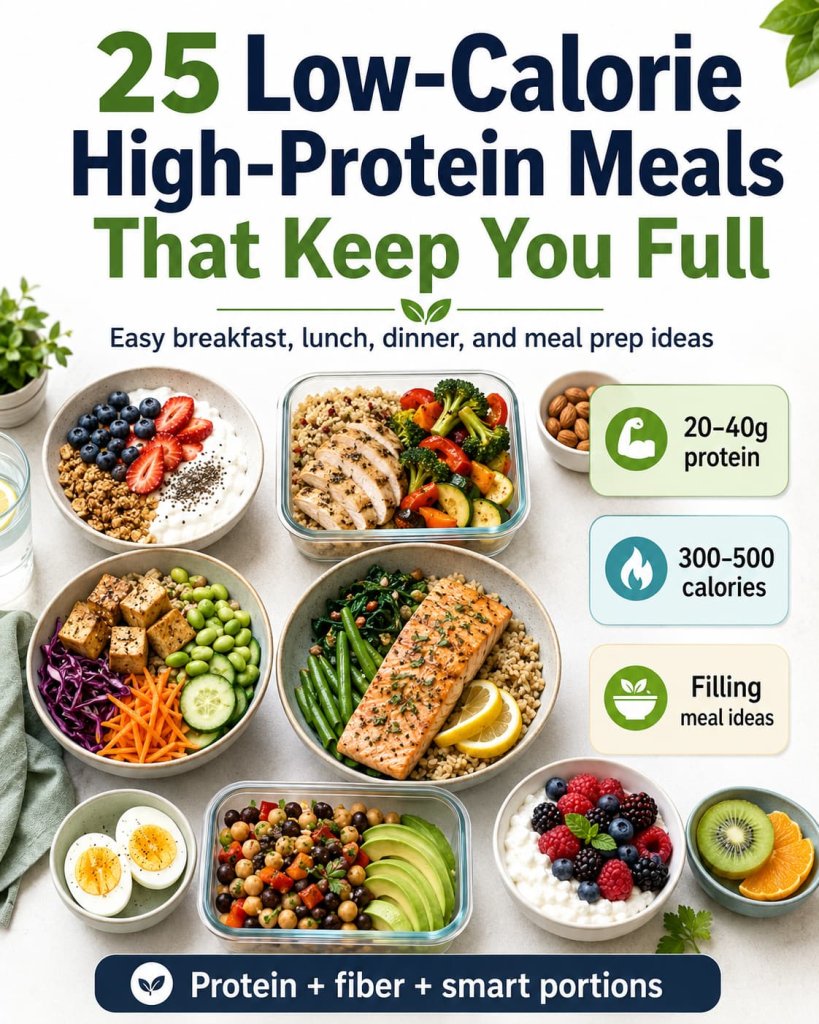
This guide shares 25 practical low calorie high protein meals for breakfast, lunch, dinner, and meal prep. Each meal includes estimated calories and protein so you can choose options that fit your needs. Nutrition needs vary, so use these ideas as flexible meal inspiration, not strict medical advice.
What Counts as Low Calorie High Protein Meals?
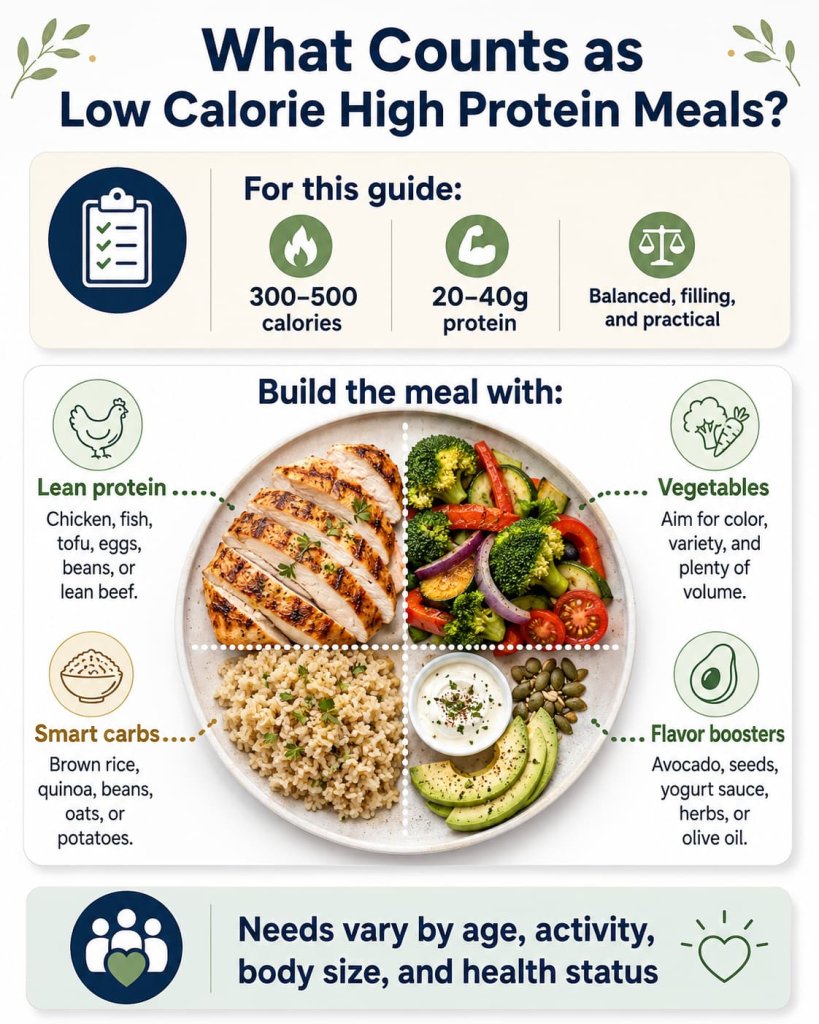
For this guide, low calorie high protein meals generally mean meals with about 300 to 500 calories and 20 to 40 grams of protein per serving.
That range is practical for many adults, but it is not a medical rule. Protein needs depend on age, body size, activity level, health status, and total calorie intake. MedlinePlus, a service of the National Library of Medicine, notes that healthy adults generally get 10% to 35% of total calories from protein, and each gram of protein provides 4 calories.
The goal is simple: build a filling plate with enough protein, plenty of plants, and ingredients you enjoy.
Why High Protein Meals Can Help Keep You Full
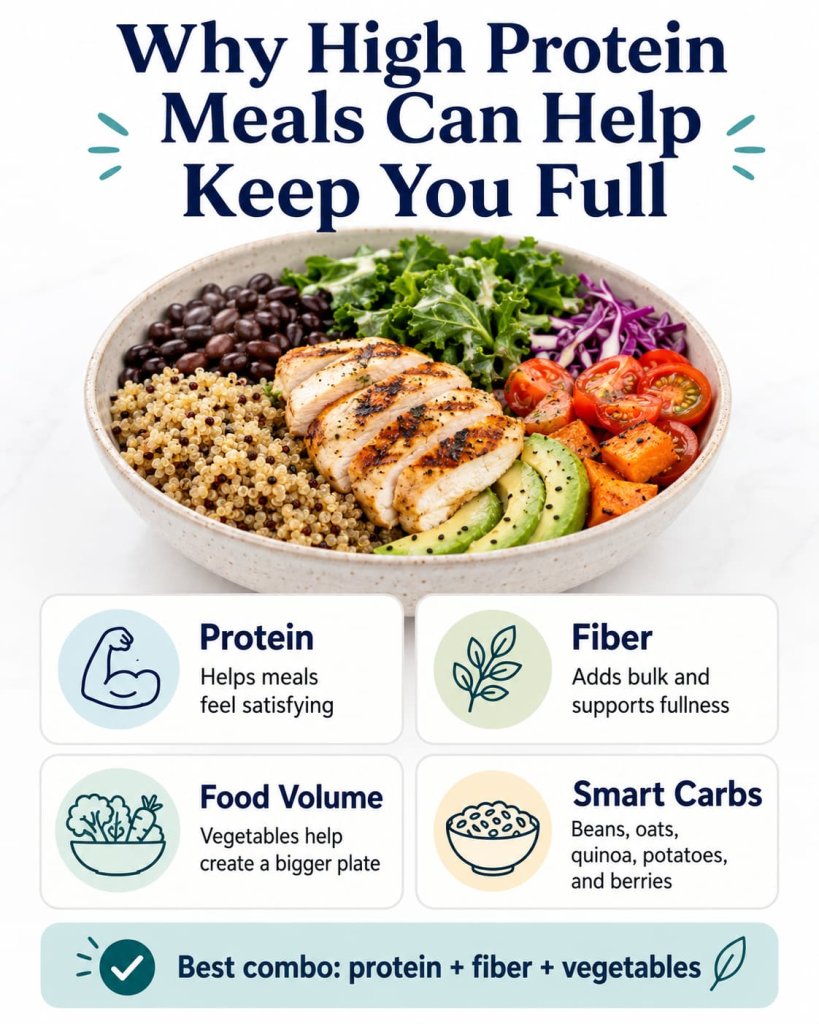
Protein supports fullness because it takes time to digest and helps make meals feel more satisfying. Fiber-rich foods also add bulk to your plate. That is why meals with chicken and vegetables, tuna and beans, Greek yogurt and berries, or tofu and edamame often feel more satisfying than meals built mostly from refined carbs.
A good filling meal usually includes:
- A protein source such as chicken, fish, turkey, eggs, Greek yogurt, tofu, lentils, or beans
- High-volume vegetables such as broccoli, cabbage, spinach, zucchini, peppers, or greens
- A smart carb such as oats, quinoa, beans, lentils, potatoes, berries, or whole-grain wraps
- Flavor from herbs, spices, salsa, lemon juice, vinegar, broth, or yogurt-based sauces
The USDA MyPlate approach also supports balanced meals with protein foods, fruits, vegetables, grains, and dairy or fortified alternatives.
Quick Guide to Building a Low-Calorie High-Protein Plate
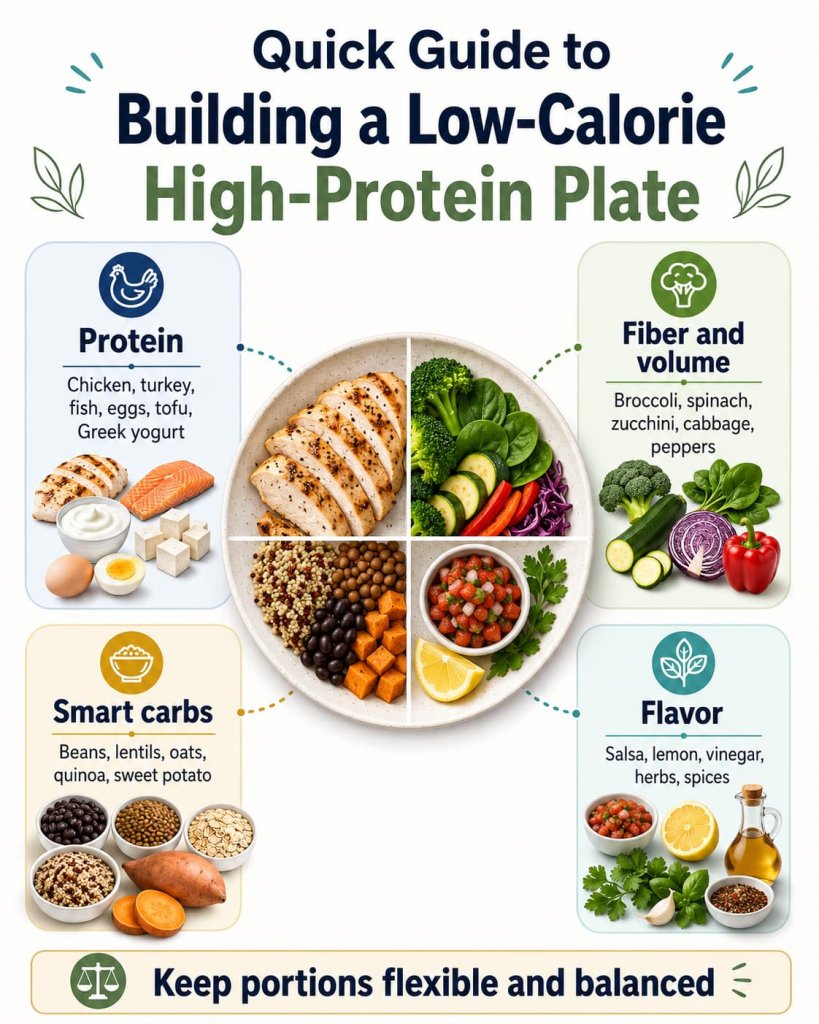
Use this simple formula when building your own meals.
| Meal Part | Good Choices |
|---|---|
| Protein | Chicken breast, turkey, tuna, shrimp, cod, salmon, eggs, Greek yogurt, cottage cheese, tofu, tempeh |
| Fiber and volume | Broccoli, spinach, zucchini, cabbage, peppers, cauliflower rice, salad greens |
| Smart carbs | Beans, lentils, oats, quinoa, sweet potato, berries, whole-grain pita or wraps |
| Flavor | Salsa, mustard, hot sauce, lemon, vinegar, garlic, herbs, spices, Greek yogurt sauce |
| Healthy fats | Avocado, olive oil, nuts, seeds, salmon, tahini in small portions |
Small amounts of healthy fat can make meals more satisfying, but portions matter because fats are calorie-dense.
25 Low-Calorie High-Protein Meals That Keep You Full
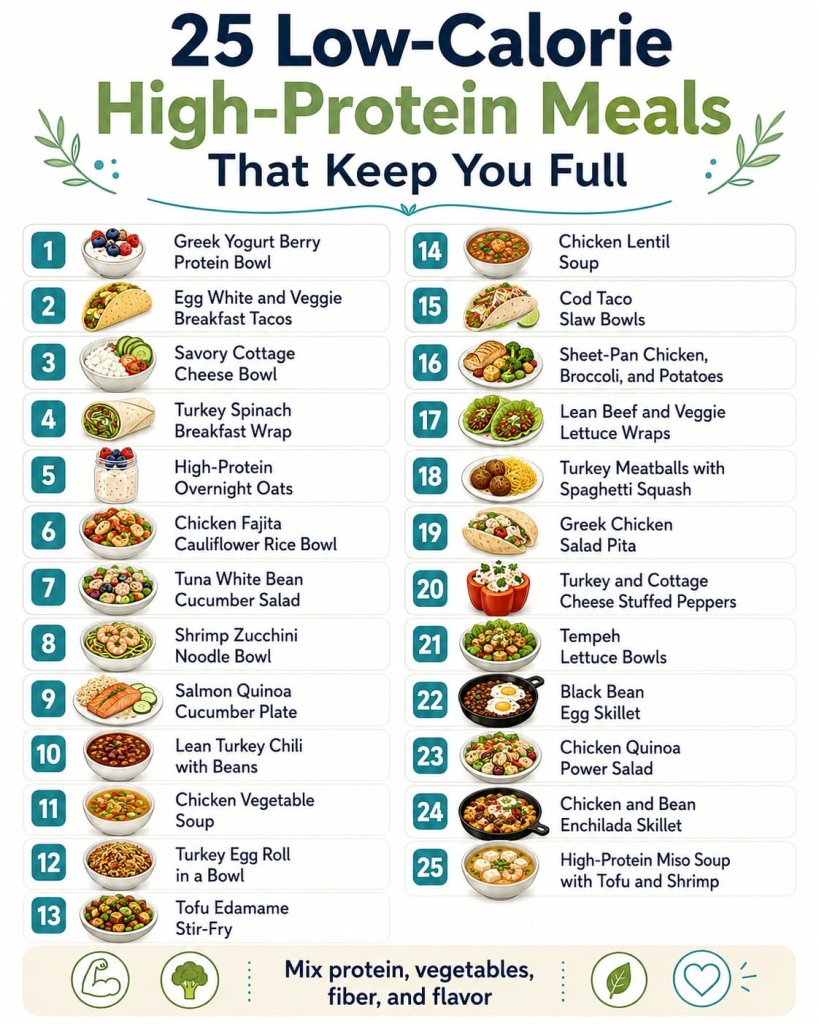
Nutrition numbers are estimates. Calories and protein can change based on brands, portions, cooking oils, sauces, and toppings.
1. Greek Yogurt Berry Protein Bowl
Estimated nutrition: 300 to 380 calories, 25 to 35 grams of protein
Use plain nonfat or low-fat Greek yogurt, mixed berries, chia seeds, and a small amount of high-fiber cereal or oats. Add cinnamon or vanilla extract for flavor without much added sugar.
This meal works well because Greek yogurt provides protein, while berries and chia seeds add fiber and volume.
2. Egg White and Veggie Breakfast Tacos
Estimated nutrition: 300 to 400 calories, 25 to 30 grams of protein
Scramble egg whites with spinach, peppers, onions, and a little reduced-fat cheese. Serve in two small corn tortillas with salsa.
This is a good breakfast option when you want something warm, savory, and filling without using a lot of oil or heavy toppings.
3. Savory Cottage Cheese Bowl with Turkey and Veggies
Estimated nutrition: 250 to 350 calories, 25 to 35 grams of protein
Add cottage cheese to a bowl with sliced turkey, cucumber, tomato, black pepper, and everything bagel seasoning. You can also add chopped bell pepper or greens.
Cottage cheese is high in protein and easy to pair with crunchy vegetables. Choose lower-sodium turkey if you are watching sodium.
4. Turkey Spinach Breakfast Wrap
Estimated nutrition: 350 to 450 calories, 30 to 40 grams of protein
Fill a high-fiber wrap with scrambled eggs or egg whites, lean turkey, spinach, and salsa. Add a small amount of cheese if you want more flavor.
This meal is easy to prep ahead and reheat. It also works as a quick lunch.
5. High-Protein Overnight Oats with Greek Yogurt
Estimated nutrition: 350 to 450 calories, 25 to 35 grams of protein
Mix oats, Greek yogurt, milk or fortified soy milk, berries, chia seeds, and cinnamon. Refrigerate overnight.
Oats add fiber, while Greek yogurt boosts protein. This is a good grab-and-go meal for busy mornings.
6. Chicken Fajita Cauliflower Rice Bowl
Estimated nutrition: 350 to 450 calories, 35 to 45 grams of protein
Cook chicken breast with fajita seasoning, peppers, onions, and cauliflower rice. Top with salsa, cilantro, and a spoonful of Greek yogurt instead of sour cream.
This meal is high in protein and big in volume, which can help it feel more satisfying.
7. Tuna White Bean Cucumber Salad
Estimated nutrition: 300 to 400 calories, 28 to 38 grams of protein
Combine tuna, white beans, cucumber, celery, parsley, lemon juice, and a little olive oil. Serve it over greens or in lettuce cups.
Tuna adds lean protein, while beans add fiber and slow-digesting carbs. Choose tuna packed in water for fewer calories.
8. Shrimp Zucchini Noodle Bowl
Estimated nutrition: 300 to 400 calories, 30 to 40 grams of protein
Sauté shrimp with zucchini noodles, garlic, cherry tomatoes, spinach, lemon juice, and chili flakes. Use a light amount of olive oil or cooking spray.
Shrimp is naturally high in protein and relatively low in calories. Zucchini noodles add volume without making the meal heavy.
9. Salmon Quinoa Cucumber Plate
Estimated nutrition: 400 to 500 calories, 30 to 40 grams of protein
Serve baked salmon with cucumber, greens, a small portion of quinoa, and lemon yogurt sauce.
Salmon is higher in calories than white fish, but it provides protein and healthy fats. Keeping the grain portion moderate helps the meal stay within a lighter calorie range.
10. Lean Turkey Chili with Beans
Estimated nutrition: 350 to 450 calories, 30 to 40 grams of protein
Make chili with lean ground turkey, beans, tomatoes, onions, peppers, chili powder, cumin, and broth. Skip heavy cheese toppings or use a small amount.
This is one of the best low calorie high protein meals for meal prep because it reheats well and freezes easily.
11. Chicken Vegetable Soup
Estimated nutrition: 250 to 350 calories, 25 to 35 grams of protein
Use shredded chicken breast, broth, carrots, celery, zucchini, spinach, tomatoes, and herbs. Add beans or a small portion of whole-grain pasta if you want more carbs.
Soup can be filling because it gives you a large portion with protein, vegetables, and liquid volume.
12. Turkey Egg Roll in a Bowl
Estimated nutrition: 350 to 450 calories, 30 to 40 grams of protein
Cook lean ground turkey with shredded cabbage, carrots, garlic, ginger, low-sodium soy sauce, and green onions.
This meal gives you the flavor of an egg roll without deep frying. Cabbage adds crunch and volume.
13. Tofu Edamame Stir-Fry
Estimated nutrition: 350 to 500 calories, 25 to 35 grams of protein
Stir-fry tofu, shelled edamame, broccoli, mushrooms, peppers, and a light sauce made with garlic, ginger, and low-sodium soy sauce.
This is a strong vegetarian option because tofu and edamame both provide plant protein.
14. Chicken Lentil Soup
Estimated nutrition: 350 to 450 calories, 30 to 40 grams of protein
Combine chicken breast, lentils, tomatoes, carrots, celery, onions, broth, garlic, and Italian herbs.
Lentils add protein, fiber, and texture. This makes the soup more filling than broth-only chicken soup.
15. Cod Taco Slaw Bowls
Estimated nutrition: 300 to 400 calories, 25 to 35 grams of protein
Bake cod with taco seasoning and serve it over cabbage slaw with salsa, lime, cilantro, and a small scoop of black beans.
Cod is lean and mild, so it works well with bold seasonings. The slaw keeps the meal fresh and crunchy.
16. Sheet-Pan Chicken, Broccoli, and Potatoes
Estimated nutrition: 400 to 500 calories, 35 to 45 grams of protein
Roast chicken breast, broccoli, and a moderate portion of baby potatoes with garlic, paprika, black pepper, and a small amount of olive oil.
This is a simple balanced dinner. Chicken provides protein, broccoli adds volume, and potatoes make the meal more satisfying.
17. Lean Beef and Veggie Lettuce Wraps
Estimated nutrition: 350 to 450 calories, 25 to 35 grams of protein
Use 90% to 95% lean ground beef, lettuce leaves, shredded carrots, cucumber, peppers, and a light yogurt or salsa-based sauce.
Lean beef can fit into a balanced high-protein meal when portions are moderate. Add plenty of vegetables to keep the meal lighter.
18. Turkey Meatballs with Spaghetti Squash
Estimated nutrition: 350 to 450 calories, 30 to 40 grams of protein
Bake turkey meatballs and serve them with spaghetti squash, marinara sauce, and a small sprinkle of Parmesan.
Spaghetti squash gives you a pasta-style meal with more volume and fewer calories than a large bowl of regular pasta.
19. Greek Chicken Salad Pita
Estimated nutrition: 400 to 500 calories, 30 to 40 grams of protein
Fill a whole-grain pita with grilled chicken, romaine, cucumber, tomato, red onion, and a Greek yogurt tzatziki sauce.
This meal is fresh, portable, and balanced. Use half a large pita or a small pita if you want to keep calories lower.
20. Turkey and Cottage Cheese Stuffed Peppers
Estimated nutrition: 350 to 450 calories, 30 to 40 grams of protein
Stuff bell peppers with lean ground turkey, cottage cheese, tomatoes, spinach, and Italian seasoning. Bake until the peppers are tender.
This meal is high in protein and has a creamy texture without needing heavy cream.
21. Tempeh Lettuce Bowls
Estimated nutrition: 400 to 500 calories, 25 to 35 grams of protein
Cook tempeh with garlic, ginger, low-sodium soy sauce, and a little rice vinegar. Serve with lettuce leaves, cucumber, shredded carrots, and herbs.
Tempeh is a firm plant-based protein that works well for meal prep. It is more calorie-dense than tofu, so portion size matters.
22. Black Bean Egg Skillet
Estimated nutrition: 350 to 450 calories, 25 to 35 grams of protein
Cook black beans, eggs, egg whites, peppers, spinach, salsa, and spices in one skillet.
This meal combines animal and plant protein. Beans also add fiber, which makes the meal more filling.
23. Chicken Quinoa Power Salad
Estimated nutrition: 400 to 500 calories, 35 to 45 grams of protein
Build a salad with grilled chicken, greens, cucumber, tomatoes, roasted vegetables, a small scoop of quinoa, and lemon vinaigrette.
Quinoa adds texture and carbs, while chicken keeps the protein high. Keep dressing portions moderate to control calories.
24. Chicken and Bean Enchilada Skillet
Estimated nutrition: 400 to 500 calories, 35 to 45 grams of protein
Cook shredded chicken, black beans, enchilada sauce, peppers, onions, and a small amount of cheese in one skillet. Serve with lettuce or cauliflower rice.
This gives you the comfort of enchiladas without using several tortillas per serving.
25. High-Protein Miso Soup with Tofu and Shrimp
Estimated nutrition: 250 to 350 calories, 25 to 35 grams of protein
Add tofu, shrimp, mushrooms, spinach, seaweed, and green onions to a miso broth.
This is a lighter meal with plenty of protein. It works well when you want something warm but not heavy.
Best Foods for Low-Calorie High-Protein Meals
The easiest meals come from simple ingredients. Keep these foods on hand so you can build quick meals without overthinking.
| Food | Why It Works |
|---|---|
| Chicken breast | Very high in protein and easy to season |
| Turkey | Good for chili, wraps, bowls, and meatballs |
| Tuna | Convenient, high in protein, and easy for salads |
| Shrimp | Quick-cooking and naturally lean |
| Cod and white fish | Lower in calories than many fattier proteins |
| Greek yogurt | Useful for breakfast bowls, sauces, and dressings |
| Cottage cheese | High-protein base for savory or sweet meals |
| Eggs and egg whites | Flexible for breakfast, bowls, and skillets |
| Tofu | Plant-based protein that absorbs flavor well |
| Lentils and beans | Add both protein and fiber |
| Edamame | Higher-protein plant food for bowls and stir-fries |
When using packaged foods, check the Nutrition Facts label. The FDA explains that the label can help you compare calories, serving size, sodium, added sugar, saturated fat, and nutrients.
How to Make Low-Calorie High-Protein Meals Taste Better
A common mistake is making high-protein meals too plain. You do not need heavy sauces to make them taste good.
Try these flavor boosters:
- Salsa, pico de gallo, or hot sauce
- Lemon juice, lime juice, or vinegar
- Garlic, ginger, onion, cumin, paprika, chili powder, or Italian herbs
- Low-sodium soy sauce or coconut aminos
- Mustard or Greek yogurt-based sauces
- Fresh herbs such as cilantro, parsley, dill, or basil
- Roasted vegetables for deeper flavor
Flavor matters because meals are easier to repeat when they taste satisfying.
Meal Prep Tips for High Protein Meals
Meal prep can save time, but it works best when you plan for both nutrition and food safety.
Use these simple tips:
- Cook two proteins at once, such as chicken and turkey chili.
- Prep vegetables separately so they stay crisp.
- Keep sauces on the side until serving.
- Use beans, lentils, frozen vegetables, and canned tuna for quick meals.
- Rotate flavors so meals do not feel repetitive.
- Store leftovers in shallow containers so they cool faster.
- Label containers with the cooking date.
For safety, FoodSafety.gov recommends cooking poultry to 165°F, fish and shellfish to 145°F, egg dishes to 160°F, and reheating leftovers to 165°F.
Common Mistakes to Avoid
Choosing Protein but Skipping Fiber
A plain chicken breast may be high in protein, but it may not feel like a complete meal. Add vegetables, beans, fruit, lentils, potatoes, oats, or whole grains for more fullness.
Making Calories Too Low
Lower is not always better. Very low-calorie meals can leave you hungry, tired, and more likely to snack later. A better goal is a balanced meal that fits your day.
Adding Too Much Sauce or Oil
Healthy ingredients can become high-calorie quickly when you add large amounts of oil, mayo, cheese, cream sauce, or dressing. Measure these ingredients when needed.
Forgetting About Sodium
Canned foods, deli meats, frozen meals, sauces, and seasoning blends can be high in sodium. Choose lower-sodium options when possible.
Eating the Same Meal Every Day
Repeating one meal can get boring and may limit nutrient variety. Rotate proteins, vegetables, grains, and flavors throughout the week.
Are Low-Calorie High-Protein Meals Safe for Everyone?
Low calorie high protein meals can fit into many healthy eating patterns, but they are not right for every situation.
Talk with a qualified healthcare professional or registered dietitian before making major diet changes if you:
- Have kidney disease or another medical condition
- Are pregnant or breastfeeding
- Are under 18
- Have a history of disordered eating
- Are recovering from illness, surgery, or injury
- Follow a medical nutrition plan
- Are an athlete with higher energy needs
The American Heart Association notes that the adult RDA for protein is 0.8 grams per kilogram of body weight per day, but needs can vary. That is why meal plans should be personalized.
Sample One-Day Low-Calorie High-Protein Meal Plan
This is only an example. Adjust portions based on your hunger, activity level, and nutrition needs.
| Meal | Example |
|---|---|
| Breakfast | Greek yogurt berry protein bowl |
| Lunch | Chicken fajita cauliflower rice bowl |
| Snack | Cottage cheese with cucumber and pepper |
| Dinner | Turkey chili with beans |
| Optional add-on | Fruit, whole-grain toast, or extra vegetables if needed |
The goal is not to eat as little as possible. The goal is to build meals that are balanced, satisfying, and realistic.
FAQ
What is a good low calorie high protein meal?
A good low calorie high protein meal usually has 20 to 40 grams of protein, plenty of vegetables or fruit, and moderate calories. Examples include chicken vegetable soup, turkey chili, Greek yogurt with berries, tuna white bean salad, and tofu edamame stir-fry.
How much protein should a meal have to keep you full?
Many filling meals provide about 20 to 40 grams of protein, but your needs may be higher or lower. Body size, activity level, age, and total daily intake all matter.
Can vegetarian meals be low calorie and high protein?
Yes. Good vegetarian options include tofu edamame stir-fry, tempeh lettuce bowls, lentil soup, black bean egg skillets, Greek yogurt bowls, and cottage cheese bowls. Vegan meals may need more planning but can still be high in protein.
What foods are high in protein but not too high in calories?
Lean chicken, turkey breast, tuna, shrimp, cod, egg whites, Greek yogurt, cottage cheese, tofu, and edamame are strong options. Beans and lentils are also helpful because they provide both protein and fiber.
Are low calorie high protein meals good for meal prep?
Yes. Turkey chili, chicken lentil soup, sheet-pan chicken, stuffed peppers, chicken quinoa salad, and turkey meatballs are easy to prep ahead. Store leftovers safely and reheat them properly.
How can I add protein without adding too many calories?
Use lean proteins such as chicken breast, tuna, shrimp, cod, Greek yogurt, cottage cheese, egg whites, tofu, or turkey. You can also use Greek yogurt instead of sour cream or mayo in sauces and dressings.
Do high protein meals help with weight loss?
High protein meals may support fullness, which can make balanced eating easier. However, weight management depends on total eating patterns, activity, sleep, health status, and consistency. Avoid extreme calorie restriction and seek professional advice if needed.
Conclusion
Low calorie high protein meals do not have to be bland, tiny, or complicated. The best meals combine protein, fiber-rich foods, smart portions, and simple seasonings so you feel satisfied and enjoy what you eat.
Start with a few easy options, such as Greek yogurt bowls, chicken fajita bowls, turkey chili, tuna white bean salad, or tofu edamame stir-fry. Then rotate proteins, vegetables, and flavors to build a meal plan you can actually follow.
This content is for informational purposes only and not medical advice.