
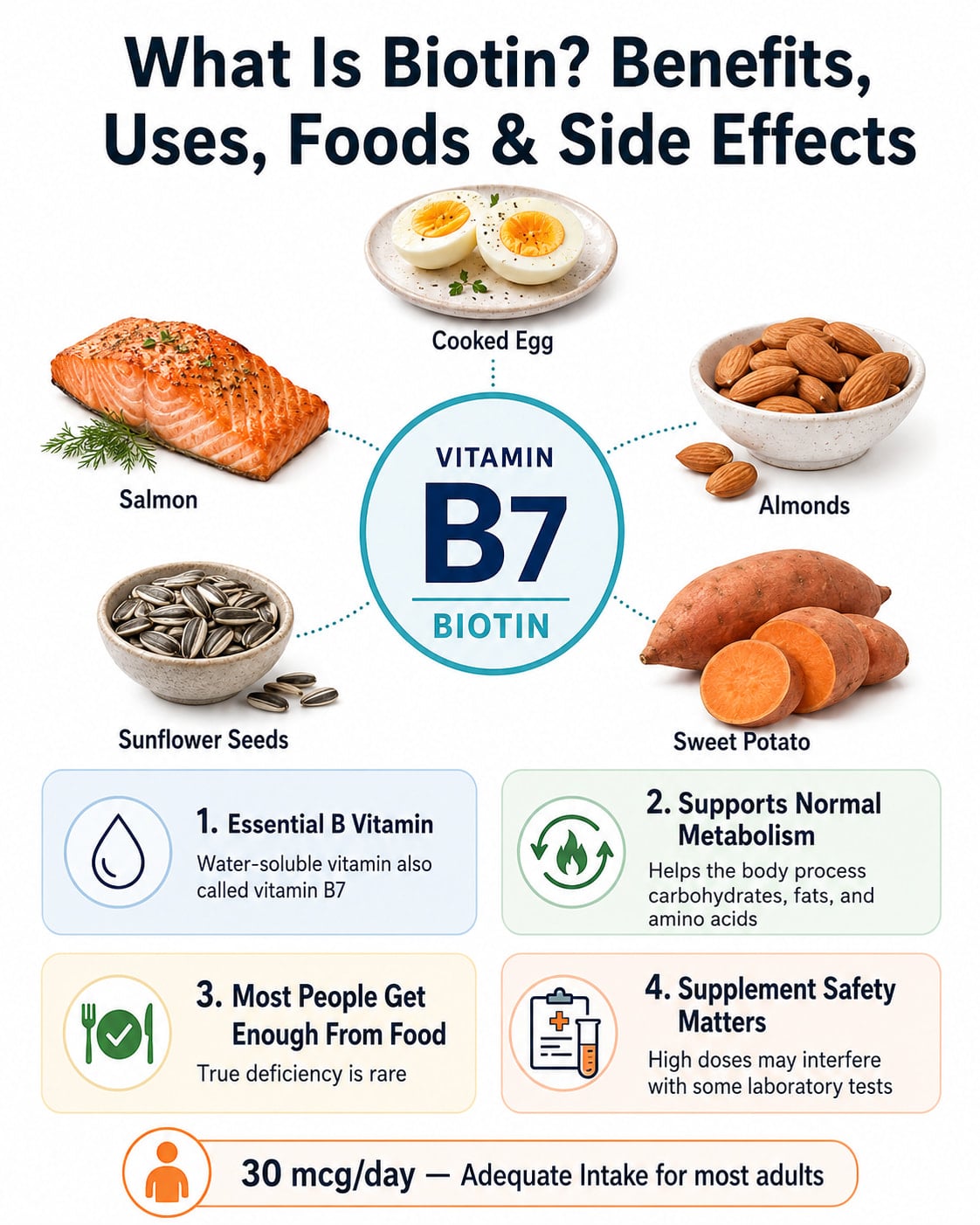
Biotin is an essential, water-soluble B vitamin that helps your body process carbohydrates, fats, and amino acids. Also known as vitamin B7 or vitamin H, biotin occurs naturally in foods such as cooked eggs, salmon, meat, nuts, seeds, and sweet potatoes.
Most people obtain enough biotin from a varied diet, and true deficiency is rare. Although supplements are heavily promoted for hair, skin, and nails, taking extra biotin has not been shown to reliably improve hair growth in people who are not deficient. High-dose supplements can also interfere with important blood tests.
The NIH Office of Dietary Supplements biotin fact sheet provides official information on biotin intake, food sources, deficiency, and safety.
Biotin at a Glance
| Question | Quick answer |
|---|---|
| What is biotin? | A water-soluble B vitamin, also called vitamin B7 |
| What does it do? | Helps enzymes process fats, carbohydrates, and amino acids |
| How much do adults need? | 30 micrograms per day |
| How much is recommended during pregnancy? | 30 micrograms per day |
| How much is recommended while breastfeeding? | 35 micrograms per day |
| What foods contain biotin? | Cooked eggs, liver, salmon, meat, seeds, nuts, and sweet potatoes |
| Is deficiency common? | No. Biotin deficiency is rare |
| Does it help hair grow? | It may help when deficiency is present, but evidence for routine use is weak |
| What is the main safety concern? | High doses can produce inaccurate laboratory results |
The National Academies established an Adequate Intake of 30 micrograms daily for adults because there was not enough evidence to establish a Recommended Dietary Allowance.
What Is Biotin?
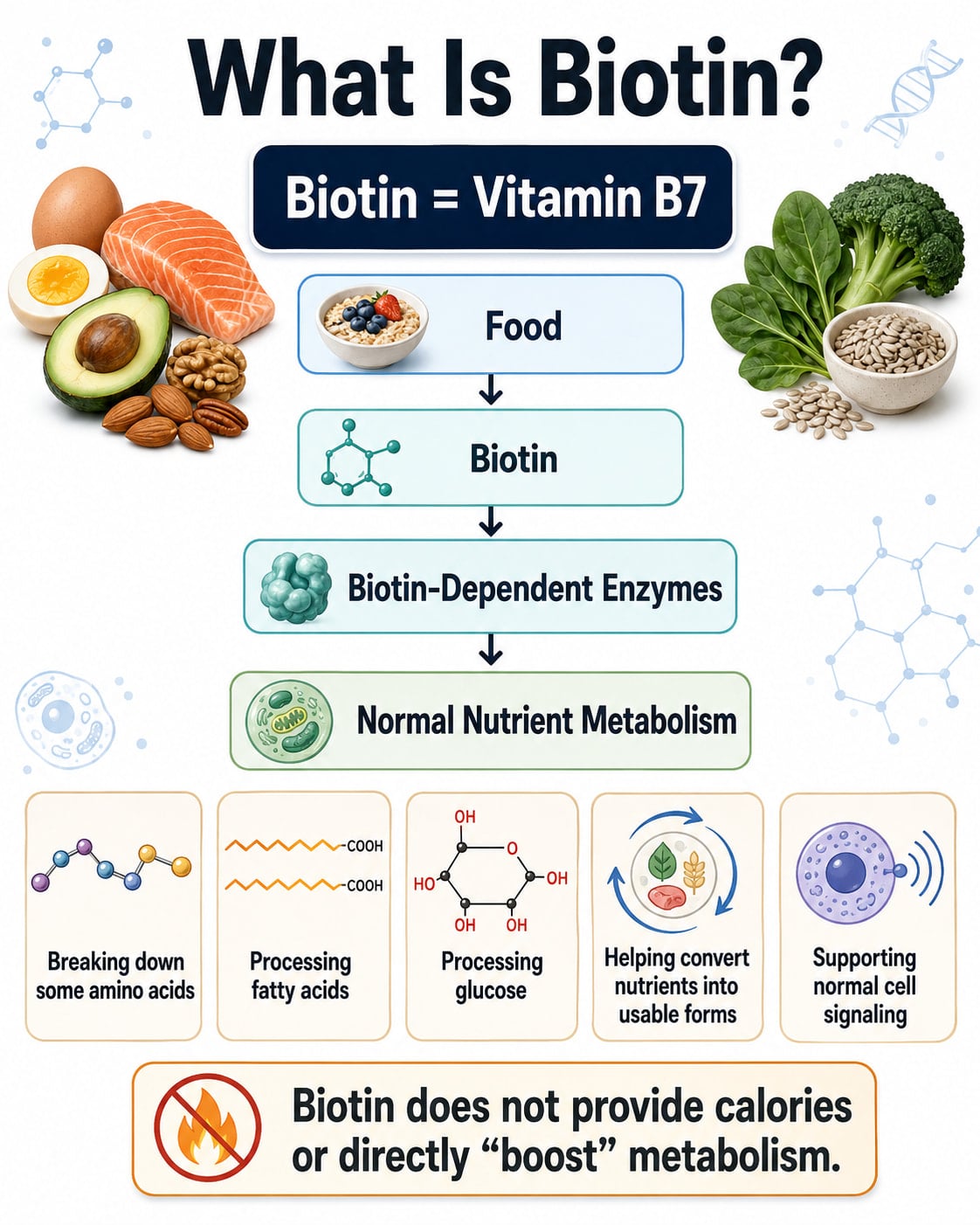
Biotin is one of the B-complex vitamins. Unlike carbohydrates, fat, and protein, it does not provide calories. Instead, it works as a cofactor—a helper that allows certain enzymes to function properly.
The body uses biotin-dependent enzymes during several important metabolic processes, including:
- Breaking down some amino acids
- Producing and processing fatty acids
- Processing glucose
- Converting nutrients from food into usable forms
- Supporting normal cell signaling and gene regulation
Biotin is therefore essential for normal metabolism. However, taking more than your body needs does not automatically increase energy, speed up metabolism, or promote weight loss.
What Are the Benefits and Uses of Biotin?
Biotin’s established nutritional role is supporting normal enzyme function and preventing deficiency. Claims involving hair growth, stronger nails, or clearer skin require more careful interpretation.
| Proposed use | What the evidence shows |
|---|---|
| Normal metabolism | Biotin is essential for enzymes involved in carbohydrate, fat, and amino-acid metabolism |
| Biotin deficiency | Supplementation can restore adequate status when deficiency is properly identified |
| Hair growth | Good-quality evidence does not support routine use in people without deficiency |
| Brittle nails | A few small studies reported improvements, but the evidence is limited |
| Skin health | Deficiency can cause a rash, but evidence for cosmetic benefits in healthy adults is weak |
| More energy or weight loss | No evidence shows that extra biotin boosts energy or causes weight loss in people getting enough |
Supports Normal Nutrient Metabolism
Biotin helps several carboxylase enzymes perform reactions involved in the metabolism of glucose, fatty acids, and amino acids.
This function is essential, but it should not be confused with a stimulant-like “energy boost.” Correcting a deficiency may improve symptoms caused by low biotin status, but taking a megadose is unlikely to make a well-nourished person feel more energetic.
Helps Correct Biotin Deficiency
Correcting a confirmed biotin deficiency is the clearest reason to use a biotin supplement. Some people with inherited biotin-processing disorders also require medically supervised biotin for life.
Hair loss, skin changes, and neurological symptoms related to true deficiency may improve when adequate biotin status is restored. However, these symptoms can have many other causes, so they should not be used to diagnose a deficiency without medical evaluation.
Does Biotin Help Hair Growth?
Biotin deficiency can contribute to hair thinning. In that situation, restoring adequate intake may support normal hair growth.
That does not mean extra biotin helps everyone with hair loss. A 2024 review of biotin and hair growth identified only three eligible clinical studies. The highest-quality study was double-blind and placebo-controlled and found no difference in hair growth between biotin and placebo. The reviewers concluded that using biotin as a general hair supplement is not supported by high-quality evidence.
The American Academy of Dermatology also advises that the effectiveness of beauty supplements such as biotin is often inconsistent or unreliable. Hair loss may be related to genetics, illness, rapid weight loss, hormonal changes, nutritional deficiencies, medications, stress, or scalp conditions. Investigating the cause is more useful than automatically taking a high-dose supplement.
Can Biotin Strengthen Brittle Nails?
A few small studies have suggested that biotin may improve nail firmness, hardness, or thickness in some people with brittle nails. The studies generally used 2.5 milligrams, or 2,500 micrograms, per day for several months.
However, these studies had important limitations:
- They were small.
- They did not include placebo groups.
- Participants’ biotin status was not clearly established beforehand.
- Some findings were based on personal reports rather than standardized measurements.
These results are not strong enough to recommend high-dose biotin for everyone with brittle nails. Nail weakness can also be associated with frequent water exposure, nail products, skin conditions, iron deficiency, thyroid disorders, aging, or physical damage.
Does Biotin Improve Skin?
Biotin deficiency can produce a red, scaly rash, especially around the eyes, nose, and mouth. Correcting the deficiency can help resolve deficiency-related skin changes.
There is little evidence that high-dose biotin improves acne, dryness, wrinkles, or general skin appearance in otherwise healthy adults. NIH notes that supportive reports for skin benefits largely involve infants with unusual medical or nutritional circumstances, not healthy adults taking cosmetic supplements.
How Much Biotin Do You Need Per Day?
Biotin recommendations are expressed as an Adequate Intake, or AI. An AI is used when researchers do not have enough evidence to establish a Recommended Dietary Allowance.
| Age or life stage | Adequate Intake |
|---|---|
| Birth to 6 months | 5 mcg per day |
| 7–12 months | 6 mcg per day |
| 1–3 years | 8 mcg per day |
| 4–8 years | 12 mcg per day |
| 9–13 years | 20 mcg per day |
| 14–18 years | 25 mcg per day |
| Adults 19 and older | 30 mcg per day |
| Pregnancy | 30 mcg per day |
| Breastfeeding | 35 mcg per day |
The FDA Daily Value for adults and children aged 4 and older is also 30 micrograms.
Micrograms vs. Milligrams
Supplement labels may list biotin in micrograms, abbreviated mcg, or milligrams, abbreviated mg.
- 1 mg equals 1,000 mcg.
- 2.5 mg equals 2,500 mcg.
- 5 mg equals 5,000 mcg.
- 10 mg equals 10,000 mcg.
A 5,000-mcg supplement provides about 167 times the adult AI. A 10,000-mcg supplement provides about 333 times the adult AI.
A larger dose does not mean better results. These high amounts are commonly marketed for hair and nails, even though evidence supporting routine use is limited.
Is There an Upper Limit for Biotin?
No Tolerable Upper Intake Level has been established for biotin because clear evidence of direct toxicity in humans is lacking.
That does not prove that unlimited amounts are harmless. High supplemental doses can interfere with laboratory testing, and they may expose you to unnecessary ingredients found in combination products.
Best Foods High in Biotin
Biotin occurs naturally in many animal and plant foods. Food values can vary according to the variety, season, preparation method, and processing.
| Food | Serving | Approximate biotin |
|---|---|---|
| Beef liver, cooked | 3 ounces | 30.8 mcg |
| Whole egg, cooked | 1 egg | 10 mcg |
| Pink salmon, canned in water | 3 ounces | 5 mcg |
| Pork chop, cooked | 3 ounces | 3.8 mcg |
| Hamburger patty, cooked | 3 ounces | 3.8 mcg |
| Sunflower seeds, roasted | ¼ cup | 2.6 mcg |
| Sweet potato, cooked | ½ cup | 2.4 mcg |
| Almonds, roasted | ¼ cup | 1.5 mcg |
| Tuna, canned in water | 3 ounces | 0.6 mcg |
| Spinach, boiled | ½ cup | 0.5 mcg |
| Broccoli, fresh | ½ cup | 0.4 mcg |
| Cheddar cheese | 1 ounce | 0.4 mcg |
| Milk, 2% | 1 cup | 0.3 mcg |
| Plain yogurt | 1 cup | 0.2 mcg |
You do not need to obtain all 30 micrograms from one food. Smaller amounts from eggs, fish, meat, dairy products, vegetables, nuts, and seeds can add up across the day.
Cook Eggs Before Eating Them
Raw egg whites contain a protein called avidin. Avidin binds biotin in the digestive tract and reduces its absorption.
Cooking changes avidin’s structure so that it can no longer bind biotin effectively. Cooked eggs are therefore a better biotin source than raw egg whites.
What Causes Biotin Deficiency?
Biotin deficiency is uncommon. NIH reports that severe deficiency has not been documented in healthy people eating a normal mixed diet.
Factors that may increase the risk of inadequate biotin status include the following.
Biotinidase Deficiency
Biotinidase deficiency is a rare inherited disorder that prevents the body from efficiently releasing and recycling biotin. Newborn screening programs in the United States routinely check for this condition.
People with the disorder require lifelong care and medically directed biotin intake.
Chronic Alcohol Exposure
Long-term heavy alcohol exposure can interfere with biotin absorption. NIH reports that low plasma biotin concentrations have been observed in some people with chronic alcoholism.
Regular Consumption of Raw Egg Whites
Frequently consuming substantial amounts of raw egg whites can reduce biotin absorption because of their avidin content. Cooking the egg whites prevents this effect.
Pregnancy and Breastfeeding
Pregnancy and breastfeeding can alter biotin metabolism and laboratory markers of biotin status. NIH notes that biochemical signs of marginal deficiency have been observed during pregnancy, although the clinical significance is uncertain.
Pregnancy alone is not a reason to take a high-dose standalone supplement. Discuss prenatal supplements and doses with an obstetric clinician.
Long-Term Use of Certain Anti-Seizure Medications
Long-term use of carbamazepine, primidone, phenytoin, or phenobarbital has been associated with lower biotin levels in some studies.
Do not change a prescribed medication or add high-dose biotin on your own. A doctor or pharmacist can determine whether your medication affects your nutritional needs.
Signs and Symptoms of Biotin Deficiency
Possible signs of deficiency can develop gradually and may include:
- Thinning hair or widespread hair loss
- Brittle nails
- A red, scaly rash around the eyes, nose, or mouth
- Conjunctivitis
- Fatigue or lethargy
- Tingling in the hands or feet
- Depression or hallucinations
- Seizures in severe cases
- Low muscle tone or developmental delays in infants
These symptoms are not unique to biotin deficiency. Hair loss, fatigue, rashes, and brittle nails are much more commonly associated with other health, nutritional, environmental, or genetic factors.
A healthcare professional may review your diet, supplements, medications, symptoms, and medical history before deciding whether specialized testing is useful. Standard blood biotin measurements do not always identify marginal deficiency reliably.
Who May Need a Biotin Supplement?
A biotin supplement may be appropriate when:
- A healthcare professional identifies a deficiency.
- A person has biotinidase deficiency or another biotin-related inherited disorder.
- A clinician recommends it because of a specific medical or nutritional circumstance.
- Adequate intake cannot be achieved through food or an appropriate multivitamin.
Most healthy adults eating a varied diet do not need a high-dose standalone biotin supplement. The average biotin intake reported in other Western populations is approximately 35–70 micrograms per day, suggesting that ordinary diets often provide adequate amounts. Comparable nationally representative intake data for the United States are limited.
Biotin Side Effects and Safety Risks
Biotin is not generally associated with direct toxicity at normal food or supplement amounts. However, “water-soluble” does not mean risk-free, especially when supplements provide hundreds of times the daily requirement.
Biotin Can Interfere With Blood Tests
Laboratory interference is the most important known risk of high-dose biotin.
Some laboratory tests rely on an interaction between biotin and a protein called streptavidin. Excess biotin in a blood sample can disrupt that process, producing a result that appears falsely high or falsely low.
Potentially affected tests include certain tests for:
- Troponin, a marker used when evaluating possible heart damage
- Thyroid-stimulating hormone and thyroid hormones
- Parathyroid hormone
- Vitamin D
- Reproductive hormones
- Cortisol
- Ferritin
- Vitamin B12
- NT-proBNP, a marker used during some heart evaluations
- Some tumor markers and medication levels
Not every laboratory method is affected. The risk depends on the supplement dose, how recently it was taken, kidney function, the specific test, and the equipment used by the laboratory.
The FDA warning about biotin and troponin tests states that biotin can significantly interfere with certain tests and cause incorrect results. The FDA has continued to receive reports involving falsely low troponin results, which could complicate the evaluation of a possible heart attack.
NIH also reports that even a single 10-milligram dose has interfered with some thyroid tests performed within 24 hours.
Should You Stop Biotin Before a Blood Test?
Always tell the ordering clinician and laboratory staff that you take biotin. Check multivitamins, prenatal vitamins, B-complex products, gummies, powders, and “hair, skin, and nails” products because biotin may not appear prominently on the front label.
The Association for Diagnostics & Laboratory Medicine guidance recommends that people who have taken 5–10 milligrams wait at least eight hours before some laboratory tests. Some tests may require a washout period of up to 72 hours, and clearance may take longer in people with impaired kidney function.
These time frames are not universal. Follow instructions from the healthcare professional or laboratory performing your specific test. Do not stop medically prescribed high-dose biotin without professional guidance.
Do not delay emergency care because you have taken biotin. During an emergency, immediately tell the medical team what product you took, the dose, and when you last took it.
How to Choose a Biotin Supplement Safely
Food is usually the simplest way to meet your biotin needs. When a healthcare professional recommends a supplement, use the following checklist.
1. Confirm That You Need It
Hair thinning or weak nails do not automatically indicate a biotin deficiency. Ask whether another cause should be investigated first.
2. Check the Actual Dose
Compare the amount on the Supplement Facts label with the adult AI of 30 micrograms. Products providing 5,000 or 10,000 micrograms contain far more than the daily requirement.
3. Avoid Supplement Stacking
Biotin may appear in several products at once, including:
- Multivitamins
- B-complex supplements
- Prenatal vitamins
- Hair, skin, and nail gummies
- Beauty powders
- Energy or wellness blends
Add the amounts together to understand your total supplemental intake.
4. Choose a Simple Product
Avoid formulas containing numerous unnecessary ingredients. A shorter ingredient list makes it easier to understand what you are taking and identify the source of any unwanted effect.
5. Look for Independent Quality Verification
The American Academy of Dermatology recommends looking for reputable independent verification, such as USP, NSF, UL, or ConsumerLab. Verification can provide additional confidence that a product contains the listed ingredients, but it does not prove that the product will produce its advertised benefits.
6. Do Not Rely on “FDA-Approved” Supplement Claims
According to the FDA’s May 2026 explanation of product approval, dietary supplements are not FDA-approved for safety and effectiveness before marketing. Manufacturers are responsible for safety, labeling, and compliance, while the FDA monitors the market and can act when problems arise.
7. Keep Your Healthcare Team Informed
Include biotin on your medication and supplement list. Tell your doctor, pharmacist, dentist, and laboratory staff, particularly before blood work or a medical procedure.
When to Speak With a Healthcare Professional
Seek professional evaluation rather than relying only on a supplement when you have:
- Sudden or rapidly worsening hair loss
- Patchy hair loss
- Scalp pain, redness, scaling, or scarring
- Loss of eyebrows or eyelashes
- Persistent brittle, discolored, or misshapen nails
- A recurring rash around the eyes, nose, or mouth
- Tingling, severe fatigue, confusion, or neurological symptoms
- Symptoms that began after starting a medication
- Concerns about biotin during pregnancy or breastfeeding
- An upcoming laboratory test while using a high-dose product
A dermatologist can evaluate hair, skin, and nail concerns, while a doctor or registered dietitian can assess possible nutritional factors.
Frequently Asked Questions
Is biotin the same as vitamin B7?
Yes. Biotin, vitamin B7, and vitamin H are different names for the same water-soluble B vitamin.
Does biotin make your hair grow faster?
There is no strong evidence that biotin makes hair grow faster in people with adequate biotin status. It may support normal hair growth when a true deficiency is present, but a 2024 review found that deficiency is rare.
How much biotin should an adult get each day?
The NIH Office of Dietary Supplements states that the Adequate Intake is 30 micrograms per day for adults. The amount is also 30 micrograms during pregnancy and 35 micrograms while breastfeeding.
Is 10,000 mcg of biotin too much?
Ten thousand micrograms equals 10 milligrams and is approximately 333 times the adult AI. A formal upper limit has not been established, but NIH reports that this dose is much higher than most people need and can interfere with laboratory tests. Discuss high-dose use with a healthcare professional.
Can you take biotin every day?
Biotin from food is safe to consume daily. A standard multivitamin may also provide an amount close to the daily requirement. Daily high-dose supplementation should have a clear reason because more biotin has not been shown to provide greater cosmetic benefits and may affect laboratory results.
How long does biotin take to work?
There is no reliable timeline for cosmetic results because evidence for hair and nail benefits in people without deficiency is limited. Older brittle-nail studies used biotin for several months, but their designs were too weak to guarantee that biotin caused the reported changes. When deficiency is present, improvement depends on its severity, the symptom, and the underlying cause.
What foods have the most biotin?
Cooked beef liver is among the richest listed sources. Other useful sources include cooked eggs, salmon, pork, beef, sunflower seeds, sweet potatoes, almonds, dairy products, and some vegetables. A varied diet can provide biotin from several foods rather than one concentrated source.
Conclusion
Biotin is an essential B vitamin that supports normal nutrient metabolism, but most people already get enough from food. High-dose supplements are unlikely to improve hair, skin, or nails unless inadequate biotin status is actually contributing to the problem.
Focus first on a varied diet and investigate persistent hair, skin, or nail changes instead of assuming biotin is the answer. Check supplement labels carefully, avoid unnecessary megadoses, and always report biotin use before laboratory testing.
This content is for informational purposes only and not medical advice.
References
- NIH Office of Dietary Supplements: Biotin Fact Sheet for Health Professionals
- U.S. Food and Drug Administration: Biotin Interference With Troponin Lab Tests
- PubMed: Biotin for Hair Loss—Teasing Out the Evidence
- American Academy of Dermatology: Guidance on Skin, Hair, and Nail Supplements
- Association for Diagnostics & Laboratory Medicine: Biotin Interference Guidance
- U.S. Food and Drug Administration: Is It Really FDA Approved?