
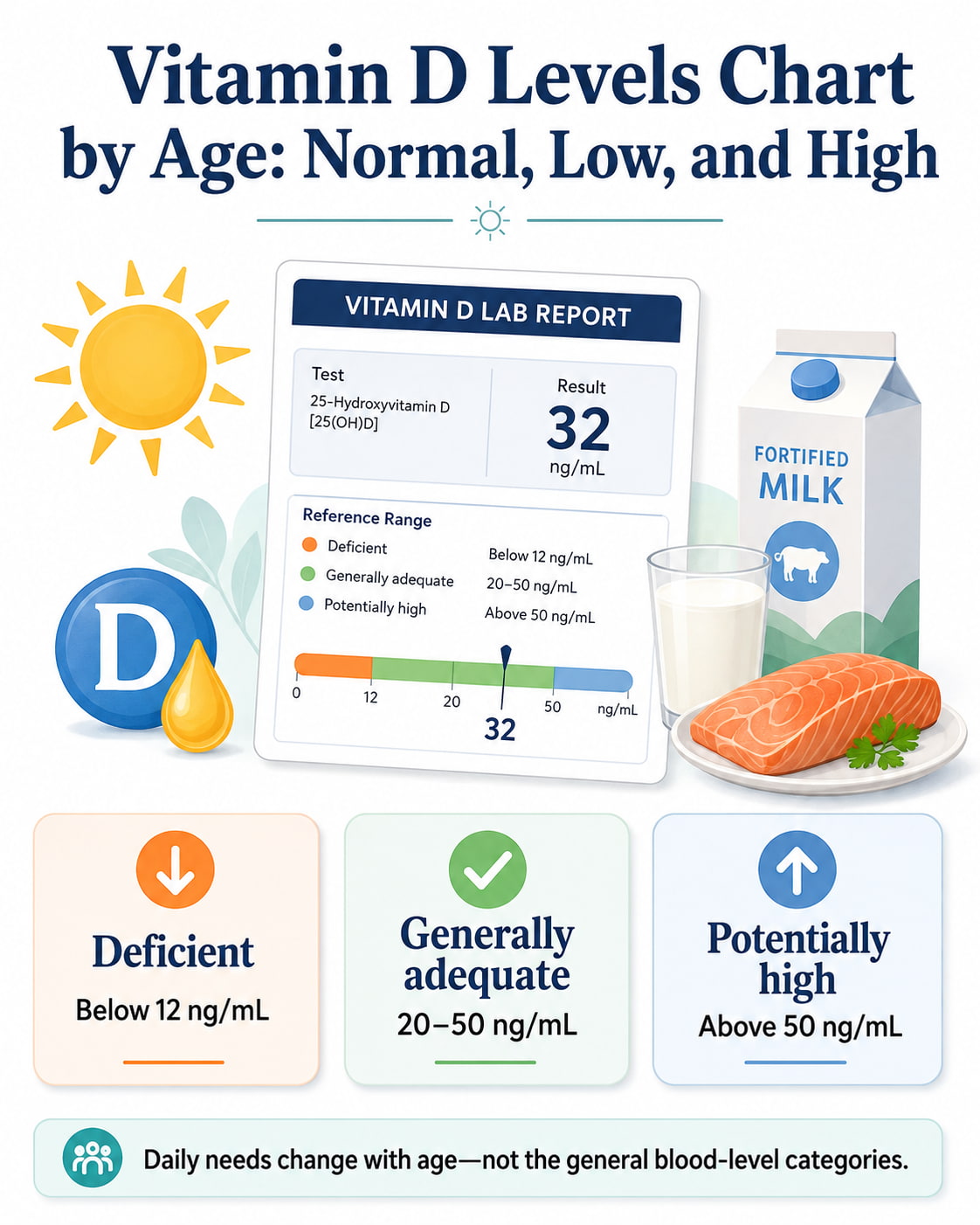
A 25-hydroxyvitamin D level of at least 20 ng/mL, or 50 nmol/L, is generally adequate for most healthy people. Levels below 12 ng/mL indicate deficiency, while results above 50 ng/mL may be associated with adverse effects.
Vitamin D blood ranges do not change automatically at every age. Instead, the amount of vitamin D a person should consume each day changes with age. Infants need 400 IU daily, most children and adults need 600 IU, and adults older than 70 need 800 IU.
Use the vitamin D levels chart by age below as a general guide. Always compare your result with the reference range on your laboratory report and discuss abnormal results with a healthcare professional.
Vitamin D Levels Chart: Normal, Low, and High
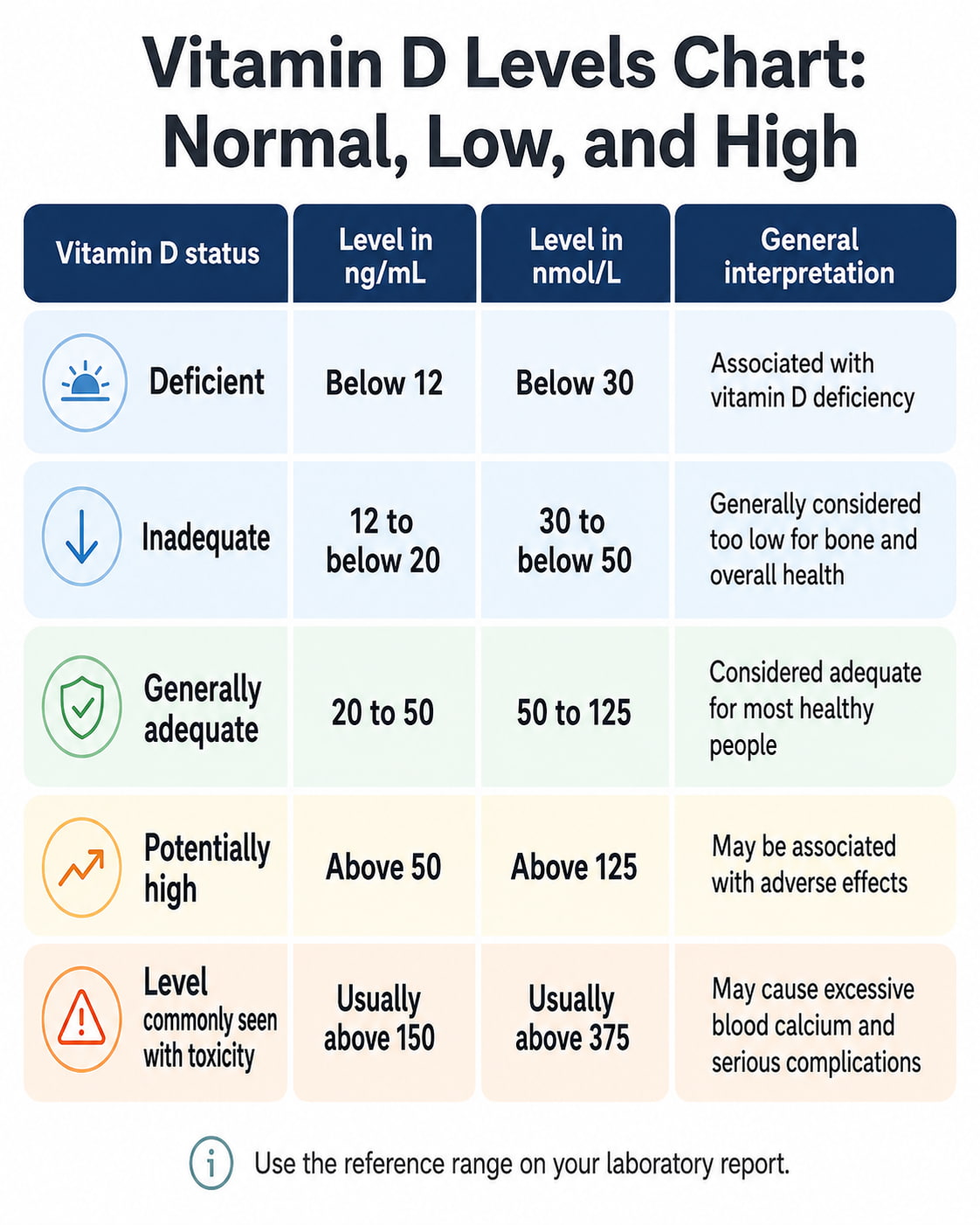
Healthcare professionals usually evaluate vitamin D status by measuring total serum 25-hydroxyvitamin D, written as 25(OH)D.
| Vitamin D status | Level in ng/mL | Level in nmol/L | General interpretation |
|---|---|---|---|
| Deficient | Below 12 | Below 30 | Associated with vitamin D deficiency and a risk of weakened or poorly mineralized bones |
| Inadequate | 12 to below 20 | 30 to below 50 | Generally considered too low for bone and overall health in healthy people |
| Generally adequate | 20 to 50 | 50 to 125 | Considered adequate for most healthy people |
| Potentially high | Above 50 | Above 125 | May be associated with adverse effects, especially as the level increases |
| Level commonly seen with toxicity | Usually above 150 | Usually above 375 | May cause excessive blood calcium and serious complications |
The NIH Office of Dietary Supplements uses these general categories but explains that an optimal vitamin D concentration has not been established for every person or stage of life. One ng/mL equals 2.5 nmol/L.
A result of 20 ng/mL or higher does not guarantee that a person has an ideal level for every medical situation. Laboratories, clinicians, and professional organizations may interpret results differently.
Vitamin D Levels Chart by Age
Most U.S. public-health guidance does not provide a separate universal vitamin D blood range for every age. The commonly used blood-level categories remain broadly similar, while recommended daily intake changes with age.
| Age or life stage | Deficient | Inadequate | Generally adequate for most people | Potentially high | Recommended daily intake |
|---|---|---|---|---|---|
| Birth to 12 months | Below 12 ng/mL | 12 to below 20 ng/mL | 20–50 ng/mL | Above 50 ng/mL | 400 IU or 10 mcg |
| Children 1–13 years | Below 12 ng/mL | 12 to below 20 ng/mL | 20–50 ng/mL | Above 50 ng/mL | 600 IU or 15 mcg |
| Teens 14–18 years | Below 12 ng/mL | 12 to below 20 ng/mL | 20–50 ng/mL | Above 50 ng/mL | 600 IU or 15 mcg |
| Adults 19–50 years | Below 12 ng/mL | 12 to below 20 ng/mL | 20–50 ng/mL | Above 50 ng/mL | 600 IU or 15 mcg |
| Adults 51–70 years | Below 12 ng/mL | 12 to below 20 ng/mL | 20–50 ng/mL | Above 50 ng/mL | 600 IU or 15 mcg |
| Adults 71 years and older | Below 12 ng/mL | 12 to below 20 ng/mL | 20–50 ng/mL | Above 50 ng/mL | 800 IU or 20 mcg |
| Pregnancy | Below 12 ng/mL | 12 to below 20 ng/mL | 20–50 ng/mL | Above 50 ng/mL | 600 IU or 15 mcg |
| Breastfeeding | Below 12 ng/mL | 12 to below 20 ng/mL | 20–50 ng/mL | Above 50 ng/mL | 600 IU or 15 mcg |
These intake amounts apply to generally healthy people and assume minimal sun exposure. They are not doses for correcting a confirmed deficiency. A healthcare professional may recommend a different amount based on test results, diet, medical history, medications, and absorption problems.
Are Normal Vitamin D Levels Different by Age?
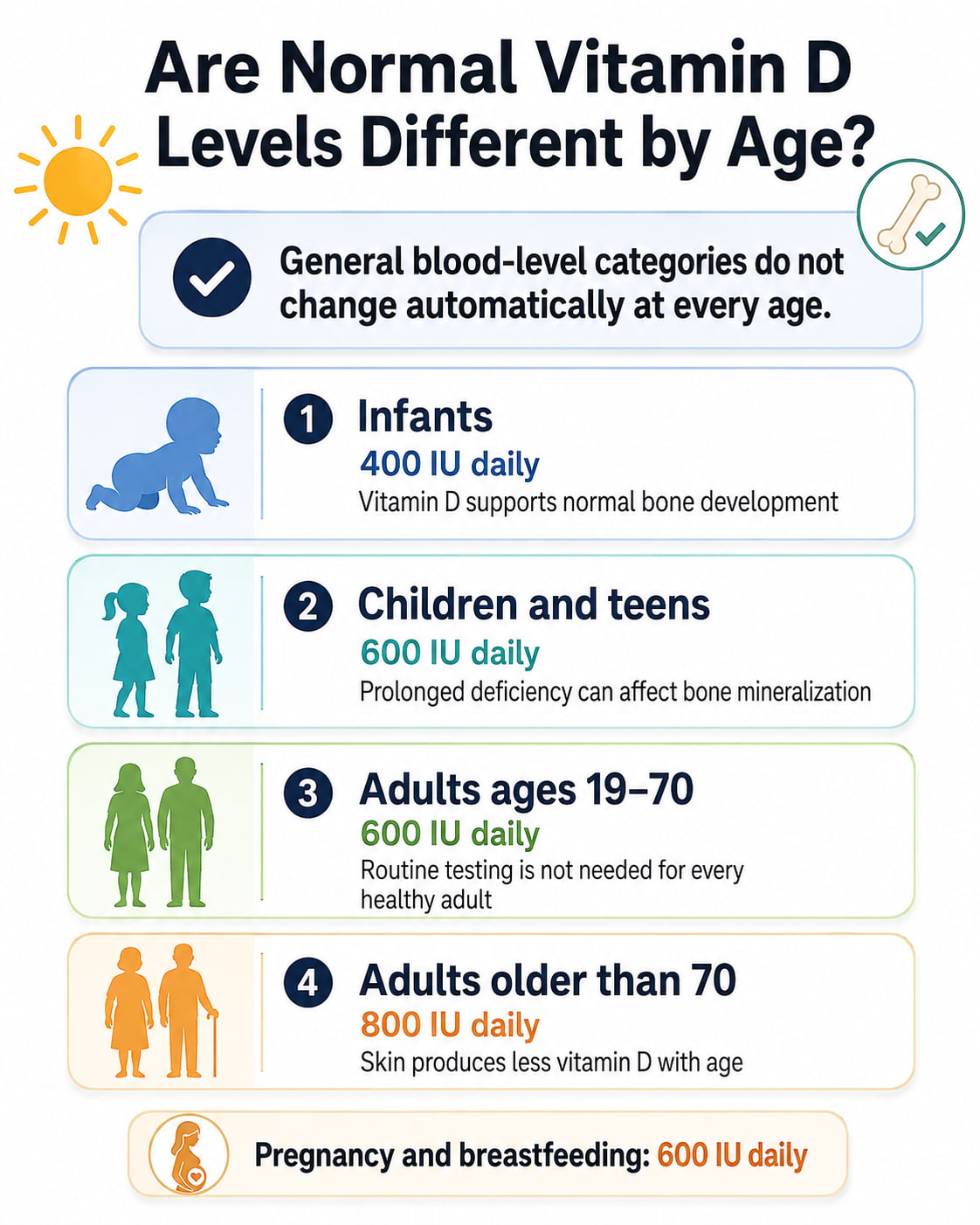
There is no universally accepted “normal” vitamin D range that changes at every birthday. A level of at least 20 ng/mL is generally considered adequate for most healthy children and adults under the National Academies framework.
Age still matters because it affects vitamin D needs and deficiency risk.
Infants
Infants need vitamin D for normal bone development and the prevention of nutritional rickets. Breast milk usually does not provide enough vitamin D by itself.
According to the Centers for Disease Control and Prevention:
- Babies younger than 12 months need 400 IU daily.
- Babies who receive only breast milk or both breast milk and formula generally need 400 IU from a supplement beginning shortly after birth.
- Formula-fed babies generally do not need an additional supplement once they drink at least 32 ounces of vitamin D-fortified formula per day.
- Children ages 12–24 months need 600 IU daily.
Parents should confirm the correct product and drop amount with their child’s healthcare professional because infant supplements can have different concentrations.
Children and Teenagers
Children and teens ages 1–18 need 600 IU daily. Prolonged severe deficiency can interfere with bone mineralization and contribute to rickets, bone pain, muscle weakness, or skeletal changes.
A child’s result should be interpreted with symptoms, growth, diet, health conditions, and the laboratory’s pediatric reference information.
Adults Ages 19–70
Most healthy adults ages 19–70 need 600 IU daily. Healthy adults do not generally need routine vitamin D testing or supplements above the recommended daily amount unless they have a specific risk factor or medical reason.
Adults Ages 71 and Older
Adults older than 70 need 800 IU daily. Older adults have a greater risk of low vitamin D because skin becomes less efficient at producing it from sunlight with age. Kidney function and dietary intake may also affect vitamin D status.
The 2024 Endocrine Society guideline suggests empiric vitamin D supplementation for adults 75 and older but does not establish a special target blood level for this age group.
Pregnancy and Breastfeeding
The recommended daily intake during pregnancy and breastfeeding is 600 IU. The Endocrine Society suggests vitamin D supplementation during pregnancy but advises against routine vitamin D blood testing in otherwise healthy pregnant individuals without another reason for testing.
A prenatal vitamin may already contain vitamin D. Pregnant or breastfeeding individuals should check the label before combining multiple supplements.
Why Some Laboratories Use Different Vitamin D Ranges
A laboratory may label vitamin D results differently from the chart above. For example, some reports classify:
- Below 20 ng/mL as deficient
- 20–29 ng/mL as insufficient
- 30 ng/mL or higher as sufficient
These cutoffs became common under earlier professional guidance. However, the Endocrine Society replaced its 2011 vitamin D guideline in 2024 and no longer endorses universal blood-level thresholds for sufficiency, insufficiency, or deficiency for disease prevention.
The current guideline states that clinical trials have not established one 25(OH)D concentration that provides the same outcome-specific benefits for everyone.
For that reason, do not compare your number with an online chart alone. Use:
- The range printed on your laboratory report
- The reason the test was ordered
- Your symptoms and medical history
- Calcium, kidney, liver, or bone test results
- Your healthcare professional’s interpretation
What Vitamin D Test Should You Get?
The standard test is the total 25-hydroxyvitamin D blood test.
It may also appear on a laboratory order as:
- 25(OH)D
- 25-hydroxyvitamin D
- Total vitamin D
- Calcidiol
- Vitamin D2 and D3
The total value combines vitamin D2 and vitamin D3 and is the main number used to assess vitamin D status.
The active form, 1,25-dihydroxyvitamin D, is not usually the correct test for checking nutritional vitamin D levels. A healthcare professional may order it when evaluating certain kidney disorders, unusual calcium results, or specific medical conditions.
The National Library of Medicine’s MedlinePlus explains that the 25(OH)D test provides the most accurate routine assessment of whether the body has enough vitamin D. No special preparation is usually required, but patients should report all medicines and supplements before testing.
Who May Need a Vitamin D Test?
Routine vitamin D screening is not recommended for every healthy person. Testing may be appropriate when a healthcare professional suspects a deficiency or needs to monitor a known condition.
Possible reasons for testing include:
- Bone pain or unexplained muscle weakness
- Rickets or osteomalacia
- Osteopenia, osteoporosis, or repeated fractures
- Abnormally low blood calcium
- Crohn’s disease, celiac disease, ulcerative colitis, or another absorption disorder
- Chronic kidney or liver disease
- Previous gastric bypass surgery
- Long-term use of medicines that affect vitamin D
- Suspected excessive supplement intake
- Monitoring a clinician-directed supplementation plan
The Endocrine Society recommends against routine screening in healthy adults, including generally healthy adults with obesity or dark skin, unless they have another established reason for testing.
What Causes Low Vitamin D Levels?
A low result can occur when the body does not receive, absorb, produce, or process enough vitamin D.
Common causes and risk factors include:
- Limited intake of vitamin D-rich or fortified foods
- Exclusive or partial breastfeeding without infant supplementation
- Spending little time outdoors
- Clothing that covers most of the skin
- Darker skin pigmentation
- Older age
- Crohn’s disease, celiac disease, or ulcerative colitis
- Conditions that reduce fat absorption
- Obesity
- Gastric bypass surgery
- Chronic kidney or liver disease
- Certain anti-seizure medicines, steroids, cholesterol medicines, or weight-loss medicines
Vitamin D is fat-soluble, so conditions that interfere with fat absorption can also reduce vitamin D absorption.
Symptoms of Low Vitamin D
Mildly low vitamin D may not cause noticeable symptoms. More significant or prolonged deficiency may be associated with:
- Bone pain
- Muscle weakness or aches
- Weak or soft bones
- Increased risk of fractures
- Delayed or abnormal bone development in children
- Rickets in children
- Osteomalacia in adolescents and adults
These symptoms can have many causes. A vitamin D test and medical evaluation are necessary to determine whether vitamin D is involved. Severe deficiency can contribute to poor bone mineralization, but a low vitamin D result does not explain every case of fatigue, weakness, or pain.
What Does a High Vitamin D Level Mean?
A level above 50 ng/mL may be associated with adverse effects, but it does not automatically mean that a person has vitamin D toxicity.
Interpretation depends on:
- How high the result is
- How long it has remained elevated
- Supplement dose and duration
- Blood calcium
- Kidney function
- Symptoms
- Other medical conditions
Vitamin D toxicity usually results from excessive supplement use, not normal food intake or ordinary sun exposure.
Blood levels above approximately 150 ng/mL are commonly associated with toxicity. Excess vitamin D can raise calcium absorption and cause hypercalcemia, or excessive calcium in the blood.
Possible Symptoms of Vitamin D Toxicity
Possible warning signs include:
- Nausea or vomiting
- Poor appetite
- Constipation
- Muscle weakness
- Confusion
- Dehydration
- Excessive thirst
- Frequent urination
- Kidney stones
- Unexplained weight loss
Severe toxicity may contribute to kidney failure, abnormal heart rhythms, and calcium deposits in soft tissues or blood vessels. Anyone taking a large vitamin D dose who develops these symptoms should seek prompt medical advice.
Vitamin D Upper Limits by Age
The tolerable upper intake level is the highest average daily amount considered unlikely to cause harm for most healthy people. It is not a recommended intake target.
| Age | Daily upper limit |
|---|---|
| Birth to 6 months | 1,000 IU or 25 mcg |
| 7–12 months | 1,500 IU or 38 mcg |
| 1–3 years | 2,500 IU or 63 mcg |
| 4–8 years | 3,000 IU or 75 mcg |
| 9–18 years | 4,000 IU or 100 mcg |
| Adults 19 years and older | 4,000 IU or 100 mcg |
| Pregnancy and breastfeeding | 4,000 IU or 100 mcg |
The limit includes vitamin D from food, drinks, and supplements. A healthcare professional may prescribe more than the upper limit for a limited period when managing a confirmed deficiency. Do not use the table as a self-directed deficiency dosing plan.
How to Get Enough Vitamin D
The body can obtain vitamin D from food, fortified products, supplements, and production in the skin after exposure to ultraviolet B light.
Food Sources
Foods that may provide vitamin D include:
- Salmon, trout, tuna, and other fatty fish
- Egg yolks
- UV-exposed mushrooms
- Fortified cow’s milk
- Fortified soy, almond, oat, or other plant-based drinks
- Fortified cereals
- Some fortified yogurts and orange juices
Few foods naturally contain large amounts of vitamin D. Check the Nutrition Facts label because fortification levels vary between products.
Supplements
Vitamin D supplements are commonly available as:
- Vitamin D2, or ergocalciferol
- Vitamin D3, or cholecalciferol
Both forms can raise vitamin D levels. Vitamin D3 generally raises and maintains 25(OH)D more effectively, although the appropriate product depends on the person’s needs.
Check all multivitamin, calcium, prenatal, and individual vitamin D products before combining them. Taking several products can unintentionally create a high total dose.
Sunlight
Sun exposure can support vitamin D production, but there is no single safe exposure time that works for everyone. Production varies with skin pigmentation, age, season, latitude, time of day, clothing, cloud cover, and sunscreen use.
Intentional sunburn or tanning-bed use is not a safe vitamin D strategy. Food and appropriately selected supplements provide more predictable amounts without increasing ultraviolet exposure.
How to Read Your Vitamin D Test Result
Follow these steps when reviewing a vitamin D report:
- Confirm the test name. Look for total 25-hydroxyvitamin D or 25(OH)D.
- Check the unit. The result may use ng/mL or nmol/L.
- Read the laboratory range. Different laboratories may use different categories.
- Review supplements. Write down the dose from every vitamin, calcium product, or fortified drink you use.
- Consider why the test was ordered. Bone disease, absorption problems, kidney disease, or excessive supplement use may change interpretation.
- Discuss abnormal results. Do not start a high-dose regimen based only on an online chart.
Frequently Asked Questions
What is a good vitamin D level for my age?
A 25(OH)D level of at least 20 ng/mL is generally adequate for most healthy people across age groups. However, your laboratory or clinician may use a different target based on your health, symptoms, and reason for testing.
Is 30 ng/mL a normal vitamin D level?
Yes. A result of 30 ng/mL falls within the generally adequate range used by the NIH framework. Some laboratories use 30 ng/mL as their minimum sufficient level, while others use 20 ng/mL.
Is a vitamin D level of 20 ng/mL too low?
Twenty ng/mL is generally considered adequate for most healthy people under the National Academies framework. However, it is near the lower boundary, so a clinician may consider your diet, symptoms, medical conditions, and laboratory range before deciding whether any action is needed.
What level of vitamin D is considered dangerously low?
A level below 12 ng/mL is associated with vitamin D deficiency. Prolonged severe deficiency can contribute to rickets in children and osteomalacia in adults. The clinical risk also depends on calcium levels, symptoms, age, and overall health.
What vitamin D level is too high?
A result above 50 ng/mL may be potentially high and should be interpreted carefully. Toxicity is more commonly associated with levels above 150 ng/mL, especially when excessive supplement use has also caused high blood calcium.
Should everyone get a vitamin D blood test?
No. Routine screening is not recommended for every healthy person. Testing is more useful when someone has symptoms, bone disease, absorption problems, kidney or liver disease, abnormal calcium, high-dose supplement use, or another medical indication.
Can I take 5,000 IU of vitamin D every day?
Five thousand IU exceeds the adult tolerable upper intake level of 4,000 IU per day. A healthcare professional may recommend that amount for a specific reason, but it should not become a long-term self-directed dose without reviewing blood levels, calcium, medicines, and health history.
Conclusion
A vitamin D level of at least 20 ng/mL is generally adequate for most healthy people, while a result below 12 ng/mL indicates deficiency. Levels above 50 ng/mL may be potentially high, and toxicity is commonly associated with results above 150 ng/mL.
The blood-level categories remain broadly similar across ages, but daily intake needs change. Infants need 400 IU, most children and adults need 600 IU, and adults older than 70 need 800 IU per day.
Check the test name, measurement unit, laboratory range, and every supplement you take before interpreting your result. Speak with a healthcare professional before using high-dose vitamin D or changing a clinician-directed plan.
This content is for informational purposes only and not medical advice.
References
- NIH Office of Dietary Supplements: Vitamin D Fact Sheet for Health Professionals.
- Centers for Disease Control and Prevention: Vitamin D—Infant and Toddler Nutrition.
- Endocrine Society: Vitamin D for the Prevention of Disease Clinical Practice Guideline.
- National Library of Medicine MedlinePlus: Vitamin D Test.
- National Library of Medicine MedlinePlus: Vitamin D Deficiency.