
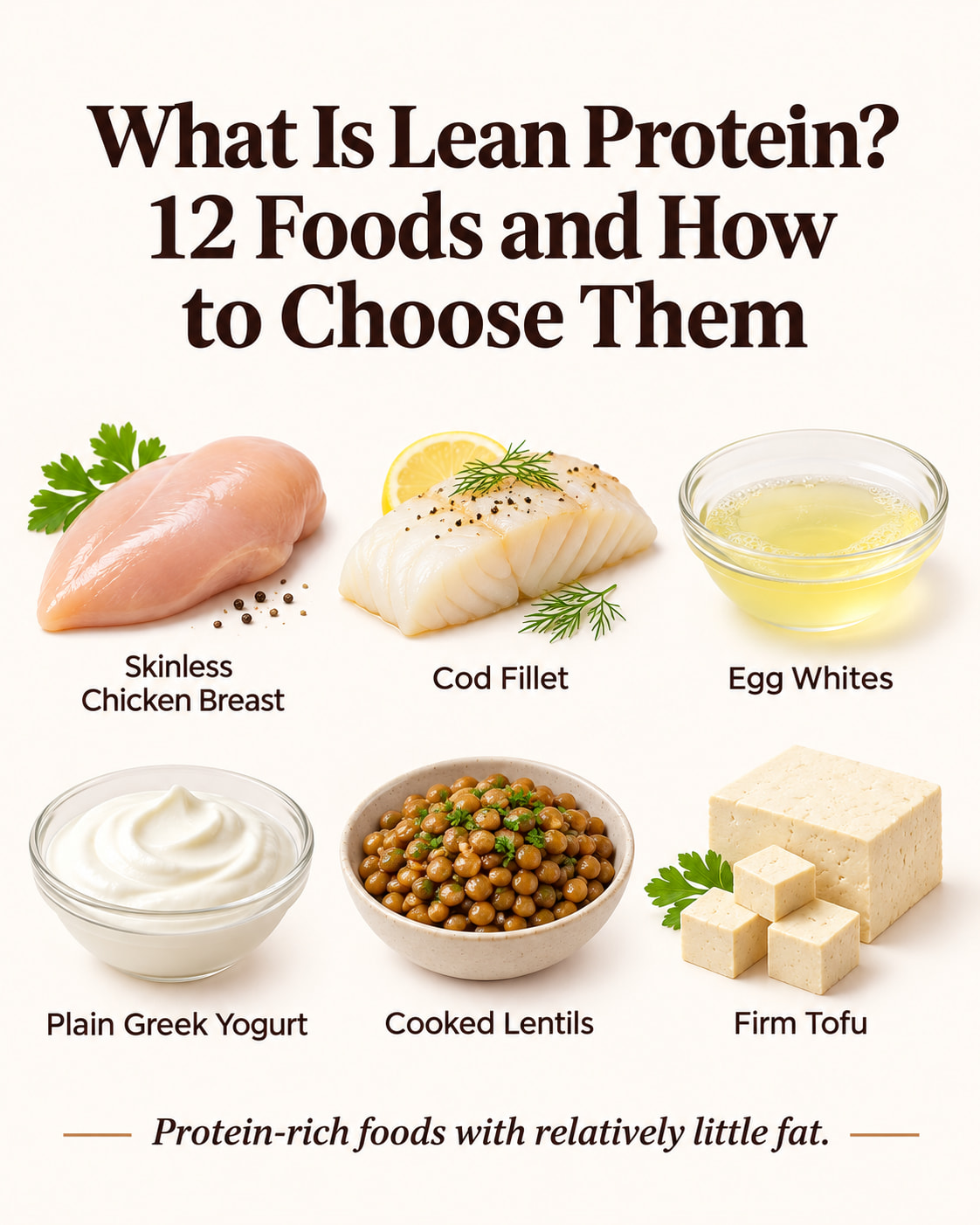
Lean protein refers to foods that provide protein with relatively little fat, especially saturated fat. Familiar options include skinless poultry, white fish, egg whites, lower-fat dairy, beans, and lentils. “Lean” describes the food supplying the protein—not a special type of protein. The American Heart Association’s guide to healthy proteins emphasizes these choices alongside a variety of other protein foods.
But lean does not mean fat-free, and the lowest-fat food is not automatically the best choice. The useful questions are how much protein a food provides, what types of fat it contains, and how you prepare it.
What Does “Lean” Actually Mean?
In everyday conversation, “lean protein” is a broad nutrition term. On certain food labels, however, “lean” has a specific legal definition.
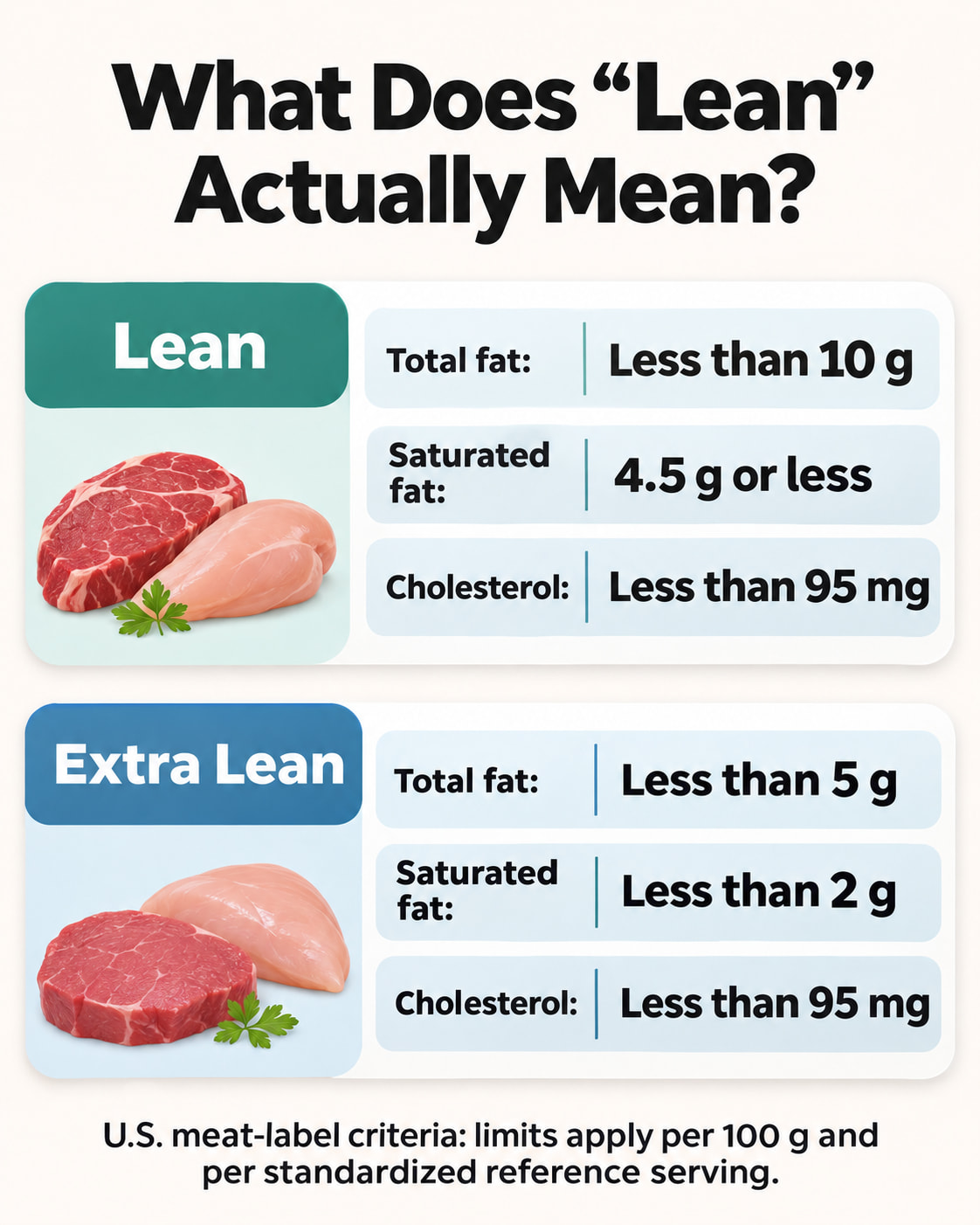
For individual meat products, U.S. labeling regulations set these limits:
| Label claim | Total fat | Saturated fat | Cholesterol |
|---|---|---|---|
| Lean | Less than 10 g | 4.5 g or less | Less than 95 mg |
| Extra lean | Less than 5 g | Less than 2 g | Less than 95 mg |
The product must meet these limits both per 100 grams and per standardized reference amount customarily consumed. That reference amount is a regulatory measure—not whatever portion someone happens to put on a plate.
These meat-labeling thresholds are not a universal test for yogurt, lentils, or every other protein-containing food. For everyday shopping, use the broader idea: look for foods that deliver useful amounts of protein without large amounts of fat, while considering the rest of their nutritional value.
12 Protein Foods and How to Choose Leaner Options
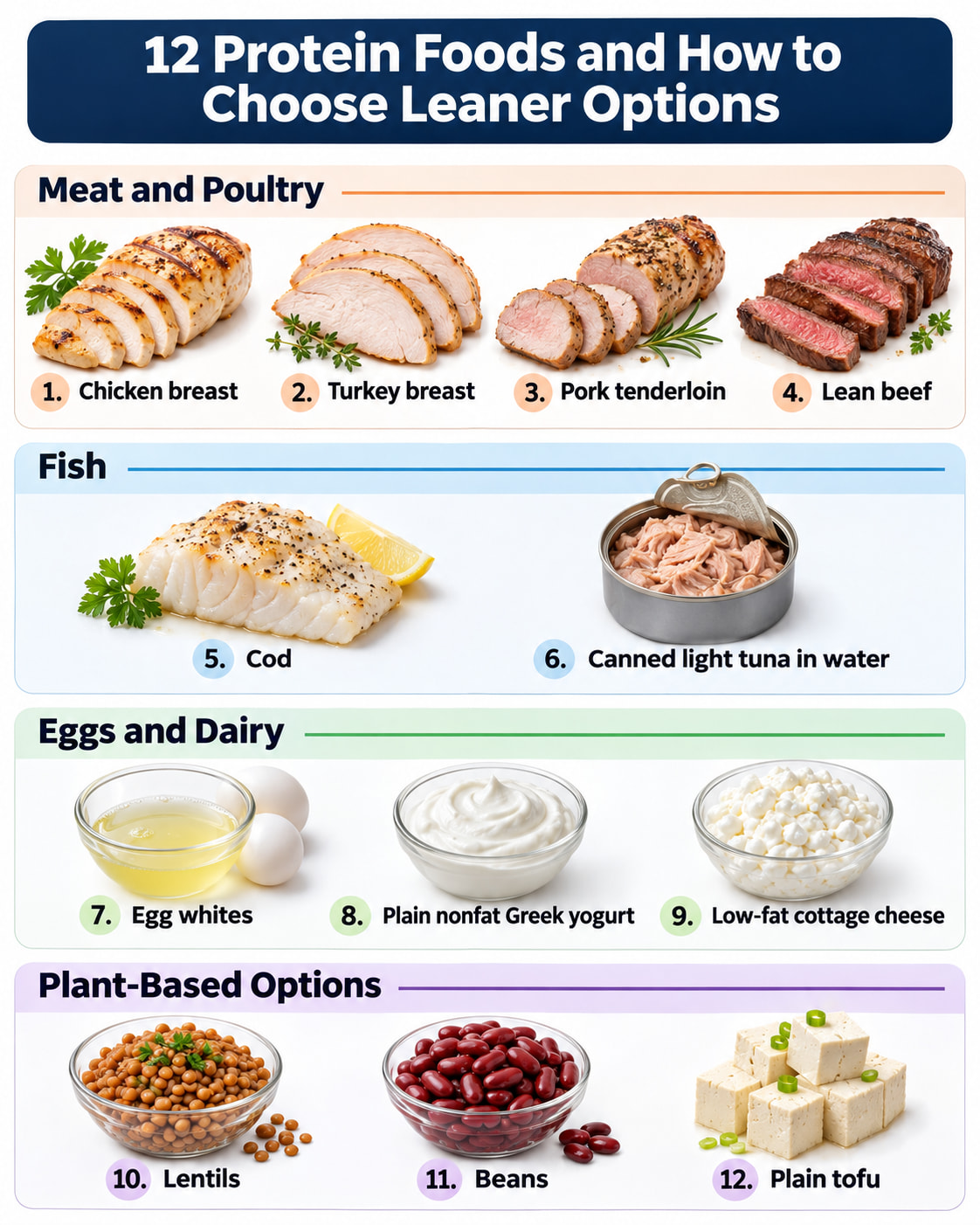
The following foods offer a mix of animal and plant choices. This is not a ranking, and equal portions do not necessarily contain equal amounts of protein.
Meat and Poultry
The American Heart Association recommends skinless poultry and lean, unprocessed meat. For beef and pork, names such as “round,” “loin,” and “sirloin” can help identify leaner cuts, although the amount of visible fat still matters.
| Food | What to choose | A practical way to use it |
|---|---|---|
| 1. Chicken breast | Skinless, unbreaded breast rather than breaded pieces or chicken served with a rich sauce. | Roast extra portions and slice them into sandwiches, salads, or grain bowls. |
| 2. Turkey breast | Plain, skinless breast. Do not assume turkey sausage or deli turkey has the same nutritional profile. | Use leftover roasted turkey in wraps or vegetable soup. |
| 3. Pork tenderloin | A trimmed tenderloin with visible exterior fat removed. | Roast with herbs, then slice and serve with vegetables and a grain. |
| 4. Lean beef | Cuts such as round or top sirloin; compare labels and trim visible fat. | Slice thinly for a vegetable stir-fry or use in a bean-and-beef chili. |
A lean cut and a processed meat are different considerations. Deli meats and sausages—including versions made from poultry—can contain substantial salt. The NHS’s meat guidance distinguishes these products from plain meat and recommends limiting processed meat.
Fish
White fish such as cod is naturally low in fat. Preparation makes a difference: the NHS notes that frying, particularly with batter, increases a fish dish’s fat content.
| Food | What to choose | A practical way to use it |
|---|---|---|
| 5. Cod | Plain fresh or frozen fillets, without breading or a butter-heavy sauce. | Bake with lemon and herbs, or poach in a tomato-based sauce. |
| 6. Canned light tuna in water | Water-packed tuna, drained before serving. Compare sodium on the labels. | Combine with white beans, chopped vegetables, and a lemon dressing. |
USDA’s reference entry for canned light tuna in water contains approximately 19.4 grams of protein and 1 gram of fat per 100 grams of drained tuna. Individual products may differ.
Keep mercury guidance in mind. The FDA/EPA fish-choice chart lists cod and canned light tuna, including skipjack, as “Best Choices” for lower mercury. Albacore, or white tuna, is in the “Good Choices” category, which has more restrictive frequency guidance. People who might become pregnant, are pregnant or breastfeeding, and parents choosing fish for children should follow the chart’s portion and frequency advice.
Eggs and Dairy
Egg whites and lower-fat dairy offer alternatives to meat and fish. Canada’s Food Guide recommends choosing unsweetened lower-fat yogurt and lower-fat, lower-sodium cheeses.
| Food | What to choose | A practical way to use it |
|---|---|---|
| 7. Egg whites | Separated egg whites or a carton labeled 100% egg whites. | Cook into a vegetable scramble or combine with a whole egg in an omelet. |
| 8. Plain nonfat Greek yogurt | Plain, nonfat yogurt; check protein and added sugars on the actual product. | Serve with fruit and oats, or stir with herbs for a savory dip. |
| 9. Low-fat cottage cheese | Check the milk-fat percentage and compare sodium between products. | Pair with fruit, spread on toast, or serve with tomatoes and pepper. |
For an example of how to read an egg-white label, Eggland’s Best lists 5 grams of protein and 0 grams of fat per 3 tablespoons, or 46 grams. Those are product-specific serving values, not amounts for an entire carton.
Plant-Based Options
Beans and lentils are protein foods even though they also contain carbohydrate and fiber. Tofu deserves a qualification: it can be relatively low in saturated fat without being especially low in total fat. USDA’s food-composition records illustrate those differences in the comparison below.
| Food | What to choose | A practical way to use it |
|---|---|---|
| 10. Lentils | Plain cooked lentils, or canned versions with less sodium. | Add to soup, use in a grain bowl, or replace some ground meat in a sauce. |
| 11. Beans | Black, kidney, or other beans without substantial added fat. Choose lower-sodium canned options, or drain and rinse them. | Make bean tacos, chili, or a bean-and-vegetable salad. |
| 12. Plain tofu | Compare labels because protein and fat vary by product. Choose plain rather than fried or breaded tofu. | Bake cubes, add to soup, or scramble with vegetables. |
Draining and rinsing canned beans can reduce sodium. Health Canada’s protein-food guidance also recommends comparing labels on soy products rather than assuming every plant-based product has the same nutritional qualities.
How Much Protein Do These Foods Provide?
“Lower in fat” and “more concentrated in protein” are separate characteristics. Comparing the same food weight makes that easier to see.
The following rounded values come from USDA FoodData Central. Each row represents 100 grams—about 3.5 ounces—of the specified food. This is a comparison amount, not a recommended portion.
| Food and preparation | Protein | Total fat |
|---|---|---|
| Chicken breast, meat only, roasted | 31.0 g | 3.6 g |
| Lentils, boiled without salt | 9.0 g | 0.4 g |
| Firm tofu, prepared with calcium sulfate, before cooking | 17.3 g | 8.7 g |
Source: USDA SR Legacy food-composition records published in FoodData Central in 2019. Values are reference averages, not guarantees for every product or recipe.
Chicken provides more protein than the same weight of cooked lentils, but lentils contribute other nutrients, including about 7.9 grams of fiber per 100 grams. A cup of cooked lentils, approximately 198 grams in this USDA record, provides about 18 grams of protein. Their carbohydrate content does not prevent them from being a useful protein source.
The tofu example contains more total fat than either chicken or lentils, but only about 1.3 grams of saturated fat per 100 grams; most of its fat is unsaturated. That is why describing all tofu as “very low-fat” would be misleading, even though it can fit a lower-saturated-fat eating pattern.
Also remember that 100 grams of a protein food is not 100 grams of protein. The food’s weight includes water, fat, carbohydrate, and other components.
How to Compare Protein Foods at the Store
You do not need a rigid protein-to-fat formula. A few label checks are more useful.
Start with the serving size. Compare similar foods using the same amount, or adjust for differences. A yogurt label based on a small container cannot be compared directly with one based on a larger serving. The FDA explains that labeled serving sizes reflect typical consumption; they are not recommendations for how much you personally should eat.
Read protein, total fat, and saturated fat together. Then check sodium and added sugars where relevant. On U.S. labels, the FDA’s general guide considers 5% Daily Value or less low and 20% or more high for a nutrient per serving. These benchmarks help interpret saturated fat or sodium, but they do not define a food as lean.
Understand ground-meat percentages. “93% lean/7% fat” is a lean-to-fat statement—not a claim that the product contains 93% protein. U.S. rules require the fat percentage to accompany the lean percentage on these products. Still check the Nutrition Facts label for protein and saturated fat.
Finally, look beyond the headline on the package. A food can be low in fat yet contain considerable sodium or added sugar. The American Heart Association recommends considering all three when comparing packaged foods.
How Preparation Changes the Meal
The starting ingredient is only part of the picture. Chicken breast baked with herbs is different from the same breast breaded, fried, and covered in a creamy sauce.
To limit added fat, try baking, roasting, poaching, or grilling. Trim visible meat fat and remove poultry skin. For flavor, use lemon, herbs, spices, garlic, or salsa rather than relying entirely on butter or gravy. These approaches follow Health Canada’s preparation guidance.
You do not have to eliminate cooking oil. The American Heart Association recommends replacing sources of saturated fat with unsaturated fats, such as olive or canola oil. Using some oil to cook vegetables or make a dressing is different from assuming that every meal must be fat-free.
For a meal you can repeat easily, choose a protein, add vegetables or fruit, and include a grain or another accompaniment you enjoy. Examples include a lentil-and-vegetable bowl with rice, baked cod with potatoes and green beans, or plain Greek yogurt with oats and berries.
Do All Your Protein Foods Need to Be Lean?
No. Leanness is one characteristic of a food, not a complete measure of its value.
Salmon and sardines contain more fat than white fish, but they also provide long-chain omega-3 fats. Nuts supply protein along with unsaturated fats. These foods remain part of recommended healthy eating patterns; choosing only the lowest-fat options would leave out useful variety. The NHS explains the nutritional role of oily fish, while the American Heart Association’s dietary guidance includes nuts and other plant proteins.
Choosing leaner meat or lower-fat dairy can be one way to reduce saturated fat. That matters because saturated fat can raise LDL cholesterol. But the broader goal is a balanced eating pattern—not removing every gram of fat or eating the same protein at every meal.
For your next grocery trip, choose a few protein foods you enjoy, compare equivalent portions, and think about how you will prepare them. Keeping lentils or beans in the pantry and a plain protein option in the refrigerator or freezer gives you a practical starting point without turning every meal into a calculation.
This content is for informational purposes only and not medical advice.