
Erector spinae exercises for seniors are safe, low-impact movements that focus on gently strengthening the muscles along your spine to support posture, balance, and everyday activities after age 60.
Understanding how to train these muscles correctly is important because they play a key role in standing upright, bending safely, and reducing strain during daily movements. With the right exercises, proper form, and gradual progression, older adults can support back strength without aggressive or high-risk movements.
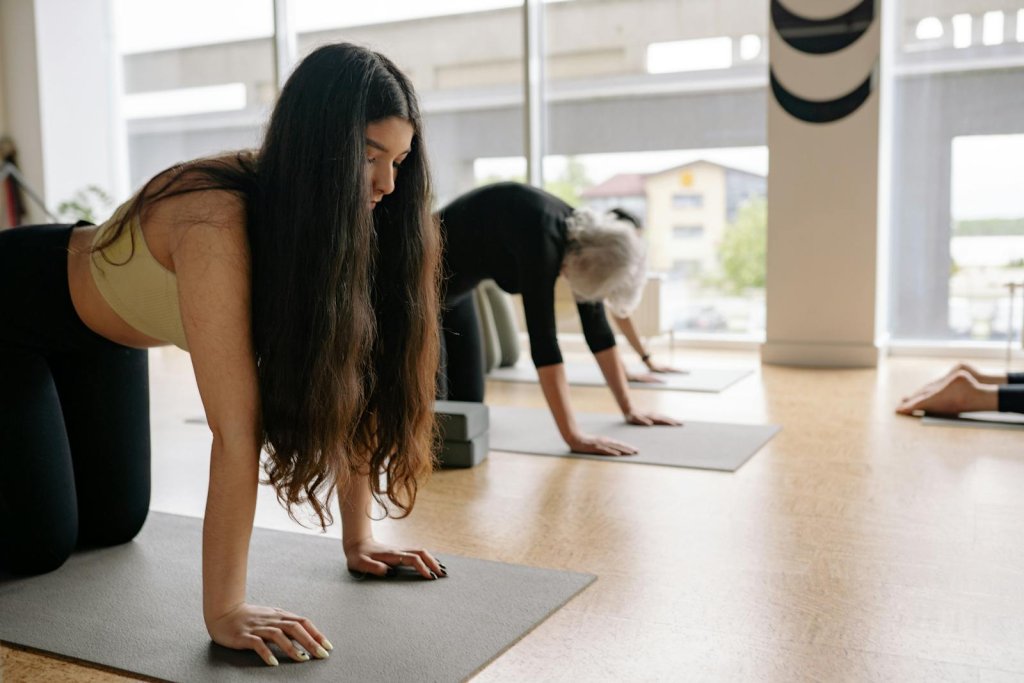
This guide explains what the erector spinae muscles do, why they matter after 60, and the safest exercises recommended by evidence-based fitness and aging guidelines.
Why Erector Spinae Exercises Matter for Seniors
As we age, spinal extensor strength and endurance tend to decline. This may contribute to rounded posture, reduced balance, and difficulty with daily tasks such as standing from a chair or carrying groceries.
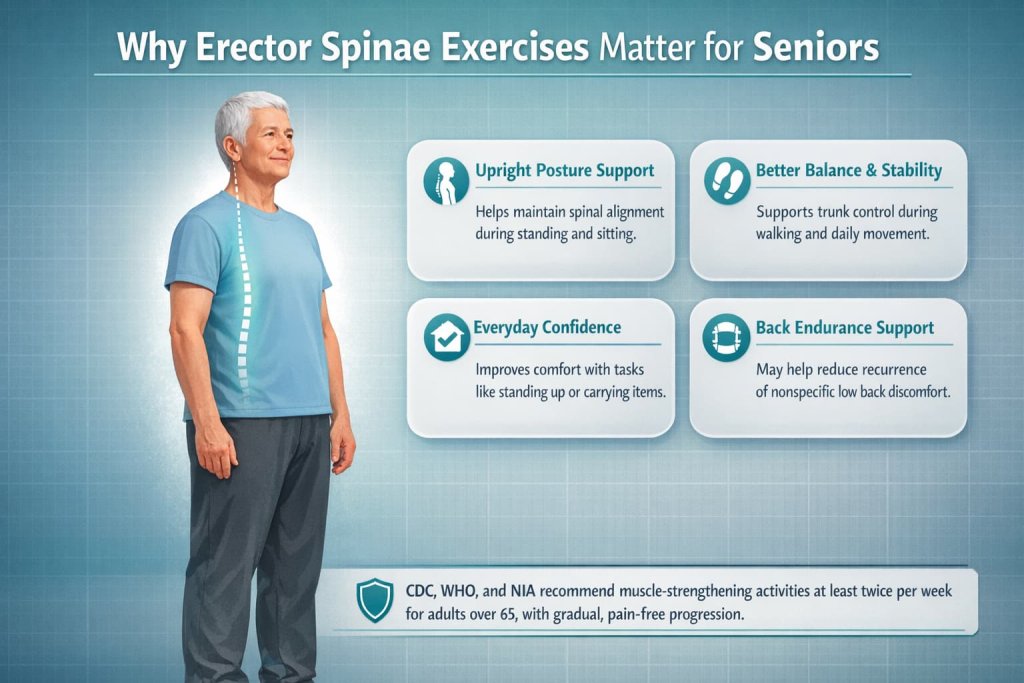
Research and public-health guidelines suggest that gentle back-strengthening exercises may help support:
- Upright posture and spinal alignment
- Trunk stability during walking and standing
- Confidence with everyday movements
- Reduced recurrence of nonspecific low back discomfort in some people
The CDC, World Health Organization (WHO), and National Institute on Aging (NIA) all recommend muscle-strengthening activities at least twice per week for adults over 65, with gradual progression and pain-free movement.
8 Best Erector Spinae Exercises for Seniors
These exercises emphasize control, posture, and low spinal load. Perform 2–3 times per week, resting at least one day between sessions.
1. Pelvic Tilt
Why it works:
Pelvic tilts gently activate the deep abdominal muscles and the lower portion of the erector spinae. This exercise improves awareness of spinal positioning and helps reduce unnecessary tension in the lower back. For seniors, it serves as a foundational movement that prepares the spine for more upright activities.
Muscles worked:
- Erector spinae (low back region)
- Transverse abdominis
- Rectus abdominis
- Pelvic stabilizing muscles
How to do it:
- Lie on your back with knees bent and feet flat on the floor
- Gently tighten your abdominal muscles
- Flatten your lower back into the floor without holding your breath
- Hold for 3–5 seconds
- Relax completely and repeat
Trainer Tip:
Think about “lengthening” the spine rather than pushing hard into the floor. The movement should feel controlled and subtle, not forceful.
2. Glute Bridge
Why it works:
The glute bridge strengthens the hips while allowing the erector spinae to work in a supportive, low-load role. Stronger glutes reduce stress on the lower back during walking, standing, and lifting, which is especially important after age 60.
Muscles worked:
- Gluteus maximus
- Erector spinae
- Hamstrings
- Core stabilizers
How to do it:
- Lie on your back with knees bent and feet hip-width apart
- Press through your heels
- Lift your hips until shoulders, hips, and knees form a straight line
- Hold briefly at the top
- Lower slowly with control
Trainer Tip:
Avoid arching your lower back at the top. Keep ribs down and imagine your hips lifting, not your spine bending.
3. Bird Dog (Quadruped Arm and Leg Lift)
Why it works:
Bird dog exercises train the erector spinae to stabilize the spine while the arms and legs move. This improves coordination, balance, and trunk control—skills that transfer directly to daily activities and fall prevention.
Muscles worked:
- Erector spinae
- Multifidus
- Gluteus maximus
- Shoulder stabilizers
- Core muscles
How to do it:
- Start on hands and knees with a neutral spine
- Slowly extend one arm forward and the opposite leg backward
- Keep hips and shoulders level
- Hold briefly, then return to start
- Switch sides
Trainer Tip:
If balance is challenging, lift only the arm or only the leg until control improves.
4. Standing Back Extension Isometric
Why it works:
This upright isometric exercise builds endurance in the erector spinae without excessive movement. It reinforces posture awareness and helps seniors maintain upright alignment during standing and walking.
Muscles worked:
- Erector spinae
- Gluteal muscles
- Core stabilizers
How to do it:
- Stand tall with feet hip-width apart
- Place hands on hips or thighs
- Gently press hips forward while staying upright
- Lightly engage back muscles
- Hold 5–10 seconds, then relax
Trainer Tip:
This is not a deep backbend. Think “tall posture,” not leaning backward.
5. Cat–Cow (Spinal Mobility)
Why it works:
Cat–cow improves controlled spinal movement and helps the erector spinae learn to lengthen and shorten smoothly. This can reduce stiffness and prepare the back for strengthening exercises.
Muscles worked:
- Erector spinae
- Abdominal muscles
- Spinal stabilizers
- Neck and upper-back muscles
How to do it:
- Start on hands and knees
- Slowly round your back upward (cat)
- Slowly arch your back gently (cow)
- Move within a comfortable, pain-free range
Trainer Tip:
Match movement with slow breathing to keep the motion relaxed and controlled.
6. Floor Back Extension (Modified Prone Lift)
Why it works:
This gentle prone exercise directly activates the erector spinae with minimal load. It is often included in evidence-based older-adult strength programs to support spinal endurance.
Muscles worked:
- Erector spinae
- Gluteus maximus
- Upper-back stabilizers
How to do it:
- Lie face down with forehead resting on your hands
- Gently lift your chest a few inches off the floor
- Keep neck in a neutral position
- Lower slowly and relax
Trainer Tip:
Lift only as high as comfortable. Even a very small lift provides benefit.
7. Wall-Supported Hip Hinge
Why it works:
This exercise teaches safe bending mechanics by shifting movement to the hips while the erector spinae maintain spinal stability. It reinforces proper posture for daily tasks like picking up objects.
Muscles worked:
- Erector spinae
- Gluteus maximus
- Hamstrings
- Core stabilizers
How to do it:
- Stand facing away from a wall
- Push hips backward until they lightly touch the wall
- Keep spine neutral and chest lifted
- Return to standing
Trainer Tip:
Imagine closing a door with your hips rather than bending through your back.
8. Resistance Band Row
Why it works:
Resistance band rows strengthen the upper back, which works together with the erector spinae to support upright posture. Improved upper-back strength reduces forward rounding and spinal strain.
Muscles worked:
- Erector spinae (postural support)
- Rhomboids
- Middle trapezius
- Rear deltoids
How to do it:
- Sit or stand holding a resistance band
- Pull elbows backward while squeezing shoulder blades
- Keep chest lifted and spine tall
- Return slowly with control
Trainer Tip:
Focus on posture throughout the movement—if shoulders rise toward the ears, reduce resistance.
How Often Seniors Should Do These Exercises
For most adults over 60, erector spinae exercises are best performed consistently but conservatively. Public-health and aging-fitness guidelines recommend muscle-strengthening activities on nonconsecutive days.
A general guideline for seniors includes:
- Frequency: 2–3 days per week
- Sets: 1–2 sets per exercise
- Repetitions: 8–12 slow, controlled repetitions
- Rest: At least one day of rest between sessions
Balance, posture awareness, and gentle mobility exercises can be performed more frequently if they remain comfortable and fatigue-free. Progress gradually, focusing on control and form rather than increasing difficulty quickly.
Safety Guidelines Before Starting Back Exercises After 60
Before beginning erector spinae exercises for seniors, keep these safety principles in mind:
- Move slowly and avoid jerky motions
- Keep exercises pain-free or very low discomfort
- Stop if pain travels down the leg or causes numbness
- Avoid deep spinal flexion if you have osteoporosis unless cleared by a clinician
- Use support (chair, wall, or floor) when needed
If you have recent injury, severe pain, or balance concerns, consult a healthcare professional first.
Who Should Be Cautious or Talk to a Doctor First
While erector spinae exercises for seniors are generally low impact, some individuals should use extra caution or seek medical guidance before starting a new back-strengthening routine.
Talk to a healthcare professional first if you have:
- Diagnosed osteoporosis or low bone density, especially with a history of spinal compression fractures
- Recent back, hip, or spinal surgery
- Severe or worsening back pain that does not improve with rest
- Pain, numbness, tingling, or weakness radiating into one or both legs
- Balance disorders or a high risk of falls
- Any condition where your doctor has advised limiting spinal movement
If you are unsure, beginning with supervised or modified exercises can help ensure movements remain safe and appropriate.
When to Stop Exercises and Seek Medical Advice
Stop exercising and seek medical evaluation if you experience any of the following symptoms during or after back exercises:
- Sharp, sudden, or worsening back pain
- Pain that travels down the leg, especially below the knee
- New numbness, tingling, or muscle weakness
- Dizziness, lightheadedness, or loss of balance
- Changes in bowel or bladder control
These symptoms may indicate a condition that requires professional assessment. Exercise should never be continued through significant pain or neurological symptoms.
Frequently Asked Questions
Are erector spinae exercises safe for seniors?
Yes, when exercises are low-impact, controlled, and performed with proper form.
Can seniors with osteoporosis do back exercises?
Often yes, but spinal flexion should be limited and medical guidance is recommended.
Do these exercises help posture?
They may help support posture by improving spinal extensor endurance.
How long before results are noticeable?
Many seniors notice improved comfort and posture awareness within 4–6 weeks.
Can these exercises reduce back pain?
They may help reduce recurrence of nonspecific low back discomfort in some individuals.
Should seniors use weights?
Most beginners should start with bodyweight or bands only.
Conclusion
Erector spinae exercises for seniors focus on safe, controlled movements that support posture, balance, and confidence after age 60. By choosing gentle exercises, progressing gradually, and following evidence-based guidelines, older adults can strengthen their backs while minimizing risk.
If you’re new to exercise or managing a health condition, start slowly and consult a qualified professional for guidance.
References
- Older Adult Activity: An Overview (Adults 65+) — Centers for Disease Control and Prevention (CDC).
- Exercise and Physical Activity for Older Adults (PDF) — National Institute on Aging (NIA/NIH).
- Exercise and physical activity (Healthy aging resource hub) — National Institute on Aging (NIA/NIH).
- WHO Guidelines on Physical Activity and Sedentary Behaviour (PDF) — World Health Organization (WHO).
- Growing Stronger: Strength Training for Older Adults (PDF) — CDC.
- Low Back Pain (red flags and when to seek care) — American Academy of Orthopaedic Surgeons (AAOS).
- Back pain: When to see a doctor — Mayo Clinic.
- Protecting Your Spine (osteoporosis-safe movement; mentions erector spinae) — Bone Health & Osteoporosis Foundation (BHOF).