
Functional exercises for seniors are movements that help older adults perform everyday activities—such as standing up, walking, climbing stairs, reaching, and carrying objects—more safely and efficiently. These exercises are important because daily strength, balance, and coordination directly affect independence, confidence, and overall quality of life as we age.
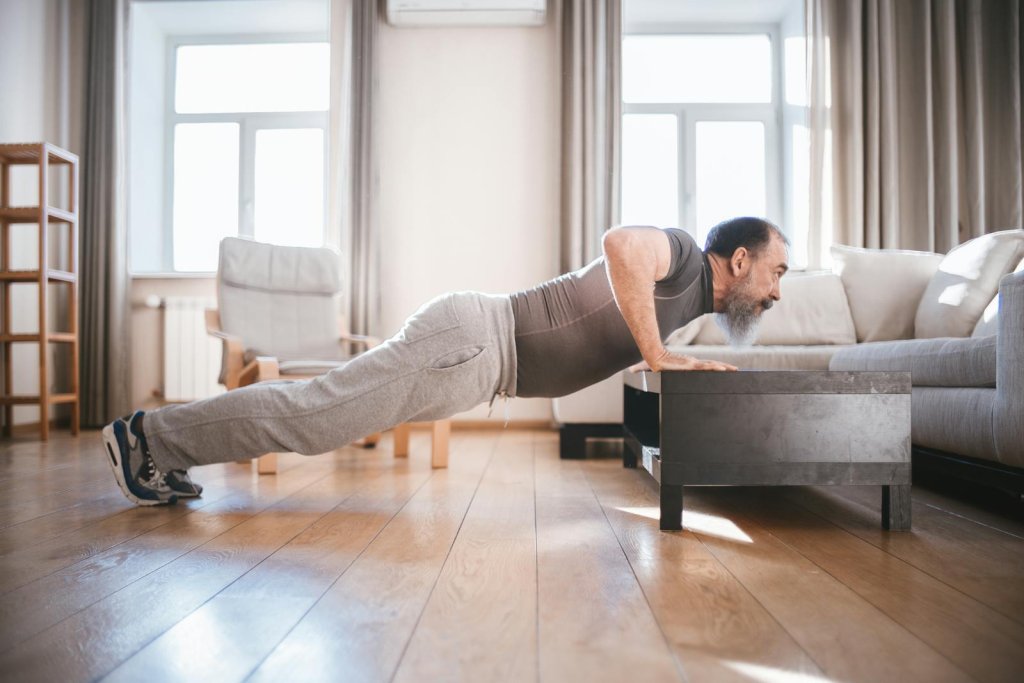
Unlike traditional workouts that focus on isolated muscles, functional exercises train the body to move as a coordinated unit, which makes them especially practical for seniors.
What Are Functional Exercises for Seniors?
Functional exercises for seniors focus on real-world movement patterns that are used repeatedly throughout the day. Instead of training muscles in isolation, these exercises teach multiple muscles to work together.
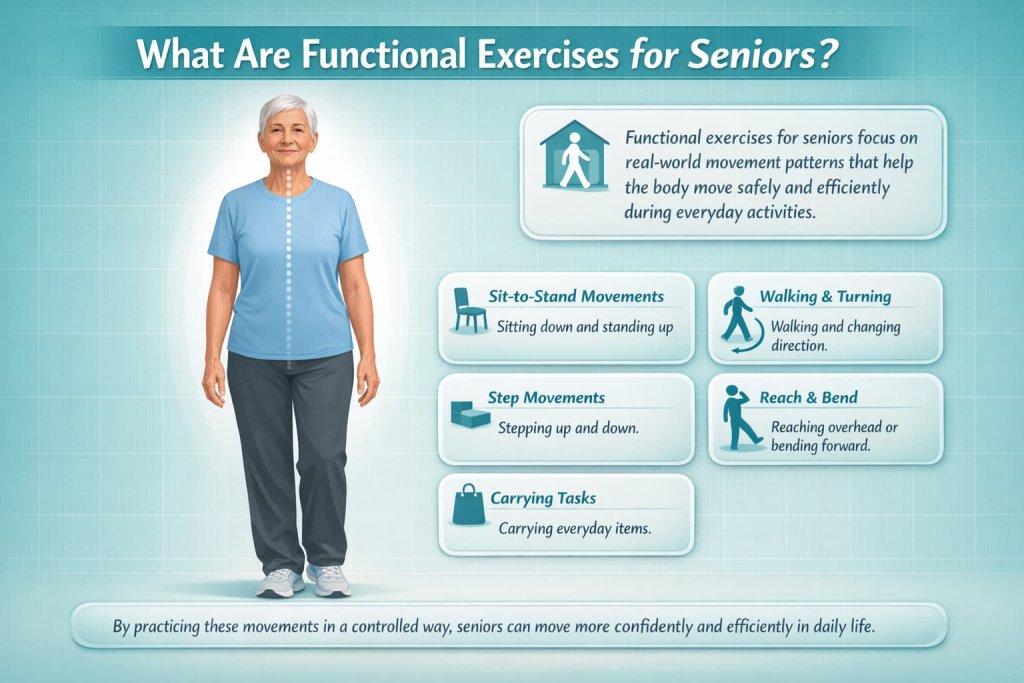
Common daily movements trained through functional exercise include:
- Sitting down and standing up
- Walking and turning
- Stepping up and down
- Reaching overhead or bending forward
- Carrying everyday items
By practicing these movements in a controlled way, seniors can improve how confidently and efficiently they move in daily life.
Why Functional Exercises Matter for Older Adults
Regular functional exercise may help support:
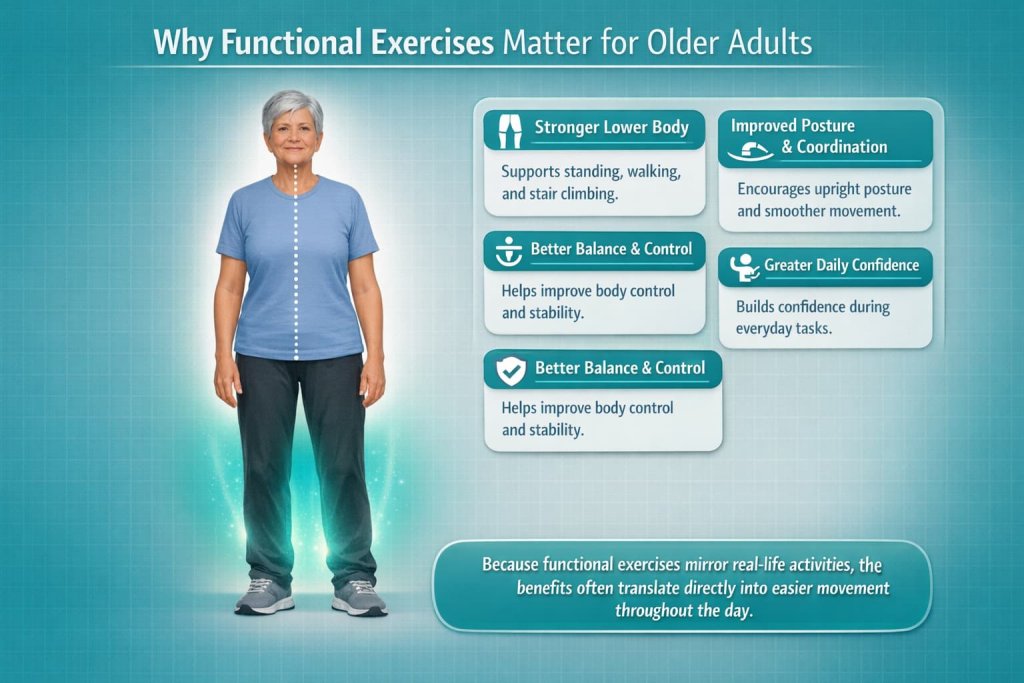
- Stronger legs for standing, walking, and stairs
- Better balance and body control
- Improved posture and movement coordination
- Increased confidence during daily tasks
- Reduced fear of falling
Because these exercises reflect real-life activities, the benefits often translate directly into easier movement throughout the day.
10 Best Functional Exercises for Seniors
Each exercise below trains a movement pattern commonly used in daily life. All exercises can be modified using support as needed.
1. Chair Sit-to-Stand
Why it works:
This exercise directly trains one of the most important daily movements for seniors—getting up from chairs, beds, and toilets. Improving this pattern supports independence and reduces reliance on assistance.
Muscles worked:
Quadriceps, glutes, core, and supporting hip muscles.
How to do it:
- Sit on a sturdy chair with feet flat and hip-width apart
- Keep your chest lifted and lean slightly forward
- Press through your heels to stand up fully
- Slowly bend your hips and knees to sit back down with control
Trainer Tip:
If standing feels difficult, use armrests or place your hands on your thighs for light assistance rather than pulling with the arms.
2. Supported Step-Ups
Why it works:
Step-ups strengthen the muscles needed for climbing stairs, stepping onto curbs, and navigating uneven surfaces, which are common challenges for seniors.
Muscles worked:
Glutes, quadriceps, calves, and stabilizing core muscles.
How to do it:
- Stand facing a low step or bottom stair
- Place one foot fully on the step
- Press through the heel to stand tall
- Step back down carefully and switch sides
Trainer Tip:
Start with the lowest possible step height and always use a railing or wall for balance support.
3. Wall or Incline Push-Ups
Why it works:
This exercise builds pushing strength used in daily activities such as opening doors, pushing up from surfaces, and maintaining upper-body stability.
Muscles worked:
Chest, shoulders, triceps, and core.
How to do it:
- Place hands on a wall or sturdy counter at chest height
- Step feet back slightly to create a gentle incline
- Bend elbows to bring your chest toward your hands
- Push back to the starting position with control
Trainer Tip:
The closer your feet are to the wall, the easier the exercise will be—adjust distance as needed.
4. Resistance Band Row
Why it works:
Rows strengthen the muscles that support upright posture and pulling movements, helping counter rounded shoulders from prolonged sitting.
Muscles worked:
Upper back, rear shoulders, and arms.
How to do it:
- Hold a resistance band with both hands, arms extended forward
- Pull the band toward your torso by bending your elbows
- Squeeze your shoulder blades together gently
- Slowly return to the starting position
Trainer Tip:
Keep your shoulders relaxed and down—avoid shrugging as you pull.
5. Supported Hip Hinge
Why it works:
This movement teaches safe bending mechanics for picking up objects from the floor while protecting the lower back.
Muscles worked:
Glutes, hamstrings, and lower back stabilizers.
How to do it:
- Stand holding a chair or countertop for support
- Keep a slight bend in your knees
- Push your hips backward while keeping your chest lifted
- Return to standing by squeezing your glutes
Trainer Tip:
Think “hips back, not shoulders down” to maintain proper form.
6. Farmer’s Carry
Why it works:
This exercise mimics carrying groceries, laundry, or bags, helping improve grip strength, posture, and full-body stability.
Muscles worked:
Grip muscles, core, shoulders, legs, and upper back.
How to do it:
- Hold light weights or household bags in each hand
- Stand tall with shoulders relaxed
- Walk slowly and steadily for a short distance
- Set the weights down carefully
Trainer Tip:
If balance is a concern, carry weight in one hand at a time while using the other hand for support.
7. Heel Raises
Why it works:
Heel raises strengthen the calves and ankles, which are essential for walking, balance, and preventing trips or falls.
Muscles worked:
Calves and ankle stabilizers.
How to do it:
- Stand holding a chair or wall for balance
- Slowly rise up onto your toes
- Pause briefly at the top
- Lower your heels back down with control
Trainer Tip:
Perform the movement slowly to maximize muscle engagement and stability.
8. Standing Hip Abduction
Why it works:
This exercise strengthens the side hip muscles that help stabilize the pelvis during walking and standing on one leg.
Muscles worked:
Hip abductors and glute muscles.
How to do it:
- Stand upright while holding a chair for support
- Lift one leg out to the side without leaning
- Lower the leg slowly
- Switch sides after completing repetitions
Trainer Tip:
Keep your torso upright and avoid tilting to the side as the leg lifts.
9. Marching in Place
Why it works:
Marching improves coordination, balance, and leg strength, all of which support safer walking patterns.
Muscles worked:
Hip flexors, quadriceps, core, and lower-leg muscles.
How to do it:
- Stand tall with support nearby if needed
- Lift one knee toward hip height or comfortable range
- Lower the foot and switch legs
- Continue alternating at a steady pace
Trainer Tip:
Lift the knees only as high as feels comfortable—height is less important than control.
10. Tandem or Single-Leg Stand
Why it works:
This exercise directly challenges balance and body awareness, which are essential for preventing falls.
Muscles worked:
Ankles, hips, core, and postural muscles.
How to do it:
- Stand with one foot directly in front of the other or on one leg
- Keep your gaze forward and posture upright
- Hold the position for 10–30 seconds
- Switch sides
Trainer Tip:
Always perform this exercise near a wall, counter, or chair for safety.
How to Prepare for Functional Exercises as a Senior
Proper preparation helps reduce discomfort and improves movement quality. Before starting functional exercises, seniors should focus on creating a safe and supportive environment.
Key preparation steps include:
- Wearing supportive, non-slip footwear
- Exercising in a clear, clutter-free space
- Keeping a chair, wall, or countertop nearby for balance
- Beginning with gentle movements to warm up joints and muscles
Starting slowly and focusing on form helps the body adapt comfortably to functional movements.
How Often Should Seniors Do Functional Exercises?
A simple and sustainable routine typically includes:
- Functional strength exercises 2–3 days per week
- Balance-focused movements several days per week
- Light daily movement such as walking
Sessions can be short and do not need to be intense. Consistency and safe technique matter more than duration.
Common Mistakes Seniors Should Avoid During Functional Exercises
Avoiding common mistakes can make functional exercises safer and more effective. Many issues arise not from the exercises themselves, but from how they are performed.
Common mistakes include:
- Moving too quickly or using momentum
- Skipping balance support when needed
- Holding the breath during movement
- Using weights that are too heavy
- Ignoring discomfort or fatigue
Functional exercises should always feel controlled and manageable. Quality of movement is more important than repetitions or resistance.
Is Functional Exercise Safe for Seniors?
Functional exercise is generally safe for seniors when movements are performed slowly, with proper support, and within a comfortable range of motion. These exercises are designed to mirror everyday activities, which makes them practical and easier to control compared to high-impact or complex workouts.
Safety depends on:
- Choosing appropriate exercise variations
- Using stable support such as chairs or walls
- Avoiding rushed or jerky movements
- Progressing gradually over time
Functional exercises are not about intensity or speed. The goal is controlled, confident movement that supports daily independence.
When to Modify or Stop Functional Exercises
Functional exercises should always be adjusted based on how the body feels on a given day. Seniors should modify or stop an exercise if movement becomes uncomfortable or unstable.
Situations where modification or stopping is appropriate include:
- Sharp or sudden pain
- Dizziness or lightheadedness
- Loss of balance or control
- Excessive fatigue or shortness of breath
Reducing range of motion, slowing the pace, or adding more support are simple ways to modify exercises. If symptoms persist, professional guidance may be appropriate.
Safety Guidelines Before Starting Functional Exercises
- Warm up with gentle movement
- Use stable support such as chairs or walls
- Move within a comfortable, pain-free range
- Stop if you feel dizziness or sharp discomfort
- Progress slowly over time
Frequently Asked Questions
Are functional exercises safe for seniors?
Yes, when performed with proper support, slow pacing, and good form.
How long should a functional exercise session last?
Even 15–30 minutes can be effective when done consistently.
Can functional exercises improve balance?
Yes. Many functional movements naturally challenge balance and coordination.
Do seniors need gym equipment?
No. Most exercises use body weight, chairs, or light resistance.
Can beginners start functional exercises?
Yes. These exercises are ideal for beginners when properly modified.
Should functional exercises replace walking?
No. They work best alongside regular walking or light cardio.
Conclusion
Functional exercises for seniors are one of the most practical ways to stay strong, mobile, and independent. By training movements used in everyday life, these exercises help support safer mobility, better balance, and long-term confidence. Start slowly, stay consistent, and focus on quality movement.
References
- WHO Guidelines on Physical Activity and Sedentary Behaviour (2020) — World Health Organization
- Physical Activity Guidelines for Americans, 2nd edition (2018) — U.S. Department of Health and Human Services
- Physical Activity for Older Adults — CDC
- Exercise and Physical Activity — National Institute on Aging
- Physical Activity and Public Health in Older Adults (2007) — Circulation (DOI)
- Home-Based Exercise Program to Prevent Falls in Elderly Women (1997) — BMJ (DOI)
- Timed “Up & Go” Test: Basic Functional Mobility (1991) — Journal of the American Geriatrics Society (DOI)
- 30-Second Chair Stand Test (1999) — Research Quarterly for Exercise and Sport (DOI)