
Piriformis exercises for seniors are gentle stretches and light strengthening movements designed to improve hip mobility and reduce sciatic-like discomfort without stressing aging joints. Understanding how to perform these exercises safely matters because piriformis tightness can limit walking comfort, sitting tolerance, and daily independence as we age.
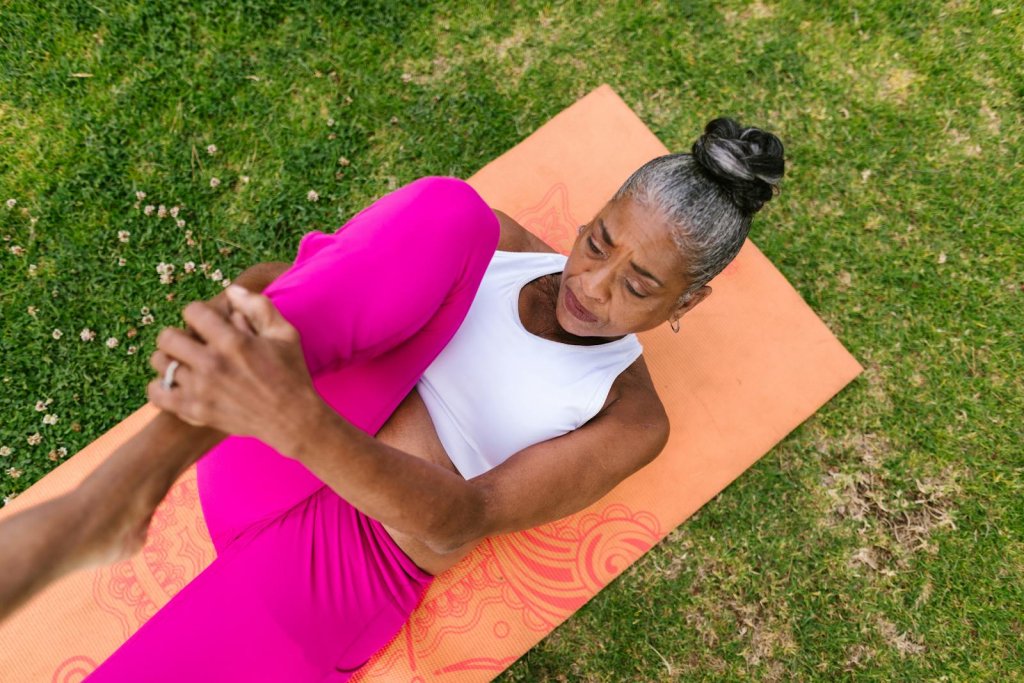
This guide explains what piriformis exercises are, why they matter for older adults, and how to perform 8 senior-friendly piriformis exercises using simple, low-impact techniques.
What Is the Piriformis Muscle?
The piriformis is a small, deep muscle located in the buttock region. It helps rotate the hip outward and stabilize the pelvis during walking and standing. When this muscle becomes tight or overworked, it may irritate nearby nerves, sometimes contributing to buttock or leg discomfort.
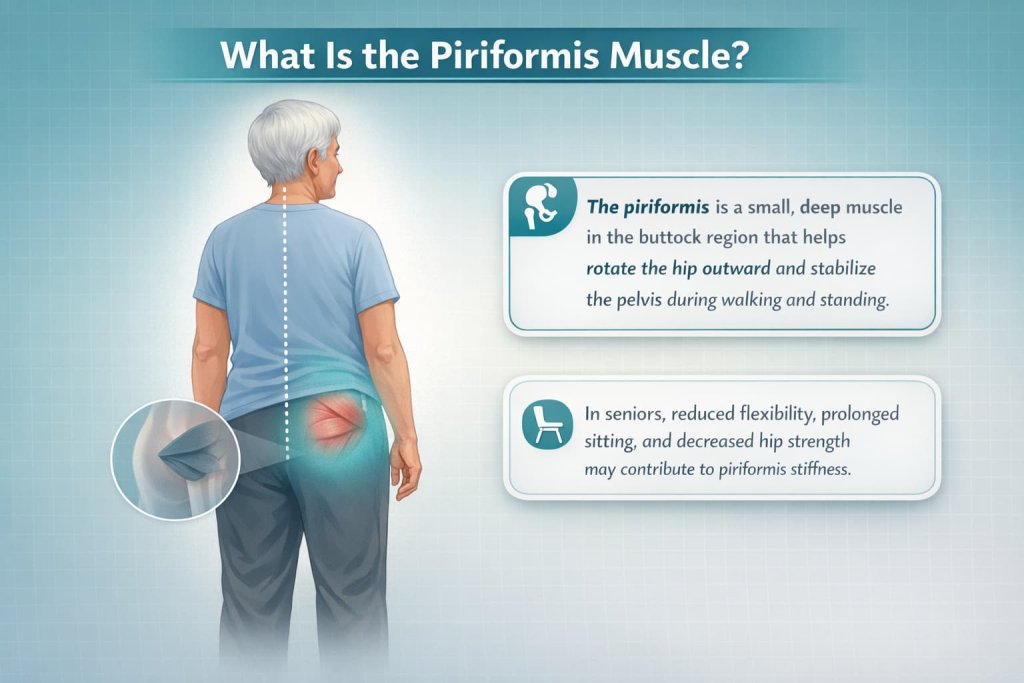
For seniors, age-related changes such as reduced flexibility, prolonged sitting, and decreased hip strength can increase piriformis stiffness. Gentle, controlled exercises are often used to support hip movement and comfort.
8 Best Piriformis Exercises for Seniors
These gentle piriformis exercises are designed to support hip mobility, sitting comfort, and daily movement in older adults. Each exercise focuses on controlled, pain-free motion using positions that are easy to modify for balance and joint comfort.
1. Seated Piriformis Stretch
Why it works:
This stretch gently places the hip into external rotation, which lengthens the piriformis without loading the spine or knees. Sitting support makes it especially suitable for seniors who may find floor positions uncomfortable or unsafe.
How to do it:
- Sit tall in a sturdy chair with both feet flat on the floor
- Place one ankle over the opposite knee, stopping before discomfort
- Keep your chest lifted and hinge forward slightly from the hips
- Stop when you feel a mild, comfortable stretch in the buttock
- Hold for 20–30 seconds, then switch sides
Trainer Tip:
If crossing the ankle feels uncomfortable, simply place the foot lightly on the shin instead of the knee.
2. Figure-4 Stretch (Supine)
Why it works:
Lying on your back removes balance demands and allows full control of stretch depth. This makes it one of the safest piriformis stretches for seniors with limited mobility or balance concerns.
How to do it:
- Lie comfortably on your back with knees bent
- Cross one ankle over the opposite thigh to form a “figure 4”
- Gently draw the supporting leg toward your chest
- Hold the stretch without forcing the movement
- Maintain for 20–30 seconds on each side
Trainer Tip:
Keep your head and shoulders relaxed on the floor to avoid unnecessary neck tension.
3. Lying Knee-to-Chest Stretch
Why it works:
This movement reduces deep hip and buttock tension while keeping the spine in a neutral, supported position. It also promotes gentle hip flexion, which can feel relieving after prolonged sitting.
How to do it:
- Lie on your back with both knees bent
- Slowly bring one knee toward your chest
- Hold behind the thigh or shin without pulling forcefully
- Keep the movement slow and relaxed
- Switch sides after 20–30 seconds
Trainer Tip:
If your lower back feels strained, place the opposite foot flat on the floor instead of keeping it extended.
4. Seated Hip External Rotation
Why it works:
This exercise builds active control of hip rotation rather than relying only on passive stretching. Strengthening these muscles helps reduce strain on the piriformis during walking and daily movement.
How to do it:
- Sit upright in a chair with feet flat on the floor
- Slowly rotate one knee outward while keeping your hips steady
- Pause briefly at the end of the movement
- Return to center with control
- Perform 8–10 repetitions per side
Trainer Tip:
Imagine moving through thick water—slow, controlled motion improves muscle engagement and safety.
5. Standing Piriformis Stretch (Supported)
Why it works:
This stretch gently loads the hip while introducing light balance work. When performed with support, it can help seniors maintain hip mobility needed for daily standing activities.
How to do it:
- Stand near a chair or counter and hold it for support
- Place one ankle lightly across the opposite knee (only if comfortable)
- Sit the hips back slightly, keeping the chest upright
- Hold a mild stretch briefly
- Switch sides and repeat
Trainer Tip:
Safety comes first—if balance feels uncertain, return to seated or lying variations instead.
6. Side-Lying Clamshell
Why it works:
Strengthening the gluteus medius and hip rotators helps reduce compensatory overuse of the piriformis during walking and standing. This exercise supports long-term hip stability.
How to do it:
- Lie on your side with hips stacked and knees bent
- Keep feet together while slowly lifting the top knee
- Stop before the hips roll backward
- Lower the knee with control
- Perform 8–12 repetitions per side
Trainer Tip:
Small, controlled movements are more effective than lifting the knee as high as possible.
7. Gentle Hip March (Seated)
Why it works:
This movement improves hip mobility, coordination, and neuromuscular control, all of which support safer walking and transitions such as standing up from a chair.
How to do it:
- Sit tall with hands resting on the chair or thighs
- Slowly lift one knee a few inches
- Lower it back down with control
- Alternate sides
- Perform 10–12 repetitions total
Trainer Tip:
Avoid leaning backward—keep your posture upright to engage the correct muscles.
8. Short-Range Glute Bridge
Why it works:
By strengthening the glute muscles, this exercise helps reduce excess workload on the piriformis during hip extension and walking activities.
How to do it:
- Lie on your back with knees bent and feet hip-width apart
- Gently tighten your core
- Lift your hips just a few inches off the floor
- Pause briefly, then lower slowly
- Perform 8–10 controlled repetitions
Trainer Tip:
Quality matters more than height—stop lifting as soon as you feel strain in the lower back.
How Often Should Seniors Do Piriformis Exercises?
Most seniors may benefit from performing piriformis exercises 2–3 days per week, allowing rest days between sessions. Light stretches can be done more frequently if comfortable, while strengthening exercises should be spaced to allow recovery.
Common Mistakes to Avoid
- Stretching into sharp or radiating pain
- Holding the breath during movements
- Skipping support when balance is limited
- Rushing through repetitions
Benefits of Piriformis Exercises
Well-designed piriformis exercises may help support:
- Easier walking and stair climbing
- Improved sitting comfort
- Better hip rotation and balance control
- Reduced stiffness after long periods of inactivity
Public health guidance from the World Health Organization and CDC highlights that older adults benefit from regular flexibility and muscle-strengthening activities at least two days per week, performed at a comfortable intensity.
Safety Guidelines Before You Start
Before performing piriformis exercises for seniors:
- Move slowly and avoid bouncing or forcing a stretch
- Stay within a pain-free or mild-stretch range
- Use a chair, wall, or bed for support if balance is limited
- Stop if sharp pain, numbness, or worsening symptoms occur
Seniors with osteoporosis, recent hip surgery, or persistent leg pain should consider professional guidance before starting new exercises.
When to Seek Professional Guidance
Consider professional evaluation if pain worsens, spreads below the knee, or does not improve with gentle activity. A physical therapist can help determine whether piriformis-focused exercises or other hip and spine strategies are more appropriate.
FAQs About Piriformis Exercises for Seniors
Are piriformis exercises safe for seniors?
When performed gently and with support, they are commonly considered safe for most older adults.
Can piriformis exercises help with sciatica-like discomfort?
They may help support comfort when piriformis tightness contributes to symptoms, but results vary.
How long should I hold piriformis stretches?
Most seniors do well with 20–30 second holds within a pain-free range.
Should seniors stretch every day?
Light stretching can be done often, but strengthening exercises usually work best 2–3 times weekly.
Do I need equipment?
No—most piriformis exercises for seniors use chairs, the floor, or a bed.
Conclusion
Piriformis exercises for seniors offer a gentle, accessible way to support hip mobility, comfort, and daily movement confidence. By focusing on slow, controlled stretches and light strengthening, older adults can stay active while respecting joint and balance needs. Start conservatively, stay consistent, and prioritize comfort over intensity.
This content is for informational purposes only and not medical advice.
References
- Older Adult Activity: An Overview (CDC)
- What Counts as Physical Activity for Older Adults (CDC)
- Exercise and Older Adults Toolkit (National Institute on Aging)
- Exercises for Sciatica Problems (NHS) (includes piriformis syndrome video)
- Piriformis Syndrome (StatPearls) (NCBI Bookshelf/NIH)
- Deep Gluteal Syndrome: An Underestimated Cause of Posterior Hip Pain (2024, PMC)
- How Much and How Often Should People Stretch? (American Heart Association, 2024)