
Piriformis stretching exercises are gentle movements designed to help reduce deep hip tightness and ease sciatic-type discomfort by improving flexibility in the piriformis muscle.
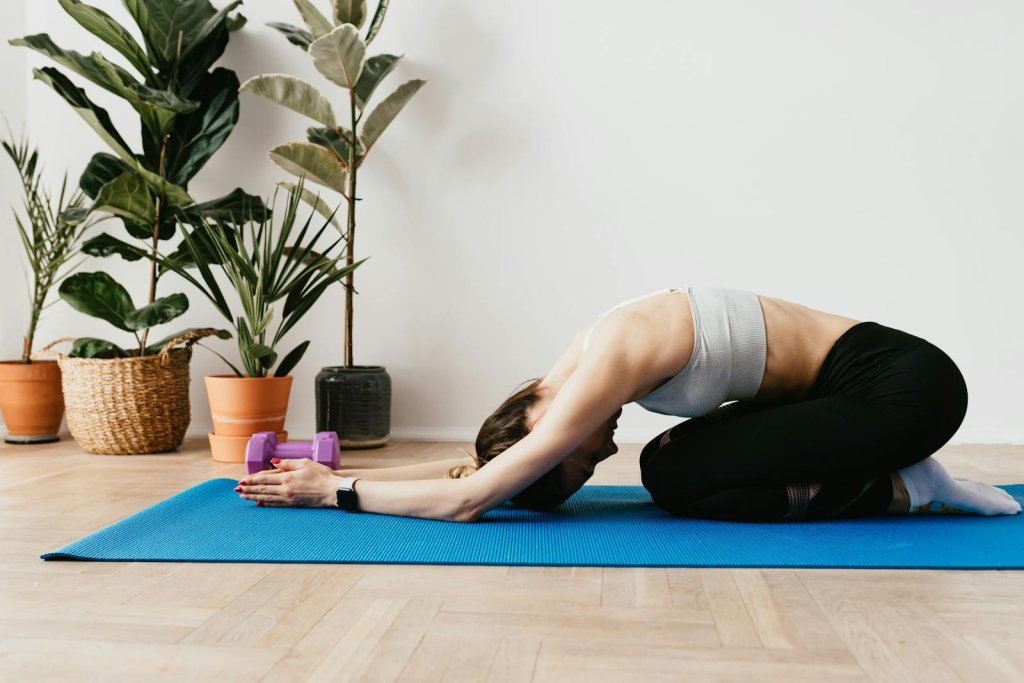
Understanding how and why to stretch this muscle matters because piriformis tightness may irritate nearby nerves, limit hip mobility, and make sitting, walking, or exercising uncomfortable. With the right approach, regular stretching can support better movement, posture, and daily comfort.
What Are Piriformis Stretching Exercises?
Piriformis stretching exercises focus on gently lengthening the piriformis muscle, a small but important muscle located deep in the buttock. This muscle helps rotate and stabilize the hip, especially during walking and sitting.
When the piriformis becomes tight or overactive, it may contribute to:
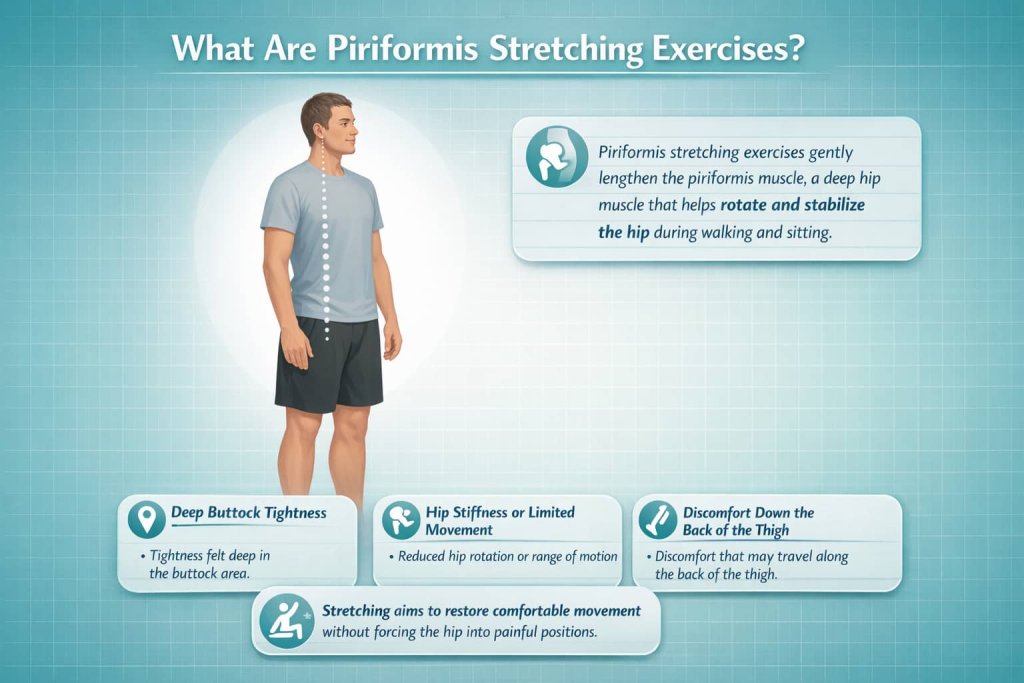
- Deep buttock tightness
- Hip stiffness or reduced range of motion
- Discomfort that may travel down the back of the thigh
Stretching aims to restore comfortable movement without forcing the hip into painful positions.
Why Piriformis Stretching Exercises Matter
Regular piriformis stretching exercises may help support:
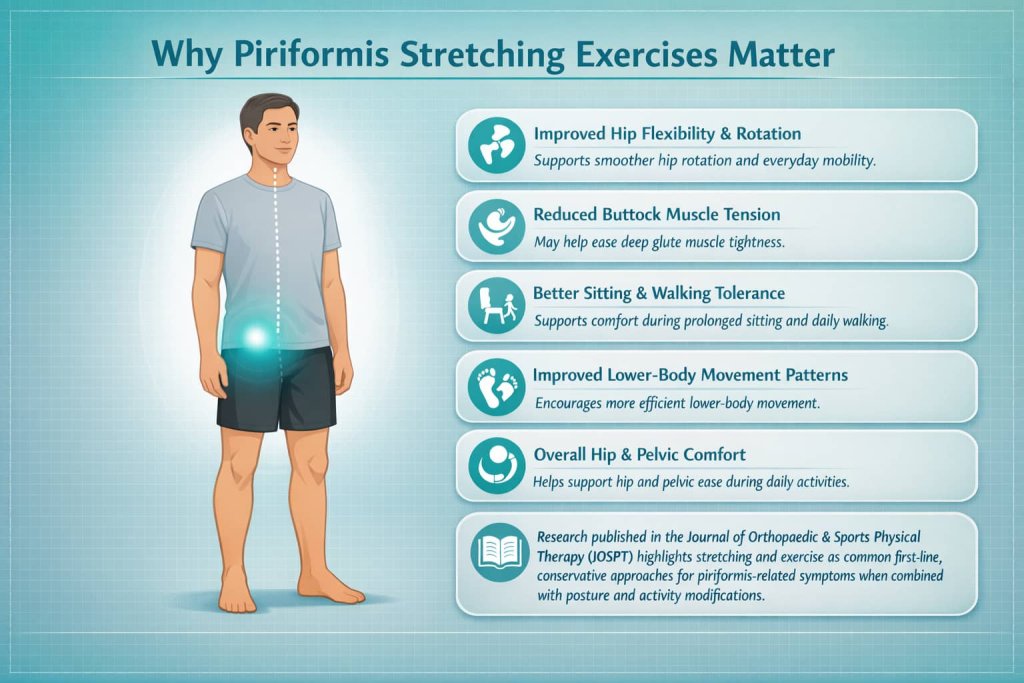
- Improved hip flexibility and rotation
- Reduced muscle tension in the buttocks
- Better tolerance for sitting and walking
- Improved lower-body movement patterns
- Overall hip and pelvic comfort
According to the Journal of Orthopaedic & Sports Physical Therapy (JOSPT), stretching and exercise are commonly recommended first-line strategies for piriformis-related symptoms, especially when combined with posture and activity modifications.
10 Best Piriformis Stretching Exercises
Below are commonly recommended piriformis stretching exercises used in home and clinical settings.
1. Seated Figure-4 Stretch
Why it works:
This stretch places the hip in external rotation, which gently lengthens the piriformis and other deep hip rotators. Sitting upright helps control spinal position and limits strain on the lower back.
Muscles worked:
Piriformis, gluteus maximus, gluteus medius, deep hip rotators
How to do it:
- Sit tall on a chair with both feet flat on the floor
- Cross your right ankle over your left knee, forming a “4” shape
- Keep your spine neutral and chest lifted
- Gently hinge forward at the hips until a stretch is felt
- Hold, then switch sides
Trainer Tip:
Avoid rounding your lower back—think “hinge forward” rather than “curl down” for a more targeted hip stretch.
2. Supine Figure-4 Stretch
Why it works:
Lying on your back reduces spinal loading and allows better relaxation, making this version ideal for beginners or people with back sensitivity.
Muscles worked:
Piriformis, gluteus maximus, hip external rotators
How to do it:
- Lie on your back with knees bent and feet flat
- Cross one ankle over the opposite knee
- Grasp the thigh of the supporting leg
- Gently pull the leg toward your chest
- Hold, then repeat on the other side
Trainer Tip:
If pulling the leg feels intense, place your foot against a wall for a lighter stretch.
3. Lying Knee-Across-Body Stretch
Why it works:
This movement introduces controlled spinal rotation combined with hip motion, which can help reduce stiffness around the hip and pelvis.
Muscles worked:
Piriformis, gluteals, lower back stabilizers
How to do it:
- Lie on your back with arms out to the sides
- Bend one knee and bring it toward your chest
- Slowly guide the knee across your body
- Keep shoulders relaxed against the floor
- Hold, then change sides
Trainer Tip:
Move slowly and stop before any sharp pulling or nerve-like sensations appear.
4. Standing Figure-4 Stretch
Why it works:
This variation challenges balance while stretching the piriformis, helping translate flexibility into functional standing positions.
Muscles worked:
Piriformis, gluteals, hip stabilizers, core muscles
How to do it:
- Stand tall and shift weight onto one leg
- Cross the opposite ankle over the standing knee
- Sit back slightly as if lowering into a chair
- Keep hips level and chest lifted
- Hold, then switch sides
Trainer Tip:
Hold onto a wall or chair for balance if needed—control is more important than depth.
5. Supine Piriformis Stretch With Towel
Why it works:
Using a towel allows you to fine-tune stretch intensity, making it useful for gradual progression.
Muscles worked:
Piriformis, gluteus maximus, deep hip rotators
How to do it:
- Lie on your back with knees bent
- Loop a towel behind one thigh
- Cross the opposite ankle over that knee
- Gently pull the towel toward your chest
- Hold, then repeat on the other side
Trainer Tip:
Use slow, steady tension—never yank or pull abruptly.
6. Seated Hip Rotation Stretch
Why it works:
This stretch targets rotational mobility at the hip joint, an essential component for walking and daily movement.
Muscles worked:
Piriformis, internal and external hip rotators
How to do it:
- Sit upright on a chair
- Place one ankle slightly outside the opposite knee
- Gently guide the knee outward
- Maintain a neutral spine
- Hold, then switch sides
Trainer Tip:
This stretch should feel deep but comfortable—avoid pressing directly on the knee joint.
7. Child’s Pose With Hip Shift
Why it works:
Combining spinal flexion with lateral hip movement allows the piriformis to stretch indirectly in a relaxed position.
Muscles worked:
Piriformis, gluteals, lower back muscles
How to do it:
- Kneel on the floor and sit back toward your heels
- Lower your chest toward the floor
- Walk hands slightly to one side
- Shift hips gently in the opposite direction
- Hold, then switch sides
Trainer Tip:
Support your knees with a cushion if kneeling feels uncomfortable.
8. 90–90 Hip Stretch
Why it works:
This position trains both internal and external hip rotation, helping improve overall hip control and symmetry.
Muscles worked:
Piriformis, gluteals, hip rotators
How to do it:
- Sit on the floor with both knees bent at 90 degrees
- One leg in front, one leg to the side
- Keep your chest upright
- Lean forward slightly over the front leg
- Hold, then switch sides
Trainer Tip:
Move slowly into position—forcing rotation can irritate the hip joint.
9. Reclined Cross-Leg Stretch
Why it works:
This gentle variation is ideal for relaxation and end-of-day stretching, especially if sitting is uncomfortable.
Muscles worked:
Piriformis, gluteus maximus
How to do it:
- Lie on your back with legs extended
- Bend one knee and cross it over the opposite thigh
- Let the knee fall outward naturally
- Keep hips relaxed on the floor
- Hold, then switch sides
Trainer Tip:
Place a pillow under the knee for added comfort if needed.
10. Gentle Hip External Rotation Stretch
Why it works:
This low-intensity movement introduces hip rotation without deep loading, making it suitable for beginners.
Muscles worked:
Piriformis, deep hip rotators
How to do it:
- Lie on your back with knees bent
- Allow one knee to slowly fall outward
- Keep pelvis stable
- Hold briefly, then return to center
- Repeat on the other side
Trainer Tip:
Think “relax into the movement” rather than pushing the knee down.
How Often Should You Do Piriformis Stretching Exercises?
General guidance from physiotherapy and orthopedic sources suggests:
- Stretching 1–2 times per day if movements are comfortable
- Holding each stretch 20–30 seconds
- Repeating 2–3 times per side
- Avoiding sharp pain, numbness, or tingling
Consistency matters more than intensity. Gentle, regular stretching tends to be more effective than aggressive forcing.
Common Mistakes to Avoid
When doing piriformis stretching exercises, avoid:
- Bouncing or forcing the stretch
- Holding your breath
- Stretching through sharp pain or nerve symptoms
- Ignoring posture and alignment
- Stretching aggressively without warming up
Slow, controlled movement improves comfort and safety.
How Piriformis Tightness Can Affect the Sciatic Nerve
The piriformis muscle sits deep in the buttock, close to the path of the sciatic nerve. In some people, the sciatic nerve runs directly beneath or even through the piriformis. When this muscle becomes tight, overactive, or irritated, it may increase pressure around the nerve.
This increased tension can contribute to symptoms such as:
- Deep buttock tightness or aching
- Discomfort that may travel down the back of the thigh
- Increased stiffness after prolonged sitting or driving
It’s important to note that not all sciatic discomfort is caused by the piriformis muscle. However, improving piriformis flexibility may help reduce local muscle tension and support more comfortable movement in people whose symptoms are influenced by hip muscle tightness.
When to Use Piriformis Stretching Exercises
Piriformis stretching exercises are most appropriate when hip tightness or discomfort is mild to moderate and movement remains comfortable. They are commonly used as part of a broader mobility or flexibility routine.
You may consider piriformis stretching exercises if you experience:
- Hip or buttock tightness after long periods of sitting
- Reduced hip rotation during walking, squatting, or daily activities
- Mild sciatic-type discomfort that improves with movement
- Stiffness following exercise or prolonged inactivity
Stretching should always feel gentle and controlled. If symptoms are worsening, persistent, or accompanied by numbness, weakness, or significant pain, it’s best to pause stretching and seek guidance from a qualified healthcare professional.
Who Should Be Cautious With Piriformis Stretching Exercises?
You should proceed carefully or seek guidance if you have:
- Recent hip or spinal surgery
- Severe or worsening sciatic symptoms
- Progressive numbness, weakness, or loss of balance
- Known hip joint conditions that limit rotation
Piriformis Stretching Exercises vs Strengthening
Stretching improves flexibility, while strengthening supports long-term hip stability. Many physiotherapy programs recommend starting with gentle stretching and gradually adding strengthening exercises as comfort improves.
This balanced approach may help reduce recurrence of symptoms over time.
Frequently Asked Questions
Can piriformis stretching exercises help sciatica?
Piriformis stretching exercises may help when sciatic-type discomfort is related to muscle tightness, but not all sciatica originates from the piriformis muscle.
How long does it take to notice improvement?
Some people feel mild relief within days, while others may need several weeks of consistent stretching.
Should piriformis stretches hurt?
No. Stretches should feel gentle to mildly challenging, never sharp or painful.
Can I do piriformis stretching exercises every day?
Yes, daily stretching is generally acceptable if movements remain comfortable.
Are these exercises safe for beginners?
Most are beginner-friendly when performed slowly and within a comfortable range.
Should I stretch before or after workouts?
Many programs recommend light stretching after activity or at the end of the day.
Conclusion
Piriformis stretching exercises offer a simple, accessible way to support hip mobility and ease deep glute tension. When performed consistently, gently, and with good form, they may improve comfort during sitting, walking, and daily movement.
If symptoms persist, worsen, or interfere with normal activity, consider consulting a qualified healthcare or physical therapy professional for individualized guidance.
References
- Exercises for Sciatica Problems (Includes Piriformis Syndrome Video) (NHS)
- Hip Conditioning Program (2025 PDF) (American Academy of Orthopaedic Surgeons)
- Piriformis Syndrome (StatPearls) (NCBI Bookshelf)
- Treatment of an Individual With Piriformis Syndrome: A Case Report (Tonley et al., 2010) (PubMed)
- Effects of Three Types of Piriformis Stretching on Hip Motion (Park et al., 2017) (PMC)
- Sciatic Nerve Variants and the Piriformis Muscle: Systematic Review & Meta-analysis (Poutoglidou et al., 2020) (PDF)