
Posture exercises for seniors can help improve upright alignment, balance, and everyday movement when they focus on mobility, strength, and control. The goal is not perfect posture. It is better support from the upper back, shoulders, core, and hips so standing, walking, and sitting feel easier and safer. Guidance from the CDC, National Institute on Aging, NHS, and Mayo Clinic supports a mix of balance work, muscle strengthening, and simple flexibility exercises for older adults.
For adults age 65 and older, the CDC says weekly activity should include at least 150 minutes of moderate aerobic activity, muscle-strengthening activity on at least 2 days, and balance-focused activity. That matters because slouched posture is rarely just a chest or shoulder issue. It is usually linked to stiffness, weaker back and hip muscles, and reduced balance confidence.
Why posture exercises for seniors matter
Better posture can support easier breathing, safer walking, more comfortable sitting, and improved confidence during daily tasks. The National Institute on Aging notes that muscle-strengthening and balance exercises help older adults stay independent and reduce fall risk. The CDC also reports that more than one in four older adults falls each year, and falling once doubles the chance of falling again.
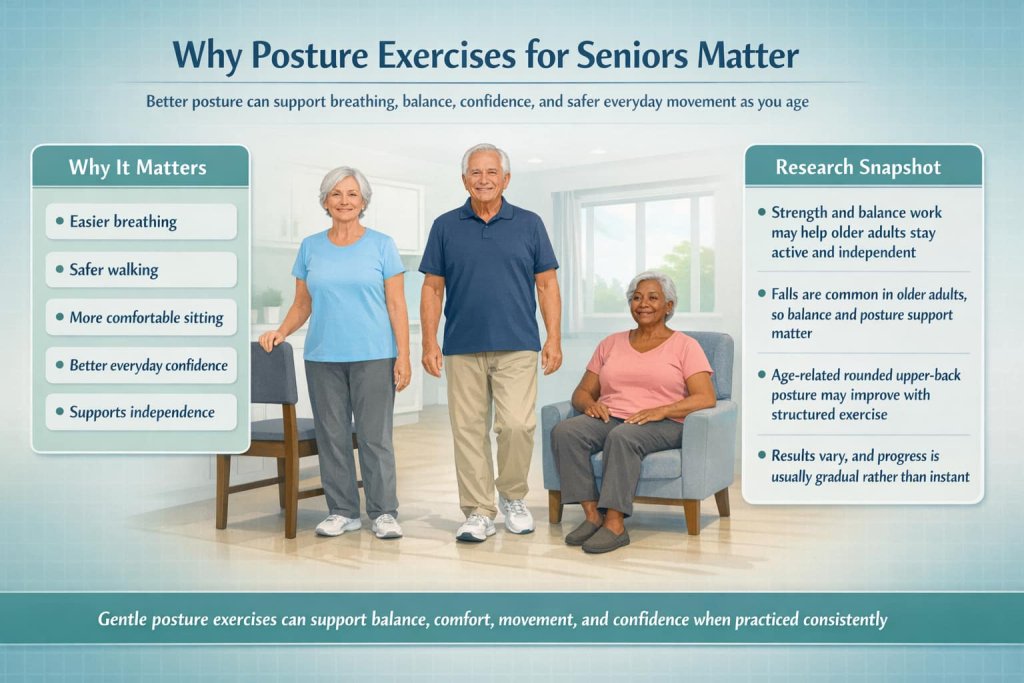
Research on age-related hyperkyphosis, the rounded upper-back posture that becomes more common with aging, suggests structured exercise can help improve posture, spinal stability, and postural control, although results vary and exercise is not a quick fix, according to PubMed.
Who should be careful before starting posture exercises for seniors
Get medical or physical therapy guidance first if you have:
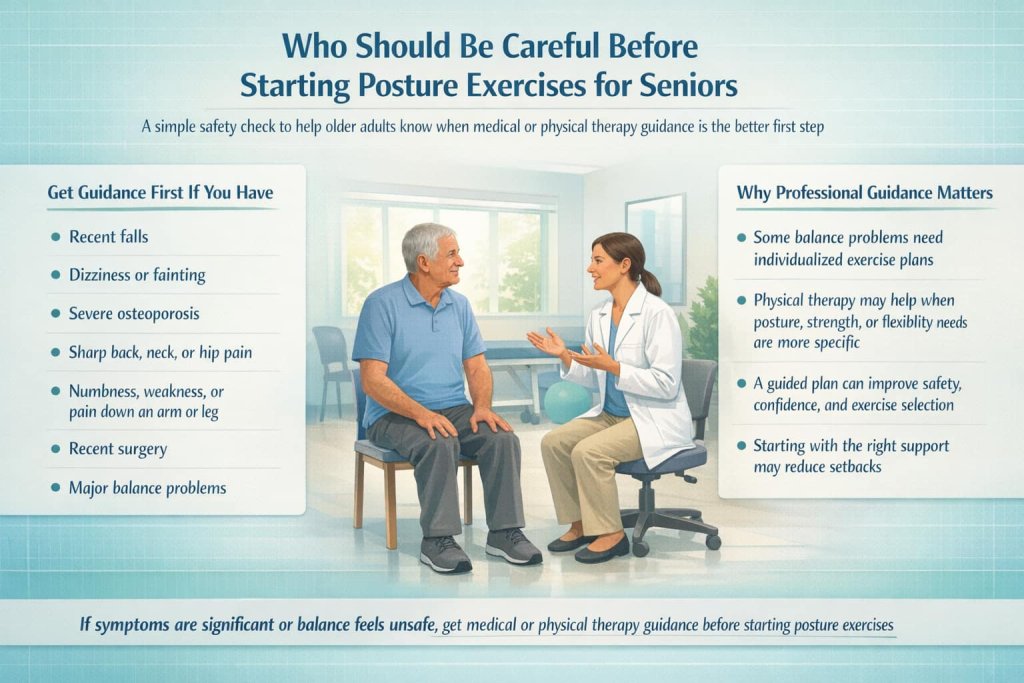
- recent falls
- dizziness or fainting
- severe osteoporosis
- sharp back, neck, or hip pain
- numbness, weakness, or pain running down an arm or leg
- recent surgery
- major balance problems
The National Institute on Aging notes that some balance problems need individualized exercises from a physical therapist or trained professional. Mayo Clinic also recommends physical therapy when flexibility, strength, and posture need more targeted support.
9 Best Posture Exercises for Seniors
Improve posture, balance, and daily movement with these senior-friendly exercises designed to support a taller, more comfortable stance. These 9 simple moves focus on mobility, strength, and control to help you stand straighter and move with more confidence.
1. Seated Chest Stretch
How to do it:
- Sit tall near the front of a sturdy chair.
- Pull your shoulders gently back and down.
- Open your arms out to the sides.
- Lift your chest slightly until you feel a stretch across the front of the chest.
- Hold for 5 to 10 seconds.
- Repeat 3 to 5 times.
Why it works:
Many older adults spend a lot of time sitting, reading, or looking down. That can leave the chest tight and the shoulders rounded. This gentle stretch opens the front of the body and encourages a more upright position.
Muscles worked:
Pectorals, front shoulders, upper back stabilizers.
Trainer Tip:
Do not crank your lower back or force your arms high. Think “open the chest” rather than “pull hard.” The NHS specifically lists a seated chest stretch as good for posture.
2. Chin Tuck
How to do it:
- Sit or stand tall.
- Keep your eyes level.
- Gently draw your head straight back as if making a small double chin.
- Hold for 3 to 5 seconds.
- Relax and repeat 8 to 10 times.
Why it works:
A forward head position often goes with rounded shoulders. Chin tucks help restore a more stacked head-and-neck position and can improve awareness of upright posture.
Muscles worked:
Deep neck flexors, upper back postural muscles.
Trainer Tip:
Do not tilt your head up or down. The motion is small and straight back.
3. Shoulder Blade Squeeze
How to do it:
- Sit or stand tall with arms relaxed by your sides.
- Gently squeeze your shoulder blades back and slightly down.
- Hold for 3 to 5 seconds.
- Relax and repeat 10 to 12 times.
Why it works:
This simple drill trains the mid-back muscles that help counter rounded shoulders and slumped sitting.
Muscles worked:
Rhomboids, middle trapezius, lower trapezius.
Trainer Tip:
Avoid shrugging. Keep the neck long and shoulders away from the ears.
4. Seated Pelvic Tilt
How to do it:
- Sit near the front of a chair with feet flat.
- Gently rock your pelvis backward so your lower back rounds slightly.
- Then rock it forward so you sit taller through the spine.
- Move slowly for 8 to 12 reps.
Why it works:
Pelvic position affects the whole spine. Learning to move the pelvis with control can improve sitting posture and core awareness.
Muscles worked:
Abdominals, glutes, lower back stabilizers.
Trainer Tip:
Make the movement smooth and small. The older-adult strengthening guide from the CDC includes pelvic tilt and notes that it can improve posture.
5. Sit-to-Stand
How to do it:
- Sit on a sturdy chair with feet hip-width apart.
- Lean slightly forward from the hips.
- Press through your feet and stand up.
- Lower back down with control.
- Repeat 8 to 10 times.
Why it works:
Good posture is easier when the legs and hips are strong enough to support everyday movement. Sit-to-stand builds practical lower-body strength and reinforces alignment during a common daily task.
Muscles worked:
Quadriceps, glutes, core.
Trainer Tip:
Use your hands on the chair or armrests if needed at first. Aim for smooth control, not speed.
6. Wall Posture Hold
How to do it:
- Stand with your back near a wall.
- Place your heels a few inches from the wall.
- Let the back of your head, upper back, and hips lightly touch if comfortable.
- Gently draw the ribs down and relax the shoulders.
- Hold for 10 to 20 seconds.
- Repeat 3 to 5 times.
Why it works:
The wall gives instant feedback about body position. It can help you feel what a more upright stacked posture is like without overcorrecting.
Muscles worked:
Upper back postural muscles, core, glutes.
Trainer Tip:
Do not force your low back flat into the wall. Keep the position comfortable and natural.
7. Seated Thoracic Rotation
How to do it:
- Sit tall in a chair with arms crossed over your chest.
- Slowly rotate to the right as far as comfortable.
- Return to center.
- Rotate to the left.
- Repeat 5 to 8 times per side.
Why it works:
The upper back needs rotation and extension to stay mobile. Gentle thoracic movement can help reduce stiffness from long periods of sitting and support better upright posture.
Muscles worked:
Upper back, obliques, spinal stabilizers.
Trainer Tip:
Keep the movement slow and comfortable. A posture handout from University Hospital Southampton NHS Foundation Trust includes seated thoracic rotation as part of posture-improvement exercises.
8. Standing Heel-to-Toe Walk
How to do it:
- Stand near a wall or counter.
- Place one foot directly in front of the other, heel touching toe if possible.
- Walk forward slowly for 10 to 20 steps.
- Rest and repeat 2 to 3 rounds.
Why it works:
Posture and balance go together. Heel-to-toe walking challenges control while encouraging a tall, steady body position.
Muscles worked:
Core stabilizers, hips, calves, foot and ankle muscles.
Trainer Tip:
Keep a hand close to support if needed. Balance work is part of healthy aging, not an extra add-on. Both the National Institute on Aging and the CDC recommend balance-focused activity for older adults.
9. Standing March With Tall Posture
How to do it:
- Stand tall behind a sturdy chair.
- Lightly hold the chair if needed.
- Lift one knee, lower it, then lift the other.
- Keep your chest up and shoulders relaxed.
- Continue for 20 to 40 seconds.
Why it works:
This exercise combines posture, hip strength, and balance in a very practical way. It helps reinforce staying tall while the body moves.
Muscles worked:
Hip flexors, glutes, core, lower-leg stabilizers.
Trainer Tip:
Think about growing tall through the top of the head while keeping the ribs quiet.
Common mistakes to avoid with posture exercises for seniors
Trying to “stand straight” by stiffening the whole body is a common mistake. Better posture usually comes from balanced muscle support and comfortable mobility, not from forcing the chest up all day. Other mistakes include:
- holding the breath
- shrugging the shoulders
- moving too fast
- doing painful ranges
- skipping leg and balance work
The Mayo Clinic also emphasizes practical posture habits such as not slouching, maintaining a neutral pelvic position, and changing position regularly during sitting.
Do posture exercises for seniors actually work?
They can help, especially when done consistently and paired with general strength, balance, and daily movement. Research on age-related hyperkyphosis suggests exercise programs may improve posture-related measures, postural control, spinal stability, and sometimes balance, but improvements are often gradual and vary from person to person. Exercise works best as part of a larger routine rather than as a one-exercise fix, based on findings indexed in PubMed.
How often should seniors do posture exercises?
A simple and realistic target is:
- 10 to 15 minutes of posture-focused mobility or activation on most days
- 2 to 3 days per week of strength work
- regular balance practice during the week
That fits the broader recommendations from the CDC and the National Institute on Aging.
A simple weekly plan for posture exercises for seniors
Here is one easy way to organize the exercises:
Day 1: Chest stretch, chin tuck, shoulder blade squeeze, sit-to-stand
Day 2: Pelvic tilt, thoracic rotation, standing march
Day 3: Chest stretch, wall posture hold, heel-to-toe walk, sit-to-stand
Day 4: Easy walk plus chin tuck and shoulder blade squeeze
Day 5: Pelvic tilt, standing march, heel-to-toe walk
Weekend: Repeat your favorite 3 to 4 exercises for 10 minutes
Keep the effort comfortable. You should feel more active, not wiped out.
Frequently asked questions about posture exercises for seniors
Can posture exercises help seniors stand taller?
They may help you stand more upright by improving flexibility, balance, and muscle support. They do not change your height permanently, but they can improve how you carry yourself.
What is the best posture exercise for seniors?
There is no single best one. A mix of chest opening, upper-back strengthening, pelvic control, leg strength, and balance work usually works better than one exercise alone.
Are chair-based posture exercises effective for seniors?
Yes. Chair-based drills like chest stretches, pelvic tilts, and thoracic rotation can be very effective, especially for beginners or anyone who needs extra support. The NHS offers several seated options that fit well into a senior-friendly routine.
How long does it take to see results from posture exercises?
Some people notice better body awareness and easier movement within a few weeks. Visible posture change usually takes longer and depends on consistency, stiffness, strength, balance, and underlying medical issues.
Are posture exercises safe for seniors with osteoporosis?
Some are, but exercise choice matters. Seniors with osteoporosis, spine fractures, or major balance issues should get guidance from a clinician or physical therapist before starting.
Should seniors do posture exercises every day?
Light posture drills can be done most days, while harder strength work usually fits better 2 to 3 times per week.
Can posture exercises reduce back discomfort?
They may help by improving mobility, muscle support, and movement habits. The Mayo Clinic notes that exercise often helps ease back discomfort and strengthen the muscles that support the back.
Conclusion
Posture exercises for seniors work best when they are simple, consistent, and built around real-life needs. Focus on chest mobility, upper-back support, pelvic control, leg strength, and balance. You do not need a perfect posture routine. You need a safe one you can keep doing. Start with 3 or 4 of the exercises above, practice them regularly, and build from there.