
Yes—gentle hip flexor stretches can improve mobility and reduce stiffness for many seniors when done consistently, slowly, and without pain. Hip flexors (the muscles at the front of the hips) often feel tighter with long sitting and reduced daily movement, which can make walking, standing up, and climbing stairs feel more difficult. Guidance from the American Heart Association supports slow, controlled stretching (typically 10–30 seconds per stretch, repeated multiple times) as a simple way to maintain flexibility.
In this guide, you’ll get 7 senior-friendly hip flexor stretches with clear steps, plus a safe weekly routine, common mistakes to avoid, and when to check with a professional.
What Are Hip Flexors and Why Do They Get Tight in Seniors?
Hip flexors are muscles at the front of the hip that help lift the thigh and support upright posture. The main muscles include the iliopsoas and rectus femoris. They are essential for walking, climbing stairs, and standing up from a chair.
In seniors, hip flexors may become tight due to:
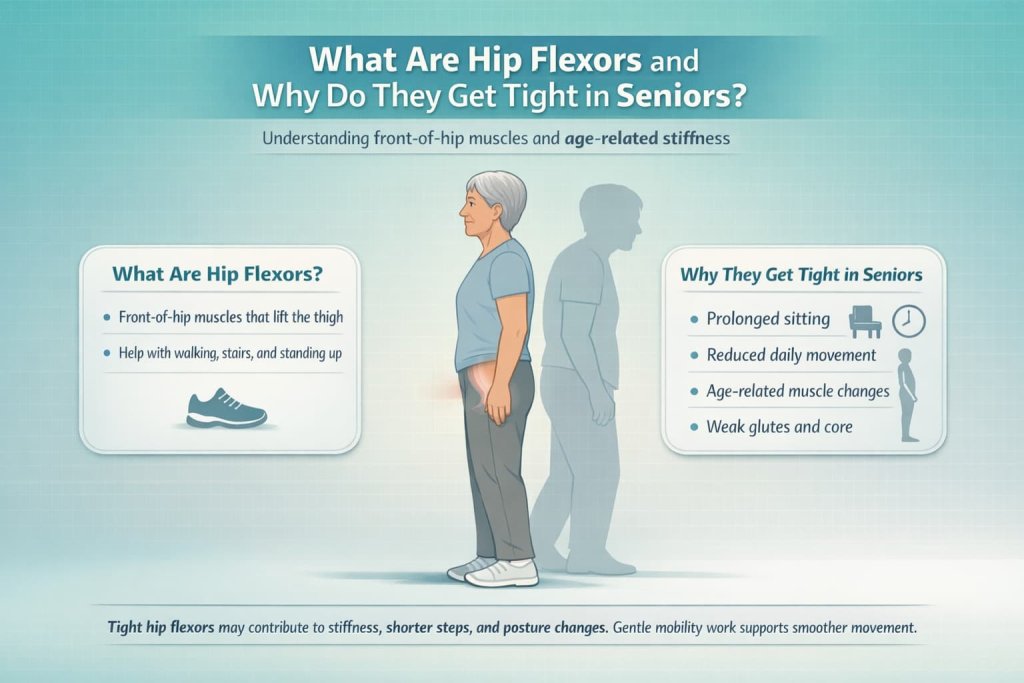
- Prolonged sitting
- Reduced daily movement
- Age-related changes in muscle elasticity
- Weak glutes and core muscles
When hip flexors stay shortened for long periods, they may contribute to stiffness, shorter steps while walking, and a forward-tilted posture. Maintaining flexibility can help support smoother, more comfortable movement.
7 Best Hip Flexor Stretches for Seniors to Improve Mobility
Improve flexibility and reduce front-of-hip stiffness with these safe, senior-friendly stretches. Each move is designed to support better walking, posture, and comfortable daily movement.
1) Supported Standing Hip Flexor Stretch
How to do it:
- Stand tall and hold a wall, rail, or sturdy chair for balance.
- Step your right foot back into a comfortable split stance.
- Keep both feet pointing forward and gently bend your front knee.
- Lightly tuck your pelvis (engage your lower abs) to avoid arching your lower back.
- Shift your hips forward a few inches until you feel a stretch in the front of the back hip.
- Hold 10–30 seconds with steady breathing, then switch sides.
Why it works:
This is one of the safest places to start because external support reduces balance demands. The split stance gently extends the back hip, which helps lengthen tight hip flexors commonly shortened by prolonged sitting.
Muscles worked:
The iliopsoas and rectus femoris are the primary muscles stretched. The glutes and core activate lightly to stabilize the pelvis and maintain upright posture.
Trainer Tip:
If you feel the stretch mostly in your lower back, shorten your stance and focus on a subtle pelvic tuck before shifting forward.
2) Chair-Assisted Low Lunge Hip Flexor Stretch
How to do it:
- Stand facing a sturdy chair or countertop and hold it lightly.
- Step your right leg back while keeping your left knee slightly bent.
- Keep your chest lifted and hips facing forward.
- Gently shift your hips forward until you feel a stretch in the front of the right hip.
- Maintain control and balance throughout.
- Hold 10–30 seconds, then switch sides.
Why it works:
This version increases stability and allows you to control depth. Because you can lean lightly on support, you reduce fall risk while still placing the back hip into safe extension.
Muscles worked:
The hip flexors of the back leg are the primary focus. The quadriceps assist, and the hip stabilizers and core engage to maintain balance.
Trainer Tip:
Keep your back heel lifted and hips square. If your pelvis rotates open, the stretch shifts away from the hip flexors.
3) Kneeling Hip Flexor Stretch With Cushion
How to do it:
- Place a folded towel or cushion under your right knee.
- Kneel on the right knee and place your left foot flat in front.
- Stand tall through your torso and gently brace your core.
- Tuck your pelvis slightly.
- Slowly shift your hips forward without arching your lower back.
- Hold 10–30 seconds, then switch sides.
Why it works:
Kneeling isolates the hip flexors more directly by positioning the back leg into controlled extension. The pelvic tuck prevents excessive lumbar arching, ensuring the stretch targets the hip instead of the lower back.
Muscles worked:
The iliopsoas and rectus femoris of the back leg are stretched most directly. Core muscles assist in maintaining upright posture.
Trainer Tip:
If kneeling causes knee discomfort even with padding, switch to a supported standing variation.
4) Sofa or Bed Hip Flexor Stretch
How to do it:
- Kneel with your right knee on a cushion near a sofa or bed.
- Place your right shin or foot up behind you on the sofa edge if comfortable.
- Step your left foot forward into a stable half-kneel.
- Keep your torso upright and gently tuck your pelvis.
- Hold for 10–20 seconds to start.
- Switch sides carefully.
Why it works:
Elevating the back leg increases knee flexion, which intensifies the stretch across both the quadriceps and hip flexors. This makes it effective but also stronger, so it should be approached conservatively.
Muscles worked:
The hip flexors and quadriceps of the back leg are stretched simultaneously. The core helps stabilize the trunk.
Trainer Tip:
This stretch intensifies quickly. Begin with shorter holds and a smaller range before progressing.
5) Supine (Lying) Hip Flexor Stretch Off the Bed
How to do it:
- Sit near the edge of a firm bed.
- Slowly lie back while hugging one knee toward your chest.
- Let the opposite leg relax and hang off the bed edge.
- Keep your lower back comfortably supported against the surface.
- Allow gravity to gently stretch the hanging leg.
- Hold 10–30 seconds, then switch legs.
Why it works:
Lying down removes balance challenges and allows gravity to create gentle hip extension. This can feel more comfortable and controlled for seniors who prefer floor- or bed-based stretching.
Muscles worked:
The hip flexors and quadriceps of the hanging leg are stretched, while the opposite hip remains flexed for stability.
Trainer Tip:
If you feel a pinching sensation in the front of the hip, reduce how far the leg hangs or place a small pillow under your hips.
6) Half-Kneeling Hip Flexor Stretch With Side Reach
How to do it:
- Get into a comfortable half-kneeling position with cushioning under the back knee.
- Gently tuck your pelvis and shift hips forward slightly.
- Raise the arm on the same side as the back leg.
- Slowly reach overhead and slightly toward the opposite side.
- Keep your ribs down and spine tall.
- Hold 10–20 seconds, then switch sides.
Why it works:
The added side reach may increase stretch sensation across the front of the hip and into the lateral trunk. It introduces a mild fascial stretch component while maintaining hip extension.
Muscles worked:
Hip flexors of the back leg, along with lateral trunk muscles such as the obliques and latissimus dorsi.
Trainer Tip:
Keep the reach controlled and subtle. If your lower back arches, lower the arm and reset your posture.
7) Standing Quad-to-Hip Flexor Stretch (Supported)
How to do it:
- Stand next to a wall or hold a sturdy chair for balance.
- Bend one knee and bring your heel toward your glutes.
- Hold your ankle or pant leg gently.
- Keep your knees close together and torso upright.
- Slowly move the thigh slightly behind you.
- Hold 10–20 seconds, then switch sides.
Why it works:
Combining knee flexion with hip extension stretches both the quadriceps and hip flexors at the same time, making it efficient for improving front-of-hip flexibility.
Muscles worked:
The quadriceps and hip flexors of the stretching leg are targeted. Ankle and hip stabilizers engage to support balance.
Trainer Tip:
If balance feels unstable, perform the bed-edge stretch instead for added safety and support.
Benefits of Hip Flexor Stretches for Seniors
Gentle hip flexor stretches may help reduce stiffness and support everyday mobility when performed consistently and safely.
Potential benefits include:
- Improved stride length
- Reduced stiffness after sitting
- Better upright posture
- Increased comfort during daily activities
- Support for overall movement confidence
Stretching works best when combined with regular strength, balance, and light aerobic activity. Consistency and controlled movement are more important than stretching deeply.
How Often Should Seniors Stretch Hip Flexors?
A practical target is 2–3 days per week, and daily gentle stretching can also be appropriate if tolerated. Many public health recommendations support holding each stretch for 10–30 seconds and repeating multiple times, as described by the American Heart Association.
For broader mobility and independence, stretching works best when combined with aerobic, strength, and balance training. The CDC recommends adults 65+ aim for at least 150 minutes of moderate-intensity activity per week, plus muscle-strengthening and balance activities.
Before You Start: Safe Stretching Rules for Seniors
A few basics make hip flexor stretching safer and more effective:
- Warm up first with 3–5 minutes of easy movement (marching in place, gentle walking, or seated leg lifts).
- Stretch to a “mild to moderate pull,” not sharp pain.
- Don’t bounce. Move slowly and breathe.
- Use a wall, countertop, or sturdy chair for balance support when needed.
- A common guideline is holding a stretch 10–30 seconds and repeating 3–5 times per session, gradually increasing tolerance over time, as outlined by the American Heart Association.
A Simple Weekly Routine for Hip Flexor Stiffness
Try this 10-minute plan, 3 days per week:
- Warm-up: 3 minutes easy walk or seated march
- Supported Standing Hip Flexor Stretch: 2 rounds each side
- Bed-Edge Hip Flexor Stretch: 2 rounds each side
- Chair-Assisted Low Lunge Stretch: 1–2 rounds each side
- Easy walk: 2 minutes to keep hips moving
Common Mistakes That Make Hip Flexor Stretching Less Effective
- Arching the low back instead of moving the hip
- Forcing a deep stretch too soon
- Holding your breath
- Letting the pelvis rotate open
- Skipping support and wobbling through the stretch
When to Stop and Get Professional Guidance
Consider checking with a clinician or physical therapist if you have:
- Sharp or worsening hip pain
- Pain that travels down the leg
- Recent hip surgery or fall
- Balance concerns that make standing stretches unsafe
For additional flexibility and exercise guidance tailored to older adults, the National Institute on Aging provides evidence-based recommendations.
FAQs
What is the best hip flexor stretch for seniors who can’t kneel?
The supported standing stretch and bed-edge lying stretch are typically the most comfortable and stable options.
How long should a senior hold a hip flexor stretch?
Most guidelines suggest 10–30 seconds per stretch, repeated several times, staying below pain.
Can tight hip flexors affect walking and posture?
Yes. Tight hip flexors may contribute to shorter stride length and a forward-tilted posture.
Should seniors stretch before or after walking?
Stretching after walking is often more comfortable because muscles are warm. The National Institute on Aging notes flexibility exercises are most effective when muscles are warmed up.
Are hip flexor stretches safe for arthritis?
Gentle stretching may be appropriate, but intensity should stay mild. Consult a healthcare professional if symptoms flare.
How quickly will flexibility improve?
Some people feel short-term relief quickly, but consistent practice over several weeks typically produces more noticeable improvements.
Conclusion
Hip flexor stretches for seniors don’t need to be complicated. Choose 2–3 safe stretches, use support, hold gently, and stay consistent. Pair stretching with regular movement, strength, and balance activities to support everyday mobility and confidence.
References
- American Heart Association – Warm Up, Cool Down (Safe stretching tips)
- Mayo Clinic – A Guide to Basic Stretches (Includes hip flexor stretch)
- American Academy of Orthopaedic Surgeons – Hip Conditioning Program (PDF)
- Harvard Health Publishing – Hip Flexor Stretches for People Who Sit a Lot
- NHS – Physical Activity Guidelines for Older Adults