
Weight loss for men works best when you create a manageable calorie deficit, eat mostly nutrient-dense foods, combine cardio with strength training, sleep adequately, and track your progress long enough to make informed adjustments. You do not need a detox, fat-burning supplement, extreme diet, or punishing workout plan.
Understanding the basics matters because body weight is influenced by more than willpower. Age, sleep, medications, medical conditions, stress, hormones, genetics, food access, and daily activity can all affect results. The latest measured CDC data found that 39.2% of U.S. adult men had obesity during August 2021–August 2023.
The 12 strategies below follow current CDC guidance for sustainable weight loss and other authoritative evidence. Here, “proven” means supported by established guidance or clinical research—not guaranteed to work identically for every man.
Weight Loss for Men: Practical Targets at a Glance
These numbers are useful starting points, not personalized prescriptions.
| Area | General starting target |
|---|---|
| Rate of weight loss | About 1–2 pounds per week |
| Initial goal | About 5%–10% of starting weight within six months |
| Aerobic activity | At least 150 minutes of moderate activity or 75 minutes of vigorous activity weekly |
| Strength training | At least two days per week |
| Sleep | At least seven hours per 24-hour period for most adults |
| Waist measurement | A waist of 40 inches or more in men is associated with greater health risk |
Gradual weight loss is generally more likely to be maintained than faster loss. Losing even 5%–10% of your starting weight may provide meaningful health benefits. BMI and waist size are screening tools rather than complete measures of health.
How Weight Loss for Men Actually Works
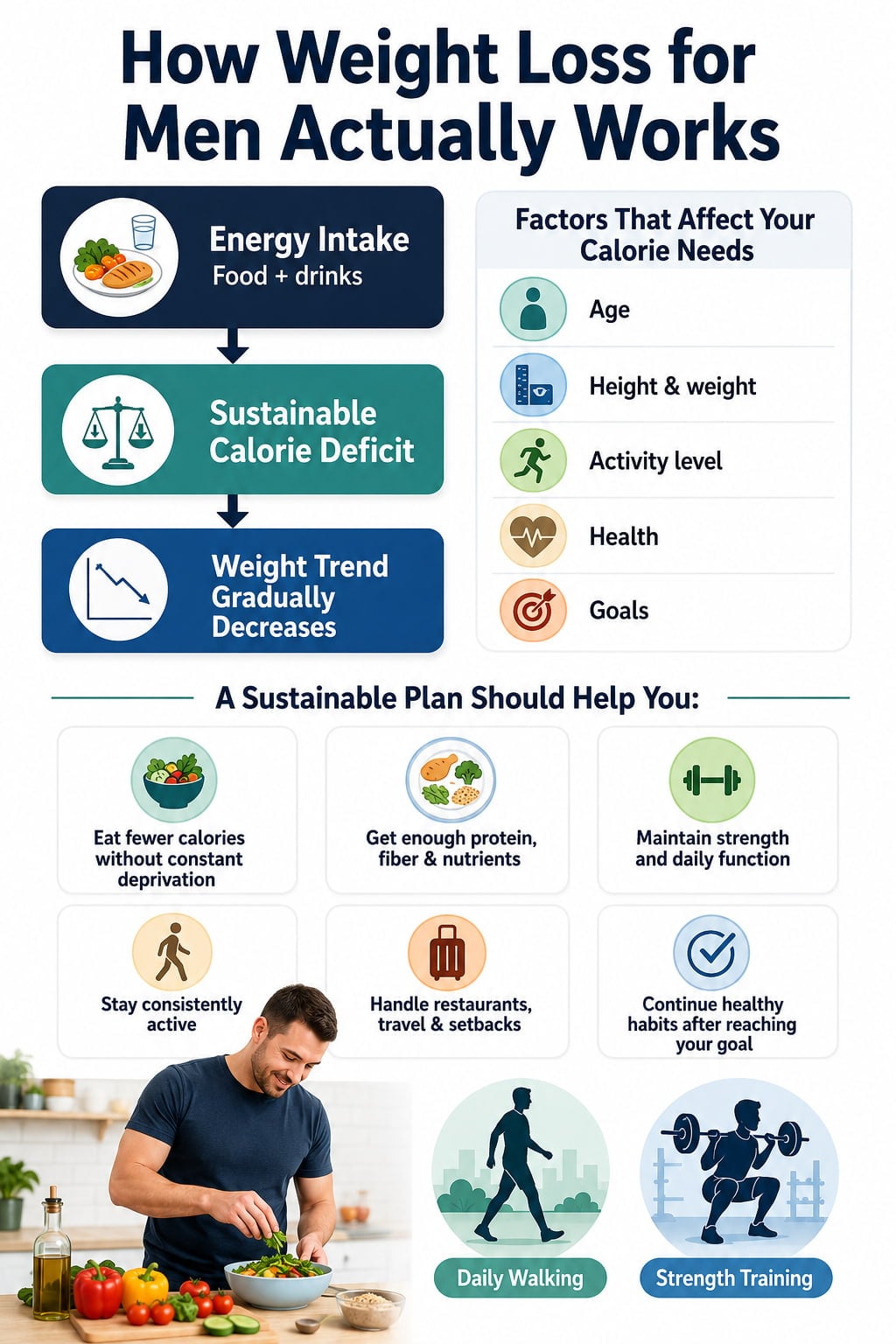
Body weight decreases when average energy intake remains below average energy expenditure over time. This is called a calorie deficit.
However, that does not mean every man should follow the same calorie target. Your needs depend on your age, height, weight, activity level, health, and goals. Your metabolism and activity may also change as you lose weight, so a plan often requires adjustments rather than one fixed number forever.
A lasting plan should help you:
- Eat fewer calories without feeling constantly deprived
- Get enough protein, fiber, and essential nutrients
- Maintain strength and daily function
- Remain active consistently
- Handle restaurants, travel, holidays, and setbacks
- Continue your habits after reaching your goal
12 Proven Weight Loss Tips for Men
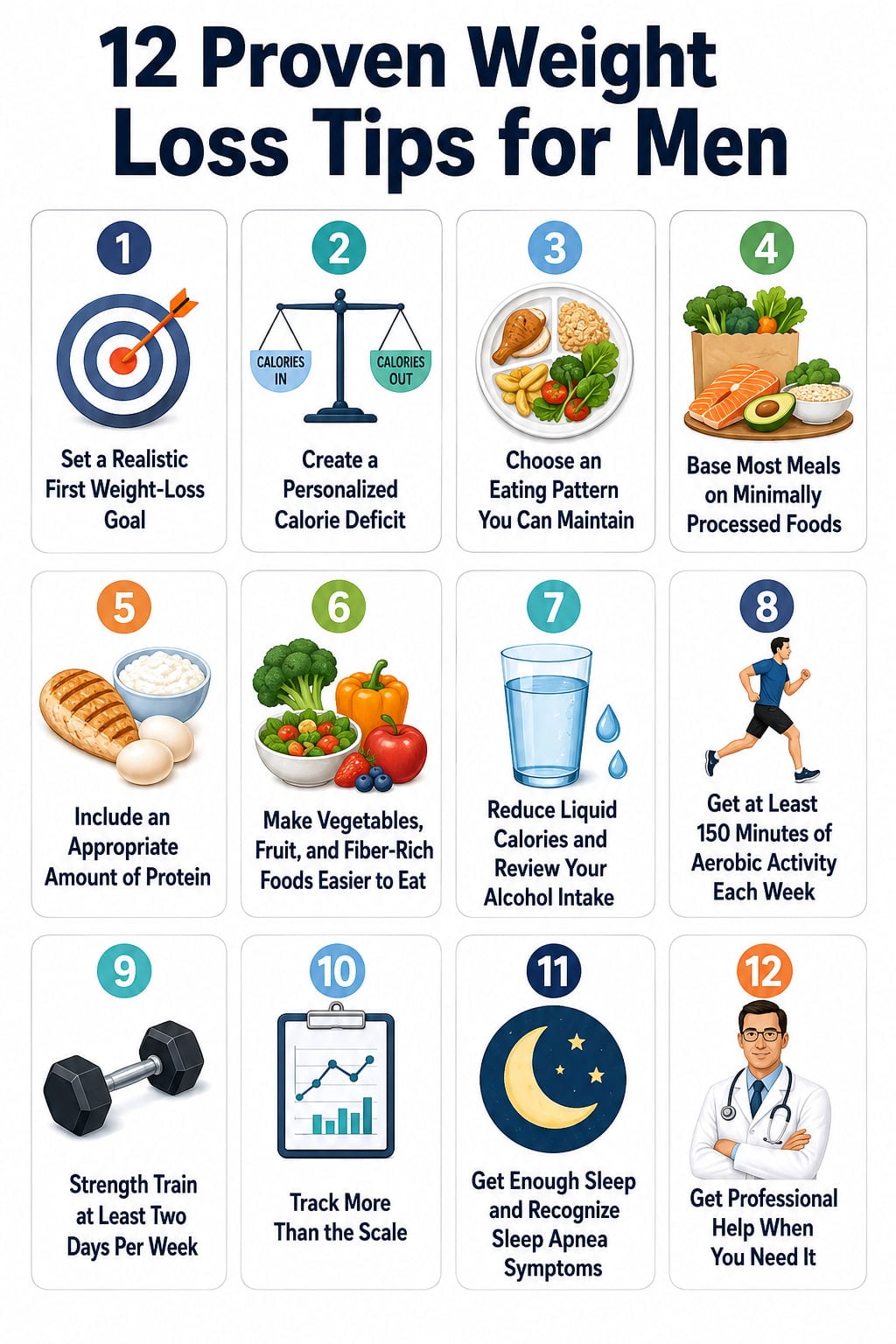
1. Set a Realistic First Weight-Loss Goal
Instead of focusing immediately on your final goal weight, aim to lose approximately 5%–10% of your starting weight within six months.
For example, a man who weighs 220 pounds could begin with a goal of losing 11–22 pounds. That amount may feel less dramatic than an online transformation promise, but modest weight loss can still support improvements in blood pressure, blood sugar, triglycerides, mobility, and other health measures.
A general pace of about one to two pounds per week is reasonable for many adults. Some weeks may show little change, while other weeks may move faster because of normal changes in water, food intake, and activity.
Avoid treating the weekly target as a pass-or-fail test. The longer-term trend is more important.
2. Create a Personalized Calorie Deficit
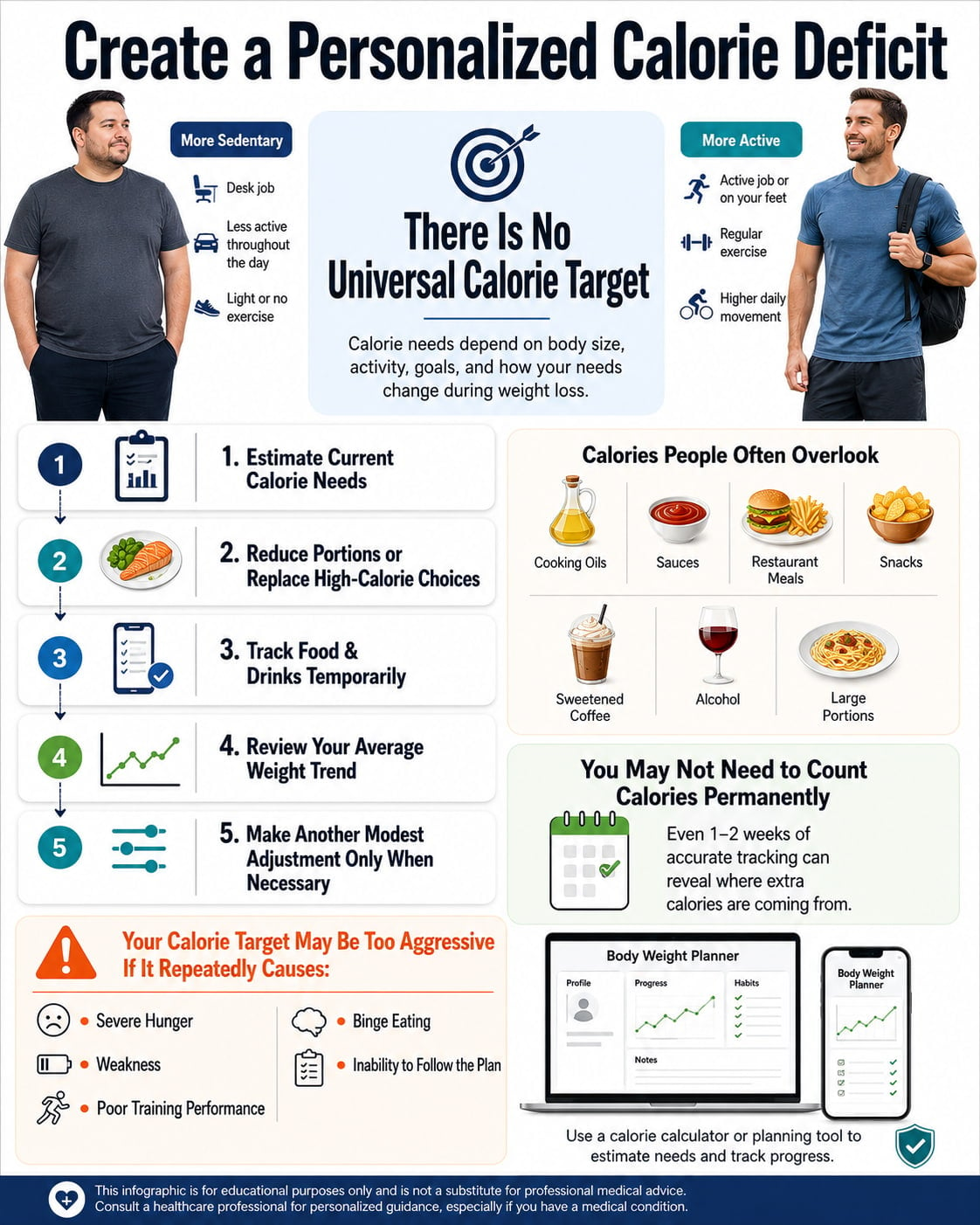
There is no universal calorie target for male weight loss. A sedentary 5-foot-6-inch man and an active 6-foot-3-inch man will not have the same energy needs.
The free NIDDK Body Weight Planner can estimate how changes in calories and activity may affect your weight over time. It also accounts for the fact that calorie needs can change during weight loss.
A practical approach is to:
- Estimate your current calorie needs.
- Reduce portions or replace several high-calorie choices.
- Track food and drinks temporarily to identify overlooked calories.
- Review your average weight trend after several weeks.
- Make another modest adjustment only when necessary.
You may not need to count calories permanently. Even one or two weeks of accurate tracking can reveal how much you are getting from cooking oils, sauces, restaurant meals, snacks, sweetened coffee, alcohol, and large portions.
A calorie target is too aggressive if it repeatedly causes severe hunger, weakness, poor training performance, binge eating, or an inability to follow the plan.
3. Choose an Eating Pattern You Can Maintain
Low-carbohydrate, lower-fat, Mediterranean-style, plant-forward, and balanced eating patterns can all support weight loss when they help you maintain a calorie deficit and meet your nutritional needs.
In the 12-month DIETFITS randomized trial, 609 adults were assigned to either a healthy low-fat or healthy low-carbohydrate diet. Both groups lost weight, and there was no statistically significant difference in average weight loss between the two approaches.
Instead of asking which diet has the most impressive marketing, ask:
- Can I follow this while working or traveling?
- Does it include foods I genuinely enjoy?
- Can I eat this way around family and friends?
- Does it provide enough protein, vegetables, fruit, and other nutrients?
- Could I continue a flexible version after reaching my goal?
You do not have to eliminate bread, rice, potatoes, fruit, or every favorite food. Portion size, overall diet quality, total calorie intake, and consistency matter more than following a fashionable diet label.
4. Base Most Meals on Minimally Processed Foods
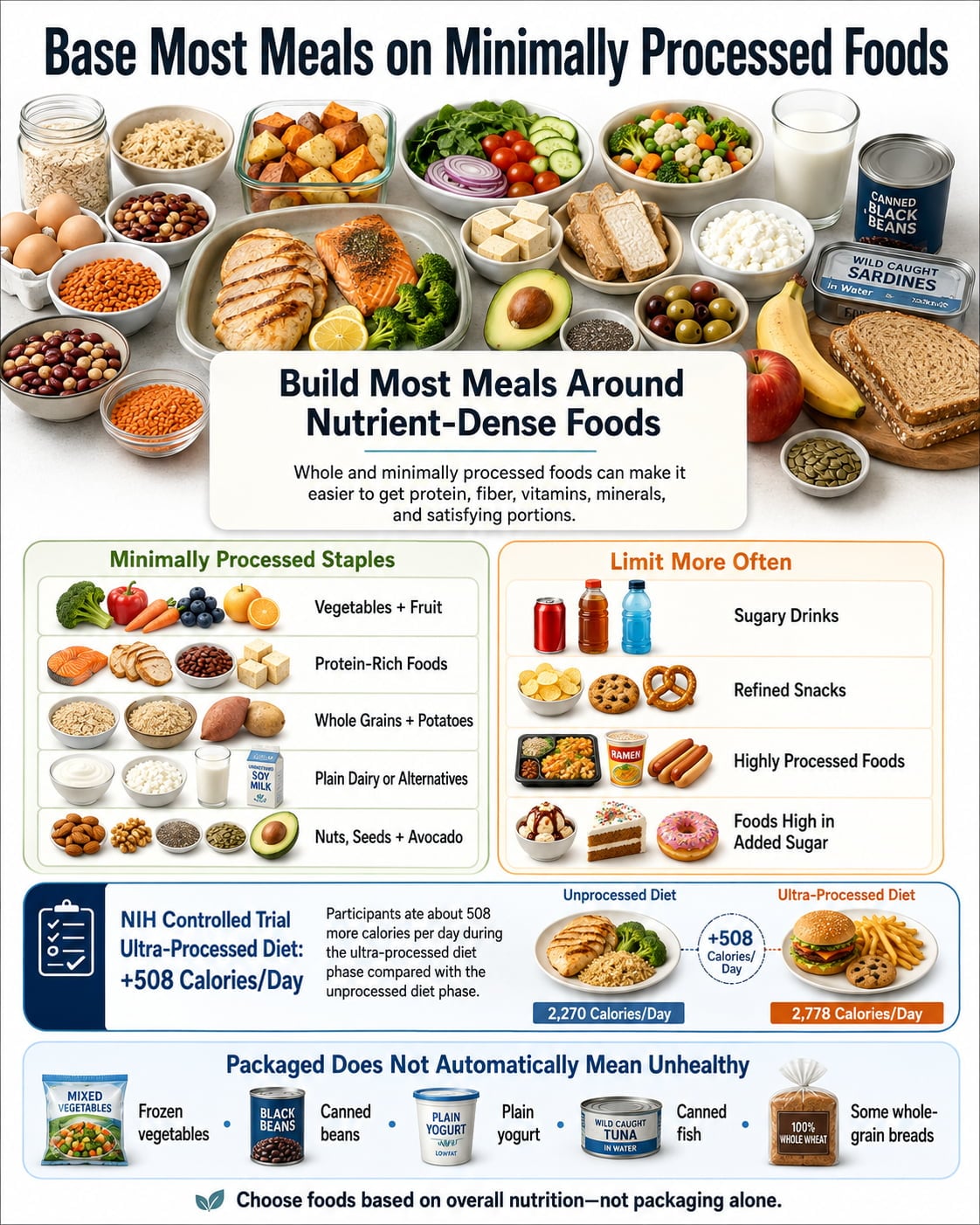
The current Dietary Guidelines for Americans, 2025–2030, released in January 2026, emphasize whole, nutrient-dense foods while recommending a substantial reduction in highly processed foods, refined carbohydrates, sugary drinks, and added sugars.
Useful staples include:
- Eggs, fish, poultry, lean meat, beans, lentils, tofu, and tempeh
- Vegetables and whole fruit
- Oats, brown rice, potatoes, and fiber-rich whole grains
- Plain yogurt, cottage cheese, milk, or suitable alternatives
- Nuts, seeds, olives, and avocados
- Frozen or canned vegetables and fruit with little or no added sugar
In a controlled NIH trial involving 20 adults, participants consumed about 508 more calories per day during an ultra-processed diet phase than during an unprocessed diet phase. They gained weight during the ultra-processed phase and lost weight during the unprocessed phase. The study was small and short, but it demonstrates how food form and processing can affect calorie intake even when people are allowed to eat as much as they want.
This does not mean every packaged food is unhealthy. Frozen vegetables, canned beans, plain yogurt, canned fish, and some whole-grain breads can make a nutritious eating plan more affordable and convenient.
5. Include an Appropriate Amount of Protein
Protein supports muscle, bone, connective tissue, and many other functions. Including it at meals can also make a reduced-calorie plan easier to structure.
The 2025–2030 Dietary Guidelines list a general protein serving goal of 1.2–1.6 grams per kilogram of body weight per day, adjusted to individual calorie needs. For a 180-pound man, that calculation equals approximately 98–131 grams per day. This is a general federal target, not a personalized requirement for every man.
Practical protein foods include:
- Fish and seafood
- Eggs
- Chicken or turkey
- Lean cuts of meat
- Greek yogurt or cottage cheese
- Beans, peas, and lentils
- Tofu, tempeh, and other soy foods
Try to distribute protein across your meals instead of eating very little during the day and most of it at dinner.
Protein does not make calories irrelevant, and more is not always better. Protein shakes can be convenient, but they are optional. Whole foods usually provide additional nutrients and may be more satisfying.
Men with chronic kidney disease should not automatically adopt a high-protein diet. Some people with kidney disease need a moderate or reduced protein intake based on kidney function and treatment status. A registered dietitian or health professional should determine the appropriate amount.
6. Make Vegetables, Fruit, and Fiber-Rich Foods Easier to Eat
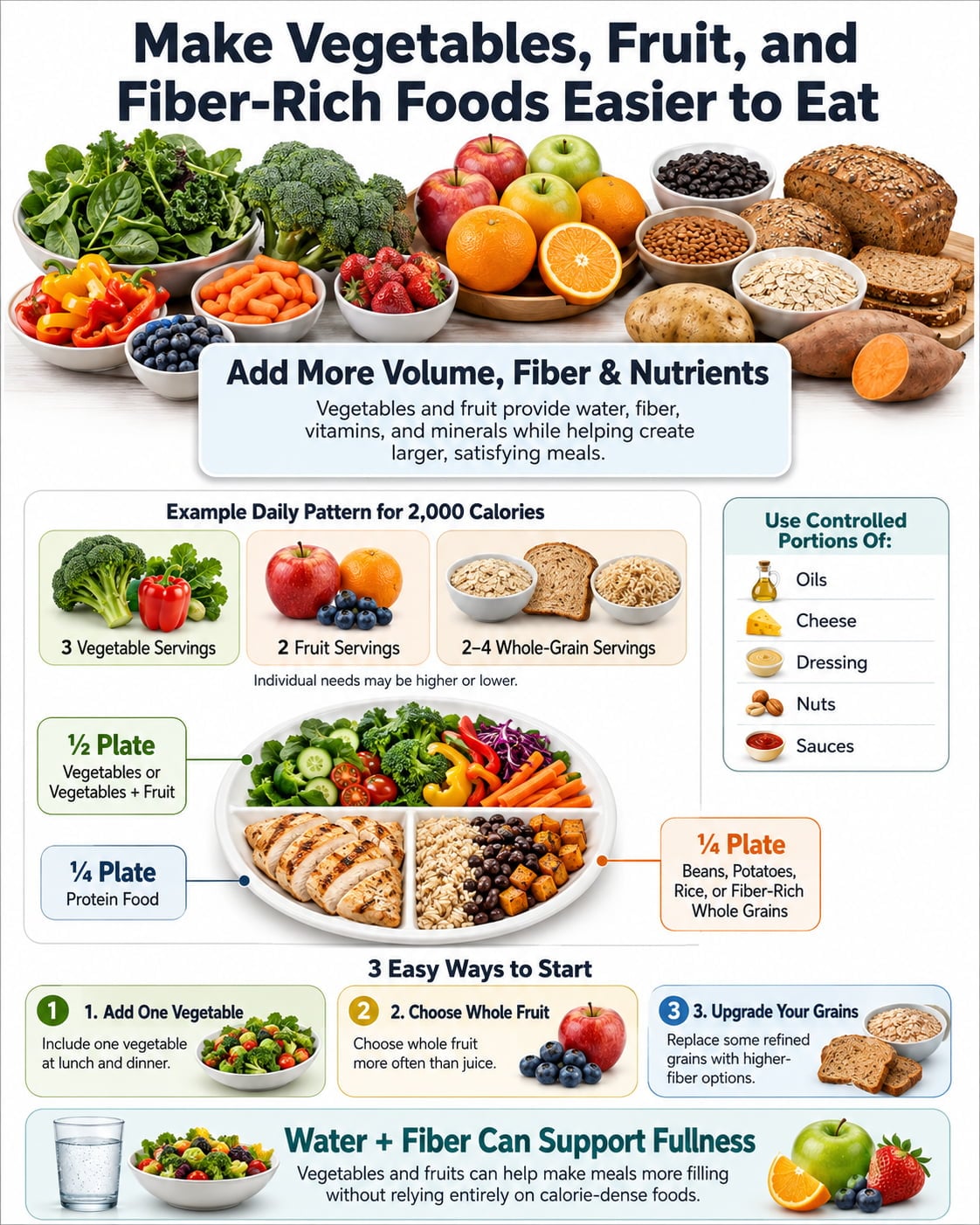
Vegetables and fruit provide water, fiber, vitamins, and minerals. Their volume can help you build larger-looking meals without relying entirely on calorie-dense ingredients.
The current Dietary Guidelines give the following examples for a 2,000-calorie pattern:
- Three vegetable servings per day
- Two fruit servings per day
- Approximately two to four whole-grain servings per day
Your needs may be higher or lower depending on your calorie target and health.
A simple meal framework is:
- About half the plate from vegetables or a combination of vegetables and fruit
- About one-quarter from a protein food
- About one-quarter from beans, potatoes, rice, or a fiber-rich whole grain
- A controlled portion of oils, cheese, dressing, nuts, or sauces
You do not need a perfect plate at every meal. Start by adding one vegetable to lunch and dinner, choosing whole fruit more often than juice, and replacing some refined grains with higher-fiber options.
CDC notes that the water and fiber in vegetables and fruits can support fullness.
7. Reduce Liquid Calories and Review Your Alcohol Intake
Calories from drinks are easy to overlook. Common sources include:
- Regular soda
- Sweet tea
- Energy drinks
- Fruit drinks
- Sweetened coffee
- Large smoothies
- Alcoholic beverages
According to the CDC’s Rethink Your Drink resource, a 12-ounce regular soda contains about 150 calories from sugar. Replacing two regular sodas per day would remove approximately 2,100 calories from the weekly intake, provided those calories are not replaced elsewhere.
Try these replacements:
- Water or sparkling water
- Unsweetened tea
- Coffee with less sugar or flavored creamer
- Water flavored with lemon, cucumber, or berries
- Unsweetened milk when it fits your meal plan
Alcohol also provides calories with few nutrients and may contribute to unwanted weight gain. The current Dietary Guidelines advise consuming less alcohol for better overall health. Review how many drinks you have, the actual serving sizes, and the mixers used rather than counting only the number of glasses.
8. Get at Least 150 Minutes of Aerobic Activity Each Week
Adults should aim for at least 150 minutes of moderate-intensity aerobic activity per week, 75 minutes of vigorous activity, or an equivalent combination. The CDC adult physical activity guidelines also recommend reducing sedentary time and spreading activity across the week.
Effective options include:
- Brisk walking
- Cycling
- Swimming
- Jogging
- Elliptical training
- Rowing
- Hiking
- Recreational sports
You do not have to complete long workouts. Three 10-minute walks can be easier to schedule than one 30-minute session.
Exercise provides important health benefits even when the scale changes slowly. However, the amount needed for weight loss or maintenance varies. Some people may eventually need more than 150 minutes per week, and NIDDK notes that maintenance plans may include approximately 150–300 minutes or more.
Begin below these targets when necessary and increase gradually. A consistent walking plan is more valuable than an intense routine you abandon after one week.
9. Strength Train at Least Two Days Per Week
Strength training is especially important for men who want to lose fat while maintaining strength, muscle, and physical function.
Train all major muscle groups with movements such as:
- Squats, leg presses, or chair squats
- Deadlift variations or hip hinges
- Push-ups or chest presses
- Rows or pulldowns
- Overhead presses
- Step-ups or split squats
- Carries, planks, or other core exercises
Weights, machines, resistance bands, and bodyweight exercises can all work. Start with a level that allows controlled technique. Gradually increase the repetitions, resistance, range of motion, or number of sets as you become stronger.
Federal guidelines recommend muscle-strengthening activity on at least two days each week. Research reviews also indicate that resistance training is particularly useful for limiting lean-mass loss during diet-induced weight loss.
Example Beginner Week
| Day | Activity |
|---|---|
| Monday | Full-body strength workout and a 20-minute brisk walk |
| Tuesday | 30-minute brisk walk |
| Wednesday | 30 minutes of cycling, swimming, or elliptical exercise |
| Thursday | Full-body strength workout and a 20-minute brisk walk |
| Friday | 30-minute brisk walk |
| Saturday | 20 minutes of easy cardio or active recreation |
| Sunday | Rest or gentle mobility work |
This example provides 150 minutes of aerobic activity and two strength sessions. Adjust the duration, exercise selection, and intensity to your current ability.
10. Track More Than the Scale
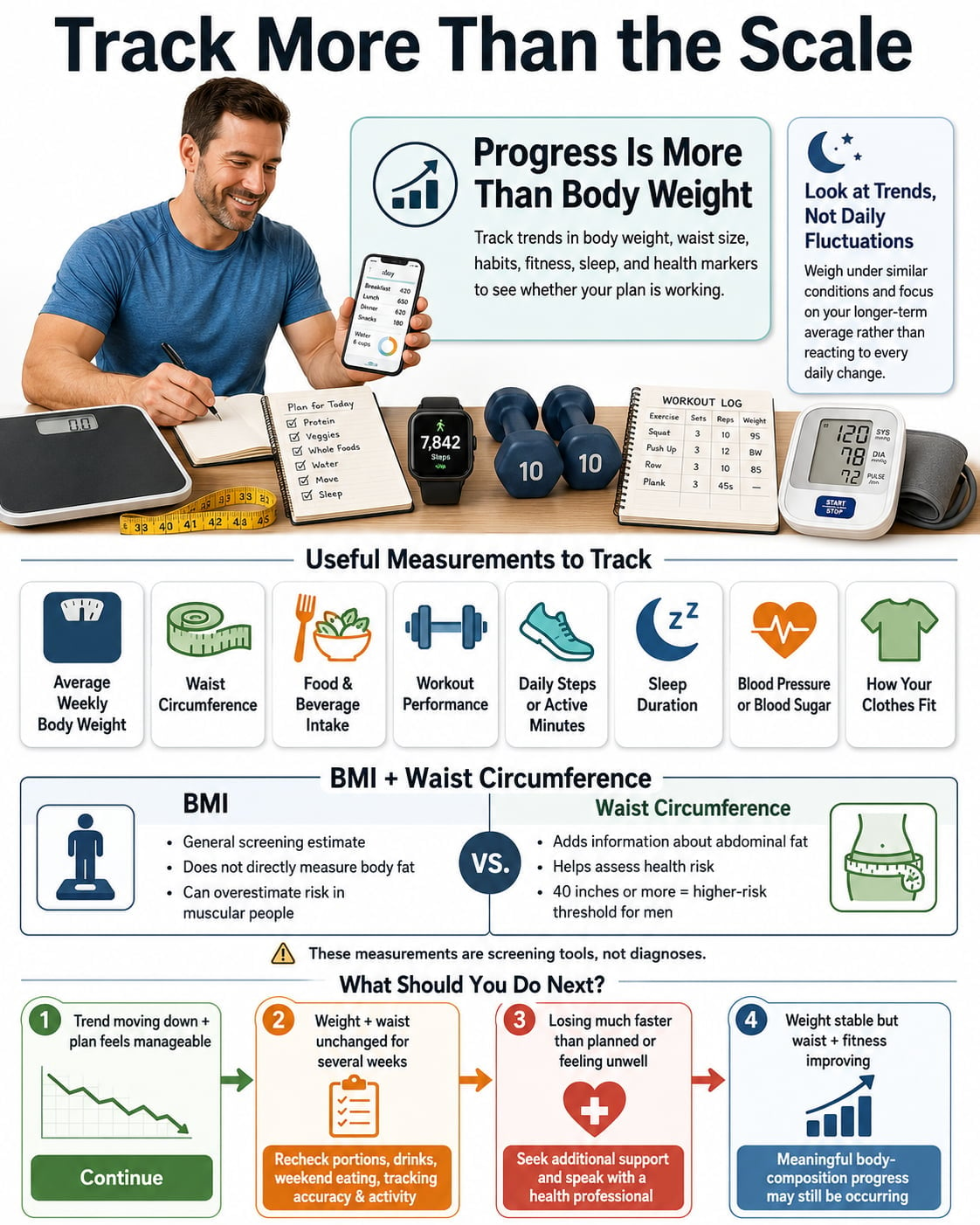
Tracking helps you determine whether your plan is working and which habits need attention. It is not meant to punish you.
Useful measurements include:
- Average weekly body weight
- Waist circumference
- Food and beverage intake
- Workout performance
- Daily steps or active minutes
- Sleep duration
- Blood pressure or blood sugar when medically appropriate
- How your clothes fit
NIDDK recommends monitoring eating, drinking, sleep, and activity regularly and checking body weight approximately once per week. Weighing under similar conditions and looking at an average can help you avoid reacting to every daily fluctuation.
BMI can provide a general screening estimate, but it does not directly measure body fat. A muscular man may have a high BMI without having excessive body fat. Waist circumference provides additional information because abdominal fat is associated with greater health risk. A waist measurement of 40 inches or more is considered a higher-risk threshold for men, although it should not be used as a diagnosis by itself.
Use this decision process:
- Your trend is moving down and the plan feels manageable: Continue.
- Your weight and waist have not changed for several weeks: Recheck portions, drinks, weekend eating, tracking accuracy, and activity.
- You are repeatedly losing much faster than planned or feeling unwell: Increase support and speak with a health professional.
- Your weight is stable but your waist and fitness are improving: The plan may still be producing meaningful body-composition changes.
11. Get Enough Sleep and Recognize Sleep Apnea Symptoms
Most adults should get at least seven hours of sleep per 24-hour period. However, 2024 national data found that 30.6% of U.S. men reported sleeping fewer than seven hours.
Sleep does not replace a calorie deficit, but inadequate sleep can make consistent eating and activity habits more difficult.
In a two-week randomized trial involving 80 adults with overweight who usually slept fewer than 6.5 hours, the sleep-extension group increased sleep by about 1.2 hours and consumed an average of 270 fewer calories per day than the control group. This small, short-term study does not guarantee that sleeping longer will automatically produce a specific amount of weight loss, but it supports including sleep in a complete plan.
Improve sleep by:
- Keeping a reasonably consistent bedtime and wake time
- Limiting late caffeine
- Reducing alcohol close to bedtime
- Making the bedroom dark, quiet, and comfortable
- Creating a brief wind-down routine
- Moving demanding work and scrolling away from bedtime when possible
Men should also recognize possible obstructive sleep apnea. Warning signs include frequent loud snoring, gasping for air, breathing that repeatedly stops and starts during sleep, morning headaches, and significant daytime sleepiness. Obesity is a risk factor, but sleep apnea can also affect people at lower weights. These symptoms should be discussed with a health professional rather than managed through weight loss alone.
12. Get Professional Help When You Need It
Obesity is a complex chronic condition, not a personal failure. Lifestyle changes remain important, but some men benefit from structured counseling, medical nutrition therapy, prescription medication, or metabolic and bariatric surgery.
Consider professional support when:
- Your weight is affecting blood pressure, blood sugar, joints, sleep, or mobility
- A medical condition or medication may be affecting your weight
- You have repeatedly lost and regained weight
- You experience binge eating or another disordered eating pattern
- You are unsure how to eat with diabetes, kidney disease, or heart disease
- You are considering prescription weight-management medication
- You have possible sleep apnea or symptoms of low testosterone
Prescription weight-management medication may be considered for some adults with a BMI of 30 or higher, or a BMI of 27 or higher plus a weight-related condition such as type 2 diabetes or high blood pressure. Meeting a BMI threshold does not automatically mean a medication is appropriate. A clinician must consider benefits, side effects, medical history, other medications, cost, and long-term follow-up.
Be cautious with compounded or online GLP-1 products. In June 2026, the FDA warned that unapproved GLP-1 products are not reviewed for safety, effectiveness, or quality and reported fraudulent semaglutide and tirzepatide labels. Use a qualified prescriber and a properly licensed pharmacy.
Testosterone should not be used as a general weight-loss shortcut. A July 2026 Endocrine Society statement emphasized that low energy, mood changes, or reduced libido do not diagnose low testosterone. Diagnosis requires symptoms plus consistently low, accurately measured laboratory results. For appropriately diagnosed low testosterone associated with overweight or obesity and no other identified cause, weight loss is typically considered first-line management.
Can Men Target Belly Fat?
Men cannot force their bodies to remove fat only from the stomach. Abdominal exercises can strengthen the core, but they do not provide control over where stored fat is lost.
NIDDK identifies promises to “lose weight in a specific part of your body” as a warning sign of an unreliable weight-loss program. The practical approach is to reduce total body fat through a sustainable calorie deficit, regular physical activity, strength training, sleep, and consistency.
Because men commonly carry extra weight around the abdomen, waist circumference can be a useful secondary progress measure. Measure it consistently rather than expecting one exercise to flatten your stomach.
Frequently Asked Questions
How quickly can a man safely lose weight?
About one to two pounds per week is a reasonable general target for many adults. Slower progress can also be successful, especially when the plan is easier to maintain. Very rapid-loss promises should be treated cautiously.
How many calories should a man eat to lose weight?
There is no single correct amount. Calorie needs depend on age, height, weight, activity, health, and the intended rate of loss. Use a personalized estimate, monitor your weight trend, and adjust gradually rather than copying a generic low-calorie plan.
Is cardio or strength training better for male weight loss?
Use both. Cardio helps increase weekly energy expenditure and improves cardiovascular fitness. Strength training helps maintain strength and lean mass during a reduced-calorie diet. Current guidelines recommend at least 150 minutes of moderate aerobic activity and two strength-training days per week.
How much protein should a man eat while losing weight?
The 2025–2030 Dietary Guidelines provide a general target of 1.2–1.6 grams per kilogram of body weight per day, adjusted to calorie needs. Individual needs vary, and men with kidney disease or other relevant medical conditions should receive personalized guidance.
What is the best way for men to lose belly fat?
Create a sustainable calorie deficit, eat nutrient-dense foods, perform regular cardio and strength training, sleep adequately, and monitor waist circumference. You cannot selectively burn stomach fat through sit-ups, supplements, or a special food.
Why can weight loss feel harder for men after 40?
Age does not make weight loss impossible. However, changes in activity, muscle mass, sleep, work demands, medications, and health can affect calorie needs and consistency. Strength training, sufficient protein, daily movement, sleep assessment, and medical review become especially valuable.
When should a man consider weight-loss medication?
Medication may be considered when BMI is at least 30, or at least 27 with a weight-related health condition, after an individual clinical assessment. Medication should be combined with ongoing nutrition, activity, sleep, and behavior support rather than used as a replacement for those habits.
Conclusion
Lasting weight loss for men does not require perfection. It requires a plan you can repeat.
Begin with a realistic 5%–10% goal. Build meals around protein, vegetables, fruit, and minimally processed foods. Replace one regular source of liquid calories. Schedule two weekly strength sessions and enough walking or cardio to reach 150 minutes. Then review your weight, waist, fitness, and habits regularly.
Choose two or three changes you can begin this week. Once they feel routine, add the next step instead of trying to overhaul your entire life overnight.
This content is for informational purposes only and not medical advice.
References
- CDC: Steps for Losing Weight
- CDC: Obesity and Severe Obesity Prevalence in Adults
- NIDDK: Choosing a Safe and Successful Weight-Loss Program
- NIDDK Body Weight Planner
- Dietary Guidelines for Americans, 2025–2030
- DIETFITS Randomized Clinical Trial
- NIH Trial of Ultra-Processed and Unprocessed Diets
- FDA: Concerns with Unapproved GLP-1 Drugs Used for Weight Loss
- Endocrine Society: Statement on Testosterone Replacement Therapy