
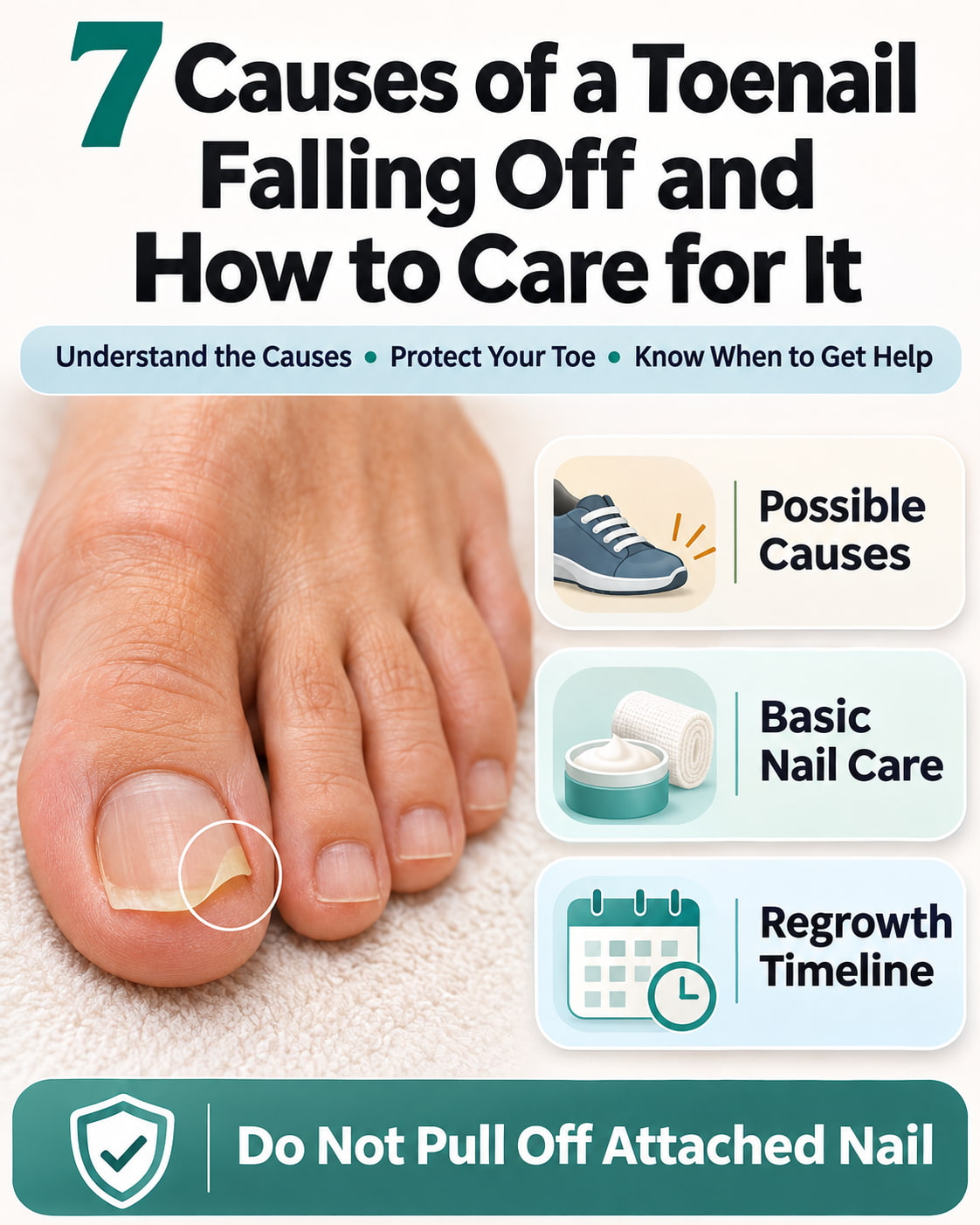
A toenail falling off may result from an injury, repeated shoe pressure, a fungal infection, psoriasis, or other changes affecting nail growth and attachment. Protect the exposed area, avoid pulling off attached nail, and check for warning signs such as severe pain, increasing redness, or drainage.
A loose toenail does not automatically mean fungus. Understanding the cause helps you decide whether basic protection is enough or whether you need a medical assessment.
What Does a Toenail Falling Off Mean?
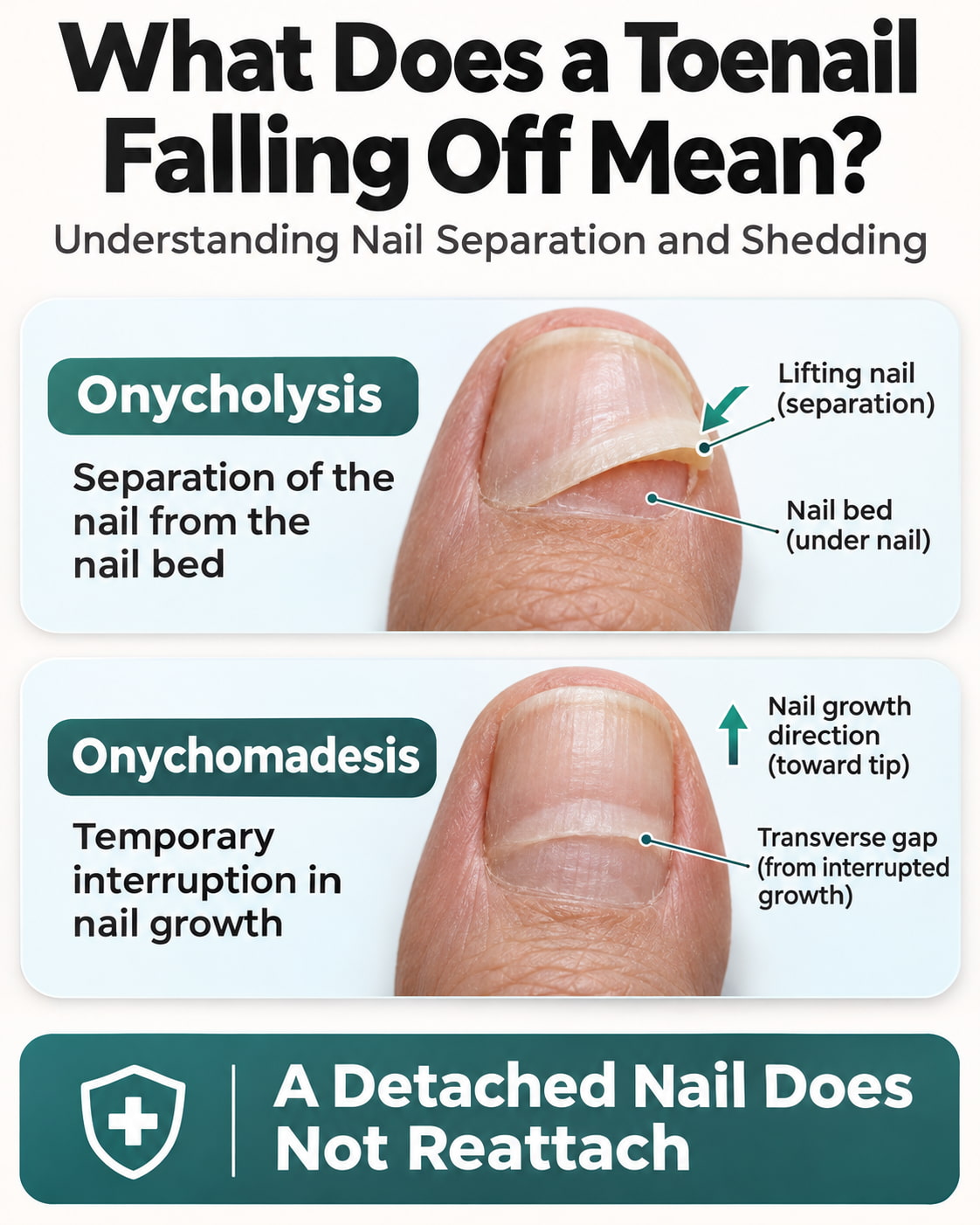
Your toenail rests on skin called the nail bed. When the nail lifts away from this surface, the change is called onycholysis. It often starts near the tip or sides and may affect only part of the nail.
A different process, called onychomadesis, happens when nail growth temporarily stops and the affected nail begins to shed.
According to DermNet’s overview of nail separation, the detached portion will not reattach to the nail bed. A new nail must grow out to replace it.
When to Get Medical Help for a Toenail Falling Off
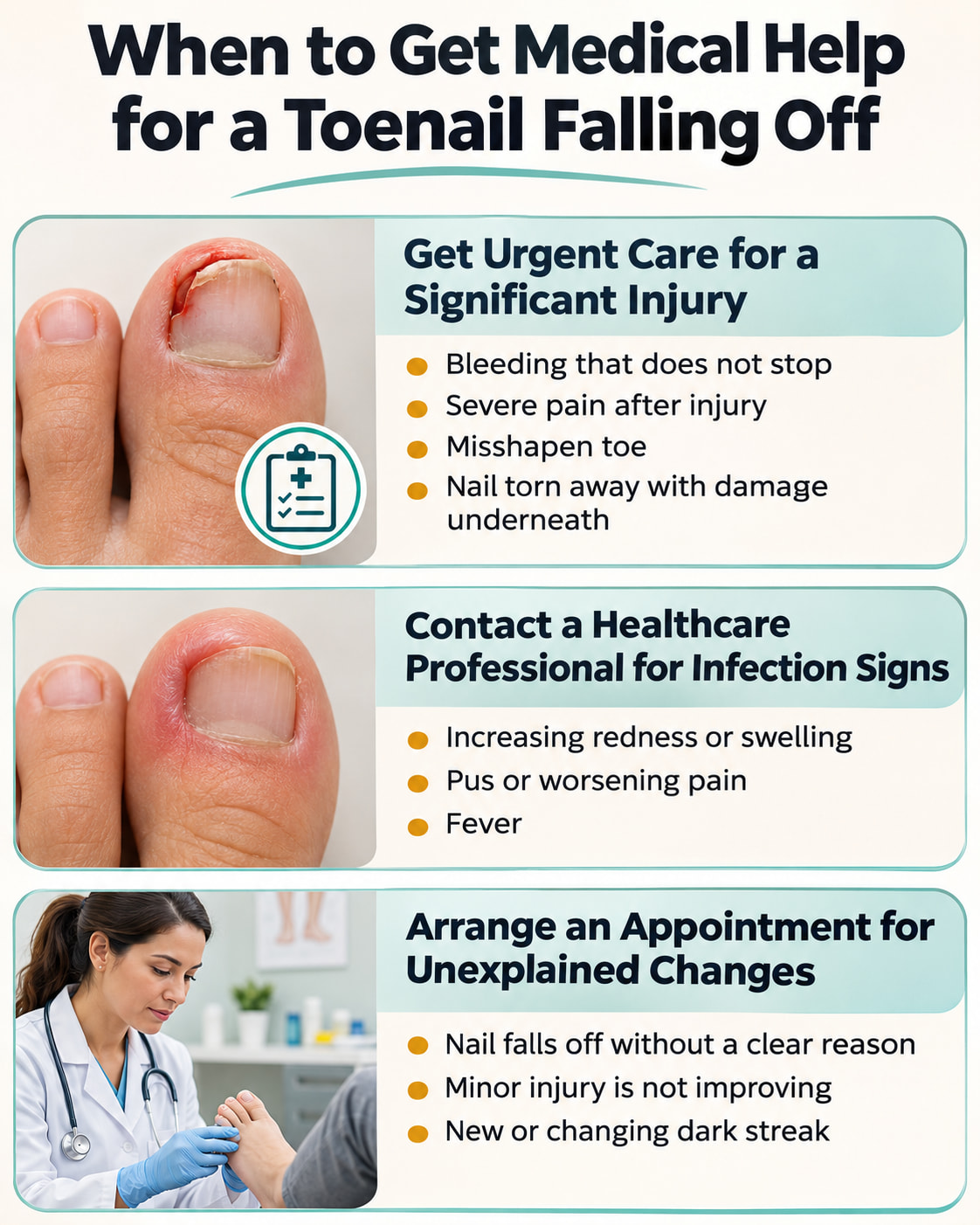
Get Urgent Care for a Significant Injury
Seek urgent medical attention if you have:
- Bleeding that does not stop.
- Severe pain after a crush injury or other impact.
- A toe that looks misshapen or cannot bend normally.
- A nail that has been forcefully torn away with visible damage underneath.
MedlinePlus guidance explains that significant nail injuries may involve damage to the nail bed or an underlying fracture.
Contact a Healthcare Professional for Infection Signs
Increasing redness, warmth, swelling, pain, pus, or fever needs prompt medical attention.
Get advice early if you have diabetes, poor circulation, or a weakened immune system. These conditions can make foot injuries more complicated, and a professional should handle difficult trimming.
Arrange an Appointment for Unexplained Changes
Have the nail checked if it falls off without a clear reason or if a minor injury is not improving after a few days.
A new or changing dark streak also deserves a dermatologist’s assessment. A dark streak does not automatically mean a serious condition, but it should not be assumed to be an ordinary bruise.
7 Causes of a Toenail Falling Off
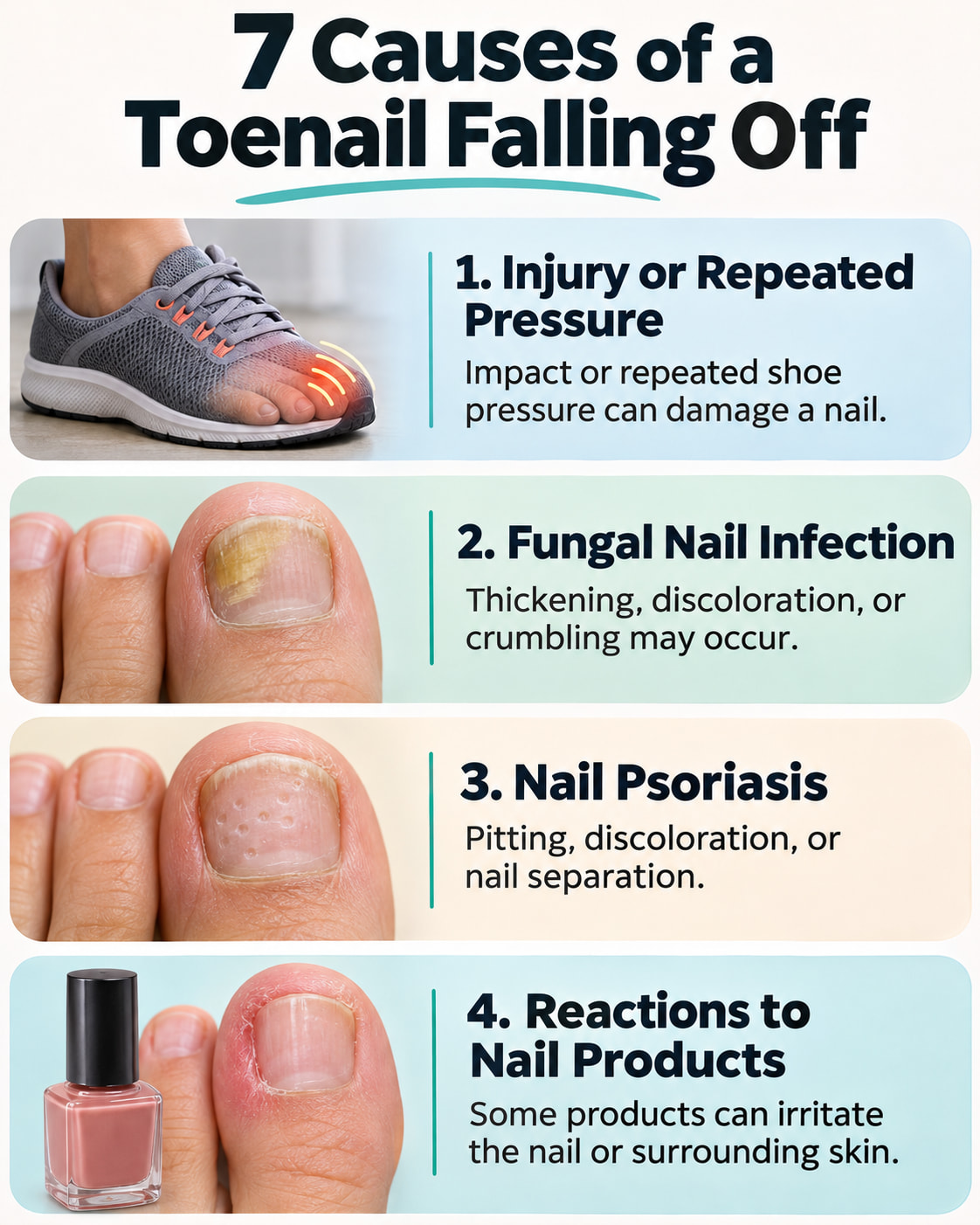
1. Injury or Repeated Pressure
Stubbing your toe, dropping something on your foot, or catching a nail can damage its attachment. Blood may collect beneath the nail, and the damaged nail may loosen afterward.
Repeated pressure can have a similar effect. For example, a runner’s big toenail may repeatedly hit the front of a shoe that does not provide enough room.
You may remember one painful event, or the damage may develop without a single obvious accident. Footwear fit and recent activities are useful details to mention during an examination.
2. Fungal Nail Infection
A fungal nail infection can make a toenail thicker, discolored, brittle, or crumbly. The affected nail may gradually lift, and sometimes most or all of it separates.
Possible changes include:
- White or yellow areas.
- Thickening or debris beneath the nail.
- A rough, crumbling edge.
- Separation from the underlying skin.
These signs do not confirm fungus by themselves. Psoriasis and injuries can look similar, so a clinician may examine nail clippings or scrapings before recommending care.
3. Nail Psoriasis
Psoriasis can affect toenails even when there are no obvious patches on the skin.
Nail changes may include small pits, discoloration, crumbling, buildup underneath, and separation from the toe. The appearance can overlap with a fungal infection.
If you already have psoriasis, mention new nail changes to your dermatologist. If you do not, avoid assuming that a pitted or loose nail establishes the diagnosis.
4. Reactions to Nail Products
Some people develop irritation or allergic reactions to ingredients in nail polish, artificial nails, gel products, or nail adhesives. These reactions can affect the surrounding skin and contribute to nail separation.
Redness, itching, or swelling may accompany the nail changes. Damage from aggressive filing or other pedicure techniques can also affect the nail.
If lifting begins after a new product or nail service, tell your clinician what was used. Avoid applying more products to cover a damaged or exposed area while the cause is being assessed.
5. Medication-Related Nail Changes
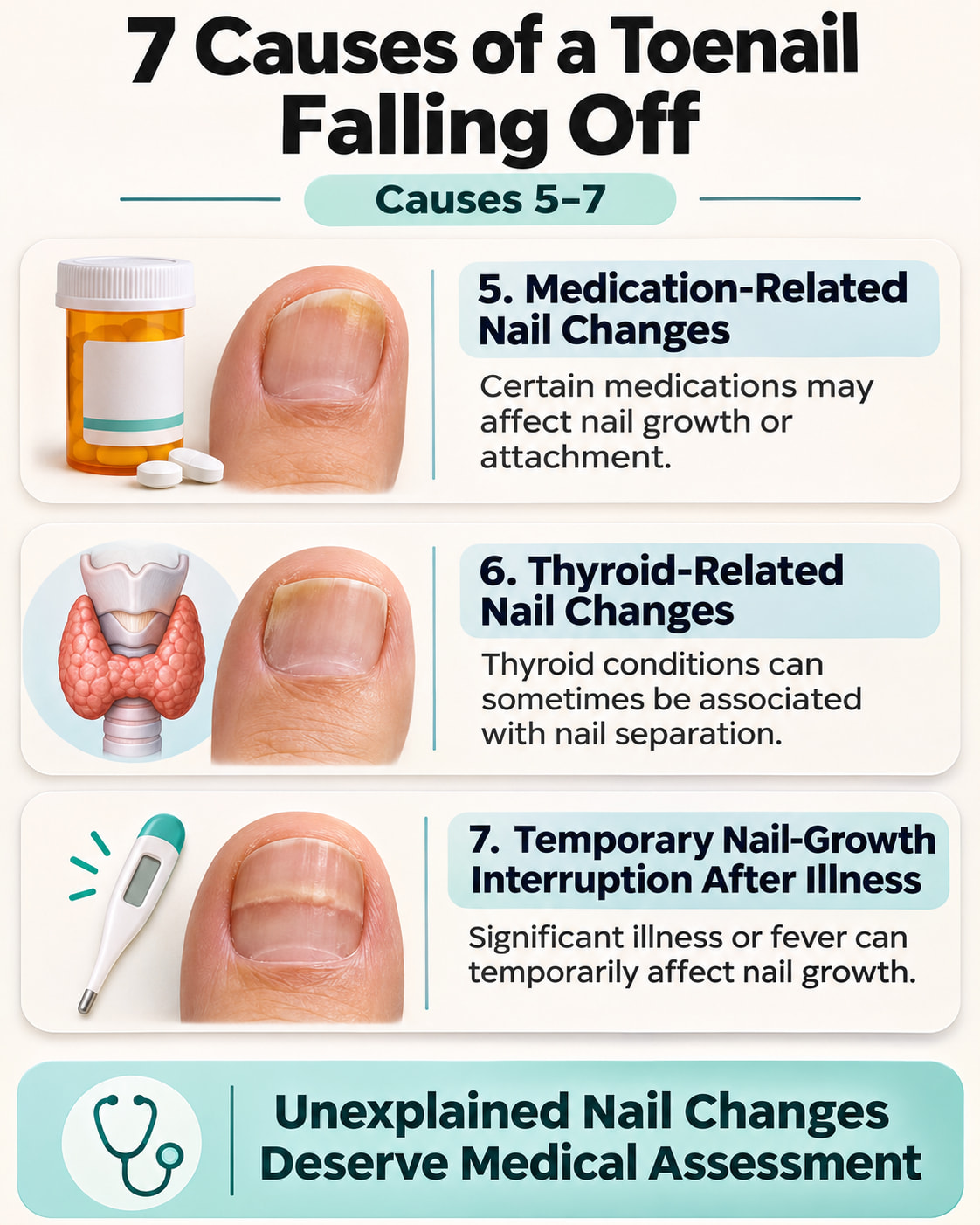
Some medications can affect nail growth or attachment. Chemotherapy is one example; certain other medicines can also contribute to nail separation.
These effects are not equally likely with every medication. Outside particular drugs, medication-related nail disease is generally uncommon.
If nail changes begin after a new prescription, tell the prescriber. Do not stop or change a prescribed medication on your own.
6. Thyroid-Related Nail Changes
Both an underactive and an overactive thyroid can be associated with nail separation.
However, a loose toenail alone cannot identify a thyroid condition. Your clinician can consider your medical history, other symptoms, and the pattern of nail changes when deciding whether further assessment is appropriate.
7. Temporary Nail-Growth Interruption After Illness
A significant illness or fever can temporarily interrupt nail growth. The resulting grooves, gaps, or shedding may become noticeable after the original illness has passed.
Nail loss has also been reported weeks after hand, foot, and mouth disease, particularly in children. However, CDC guidance states that these reports do not establish that HFMD caused the nail loss.
If several nails change after an illness, share that timing with your healthcare professional.
How to Care for a Toenail That Is Falling Off
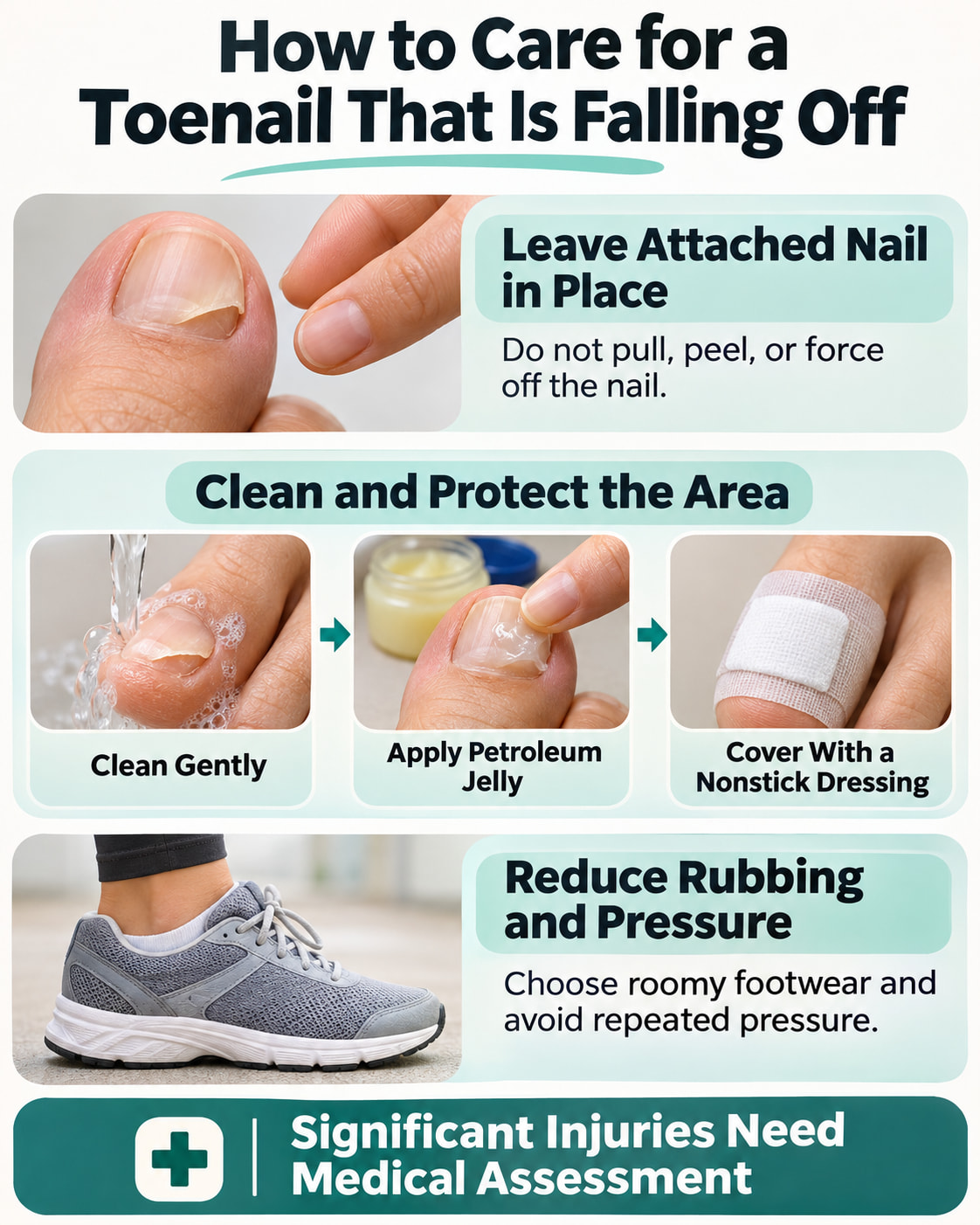
The following steps apply to minor damage. A deeply torn nail or a significant injury needs assessment before you attempt to trim or remove anything.
Leave Attached Nail in Place
Do not pull, peel, or force off the nail.
For a mild injury, you may carefully trim a small loose edge only when it is completely detached from the skin. Stop if trimming causes pain, bleeding, or resistance. Ask a clinician for help if you cannot clearly tell what is still attached.
Clean and Protect the Area
The AAD nail-care guidance recommends gentle cleaning and protection for minor injuries:
- Wash gently with soap and water.
- Apply a thin layer of petroleum jelly to exposed skin.
- Cover it with a light, nonstick dressing.
- Place adhesive on surrounding skin rather than the injured nail.
- Change the dressing daily and whenever it becomes wet.
Keep the dressing comfortable rather than tightly wrapped.
Reduce Rubbing and Pressure
Choose footwear with enough room around your toes. Reduce activities that repeatedly press or catch the damaged nail.
A cool, damp washcloth and elevating your foot may help with swelling after a minor injury. If pain or swelling increases, seek medical advice.
How Long Does a Toenail Take to Grow Back?
A complete toenail can take about 12–18 months to regrow. The AAD’s nail-fungus guidance gives this range after complete nail removal, and the NHS notes that regrowth after an injury can take up to 18 months.
The exposed skin can recover much sooner than the nail itself. Feeling more comfortable does not mean a replacement nail has finished growing.
A new nail may have grooves, ridges, or a different shape after an injury. Some changes can persist, so regrowth does not always mean an identical-looking nail.
How to Reduce the Risk of Future Toenail Damage
A few habits can help protect your nails:
- Choose roomy shoes. Your toes should not be squeezed, especially during exercise.
- Trim straight across. Avoid cutting deeply into the corners.
- Keep feet clean and dry. Wear clean socks and change damp ones.
- Use your own nail tools. Do not share clippers or scissors.
- Avoid picking and aggressive cleaning. Do not dig beneath the nail with sharp objects.
- Address athlete’s foot. Ask a pharmacist or clinician about persistent symptoms because the infection can spread to nails.
Keep socks and footwear dry while protecting an exposed nail bed with the dressing described above.
Frequently Asked Questions
Should I Pull Off a Toenail That Is Falling Off?
No. Leave attached nail in place. A small, completely detached edge may be trimmed after a mild injury, but a painful, bleeding, or substantially torn nail should be assessed by a healthcare professional.
Can a Detached Toenail Reattach?
The separated portion will not naturally attach to the nail bed again. Recovery depends on new nail growth replacing the damaged area.
Why Is My Toenail Falling Off Without Pain?
Nail separation is often painless. Repeated pressure, fungal infection, and other nail conditions may cause lifting without significant discomfort. A lack of pain does not identify the cause, so unexplained separation still deserves an examination.
Does a Toenail Falling Off Always Mean Fungus?
No. Injury, psoriasis, nail-product reactions, medication effects, and other medical factors can also cause separation. A clinician may need a nail sample to determine whether fungus is involved.
Will a New Toenail Push the Old One Off?
Sometimes. As a new nail grows, it can gradually displace the damaged nail. Do not pull at the old nail to speed up the process.
Can I Wear Shoes or Exercise After Losing a Toenail?
Roomy footwear can help protect the toe, but activity depends on the injury. Reduce activity if shoes or exercise cause rubbing, pain, or bleeding. After a significant injury, follow your clinician’s guidance about returning to sports.
Conclusion
A toenail falling off can have several causes, and identifying the reason helps guide appropriate care. Protect the area, leave attached nail alone, and allow time for replacement growth.
Arrange a medical assessment if the cause is unclear, the area is worsening, or you have a condition that makes foot injuries higher risk.
This content is for informational purposes only and not medical advice.
References
- American Academy of Dermatology. Tips to care for an injured nail.
- MedlinePlus. Nail injuries.
- American Academy of Dermatology. Nail fungus: Diagnosis and treatment.
- American Academy of Dermatology. Nail psoriasis.
- American Academy of Dermatology. Nail changes a dermatologist should examine.
- NHS. Nail problems.
- NHS. Fungal nail infection.