
Normal TSH levels depend on age, laboratory method, pregnancy status, medications, and individual health factors. In many adults, the laboratory reference range is approximately 0.4 to 4.0 mIU/L, but children may have higher limits, and TSH can naturally rise somewhat in older adults.
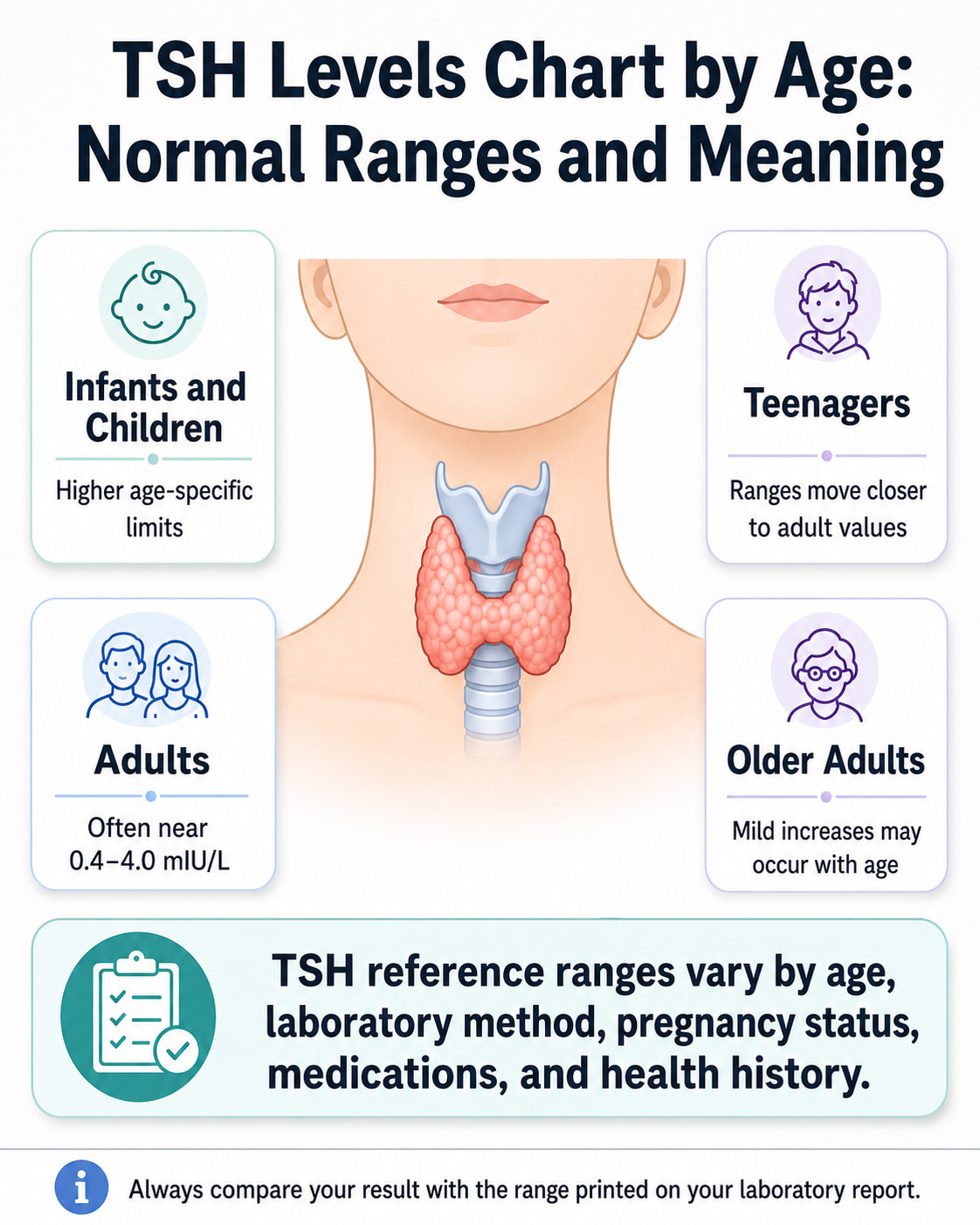
A TSH levels chart by age can provide useful context, but it should not replace the reference range printed on your laboratory report. Doctors usually interpret TSH together with free T4, symptoms, medications, previous results, and thyroid history.
TSH Levels Chart by Age
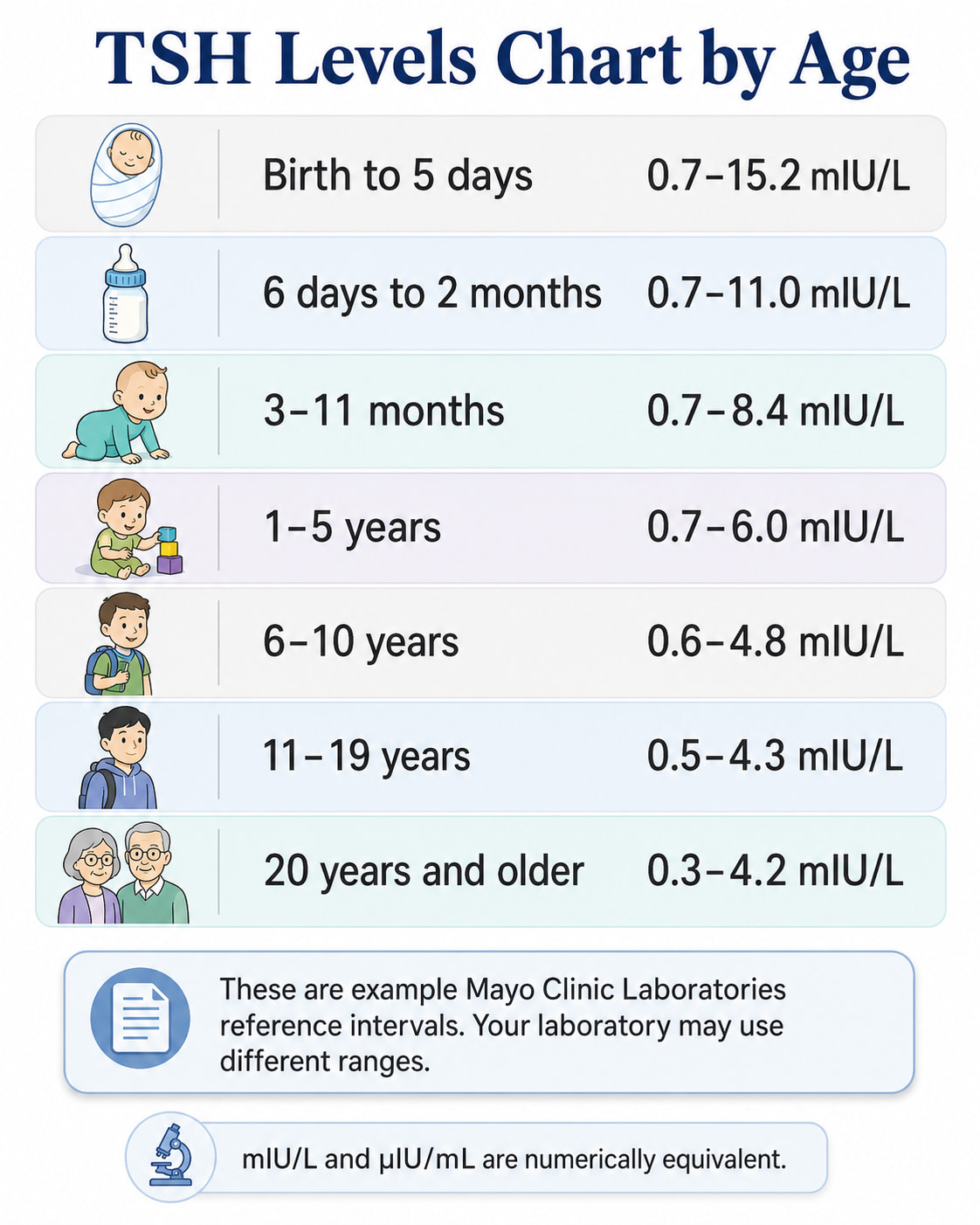
The following chart uses current age-specific reference intervals published by Mayo Clinic Laboratories.
| Age | Example Normal TSH Range |
|---|---|
| Birth to 5 days | 0.7–15.2 mIU/L |
| 6 days to 2 months | 0.7–11.0 mIU/L |
| 3–11 months | 0.7–8.4 mIU/L |
| 1–5 years | 0.7–6.0 mIU/L |
| 6–10 years | 0.6–4.8 mIU/L |
| 11–19 years | 0.5–4.3 mIU/L |
| 20 years and older | 0.3–4.2 mIU/L |
These are example laboratory reference intervals, not universal diagnostic thresholds. Another laboratory may use slightly different lower and upper limits because testing equipment, methods, and reference populations vary. Always compare your result with the range shown beside it on your own report.
Important Notes About the Chart
- mIU/L and µIU/mL are numerically equivalent. A TSH of 3.0 mIU/L is the same numerical concentration as 3.0 µIU/mL.
- Newborn and pediatric ranges are different from adult ranges.
- Pregnancy requires pregnancy-specific interpretation.
- Older adults may have a mildly higher TSH without having an underactive thyroid.
- People taking thyroid medicine may have an individualized target rather than the general population range.
- A reference interval does not confirm or rule out disease by itself.
What Is TSH?
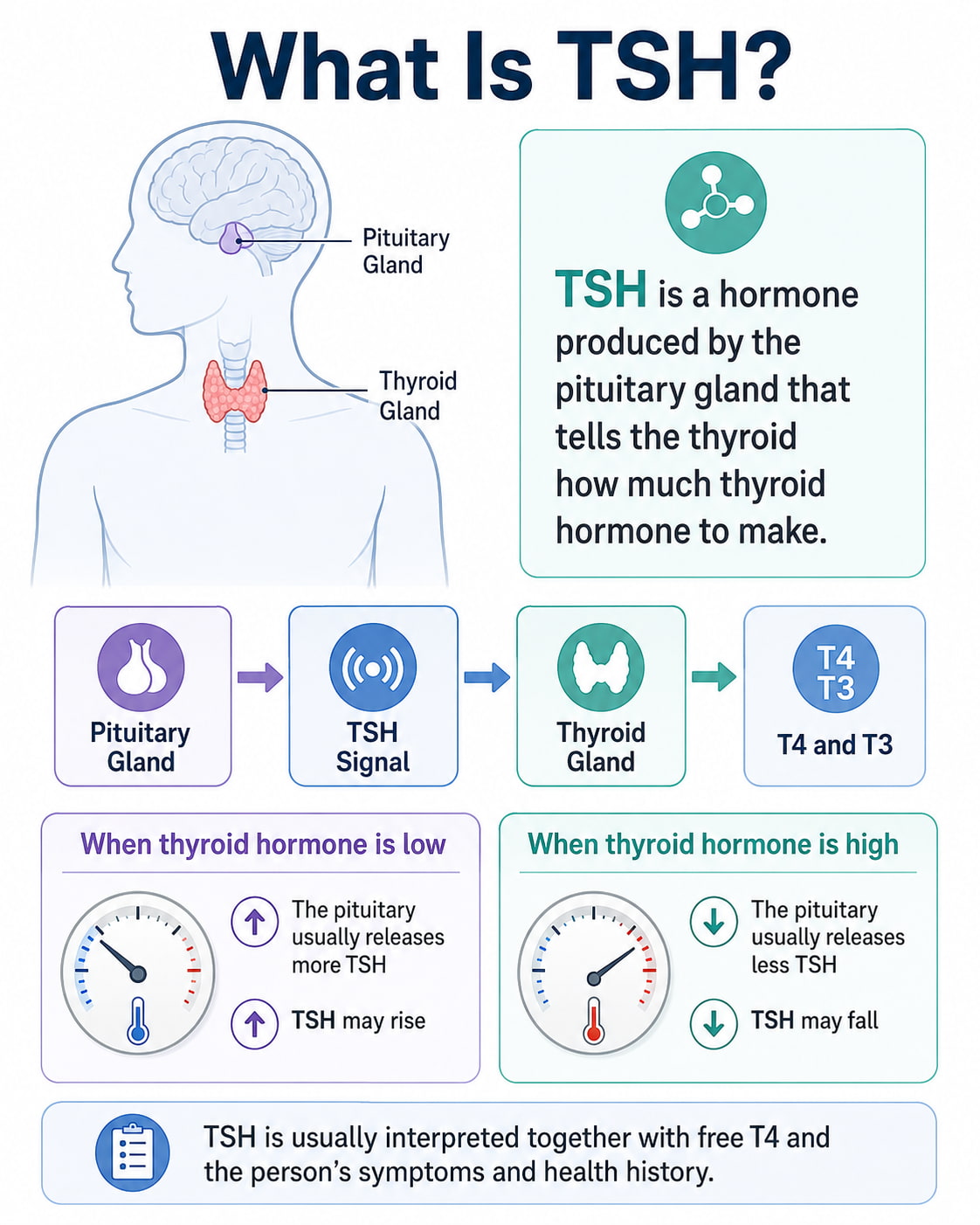
TSH stands for thyroid-stimulating hormone, also called thyrotropin. It is produced by the pituitary gland, a small gland at the base of the brain.
TSH acts as a signal telling the thyroid gland how much thyroid hormone to produce. The thyroid mainly releases thyroxine, or T4, which is converted into the more active hormone T3 in body tissues.
The relationship works like a thermostat:
- When thyroid hormone levels are low, the pituitary usually releases more TSH.
- When thyroid hormone levels are high, the pituitary usually releases less TSH.
This is why a high TSH often points toward an underactive thyroid, while a low TSH often points toward an overactive thyroid. However, exceptions can occur, particularly with pituitary disorders, severe illness, pregnancy, medications, and laboratory interference.
The American Thyroid Association’s thyroid function testing guide explains that TSH is generally the best initial blood test for evaluating thyroid function.
What Is a Normal TSH Level for Adults?
Many laboratories use an adult TSH reference range close to:
0.4 to 4.0 mIU/L
However, some laboratories use values such as 0.3 to 4.2 mIU/L, 0.4 to 4.5 mIU/L, or another similar interval.
A result within the laboratory range usually suggests that the thyroid is functioning normally when the pituitary gland is healthy. However, a normal TSH does not explain every thyroid-related symptom, and unusual combinations of TSH and free T4 may require further investigation.
The following general interpretation is commonly used for adults who are not pregnant and are not taking medicines intended to suppress TSH:
| TSH Result | General Interpretation |
|---|---|
| Below the laboratory range | Low TSH |
| Within the laboratory range | Usually considered normal |
| Slightly above the range | Mildly elevated TSH |
| Clearly above the range | More consistent with reduced thyroid function, depending on free T4 |
These categories do not determine whether treatment is necessary. Treatment decisions depend on factors such as free T4, symptoms, age, pregnancy plans, thyroid antibodies, heart health, and how persistent the abnormal result is.
How TSH Levels Change With Age
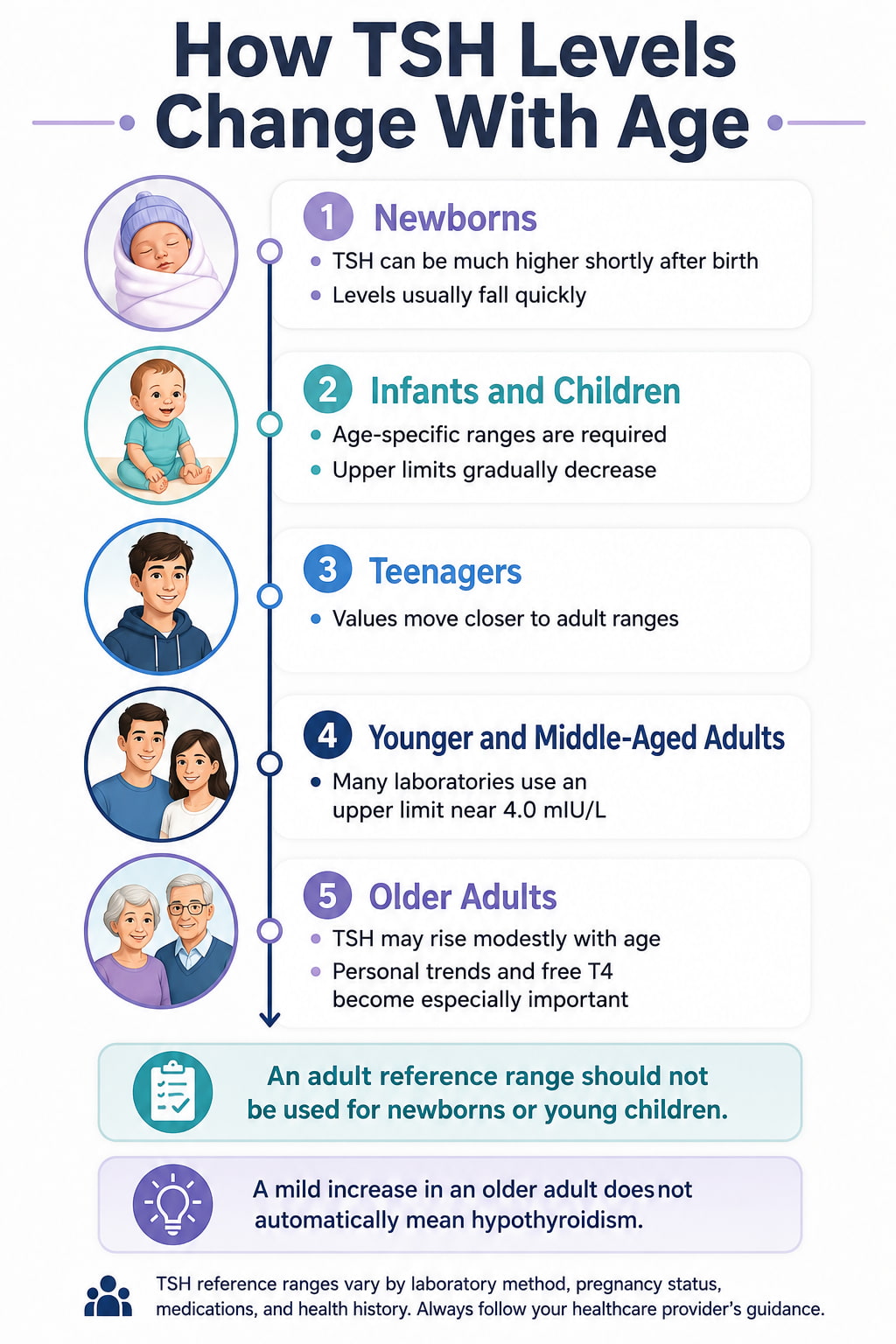
TSH Levels in Newborns
TSH can be much higher during the first days of life than it is later in childhood or adulthood. The value generally falls quickly after birth.
Newborn screening programs test babies for congenital hypothyroidism because thyroid hormone is important for normal growth and brain development. Screening thresholds and follow-up procedures may differ from the serum ranges used for older children.
An adult TSH range should never be used to interpret a newborn’s result.
TSH Levels in Infants and Children
Normal TSH upper limits gradually decrease through infancy and childhood. For example, Mayo Clinic Laboratories lists an upper limit of 11.0 mIU/L for babies ages 6 days to 2 months but 4.8 mIU/L for children ages 6 to 10 years.
Pediatric thyroid results should be compared with an age-specific range. Doctors may also consider:
- Growth rate
- Puberty and development
- Free T4
- Family history
- Thyroid antibodies
- Symptoms
- Newborn screening history
TSH Levels in Teenagers
By adolescence, the normal range becomes closer to the adult range. Mayo Clinic Laboratories currently lists a TSH reference interval of 0.5 to 4.3 mIU/L for ages 11 to 19.
Symptoms such as fatigue, weight changes, mood changes, irregular menstrual periods, difficulty concentrating, or slowed growth can have many causes. A TSH result should therefore be evaluated with other findings rather than interpreted alone.
TSH Levels in Younger and Middle-Aged Adults
Most adults younger than 50 or 60 are evaluated using the laboratory’s standard adult range. In many laboratories, the upper limit is near 4.0 mIU/L.
An adult result slightly outside the range may be repeated before a diagnosis is made, particularly when free T4 is normal and the person has no significant symptoms. Temporary illness, medication changes, supplement interference, or normal biological variation may affect the result.
TSH Levels in Adults Over 50
TSH may begin to trend upward with age, even in people without clear thyroid disease.
A 2024 multicenter study based on approximately 7.6 million TSH tests found that the upper TSH reference limit began increasing around age 50 in women and age 60 in men. Applying age-specific intervals reduced the number of older adults classified as having hypothyroidism. (Jansen et al., 2024)
This does not mean an elevated result should be ignored. It means clinicians may consider age before labeling a mild elevation as thyroid disease.
TSH Levels in Adults Over 70
A mildly elevated TSH with a normal free T4 may be more common in older adults. Interpretation should consider:
- Whether the result is new or stable
- Free T4 level
- Thyroid antibodies
- Symptoms
- Heart rhythm and cardiovascular history
- Current medications
- Frailty and other health conditions
- Previous thyroid treatment
A 2025 study using US and Chinese population data found that the upper TSH percentile increased with age. Using age-, sex-, and race-specific intervals reclassified almost half of participants initially categorized as having subclinical hypothyroidism as being within an adjusted reference range. (Li et al., 2025)
TSH Levels in Adults Over 80
TSH may be higher after age 80 without an underlying thyroid disorder. The MedlinePlus TSH test guide specifically notes that older adults may have higher values despite having a healthy thyroid.
Recent longitudinal research published in 2026 found that most people had relatively stable thyroid function as they aged, with only a slight average increase in TSH. However, thyroid test results became more variable after approximately age 65. This supports looking at personal trends and repeat results instead of relying on one universal cutoff.
Does TSH Normally Increase With Age?
TSH often increases modestly with age, especially in older adulthood. Several large studies have found that the upper end of the TSH distribution is higher among older adults than among younger adults.
Possible explanations include changes in:
- Pituitary-thyroid signaling
- Thyroid hormone metabolism
- Medication use
- Chronic illness
- Iodine exposure
- Autoimmune thyroid disease
- Individual thyroid set points
Age-related increases are usually modest. A markedly elevated TSH, a low free T4, significant symptoms, or steadily rising results still require medical evaluation.
What Does a High TSH Level Mean?
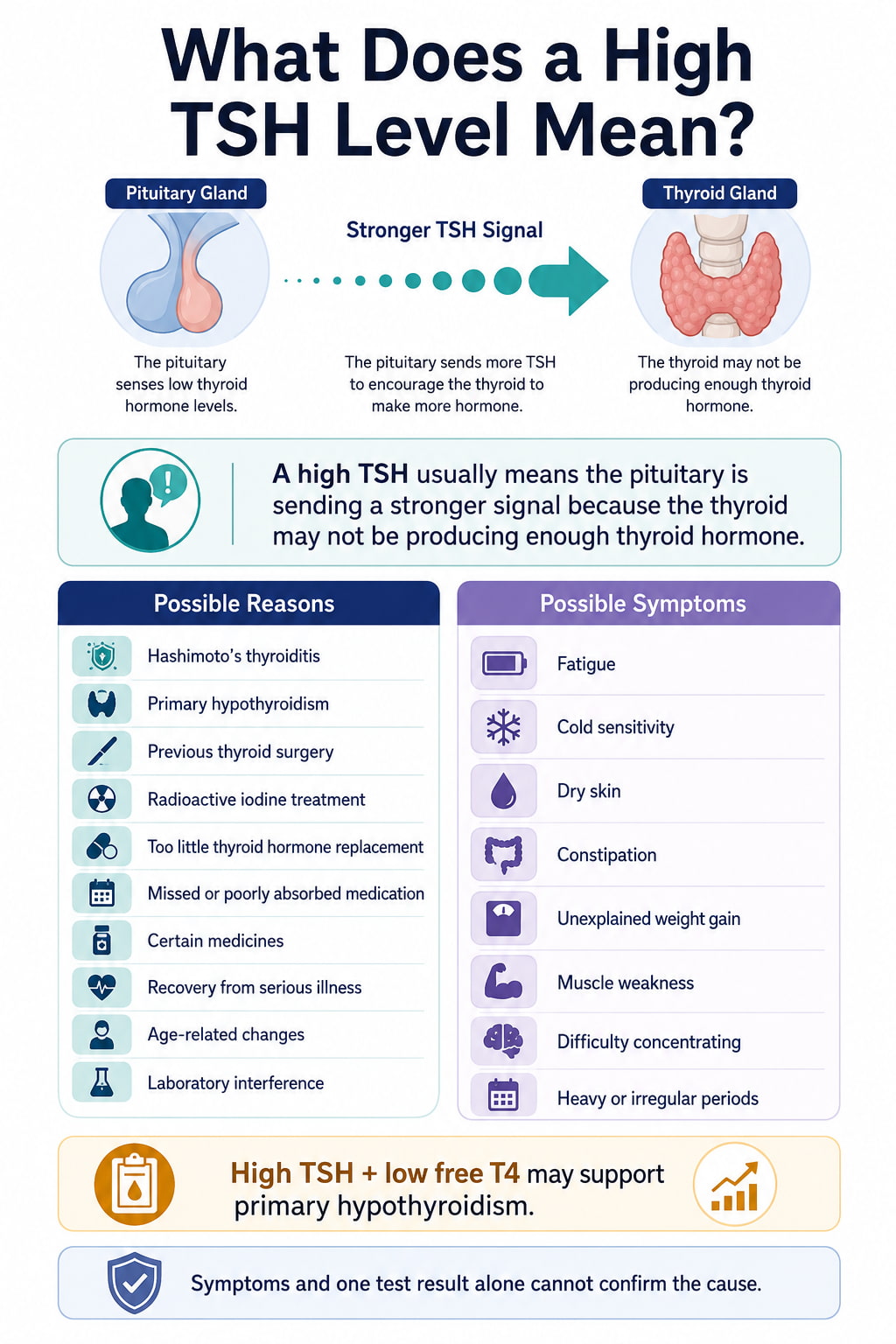
A high TSH usually means the pituitary gland is sending a stronger signal because the thyroid is not producing enough thyroid hormone.
Possible causes include:
- Hashimoto’s thyroiditis
- Primary hypothyroidism
- Previous thyroid surgery
- Radioactive iodine treatment
- Certain medications
- Too little thyroid hormone replacement
- Missed levothyroxine doses
- Reduced levothyroxine absorption
- Recovery from a serious illness
- Age-related changes
- Laboratory interference
Common Symptoms Associated With Hypothyroidism
People with an underactive thyroid may experience:
- Fatigue
- Increased sensitivity to cold
- Dry skin
- Constipation
- Unexplained weight gain
- Muscle aches or weakness
- Slower heart rate
- Thinning hair
- Heavy or irregular menstrual periods
- Difficulty concentrating
- Low mood
- Puffiness around the face
These symptoms are not specific to thyroid disease. Some people with an elevated TSH have few or no symptoms, while people with similar symptoms may have normal thyroid results.
What Does a Low TSH Level Mean?
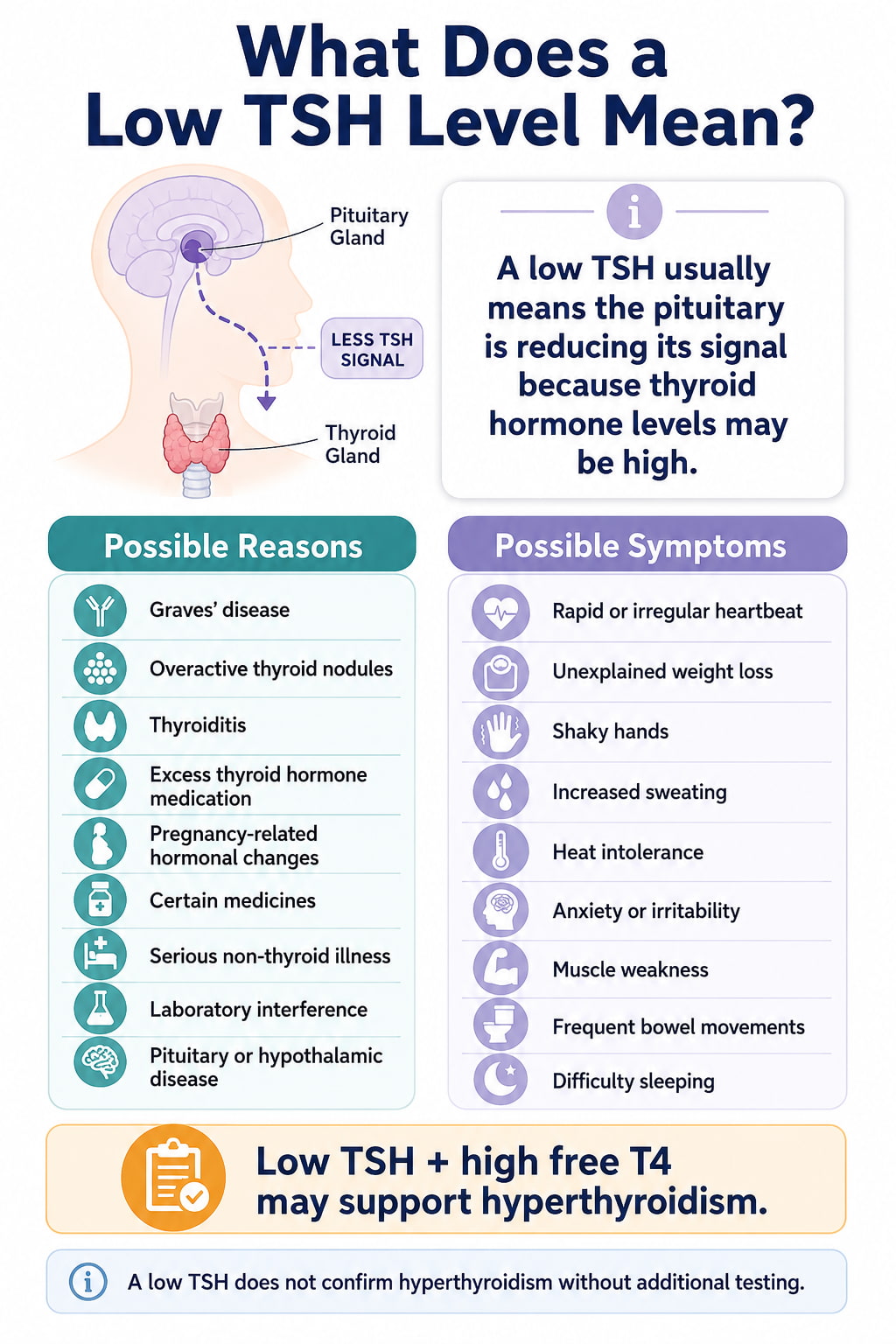
A low TSH usually means the pituitary is reducing its signal because thyroid hormone levels are high.
Possible causes include:
- Graves’ disease
- Overactive thyroid nodules
- Thyroiditis
- Excess thyroid hormone medication
- Pregnancy-related hormonal changes
- Certain medications
- Serious non-thyroid illness
- Laboratory interference
- Pituitary or hypothalamic disease
Common Symptoms Associated With Hyperthyroidism
Possible symptoms include:
- Rapid or irregular heartbeat
- Unexplained weight loss
- Shaky hands
- Increased sweating
- Heat intolerance
- Anxiety or irritability
- Muscle weakness
- Frequent bowel movements
- Difficulty sleeping
- Neck swelling or goiter
Older adults may not develop the classic symptoms. They may instead experience fatigue, reduced appetite, weakness, heart rhythm changes, or social withdrawal.
How TSH and Free T4 Results Are Interpreted Together
TSH is most useful when interpreted with free T4. Free T4 measures the portion of circulating T4 that is not bound to proteins and is available to body tissues.
| TSH | Free T4 | Possible Meaning |
|---|---|---|
| High | Low | Primary hypothyroidism |
| High | Normal | Possible subclinical hypothyroidism |
| Low | High | Hyperthyroidism |
| Low | Normal | Possible subclinical hyperthyroidism |
| Low or inappropriately normal | Low | Possible pituitary or hypothalamic disorder |
| Normal | Normal | Thyroid function is usually normal |
“Subclinical” means that TSH is outside the reference interval while free T4 remains within its normal range. It does not mean symptoms are imaginary or that the result should automatically be treated.
The appropriate next step may involve repeat testing, monitoring, thyroid antibody testing, medication review, or treatment depending on the full clinical situation. The American Thyroid Association confirms that an elevated TSH with low free T4 is typical of primary hypothyroidism, while a low TSH with elevated free T4 is typical of hyperthyroidism.
Can You Have Thyroid Disease With a Normal TSH?
It is possible, although uncommon in otherwise healthy people.
Examples include:
- Pituitary or hypothalamic disease
- Recent changes in thyroid medication
- Early or fluctuating thyroid disease
- Severe non-thyroid illness
- Pregnancy
- Laboratory interference
- Unusual thyroid hormone resistance or transport disorders
A normal TSH is generally reassuring, but healthcare professionals may order free T4, T3, thyroid antibodies, or other tests when symptoms or medical history suggest that more evaluation is necessary.
Factors That Can Affect TSH Test Results
Time of Day
TSH follows a daily rhythm. Levels generally peak during the night and are lower during the daytime. The difference is usually not large enough to change routine interpretation, but testing at a similar time can make repeated measurements easier to compare.
Illness
Serious illness can temporarily lower or raise TSH even when the thyroid itself is healthy. Testing may need to be repeated after recovery when an unexpected result does not match the clinical picture.
Pregnancy
Pregnancy changes thyroid hormone production, binding proteins, iodine needs, and TSH levels. General adult ranges may not be appropriate.
Medications
Medicines that may affect thyroid function or test interpretation include:
- Thyroid hormone replacement
- Antithyroid medicines
- Amiodarone
- Lithium
- Corticosteroids
- Dopamine-related medicines
- Some cancer treatments
- Estrogen-containing medicines
Do not stop a prescription medicine before testing unless your healthcare professional tells you to do so.
Biotin Supplements
Biotin is commonly included in supplements marketed for hair, skin, or nails. It can interfere with some laboratory methods and may make TSH appear falsely low while making thyroid hormone levels appear falsely high.
The American Thyroid Association advises avoiding biotin for at least two days before thyroid testing, but the appropriate timing may depend on the dose and the laboratory method. Tell your healthcare professional and laboratory about every supplement you take.
Iodine Exposure
Too little or too much iodine can influence thyroid function. Iodine may be found in:
- Iodized salt
- Seaweed products
- Some supplements
- Certain medications
- Iodine-containing imaging contrast
Do not start a high-dose iodine supplement to correct an abnormal TSH without medical guidance.
Thyroid Medication Timing and Absorption
Levothyroxine absorption may be affected by food, calcium, iron, antacids, and certain medications. Inconsistent dosing can cause TSH results to fluctuate.
Take thyroid medicine exactly as prescribed and tell your healthcare professional about missed doses or changes in your routine.
TSH Levels During Pregnancy
Pregnancy requires separate interpretation because TSH often falls during the first trimester as pregnancy hormones stimulate the thyroid.
The ideal approach is to use:
- Trimester-specific ranges
- Population-specific ranges
- The laboratory’s pregnancy reference interval
- An individualized target for anyone already taking thyroid medication
The American Thyroid Association released updated pregnancy and postpartum guidelines in June 2026. The guidance covers thyroid testing, hypothyroidism, hyperthyroidism, thyroid autoimmunity, iodine, thyroid nodules, and postpartum thyroid dysfunction. Pregnant readers should follow the target provided by their obstetrician or thyroid specialist rather than a general adult TSH chart. (2026 ATA pregnancy guideline announcement)
Contact a healthcare professional promptly if you are pregnant, planning pregnancy, or recently gave birth and have an abnormal TSH result or a history of thyroid disease.
Should an Abnormal TSH Test Be Repeated?
A repeat test may be appropriate when:
- The elevation or suppression is mild
- Free T4 is normal
- You recently had a serious illness
- You recently started or changed medication
- You take biotin or another interfering supplement
- The result does not match your symptoms
- A laboratory error or interference is suspected
- The result is unexpected compared with earlier tests
The timing of repeat testing depends on the situation. Do not delay follow-up when free T4 is abnormal, symptoms are significant, pregnancy is involved, or the result is markedly different from previous tests.
When to Contact a Healthcare Professional
Arrange medical follow-up if:
- Your TSH is outside your laboratory’s reference interval
- An abnormal result persists on repeat testing
- You have symptoms of hypothyroidism or hyperthyroidism
- You notice swelling in the front of your neck
- You are pregnant or planning pregnancy
- Your child has an abnormal thyroid result
- You take thyroid medicine and your TSH has changed
- You develop a rapid or irregular heartbeat
- Your symptoms are getting worse
Seek urgent medical care for severe symptoms such as chest pain, fainting, severe breathing difficulty, extreme confusion, or a dangerously rapid heartbeat.
Frequently Asked Questions
What is a normal TSH level for my age?
The normal range depends on the laboratory and testing method. Mayo Clinic Laboratories currently uses 0.3 to 4.2 mIU/L for adults age 20 and older, while infants and children have age-specific ranges with higher upper limits.
Older adults may naturally have somewhat higher TSH levels. Your personal laboratory range and free T4 result are more important than a general online chart.
Is a TSH of 4.5 high?
A TSH of 4.5 mIU/L may be slightly above the range used by some laboratories but within or close to the upper limit used by others.
Its meaning depends on your age, free T4, symptoms, thyroid antibodies, pregnancy status, medication use, and previous results. A clinician may recommend repeat testing rather than making a diagnosis from one result.
Is a TSH of 5 normal for an older adult?
A TSH of 5 mIU/L may fall above a standard adult laboratory range, but mild elevations are more common in older adults. It should not automatically be assumed to represent hypothyroidism.
Free T4, symptoms, medications, thyroid antibodies, heart health, and whether the level is stable or rising should all be considered.
What TSH level means hypothyroidism?
No single TSH number confirms hypothyroidism in every person. Primary hypothyroidism is generally supported by a high TSH combined with a low free T4.
A high TSH with a normal free T4 may indicate subclinical hypothyroidism, temporary variation, medication effects, or an age-related change.
Can stress affect TSH levels?
Ordinary emotional stress does not always cause a meaningful TSH change. However, severe physical stress, hospitalization, acute illness, disrupted sleep, and certain medications may temporarily affect thyroid test results.
Why is my TSH high but free T4 normal?
This pattern may indicate subclinical hypothyroidism. It can also occur temporarily after illness, with certain medications, during inconsistent thyroid medication use, or because the laboratory range does not fully account for age.
Doctors may repeat the tests and check thyroid peroxidase antibodies before deciding whether monitoring or treatment is appropriate.
What is considered a dangerously high or low TSH?
There is no universal “dangerous” TSH number because risk depends on free T4 or T3 levels, symptoms, age, heart health, pregnancy, and the cause of the abnormality.
A very abnormal result or severe symptoms require prompt medical evaluation. Do not adjust thyroid medication based only on an online chart.
Conclusion
A TSH levels chart by age can help you understand how thyroid reference ranges change from infancy through older adulthood. Children generally have higher upper limits, most adults are evaluated using a range near 0.4 to 4.0 mIU/L, and mildly higher values may become more common with age.
The most important number is the reference interval printed on your own laboratory report. Review an abnormal result with a healthcare professional who can consider free T4, symptoms, medications, pregnancy status, previous tests, and your overall health.
This content is for informational purposes only and not medical advice.
References
- Mayo Clinic Laboratories: Thyroid-Stimulating Hormone Reference Values
- American Thyroid Association: Thyroid Function Tests
- MedlinePlus: TSH Blood Test and Interpretation
- Jansen et al., 2024: Age-Specific TSH and Free T4 Reference Intervals
- Li et al., 2025: Thyroid Reference Intervals by Age, Sex, and Race
- American Thyroid Association: 2026 Pregnancy and Postpartum Guideline Update