
Back fat exercises for women over 50 can help strengthen and tone the muscles of your upper and mid-back, but they do not remove fat from just one area. What they can do is build muscle, support better posture, improve daily function, and help with overall fat loss when paired with regular activity and sustainable eating habits. The CDC recommends that older adults get at least 150 minutes of moderate-intensity aerobic activity each week, plus muscle-strengthening activity and balance work.

That is why this topic matters. After 50, lean muscle mass tends to decline with age, while body fat percentage can rise if strength training is not maintained. Mayo Clinic notes that strength training helps preserve and enhance muscle mass at any age, and the National Institute on Aging says physical activity supports healthy aging, mobility, and independence.
What “Back Fat Exercises” Really Mean
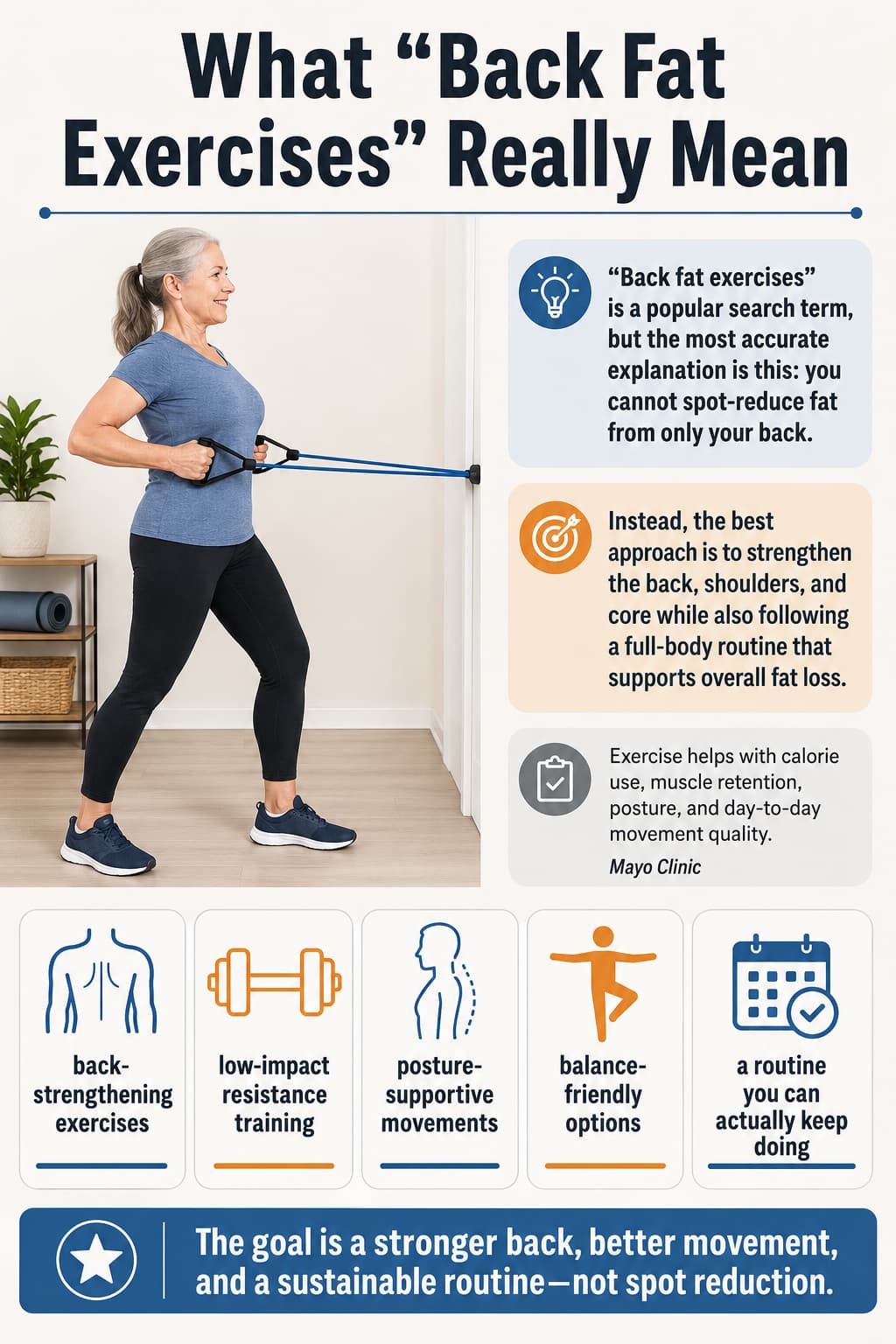
“Back fat exercises” is a popular search term, but the most accurate explanation is this: you cannot spot-reduce fat from only your back. Instead, the best approach is to strengthen the back, shoulders, and core while also following a full-body routine that supports overall fat loss. Exercise helps with calorie use, muscle retention, posture, and day-to-day movement quality, as explained by Mayo Clinic.
For women over 50, that usually means focusing on:
- back-strengthening exercises
- low-impact resistance training
- posture-supportive movements
- balance-friendly options
- a routine you can actually keep doing
Why Back Fat Exercises for Women Over 50 Matter
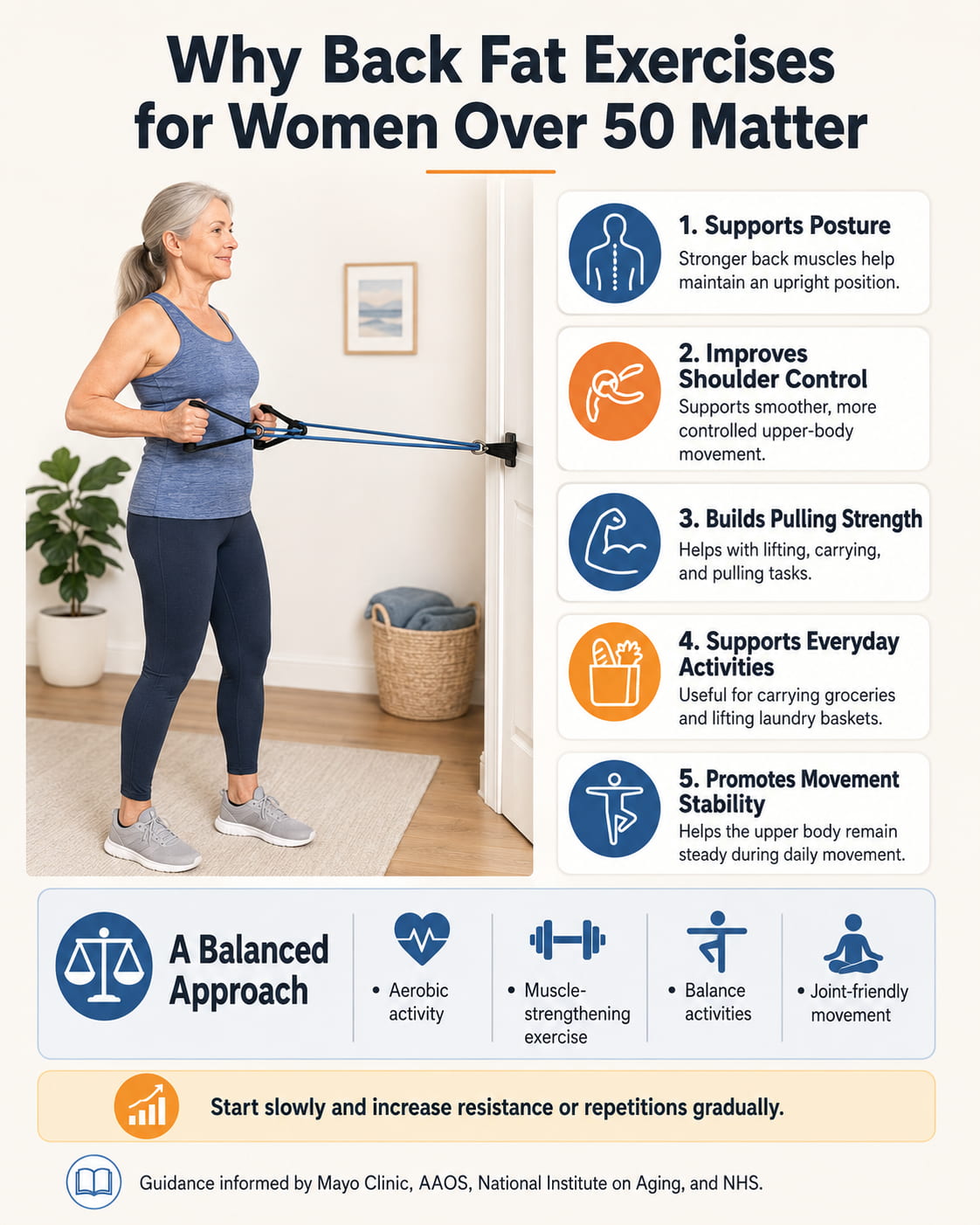
A stronger back does more than improve appearance. It can support posture, shoulder control, pulling strength, and everyday tasks like carrying groceries, lifting laundry baskets, and staying steady during movement. Mayo Clinic notes that strong back muscles matter for posture, and AAOS says strengthening the muscles that support the spine helps keep the back and upper body stable.
This age group also benefits from exercise choices that are joint-friendly and realistic. The National Institute on Aging says older adults benefit from aerobic, muscle-strengthening, and balance activities, and NHS guidance encourages building up slowly and progressing gradually.
Before You Start Back Fat Exercises for Women Over 50
Start with a level you can control. Mayo Clinic advises using proper form and choosing resistance that challenges your muscles without forcing sloppy reps. A light warm-up of about 5 to 10 minutes is also a smart idea before strength work or stretching.
Use these simple rules before your workout:
- warm up with marching, arm circles, shoulder rolls, or easy walking
- move slowly enough to stay in control
- keep your neck relaxed and your shoulders down
- breathe steadily instead of holding your breath
- stop if you feel sharp, unusual, or worsening pain
- use a wall, chair, or bench for support when needed
Muscles These Exercises Target
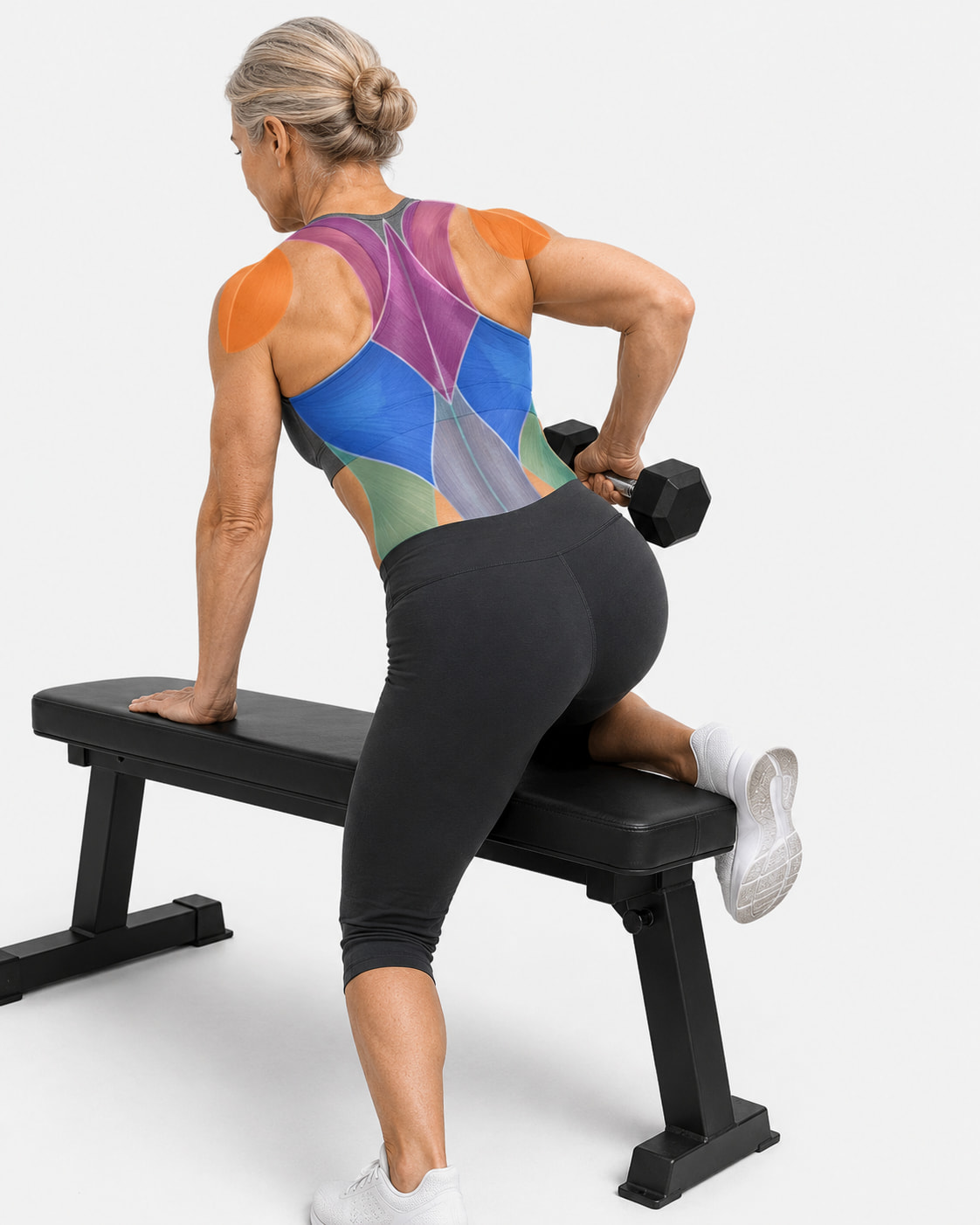
The best back fat exercises for women over 50 usually train more than one area at once. Depending on the movement, they can work the:
- latissimus dorsi
- rhomboids
- middle and lower trapezius
- rear deltoids
- spinal support muscles
- core stabilizers
That is one reason these exercises are useful. They do not just “hit the back.” They also help improve posture, shoulder blade control, and trunk stability, which is consistent with guidance from AAOS.
9 Best Back Fat Exercises for Women Over 50
These back fat exercises for women over 50 can help strengthen and tone the upper and mid-back, support better posture, and improve everyday function. While you cannot spot-reduce fat, these moves can help build muscle and support overall fat loss when paired with regular activity and healthy habits.
1. Resistance Band Row
How to do it
- Anchor a resistance band at chest height.
- Hold one end in each hand and step back until the band is taut.
- Stand tall with your chest lifted.
- Pull your elbows back and squeeze your shoulder blades together.
- Pause briefly, then return slowly.
- Repeat for controlled reps.
Why it works
This is one of the best starter exercises because it strengthens the upper and mid-back without needing heavy weights. It is easy to scale and usually feels more joint-friendly than many gym machines.
Muscles worked
Rhomboids, middle traps, lats, rear shoulders, and arm flexors.
Trainer Tip
Do not shrug your shoulders up. Think about pulling your shoulder blades back and down.
2. Chair-Supported Dumbbell Row
How to do it
- Place one hand and the same-side knee on a chair or bench for support.
- Hold a dumbbell in the opposite hand.
- Keep your back flat and neck neutral.
- Pull the dumbbell toward your hip.
- Lower it slowly with control.
- Complete all reps, then switch sides.
Why it works
This row variation gives extra support, which is helpful for women over 50 who want to train the back without feeling unstable. It lets you focus on the pull instead of balance.
Muscles worked
Lats, rhomboids, rear delts, biceps, and core stabilizers.
Trainer Tip
Pull toward your hip, not straight up to your shoulder. That usually helps you feel the back more.
3. Band Pull-Apart
How to do it
- Hold a light resistance band with both hands at shoulder height.
- Keep your arms mostly straight with a soft bend in the elbows.
- Pull the band apart until your arms open wide.
- Squeeze your shoulder blades together.
- Return slowly to the start.
- Repeat with smooth control.
Why it works
Band pull-aparts are simple, effective, and excellent for posture support. They can help balance out all the forward-reaching and sitting many people do during the day.
Muscles worked
Rear delts, rhomboids, middle traps, and upper-back stabilizers.
Trainer Tip
Keep your ribs down and avoid leaning back to “cheat” the movement.
4. Reverse Fly
How to do it
- Hold a light dumbbell in each hand.
- Hinge slightly at the hips with a long spine.
- Let your arms hang below you.
- Lift the weights out to the sides in a wide arc.
- Stop when your arms are about shoulder level.
- Lower slowly and repeat.
Why it works
This move targets the back of the shoulders and upper back, which are often undertrained. It can help improve posture and give the upper back a firmer look.
Muscles worked
Rear deltoids, rhomboids, and middle traps.
Trainer Tip
Use lighter weights than you think you need. Good control matters more than heavy loading here.
5. Wall Angels
How to do it
- Stand with your back against a wall.
- Keep your head, upper back, and hips gently touching the wall if comfortable.
- Raise your arms into a goalpost shape.
- Slowly slide them upward, then lower them back down.
- Move only as far as you can without strain.
- Repeat for slow reps.
Why it works
Wall angels train posture, shoulder mobility, and shoulder-blade control at the same time. They are especially useful for people who spend a lot of time sitting.
Muscles worked
Upper-back stabilizers, rear shoulders, and postural muscles.
Trainer Tip
Do not force your lower back flat against the wall. Stay comfortable and controlled.
6. Bird Dog
How to do it
- Start on your hands and knees.
- Brace your midsection gently.
- Reach one arm forward and the opposite leg back.
- Pause briefly without twisting.
- Return to the start.
- Alternate sides for each rep.
Why it works
Bird dog supports trunk control and back stability without heavy loading. It is a strong option for women who want a back-friendly exercise that also builds coordination.
Muscles worked
Back stabilizers, glutes, shoulders, and core.
Trainer Tip
Reach long, not high. Lifting too high usually causes arching and loss of control.
7. Standing Lat Pulldown With Band
How to do it
- Anchor a resistance band overhead.
- Hold the band ends with your arms raised.
- Stand tall with your core gently braced.
- Pull your elbows down toward your sides.
- Pause and squeeze your back.
- Return slowly to the top.
Why it works
This is a practical home alternative to the lat pulldown machine. It trains the large back muscles that help with pulling strength and upper-body support.
Muscles worked
Lats, mid-back muscles, rear shoulders, and arm flexors.
Trainer Tip
Keep your chest lifted, but do not lean back too much during the pull.
8. Superman or Gentle Back Extension
How to do it
- Lie face down on a mat.
- Keep your neck neutral and look down.
- Lift your chest slightly off the floor, with or without lifting the arms.
- Pause briefly.
- Lower back down with control.
- Repeat in a small, comfortable range.
Why it works
This movement helps strengthen the muscles along the back of the body. For some women, a small-range version works better than a high lift.
Muscles worked
Spinal erectors, glutes, upper back, and rear shoulders.
Trainer Tip
Small, clean reps are better than big, strained reps. This should feel controlled, not jammed into the low back.
9. Seated Row With Resistance Band
How to do it
- Sit tall with your legs extended or slightly bent.
- Loop a resistance band around your feet.
- Hold the ends with both hands.
- Pull your elbows back close to your body.
- Squeeze your shoulder blades together.
- Return slowly and repeat.
Why it works
This gives you another low-impact rowing option that is easy to do at home. It is useful for beginners and for anyone who prefers seated support.
Muscles worked
Lats, rhomboids, middle traps, rear delts, and biceps.
Trainer Tip
Do not round your upper back forward at the start. Sit tall and keep the movement smooth.
A Simple Weekly Plan for Women Over 50
A realistic plan often works better than a perfect plan. The CDC says older adults should include aerobic, strength, and balance work each week, while the National Institute on Aging notes that even small amounts of activity count toward weekly goals.
A simple starting routine could look like this:
- 2 to 3 back-strength workouts per week
- 20 to 30 minutes of walking on most days
- 2 or more total-body strength days per week
- balance work about 3 times per week if appropriate, as suggested by the National Institute on Aging
Example back session:
- 1 row variation
- 1 posture exercise
- 1 rear-shoulder exercise
- 1 trunk-stability exercise
- 1 gentle finisher such as band pull-aparts
How Many Reps and Sets Should You Do?
For many women over 50, a good starting point is:
- 1 to 3 sets per exercise
- 8 to 15 reps for most moves
- light to moderate resistance
- 30 to 60 seconds of rest between exercises
Mayo Clinic notes that one set can be enough for health and fitness benefits, and that resistance should be challenging enough to tire the muscles with good form, often around 12 to 15 reps for general strength work.
Common Mistakes to Avoid
Trying to “Burn Back Fat” With Back Exercises Alone
Back exercises help tone muscle, but they do not remove fat from one specific body part. A broader plan works better.
Going Too Heavy Too Soon
This often leads to shrugging, momentum, or neck tension instead of quality back work.
Letting Posture Collapse
Rounded shoulders and a jutting head reduce the quality of many back exercises.
Skipping Balance and Daily Movement
For women over 50, strength is important, but so are walking, balance work, and movement consistency, as the CDC explains.
Who Should Be Careful Before Starting?
Talk with a qualified healthcare professional before starting or modifying exercise if you have:
- severe osteoporosis concerns
- recent surgery
- an active shoulder, neck, or back injury
- dizziness, balance problems, or repeated falls
- pain that is sharp, worsening, or radiating
The National Institute on Aging notes that some balance problems in older adults can be linked to medical conditions or medications, so it is important to be cautious if you often feel unsteady.
Can Back Fat Exercises Help Posture?
Yes, they can help support better posture. Exercises that strengthen the upper back, rear shoulders, and trunk can make it easier to hold a taller position through the chest and shoulders. Both Mayo Clinic and AAOS emphasize the value of strong back and spine-supporting muscles for posture and stability.
Can You Do These Back Fat Exercises at Home?
Yes. In fact, many of the best options for women over 50 are home-friendly. Resistance bands, light dumbbells, a chair, and a wall are often enough. NHS guidance also supports simple strength and balance routines done at home while building up gradually.
FAQs About Back Fat Exercises for Women Over 50
Can back fat exercises really get rid of back fat?
They can help tone and strengthen the muscles under the area, but they do not remove fat from only the back. Overall fat loss usually comes from a combination of regular activity, strength training, and sustainable nutrition habits, as explained by Mayo Clinic.
What is the best back exercise for women over 50?
There is no single best exercise for everyone, but resistance band rows, chair-supported dumbbell rows, and band pull-aparts are strong choices because they are effective, scalable, and beginner-friendly.
How often should women over 50 train their back?
Most women do well with 2 to 3 back-focused sessions per week, depending on recovery and total training volume. General guidance from the CDC still supports at least 2 days per week of muscle-strengthening work.
Are resistance bands good for toning back fat?
Yes. Resistance bands are useful for strengthening the upper and mid-back, improving posture, and making home workouts more accessible.
What if I have not exercised in years?
Start small. The National Institute on Aging says even small amounts of activity count, and NHS guidance recommends building up gradually over time.
Are these exercises safe with mild back discomfort?
Sometimes, but it depends on the cause and severity. Gentle, controlled movements may help some people, but sharp or worsening pain is a sign to stop and get medical advice.
Do I need weights for these back fat exercises?
No. Bands, bodyweight, wall exercises, and chair-supported movements can all work well, especially at the start.
Conclusion
Back fat exercises for women over 50 work best when you think of them as back-strengthening and posture-supportive exercises, not quick spot-reduction tricks. The right routine can help you build a stronger upper body, improve posture, support healthy aging, and make everyday movement feel better. Start with simple, controlled exercises, build up slowly, and stay consistent with both strength work and regular walking or other aerobic activity.
A smart next step is to pick 4 or 5 of the exercises above and do them 2 to 3 times a week with good form and manageable resistance.