
Posture exercises for women can help improve alignment, build upper-back and core strength, and reduce the stiffness that often comes with long hours of sitting. The best results usually come from a mix of mobility, strength, and body-awareness work rather than trying to “sit up straight” all day. Guidance from Mayo Clinic Health System, Cleveland Clinic, and the CDC supports this kind of balanced approach.
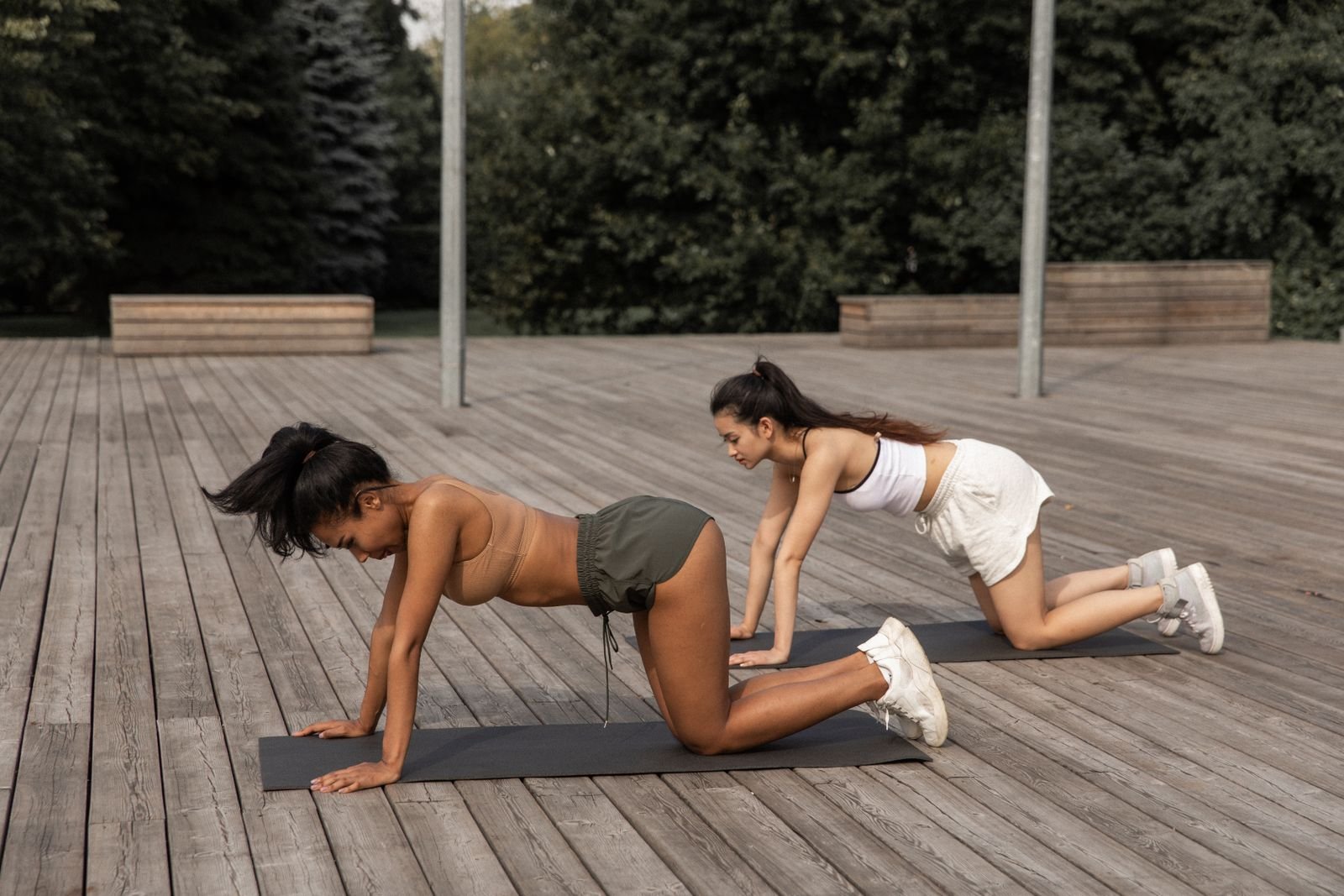
Understanding posture matters because alignment affects how your neck, shoulders, upper back, core, and hips share load during daily life. When posture slips for long periods, tissues can get overworked and movement can feel less efficient. The good news is that simple exercises done consistently can help over time.
What Are Posture Exercises for Women?
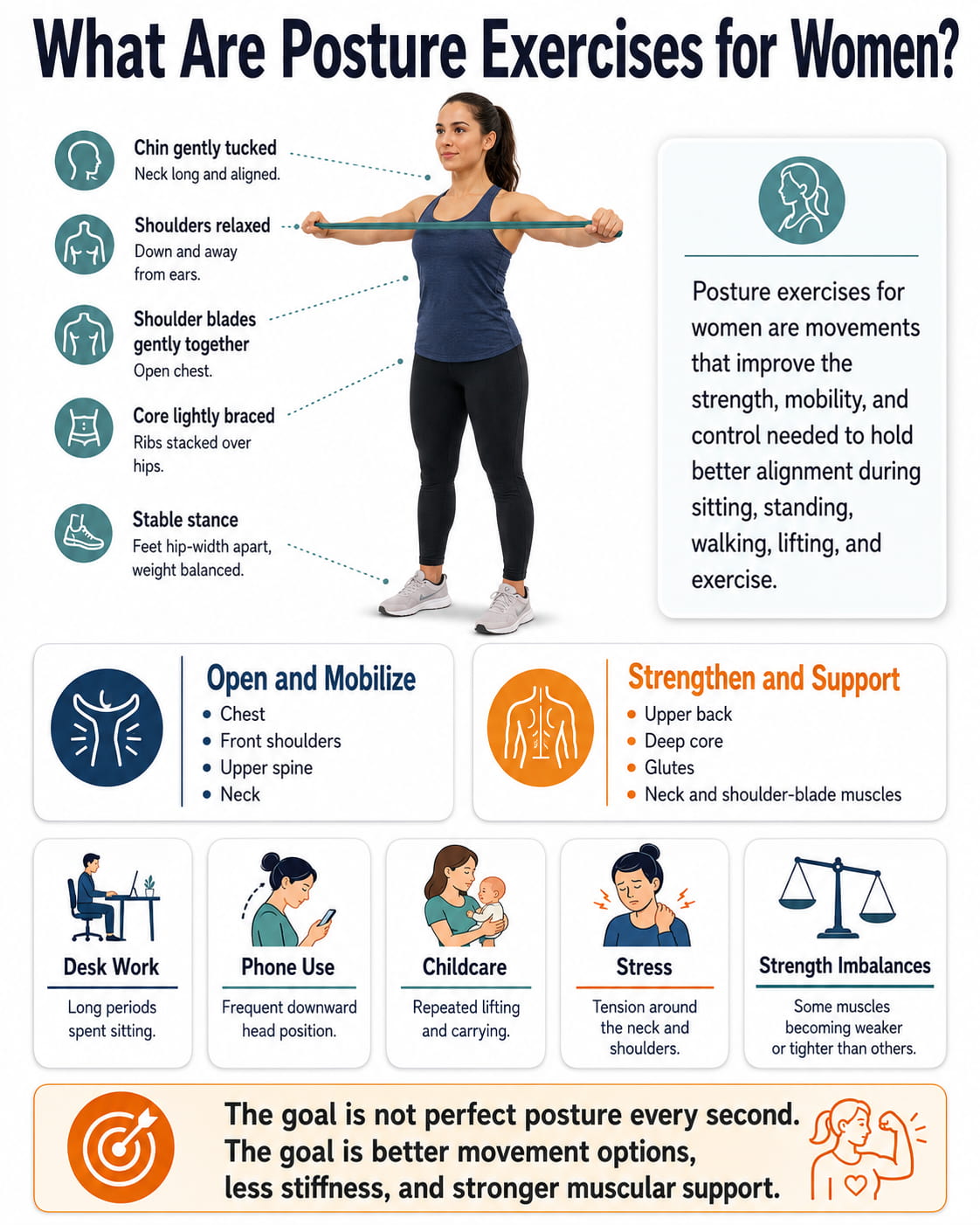
Posture exercises for women are movements that improve the strength, mobility, and control needed to hold better alignment during sitting, standing, walking, lifting, and exercise. In practice, that usually means opening tight areas like the chest and front shoulders while strengthening areas that often get overlooked, such as the upper back, deep core, glutes, and postural muscles around the neck and shoulder blades. This is similar to the posture-improvement strategies described by University Hospital Southampton NHS Foundation Trust and Cleveland Clinic.
Women often look for posture exercises because of desk work, phone use, childcare, stress, strength imbalances, or long periods of sitting. The goal is not perfect posture every second. The goal is better movement options, less stiffness, and stronger support from the muscles that help you stay upright.
Why Posture Exercises Matter for Women
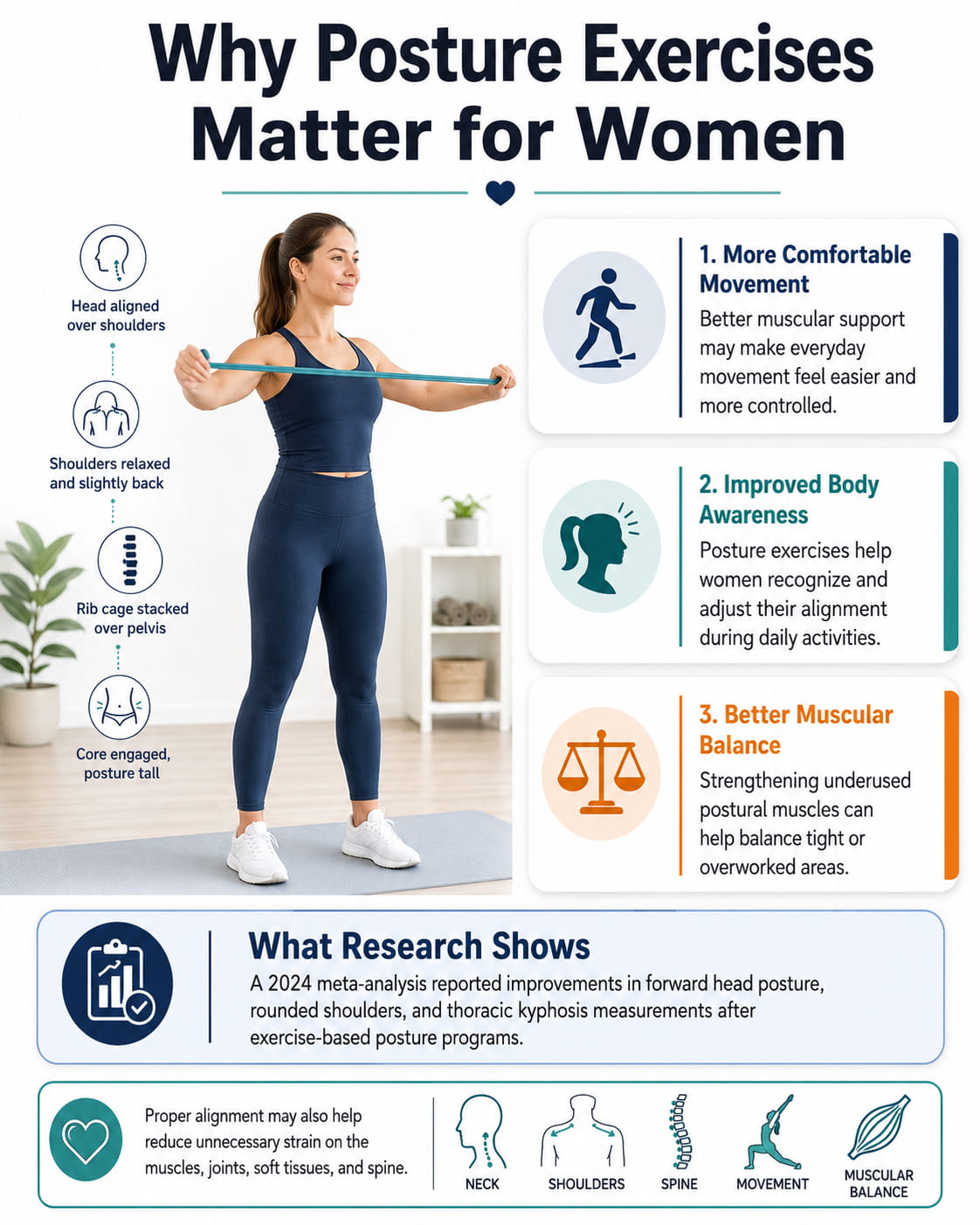
Better posture is not just about appearance. It can support more comfortable movement, improved body awareness, and better muscular balance. Mayo Clinic Health System notes that proper posture can help reduce unnecessary wear and tear on joints and soft tissues, while Mayo Clinic News Network explains that good alignment may reduce excess strain on muscles and the spine.
Exercise-based posture programs also have research support. A 2024 meta-analysis on PubMed found improvements in forward head posture, rounded shoulders, and thoracic kyphosis measures, and earlier studies available through PMC have also reported improvements in posture-related pain and alignment outcomes after corrective exercise programs.
The 11 Best Posture Exercises for Women
Improve your alignment, strengthen supportive muscles, and reduce everyday stiffness with these simple posture exercises for women. This list helps you stand taller, move better, and build strength with safe, practical movements.
1. Chin Tuck
How to do it:
- Sit or stand tall with your eyes looking straight ahead.
- Gently draw your chin backward, as if making a small double chin.
- Keep the back of your neck long instead of tipping your head up or down.
- Hold for 3 to 5 seconds.
- Repeat for 8 to 10 reps.
Why it works:
Chin tucks train the deep neck muscles and help counter the forward-head position that often builds from laptop and phone use.
Muscles worked:
Deep neck flexors, upper cervical stabilizers, and postural neck muscles.
Trainer Tip:
Think “slide back,” not “look down.” The movement is small. If you force it, you usually lose the right position.
2. Wall Angels
How to do it:
- Stand with your back against a wall, feet a few inches away.
- Keep your ribs down and your low back in a comfortable neutral position.
- Place your arms against the wall in a goalpost shape.
- Slowly slide your arms upward, then return to the start.
- Repeat for 8 to 12 reps.
Why it works:
Wall angels combine shoulder mobility with upper-back control. They can help teach better positioning for the head, shoulders, and rib cage.
Muscles worked:
Upper back, rear shoulders, lower traps, rotator cuff, and postural shoulder-blade muscles.
Trainer Tip:
Do not force your arms flat to the wall if that causes arching. Smooth control matters more than range.
3. Doorway Chest Stretch
How to do it:
- Stand in a doorway and place your forearms or hands on the frame.
- Step one foot forward gently until you feel a stretch across the chest.
- Keep your neck relaxed and your ribs stacked over your hips.
- Hold for 20 to 30 seconds.
- Repeat 2 to 3 times.
Why it works:
Many posture problems involve tightness through the chest and front shoulders. This stretch helps restore space in the front of the body so the upper back can do its job better.
Muscles worked:
Pectoralis major, pectoralis minor, and the front of the shoulders.
Trainer Tip:
A gentle stretch is enough. You should not feel numbness, tingling, or shoulder pinching.
4. Cat-Cow
How to do it:
- Start on your hands and knees.
- Inhale as you gently lift your chest and tailbone.
- Exhale as you round your spine and tuck your pelvis.
- Move slowly through a comfortable range.
- Repeat for 6 to 10 controlled reps.
Why it works:
Cat-cow improves spinal mobility and body awareness. It is useful when stiffness in the upper back and trunk makes upright posture harder to maintain.
Muscles worked:
Spinal stabilizers, abdominals, and muscles around the shoulders and hips.
Trainer Tip:
Let the movement come from the whole spine, not just the neck or low back.
5. Thoracic Extension
How to do it:
- Sit on a chair with your hands behind your head or crossed over your chest.
- Gently lift your breastbone and extend through the upper back.
- Keep the movement focused on the mid-to-upper back, not the low back.
- Pause briefly, then return.
- Repeat for 8 to 10 reps.
Why it works:
The thoracic spine often gets stiff from sitting and slouching. Better extension through this area can make upright posture feel easier and more natural.
Muscles worked:
Thoracic extensors, postural back muscles, and shoulder-blade stabilizers.
Trainer Tip:
Think “lift through the sternum” instead of “lean backward hard.”
6. Band Pull-Apart
How to do it:
- Hold a light resistance band at shoulder height with straight or softly bent arms.
- Brace your core and keep your shoulders down.
- Pull the band apart by moving your arms out to the sides.
- Squeeze your shoulder blades gently together.
- Return with control and repeat for 10 to 15 reps.
Why it works:
This exercise strengthens the upper back and helps offset the rounded-shoulder position common with desk work.
Muscles worked:
Rear delts, rhomboids, mid traps, lower traps, and rotator cuff.
Trainer Tip:
Do not shrug. Keep tension in the upper back, not the neck.
7. Bird Dog
How to do it:
- Start on your hands and knees with your spine neutral.
- Tighten your abdominals gently.
- Reach one arm forward and the opposite leg backward.
- Pause briefly without twisting.
- Return and switch sides for 6 to 10 reps per side.
Why it works:
Bird dog builds trunk stability and teaches you to control the spine while the arms and legs move. Mayo Clinic includes the quadruped or bird dog as a core-strength exercise.
Muscles worked:
Deep core, spinal stabilizers, glutes, shoulders, and hip stabilizers.
Trainer Tip:
Keep your hips level. A smaller reach with better control beats a big reach with rotation.
8. Dead Bug
How to do it:
- Lie on your back with your arms up and knees bent to 90 degrees.
- Gently brace your core and keep your lower ribs down.
- Lower one arm and the opposite leg slowly.
- Return to the start and switch sides.
- Perform 6 to 10 reps per side.
Why it works:
Dead bug teaches the core to resist unwanted movement while the limbs move. That can support better rib-and-pelvis control, which matters for posture.
Muscles worked:
Deep abdominals, hip flexors, and trunk stabilizers.
Trainer Tip:
Only lower as far as you can without your low back popping off the floor.
9. Glute Bridge
How to do it:
- Lie on your back with knees bent and feet flat.
- Press through your heels and lift your hips.
- Stop when your body forms a straight line from shoulders to knees.
- Squeeze your glutes gently at the top.
- Lower slowly and repeat for 10 to 15 reps.
Why it works:
Glute bridges help restore strength to the hips and backside, which support pelvic position and lower-body posture.
Muscles worked:
Glutes, hamstrings, and deep core.
Trainer Tip:
Do not overarch at the top. Lift with the hips, not the low back.
10. Pelvic Tilt
How to do it:
- Lie on your back with knees bent and feet flat.
- Gently flatten your lower back toward the floor by tipping your pelvis.
- Pause for a few seconds.
- Relax back to neutral.
- Repeat for 8 to 12 reps.
Why it works:
Pelvic tilts improve awareness of pelvic position and can help you find a more comfortable neutral spine. Cleveland Clinic specifically includes pelvic tilts in its posture exercise advice.
Muscles worked:
Lower abdominals, deep core, and pelvic stabilizers.
Trainer Tip:
Use a gentle motion. This is a control drill, not a forceful ab exercise.
11. Side Plank
How to do it:
- Lie on your side with your forearm under your shoulder.
- Bend your knees for an easier version or straighten your legs for a harder version.
- Lift your hips and keep your body in a straight line.
- Hold for 10 to 30 seconds.
- Repeat 2 to 3 rounds per side.
Why it works:
Side planks build lateral core strength, shoulder stability, and pelvic control. Those qualities help posture during walking, standing, and lifting.
Muscles worked:
Obliques, glute medius, shoulder stabilizers, and deep core.
Trainer Tip:
Start with bent knees if needed. Good alignment matters more than a long hold.
How Often Should Women Do Posture Exercises?
For most women, posture exercises work well 2 to 4 times per week. A short 10- to 20-minute routine can be enough if you stay consistent. This fits well alongside the CDC recommendation that adults get at least 150 minutes of moderate activity per week plus muscle-strengthening work on at least 2 days each week.
A simple weekly plan could look like this:
- 2 days of posture strength work
- 2 to 3 short mobility sessions
- Daily movement breaks if you sit for long hours
Common Mistakes to Avoid With Posture Exercises
Doing Only Stretches and Skipping Strength
Mobility helps, but many women also need stronger upper-back, core, and glute muscles to hold improved positions longer.
Forcing “Perfect Posture”
Good posture is not rigid posture. You want adaptable, comfortable alignment, not a stiff military stance.
Moving Too Fast
Posture drills work better when done slowly and with control.
Letting the Neck Take Over
If every exercise turns into neck tension, scale back and refocus on the ribs, shoulder blades, and core.
Expecting Instant Results
Posture usually changes gradually. Research on PubMed and PMC supports improvement over time with consistent exercise, not overnight correction.
Who Should Be Careful or Get Medical Guidance First?
Talk with a qualified clinician before starting if you have:
- Persistent neck, shoulder, or back pain
- Numbness, tingling, or weakness
- Recent injury or surgery
- Dizziness with neck movement
- Known osteoporosis or other bone-health concerns
- Pregnancy or postpartum concerns that need individual guidance
- Symptoms that get worse during exercise
Mayo Clinic Health System advises getting evaluated when posture issues come with pain, movement difficulty, or other symptoms.
Do Posture Exercises Really Work?
They can, especially when the program includes the right mix of stretching, strengthening, and consistent practice. They may help improve posture-related measurements, movement quality, and discomfort in some groups, but results vary based on the cause of the problem, exercise quality, and how consistently you train. That is why realistic expectations matter, as shown in research indexed on PubMed.
FAQ About Posture Exercises for Women
Are posture exercises for women different from posture exercises for men?
The core principles are the same. The main difference is individual needs, habits, strength levels, and life stage. The best posture routine is the one that matches your body and daily demands.
How long does it take to see results from posture exercises?
Many women notice better body awareness and less stiffness within a few weeks, but visible and lasting changes usually take longer. Consistency matters more than intensity.
Can posture exercises help rounded shoulders?
They may help, especially when the plan combines chest mobility with upper-back and shoulder-blade strengthening. This is one of the most common reasons people use posture exercises, and Cleveland Clinic includes similar strategies in its posture guidance.
Should I do posture exercises every day?
Light mobility and movement breaks can be done daily. Harder strengthening exercises usually work better 2 to 4 times per week.
What is the best posture exercise for beginners?
Chin tucks, doorway chest stretches, cat-cow, pelvic tilts, and bird dog are good beginner-friendly starting points.
Can posture exercises reduce pain?
They may help some people by improving movement and reducing excess strain, but pain has many causes. Ongoing or worsening pain should be assessed by a clinician, which is also emphasized by Mayo Clinic Health System.
Are posture exercises enough if I sit all day?
They help, but they work best when paired with regular movement breaks, workstation changes, and general strength training.
Conclusion
The best posture exercises for women do more than remind you to stand tall. They build the mobility, strength, and control that make better posture easier to maintain in real life. Start with a few basic drills, practice them consistently, and focus on quality over intensity. A simple routine done a few times each week can make a real difference over time.
If you are building a fitness or wellness routine, use these posture exercises as your foundation and progress gradually.