
Hip opening exercises help release tension, improve mobility, and support better movement in your lower body. The fastest way to unlock tight hips is to combine gentle stretching with active mobility and hip-strengthening work. These exercises may support better posture, reduce stiffness from long sitting hours, and improve comfort during walking, squatting, or daily activities.
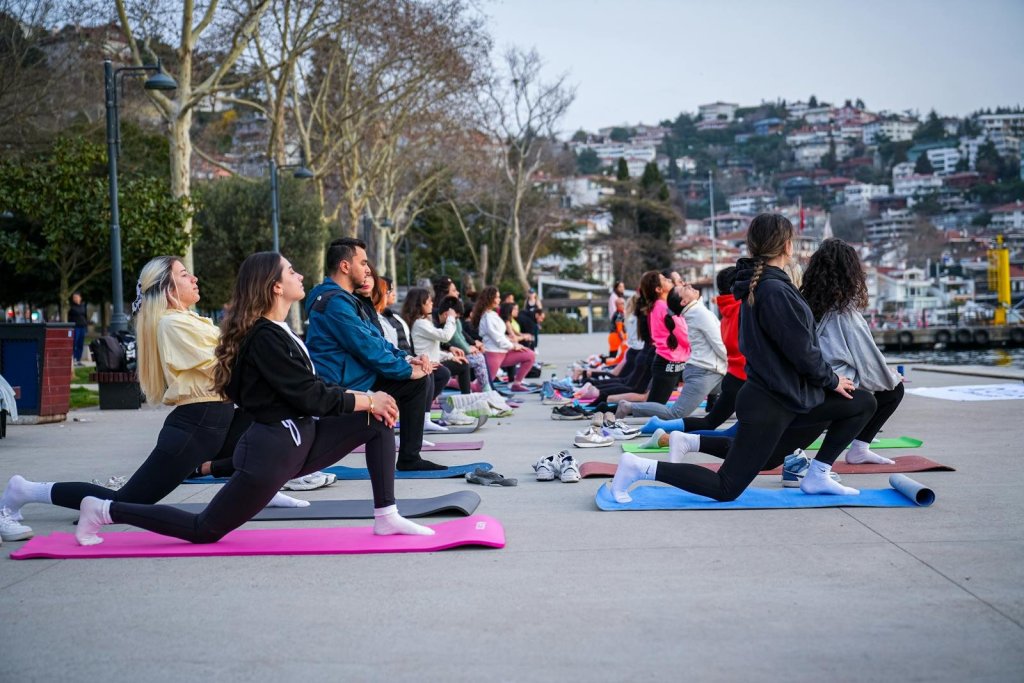
If your hips feel stiff, tight, or restricted, understanding how hip opening exercises work gives you more control over your mobility. This guide covers the best movements, how to do them safely, how often to practice them, and key tips.
You’ll also find beginner-friendly instructions, proper form cues, and safety considerations for anyone managing stiffness or limited mobility.
What Are Hip Opening Exercises?
Hip opening exercises include stretches, mobility drills, and strengthening movements that target the hip flexors, glutes, adductors, and deep hip rotators. These exercises help:
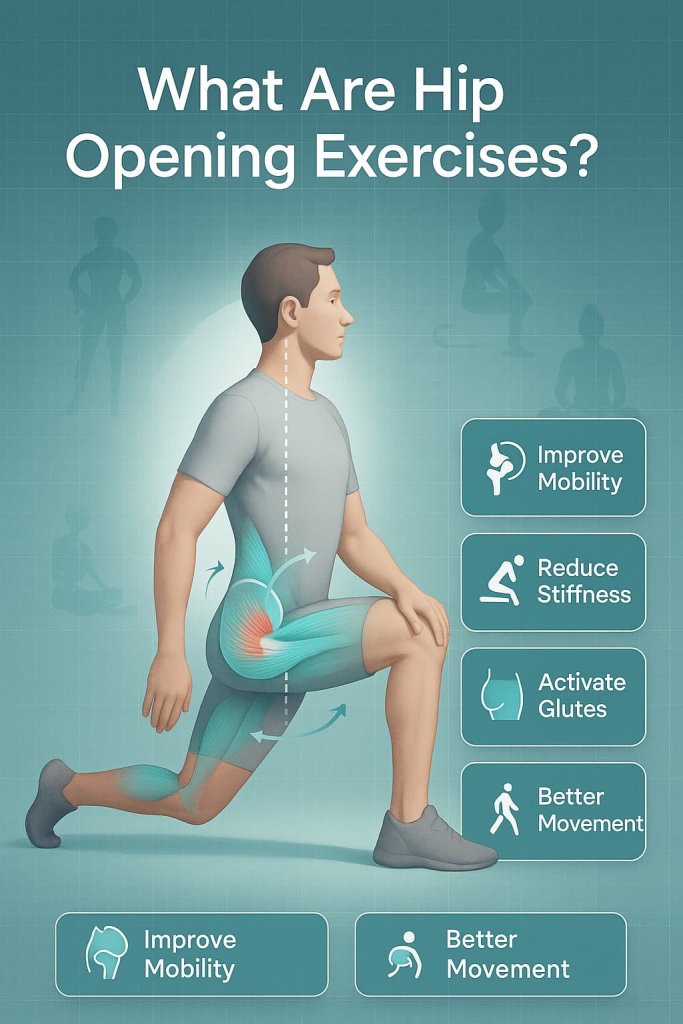
- Improve hip range of motion
- Reduce stiffness from prolonged sitting
- Support glute activation and pelvic alignment
- Enhance overall lower-body movement
Hip openers may include static stretches (such as hip flexor stretches), active mobility drills (like hip circles), and yoga-style poses (such as pigeon or lizard lunge).
Benefits of Hip Opening Exercises
Regular hip opening work may support:
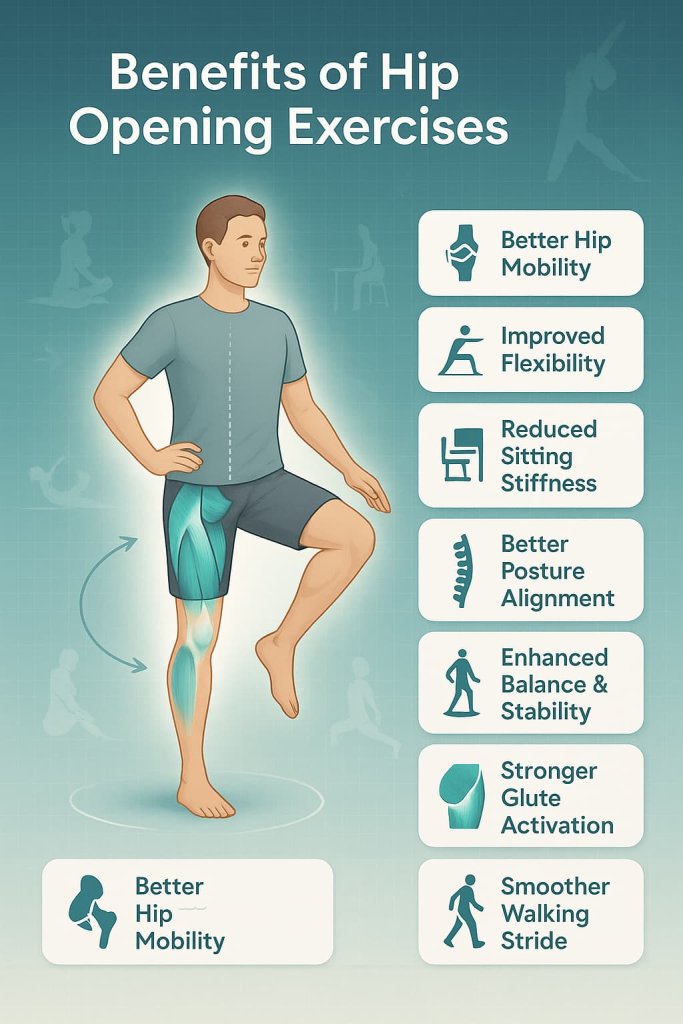
- Improved flexibility and hip joint mobility
- Better posture and reduced pelvic tilt
- Healthy movement patterns for walking and squatting
- Reduced discomfort related to prolonged sitting
- Improved balance and lower-body stability
- Better glute activation
- A more comfortable stride when running or climbing stairs
10 Best Hip Opening Exercises
A gentle stretch that targets tight hip flexors from long hours of sitting. Helps restore hip extension and improve posture.
1. Half-Kneeling Hip Flexor Stretch
Why it works:
This stretch lengthens the hip flexors—which often become tight from prolonged sitting. Improving hip extension mobility may support better posture and reduce stress on the lower back.
How to do it:
- Kneel on one knee and place the other foot forward.
- Keep your torso tall and core lightly braced.
- Shift your weight forward until you feel a stretch in the front of the hip.
- Hold 20–30 seconds per side, breathing slowly.
Trainer Tip:
Tuck your pelvis slightly (“posterior tilt”) before shifting forward—this increases the stretch without forcing motion.
2. Figure-4 Stretch (Supine Hip Opener)
Why it works:
Targets the deep external rotators that commonly tighten from long hours of sitting, helping support smoother hip rotation and lower-body mobility.
How to do it:
- Lie on your back and cross one ankle over the opposite knee.
- Gently pull the lower leg toward your chest.
- Keep your head relaxed and hips level.
- Hold 20–30 seconds per side.
Trainer Tip:
Press the crossed knee slightly away from your body to deepen the stretch without straining.
3. 90/90 Hip Mobility Stretch
Why it works:
Improves both internal and external hip rotation, essential for walking, squatting, and maintaining healthy hip mechanics.
How to do it:
- Sit with the front and back leg each bent at 90°.
- Lean forward over your front shin without rounding your back.
- Hold 20–30 seconds, then switch sides.
Trainer Tip:
If sitting upright is hard, place a pillow under your hip for support.
4. Pigeon Pose (Modified or Traditional)
Why it works:
Creates a deep stretch through the glutes and piriformis while also opening the hip flexors of the extended leg.
How to do it:
- Begin on hands and knees.
- Bring one knee forward behind the wrist and slide the opposite leg back.
- Keep hips square and lean forward gently.
- Hold 20–30 seconds.
Trainer Tip:
If the pose feels too intense, place a folded blanket under the front hip.
5. Frog Stretch
Why it works:
Opens the adductors and groin, improving hip abduction mobility essential for deep squatting and lateral movements.
How to do it:
- Start on hands and knees with knees spread wide.
- Lower onto your forearms.
- Slowly shift hips back until you feel a stretch.
- Hold 20–30 seconds.
Trainer Tip:
Keep your spine neutral—avoid sinking your chest or arching excessively.
6. Lizard Lunge (Hip-Opening Lunge)
Why it works:
This deep lunge variation opens the hip flexors, groin, and the front hip capsule while encouraging active mobility.
How to do it:
- Step one foot forward into a deep lunge.
- Place both hands inside the front foot.
- Lower your hips slowly and breathe evenly.
- Hold 20–30 seconds.
Trainer Tip:
To increase the stretch, gently lift the back knee off the ground while keeping your spine long.
7. Standing Hip Circles (Active Mobility)
Why it works:
Active hip circles improve joint lubrication and strengthen the hips through end-range motion, supporting better control and balance.
How to do it:
- Stand tall and lift one knee.
- Slowly draw a large circle outward, then inward.
- Perform 8–10 circles per direction.
Trainer Tip:
Move slowly—speed reduces control and limits mobility benefits.
8. Seated Butterfly Stretch
Why it works:
Stretches the inner thighs and groin to improve hip abduction and reduce stiffness from prolonged sitting.
How to do it:
- Sit with feet together and knees out to the sides.
- Gently press knees toward the floor.
- Keep your spine tall and chest open.
- Hold 20–30 seconds.
Trainer Tip:
Avoid rounding your back—lift through your chest for a better stretch.
9. Kneeling Side Lunge (Adductor Rock Back)
Why it works:
A beginner-friendly mobility drill that improves inner-thigh flexibility while teaching controlled hip movement.
How to do it:
- Kneel on one knee and extend the other leg to the side.
- Rock your hips back slowly while keeping your spine neutral.
- Perform 8–12 reps per side.
Trainer Tip:
Keep the extended foot flat—rolling inward reduces the effectiveness of the stretch.
10. Hip CARs (Controlled Articular Rotations)
Why it works:
Strengthens the hip through its entire rotational range, improving joint health, control, and stability.
How to do it:
- Stand tall or hold a wall for balance.
- Lift your knee, rotate it outward, sweep it behind, and return to start.
- Perform 4–6 slow reps each direction.
Trainer Tip:
Keep your torso still—minimize movement everywhere except the hip for maximum benefit.
How Often Should You Do Hip Opening Exercises?
ACSM flexibility guidelines recommend:
Stretching Frequency
- 2–3 days/week minimum
- Daily hip stretching is most effective for mobility
- Hold each stretch 15–60 seconds
- Repeat 2–4 times (aim for 60 seconds per muscle)
Mobility Work
- 3–5 days/week
- 8–12 controlled reps per movement
Why:
Consistent stretching over 8–12 weeks shows the greatest improvements in flexibility and functional movement, according to peer-reviewed evidence.
For best results:
- Do 2–3 hip mobility sessions weekly
- Add light daily hip openers if you sit for long hours
Who Should Be Careful With Hip Opening Exercises?
You should be cautious or seek medical guidance if you have:
- Recent hip surgery or hip replacement
- Hip fracture history
- Severe hip osteoarthritis
- Radiating pain or numbness down the leg
- Sharp pain during hip extension or rotation
- A diagnosed labral tear
- Inflammatory conditions affecting the hip
If you have any of these conditions, speak with a physical therapist before performing deep hip stretches.
Tips for Safe & Effective Hip Opening
- Move slowly—never force a stretch
- Breathe naturally through each movement
- Keep hips level and avoid twisting sharply
- Warm up with light movement (marching, hip circles)
- Stop if you feel numbness, tingling, or sharp pain
- Combine stretching + strengthening for lasting mobility
Frequently Asked Questions (FAQ)
1. How long does it take to loosen tight hips?
Most people notice changes within 2–4 weeks with consistent stretching 3–5 days per week.
2. Can hip opening exercises help lower-back stiffness?
They may support better posture and movement, which can indirectly help with low-back discomfort.
3. Should I stretch daily if I sit for long hours?
Yes—short daily hip openers can reduce stiffness and improve circulation.
4. Are hip opening exercises safe for beginners?
Yes. Start with supported or gentle versions and progress gradually.
5. What time of day is best for hip openers?
Evening sessions often feel easier because muscles are warmer, but any time is beneficial.
6. Should hip openers hurt?
No. You should feel mild stretching, not pain.
7. Can hip opening exercises improve flexibility permanently?
Long-term consistency (8–12+ weeks) creates the greatest lasting improvements.
Conclusion
Hip opening exercises are one of the most effective ways to reduce stiffness, improve mobility, and support comfortable, natural movement. When practiced consistently—just a few minutes a day—you’ll notice smoother walking, easier squatting, and less tightness from sitting.
Start with 3–5 exercises from this list and build your routine gradually for long-term hip flexibility and better overall movement health.
References
- Konrad A, et al. (2021). The Influence of Stretching the Hip Flexor Muscles on Performance Parameters. International Journal of Environmental Research and Public Health.
- Mettler JH, et al. (2019). Effects of a Hip Flexor Stretching Program on Running Kinematics in Individuals With Limited Passive Hip Extension. Journal of Strength and Conditioning Research.
- Teirlinck CH, et al. (2023). Effect of Exercise Therapy in Patients with Hip Osteoarthritis: A Systematic Review and Cumulative Meta-analysis. Osteoarthritis and Cartilage.
- Sasaki R, et al. (2022). Effect of Exercise and/or Educational Interventions on Physical Activity and Pain in Patients with Hip/Knee Osteoarthritis: A Systematic Review with Meta-analysis. PLOS One.
- Avman MA, et al. (2019). Is There an Association Between Hip Range of Motion and Nonspecific Low Back Pain? A Systematic Review. Musculoskeletal Science and Practice.
- Page P. (2012). Current Concepts in Muscle Stretching for Exercise and Rehabilitation. International Journal of Sports Physical Therapy.