
Leg stretching exercises can improve flexibility and mobility by lengthening key muscles in your calves, hamstrings, quads, hips, and inner thighs when done consistently and gently.
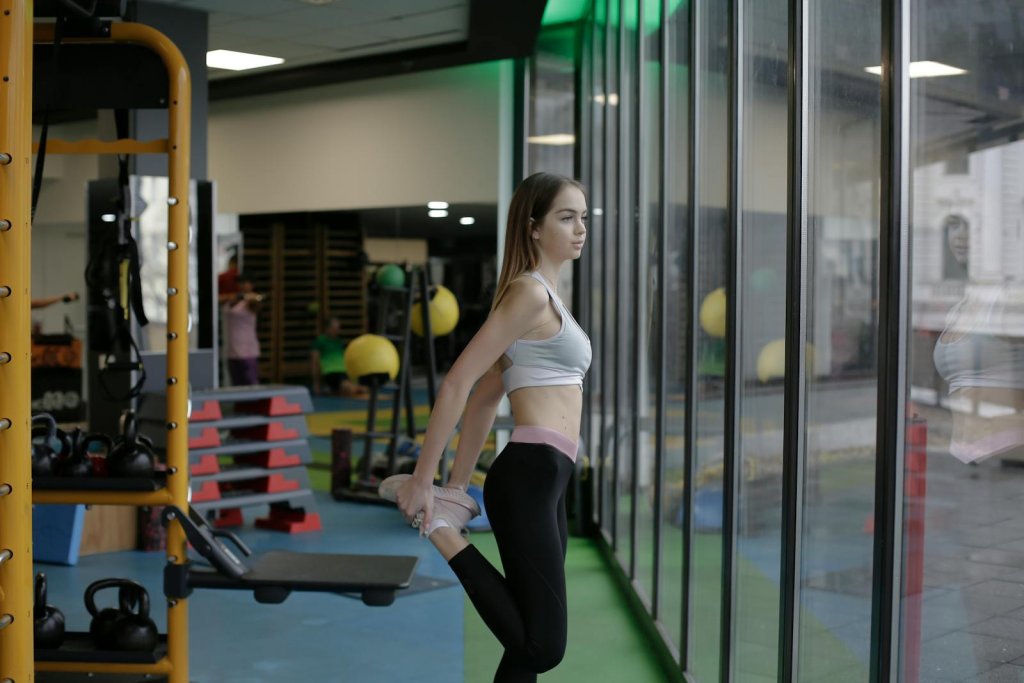
Understanding which stretches to use—and how to perform them safely—helps support smoother walking, better posture, and more comfortable daily movement, especially if you sit often or feel stiff through the lower body.
What Are Leg Stretching Exercises?
Leg stretching exercises are controlled movements designed to gently lengthen the muscles of the calves, hamstrings, quadriceps, hips, and inner thighs. They are commonly used to support joint mobility, maintain muscle flexibility, and improve comfort during everyday activities such as walking, standing, and bending.
These exercises are typically:
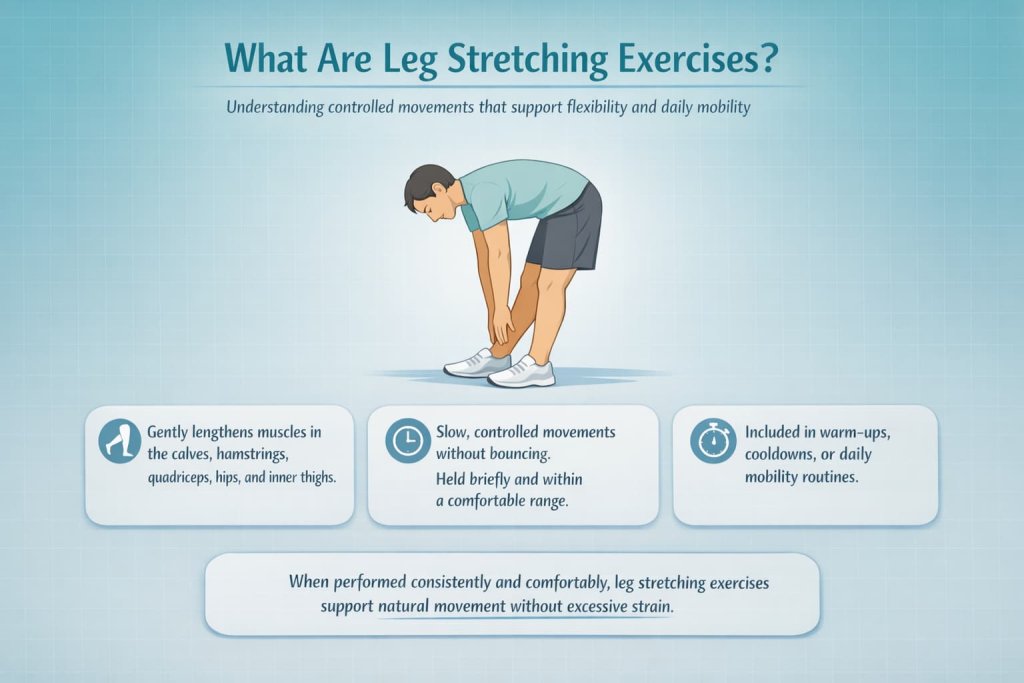
- Performed slowly and without bouncing
- Held for a short, controlled duration
- Used as part of warm-ups, cooldowns, or daily mobility routines
When done consistently and within a comfortable range, leg stretching exercises help maintain normal movement patterns without placing excessive strain on the muscles or joints.
12 best leg stretching exercises
Improve flexibility and mobility with 12 best leg stretching exercises targeting your calves, hamstrings, quads, hips, and inner thighs. Follow simple, step-by-step instructions to reduce stiffness and support comfortable daily movement.
1) Standing calf stretch (wall)
How to do it:
- Stand facing a wall and place both hands on it at chest height
- Step one leg back while keeping both feet pointing forward
- Keep the back heel pressed gently into the floor
- Lean forward slightly by bending the front knee
- Hold the position, then switch sides
Why it works:
This stretch lengthens the larger calf muscle that contributes to ankle stiffness and reduced stride length. Improving calf flexibility supports smoother walking and better lower-leg mechanics during daily activities.
Muscles worked:
Gastrocnemius, ankle stabilizers.
Trainer Tip:
If the heel lifts, shorten your stance rather than forcing the stretch.
2) Bent-knee calf stretch (soleus)
How to do it:
- Set up in the same wall position as the standing calf stretch
- Step one leg back and keep the heel grounded
- Slightly bend the back knee
- Lean forward gently until tension is felt lower in the calf
- Hold, then switch sides
Why it works:
Bending the knee shifts emphasis to the deeper soleus muscle, which plays a key role in balance, stair climbing, and prolonged standing.
Muscles worked:
Soleus, Achilles region (gentle load).
Trainer Tip:
This stretch should feel deeper and lower than the straight-knee calf stretch.
3) Seated hamstring stretch (chair)
How to do it:
- Sit tall near the front edge of a chair
- Extend one leg forward with the heel resting on the floor
- Keep toes pointing upward
- Hinge forward at the hips while keeping your spine long
- Hold, then switch sides
Why it works:
Hamstrings commonly tighten with prolonged sitting. This stretch improves posterior leg flexibility without stressing balance or the lower back.
Muscles worked:
Hamstrings.
Trainer Tip:
Stop before your back rounds—range comes from the hips, not the spine.
4) Supine hamstring stretch (towel or strap)
How to do it:
- Lie flat on your back with one knee bent and foot on the floor
- Loop a towel or strap around the opposite foot
- Slowly straighten and lift the leg upward
- Stop when gentle tension is felt
- Hold, then switch sides
Why it works:
This position allows controlled hamstring stretching while minimizing strain on the spine and hips.
Muscles worked:
Hamstrings, posterior chain tissues.
Trainer Tip:
Lower the leg slightly if your hips start to lift off the floor.
5) Standing quad stretch (supported)
How to do it:
- Stand next to a wall or chair for balance support
- Bend one knee and grasp the ankle or pant leg
- Keep knees close together
- Gently bring the heel toward the glutes
- Hold, then switch sides
Why it works:
Stretching the quadriceps supports knee comfort and improves hip extension, which is important for walking and standing posture.
Muscles worked:
Quadriceps.
Trainer Tip:
Keep ribs stacked over the pelvis to avoid arching the lower back.
6) Half-kneeling hip flexor stretch
How to do it:
- Kneel on one knee with the opposite foot forward
- Keep both hips facing forward
- Shift the hips forward slightly
- Maintain an upright torso
- Hold, then switch sides
Why it works:
This stretch counters hip flexor shortening from prolonged sitting and supports upright posture and smoother stride mechanics.
Muscles worked:
Hip flexors, rectus femoris.
Trainer Tip:
A gentle glute squeeze on the kneeling side helps target the stretch more effectively.
7) Figure-4 glute stretch (on your back)
How to do it:
- Lie on your back with both knees bent
- Cross one ankle over the opposite knee
- Grasp the uncrossed thigh
- Gently pull it toward your chest
- Hold, then switch sides
Why it works:
This stretch reduces tension in the glutes and deep hip rotators that can contribute to hip stiffness and limited movement.
Muscles worked:
Glutes, deep hip rotators.
Trainer Tip:
Move slowly into position—adjust the ankle if knee pressure appears.
8) Seated figure-4 stretch (chair)
How to do it:
- Sit upright on a chair
- Cross one ankle over the opposite knee
- Keep the foot flexed
- Lean forward slightly from the hips
- Hold, then switch sides
Why it works:
This chair-based option improves hip mobility while remaining accessible and balance-friendly.
Muscles worked:
Glutes, piriformis region.
Trainer Tip:
If the knee feels strained, uncross slightly or reduce forward lean.
9) Butterfly stretch
How to do it:
- Sit tall on the floor
- Bring the soles of your feet together
- Allow knees to fall outward naturally
- Lean forward slightly while keeping the spine long
- Hold
Why it works:
Stretching the inner thighs supports hip range of motion and comfort during side-to-side movements.
Muscles worked:
Adductors.
Trainer Tip:
Let gravity assist—never force the knees downward.
10) Side lunge adductor stretch
How to do it:
- Stand with feet wider than shoulder width
- Shift weight toward one side
- Bend that knee while keeping the opposite leg straight
- Keep both feet flat
- Hold, then switch sides
Why it works:
This functional stretch targets the inner thighs in a standing position that mirrors real-life movement patterns.
Muscles worked:
Adductors, hips.
Trainer Tip:
Keep your chest tall to avoid collapsing forward.
11) Standing lateral hip stretch
How to do it:
- Stand tall with feet close together
- Cross one leg behind the other
- Shift hips slightly toward the back leg side
- Reach the same-side arm overhead
- Hold, then switch sides
Why it works:
This stretch gently targets the outer hip and lateral thigh tissues that often feel tight during walking or prolonged standing.
Muscles worked:
Tensor fasciae latae (TFL), lateral hip tissues.
Trainer Tip:
The stretch should stay in the hip and side body, not the knee.
12) Gentle downward-dog stretch
How to do it:
- Begin on hands and knees
- Tuck toes under
- Lift hips upward and back
- Keep knees slightly bent if needed
- Hold while breathing steadily
Why it works:
This position lengthens the calves and hamstrings while encouraging spinal decompression and full-body relaxation.
Muscles worked:
Calves, hamstrings.
Trainer Tip:
Prioritize a long spine—straight legs are optional.
Benefits of Leg Stretching Exercises for Flexibility and Mobility
Regular leg stretching exercises may help support how your lower body moves and feels during daily activities. When included in a balanced movement routine, they can contribute to:
- Improved flexibility in the calves, thighs, hips, and inner legs
- Smoother walking and stair-climbing mechanics
- Reduced feeling of stiffness after sitting or inactivity
- Better joint range of motion for everyday movements
- Increased comfort during standing, bending, and light exercise
Flexibility and mobility work is most effective when stretches are performed gently, consistently, and combined with strength and balance activities as part of an overall movement routine.
How to do leg stretching exercises safely
Before you begin, follow these evidence-based basics:
- Warm up with 5–10 minutes of light movement (easy walking, marching, or gentle cycling), as recommended by the Mayo Clinic.
- Stretch slowly and smoothly—avoid bouncing or forcing range.
- Aim for mild tension, not pain.
- Breathe normally and stay relaxed.
How long to hold each leg stretch for flexibility
General flexibility guidance supports:
- Holding each stretch for about 30 seconds, repeating 2–4 times per side for tighter areas.
- Stretching major leg muscle groups at least 2–3 days per week for flexibility maintenance.
- Using short stretching routines after activity, similar to cooldown guidance shared by the NHS.
Simple daily leg stretching routine (10 minutes)
- Wall calf stretch
- Chair hamstring stretch
- Half-kneeling hip flexor stretch
- Figure-4 glute stretch
- Butterfly stretch
This type of short routine mirrors post-exercise stretching approaches promoted by the NHS.
Common mistakes to avoid with leg stretching exercises
- Stretching without warming up
- Bouncing or forcing range
- Holding your breath
- Stretching into pain
- Poor knee or spine alignment
Who should be careful before doing leg stretching exercises
Extra caution is recommended if you have a recent injury, surgery, nerve symptoms, or balance limitations. For older adults, flexibility work fits best alongside strength and balance activity within weekly movement recommendations from the CDC.
When to stop or seek professional guidance
Stop and seek medical advice if you experience sharp pain, swelling, instability, numbness, dizziness, or unusual shortness of breath.
FAQs
Should I stretch before or after exercise?
Light mobility before activity and static stretching after exercise work well for most people.
How often should I stretch my legs?
At least 2–3 days per week, or daily if comfortable and pain-free.
Is stretching supposed to hurt?
No. Stretching should feel like gentle tension, not pain.
How long does it take to see flexibility improvements?
Many people notice changes within a few weeks with consistent practice.
What if I’m too tight for certain stretches?
Use props, bend knees, reduce range, or choose chair-based options.
Conclusion
Leg stretching exercises are most effective when they’re gentle, consistent, and easy to repeat. Focus on the tightest areas, keep stretches pain-free, and integrate them into your weekly routine for better mobility and comfort over time.
References
- Mayo Clinic – Stretching: Focus on flexibility
- American Academy of Orthopaedic Surgeons – Warm up, cool down, and be flexible
- MedlinePlus – How to avoid exercise injuries (stretching tips)
- National Institute on Aging – Three types of exercise that improve health
- PubMed Central – Current concepts in muscle stretching (review)