
Lymphatic drainage exercises are gentle, rhythmic movements (often paired with deep breathing) that may help move lymph fluid and support swelling management. The lymphatic system does not have a pump like the heart, so muscle contractions and breathing help move fluid—especially if you deal with puffiness, heaviness, or lymphedema-related swelling. Guidance from Memorial Sloan Kettering Cancer Center explains how structured, low-intensity exercises are used in swelling care programs.
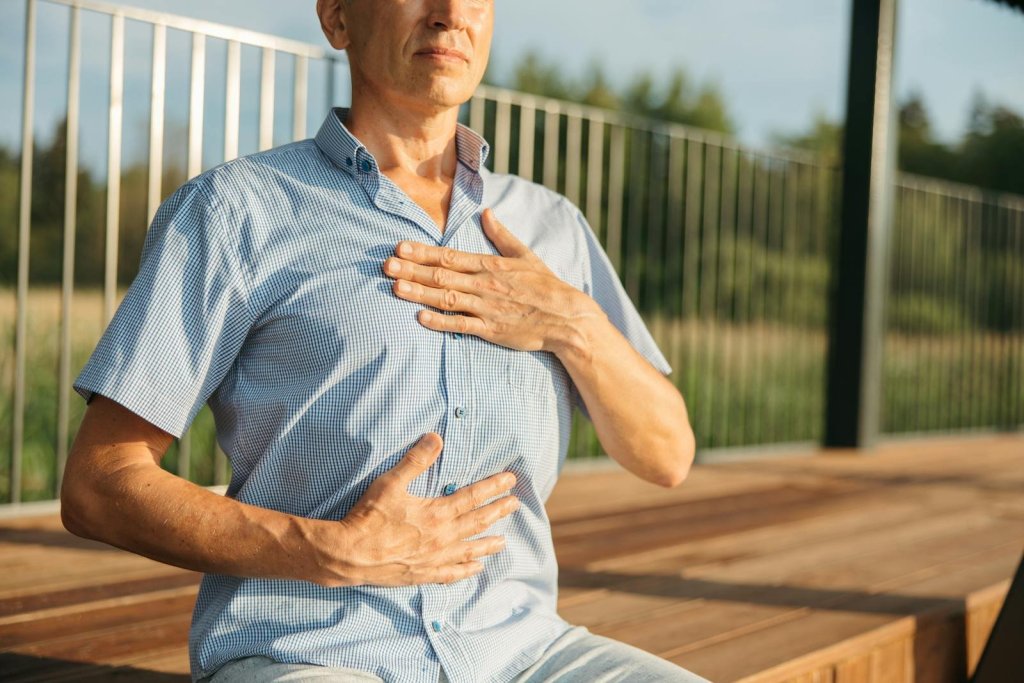
If you have diagnosed lymphedema or persistent swelling, it’s important to follow medical guidance because exercise is usually part of a broader plan that may include compression therapy and skin care, as outlined by the Mayo Clinic.
What Are Lymphatic Drainage Exercises?
Lymphatic drainage exercises are low-intensity movements designed to activate muscles and joints without straining, helping encourage lymph flow. Cancer centers often describe these as “decongestive exercises” and recommend them as part of swelling management programs.
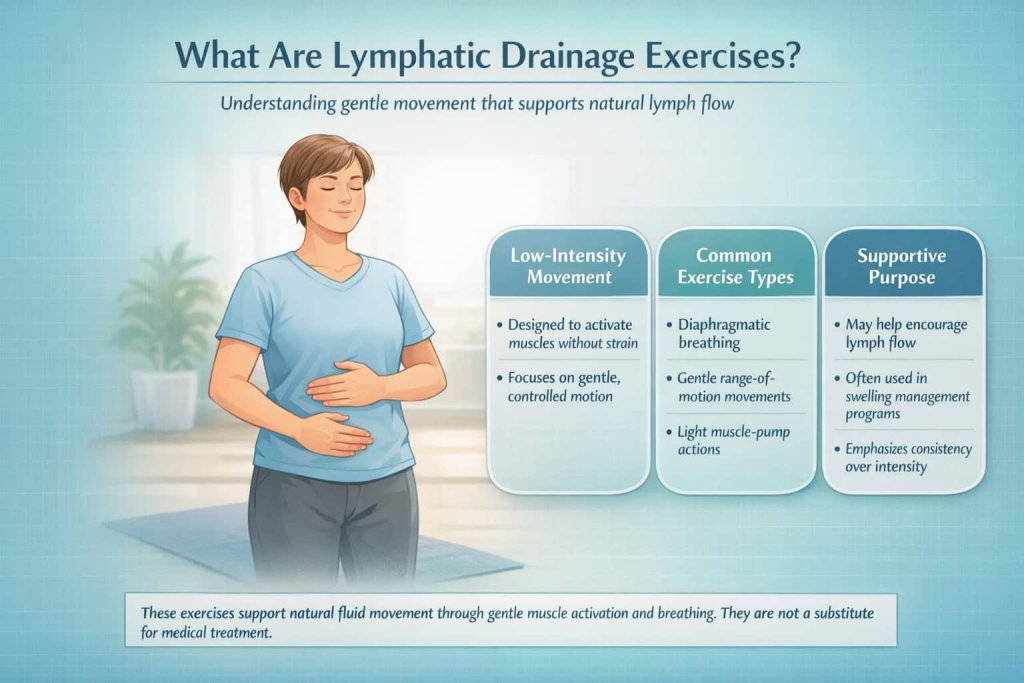
They commonly include:
- Diaphragmatic breathing
- Gentle range-of-motion (ROM) movements
- Light, repetitive muscle-pump actions (ankle pumps, calf raises, marching)
How Lymphatic Drainage Exercises May Help Support Circulation
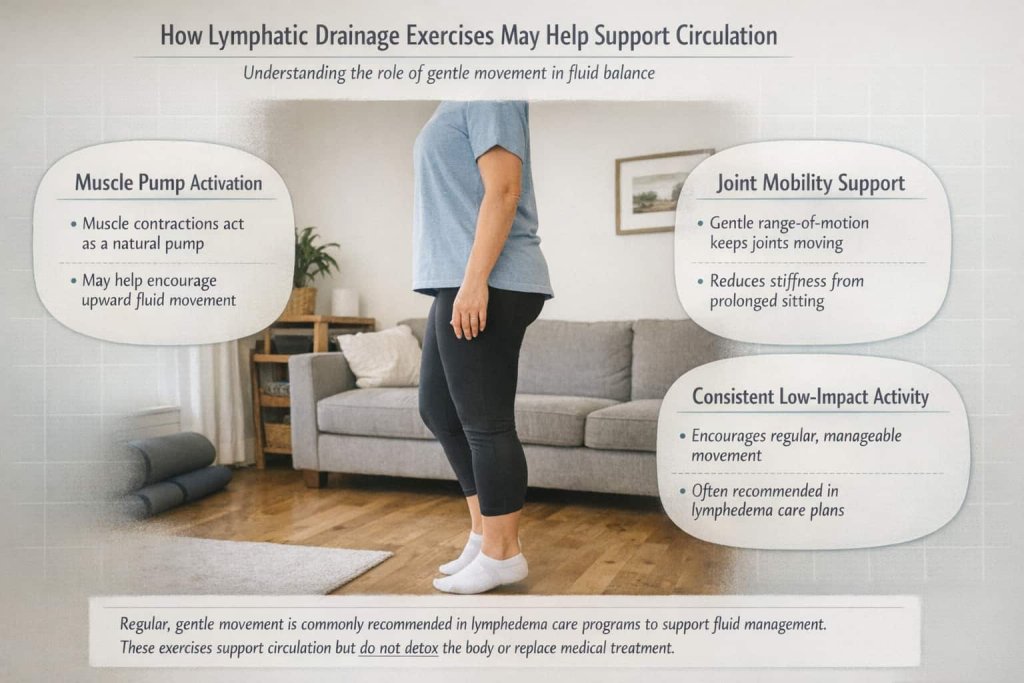
These exercises may help by:
- Using muscle contractions as a natural pump
- Supporting joint mobility
- Encouraging consistent, low-impact activity
The NHS notes that regular, gentle movement is commonly recommended in lymphedema care plans to support fluid management.
Important note: These exercises do not “detox” your body or replace medical treatment. They are best understood as movement strategies that may support fluid balance and comfort.
8 Best Lymphatic Drainage Exercises
These 8 lymphatic drainage exercises use gentle, rhythmic movements and breathing to support fluid balance and circulation. They’re simple, low-impact, and easy to add to your daily routine for reducing puffiness and promoting comfort.
1) Diaphragmatic Breathing
How to do it:
- Sit or lie comfortably with one hand on your belly.
- Inhale slowly through your nose and allow your abdomen to rise.
- Keep your chest relatively relaxed.
- Exhale gently through pursed lips.
- Continue for 1–3 minutes at an easy pace.
Why it works:
Deep breathing changes pressure inside the chest and abdomen, which may help encourage lymph fluid movement. It also promotes relaxation and prepares your body for gentle exercise.
Trainer Tip:
Move slowly and avoid shrugging your shoulders. If you feel lightheaded, pause and breathe normally before continuing.
2) Shoulder Rolls and Neck Mobility
How to do it:
- Sit or stand tall with relaxed arms.
- Roll your shoulders up, back, and down in a smooth circle (8–12 reps).
- Gently turn your head left and right (6–8 reps per side).
- Keep movements slow and pain-free.
Why it works:
Gentle upper-body motion may help support lymph flow near the neck and collarbone region, where major lymph pathways drain. It also reduces stiffness from prolonged sitting.
Trainer Tip:
Avoid forcing neck rotation. The goal is controlled mobility—not stretching to discomfort.
3) Ankle Pumps
How to do it:
- Sit or lie down with legs supported.
- Point your toes away from you.
- Pull your toes back toward your shin.
- Perform 20–30 slow repetitions per side.
Why it works:
The calf muscles act like a natural pump. Repeated ankle motion may help support lower-leg fluid movement, especially after long periods of sitting.
Trainer Tip:
Keep the movement rhythmic and controlled. Avoid bouncing or rushing the reps.
4) Ankle Circles
How to do it:
- Lift one foot slightly off the floor.
- Draw slow circles clockwise (10 reps).
- Reverse direction for 10 reps.
- Switch sides.
Why it works:
Circular ankle motion improves joint mobility and gently activates lower-leg muscles, which may assist fluid circulation.
Trainer Tip:
Make the circles smooth and controlled. Keep the knee relaxed and avoid large, jerky movements.
5) Heel Slides
How to do it:
- Lie on your back with knees bent and feet flat.
- Slowly slide one heel away to partially straighten the leg.
- Slide it back toward your body.
- Perform 10–15 repetitions per leg.
Why it works:
This low-impact movement gently activates the hip and thigh muscles, encouraging circulation without placing stress on joints.
Trainer Tip:
Keep your lower back neutral and move within a comfortable range.
6) Seated Marching
How to do it:
- Sit tall in a chair with feet flat.
- Lift one knee slightly toward your chest.
- Lower with control.
- Alternate legs for 30–60 seconds.
Why it works:
Alternating hip movement activates multiple lower-body muscles in a safe, seated position, which may help support lymphatic and blood circulation.
Trainer Tip:
Avoid leaning backward. Stay upright and move steadily.
7) Supported Calf Raises
How to do it:
- Stand while holding a wall or chair for balance.
- Rise slowly onto your toes.
- Pause briefly at the top.
- Lower with control.
- Perform 10–20 repetitions.
Why it works:
Calf raises strongly activate the calf muscle pump, which plays a key role in moving fluid upward from the lower legs.
Trainer Tip:
Move slowly on the way down to maintain control and maximize muscle activation.
8) Gentle Walking
How to do it:
- Walk at a comfortable, easy pace for 5–10 minutes.
- Gradually build toward 20–30 minutes as tolerated.
- Maintain relaxed breathing throughout.
Why it works:
Walking activates multiple muscle groups rhythmically, supporting circulation and natural fluid movement through consistent, low-impact activity.
Trainer Tip:
Choose supportive footwear and avoid overexertion. Consistency matters more than speed.
Simple At-Home Routine
Try this beginner-friendly sequence:
- Diaphragmatic breathing: 1–3 minutes
- Shoulder rolls and neck mobility: 1–2 minutes
- Ankle pumps and circles: 2–3 minutes
- Heel slides: 1–2 minutes
- Seated marching: 1 minute
- Supported calf raises: 1–2 minutes
- Gentle walk: 5–15 minutes
Consistency matters more than intensity.
Safety Rules Before You Start Lymphatic Drainage Exercises
Follow these safety guidelines:
- Speak with a healthcare professional if you have diagnosed lymphedema or unexplained swelling.
- If prescribed compression garments, ask whether to wear them during exercise.
- Keep effort light to moderate—you should be able to breathe and talk comfortably.
- Stop and seek medical care if swelling is sudden, painful, hot, red, or paired with fever or shortness of breath.
The Cleveland Clinic also outlines conditions where lymphatic techniques may not be appropriate, such as blood clots, infection, or certain heart conditions.
Common Mistakes to Avoid
- Exercising too intensely
- Holding your breath
- Skipping consistency
- Using deep-pressure self-massage techniques without proper training
Lymphatic techniques use light pressure and gentle movement rather than forceful manipulation.
When to Avoid Lymphatic Drainage Exercises
Seek medical advice before exercising if you have:
- Sudden or one-sided swelling
- Signs of infection (redness, warmth, fever)
- Suspected blood clot symptoms
- Serious heart or kidney conditions affecting fluid balance
Lymphatic Drainage Exercises vs Massage
- Exercises: Use breathing and muscle contractions to support lymph movement.
- Manual lymphatic drainage (MLD): A light, therapist-performed technique often used in lymphedema management.
The MD Anderson Cancer Center explains that manual lymphatic drainage should be performed by trained professionals in appropriate clinical situations.
FAQs
Do lymphatic drainage exercises really work?
They may help manage swelling when performed consistently and as part of a structured care plan.
How often should I do them?
Gentle daily sessions are commonly recommended, but frequency depends on individual needs.
Can they reduce facial puffiness?
Some people notice temporary improvement, but persistent facial swelling should be medically evaluated.
Should I wear compression garments while exercising?
If prescribed, follow your healthcare provider’s guidance on proper use during activity.
Is walking enough?
Walking is widely recommended as a simple way to support circulation and lymph movement.
What if swelling worsens?
Stop and consult a healthcare professional.
Conclusion
Lymphatic drainage exercises are simple, gentle movements that may help reduce puffiness, support circulation, and improve comfort when performed consistently. If swelling is persistent or medically diagnosed, use these exercises as part of a clinician-guided plan.
This content is for informational purposes only and not medical advice.
References
- The Royal Marsden NHS Foundation Trust. Leg Exercises for Lymphoedema Treatment (Patient Information PDF). Accessed February 21, 2026. The Royal Marsden NHS Foundation Trust
- Wye Valley NHS Trust. Lymphoedema Lower Limb Exercise (Patient Information PDF). Accessed February 21, 2026. Wye Valley NHS Trust
- Royal Cornwall Hospitals NHS Trust. Exercise and Activity for Lymphoedema (Patient Information PDF). Accessed February 21, 2026. Royal Cornwall Hospitals NHS Trust