
Quad stretching exercises help lengthen the muscles at the front of your thighs, which may reduce stiffness, support knee and hip mobility, and improve everyday movement. Tight quadriceps are common due to prolonged sitting, running, cycling, or strength training, and they can affect how your knees, hips, and lower back feel during daily activities and exercise.
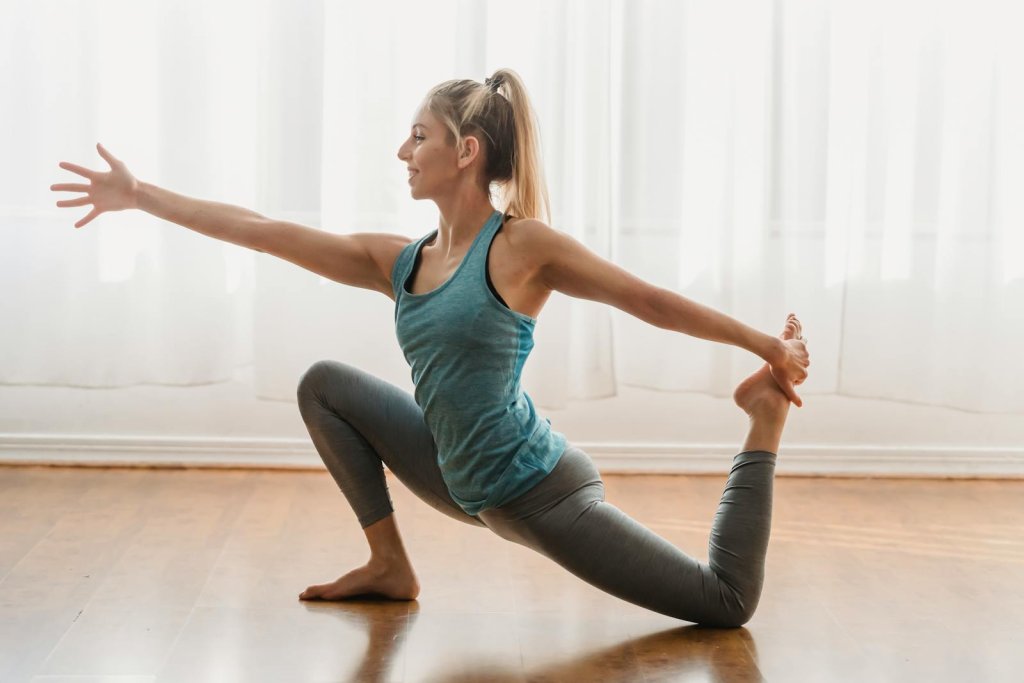
Understanding how to stretch your quads correctly matters because these muscles cross both the hip and knee joints. Well-designed quad stretching exercises, performed with proper form and timing, may help you move more comfortably, train more efficiently, and lower strain on surrounding joints.
What Are Quad Stretching Exercises?
Quad stretching exercises are movements designed to gently lengthen the quadriceps muscle group, located at the front of the thigh. The quadriceps include four muscles—rectus femoris, vastus lateralis, vastus medialis, and vastus intermedius—that work together to straighten the knee and assist with hip movement.
These stretches typically involve:
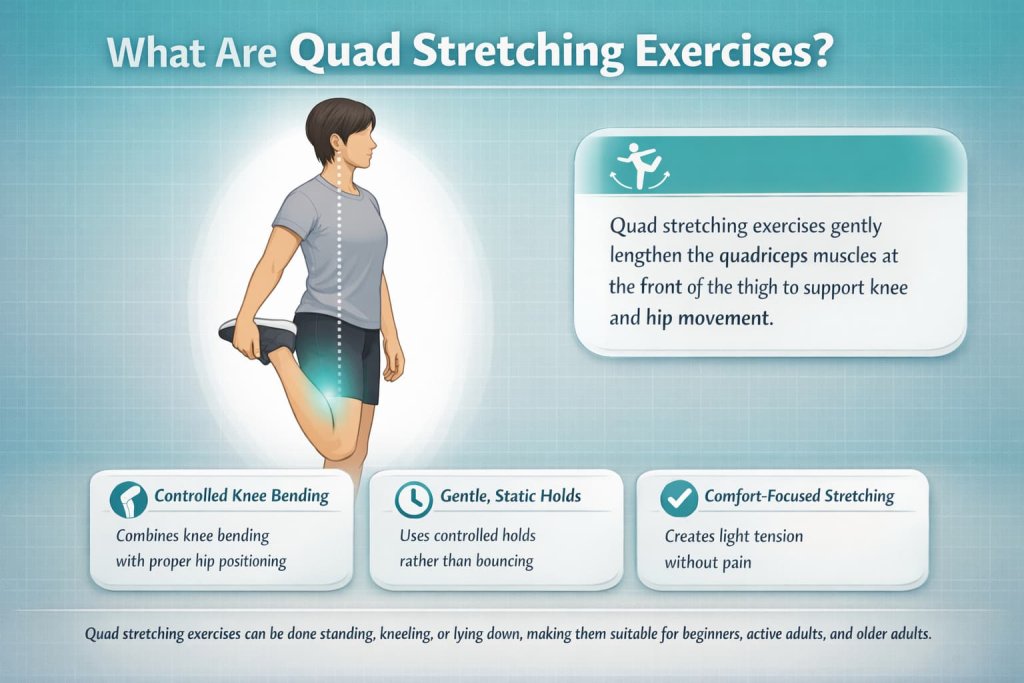
- Knee bending combined with hip positioning
- Controlled holds rather than bouncing
- Light tension without pain
Quad stretching exercises can be performed standing, kneeling, lying down, or using support, making them adaptable for beginners, active individuals, and older adults.
Why Quad Stretching Exercises Matter
Regular quad stretching exercises may help support:
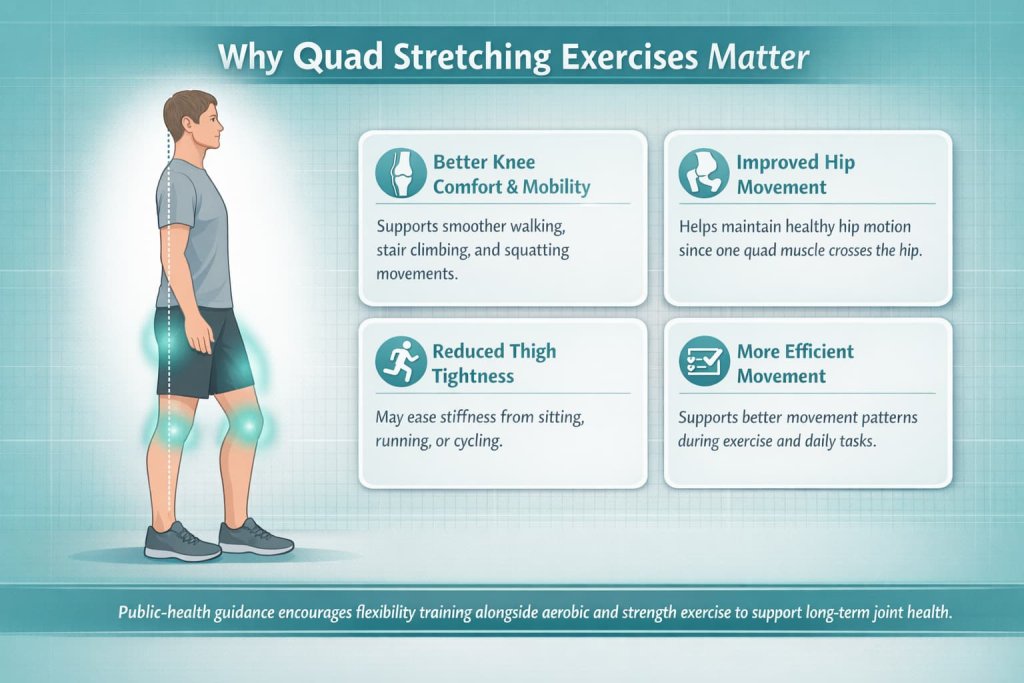
- Better knee comfort and mobility, especially during walking, stairs, and squatting
- Improved hip movement, since one quad muscle crosses the hip joint
- Reduced thigh tightness from sitting, running, or cycling
- More efficient movement patterns during exercise and daily tasks
Public-health and fitness guidance from organizations such as the Centers for Disease Control and Prevention and the World Health Organization encourages adults to include flexibility training alongside aerobic and strength exercise for long-term joint health and mobility.
6 Best Quad Stretching Exercises
These six quad stretching exercises focus on gently lengthening the front thigh muscles to reduce tightness and support better knee and hip mobility. They are simple, safe, and suitable for daily movement, warm-ups, or cool-downs.
1. Standing Quad Stretch
Why it works:
The standing quad stretch lengthens the quadriceps through controlled knee flexion while encouraging upright posture and balance. Because the rectus femoris crosses both the hip and knee joints, this position also promotes better hip alignment when performed correctly. It’s an accessible stretch that fits easily into warm-ups, cool-downs, or daily mobility routines.
How to do it:
- Stand tall and hold a wall or chair for balance
- Bend one knee and bring your heel toward your glutes
- Hold your ankle or foot gently with the same-side hand
- Keep knees close together and chest upright
- Hold, then switch sides
Trainer tip:
Lightly tuck your pelvis and squeeze the standing-side glute to shift the stretch out of the lower back and more directly into the front thigh.
2. Side-Lying Quad Stretch
Why it works:
This stretch removes balance demands and minimizes compensations such as arching the lower back or flaring the ribs. The side-lying position allows for better pelvic control, making it especially helpful for beginners, seniors, or anyone who struggles with standing balance.
How to do it:
- Lie on one side with hips stacked and legs straight
- Bend the top knee and reach back for your ankle
- Keep thighs aligned and hips steady
- Gently pull the heel toward your glutes
- Hold, then change sides
Trainer tip:
Keep your bottom leg slightly bent for stability and avoid letting the top knee drift forward, which can reduce stretch effectiveness.
3. Kneeling Quad Stretch
Why it works:
The kneeling quad stretch increases stretch intensity by placing the hip in a more extended position. This makes it particularly effective for individuals who sit frequently or experience tightness in both the quads and hip flexors.
How to do it:
- Kneel on one knee with the other foot placed in front
- Gently bend the back knee further if comfortable
- Keep torso tall and hips facing forward
- Hold and breathe steadily
Trainer tip:
Think “hips under ribs” to avoid leaning forward or arching the lower back, which can shift tension away from the quads.
4. Prone Quad Stretch (Lying Face Down)
Why it works:
Lying face down stabilizes the pelvis against the floor, reducing excessive spinal movement. This makes it easier to isolate the quadriceps without overloading the lower back, especially for those prone to lumbar arching.
How to do it:
- Lie face down on a mat
- Bend one knee and reach back for your ankle
- Keep hips pressed gently toward the mat
- Hold, then switch sides
Trainer tip:
If reaching the ankle feels difficult, use a towel or strap to maintain proper alignment without strain.
5. Towel or Strap Quad Stretch
Why it works:
Using a towel or strap allows precise control over range of motion and stretch intensity. This makes the stretch more comfortable and accessible while still providing effective quad lengthening.
How to do it:
- Lie on your side or stomach
- Loop a towel or strap around your ankle
- Gently pull the strap to bend the knee
- Maintain slow, controlled breathing
Trainer tip:
Move only to the point of light tension—not discomfort—and focus on steady breathing to help the muscle relax.
6. Wall-Assisted Quad Stretch
Why it works:
The wall-assisted quad stretch provides external support, allowing for deeper stretching while maintaining balance and posture. It places both the hip and knee in extended positions, increasing stretch effectiveness when performed with control.
How to do it:
- Stand facing away from a wall
- Place one foot behind you against the wall
- Keep torso upright and hips forward
- Hold and switch sides
Trainer tip:
Start with the foot lower on the wall and gradually increase range as flexibility improves—this stretch intensifies quickly.
How Often Should You Do Quad Stretching Exercises?
According to flexibility guidelines commonly referenced by the American College of Sports Medicine:
- Stretch at least 2–3 days per week
- Hold each stretch for 10–30 seconds (up to 60 seconds for older adults)
- Repeat each stretch 2–4 times
- Perform stretching after a light warm-up or at the end of a workout
Consistency matters more than intensity—gentle, regular stretching is more effective than forcing range of motion.
Common Mistakes to Avoid During Quad Stretching
- Arching the lower back instead of stretching the thigh
- Pulling too hard on the ankle or foot
- Letting the knee drift outward
- Holding your breath during the stretch
- Stretching cold muscles without a brief warm-up
Who Should Be Careful With Quad Stretching Exercises?
- People with recent quad, knee, or hip injuries
- Those recovering from knee or hip surgery
- Anyone with ongoing or unexplained knee pain
- Individuals with balance issues (use support or lying variations)
Stop if pain occurs and seek guidance from a qualified professional if needed.
Frequently Asked Questions
1. Can quad stretching exercises help knee discomfort?
They may help reduce muscle tightness that affects knee movement, but they are not a treatment for knee conditions.
2. Should I stretch my quads before or after a workout?
Light dynamic movements before exercise and static quad stretching after workouts are commonly recommended.
3. How long should I hold a quad stretch?
Most adults benefit from holding stretches 10–30 seconds; older adults may hold up to 60 seconds if comfortable.
4. Are quad stretching exercises safe every day?
Yes, when done gently and without pain, daily stretching is generally considered safe.
5. Do runners need quad stretching exercises?
Runners often benefit from quad stretching due to repetitive knee extension and hip movement.
6. Can seniors do quad stretching exercises?
Yes—supported and lying variations are especially suitable for older adults.
Conclusion
Quad stretching exercises are a simple yet effective way to support thigh flexibility, knee comfort, and overall mobility. When performed consistently and with proper form, they can fit seamlessly into warm-ups, cool-downs, or daily movement routines. Start gently, progress gradually, and focus on comfort—not force.
This content is for informational purposes only and not medical advice.
References
- Physical Activity Guidelines for Americans, 2nd edition (PDF) — U.S. Department of Health and Human Services (HHS), 2018.
- Adult Activity: An Overview — Centers for Disease Control and Prevention (CDC), Dec 20, 2023.
- Being Active for a Better Life (PDF) — Exercise is Medicine (includes flexibility frequency + hold times).
- Stretching and flexibility — Mayo Clinic (stretching safety + general hold guidance).
- Current concepts in muscle stretching for exercise and rehabilitation (Full text) — Page P., International Journal of Sports Physical Therapy, 2012 (includes commonly cited stretching frequency/holds and warm-up notes).