
TRX exercises for beginners are a safe and effective way to build full-body strength using only your bodyweight and adjustable straps. Because resistance is controlled by body angle—not heavy weights—TRX training is easy to scale, joint-friendly, and ideal for people who are new to strength training or returning after a break.
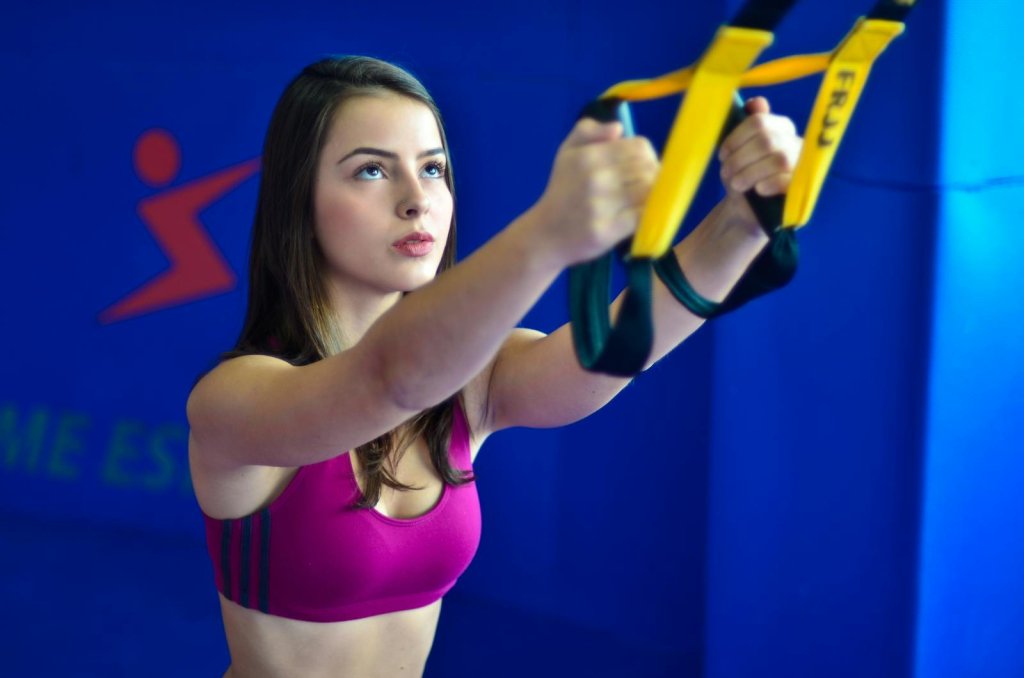
Understanding how TRX works helps you train smarter, avoid common mistakes, and get results faster. In this guide, you’ll learn what TRX exercises are, why they’re beginner-friendly, how to train safely, and the 10 best TRX exercises for beginners to start building strength, balance, and core control.
10 Best TRX Exercises for Beginners
Below are the most beginner-friendly TRX exercises that target major muscle groups while reinforcing safe movement patterns.
1. TRX Squat
How to do it:
- Face the anchor point and hold the TRX handles with both hands
- Stand with feet shoulder-width apart and arms extended
- Sit your hips back and bend your knees, keeping your chest upright
- Use the straps lightly for balance as you lower
- Press through your heels to return to standing
Why it works:
The TRX squat reinforces proper squat mechanics while reducing balance demands. The straps allow beginners to sit deeper with better posture, making it easier to learn hip and knee coordination without excessive joint stress.
Trainer Tip:
Use the straps for balance, not pulling. If you feel tension in your arms, stand more upright and focus on pushing through your legs.
2. TRX Assisted Lunge
How to do it:
- Face the anchor and hold the handles close to your chest
- Step one foot back into a split stance
- Lower your back knee toward the floor with control
- Keep your front knee aligned with your toes
- Push through the front heel to return to standing
Why it works:
The assisted lunge builds single-leg strength while improving balance and coordination. The TRX straps provide stability, allowing beginners to focus on proper alignment and depth.
Trainer Tip:
If balance feels challenging, keep more weight through the straps and reduce depth until control improves.
3. TRX Row
How to do it:
- Face the anchor and hold the handles with palms facing each other
- Walk your feet forward and lean back with arms extended
- Keep your body in a straight line from head to heels
- Pull your chest toward the handles by squeezing your shoulder blades
- Slowly lower back to the start position
Why it works:
TRX rows strengthen the upper back while reinforcing proper shoulder mechanics. The adjustable body angle allows beginners to control resistance easily.
Trainer Tip:
Think about pulling your elbows down and back rather than just bending your arms.
4. TRX Chest Press
How to do it:
- Face away from the anchor holding the handles
- Walk your feet back and lean forward slightly
- Extend arms in front of your chest
- Bend your elbows and lower your chest between your hands
- Press through your palms to return to the start
Why it works:
The TRX chest press mimics a push-up but allows better control over resistance. Beginners can adjust difficulty simply by stepping closer or farther from the anchor.
Trainer Tip:
Keep your body straight and avoid letting your hips sag to protect your lower back.
5. TRX Plank
How to do it:
- Place both feet into the TRX foot cradles
- Position your forearms on the floor under your shoulders
- Extend your legs and form a straight line from head to heels
- Brace your core and hold the position steadily
- Breathe normally throughout the hold
Why it works:
Suspension planks increase core activation by adding instability. This encourages better engagement of deep abdominal muscles without dynamic movement.
Trainer Tip:
If full suspension feels too challenging, start with one foot in the straps or shorten your hold time.
6. TRX Standing Biceps Curl
How to do it:
- Face the anchor with palms facing up
- Lean back with arms extended
- Keep elbows lifted and stable
- Curl your hands toward your temples
- Slowly extend arms back to the start
Why it works:
This movement isolates the biceps while requiring core engagement to stabilize the body. Resistance is easily adjusted by changing body angle.
Trainer Tip:
Avoid letting elbows drop—keep them high to maintain tension on the biceps.
7. TRX Triceps Extension
How to do it:
- Face away from the anchor holding the handles
- Lean forward with arms extended overhead
- Bend your elbows, lowering hands toward your head
- Keep elbows pointing forward
- Extend arms to return to start
Why it works:
TRX triceps extensions allow beginners to strengthen the back of the arms without heavy weights while maintaining joint-friendly resistance.
Trainer Tip:
If elbow strain occurs, step closer to reduce resistance and focus on slow control.
8. TRX Hip Hinge
How to do it:
- Face the anchor holding the handles lightly
- Stand tall with feet hip-width apart
- Push hips backward while keeping a neutral spine
- Lower until you feel a stretch in your hamstrings
- Drive hips forward to stand tall
Why it works:
The hip hinge teaches proper movement mechanics essential for lifting and daily activities. TRX support helps beginners maintain spinal alignment.
Trainer Tip:
Think “hips back, chest tall” rather than bending at the waist.
9. TRX Reverse Fly
How to do it:
- Face the anchor holding the handles
- Lean back with arms extended forward
- Open arms out to the sides with a slight bend in elbows
- Squeeze shoulder blades together
- Return slowly to the start
Why it works:
This exercise strengthens the upper-back muscles responsible for posture and shoulder stability, helping counteract rounded shoulders.
Trainer Tip:
Use light resistance and focus on control rather than range.
10. TRX Standing Balance Hold
How to do it:
- Face the anchor holding the straps lightly
- Shift weight onto one leg
- Lift the opposite foot slightly off the floor
- Maintain upright posture and steady breathing
- Hold for time, then switch sides
Why it works:
This simple drill improves balance and neuromuscular control, which is essential for beginners building confidence and coordination.
Trainer Tip:
Use the straps only as needed—less support means greater balance challenge.
How Often Should Beginners Do TRX Exercises?
For beginners, consistency matters more than intensity.
A simple starting plan:
- 2–3 sessions per week
- 6–10 exercises per workout
- 8–12 controlled repetitions per exercise
- 30–60 seconds rest between sets
As strength improves, you can increase volume or reduce rest time.
Why TRX Exercises Matter for Beginners
For beginners, learning movement control is just as important as building strength. TRX training supports both.
Regular TRX exercises may help support:
- Improved full-body strength and coordination
- Better balance and body awareness
- Stronger core engagement during movement
- Confidence with fundamental movement patterns
Most public health guidelines recommend muscle-strengthening activities at least two days per week, and TRX workouts are well-suited for full-body routines that meet this recommendation.
How to Use TRX Safely as a Beginner
Before starting the exercises, follow these beginner safety principles:
- Secure the anchor point and test the straps before loading your weight
- Keep straps lightly taut—avoid slack during movement
- Start with a more upright body position to reduce resistance
- Move slowly and with control; avoid rushing repetitions
- Stop any exercise that causes sharp pain or joint discomfort
As strength and confidence improve, you can increase difficulty by adjusting your stance or body angle.
Common Beginner Mistakes to Avoid
Avoiding these mistakes helps you progress safely:
- Leaning too far too soon, increasing resistance too quickly
- Letting straps go slack during movement
- Rushing reps instead of maintaining control
- Ignoring core engagement during exercises
Focus on form first—progress comes naturally after that.
FAQs About TRX Exercises for Beginners
Are TRX exercises good for beginners?
Yes. TRX exercises are highly adjustable and allow beginners to control resistance using body angle rather than heavy weights.
Can beginners build muscle with TRX?
TRX training may help support muscle strength and endurance, especially for beginners, when performed consistently.
Is TRX safer than free weights for beginners?
TRX can feel safer for many beginners because it offers support, controlled resistance, and less joint loading.
Do beginners need a full TRX system?
Most beginners only need the suspension straps and a secure anchor point such as a door anchor or wall mount.
How long should a beginner TRX workout last?
Most beginner workouts last 20–40 minutes, depending on rest time and exercise selection.
Can TRX exercises be done at home?
Yes. TRX is commonly used at home with door anchors or mounted systems.
Conclusion
TRX exercises for beginners offer a simple, scalable way to build strength, balance, and confidence without complex equipment. By starting with controlled movements, proper setup, and consistent practice, beginners can safely develop full-body strength and progress at their own pace.
If you’re ready to start, begin with 2–3 short TRX workouts per week and focus on mastering the basics before increasing difficulty.
References
- Physical Activity Guidelines for Adults (CDC)
- WHO 2020 Guidelines on Physical Activity and Sedentary Behaviour (Bull et al., 2020) – Full Text (PMC)
- Suspension Training: Overview, Mechanisms, and Programming Considerations (Frontiers in Physiology)
- Suspension Training and Core Demand During Plank Variations (Byrne et al., PubMed)
- EMG Comparison: Traditional vs Suspension Push-Ups (Snarr & Esco, PubMed)
- Muscle Activation: Suspension vs Conventional Push-Up and Inverted Row (PLOS ONE)