
Cool down exercises are simple, low-intensity movements performed after a workout to help your body gradually return to a resting state. They support a smoother drop in heart rate and breathing, promote relaxation, and help maintain flexibility after exercise.
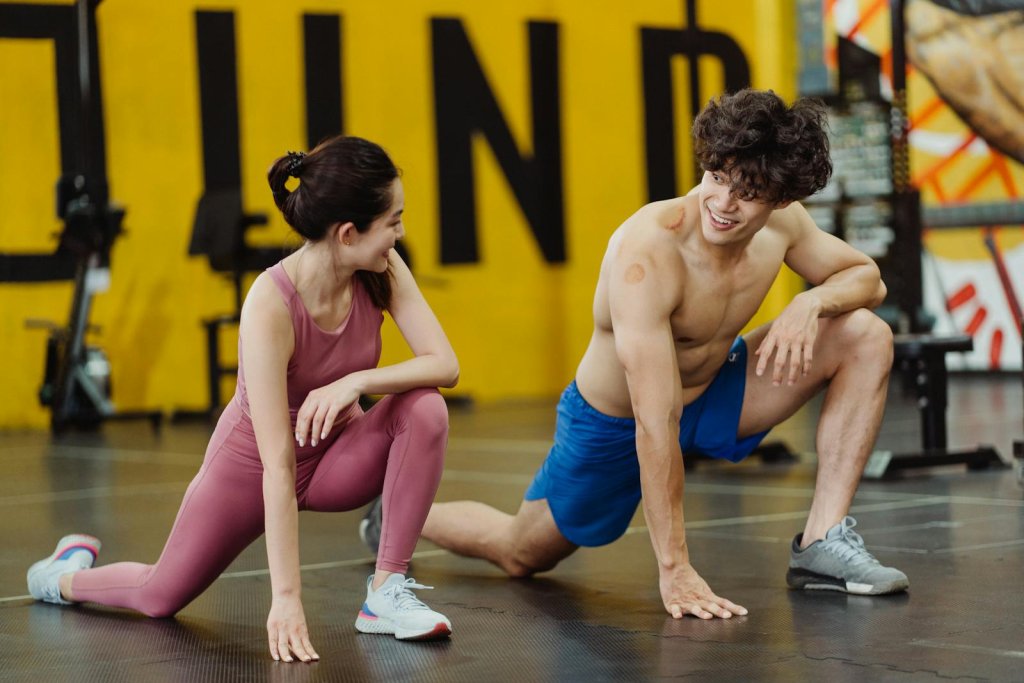
Understanding how to cool down properly matters because stopping abruptly can leave you feeling dizzy or stiff, while a short, structured cool down helps your body transition safely and comfortably. Most guidelines recommend 5–10 minutes of gentle movement followed by light stretching, making cool down exercises easy to fit into any routine.
What Are Cool Down Exercises?
Cool down exercises are post-workout movements designed to gradually reduce exercise intensity. Instead of stopping suddenly, you slow things down with gentle activity and stretching.
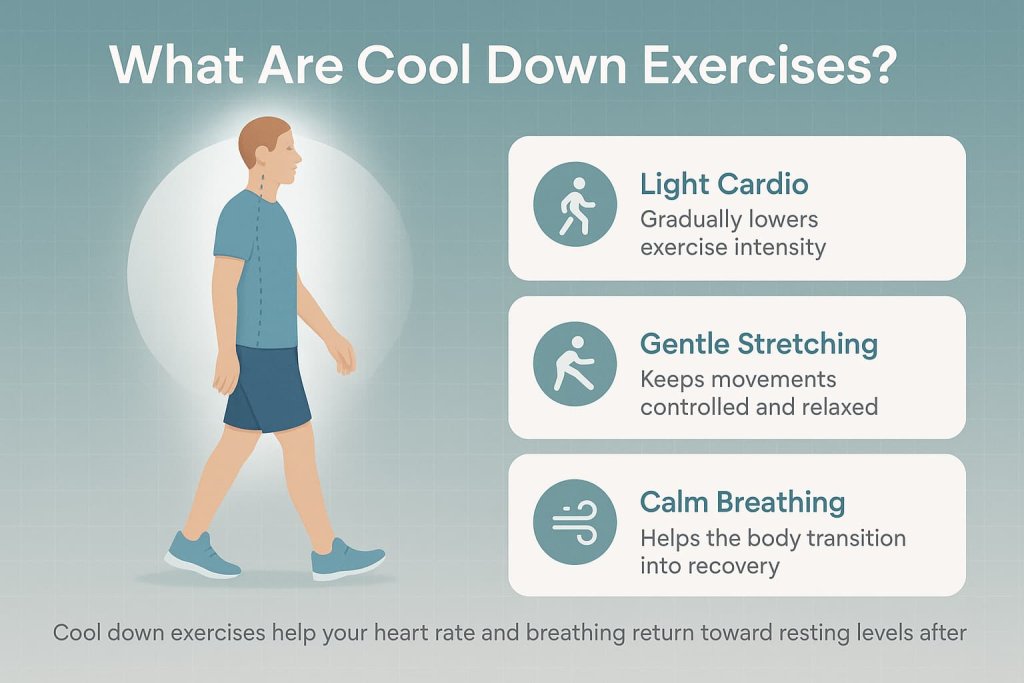
A proper cool down typically includes:
- Light cardio (walking, easy cycling)
- Gentle, controlled stretching
- Relaxed breathing
This combination helps your cardiovascular system transition smoothly and supports overall recovery.
Why Cool Down Exercises Matter After Workouts
Cool down exercises may help support:
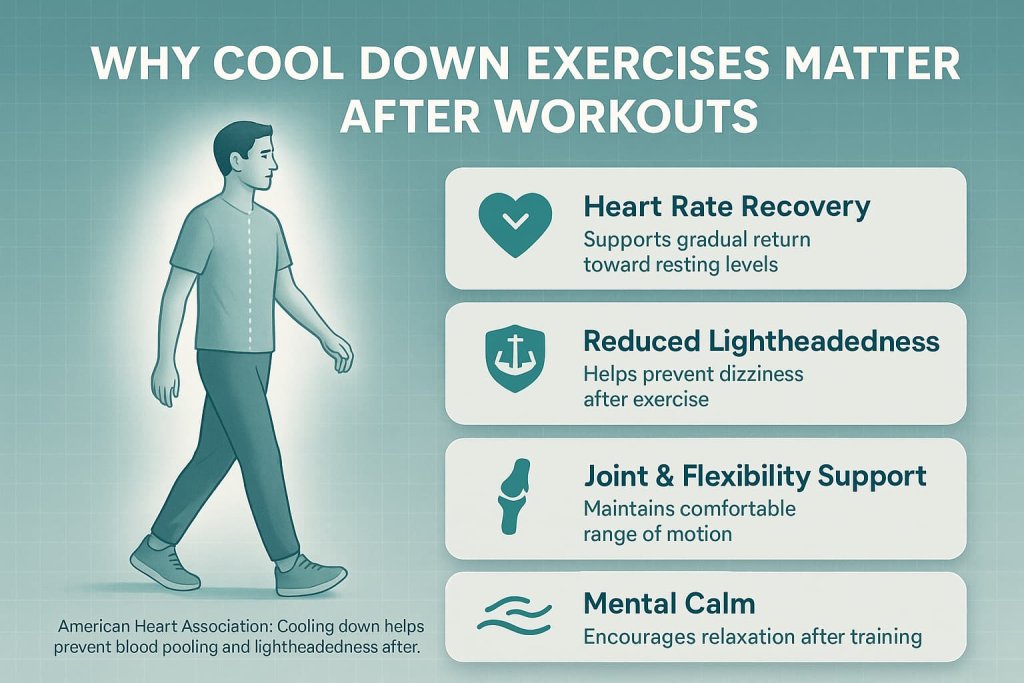
- Gradual normalization of heart rate and blood pressure
- Reduced feelings of dizziness or nausea after exercise
- Improved flexibility and joint range of motion
- A calmer mental state after training
According to the American Heart Association, cooling down helps prevent blood from pooling in the legs and reduces the risk of lightheadedness after exercise.
How Long Should a Cool Down Last?
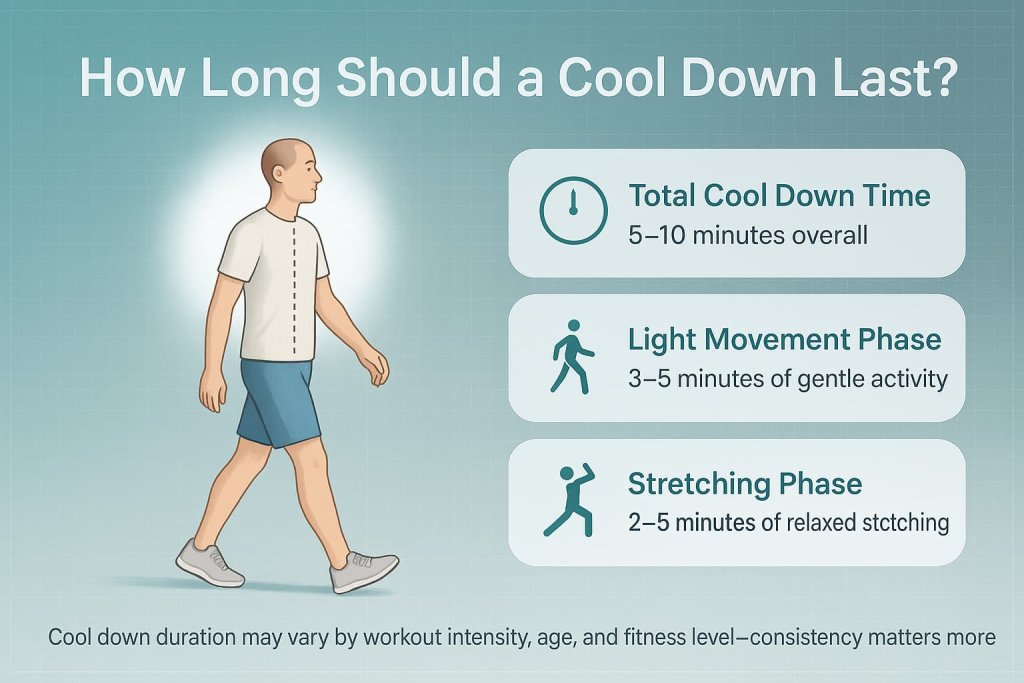
Most experts recommend:
- 5–10 minutes total
- 3–5 minutes of light movement
- 2–5 minutes of gentle stretching
The exact duration depends on workout intensity, age, and fitness level, but consistency matters more than length.
12 Best Cool Down Exercises to Recover Faster After Any Workout
The exercises below are designed to help your body gradually transition out of exercise. They focus on gentle movement, stretching, and breathing to support safe recovery after any workout.
1. Slow Walking
Why it works:
Slow walking allows your heart rate and breathing to gradually return toward resting levels instead of dropping abruptly. This supports circulation, reduces lightheadedness, and helps your nervous system shift out of a high-intensity state after cardio or full-body workouts.
Muscles worked:
Calves, quadriceps, hamstrings, glutes, and postural muscles at a very low intensity.
How to do it:
- Reduce your pace to an easy, comfortable walk
- Keep your posture upright with relaxed shoulders
- Swing your arms naturally
- Breathe slowly and evenly
- Continue for 2–5 minutes
Trainer Tip:
Think of this as “active recovery,” not exercise. If you can comfortably talk in full sentences, your pace is ideal.
2. Standing Calf Stretch
Why it works:
The calves work continuously during walking, running, and most lower-body exercises. Stretching them post-workout helps restore ankle mobility and may reduce feelings of tightness that affect walking mechanics.
Muscles worked:
Gastrocnemius and soleus muscles of the lower leg.
How to do it:
- Stand facing a wall or sturdy surface
- Step one foot back, keeping the heel down
- Bend the front knee slightly
- Keep the back leg straight
- Hold the stretch comfortably
Trainer Tip:
For deeper soleus emphasis, slightly bend the back knee while keeping the heel on the floor.
3. Standing Quadriceps Stretch
Why it works:
The quadriceps are heavily involved in cycling, running, squats, and lunges. Stretching them after exercise supports knee comfort and hip mobility.
Muscles worked:
Quadriceps group (rectus femoris, vastus muscles).
How to do it:
- Stand tall and hold a wall or chair for balance
- Bend one knee and bring your heel toward your glutes
- Hold your ankle or foot gently
- Keep knees close together
- Maintain an upright torso
Trainer Tip:
Avoid arching your lower back. Gently tuck the pelvis to feel the stretch in the front thigh instead of the spine.
4. Hamstring Stretch
Why it works:
Hamstrings often feel tight after running or strength training. Stretching them helps maintain hip hinge mechanics and reduces posterior chain stiffness.
Muscles worked:
Hamstrings (biceps femoris, semitendinosus, semimembranosus).
How to do it:
- Stand or sit with one leg extended
- Keep your spine neutral
- Hinge slightly at the hips
- Stop when you feel a gentle stretch
- Hold without bouncing
Trainer Tip:
If you feel tension behind the knee instead of the thigh, ease off slightly and refocus on hip movement.
5. Figure-4 Glute Stretch
Why it works:
This stretch targets the glutes and outer hips, which play a major role in pelvic stability and lower-body control. It’s especially useful after squats, lunges, or running.
Muscles worked:
Gluteus maximus, gluteus medius, deep hip rotators.
How to do it:
- Sit or stand comfortably
- Cross one ankle over the opposite knee
- Keep your chest lifted
- Gently press the raised knee outward
- Hold the position comfortably
Trainer Tip:
If standing balance is difficult, perform this stretch seated for better control.
6. Hip Flexor Stretch
Why it works:
Hip flexors shorten during sitting and many cardio activities. Stretching them supports pelvic alignment and reduces strain on the lower back.
Muscles worked:
Iliopsoas, rectus femoris.
How to do it:
- Step one foot forward into a split stance
- Bend the back knee slightly
- Keep your torso upright
- Gently shift hips forward
- Hold without forcing the range
Trainer Tip:
You should feel this stretch in the front of the hip, not the lower back. Reduce range if needed.
7. Inner Thigh (Adductor) Stretch
Why it works:
Adductors stabilize the hips during squats, lunges, and lateral movements. Stretching them helps maintain balanced hip mobility.
Muscles worked:
Adductor longus, brevis, magnus, gracilis.
How to do it:
- Stand with feet wider than shoulder-width
- Shift weight to one side
- Keep the opposite leg straight
- Maintain an upright torso
- Hold gently
Trainer Tip:
Avoid collapsing the knee inward. Keep it aligned with your toes for joint safety.
8. Chest and Shoulder Opener
Why it works:
Upper-body workouts and daily posture often create forward-rounded shoulders. This stretch helps restore chest openness and shoulder alignment.
Muscles worked:
Pectoralis major and minor, anterior deltoids.
How to do it:
- Stand tall or use a doorway or wall
- Place arms slightly behind your body
- Gently open the chest
- Keep shoulders relaxed
- Hold without shrugging
Trainer Tip:
Think “wide collarbones,” not pulled-back shoulders. The stretch should feel open, not forced.
9. Child’s Pose
Why it works:
Child’s pose promotes relaxation while gently stretching the spine and hips. It also encourages slow, calming breathing after intense activity.
Muscles worked:
Lower back muscles, glutes, hip muscles, spinal stabilizers.
How to do it:
- Kneel on the floor
- Sit hips back toward heels
- Reach arms forward or rest them by your sides
- Relax your neck
- Breathe slowly
Trainer Tip:
Use a cushion or folded towel under hips or chest for comfort if flexibility is limited.
10. Cat–Cow Stretch
Why it works:
This slow spinal mobility exercise restores natural movement to the spine and pairs well with breathing to release post-exercise tension.
Muscles worked:
Spinal extensors, deep core stabilizers, neck muscles.
How to do it:
- Start on hands and knees
- Inhale and gently arch your back
- Exhale and round your spine
- Move slowly between positions
- Keep movement pain-free
Trainer Tip:
Let breath guide the movement. Slow, controlled transitions are more effective than large ranges.
11. Standing Side Stretch
Why it works:
Side stretches help release tension in the torso and support full trunk mobility, which is often neglected in straight-plane exercises.
Muscles worked:
Obliques, latissimus dorsi, intercostal muscles.
How to do it:
- Stand with feet hip-width apart
- Raise one arm overhead
- Gently lean to the opposite side
- Keep hips stable
- Hold and switch sides
Trainer Tip:
Avoid twisting. The movement should feel like lengthening, not collapsing.
12. Slow Breathing
Why it works:
Slow breathing activates the parasympathetic nervous system, helping your body shift from “exercise mode” to recovery and relaxation.
Muscles worked:
Diaphragm and breathing muscles.
How to do it:
- Stand or sit comfortably
- Inhale slowly through your nose
- Pause briefly
- Exhale slowly through your mouth
- Repeat for 1–2 minutes
Trainer Tip:
Longer exhales than inhales can further enhance relaxation and recovery.
How to Structure an Effective Cool Down Routine
An effective cool down helps your body gradually transition out of exercise without stress or discomfort. The focus is on slowing down, relaxing muscles, and restoring calm breathing.
A simple, effective cool down includes:
- Light movement first to slowly lower heart rate (slow walking or easy cycling)
- Gentle stretching for the muscles you just used
- Relaxed breathing to help the body shift toward recovery
- Pain-free ranges only, never forcing a stretch
Most cool downs take 5–10 minutes and should feel comfortable and controlled from start to finish.
Cool Down Exercises After Different Types of Workouts
Cool down exercises should match the type of workout you complete, while always staying gentle and relaxed.
- After cardio workouts:
Slow walking followed by calf, hamstring, and quad stretches - After strength training:
Light movement plus stretches for the muscles trained that day - After full-body workouts:
Combine lower- and upper-body stretches with slow breathing - After flexibility or yoga workouts:
Focus on breathing and relaxation rather than additional stretching
No matter the workout, cool down exercises should remain easy, calm, and pain-free to support safe recovery and long-term consistency.
Common Cool Down Mistakes to Avoid
- Stopping exercise abruptly
- Stretching aggressively or bouncing
- Holding your breath during stretches
- Skipping the cool down when short on time
Even a brief cool down is better than none.
Do Cool Down Exercises Reduce Muscle Soreness?
Research shows mixed results. Reviews published in sports medicine journals report that cool downs may help with relaxation and lactate clearance, but they do not consistently prevent delayed onset muscle soreness (DOMS). This is why it’s best to frame cool down exercises as supporting recovery and comfort rather than guaranteeing soreness prevention.
Cool Down Exercises for Different Workouts
- After cardio: slow walking, breathing, calf and hamstring stretches
- After strength training: full-body stretching with focus on trained muscles
- After yoga or mobility sessions: brief breathing and gentle relaxation
Frequently Asked Questions (FAQs)
1. Are cool down exercises really necessary?
Yes. Most health organizations recommend cooling down to help your body transition safely after exercise.
2. How long should I hold each stretch?
Typically 10–30 seconds, staying within a comfortable, pain-free range.
3. Should I cool down after every workout?
Yes, especially after moderate-to-intense exercise.
4. Is stretching mandatory during a cool down?
Stretching is optional but commonly included to support flexibility.
5. Can beginners do cool down exercises?
Absolutely. Cool downs are suitable for all fitness levels.
6. Do cool downs prevent injury?
They may support safe recovery, but they do not guarantee injury prevention.
Conclusion
Cool down exercises are a simple but essential part of any workout routine. By spending just a few minutes slowing down, stretching gently, and breathing calmly, you support a safer transition out of exercise and promote better long-term training habits. Make cool down exercises a non-negotiable part of your fitness routine for more comfortable, consistent workouts.
References
- American Heart Association — Warm Up, Cool Down
- Mayo Clinic — Aerobic exercise: How to warm up and cool down
- NHS — How to stretch after exercising
- Van Hooren & Peake (2018) — Do We Need a Cool-Down After Exercise? (Narrative Review)
- BMJ — Effects of stretching before and after exercising on muscle soreness and risk of injury (Systematic Review)
- International Journal of Sports Physical Therapy — Current Concepts in Muscle Stretching for Exercise and Rehabilitation