
Strength training for women over 50 is one of the most effective ways to build muscle, support bone health, improve metabolism, and maintain independence as you age. Research from the CDC, WHO, and ACSM consistently shows that regular strength training—at least two days per week—supports healthy aging, especially for post-menopausal women.
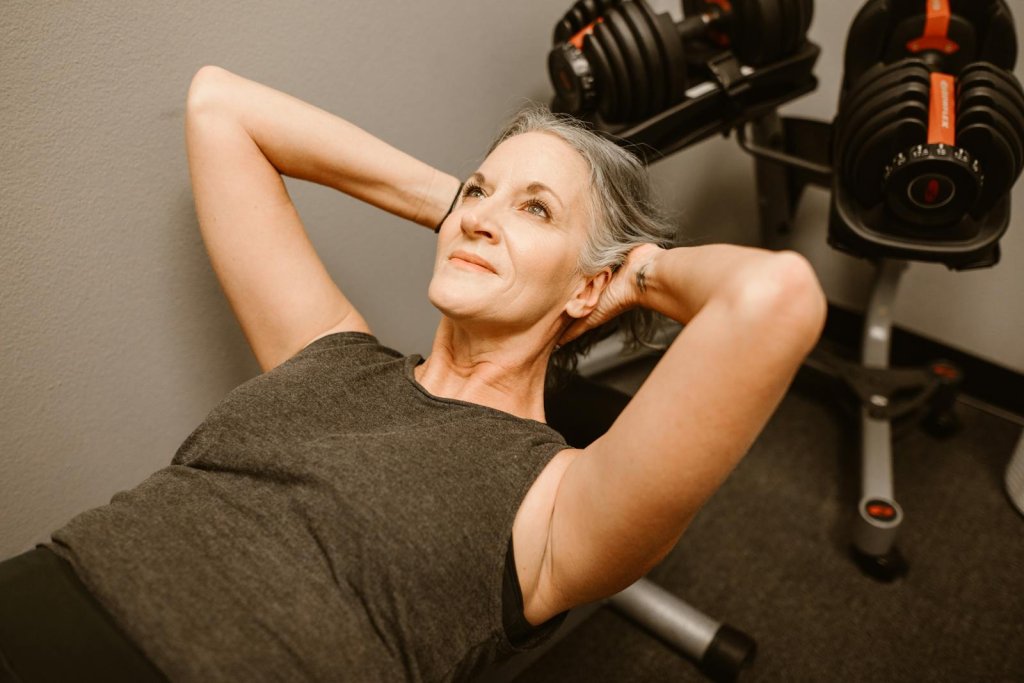
Understanding how to strength train safely and effectively after 50 is important because hormonal changes, natural muscle loss, and bone density decline can affect strength, balance, and daily function. The good news is that the right type of strength training can help counter these changes and support long-term health.
This guide explains what strength training is, why it matters after 50, and how to do it safely—along with the 10 best strength training exercises for women over 50, practical tips, and expert-backed guidelines.
What Is Strength Training for Women Over 50?
Strength training (also called resistance training) involves using resistance to challenge your muscles. This resistance can come from:
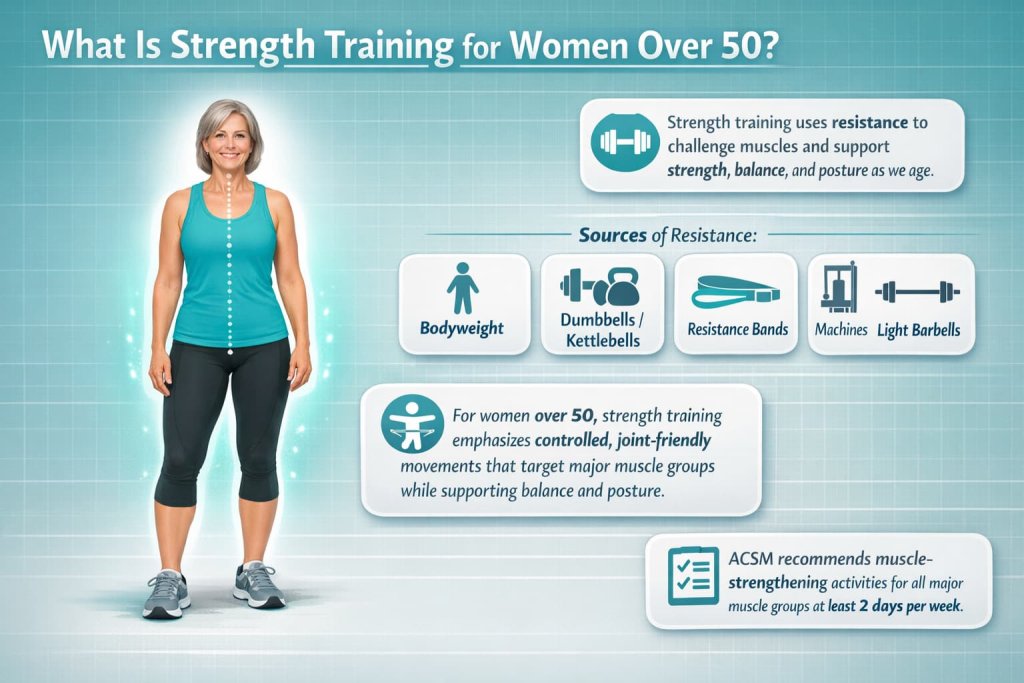
- Bodyweight
- Dumbbells or kettlebells
- Resistance bands
- Machines
- Light barbells
For women over 50, strength training focuses on controlled, joint-friendly movements that target major muscle groups while supporting balance and posture.
According to the American College of Sports Medicine (ACSM), adults should perform muscle-strengthening activities for all major muscle groups at least two days per week as part of a well-rounded fitness program.
Why Strength Training Matters After 50
As women age, several natural changes occur:
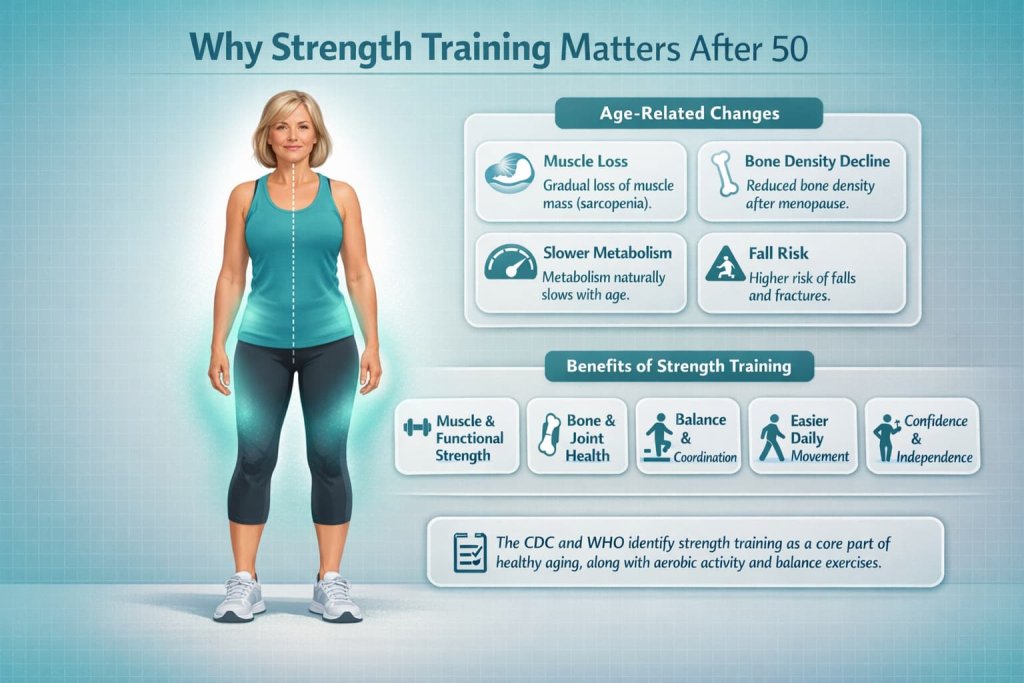
- Gradual loss of muscle mass (sarcopenia)
- Reduced bone density after menopause
- Slower metabolism
- Increased risk of falls and fractures
Regular strength training may help support:
- Muscle mass and functional strength
- Bone density and joint health
- Balance and coordination
- Daily movement like lifting, climbing stairs, and carrying groceries
- Confidence and independence
The CDC and WHO both emphasize strength training as a core component of healthy aging, alongside aerobic activity and balance exercises.
Is Strength Training Safe for Women Over 50?
Yes—when done correctly. Strength training is widely considered safe and beneficial for older adults when exercises are:
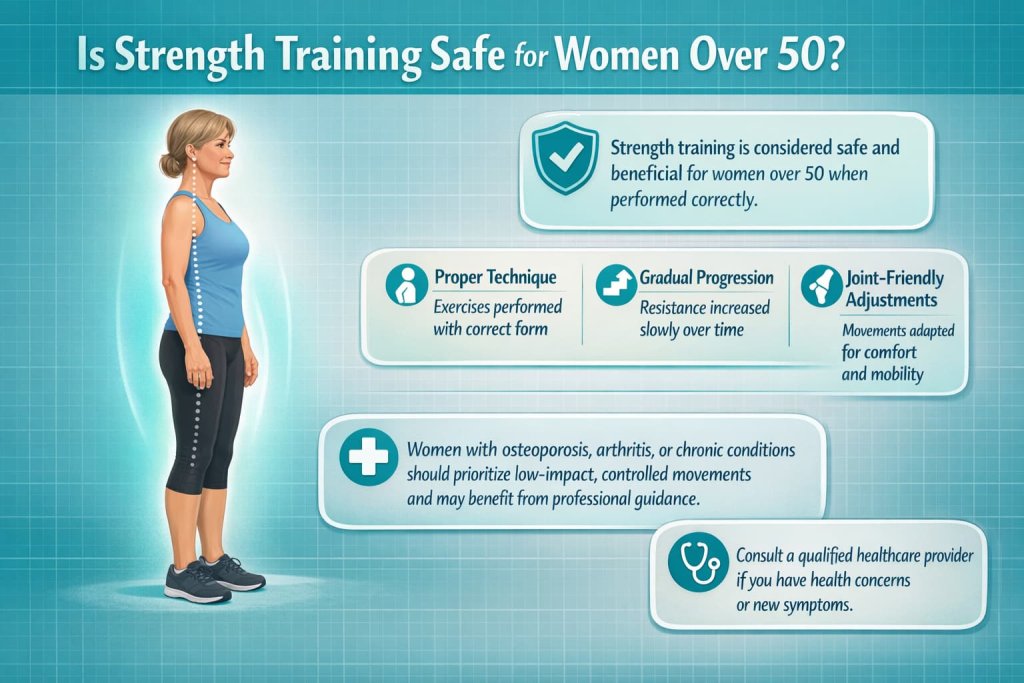
- Performed with proper technique
- Progressed gradually
- Adjusted for joint comfort and medical history
Women with osteoporosis, arthritis, or chronic conditions should focus on low-impact, controlled movements and may benefit from professional guidance. Always consult a qualified healthcare provider if you have concerns.
10 Best Strength Training Exercises for Women Over 50
These exercises focus on building full-body strength, supporting bone health, and improving balance using safe, joint-friendly movements. They are designed to support daily function, healthy aging, and long-term independence when performed with proper form and gradual progression.
1. Squats (Chair or Bodyweight)
Why it works:
Squats train the lower body in a way that closely mimics daily activities like sitting down and standing up. Using a chair reduces knee strain and improves confidence, making this exercise especially suitable for women over 50.
Muscles worked:
Quadriceps, glutes, hamstrings, core stabilizers
How to do it:
- Stand in front of a chair with feet hip-width apart
- Push hips back and slowly lower toward the chair
- Lightly touch the chair or sit briefly
- Press through your heels to stand back up
- Keep chest upright and knees tracking forward
Trainer Tip:
If knee discomfort occurs, limit depth or use a higher surface. Focus on slow, controlled movement rather than speed.
2. Wall or Incline Push-Ups
Why it works:
Wall or incline push-ups strengthen the upper body without placing excessive stress on the shoulders or wrists. The elevated position allows better control and joint comfort.
Muscles worked:
Chest, shoulders, triceps, core
How to do it:
- Place hands on a wall, counter, or sturdy bench
- Step feet back slightly to create a gentle incline
- Bend elbows and lower chest toward hands
- Press through palms to return to start
- Keep body in a straight line throughout
Trainer Tip:
The closer your feet are to the wall, the easier the movement. Adjust distance to match your strength level.
3. Dumbbell Deadlifts
Why it works:
Deadlifts strengthen the hips and back while reinforcing proper lifting mechanics. This supports posture and helps protect the spine during daily tasks.
Muscles worked:
Glutes, hamstrings, lower back, core
How to do it:
- Hold light dumbbells in front of thighs
- Stand with feet hip-width apart
- Hinge at hips while keeping spine neutral
- Lower weights toward mid-shin level
- Press hips forward to return to standing
Trainer Tip:
Think “hips back, chest tall.” Stop the movement if you feel strain in the lower back.
4. Seated or Standing Rows
Why it works:
Rowing movements strengthen the upper back, which supports posture and shoulder health—areas that commonly weaken with age.
Muscles worked:
Upper back, lats, rear shoulders, biceps
How to do it:
- Hold dumbbells or resistance band handles
- Sit or stand tall with chest lifted
- Pull elbows back while squeezing shoulder blades
- Pause briefly at the top
- Slowly return to the start
Trainer Tip:
Avoid shrugging shoulders upward. Focus on pulling elbows back and down.
5. Step-Ups
Why it works:
Step-ups improve single-leg strength and balance, which are essential for stair climbing and fall prevention.
Muscles worked:
Glutes, quadriceps, hamstrings, calves
How to do it:
- Stand facing a low step or sturdy platform
- Place one foot fully on the step
- Press through the heel to step up
- Step down with control
- Alternate sides after repetitions
Trainer Tip:
Start with a low step height and hold a railing or wall for balance if needed.
6. Overhead Dumbbell Press (Light Weight)
Why it works:
This exercise builds shoulder strength needed for lifting and reaching tasks, while also engaging the core for stability.
Muscles worked:
Shoulders, triceps, upper chest, core
How to do it:
- Hold light dumbbells at shoulder height
- Sit or stand with core engaged
- Press weights upward without locking elbows
- Lower slowly back to shoulder level
- Keep neck relaxed and ribs down
Trainer Tip:
If overhead movement causes discomfort, press one arm at a time or reduce range of motion.
7. Glute Bridges
Why it works:
Glute bridges activate the glutes and support hip and lower-back stability, which may help counter prolonged sitting.
Muscles worked:
Glutes, hamstrings, core
How to do it:
- Lie on your back with knees bent and feet flat
- Place arms at your sides
- Press through heels to lift hips
- Pause briefly at the top
- Lower hips slowly to the floor
Trainer Tip:
Avoid arching the lower back. The movement should come from the hips, not the spine.
8. Resistance Band Pull-Apart
Why it works:
Pull-aparts strengthen postural muscles and may help counter rounded shoulders caused by prolonged sitting.
Muscles worked:
Upper back, rear shoulders, posture stabilizers
How to do it:
- Hold resistance band with arms extended forward
- Keep arms straight but not locked
- Pull band apart by squeezing shoulder blades
- Pause briefly when band reaches chest width
- Return slowly to start
Trainer Tip:
Use light resistance and prioritize control over tension.
9. Farmer’s Carry (Light Weights)
Why it works:
Carrying weights while walking improves grip strength, core stability, and balance, all of which support daily activities.
Muscles worked:
Forearms, shoulders, core, legs
How to do it:
- Hold light dumbbells at your sides
- Stand tall with shoulders relaxed
- Walk slowly and steadily for 20–40 seconds
- Keep core engaged and posture upright
- Rest and repeat
Trainer Tip:
If balance feels challenging, shorten walking distance or reduce weight.
10. Standing Core Exercises (Pallof Press)
Why it works:
Standing core exercises build stability without requiring floor positions, making them accessible and joint-friendly.
Muscles worked:
Core stabilizers, obliques, lower back
How to do it:
- Attach a resistance band at chest height
- Stand sideways to the anchor point
- Hold band at chest and press arms forward
- Resist rotation through the torso
- Return slowly and repeat both sides
Trainer Tip:
Keep hips and shoulders facing forward. Control matters more than resistance level.
How to Prepare for Strength Training After 50
Proper preparation helps reduce injury risk and improves exercise effectiveness. Taking a few minutes to prepare your body can make strength training safer and more comfortable.
Before each session, focus on:
- Gentle warm-up: Light walking or dynamic movements to increase blood flow
- Joint mobility: Controlled movements for hips, shoulders, knees, and spine
- Appropriate resistance: Start with light weights or bands that allow full control
- Footwear and environment: Supportive shoes and a stable, clutter-free space
It’s also important to listen to your body. Strength training should feel challenging but not painful. Mild muscle fatigue is normal; sharp or joint-specific pain is not.
How Often Should Women Over 50 Do Strength Training?
Most authoritative guidelines recommend:
- 2–3 strength training sessions per week
- At least 48 hours of rest between sessions for the same muscle group
- 1–3 sets per exercise
- 8–12 controlled repetitions, adjusted for comfort and ability
Consistency matters more than intensity. Progress should be gradual.
Strength Training Tips for Women Over 50
- Start with light resistance and focus on form
- Move through a pain-free range of motion
- Breathe steadily—avoid holding your breath
- Increase resistance slowly over weeks, not days
- Prioritize recovery and sleep
According to the National Strength and Conditioning Association (NSCA), older adults benefit most from progressive resistance training that emphasizes control, posture, and full-body strength.
Common Mistakes to Avoid
- Lifting weights that are too heavy too soon
- Skipping warm-ups
- Ignoring balance and core work
- Training through joint pain
- Being inconsistent
Strength Training and Bone Health After 50
The Bone Health & Osteoporosis Foundation highlights muscle-strengthening exercise as a key strategy to support bone health. Weight-bearing and resistance exercises place healthy stress on bones, which may help maintain bone density when performed safely.
Women with low bone density should avoid sudden, high-impact movements and prioritize proper technique.
When to Modify or Avoid Strength Training Exercises
While strength training is beneficial, certain situations require modification or temporary avoidance to maintain safety.
Consider modifying exercises if you experience:
- Persistent joint pain during or after workouts
- Dizziness, chest discomfort, or shortness of breath
- Reduced balance or coordination
- Flare-ups of arthritis or back pain
Strength training should be paused and medical advice sought if there is:
- Unexplained pain or swelling
- Recent surgery or fracture
- Severe osteoporosis with fracture risk
- Any new or worsening medical symptoms
Adjustments such as reducing resistance, limiting range of motion, or choosing seated or supported variations can often allow continued participation without unnecessary risk.
Frequently Asked Questions
Is strength training better than cardio for women over 50?
Both are important. Strength training supports muscle and bone health, while cardio supports heart health. Most guidelines recommend doing both.
Can women over 50 build muscle?
Yes. While muscle growth may be slower, consistent strength training can improve strength and muscle quality at any age.
How heavy should weights be after 50?
Weights should feel challenging but controllable. You should be able to complete all repetitions with good form.
Is strength training safe with arthritis?
Often yes, with modifications. Low-impact, controlled movements are commonly recommended.
Do I need a gym to strength train?
No. Many effective strength training exercises can be done at home using bodyweight or resistance bands.
How long should a strength workout be?
Most sessions last 30–45 minutes, depending on rest and number of exercises.
Conclusion
Strength training for women over 50 is a powerful, evidence-based way to support muscle strength, bone health, and daily independence. With the right exercises, proper technique, and consistent practice, women can stay strong, confident, and active well into later life.
If you’re just starting, begin slowly, focus on form, and build a routine you can maintain long term. Strength truly has no age limit.
References
- CDC: Older Adult Physical Activity Guidelines (65+)
- Physical Activity Guidelines for Americans, 2nd Edition (Full PDF)
- WHO: Guidelines on Physical Activity and Sedentary Behaviour (Official Publication)
- ACSM: Physical Activity Guidelines (Strength Training Recommendations)
- NSCA Position Statement: Resistance Training for Older Adults (2019 PDF)
- ACOG: Staying Active (Physical Activity and Exercise)
- Bone Health and Osteoporosis Foundation: Weight-Bearing and Muscle-Strengthening Exercise
- Cochrane Review: Exercise for Preventing Falls in Older People (2019)