
Barbell chest exercises are among the most effective ways to build chest size and strength, thanks to their ability to load the muscles heavily and progressively. The short answer: barbell chest exercises help you gain muscle faster because they activate more total upper-body strength compared to many other chest training methods.
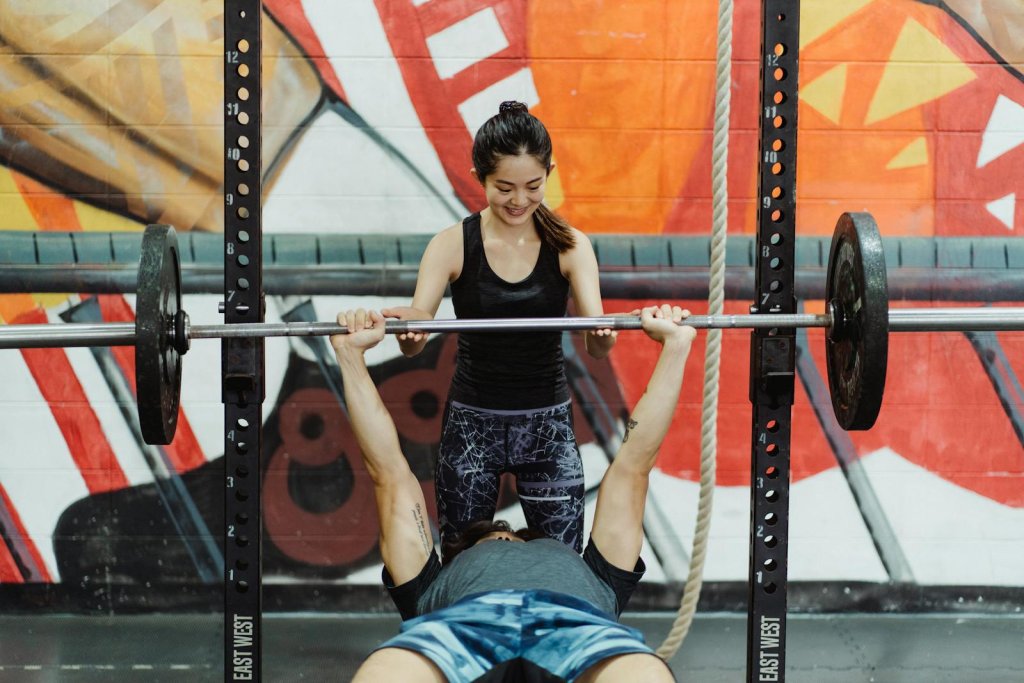
Understanding how each barbell variation targets different portions of the chest is essential for maximizing growth, improving push strength, and keeping your shoulders safe. This guide walks you through the 12 best barbell chest exercises, evidence-based tips, training frequency, safety guidelines, and common mistakes.
Why Barbell Chest Exercises Matter
Barbell chest exercises are foundational because they allow heavy loading, stable pressing mechanics, and high pec activation, making them a staple for strength and hypertrophy.
Key benefits include:
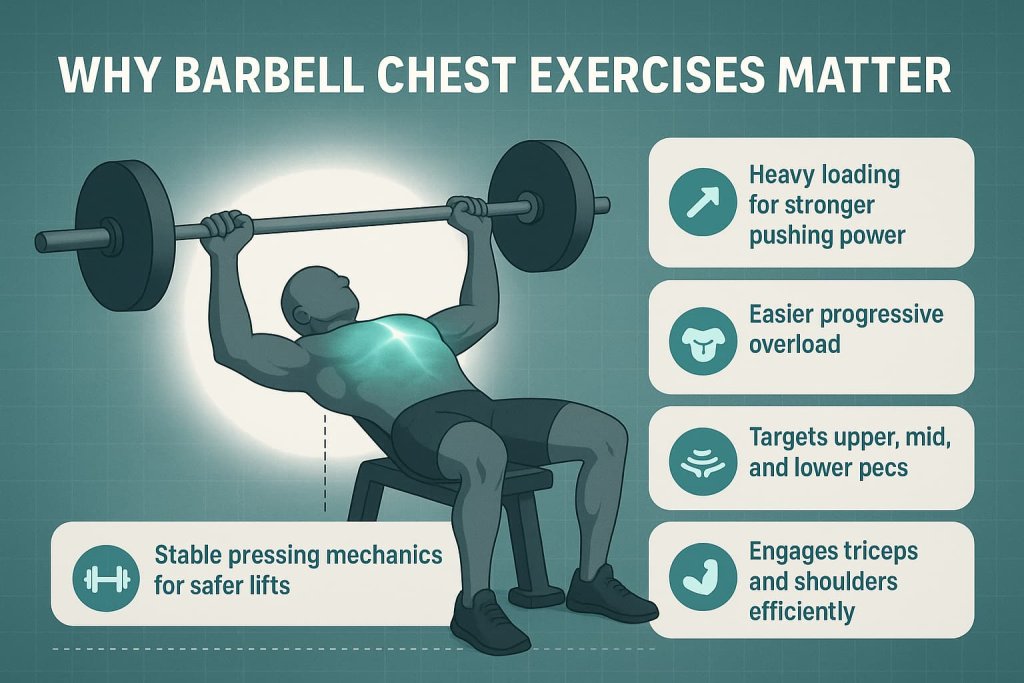
- Promote stronger horizontal pushing strength.
- Allow progressive overload more easily than dumbbells.
- Target the upper, mid, and lower chest effectively with angle variations.
- Provide measurable strength progression using incremental weight changes.
- Recruit assisting muscles like triceps and shoulders efficiently.
12 Best Barbell Chest Exercises
Build a stronger, more defined chest with these evidence-backed barbell movements. Each exercise targets the pecs from a different angle to maximize strength, size, and overall upper-body power.
1. Barbell Bench Press
A foundational strength-building chest exercise.
Why it works:
It allows the greatest overall load, heavily activating the pecs, triceps, and shoulders.
Muscles worked:
Pectoralis major, anterior deltoids, triceps brachii.
How to do it:
- Lie on the bench with feet flat.
- Grip the bar slightly wider than shoulder-width.
- Lower to mid-chest with elbows at ~45–70°.
- Press the bar up while keeping shoulder blades back and down.
Trainer Tip:
Use a spotter or safety pins when lifting heavy.
2. Incline Barbell Bench Press (30–45°)
Targets the clavicular (upper) chest.
Why it works:
Research shows incline pressing increases upper-pec activation compared to flat bench.
Muscles worked:
Upper chest, front delts, triceps.
How to do it:
- Set bench to 30–45°.
- Lower bar to upper chest.
- Press upward with control and avoid flaring elbows.
Trainer Tip:
Lower incline angles (30°) activate the upper chest more effectively than steeper inclines.
3. Decline Barbell Bench Press
Emphasizes the lower chest.
Why it works:
Decline pressing reduces shoulder strain and increases lower-pec recruitment.
Muscles worked:
Lower chest, triceps, anterior delts.
How to do it:
- Secure legs under decline supports.
- Lower bar to lower chest.
- Press upward following a straight, controlled path.
Trainer Tip:
Ideal for those wanting chest activation with less shoulder discomfort.
4. Close-Grip Barbell Bench Press
Strengthens triceps and inner chest.
Why it works:
A narrower grip increases triceps activation while still hitting the chest.
Muscles worked:
Inner chest, triceps, front delts.
How to do it:
- Grip the bar shoulder-width or slightly narrower.
- Lower to sternum level.
- Keep elbows close to the body.
Trainer Tip:
Avoid going too narrow, which stresses the wrists.
5. Wide-Grip Barbell Bench Press
Increases chest stretch and pec activation.
Why it works:
The wider grip reduces triceps involvement and loads the chest more.
Muscles worked:
Pectoralis major (mid fibers), front delts.
How to do it:
- Grip bar wider than usual.
- Lower slowly to mid-chest.
- Press without locking elbows aggressively.
Trainer Tip:
Keep wrists straight for safer mechanics.
6. Barbell Floor Press
A shoulder-friendly bench variation.
Why it works:
Reduces shoulder strain while increasing triceps strength and lockout power.
Muscles worked:
Chest, triceps, front delts.
How to do it:
- Lie on the floor with knees bent.
- Lower bar until elbows touch the ground.
- Press upward with control.
Trainer Tip:
Great for lifters with shoulder irritation during full-range bench press.
7. Spoto Press (Paused Barbell Bench Press)
Improves control and stability.
Why it works:
Pausing above the chest builds strength through the sticking point.
Muscles worked:
Chest, triceps, anterior delts.
How to do it:
- Lower bar and pause 1–2 inches above chest.
- Maintain tension.
- Press up without bouncing.
Trainer Tip:
Use lighter weight than your traditional bench.
8. Reverse-Grip Barbell Bench Press
Targets the upper chest differently.
Why it works:
Shifts emphasis onto the upper chest while reducing shoulder stress.
Muscles worked:
Upper chest, biceps (as stabilizers), triceps.
How to do it:
- Use a supinated (underhand) grip.
- Lower bar to upper chest.
- Press upward smoothly.
Trainer Tip:
Use a spotter for hand-off due to unusual grip.
9. Barbell Guillotine Press
A high-stretch upper chest movement.
Why it works:
Lowers bar to neck level, creating maximal pec tension.
Muscles worked:
Upper chest, mid chest.
How to do it:
- Use a light weight.
- Lower bar to collarbone/neck area.
- Press upward in a controlled motion.
Trainer Tip:
Not recommended for beginners; use moderate loads only.
10. Barbell Dead-Stop Bench Press
A power-building chest exercise.
Why it works:
Eliminates momentum by pressing from safety pins at chest height.
Muscles worked:
Pecs, triceps, anterior delts.
How to do it:
- Set safety pins at chest height.
- Start each rep from a dead stop.
- Press powerfully.
Trainer Tip:
Great for breaking plateaus in regular bench press.
11. Barbell Pin Press (Partial Range)
Focuses on mid- to top-end pressing strength.
Why it works:
Strengthens specific sticking points using shorter range of motion.
Muscles worked:
Chest, triceps.
How to do it:
- Set pins at desired height.
- Press bar from pins to lockout.
- Lower back to pins each rep.
Trainer Tip:
Ideal for lifters who struggle near lockout.
12. Barbell Pullover (Chest Variation)
A stretch-based chest builder.
Why it works:
Targets the chest differently through shoulder extension with barbell resistance.
Muscles worked:
Chest, serratus anterior, lats (secondary).
How to do it:
- Lie on bench holding barbell above chest.
- Lower bar in an arc behind head.
- Pull it back over chest using pecs.
Trainer Tip:
Start very light to avoid shoulder discomfort.
How to Warm Up Before Barbell Chest Training
Warming up prepares your chest, shoulders, and upper back to press safely.
Warm-up steps:
- 5 minutes of light cardio to increase blood flow.
- Shoulder mobility drills (arm circles, wall slides).
- Scapular activation (band pull-aparts, face pulls).
- 2–3 light sets of barbell bench press before heavy working sets.
- Gradually increase load without fatiguing the muscles.
How Many Sets & Reps Should You Do for Chest Growth?
Use evidence-based training volume for better results:
- 10–20 total sets per week for chest (spread over 2 sessions).
- 6–12 reps per set with moderate weight (≈60–80% of 1RM).
- Leave 1–3 reps in reserve (RIR) to maintain safe, productive effort.
These guidelines align with ACSM resistance-training recommendations.
Common Mistakes to Avoid
- Flaring elbows out too wide.
- Using excessive arch or bouncing the bar.
- Lifting without a spotter when going heavy.
- Not retracting the shoulder blades.
- Inconsistent grip width or wrist bending.
- Neglecting warm-up sets.
How to Perform Barbell Chest Exercises Safely
To protect your shoulders and press effectively, follow these key safety points:
- Keep shoulder blades back and down for stability.
- Use a closed grip and keep wrists neutral.
- Lower the bar to mid-chest with elbows at a natural angle.
- Start with light warm-up sets before heavier loads.
- Use a spotter or safety pins when lifting near your max.
- Stop if you feel sharp pain or unusual discomfort.
Who Should Avoid Heavy Barbell Chest Exercises
Some individuals should modify or avoid heavy barbell chest training:
- Those with ongoing shoulder pain or recent rotator cuff injury.
- Anyone recovering from chest, neck, or upper-back surgery.
- Individuals with cardiovascular concerns (consult a professional).
- Beginners who have not yet learned safe barbell setup and racking.
People with medical concerns should follow their healthcare provider’s recommendations.
When to See a Healthcare Professional
Consult a medical professional if you experience:
- Sharp or persistent shoulder or chest pain
- Numbness, tingling, or radiating discomfort
- Shortness of breath during pressing movements
- A recent injury, surgery, or diagnosed shoulder condition
Seeking guidance ensures safe, appropriate training for your needs.
FAQs
1. Are barbell chest exercises better than dumbbells?
Barbells allow heavier loading, while dumbbells offer more range of motion. Both have benefits.
2. How many times per week should I train chest?
ACSM recommends training major muscle groups at least 2 times per week.
3. What is the best angle for upper chest barbell exercises?
A 30–45° incline is typically best for activating the clavicular fibers.
4. Should beginners use barbells for chest exercises?
Yes, but they should start with light weight and learn proper form first.
5. Does barbell benching cause shoulder pain?
Poor technique, excessive flaring, or improper setup can cause discomfort; using safer angles helps.
6. How many sets are best for chest growth?
Most lifters benefit from 10–20 challenging sets per week across exercises.
7. Is decline pressing necessary?
Not mandatory, but great for targeting the lower chest and reducing shoulder strain.
Conclusion
Barbell chest exercises remain some of the most effective movements for building strong, well-developed pecs. By mixing angles, grip widths, and pressing styles, you can target the chest from every direction, build balanced strength, and continue progressing safely. Start with proper warm-ups, apply solid form, and progress gradually for long-term success.
References
- American College of Sports Medicine (ACSM) – Progression Models in Resistance Training for Healthy Adults.
- Schoenfeld, B. J. – The Mechanisms of Muscle Hypertrophy and Their Application to Resistance Training. Journal of Strength and Conditioning Research, 2010.
- Trebs, A. A., Brandenburg, J. P., & Pitney, W. A. – An Electromyography Analysis of 3 Muscles Surrounding the Shoulder Joint During the Performance of a Chest Press Exercise at Several Angles. Journal of Strength and Conditioning Research, 2010.
- Barnett, C., Kippers, V., & Turner, P. – Effects of Variations of the Bench Press Exercise on the EMG Activity of Five Shoulder Muscles. Journal of Strength and Conditioning Research, 1995.
- Chaves, S. F. N., et al. – Effects of Horizontal and Incline Bench Press on Neuromuscular Adaptations in Untrained Young Men. International Journal of Exercise Science, 2020.
- Melani, A., et al. – Muscle Activation in Traditional and Experimental Barbell Bench Press Exercise: A Potential New Tool for Fitness Maintenance. Sports, 2019.
- Paluch, A. E., et al. – Resistance Exercise Training in Individuals With and Without Cardiovascular Disease: 2023 Update (AHA Scientific Statement). Circulation, 2023 (summary on AHA Journals).