
Back stretching exercises are controlled, gentle movements that help improve spinal mobility and reduce stiffness in the upper, middle, and lower back. They are commonly recommended by physical therapy and public health organizations as part of staying active and comfortable, especially if you sit for long periods or feel tight after daily activities.
Understanding how and when to stretch your back matters because prolonged sitting, limited movement, and poor posture may contribute to back stiffness over time. The exercises below focus on safe, accessible movements that support mobility without aggressive force. Most can be done at home, require no equipment, and take just a few minutes.
11 Best Back Stretching Exercises
Gentle back stretching exercises may help ease stiffness and support comfortable spinal movement when performed regularly and within a pain-free range. The following exercises focus on mobility, relaxation, and controlled movement rather than force or intensity.
1. Cat–Cow Stretch
Why it works:
The Cat–Cow stretch gently moves the spine through flexion and extension, which may help reduce stiffness and improve awareness of spinal movement. It is commonly used as a warm-up because it encourages circulation to the spinal muscles without placing load on the back.
Muscles worked:
Erector spinae, multifidus, deep spinal stabilizers
How to do it:
- Start on hands and knees with wrists under shoulders and knees under hips
- Inhale and gently arch your back, lifting your chest and tailbone (cow)
- Exhale and round your spine, tucking your chin and pelvis (cat)
- Move slowly and smoothly for 8–10 controlled repetitions
Trainer Tip:
Focus on slow breathing and smooth transitions rather than forcing range of motion. The goal is mobility, not intensity.
2. Child’s Pose
How to do it:
- Kneel on the floor with knees comfortably apart
- Sit your hips back toward your heels
- Reach your arms forward and lower your chest toward the floor
- Hold for 20–30 seconds while breathing slowly
Why it works:
Child’s Pose allows the spine to gently lengthen while encouraging relaxation. This position may help ease back tightness and promote calm, diaphragmatic breathing.
Muscles worked:
Lower back muscles, latissimus dorsi, glutes
Trainer Tip:
Place a pillow or folded towel under your chest or hips if knee or hip comfort is limited.
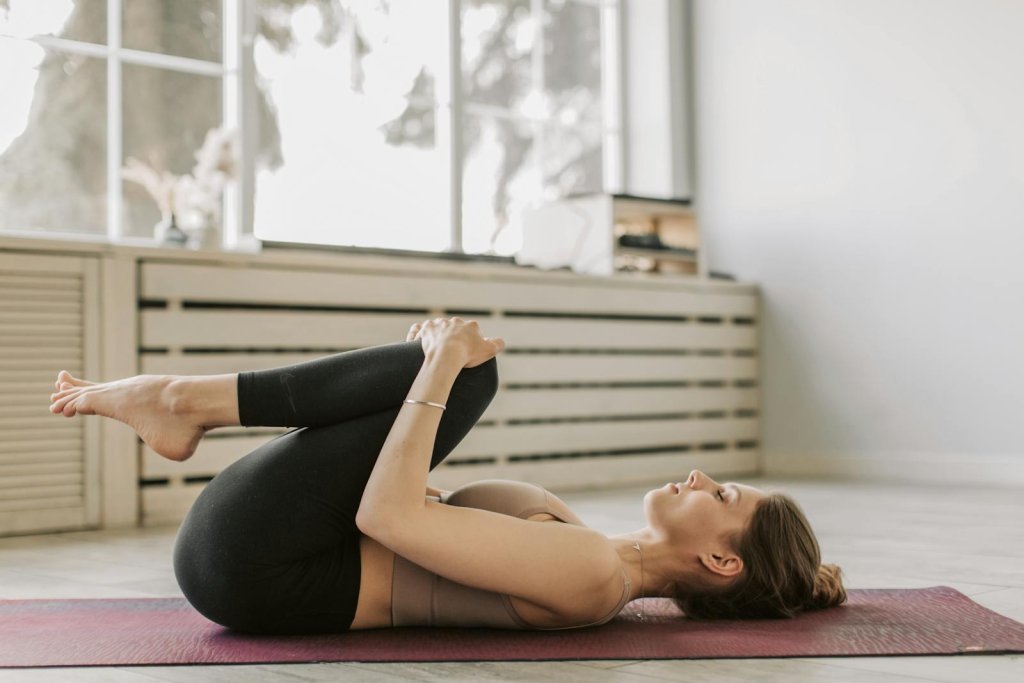
3. Knee-to-Chest Stretch
How to do it:
- Lie on your back with knees bent and feet flat on the floor
- Bring one knee or both knees toward your chest
- Hold comfortably for 5–15 seconds
- Lower the legs back down with control
Why it works:
This stretch gently flexes the lower spine, which may help reduce stiffness and create a mild decompression effect in the lumbar region.
Muscles worked:
Lumbar muscles, glutes
Trainer Tip:
Keep your shoulders and neck relaxed against the floor to avoid unnecessary tension.
4. Seated Spinal Twist
How to do it:
- Sit upright in a chair with feet flat on the floor
- Place one hand on the opposite thigh or chair back
- Rotate your torso gently while keeping hips facing forward
- Hold briefly, then switch sides
Why it works:
Seated spinal twists encourage gentle rotational movement, which supports spinal mobility needed for daily activities like turning and reaching.
Muscles worked:
Obliques, spinal rotators
Trainer Tip:
Twist only as far as feels comfortable—rotation should never feel forced or sharp.
5. Standing Side Bend
How to do it:
- Stand tall with feet hip-width apart
- Raise one arm overhead
- Gently bend your torso to the opposite side
- Hold briefly, then switch sides
Why it works:
Side bending stretches the muscles along the sides of the spine and torso, which may help relieve asymmetrical tightness from prolonged sitting or one-sided activities.
Muscles worked:
Quadratus lumborum, obliques
Trainer Tip:
Imagine lengthening upward before bending to keep the movement smooth and controlled.
6. Pelvic Tilt
How to do it:
- Lie on your back with knees bent and feet flat
- Gently flatten your lower back into the floor by tilting the pelvis
- Hold for a few seconds
- Relax and return to neutral
Why it works:
Pelvic tilts promote awareness of spinal positioning and encourage gentle activation and relaxation of the lower back and core muscles.
Muscles worked:
Lower back muscles, deep core stabilizers
Trainer Tip:
Move slowly and focus on control rather than pressing hard into the floor.
7. Seated Forward Fold
How to do it:
- Sit with feet flat on the floor and spine tall
- Hinge forward slightly from the hips
- Allow your arms to relax toward the floor
- Hold briefly while breathing calmly
Why it works:
This movement provides a gentle stretch through the lower back and hips, helping ease stiffness while maintaining spinal control.
Muscles worked:
Lower back muscles, hamstrings
Trainer Tip:
Keep the movement small and controlled—this is not a deep stretch.
8. Supine Spinal Rotation
How to do it:
- Lie on your back with knees bent and feet flat
- Drop both knees slowly to one side
- Keep shoulders relaxed against the floor
- Hold briefly, then switch sides
Why it works:
Supine rotations allow the spine to rotate gently without bearing weight, making them suitable for relaxation and mobility.
Muscles worked:
Lumbar rotators, glutes
Trainer Tip:
Place a pillow between your knees or under them for added comfort if needed.
9. Standing Back Extension
How to do it:
- Stand upright with feet hip-width apart
- Place hands on your hips or lower back
- Lean back slightly in a controlled manner
- Return slowly to neutral
Why it works:
Standing back extensions gently move the spine into extension, which may help counter prolonged forward-flexed postures such as sitting.
Muscles worked:
Erector spinae
Trainer Tip:
Keep the movement subtle and pain-free—this is about mobility, not depth.
10. Thread-the-Needle Stretch
How to do it:
- Start on hands and knees
- Slide one arm under your body, palm facing up
- Allow your upper back to gently rotate
- Hold briefly, then switch sides
Why it works:
This stretch targets the upper and mid-back, helping improve thoracic mobility and shoulder comfort.
Muscles worked:
Upper back muscles, shoulders
Trainer Tip:
Rest your shoulder or head on a cushion if floor contact feels uncomfortable.
11. Gentle Cobra Stretch
How to do it:
- Lie face down with hands under shoulders
- Press up gently through your hands
- Keep hips relaxed against the floor
- Stop immediately if discomfort increases
Why it works:
The gentle cobra stretch introduces light spinal extension, which may help improve comfort for some people when performed within a pain-free range.
Muscles worked:
Lower back muscles, abdominal muscles
Trainer Tip:
Only lift as high as feels comfortable—there should be no pinching or sharp sensation in the back.
How Often Should You Do Back Stretching Exercises?
General guidance from physiotherapy and medical sources suggests:
- Stretching most days of the week is acceptable if movements feel comfortable
- Holding stretches for short, controlled durations (5–30 seconds depending on the exercise)
- Repeating each movement 2–3 times
- Breathing slowly and avoiding bouncing
The Mayo Clinic notes that simple back routines can be performed once or twice daily, especially in the morning or evening.
Benefits of Back Stretching Exercises
Regular back stretching exercises may help support:
- Reduced stiffness from prolonged sitting or inactivity
- Improved spinal mobility for daily tasks like bending or reaching
- Better posture awareness
- Easier transitions into walking, strength training, or other activities
- General comfort during the day
According to the NHS, remaining active and performing appropriate exercises is often recommended for common back discomfort, rather than prolonged rest.
When to Avoid or Modify Back Stretching Exercises
Back stretching exercises should be avoided or modified if certain symptoms or conditions are present. Stretching through pain or ignoring warning signs may increase discomfort or delay proper care.
Avoid stretching and seek medical guidance if you have:
- Recent back, hip, or spinal surgery
- Severe or worsening back pain
- Progressive numbness, tingling, or weakness in the legs
- Loss of bowel or bladder control
- Unexplained pain following a fall or trauma
Stretching should also be modified if:
- Movements increase pain rather than ease stiffness
- Certain positions feel uncomfortable or unstable
- Balance or mobility limitations are present
If symptoms persist or worsen despite gentle activity, professional evaluation is recommended.
How to Perform Back Stretching Exercises Safely
Performing back stretching exercises safely helps reduce the risk of irritation and supports long-term consistency. Stretching should always feel controlled and comfortable.
Key safety guidelines include:
- Move within a pain-free range of motion
- Avoid bouncing or forcing stretches
- Breathe slowly and continuously
- Use support such as chairs, walls, or cushions when needed
- Stop immediately if pain increases or symptoms change
Most physiotherapy guidelines emphasize that stretching should never cause sharp pain, numbness, or discomfort that lingers after exercise.
Frequently Asked Questions (FAQs)
1. Can I do back stretching exercises every day?
Yes, gentle back stretching exercises can usually be done daily if they feel comfortable and pain-free.
2. Are back stretches helpful for people who sit all day?
They may help reduce stiffness associated with prolonged sitting and encourage regular movement breaks.
3. Should back stretching exercises hurt?
No. Stretching should feel mild to moderate and never painful.
4. How long should I hold each stretch?
Most stretches are held for 5–30 seconds, depending on comfort and guidance.
5. Can stretching fix back pain?
Stretching may support comfort and mobility, but it is not a cure. Persistent pain should be evaluated by a professional.
6. When should I stop stretching?
Stop immediately if pain increases, or if you experience unusual symptoms like numbness or weakness.
Conclusion
Back stretching exercises are a simple, accessible way to support spinal mobility and reduce daily stiffness. When performed gently and consistently, they may help you move more comfortably throughout the day. Start slowly, listen to your body, and prioritize controlled movement over intensity.
References
- NHS – Back pain (includes “exercises and stretches” + stop if pain worsens)
- ChoosePT (APTA) – Physical Therapy Guide to Low Back Pain (stay active + red-flag symptoms)
- NICE – NG59: Low back pain and sciatica in over 16s (guideline overview)
- JOSPT – 2021 Clinical Practice Guideline update for low back pain interventions
- Cochrane Library – Exercise therapy for chronic low back pain (2021 review)