
Thigh exercises for women are effective strength-training movements that target the front, inner, and back of the thighs to build strength, improve muscle definition, and support healthy lower-body function. Understanding how to train your thighs properly matters because these muscles play a key role in walking, stair climbing, balance, and everyday movement.
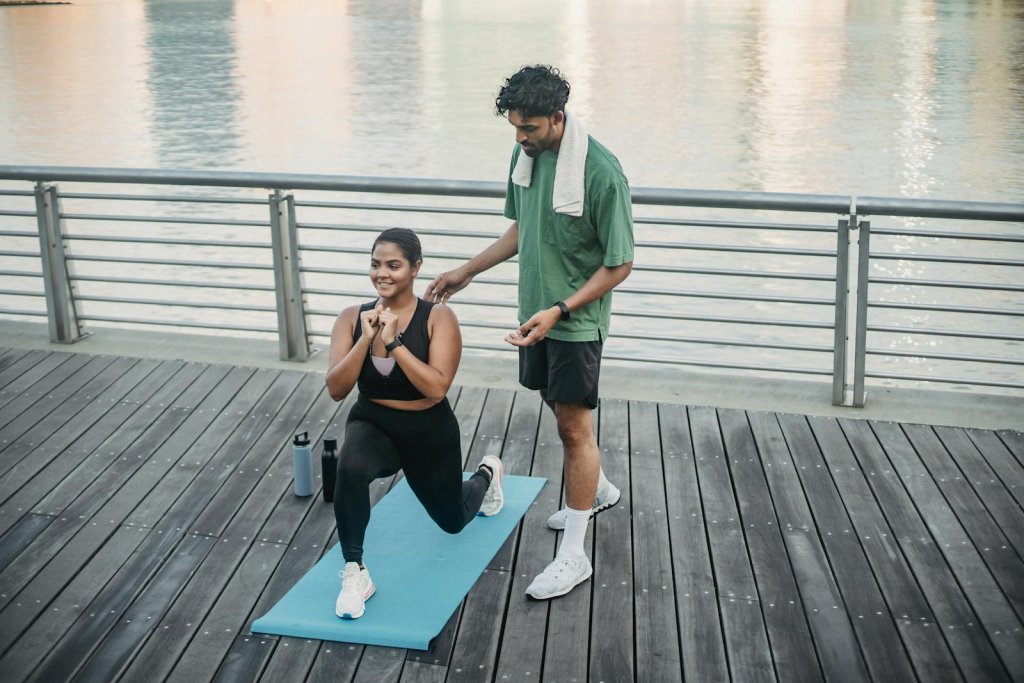
When programmed correctly, thigh exercises can be done at home or in the gym, with or without equipment, and adapted for beginners through advanced lifters.
11 Best Thigh Exercises for Women
These thigh exercises help strengthen the front, inner, and back of the thighs while supporting balance and everyday movement. They can be done at home or in the gym and adjusted for all fitness levels.
1. Squats
How to do it:
- Stand with feet about shoulder-width apart and toes slightly turned out
- Brace your core and keep your chest lifted
- Sit your hips back and down as if lowering into a chair
- Lower until thighs are near parallel or within a comfortable range
- Push through your heels to return to standing
Why it works:
Squats are a foundational lower-body movement that load the quadriceps while also engaging the hamstrings and glutes. This coordinated muscle action helps build overall thigh strength while supporting natural movement patterns like sitting, standing, and lifting.
Trainer Tip:
If knee discomfort appears, slightly widen your stance or reduce depth until control improves.
2. Forward Lunges
How to do it:
- Stand tall with feet hip-width apart
- Step one foot forward into a long stance
- Lower your body until both knees bend comfortably
- Keep your torso upright and core engaged
- Push through the front heel to return to start, then switch sides
Why it works:
Forward lunges train each leg independently, which helps address strength imbalances between sides. They also challenge balance and coordination while placing meaningful load on the thigh muscles.
Trainer Tip:
Keep your front knee tracking over your toes rather than collapsing inward.
3. Step-Ups
How to do it:
- Stand facing a sturdy step or platform
- Place one foot fully on the step
- Drive through the heel of the elevated leg to stand up
- Bring the trailing foot up or lightly tap it
- Step back down under control and repeat
Why it works:
Step-ups closely mimic stair climbing, making them a highly functional thigh exercise. They load the working leg without excessive impact and allow easy adjustments in difficulty.
Trainer Tip:
Choose a step height that allows smooth control without pushing off the back leg.
4. Wall Sits
How to do it:
- Stand with your back against a wall
- Walk your feet forward slightly
- Slide down until knees are bent and thighs are angled toward parallel
- Keep your back flat against the wall
- Hold the position while breathing steadily
Why it works:
Wall sits use isometric muscle contraction, meaning the muscles work without movement. This builds quadriceps endurance and improves knee control without joint motion.
Trainer Tip:
Stop the hold if knee pressure increases—shorter, higher-quality holds are more effective.
5. Sumo Squats
How to do it:
- Take a wide stance with toes turned slightly outward
- Brace your core and keep chest upright
- Lower hips straight down between your legs
- Keep knees pressing outward
- Push through heels to stand tall
Why it works:
The wider stance shifts more load to the inner thighs while still engaging the quadriceps and glutes. This variation helps strengthen hip and thigh stability.
Trainer Tip:
Focus on depth you can control rather than forcing a deep squat.
6. Bulgarian Split Squats
How to do it:
- Stand a few feet in front of a bench or step
- Place the top of one foot behind you on the bench
- Lower your body by bending the front knee
- Keep your torso upright
- Press through the front heel to rise
Why it works:
This single-leg exercise places a high demand on the working thigh while also challenging balance. It allows significant strength development without heavy external load.
Trainer Tip:
If balance is an issue, lightly hold a wall or reduce depth.
7. Lateral Lunges
How to do it:
- Stand tall with feet together
- Step out wide to one side
- Sit back into the stepping hip while keeping the other leg straight
- Push through the stepping foot to return to center
- Repeat on both sides
Why it works:
Lateral lunges train the thighs in the frontal plane, strengthening the inner thighs and improving hip control that’s often neglected in forward-only exercises.
Trainer Tip:
Move slowly and focus on shifting weight back rather than forward.
8. Goblet Squats
How to do it:
- Hold a dumbbell or kettlebell close to your chest
- Stand with feet shoulder-width apart
- Lower into a squat while keeping elbows close
- Sit hips back and down with control
- Stand up tall without locking knees
Why it works:
Holding weight in front helps maintain an upright torso, which increases quadriceps engagement and reinforces proper squat mechanics.
Trainer Tip:
Use a lighter weight to perfect depth and posture before increasing load.
9. Reverse Lunges
How to do it:
- Stand upright with feet hip-width apart
- Step one foot backward into a lunge
- Lower until both knees bend comfortably
- Keep most of your weight on the front leg
- Return to standing and switch sides
Why it works:
Stepping backward often places less stress on the front knee while still effectively loading the thigh muscles. This makes reverse lunges a joint-friendly option for many people.
Trainer Tip:
Control the backward step to avoid losing balance.
10. Single-Leg Sit-to-Stand
How to do it:
- Sit on a chair with one foot flat on the floor
- Extend the other leg slightly forward
- Stand up using the planted leg only
- Slowly sit back down with control
- Switch sides
Why it works:
This movement strengthens each thigh individually using a real-world pattern. It also highlights side-to-side strength differences and improves functional control.
Trainer Tip:
Use a higher seat or light hand support if needed.
11. Resistance Band Squats
How to do it:
- Place a resistance band just above your knees
- Stand with feet shoulder-width apart
- Press knees slightly outward against the band
- Lower into a squat with control
- Stand tall while maintaining band tension
Why it works:
The band provides constant outward resistance, encouraging better knee alignment and increased thigh engagement throughout the movement.
Trainer Tip:
Slow down the lowering phase to increase time under tension.
How to Program Thigh Exercises for Best Results
General strength-training guidance from the ACSM suggests:
- Frequency: 2–3 days per week
- Sets: 2–4 sets per exercise
- Reps: 8–15 controlled repetitions
- Rest: 60–90 seconds between sets
Progress gradually by increasing reps, resistance, or time under tension.
Why Thigh Exercises Important for Women
Strong thighs support daily movement and long-term joint health. Regular thigh training may help support:
- Better knee and hip stability during walking and stairs
- Improved balance and lower-body coordination
- Greater strength for daily tasks and sports
- Healthier muscle mass as you age
Public-health guidelines from the CDC and WHO recommend muscle-strengthening activities for all major muscle groups at least two days per week as part of a healthy lifestyle.
Thigh Muscles Worked
Thigh exercises typically involve three primary muscle groups:
- Quadriceps – straighten the knee and help absorb force
- Hamstrings – assist with knee bending and hip extension
- Adductors (inner thighs) – stabilize the legs and hips
Many exercises also engage the glutes and core for stability and control.
Warm-Up Guidelines Before Thigh Exercises
A proper warm-up prepares the muscles, joints, and nervous system for thigh exercises and may help reduce injury risk. Before starting your workout, aim for 5–10 minutes of gradual movement that increases blood flow and improves mobility.
Effective warm-up elements include:
- Light cardio such as brisk walking, cycling, or marching in place
- Dynamic lower-body movements like leg swings, hip circles, or bodyweight squats
- Gentle activation exercises for the glutes and quadriceps
The goal is to feel warm and mobile—not fatigued—before moving into strength work.
Who Should Be Careful With Thigh Exercises
While thigh exercises are generally safe for most people, some individuals should use extra caution or seek professional guidance before starting or progressing a program.
Extra care is recommended for those who:
- Have a recent or unresolved knee, hip, or lower-back injury
- Experience sharp or worsening pain during lower-body exercise
- Have balance limitations that increase fall risk
- Are returning to exercise after a long period of inactivity
If discomfort persists or movement feels unstable, consulting a qualified fitness or healthcare professional can help ensure exercises are performed safely and appropriately.
Common Mistakes to Avoid
- Letting knees collapse inward
- Using momentum instead of control
- Skipping warm-ups
- Training too frequently without recovery
Good technique matters more than load.
Frequently Asked Questions
How often should women train thighs?
Most women benefit from training thighs 2–3 times per week with rest days in between.
Can thigh exercises make legs bulky?
Strength training supports muscle tone and function; overall appearance depends on genetics, nutrition, and total training volume.
Are thigh exercises safe for beginners?
Yes, when starting with bodyweight and controlled range of motion.
Do I need weights for thigh exercises?
No. Many effective thigh exercises use bodyweight or resistance bands.
Can I do thigh exercises at home?
Absolutely. Squats, lunges, wall sits, and step-ups require minimal space.
How long before results appear?
Strength improvements often occur within a few weeks; visible changes vary by individual.
Conclusion
Thigh exercises for women support strength, balance, and everyday movement at every fitness level. By choosing well-designed exercises, using proper form, and following evidence-based programming, you can build strong, capable legs safely and effectively. Start where you are, progress gradually, and stay consistent.
References
- Physical Activity Guidelines for Americans, 2nd edition (official PDF, health.gov)
- ACSM Position Stand: Progression Models in Resistance Training for Healthy Adults (PubMed record)
- A Biomechanical Review of the Squat Exercise: Implications for Clinical Practice (open-access full text)
- Effects of warming-up on physical performance: systematic review with meta-analysis (PubMed)
- Patellofemoral joint loading during the forward vs backward lunge (PubMed)
- EMG activity during Monopodal Squat, Forward Lunge, and Lateral Step-Up (PLOS ONE)