
Compound exercises for women are multi-joint movements that work several muscle groups at once, helping build full-body strength while increasing calorie burn in less time.
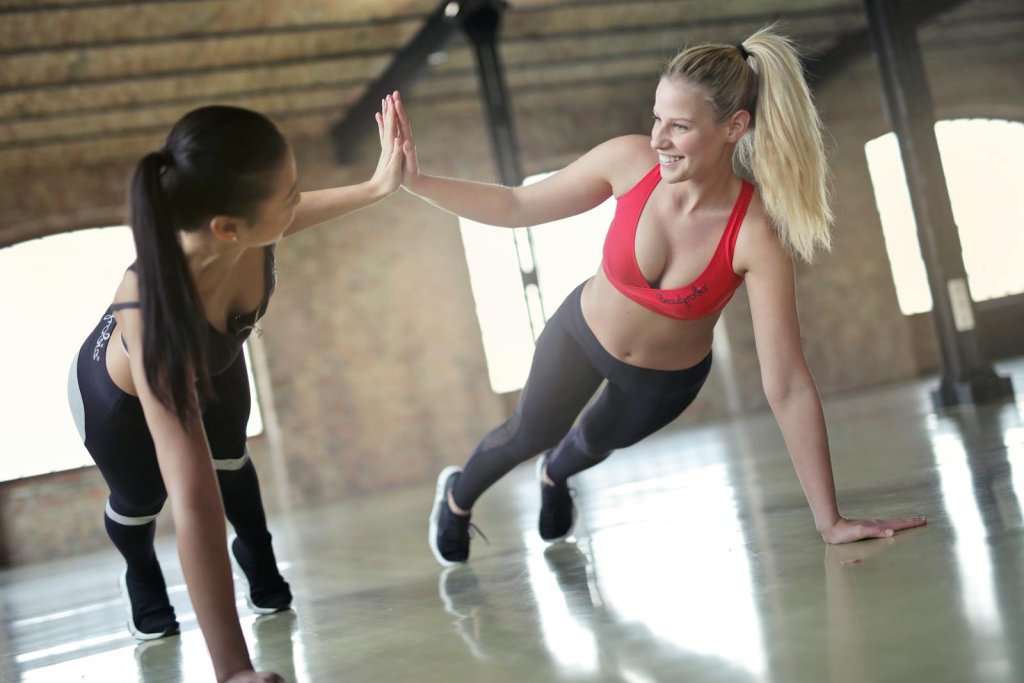
Understanding how compound exercises work is important because they form the foundation of effective strength-training programs, especially for women who want results without spending hours in the gym. These exercises support muscle tone, bone health, posture, and long-term fitness when performed with proper technique and progression.
Below, you’ll learn exactly what compound exercises are, why they matter for women, and the 12 best compound exercises for women backed by exercise science and public-health guidance.
12 Best Compound Exercises for Women
Below are the 12 best compound exercises for women, selected to cover all major movement patterns and muscle groups.
1. Squat
How to do it:
- Stand with feet shoulder-width apart and toes slightly turned out
- Brace your core and keep your chest tall
- Push hips back and bend knees to lower into a squat
- Keep heels grounded and knees tracking over toes
- Drive through your heels to return to standing
Why it works:
The squat trains multiple lower-body joints simultaneously, reinforcing natural movement patterns used in sitting, standing, and lifting. Because it engages large muscle groups together, it supports strength development and overall training efficiency.
Muscles worked:
Glutes, quadriceps, hamstrings, adductors, core stabilizers
Trainer Tip:
If depth is limited, squat to a box or chair to maintain control and confidence.
2. Goblet Squat
How to do it:
- Hold a dumbbell or kettlebell close to your chest
- Stand with feet shoulder-width apart
- Brace your core and sit down into a squat
- Keep elbows inside knees at the bottom
- Press through heels to stand up
Why it works:
Holding the weight in front encourages an upright torso and better squat mechanics, making it ideal for beginners learning proper lower-body movement.
Muscles worked:
Glutes, quadriceps, hamstrings, core, upper back (postural support)
Trainer Tip:
Use the goblet squat as a teaching tool before progressing to heavier squat variations.
3. Deadlift
How to do it:
- Stand with feet hip-width apart and weight close to shins
- Hinge at hips while keeping spine neutral
- Grip the weight firmly and brace your core
- Drive hips forward to stand tall
- Lower the weight with control
Why it works:
The deadlift strengthens the posterior chain while reinforcing safe lifting mechanics that transfer directly to daily activities.
Muscles worked:
Glutes, hamstrings, erector spinae, core, upper back
Trainer Tip:
Think “push the floor away” rather than pulling the weight up.
4. Romanian Deadlift
How to do it:
- Hold weights in front of thighs
- Slightly bend knees and hinge at hips
- Lower weights while keeping them close to legs
- Stop when hamstrings feel stretched
- Return to standing by driving hips forward
Why it works:
This variation emphasizes controlled hip movement, placing greater tension on the hamstrings and glutes without excessive knee bend.
Muscles worked:
Hamstrings, glutes, lower back, core
Trainer Tip:
Range of motion matters more than weight—don’t force depth.
5. Forward Lunge
How to do it:
- Stand tall with feet together
- Step one leg forward into a lunge
- Lower until both knees form near 90-degree angles
- Push through the front heel to return
- Alternate sides
Why it works:
Lunges train each leg independently, helping correct strength imbalances while improving coordination and balance.
Muscles worked:
Glutes, quadriceps, hamstrings, calves, core
Trainer Tip:
Keep torso upright to emphasize glutes rather than the knees.
6. Step-Up
How to do it:
- Stand facing a stable box or step
- Place one foot fully on the platform
- Press through the heel to step up
- Bring the trailing leg to stand tall
- Step down with control and switch sides
Why it works:
Step-ups closely resemble stair climbing, making them highly functional and joint-friendly.
Muscles worked:
Glutes, quadriceps, hamstrings, calves
Trainer Tip:
Start with a low step height and increase gradually.
7. Push-Up
How to do it:
- Place hands slightly wider than shoulders
- Extend legs or drop knees for modification
- Keep body in a straight line
- Lower chest toward floor with control
- Push back up while bracing core
Why it works:
Push-ups train pushing strength while challenging core stability and shoulder control.
Muscles worked:
Chest, shoulders, triceps, core
Trainer Tip:
Elevated push-ups are a great progression tool for beginners.
8. Bench Press (Dumbbell or Barbell)
How to do it:
- Lie on a bench with feet planted
- Hold weights above chest with arms extended
- Lower weights slowly toward chest
- Press upward until arms are straight
- Maintain shoulder control throughout
Why it works:
This compound push builds upper-body strength while allowing precise load adjustments.
Muscles worked:
Chest, shoulders, triceps, core stabilizers
Trainer Tip:
Dumbbells allow more natural arm movement and may feel more joint-friendly.
9. Overhead Press
How to do it:
- Stand with weights at shoulder height
- Brace core and squeeze glutes
- Press weights overhead in a straight line
- Lock out arms gently at the top
- Lower with control
Why it works:
Pressing overhead challenges shoulder strength and trunk stability simultaneously.
Muscles worked:
Shoulders, triceps, upper chest, core
Trainer Tip:
Avoid leaning back—ribs should stay stacked over hips.
10. Bent-Over Row
How to do it:
- Hinge at hips with flat back
- Hold weights hanging toward floor
- Pull elbows toward ribs
- Squeeze shoulder blades together
- Lower weights slowly
Why it works:
Rows strengthen the upper back, counterbalancing pressing movements and supporting posture.
Muscles worked:
Upper back, lats, biceps, rear shoulders, core
Trainer Tip:
Pause briefly at the top to reinforce back engagement.
11. Assisted Pull-Up or Lat Pulldown
How to do it:
- Grip bar slightly wider than shoulders
- Pull elbows down toward sides
- Lift chest toward bar or pull bar to chest
- Control the return phase
- Maintain steady tempo
Why it works:
Vertical pulling builds back strength and improves shoulder balance relative to pushing exercises.
Muscles worked:
Lats, upper back, biceps, core stabilizers
Trainer Tip:
Focus on elbow movement rather than hand pulling.
12. Hip Thrust
How to do it:
- Sit with upper back against bench
- Place feet flat and hip-width apart
- Drive hips upward by squeezing glutes
- Pause briefly at the top
- Lower hips under control
Why it works:
Hip thrusts place direct tension on the glutes, supporting hip power and lower-body strength.
Muscles worked:
Glutes, hamstrings, core
Trainer Tip:
Chin tucked and ribs down help prevent lower-back arching.
How to Structure a Compound Workout for Women
A balanced compound-focused workout typically includes:
- 4–6 compound exercises per session
- 2–4 sets per exercise
- 6–12 controlled repetitions, depending on experience and goals
According to position stands often cited by the American College of Sports Medicine, multi-joint exercises are commonly performed earlier in a workout when energy levels are highest.
How Often Should Women Do Compound Exercises?
Most women benefit from compound exercises 2–4 days per week, depending on training experience and recovery.
- Beginners: 2 full-body sessions per week
- Intermediate/advanced: 3–4 sessions per week
- Rest at least 48 hours between training the same muscle groups
Public-health guidance from the Centers for Disease Control and Prevention recommends muscle-strengthening activities at least two days per week for overall health.
Why Compound Exercises Matter for Women
Compound exercises offer several benefits that are particularly relevant to women’s health and fitness goals.
Support Strength and Lean Muscle
Training multiple muscle groups together allows women to progressively increase resistance safely and efficiently, supporting lean muscle development without focusing on body size changes.
Increase Calorie Expenditure
Because compound exercises involve more muscles at once, they generally require more energy per repetition compared to isolation movements, which may support fat-loss goals when combined with proper nutrition.
Improve Bone and Joint Health
Strength training is widely recognized for its role in maintaining bone density and joint function. Organizations such as the Mayo Clinic note that resistance training supports bone strength and overall functional health.
Save Time and Improve Adherence
Full-body compound movements allow effective workouts with fewer exercises, making it easier to stay consistent—an important factor for long-term results.
Compound vs Isolation Exercises: Do Women Need Both?
Compound exercises should form the core of a training program, while isolation exercises play a supporting role.
- Compound exercises train multiple muscles at once
- Isolation exercises target specific muscles
- A combined approach improves balance and control
According to the American College of Sports Medicine, multi-joint exercises are typically prioritized, with isolation movements added as needed.
Common Mistakes Women Make With Compound Exercises
Compound exercises are effective, but mistakes can limit results or increase injury risk.
- Using weights that are too heavy too soon
- Rushing reps instead of maintaining control
- Skipping warm-ups and recovery days
- Neglecting proper technique
Focusing on movement quality helps support safe, long-term progress.
How to Progress Compound Exercises Safely Over Time
Progression should be gradual and controlled to protect joints and maintain good form.
- Increase reps before increasing weight
- Add sets gradually over time
- Use slower, controlled tempos
- Improve range of motion and stability first
Health and fitness guidance from the Mayo Clinic emphasizes gradual progression to support long-term strength and joint health.
Safety Guidelines and Who Should Be Cautious
Compound exercises are generally safe when performed with proper technique, but women should consider professional guidance if they:
- Are new to strength training
- Are recovering from injury or surgery
- Experience joint pain during movement
- Are pregnant or recently postpartum
Working with a qualified fitness or healthcare professional can help ensure exercises are modified appropriately.
Frequently Asked Questions
Are compound exercises good for beginners?
Yes. Many compound exercises can be modified using bodyweight or light resistance, making them suitable for beginners when learned correctly.
Do compound exercises make women bulky?
No. Muscle growth depends on many factors, including training volume, nutrition, and genetics. Compound exercises support strength and tone, not unwanted bulk.
How often should women do compound exercises?
Most public-health guidelines recommend strength training at least two days per week, with recovery days between sessions.
Can compound exercises help with fat loss?
They may help by increasing overall energy expenditure and supporting lean muscle, especially when combined with balanced nutrition.
Are compound exercises better than isolation exercises?
Compound exercises are efficient and foundational, but isolation exercises can still play a supportive role in a complete program.
Can compound exercises be done at home?
Yes. Many compound movements—such as squats, lunges, push-ups, and step-ups—can be performed with little or no equipment.
Conclusion
Compound exercises for women provide a practical, science-supported way to build strength, improve fitness, and support long-term health. By focusing on multi-joint movements that train the whole body, women can achieve effective workouts that align with public-health recommendations and real-world movement needs.
If you’re building a strength routine, start with these compound exercises, progress gradually, and focus on consistency for sustainable results.
References
- CDC Adding Physical Activity as an Adult (weekly targets + strength days)
- WHO Physical Activity Recommendations (includes muscle-strengthening guidance)
- Physical Activity Guidelines for Americans, 2nd Edition (official PDF)
- Mayo Clinic: Strength training benefits and safe progression
- UNSW: What compound exercises are and why they’re effective
- National Institute on Aging: Strength training benefits as we age