
Hip tendonitis exercises are structured movements that help reduce pain by gradually improving hip strength, control, and load tolerance. When done correctly, these exercises may support daily movement, walking, and long-term hip function without relying on rest alone.
Hip tendonitis—often discussed clinically as gluteal tendinopathy or iliopsoas tendinopathy—is commonly linked to how the hip handles repeated load rather than inflammation alone.
Understanding the right exercises, pacing, and safety guidelines is essential for recovery and preventing flare-ups. This guide explains what works, why it works, and how to perform exercises safely at home using evidence-based principles.
What Are Hip Tendonitis Exercises?
Hip tendonitis exercises focus on controlled strengthening and movement, not aggressive stretching or forcing through pain. They are designed to help the hip tendons adapt gradually to load while improving muscle coordination around the joint.
Depending on pain location, exercises may target:
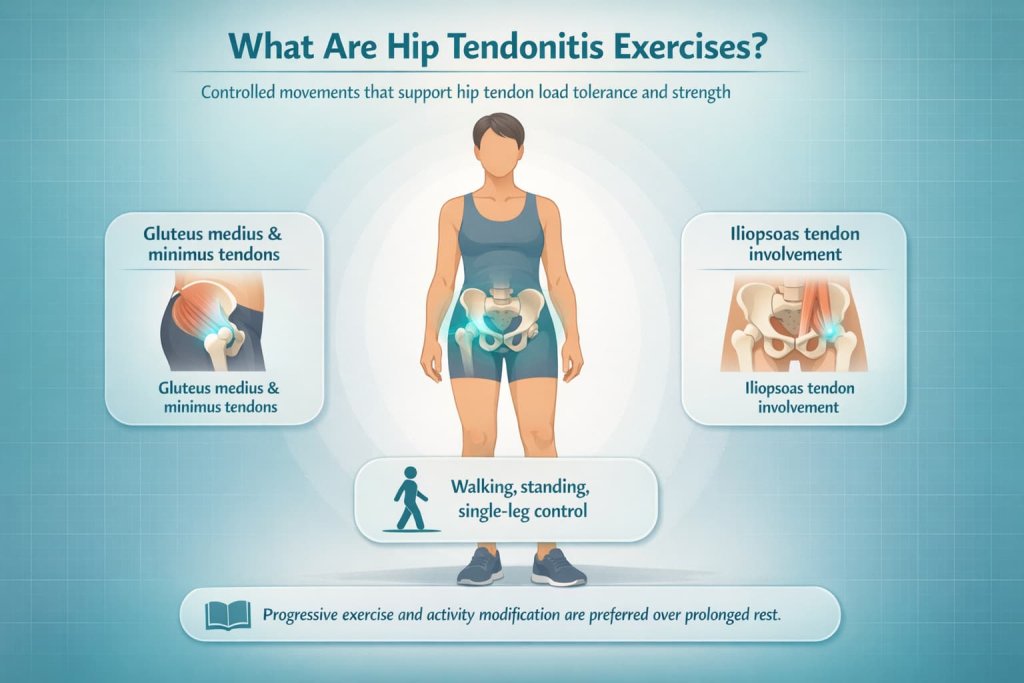
- The side of the hip (commonly gluteus medius and minimus tendons)
- The front of the hip (often involving the iliopsoas tendon)
- Hip stability during walking, standing, and single-leg tasks
According to guidance from the National Health Service, progressive exercise and activity modification are preferred over prolonged rest for lateral hip tendon pain.
Why Exercise Matters for Hip Tendonitis
Exercise does not “repair” a tendon overnight, but it plays a critical role in long-term improvement. Research published in the British Journal of Sports Medicine shows that education combined with progressive exercise leads to better outcomes than inactivity or short-term injections for many people with hip tendinopathy.
Appropriate exercises may help by:
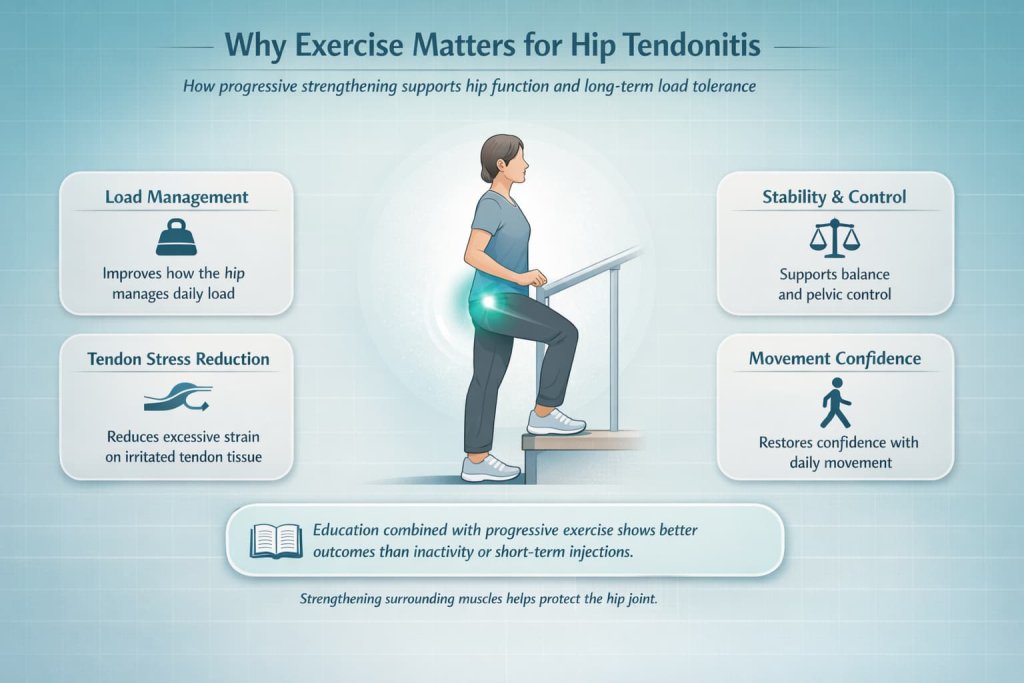
- Improving how the hip manages daily load
- Reducing strain on irritated tendon tissue
- Supporting balance and pelvic control
- Restoring confidence with movement
Organizations such as the American Academy of Orthopaedic Surgeons also emphasize strengthening surrounding muscles to protect the hip joint.
8 Best Hip Tendonitis Exercises
These exercises focus on controlled strengthening and stability to help the hip tolerate daily load more comfortably. When performed consistently and progressed gradually, they may reduce pain and support long-term hip strength and function.
1. Isometric Side-Lying Hip Abduction Hold
How to do it
- Lie on your pain-free side with both legs straight and stacked
- Gently tighten your core to keep the pelvis stable
- Lift the top leg a few inches without rotating the hip or swinging
- Hold the position for 20–30 seconds while breathing normally
- Lower with control and repeat 3–5 times
Why it works
Isometric loading allows the gluteal tendons to tolerate force without joint movement, which may help reduce pain sensitivity while maintaining muscle activation. This makes it especially useful in early or pain-sensitive phases of hip tendonitis.
Muscles worked
Gluteus medius, gluteus minimus
Trainer Tip
The lift should be small and controlled. If you feel strain in the lower back or outer thigh tension spikes, reduce the hold time or leg height.
2. Standing Hip Abduction (Band or Bodyweight)
How to do it
- Stand upright holding a wall, chair, or railing for balance
- Shift weight onto one leg while keeping the pelvis level
- Slowly move the opposite leg out to the side
- Pause briefly, then return to the starting position with control
- Perform 8–12 repetitions per side
Why it works
Standing hip abduction strengthens the lateral hip muscles in a functional, upright position. These muscles play a key role in stabilizing the pelvis during walking and single-leg tasks, which may reduce excessive tendon strain.
Muscles worked
Gluteus medius, deep hip stabilizers
Trainer Tip
Avoid leaning away from the working leg. Smaller, slower movements improve tendon tolerance more effectively than large swings.
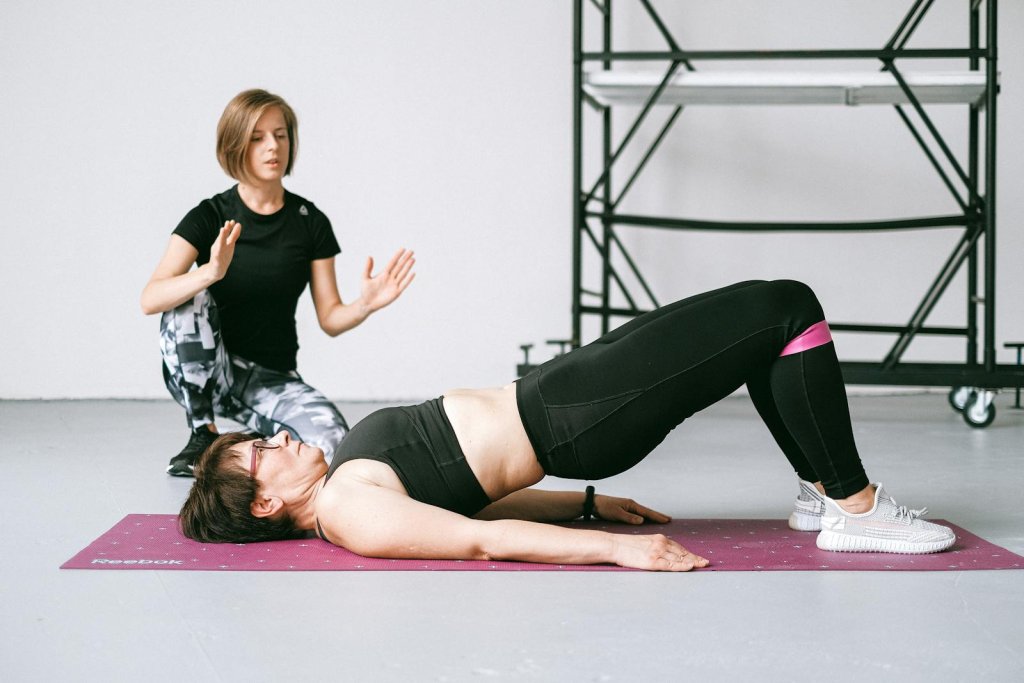
3. Bridge Exercise
How to do it
- Lie on your back with knees bent and feet flat on the floor
- Place feet hip-width apart and keep arms relaxed at your sides
- Press through your heels to lift your hips toward the ceiling
- Hold briefly at the top, then lower slowly
- Perform 8–12 controlled repetitions
Why it works
Bridges strengthen the hip extensors while keeping the hip in a neutral position, which limits compressive stress on irritated tendons. This supports overall hip strength without aggravating lateral hip pain.
Muscles worked
Gluteus maximus, hamstrings
Trainer Tip
Think “long spine” rather than arching upward. If you feel pressure in the lower back, reduce the lift height.
4. Sit-to-Stand From a Chair
How to do it
- Sit on a sturdy chair with feet hip-width apart
- Lean forward slightly from the hips
- Press through your feet to stand up slowly
- Sit back down with control
- Perform 6–10 repetitions
Why it works
This exercise mimics a daily activity while strengthening the hips and thighs. Improving control during sit-to-stand movements may reduce repeated tendon overload throughout the day.
Muscles worked
Gluteals, quadriceps
Trainer Tip
Use a higher chair or add cushions if discomfort increases. Control matters more than speed.
5. Side-Stepping (Band Optional)
How to do it
- Stand with knees slightly bent and feet hip-width apart
- Step sideways while maintaining an upright torso
- Keep toes facing forward and pelvis steady
- Take 6–10 controlled steps in one direction
- Repeat in the opposite direction
Why it works
Side-stepping improves lateral hip endurance and pelvic control, which are essential for walking, stair use, and uneven surfaces. This helps distribute load more evenly across the hip.
Muscles worked
Gluteus medius, core stabilizers
Trainer Tip
Slow, quiet steps are ideal. If using a band, choose light resistance and focus on control rather than tension.
6. Standing Hip Flexor March
How to do it
- Stand tall while holding a stable surface for support
- Lift one knee to a comfortable height
- Lower slowly and switch sides
- Perform 8–12 repetitions per side
Why it works
This movement encourages controlled activation of the hip flexors without aggressive stretching. It supports coordination and strength in the front of the hip, which may help reduce compensatory strain.
Muscles worked
Iliopsoas, abdominal stabilizers
Trainer Tip
Move slowly and stay upright. If the movement becomes jerky, reduce range of motion.
7. Single-Leg Balance Hold
How to do it
- Stand on one leg with the opposite foot off the floor
- Keep hips level and posture upright
- Hold for 20–30 seconds
- Switch sides and repeat
Why it works
Balancing on one leg challenges the hip stabilizers and improves neuromuscular control. Better balance may reduce excessive hip loading during daily movement.
Muscles worked
Hip stabilizers, gluteal muscles
Trainer Tip
Use light fingertip support if needed. Progress by increasing time, not by forcing instability.
8. Step-Ups (Low Height)
How to do it
- Stand in front of a low step or platform
- Place one foot fully on the step
- Press through the heel to stand up
- Step back down slowly
- Perform 6–10 repetitions per side
Why it works
Step-ups build hip and thigh strength in a controlled, functional pattern that mimics stair climbing. This helps improve load tolerance during real-world activities.
Muscles worked
Gluteals, quadriceps
Trainer Tip
Start with a very low step. Increase height only if pain remains stable during and after exercise.
How Often to Perform Hip Tendonitis Exercises
Most guidelines suggest:
- 2–3 sessions per week
- Rest days between strengthening sessions
- Gradual progression based on symptoms
Mild muscle soreness is normal; increasing tendon pain is not.
How to Know If an Exercise Is Too Much
Hip tendonitis exercises should feel controlled and tolerable, not sharp or progressively painful. Mild muscle effort during or after exercise can be normal, but worsening tendon pain is a sign that the load may be too high.
Watch for these warning signs:
- Sharp or increasing hip pain during the exercise
- Pain that lingers or worsens later the same day or the next morning
- Limping, guarding, or reduced confidence with walking
- Loss of hip strength or range after exercising
If these signs appear, reduce exercise intensity, range of motion, or total volume before continuing.
Safety Guidelines Before Starting Hip Tendonitis Exercises
Before beginning any hip tendonitis exercise program, basic safety principles are essential.
- Start with low-pain, controlled movements
- Avoid exercises that cause sharp or worsening pain during or after
- Progress load slowly over weeks, not days
- Modify positions that compress the painful side of the hip
- Stop and seek professional advice if pain continues to worsen
The Mayo Clinic recommends gradual progression and avoiding activities that significantly aggravate tendon pain.
When to Seek Medical or Physical Therapy Guidance
Many people improve with gradual strengthening and activity modification, but professional evaluation is important in certain situations.
Consider seeking guidance if you:
- Have persistent hip pain lasting several weeks
- Experience pain at night or pain that occurs at rest
- Notice sudden weakness, instability, or reduced hip function
- Develop symptoms after a fall, impact, or sudden injury
- Do not improve despite careful exercise progression
A healthcare or physical therapy professional can help confirm the diagnosis, adjust loading strategies, and rule out other causes of hip pain.
Frequently Asked Questions
Can hip tendonitis exercises make pain worse?
Yes, if exercises are progressed too quickly or done through sharp pain.
Is rest better than exercise for hip tendonitis?
Prolonged rest alone is not recommended; controlled exercise is usually more effective.
How long does hip tendonitis take to improve?
Many people notice gradual improvement over 6–12 weeks with consistent loading.
Are stretching exercises helpful?
Gentle mobility may help, but aggressive stretching can worsen symptoms.
Can I walk with hip tendonitis?
Walking is usually acceptable if pain remains manageable and does not worsen afterward.
Do I need equipment?
Most exercises can be done with bodyweight or light resistance bands.
Conclusion
Hip tendonitis exercises work best when they focus on gradual strengthening, proper control, and patience. By following a structured approach and respecting pain signals, you may improve hip strength, daily comfort, and long-term movement confidence.
If symptoms persist or worsen, consider consulting a qualified healthcare professional to tailor the program to your needs.
References
- BMJ (2018): Education plus exercise vs corticosteroid injection vs wait-and-see for gluteal tendinopathy (randomized trial)
- Scientific Reports (2024): Exercise-based interventions for gluteal tendinopathy (systematic review/meta-analysis)
- BMJ Open Sport & Exercise Medicine (2019): Isometric vs isotonic exercise for greater trochanteric pain syndrome (pilot RCT)
- AAOS OrthoInfo: Hip Conditioning Program (PDF)
- AAHKS HipKneeInfo: Iliopsoas tendonitis/bursitis exercise program (PDF)
- Mayo Clinic (2025): Tendinopathy overview