
Strength training exercises for women are one of the most effective ways to build lean muscle, improve total-body strength, and support long-term bone and metabolic health—without complicated programs. Understanding proper exercise selection, form, and weekly structure is important because consistency drives results.
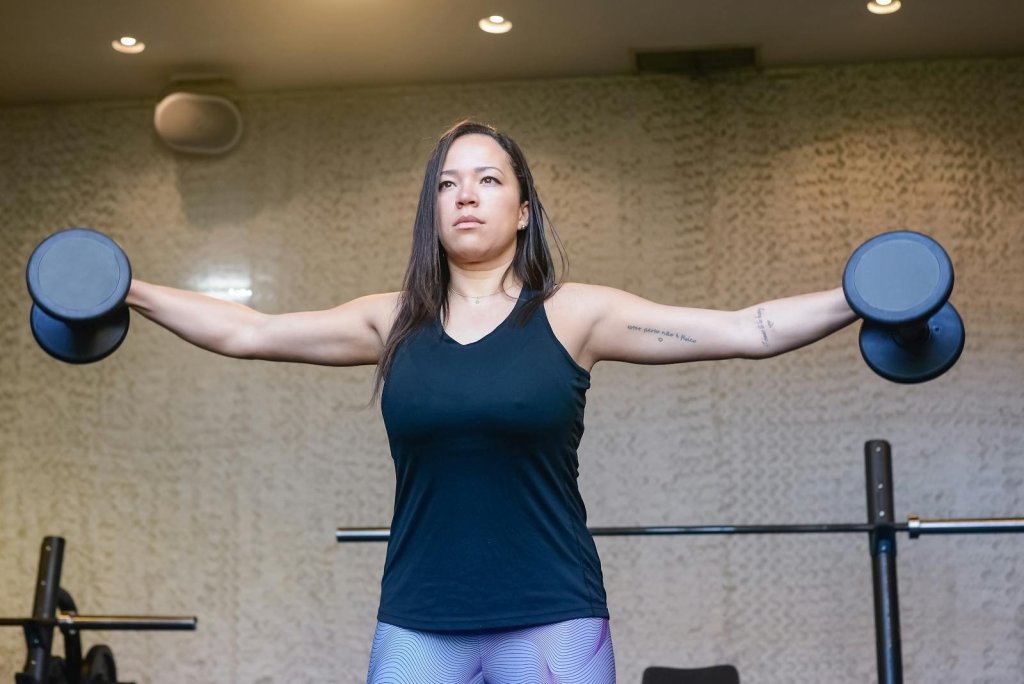
Most healthy adults are advised to train major muscle groups with strength work at least 2 days per week, alongside weekly aerobic activity targets, according to the Centers for Disease Control and Prevention (CDC).
What Counts as Strength Training Exercises for Women
Strength training includes any exercise where muscles work against resistance, such as:
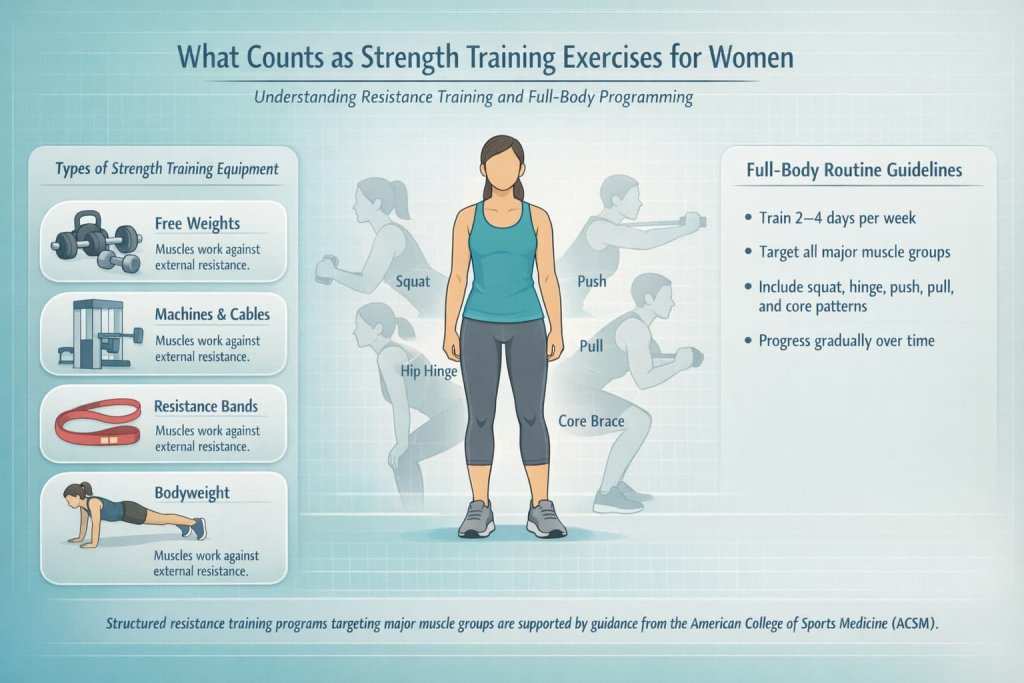
- Dumbbells, barbells, kettlebells
- Machines or cables
- Resistance bands
- Bodyweight exercises (when challenging enough)
For many women, a full-body routine built around squats, hinges, pushes, pulls, and core work performed 2–4 days per week works well.
Benefits of Strength Training for Women
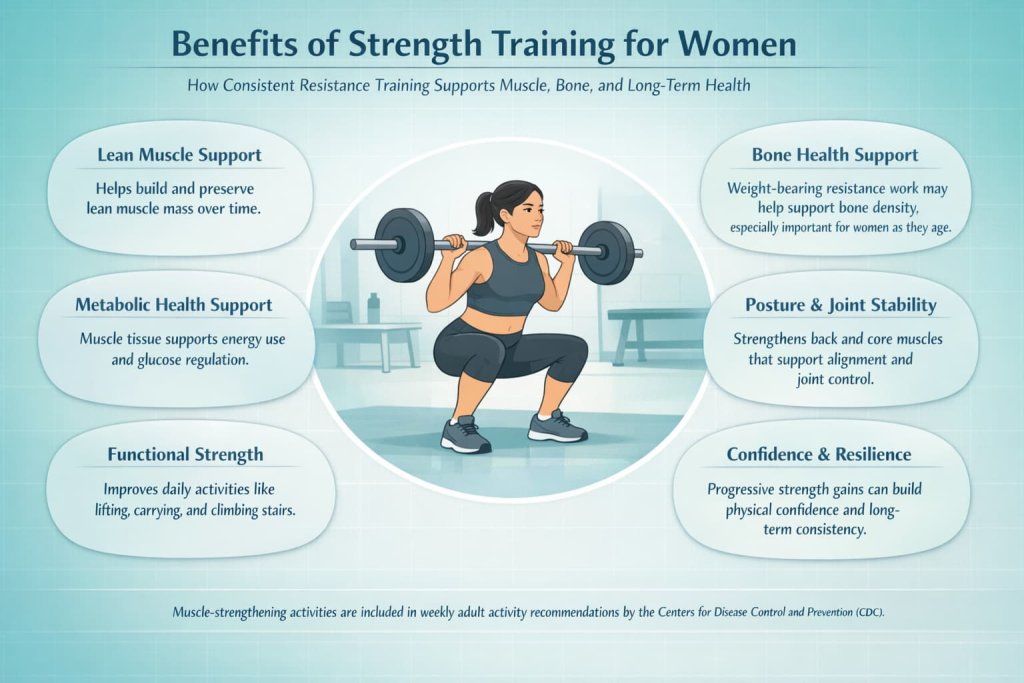
Strength training supports muscle, bone, and long-term health outcomes when performed consistently and progressively. Major health organizations like the Centers for Disease Control and Prevention (CDC) include muscle-strengthening activities in weekly adult activity recommendations.
Key benefits include:
- Supports lean muscle development and helps preserve muscle mass with age
- Helps support bone health, especially important for women over 30, as noted by the Mayo Clinic
- Supports metabolic health by improving how the body uses energy
- Improves functional strength for daily activities like lifting, carrying, and climbing stairs
- Enhances posture and joint stability through stronger back and core muscles
- Builds confidence and physical resilience over time
The 20 Best Strength Training Exercises for Women
Build lean muscle, improve total-body strength, and support long-term health with these 20 effective strength training exercises for women. From lower-body power moves to upper-body and core builders, this balanced list helps you train smarter and stronger.
Lower Body Exercises
1) Goblet Squat
Why it works: The goblet squat reinforces proper squat mechanics by naturally encouraging an upright torso and strong core bracing. Holding the weight in front acts as a counterbalance, helping many women improve depth, knee tracking, and overall control before progressing to heavier barbell lifts.
Muscles worked: Quads are the primary drivers, with strong contribution from the glutes and adductors. The core works isometrically to maintain posture throughout the movement.
How to do it:
- Hold a dumbbell or kettlebell vertically at chest level, elbows pointing down.
- Stand with feet about shoulder-width apart and toes slightly turned out.
- Brace your core and sit down by bending knees and hips together.
- Lower until thighs are at least parallel to the floor (or as mobility allows).
- Drive through your midfoot and heels to return to standing.
Trainer Tip: Keep elbows slightly forward and close to your ribcage to help maintain a tall chest position.
2) Back Squat
Why it works: The back squat is a foundational compound lift that builds overall lower-body strength and muscle mass. It allows progressive overload over time, making it highly effective for long-term strength and lean muscle development.
Muscles worked: Quads and glutes are primary movers, with the core and upper back stabilizing the bar.
How to do it:
- Position the barbell across your upper back (high-bar position for most women).
- Grip the bar firmly and brace your core before unracking.
- Sit down and back under control while keeping chest lifted.
- Descend to a comfortable depth with knees tracking over toes.
- Push the floor away to stand tall.
Trainer Tip: Think “spread the floor apart” with your feet to maintain stable knee alignment.
3) Bulgarian Split Squat
Why it works: This single-leg movement improves lower-body strength symmetry, balance, and glute development. It also increases hip stability and can reduce strength imbalances between sides.
Muscles worked: Glutes and quads are primary, with core engagement for balance.
How to do it:
- Place your back foot on a bench behind you.
- Position your front foot far enough forward to allow knee tracking comfortably.
- Lower your body straight down under control.
- Push through the front heel to return to standing.
Trainer Tip: Slight forward torso lean increases glute activation without stressing the knee.
4) Reverse Lunge
Why it works: The reverse lunge emphasizes glute engagement and often places less shear stress on the knees compared to forward lunges. It builds coordination and functional leg strength.
Muscles worked: Glutes, quads, hamstrings, and core stabilizers.
How to do it:
- Stand tall with feet hip-width apart.
- Step one foot backward into a lunge.
- Lower until front thigh is nearly parallel.
- Drive through the front foot to return to standing.
Trainer Tip: Keep your front heel planted to maximize glute involvement.
5) Step-Up
Why it works: Step-ups train unilateral leg strength and improve balance and coordination. They closely mimic everyday activities like climbing stairs.
Muscles worked: Glutes and quads primarily, with hamstrings assisting.
How to do it:
- Place one foot fully on a stable box or bench.
- Press through the working leg to stand tall at the top.
- Control the descent instead of dropping down.
Trainer Tip: Avoid pushing off the back leg; focus on the lead leg doing the work.
Hinge and Glute Exercises
6) Romanian Deadlift
Why it works: The Romanian deadlift strengthens the posterior chain and teaches proper hip hinge mechanics, essential for safe lifting and athletic performance.
Muscles worked: Hamstrings and glutes are primary; spinal erectors and core provide stability.
How to do it:
- Hold dumbbells or a barbell in front of thighs.
- Keep knees slightly bent and hinge at the hips.
- Lower the weights along your legs to mid-shin level.
- Drive hips forward to stand tall.
Trainer Tip: Think about pushing your hips back toward a wall behind you.
7) Hip Thrust
Why it works: The hip thrust allows heavy glute loading with strong muscle activation and relatively low spinal stress compared to some other lifts.
Muscles worked: Glutes are primary; hamstrings and core assist.
How to do it:
- Rest your upper back against a bench.
- Place feet flat and drive hips upward.
- Lift until torso is parallel to the floor.
- Lower slowly under control.
Trainer Tip: Keep chin slightly tucked to maintain neutral spine alignment.
8) Glute Bridge
Why it works: A beginner-friendly exercise that builds foundational glute strength and improves hip extension mechanics.
Muscles worked: Glutes primarily, with hamstrings assisting.
How to do it:
- Lie on your back with knees bent and feet flat.
- Brace your core and squeeze glutes to lift hips.
- Lower slowly to the floor.
Trainer Tip: Drive through your heels to emphasize glute activation.
9) Kettlebell Deadlift
Why it works: Reinforces proper hinge mechanics while strengthening the posterior chain in a controlled, beginner-friendly setup.
Muscles worked: Glutes, hamstrings, core stabilizers.
How to do it:
- Stand over the kettlebell with feet hip-width apart.
- Hinge down with flat back to grip handle.
- Brace and stand tall by extending hips.
- Lower with controlled hip hinge.
Trainer Tip: Keep shoulders packed and avoid rounding the back.
10) Hamstring Curl
Why it works: Isolates the hamstrings, helping support knee stability and complementing hinge movements.
Muscles worked: Hamstrings primarily.
How to do it:
- Position heels on a machine pad or stability ball.
- Curl heels toward hips while keeping hips lifted (if on ball).
- Extend legs slowly back out.
Trainer Tip: Slow eccentric (lowering) phase improves control and strength.
Upper Body Push Exercises
11) Push-Up
Why it works: Strengthens chest, shoulders, and triceps while also requiring strong core engagement for body alignment.
Muscles worked: Chest, anterior deltoids, triceps, core.
How to do it:
- Place hands under shoulders.
- Maintain straight body line.
- Lower chest toward floor or incline surface.
- Press back up to starting position.
Trainer Tip: Use an incline surface if building toward full floor push-ups.
12) Dumbbell Bench Press
Why it works: Allows natural shoulder movement while building upper-body pushing strength and muscle.
Muscles worked: Chest, triceps, shoulders.
How to do it:
- Lie on a bench with feet planted.
- Lower dumbbells to chest level under control.
- Press upward evenly until arms extend.
Trainer Tip: Keep wrists stacked over elbows for joint safety.
13) Overhead Press
Why it works: Builds shoulder strength and improves upper-body stability and posture.
Muscles worked: Deltoids, triceps, upper back stabilizers.
How to do it:
- Hold dumbbells at shoulder height.
- Brace core and press overhead.
- Lower slowly to starting position.
Trainer Tip: Squeeze glutes to prevent excessive lower-back arching.
14) Dumbbell Lateral Raise
Why it works: Targets the lateral deltoids to improve shoulder balance and aesthetic symmetry.
Muscles worked: Lateral deltoids primarily.
How to do it:
- Hold light dumbbells at sides.
- Raise arms to shoulder height with slight elbow bend.
- Lower slowly with control.
Trainer Tip: Avoid swinging the weights—control each rep.
Upper Body Pull Exercises
15) One-Arm Dumbbell Row
Why it works: Strengthens the upper back and lats, helping improve posture and pulling strength.
Muscles worked: Lats, rhomboids, rear delts, biceps.
How to do it:
- Support one hand on a bench.
- Pull dumbbell toward hip.
- Lower slowly without twisting torso.
Trainer Tip: Focus on squeezing your shoulder blade toward your spine.
16) Lat Pulldown
Why it works: Builds vertical pulling strength, supporting shoulder health and balanced upper-body development.
Muscles worked: Lats, biceps, mid-back.
How to do it:
- Grip bar slightly wider than shoulders.
- Pull bar to upper chest.
- Control return to top position.
Trainer Tip: Keep chest lifted and avoid leaning excessively backward.
17) Face Pull
Why it works: Strengthens rear delts and upper back, supporting better shoulder alignment.
Muscles worked: Rear delts, mid traps, rhomboids.
How to do it:
- Pull rope attachment toward face.
- Keep elbows high and squeeze shoulder blades.
- Return slowly.
Trainer Tip: Think “pull apart and back” rather than straight down.
18) Band Pull-Apart
Why it works: Improves upper-back activation and posture awareness.
Muscles worked: Rear delts, mid-back stabilizers.
How to do it:
- Hold band at shoulder height.
- Pull hands apart until arms are extended wide.
- Return under control.
Trainer Tip: Keep shoulders relaxed and away from ears.
Core and Total-Body Exercises
19) Dead Bug
Why it works: Enhances core stability and coordination while maintaining a neutral spine.
Muscles worked: Deep core stabilizers, transverse abdominis.
How to do it:
- Lie on back with arms and knees raised.
- Lower opposite arm and leg slowly.
- Return and alternate sides.
Trainer Tip: Exhale during the lowering phase to maintain abdominal engagement.
20) Farmer Carry
Why it works: Builds grip strength, core stability, and posture in a functional, real-world pattern.
Muscles worked: Forearms, traps, core, glutes.
How to do it:
- Hold heavy dumbbells at your sides.
- Walk slowly with tall posture.
- Maintain steady breathing throughout.
Trainer Tip: Keep steps short and controlled to maintain alignment.
How Often Should Women Do Strength Training
A practical starting point:
- 2–3 days per week for beginners (full-body sessions)
- 3–4 days per week for intermediate lifters
- 4+ days per week for advanced training splits
The Centers for Disease Control and Prevention (CDC) recommends muscle-strengthening activities involving major muscle groups at least two days per week for adults.
Simple Workout Structure That Works
A balanced session often includes:
- 5–8 minute warm-up
- 5–7 exercises (lower body, hinge, push, pull, core)
- 2–4 sets per exercise
- 6–12 reps for compound movements
- 60–120 seconds rest between sets
Guidelines commonly referenced by the American College of Sports Medicine (ACSM) support structured, progressive resistance training across major muscle groups.
Common Strength Training Mistakes Women Should Avoid
Avoiding common mistakes improves results and reduces unnecessary strain.
- Lifting too light for too long without progression
- Skipping compound exercises like squats, presses, and rows
- Not using progressive overload (no increases in weight, reps, or control)
- Neglecting pulling movements, leading to muscle imbalance
- Ignoring recovery, including sleep and rest days
- Rushing reps instead of controlling movement quality
- Compromising form to lift heavier weights
Focusing on balanced programming, proper technique, and gradual progression helps ensure safe and sustainable strength gains.
Who Should Be Careful Before Starting
Seek medical guidance before beginning or progressing a strength program if you have chest pain, recent surgery, uncontrolled medical conditions, or pregnancy complications. The American College of Obstetricians and Gynecologists (ACOG) notes that women with uncomplicated pregnancies can often remain active with appropriate guidance.
Frequently Asked Questions
How many days per week should women lift weights?
Most women benefit from 2–4 strength sessions weekly. The Centers for Disease Control and Prevention (CDC) recommends muscle-strengthening activities at least two days per week.
Will lifting weights make women bulky?
Significant muscle size typically requires years of progressive training and adequate nutrition. Most women experience improved tone and strength first.
What rep range is best for lean muscle?
A moderate range of 6–12 reps per set works well for many compound lifts, while higher reps may suit accessory work.
Is strength training safe during pregnancy?
In many uncomplicated cases, appropriately modified exercise is supported by guidance from the American College of Obstetricians and Gynecologists (ACOG).
Should women combine cardio and strength training?
Yes. Public health guidance commonly supports combining aerobic activity with strength training for overall health.
Conclusion
Strength training exercises for women provide a structured, effective way to build lean muscle, improve total-body strength, and support long-term health. Focus on foundational movements, train consistently, and progress gradually while maintaining proper form.
References
- World Health Organization (WHO) — Physical Activity Recommendations
- American College of Sports Medicine (ACSM) — Progression Models in Resistance Training (PubMed)
- Schoenfeld (2017) — Weekly Resistance Training Volume and Muscle Growth (PubMed)
- Grgic et al. (2018) — Resistance Training Frequency and Strength Gains (PubMed)
- Kemmler et al. (2020) — Exercise and Bone Mineral Density in Postmenopausal Women (PubMed)