
The best resistance band leg exercises are movements that strengthen your glutes, quads, hamstrings, hips, and calves using loop bands, mini bands, or long tube bands.
These exercises build lower-body strength, improve balance, increase stability, and support everyday functional movements.
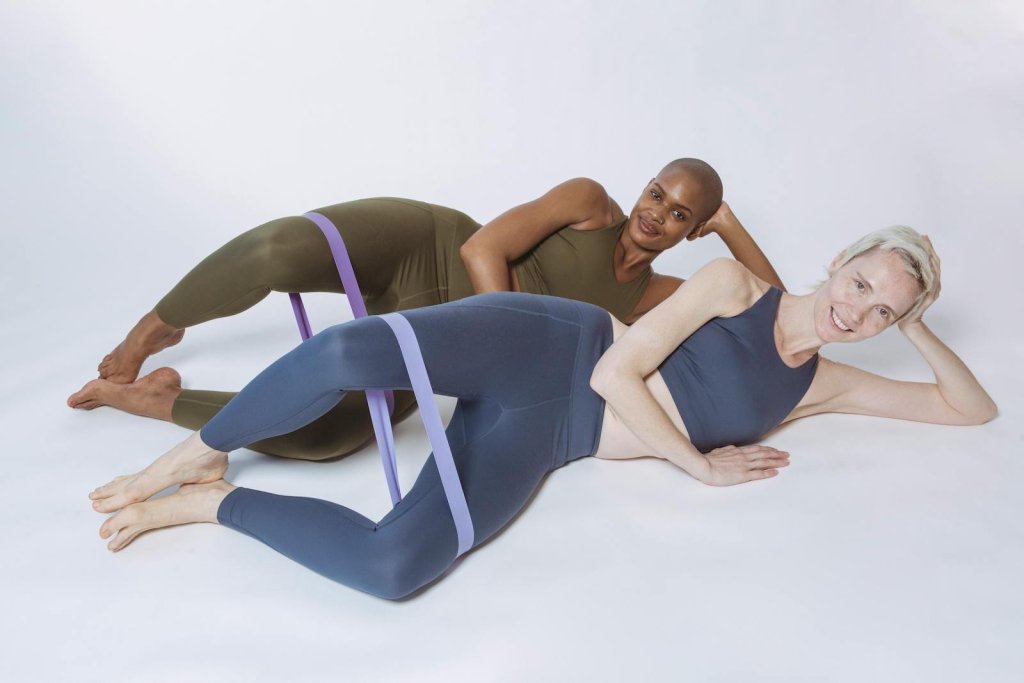
Understanding resistance band leg training is important because it allows you to build muscle and stability anywhere, even without weights. Bands create variable resistance, challenge stabilizer muscles, and are beginner-friendly while still effective enough for strong lifters. They’re also low-impact, joint-friendly, and recommended by organizations like the American College of Sports Medicine (ACSM) for home strength training.
This guide walks you through the 14 best resistance band leg exercises, step-by-step instructions, muscles worked, benefits, and FAQs—based on the most current evidence available.
14 Best Resistance Band Leg Exercises for Strength, Toning & Balance
Below are the 14 best resistance band leg exercises that target strength, toning, and balance using simple, effective movements. Each exercise includes clear instructions, muscles worked, and expert tips to help you perform them safely and with proper form.
1. Banded Squat
Why It Works:
The band increases lateral tension on your hips, forcing the glute medius to activate so your knees stay aligned. This improves squat mechanics and strengthens the entire lower body with minimal joint stress.
Muscles Worked:
Glutes (maximus & medius), quadriceps, hamstrings, hip stabilizers
How to Do It:
- Place a loop band just above your knees.
- Stand with feet shoulder-width apart and toes slightly out.
- Push your knees outward to create tension in the band.
- Sit back and down into a squat while keeping your chest lifted.
- Press through your heels to stand back up with control.
Trainer Tip:
If your knees cave inward, choose a lighter band until you can maintain proper alignment.
2. Banded Glute Bridge
Why It Works:
The band forces outward knee tension, which boosts glute activation and teaches proper hip extension mechanics.
Muscles Worked:
Gluteus maximus, gluteus medius, hamstrings, core stabilizers
How to Do It:
- Lie on your back with knees bent and band above your knees.
- Press your lower back into the floor and brace your core.
- Push through your heels and lift your hips until your body forms a straight line.
- Squeeze your glutes at the top before lowering down.
Trainer Tip:
Keep your ribcage tucked to avoid arching your lower back.
3. Banded Hip Thrust
Why It Works:
Because your hips move through a larger range than a bridge, band tension creates maximal glute activation—ideal for strength and shaping.
Muscles Worked:
Gluteus maximus, gluteus medius, hamstrings
How to Do It:
- Position your upper back on a bench with feet flat and knees bent.
- Place a loop band above your knees.
- Drive your hips up until your torso is parallel to the floor.
- Squeeze hard before lowering halfway down.
Trainer Tip:
Keep your chin tucked and gaze forward to maintain spine neutrality.
4. Lateral Band Walk (Side Steps)
Why It Works:
Targets small hip muscles responsible for knee tracking and pelvic stability—critical for walking, balance, and preventing knee valgus.
Muscles Worked:
Glute medius, glute minimus, hip stabilizers, outer thighs
How to Do It:
- Place a mini band around your ankles or above your knees.
- Slightly bend your knees into an athletic stance.
- Take slow, controlled steps sideways while maintaining tension.
Trainer Tip:
Don’t sway your torso—keep your core tight and hips level.
5. Monster Walk
Why It Works:
Diagonal steps challenge hip stability from multiple angles, activating glutes, quads, and inner thighs simultaneously.
Muscles Worked:
Glutes, quadriceps, hip abductors, core stabilizers
How to Do It:
- Place a mini band around your ankles.
- Lower into a mini squat stance.
- Step diagonally forward, alternating legs.
- Repeat diagonally backward.
Trainer Tip:
Keep steps wide but controlled, never allowing the band to slack.
6. Banded Romanian Deadlift (RDL)
Why It Works:
Provides constant tension through the hip hinge, strengthening hamstrings and glutes without heavy weights.
Muscles Worked:
Hamstrings, glutes, lower back stabilizers
How to Do It:
- Stand on a long loop band with feet hip-width apart.
- Hold the ends with both hands.
- Push your hips back while keeping a long spine.
- Drive hips forward to stand tall.
Trainer Tip:
Think “hips back, hips forward”—not up and down.
7. Standing Hip Abduction
Why It Works:
Strengthens hip abductors, which improve balance, walking stability, and single-leg control.
Muscles Worked:
Glute medius, glute minimus, hip stabilizers
How to Do It:
- Band around ankles.
- Stand tall and lift one leg outward without leaning.
- Return with control.
Trainer Tip:
Hold onto a wall lightly if needed to prevent trunk shifting.
8. Standing Hip Extension
Why It Works:
Focuses on hip extension mechanics, essential for walking, running, and climbing stairs.
Muscles Worked:
Gluteus maximus, hamstrings, core stabilizers
How to Do It:
- Place a band around your ankles.
- Stand tall and extend one leg straight back.
- Pause, then return to neutral.
Trainer Tip:
Keep toes pointing down to better isolate the glutes.
9. Banded Leg Curl (Seated or Prone)
Why It Works:
Replicates a leg curl machine using only a band—ideal for hamstring development and knee joint support.
Muscles Worked:
Hamstrings (all heads), calves (secondary)
How to Do It:
- Anchor band to a sturdy post.
- Wrap band around your ankles.
- Curl heels toward your glutes.
- Release slowly.
Trainer Tip:
Don’t arch your back—use slow, steady reps for best hamstring activation.
10. Banded Clamshell
Why It Works:
Isolates glute medius and minimus, improving hip stability, pelvic alignment, and knee tracking.
Muscles Worked:
Glute medius, glute minimus, hip external rotators
How to Do It:
- Lie on your side with band above your knees.
- Keep feet together and open your knees apart.
- Return with control.
Trainer Tip:
Keep your hips stacked—don’t rock your torso backward.
11. Banded Split Squat
Why It Works:
Creates unilateral loading to improve balance, hip stability, and single-leg strength.
Muscles Worked:
Quads, glutes, hamstrings, calf stabilizers
How to Do It:
- Band around thighs.
- Step one foot forward into a split stance.
- Lower your back knee toward the floor.
- Press through your front heel to rise.
Trainer Tip:
Keep your torso tall; avoid leaning forward excessively.
12. Banded Lateral Lunge
Why It Works:
Trains side-to-side movement, strengthening adductors and glutes while improving hip mobility.
Muscles Worked:
Glutes, quads, adductors, inner thighs
How to Do It:
- Place band above your knees.
- Step out to the side and lower into a lunge.
- Push off the lunging leg to return to center.
Trainer Tip:
Sit hips back into the lunge rather than dropping straight down.
13. Banded Calf Raise
Why It Works:
Adds resistance to calf work, improving ankle strength, balance, and lower-leg muscle endurance.
Muscles Worked:
Gastrocnemius, soleus, foot stabilizers
How to Do It:
- Loop band under your feet and hold ends at your shoulders.
- Rise onto your toes.
- Lower slowly.
Trainer Tip:
Pause at the top for a stronger contraction.
14. Banded Fire Hydrant
Why It Works:
One of the best isolation moves for hip abductors, strengthening muscles that support pelvic stability and knee alignment.
Muscles Worked:
Glute medius, glute minimus, hip abductors, core stabilizers
How to Do It:
- On all fours, band above your knees.
- Lift your knee out to the side while keeping your core tight.
- Lower with control.
Trainer Tip:
Avoid twisting your hips—movement should come from the hip joint, not your torso.
How Often Should You Do Resistance Band Leg Workouts?
For general fitness, ACSM recommends:
- 2–3 sessions per week
- 2–4 sets per exercise
- 8–12 reps for strength
- 10–15 reps for beginners or older adults
- Increase band thickness over time for progression.
Common Mistakes to Avoid with Resistance Band Leg Exercises
- Knees collapsing inward during squats or lunges
- Choosing a band that’s too heavy and disrupts form
- Allowing the band to roll up the legs or snap
- Performing reps too quickly instead of using slow, controlled motion
- Leaning excessively forward or losing posture
- Overstretching the band beyond safe limits (generally 2–2.5× its length)
- Ignoring pain or discomfort instead of modifying the movement
Sample Resistance Band Leg Workout (Beginner, Intermediate, Advanced)
Beginner Routine (10–12 minutes)
- Banded Squat – 10 reps
- Glute Bridge – 12 reps
- Standing Hip Abduction – 10 each leg
- Lateral Band Walk – 10 steps each way
- Banded Leg Curl – 10–12 reps
Sets: 1–2
Rest: 45–60 seconds
Intermediate Routine (15–20 minutes)
- Banded Hip Thrust – 12 reps
- Banded RDL – 10–12 reps
- Monster Walk – 12 steps forward & backward
- Split Squat – 10 each leg
- Fire Hydrant – 12 each side
- Banded Calf Raise – 12–15 reps
Sets: 2–3
Rest: 45–60 seconds
Advanced Routine (20–25 minutes)
- Banded Squat – 15 reps
- Banded Lateral Lunge – 10 each side
- Hip Thrust (pause 2 seconds at top) – 12 reps
- Monster Walk – 15 steps each direction
- Heavier Band RDL – 12 reps
- Banded Step-Ups – 12 each leg
- Slow-tempo Fire Hydrant – 15 each side
Sets: 3–4
Rest: 30–45 seconds
Tips for Better Results
- Keep tension throughout each movement
- Avoid knees caving in (push outward)
- Move slowly on the lowering phase
- Combine bands with bodyweight or dumbbells for advanced progress
- Use thicker bands as strength improves
Safety Tips & Who Should Avoid These Exercises
General Safety Tips:
- Start with a lighter band and gradually increase tension
- Maintain slow, controlled movements for better alignment
- Replace worn or damaged bands immediately
- Avoid locking your knees aggressively
- Stop if you feel sharp pain, numbness, or instability
Who Should Modify or Consult a Professional:
- Anyone with recent knee, hip, ankle, or lower-back injuries
- Individuals recovering from surgery
- People experiencing severe arthritis flare-ups
- Pregnant individuals beyond the first trimester (avoid long supine positions unless approved)
- Individuals with balance limitations (use a chair or wall support)
FAQs
1. Do resistance band leg exercises really build muscle?
Yes. Research shows resistance bands can improve strength and muscle size when used progressively.
2. Are resistance bands good for beginners?
Absolutely—bands are joint-friendly and easy to control, making them ideal for newcomers.
3. Can seniors use resistance bands safely?
Yes. Organizations like the National Institute on Aging recommend band exercises for maintaining strength and balance.
4. How many resistance bands do I need?
A basic set of light, medium, and heavy bands is enough for full lower-body training.
5. Are mini bands or long bands better?
Mini bands are great for hips and glutes; long bands work well for deadlifts, squats, and leg curls.
6. Can resistance band leg workouts help with balance?
Yes. Many exercises activate stabilizing muscles that support balance and mobility.
7. How long does a band leg workout take?
A full session can take 15–25 minutes, depending on sets and rest time.
Conclusion
Resistance band leg exercises are an excellent way to build strength, tone your muscles, and improve balance using simple, affordable equipment. Whether you’re a beginner, an older adult, or an experienced lifter, bands offer a safe and effective way to train at home or on the go.
Start with a few exercises from this list, progress your band tension, and stay consistent to see real results.
References
- Meng Y, Hu Y, Yang W, Xue Y, Yang S. Effects of elastic band resistance training on lower limb strength and balance function in older adults: A systematic review and meta-analysis. Frontiers in Sports and Active Living. 2025;7:1649305.
- Li A, et al. Effects of elastic band resistance training on the physical and functional performance of elderly individuals: A systematic review and meta-analysis. PLOS ONE. 2024.
- Martins WR, et al. Elastic resistance training to increase muscle strength in elderly: A systematic review and meta-analysis. Archives of Gerontology and Geriatrics. 2013;57(1):8–15.
- Fragala MS, et al. Resistance Training for Older Adults: Position Statement From the National Strength and Conditioning Association. Journal of Strength and Conditioning Research. 2019;33(8):2019–2052.
- National Institute on Aging (NIA). How can strength training build healthier bodies as we age? 2022.
- Harvard Health Publishing. Try this: Band practice. Harvard Men’s Health Watch. 2024.
- American Council on Exercise (ACE). Everything You Need to Know About Resistance Band Workouts: What Makes Them Effective, How to Get Started, and How to Up the Intensity. 2024.